
It began not with a roar, but with a spreadsheet. My husband, Mark, has always had a peculiar fascination with ‘optimizing’ our household finances, a trait that started as a shared goal to pay off our mortgage early and devolved into something far more clinical and, frankly, disturbing. We have been married for seven years, and for the first six, our finances were a team sport. Then came the promotion, the ego-boost, and the obsession with ‘individual ROI’ within the marriage.
The driveway situation started as a joke—or so I thought. Mark had been complaining about the ‘wear and tear’ on the concrete and the ‘inconvenience’ of navigating around my sedan to get his truck out in the mornings. I laughed it off, assuming he was tired. I was wrong. A week later, I found a laminated sign taped to the wall of the garage and a digital invoice waiting in my email inbox.
The audacity of the demand was staggering. He wasn’t just asking for convenience; he was asserting a proprietary claim over the very land we both owned. The daily fee was calculated down to the cent, accounting for ‘space utility’ and ‘time-cost of egress.’ It was a masterclass in gaslighting disguised as corporate efficiency, and it set the stage for a confrontation that would dismantle the last remnants of our mutual trust.
As I stared at that invoice, the realization hit me: this wasn’t about the driveway. This was about power. He wanted to see how far he could push the boundaries of our partnership before I snapped. He viewed our home as a marketplace, and I was suddenly a tenant in my own life. I didn’t get angry; I got creative. If he wanted to treat our home like a commercial parking facility, it was time I started acting like a very difficult customer.
The Morning The Invoice Appeared
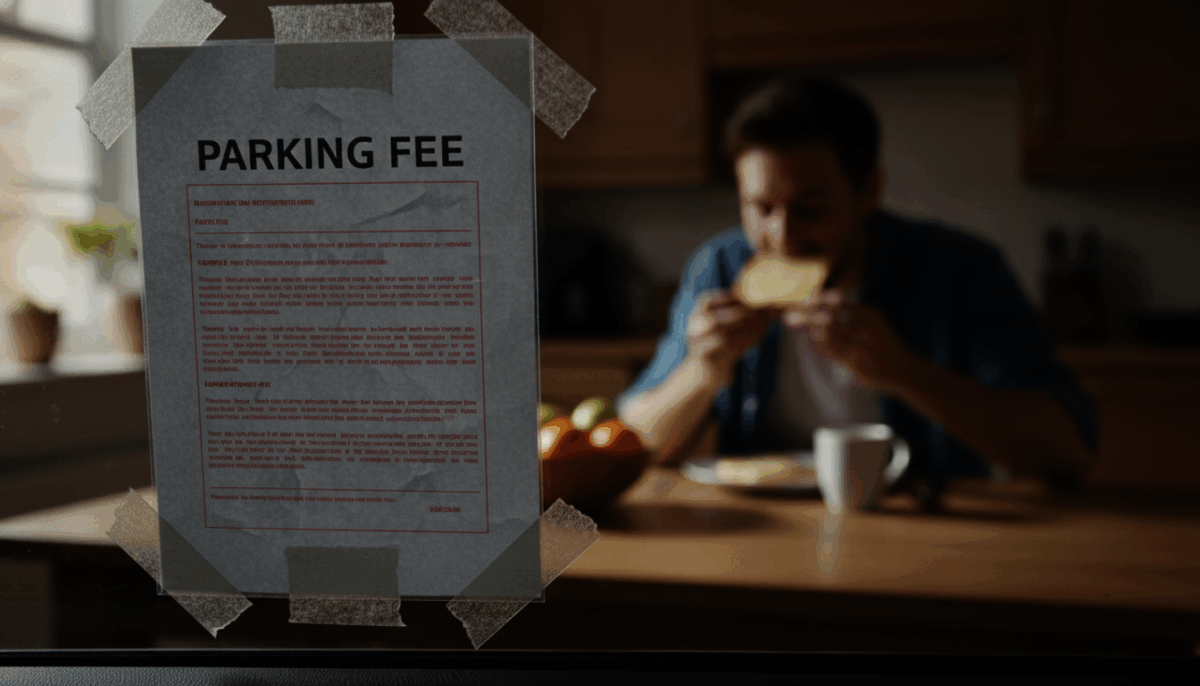
It was a Tuesday morning, the kind of gray, drizzly day that makes you want to crawl back into bed. I walked out to the garage, coffee in hand, and noticed a strange, bright-yellow piece of paper taped to the driver’s side window. I assumed it was a notice from the HOA or perhaps a flyer for a local landscaping service. As I peeled it off, the cold reality of the situation began to settle into my chest.
The heading was printed in bold, professional-looking font: ‘Residential Driveway Utilization Fee – Daily Rate.’ Below it was a breakdown of costs, including a $15 flat fee for ‘prime parking zone access’ and an additional surcharge for ‘egress blocking’ if I stayed parked past 7:30 AM. My mouth fell open. I walked into the kitchen, where Mark was meticulously buttering a piece of toast, looking entirely too pleased with himself.
“I hope you saw the notice on your windshield, honey. I’m trying to keep the household accounts balanced, and the driveway space is a premium asset that hasn’t been properly monetized.”
I set the paper down on the granite island, my hands shaking slightly. ‘Mark, please tell me this is a joke. A very elaborate, very unfunny joke you’re playing on me.’ He didn’t even look up from his toast, just hummed a little tune, completely detached from the sheer absurdity of his request.
He looked at the paper as if it were a legitimate legal document. ‘It’s not a joke, Sarah. It’s basic economics. You take the best spot, and it forces me to back out of the garage at a sub-optimal angle. This covers the increased risk of collision and the wear on my vehicle’s alignment. It’s perfectly reasonable.’
I felt a surge of cold, calculated clarity. This wasn’t about his truck’s alignment. This was a man who wanted to exert control over every square inch of our shared existence. I realized then that arguing against the ‘logic’ of his spreadsheet was a trap, because he would just move the goalposts to a new set of data points. The only way to win a game of petty bureaucracy was to change the rules of the game entirely.
The First Payment Demand

By Thursday, the digital invoices started arriving. He had set up an automated system through a popular peer-to-peer payment app, sending me ‘requests’ for $15 every evening. I watched the notifications pop up on my phone with a mix of disbelief and morbid fascination. He was truly committed to this charade. Each request included a memo line: ‘Driveway Rental – 05/12’.
I started keeping my own log. I tracked every time he left his tools in the living room, every time he used my Netflix subscription, and every time he didn’t replace the toilet paper roll. If he wanted to treat our marriage like a series of commercial transactions, I was going to be the most rigorous auditor he had ever encountered.
“You haven’t paid the invoice for yesterday, Sarah. The system will start charging a 5% late fee if it’s not cleared by midnight. I don’t want to have to escalate this to a formal household debt collection.”
I looked at him across the dinner table. He was genuinely waiting for me to pull out my phone and send him the money. The look of expectation in his eyes was almost pathetic. I decided to lean into the role he had cast me in: the stubborn, non-compliant tenant.
‘Mark, I’ve been reviewing our shared assets,’ I said, my voice eerily calm. ‘I’ve noticed that you occupy the main bathroom for at least forty-five minutes every morning. That’s a significant utility usage. I’ve decided to implement a ‘facility access fee’ of $20 per morning to cover the cost of the hot water and the increased wear on the plumbing fixtures. I’ve sent you the first invoice. It’s due by morning.’
His face went from smug to purple in about three seconds. He sputtered, trying to explain why his ‘necessary’ bathroom time was different from my ‘optional’ parking spot. I didn’t let him finish. I simply smiled, took a sip of my wine, and went back to my meal. The power dynamic hadn’t shifted, but the battlefield had been leveled.
The Escalation of Petty Warfare

The week that followed was a blur of passive-aggressive post-it notes and digital payment requests. My phone was vibrating constantly with notifications from the app. It was almost comedic, the two of us sitting in the same living room, communicating solely through financial demands. He had even started leaving ‘parking tickets’ on my windshield, handwritten on neon-colored paper, detailing the ‘violation’ of the parking rules.
I, in turn, began leaving ‘violation notices’ on his side of the bed for ‘unauthorized snoring’ and ‘excessive pillow hogging.’ The atmosphere in the house was thick enough to cut with a knife. Our friends stopped coming over, sensing the tension, and the few who did notice the neon slips of paper on the car were absolutely horrified by the level of dysfunction.
“You’re acting like a child, Sarah. If you just paid the $15, we wouldn’t have to deal with all of this. Why do you have to make everything so difficult? It’s a simple cost-benefit analysis!”
I looked at him, realizing he still didn’t see the absurdity of his own behavior. He was so deeply entrenched in his ‘business logic’ that he had lost the ability to see his wife as anything other than a line item in his budget. It was then that I decided the war needed to be fought on the literal ground, not just through digital apps.
I started planning my move. I knew exactly when he had to leave for his early morning board meetings and exactly how much he valued the ‘optimization’ of his exit strategy. He took pride in the fact that he could back out of the garage and be on the road in less than sixty seconds. That was his weakness. That was where I would strike.
The Night of the Great Blockade
It was a Friday night. Mark was particularly smug, having finally ‘successfully’ invoiced me for the entire week. He went to bed early, excited for his Saturday morning golf trip, a ritual he took more seriously than our anniversary. I waited until I heard the rhythmic, heavy breathing that signified he was deep in his slumber. I grabbed my keys, put on my coat, and walked out into the cool night air.
The driveway looked peaceful, bathed in the soft glow of the porch light. I backed my car out of its usual spot and pulled it forward, turning the wheel hard to the left. I maneuvered until I was parked perfectly perpendicular to the garage, blocking both doors completely. It was a beautiful, tactical masterpiece. No truck, sedan, or even a bicycle was getting out of that garage until I decided otherwise.
I went back inside, feeling a rush of adrenaline I hadn’t felt in years. I didn’t sleep much that night. I laid in bed, listening to the quiet of the house, waiting for the inevitable moment of realization. I knew he wouldn’t notice until the very last second, right when he was rushing to load his golf clubs into his truck.
I kept my phone on my nightstand, volume turned up to the max. I wanted to hear the explosion. I wanted to witness the moment his carefully constructed, efficient little world crashed into the solid wall of my refusal to play his game. It was a petty act, perhaps, but it was the only one that felt commensurate with the emotional violence he had been inflicting on me for weeks.
The 6:00 AM Garage Door Panic

The sound came at exactly 6:02 AM. The electronic ‘beep-beep’ of his garage door opener, followed by a heavy, confused silence. Then, the sound of the garage door itself lifting, hitting the bottom of my car’s bumper, and stuttering to a halt as the safety sensor kicked in. Then came the shouting. A string of expletives that would have made a sailor blush, vibrating through the walls of the house.
I stayed in bed, pulling the duvet up to my chin, a small, satisfied smile playing on my lips. The bedroom door flew open. Mark stood there, wild-eyed, his golf clothes disheveled, looking like he’d just seen a ghost. He was breathing heavily, his face a bright, pulsating red. He looked at me, then at the window, then back at me, unable to form a coherent sentence.
“Move the car. Right now. You have blocked both doors. I am going to be late for my tee time and you have effectively crippled my morning schedule. What the hell is wrong with you?”
I sat up slowly, yawning with an exaggerated, languid grace. I looked at the clock on the bedside table and then up at him, my expression one of practiced innocence. ‘I’m sorry, is there a problem? You mentioned that the driveway is a prime asset. I’ve decided to lease the entirety of the driveway space for the weekend to myself. I’ve sent you an invoice for the rental fee. It’s significantly higher than your daily rate, given it’s a weekend premium.’
He stared at me, his mouth agape. He looked like he was about to have a stroke. He started pacing the room, gesturing wildly at the window. ‘You are out of your mind! This isn’t a rental property, it’s our home! You can’t just block my car in because you’re mad about a few minor administrative fees!’
‘Minor?’ I laughed, a short, sharp sound. ‘You’ve spent weeks treating our life like a transaction. I’m just participating in the market you created. If you want to use the driveway, you’ll have to negotiate a new contract with the current leaseholder—me. Oh, and I’m afraid the weekend rate is non-negotiable.’
The Neighborhood Spectacle
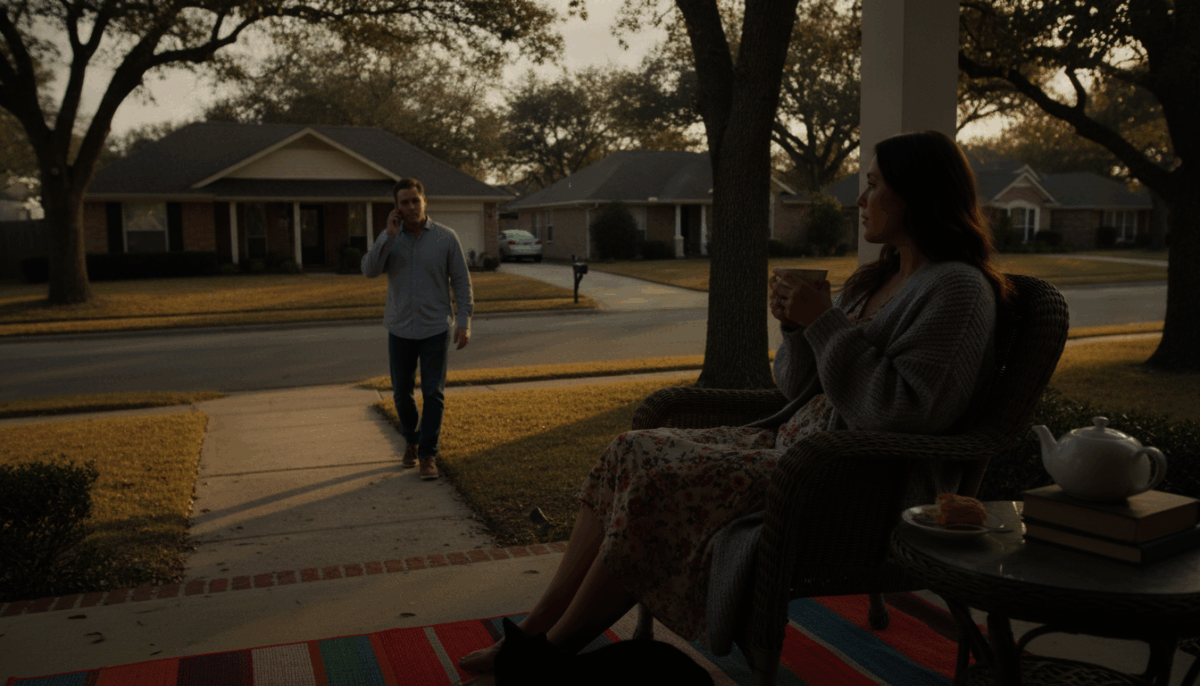
By 8:00 AM, the situation had escalated. Mark had tried to physically push my car, which, unsurprisingly, didn’t move an inch. He was now standing in the middle of the driveway, hands on his hips, shouting at the house, drawing the attention of the neighbors. Mrs. Higgins from next door was peering through her curtains, and the mailman had stopped, clearly enjoying the drama unfolding on the lawn.
I walked out onto the front porch, wrapped in my bathrobe, holding a mug of tea. I watched him pace. He looked ridiculous. A grown man, dressed for the country club, throwing a tantrum in his own driveway because his wife had out-maneuvered his petty financial tyranny. I felt a strange sense of liberation. I wasn’t the victim anymore; I was the architect of his frustration.
“Hey, Mark! You’re making a scene! Do you want to discuss the terms of the lease, or are you just going to continue to violate the terms of the driveway rental agreement by loitering on the premises without a permit?”
He turned to face me, his voice shaking with rage. ‘I am calling a tow truck. I don’t care how much it costs. I am going to have your car moved and I am going to file for a restraining order if you don’t move it right now!’
I smiled, took a sip of my tea, and sat down on the porch chair. ‘A tow truck? That’s going to be expensive, Mark. And it’s private property. The police aren’t going to get involved in a domestic dispute over a parking spot. You’re going to look like a complete idiot when you call them to report that your wife is parked in her own driveway.’
He realized I was right. The sheer futility of his situation finally hit him. He slumped against the hood of his truck, defeated by his own logic. The neighbors were definitely watching now, and the look of pity on their faces was far worse than any argument he could have had with me. He had turned a private issue into a public spectacle, and he was the one looking like a fool.
Reddit Weighs In: The Community Verdict
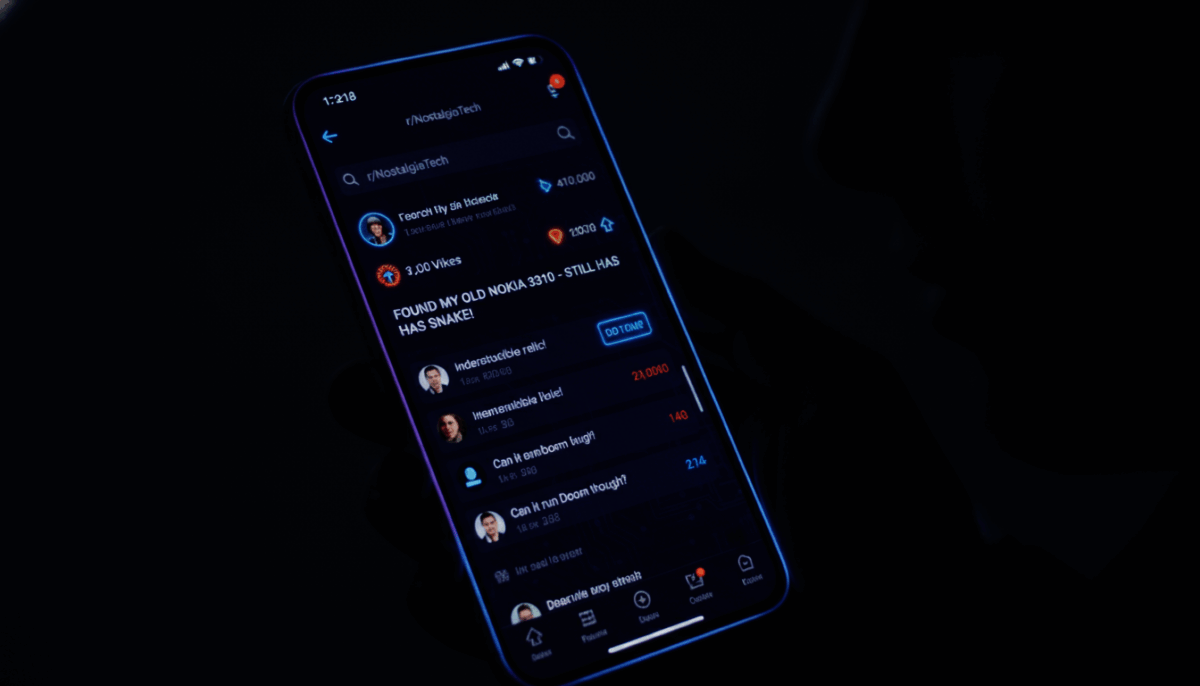
I posted the whole story on an anonymous account on a popular subreddit while I sat on the porch. The responses started pouring in almost immediately. Within an hour, the post had thousands of upvotes, and the comment section was a battlefield of opinions. It was validating to see that I wasn’t the crazy one, but the sheer variety of reactions was fascinating.
“This is the kind of petty, weaponized compliance I live for. He created a ‘business’ environment in a marriage, so you turned it into a hostile takeover. 10/10, no notes.”
— u/ChaosQueen99 (Top Comment, 32.4k upvotes)
Other commenters were more concerned about the psychological state of my marriage. They pointed out that the $15 fee was a symptom of something much deeper, a classic sign of financial abuse and control. It made me realize that I hadn’t just been dealing with a ‘quirk’—I was dealing with a partner who didn’t respect me enough to treat me as an equal.
“OP, please look at the big picture. This isn’t just about the driveway. He’s training you to accept his ‘rules’ and his ‘taxes’ on your daily life. This is a massive red flag. Please talk to a lawyer before this escalates into full-blown financial abuse.”
— u/RealTalkAttorney (15.2k upvotes)
The thread became a repository for similar stories—people who had dealt with ‘budget-obsessed’ partners who tried to nickel-and-dime them into submission. It was a sobering reminder that I wasn’t alone, but it also made me realize that my marriage was standing on the edge of a cliff. I read every comment, feeling a mix of amusement and profound sadness.
The consensus was clear: he was in the wrong, and my response, while petty, was the only way to get him to see the mirror he had been avoiding. But the community also warned me: this isn’t a sustainable way to live. The ‘war’ was the easy part; the conversation that came after was going to be the real challenge.
The Silent Dinner Table

By Saturday evening, the car was finally moved, but the air in the house was deathly silent. We moved around each other like ghosts. He didn’t try to charge me for anything, and I didn’t make any more jokes about lease agreements. The novelty of the war had worn off, replaced by the crushing weight of the reality of our disconnect.
We sat down for dinner—takeout pizza, consumed in front of the television. He kept glancing at me, waiting for me to break, waiting for me to apologize or to start the cycle again. But I had nothing left to give him. The anger had burned out, and in its place was a cold, hard indifference. I realized that I didn’t care if he was annoyed. I didn’t care if he was ‘optimized.’ I just wanted to be respected.
“Are you going to keep doing this, Sarah? Is this what our marriage is now? Just a constant game of who can be more difficult?”
I looked at him, truly looked at him, and for the first time in years, I didn’t feel the need to defend myself or to explain my actions. ‘No, Mark. This is what you made it. I just showed you the mirror. If you don’t like what you see, that’s not my responsibility anymore.’
He looked away, his eyes damp. It was the first time I had seen him vulnerable, not in a way that sought pity, but in a way that showed he was finally processing the damage he had caused. It wasn’t an apology, but it was an acknowledgment that the ‘business’ was failing. We finished our pizza in silence, the weight of the last few weeks sitting between us like a third, unwanted guest.
The Financial Audit Nobody Wanted

On Sunday, we finally sat down to look at the numbers. Not the fake ones he had invented for the driveway, but the real ones—our mortgage, our savings, our long-term goals. I brought the laptop to the table, and for once, he didn’t try to take the lead. He just sat there, waiting for me to start the conversation.
I laid it all out. I showed him the cost of the last few weeks, not in dollars, but in the erosion of our relationship. I talked about how the ‘parking fee’ had made me feel like an outsider, a guest, a liability in my own home. I talked about the anxiety of the daily notifications, the feeling of being hunted by my own husband.
“I don’t want to live like this, Mark. I don’t want a business partner. I want a husband. I want someone who treats me like a partner, not a tenant who needs to be billed for existing.”
He listened, really listened, for the first time in months. He didn’t try to interrupt with ‘efficiency’ arguments or ‘ROI’ talk. He just nodded, his face pale. He finally understood that while he had been focused on the micro-management of our driveway, he had completely lost the macro-management of his life.
He told me he felt overwhelmed by the pressure of his new job, that he felt like he had to be ‘perfect’ and ‘in control’ everywhere he went. He had projected that need for control onto me, thinking that if he could just make everything around him orderly, he could keep his own life from falling apart. It was a pathetic excuse, but it was an honest one, and it was the first real conversation we’d had in a year.
Boundaries and the End of the Transactional Era
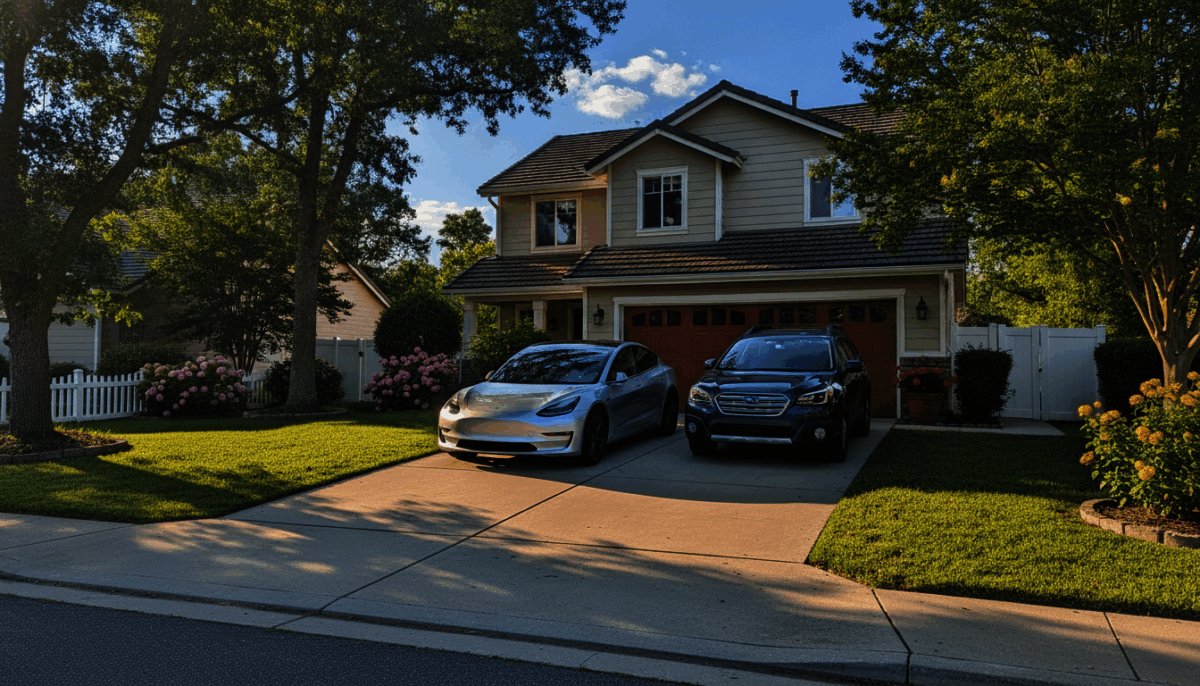
We didn’t solve everything that afternoon. The trust was frayed, and there was a long road ahead of us. But we did agree on one thing: the ‘fee’ system was gone, never to return. No more invoices, no more neon slips of paper, no more spreadsheets calculating the cost of my presence in our home. It was a small victory, but it felt like a foundation upon which we could actually rebuild.
I kept my car in the garage, and he kept his truck, and we didn’t mention the ‘prime spot’ ever again. It was as if the whole debacle had been a fever dream that we had both finally woken up from. He started going to therapy, something he had resisted for years, and we began attending sessions together to work through the resentment that had built up over the months of his ‘optimization’ phase.
“I realized that I was trying to manage you because I was terrified of being managed by my job. I’m sorry I treated you like a liability instead of my wife.”
It wasn’t a fairy-tale ending. We still have arguments, and we still have to figure out how to navigate our finances in a way that feels fair and respectful. But the power dynamic has shifted. I am no longer a tenant in my own life, and he is no longer the landlord of our marriage. We are equal participants, and that is all I ever wanted.
The driveway still sits there, just a patch of concrete in front of a house. But to me, it will always be the site of the greatest lesson I ever learned about the importance of standing your ground. Sometimes, to save a relationship, you have to be willing to be the person who blocks the exit, just to make sure the other person stops long enough to listen to you.
Conclusion
Looking back, the entire experience feels like a bizarre, high-stakes drama I only watched from the sidelines, even though I was the protagonist. The driveway incident was the catalyst that finally forced us to look at the cracks in our foundation. It is easy to get caught up in the pettiness of a domestic dispute, but the real challenge is realizing when that pettiness is a mask for something much more profound.
I learned that boundaries are not just about saying ‘no’—they are about showing the other person exactly what the consequences of their actions will be. By turning his own logic against him, I didn’t just win an argument; I forced him to confront the absurdity of his own behavior. And while we still have work to do, we are doing it together, with the understanding that our marriage is a partnership, not a profit center.
To those of you currently dealing with a partner who thinks life is a series of transactions: know that you don’t have to accept the terms of the contract. You are allowed to park your car across the garage doors. You are allowed to reclaim your space, your dignity, and your voice. Don’t let yourself be billed for your own happiness.
What about you? Have you ever had to resort to ‘malicious compliance’ to get a stubborn partner to see the light, or has a partner ever tried to ‘optimize’ your life in a way that felt like an insult? Share your stories below—I’d love to know I’m not the only one who had to turn their home into a battleground to find peace.
What's your verdict on this dilemma?
Vote below to contribute to the official community consensus.

Have a Dilemma Keeping You Up at Night?
Share your real-life feud, wedding chaos, or relationship crossroads anonymously with our editorial team.
What do you think ?
0 Comments🛡️ Comments are moderated to protect community integrity. Your comment will appear once approved by the editorial team.