
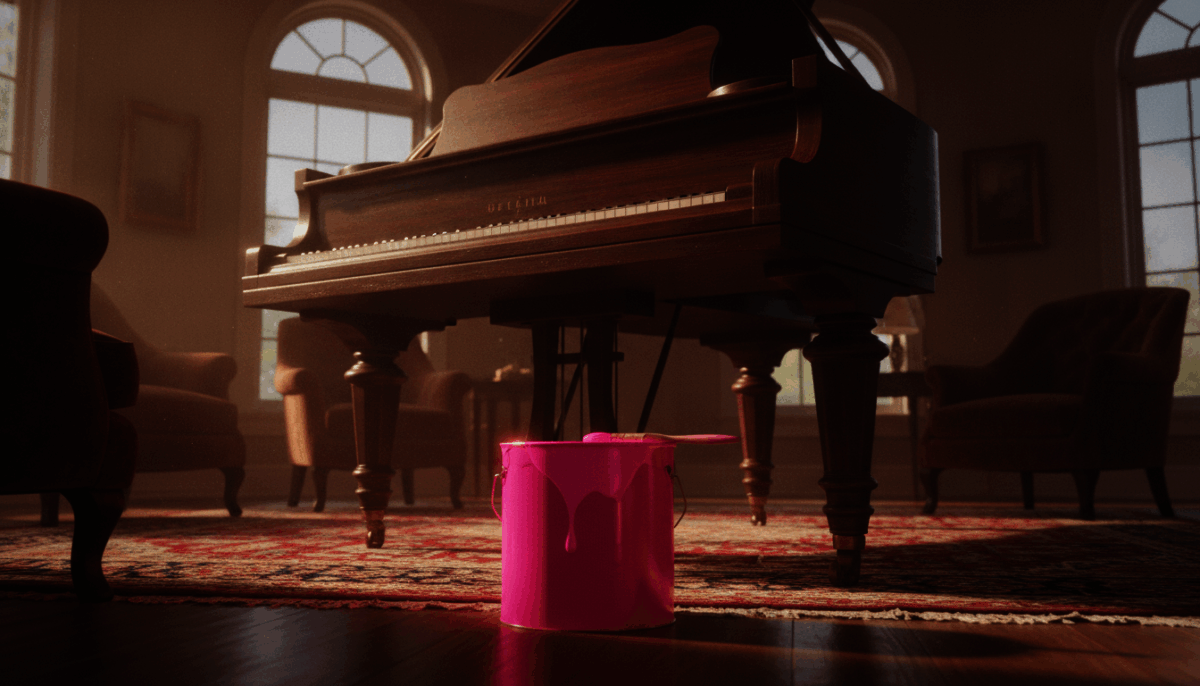
Grief is a strange, winding road, and for the three years since my mother passed, the only thing that kept me tethered to her memory was her Steinway. It wasn’t just an instrument; it was the soul of our home, a relic of late-night sonatas and the gentle hum of her voice that I still heard whenever I brushed my fingers against the keys. It was the centerpiece of my life, kept in pristine condition, and it was the single item I insisted on keeping when my father remarried and began ‘modernizing’ the house.
My stepmother, Clara, had always been a woman of intense aesthetic convictions. She viewed interior design as a battlefield where beige was the enemy and ‘boldness’ was her signature. When she moved into my childhood home, she brought with her a whirlwind of redecorating, replacing timeless oak with sterile whites and greys. I held my breath, waiting for the inevitable, but I never expected her eyes to land on the piano with such predatory intent.
The dilemma began on a Tuesday afternoon, a day that started with the mundane clinking of coffee mugs and ended with a threat to everything I held dear. Clara didn’t ask; she declared. In her mind, the piano was an eyesore, a dusty relic that lacked the ‘pizzazz’ required for her vision of a contemporary gallery space. She didn’t want it gone—she wanted it transformed into a neon pink statement piece that screamed, in her words, ‘mid-century chic gone wild.’
I felt a cold shiver run down my spine as she laid out her plans, complete with paint swatches and visions of ‘reclaimed art.’ The moral weight of the situation hit me instantly. This wasn’t just a piece of furniture; it was a sacred object, a bridge to a woman who couldn’t defend her legacy. My father, caught in the middle as he often was, stayed silent, his eyes fixed on his newspaper while the storm gathered around us. The battle for the piano had begun, and the stakes were far higher than mere decor.
The Tuesday Afternoon Declaration

It was a humid afternoon when Clara brought the paint sample card out. She laid it on the living room table with the precision of a general placing a marker on a map. I was nursing a cup of tea, staring at the piano, when she cleared her throat with that specific, sharp sound she made when she was about to make a life-altering decision for someone else.
She started by talking about ‘energy flow’ and ‘vibrancy,’ using terms I knew she had picked up from a high-end design blog that morning. As she spoke, she gestured toward the piano. I felt my stomach drop. She suggested that the dark wood was ‘suffocating’ the room and that a coat of ‘Electric Fuchsia’ would turn the space into a true conversation starter.
“Look, it’s just a piece of wood, honey. Your mother would want you to be happy with your home, not living in a museum. A bit of neon pink will modernize the whole vibe and actually make it usable for the aesthetic we’re going for.”
— Clara, stepping over the line
I remember standing up, my hands trembling slightly. I tried to explain, as calmly as I could, that the piano was not just furniture. I explained the history, the care it required, and how the original finish was part of its value. I told her that I would never allow it to be touched. She just laughed, a dismissive, airy sound that made my blood boil.
She told me that I was being ‘dramatic’ and ‘stuck in the past.’ She insisted that since the piano was technically in the living room of the house she now co-owned with my father, she had a say in how it looked. I looked at my father, expecting him to defend the history of his own first marriage, but he just muttered something about wanting us to get along.
The silence that followed was heavy, filled with the ticking of the grandfather clock in the hallway. I realized then that I was alone in this fight. My father’s avoidance wasn’t just cowardice; it was an abandonment of the history we shared. That was the moment I knew I couldn’t keep the piano here, but I also knew I wouldn’t leave it to be destroyed by her whims.
The Midnight Consultation With My Best Friend
I didn’t sleep that night. I spent the hours pacing the room, watching the moonlight hit the ivories. I sent a series of frantic messages to my best friend, Sarah, who had known my mother well. The realization that I was actually considering selling the piano felt like a betrayal in itself, but the alternative—watching it get ruined—felt like a greater sin.
“She actually wants to paint the Steinway? Is she insane? You need to move it, like, yesterday. Don’t tell them. Just get it out before she calls a painter. I know a guy who specializes in vintage instrument transport. He can be there by Friday.”
— Sarah, my voice of reason
Sarah’s advice was practical, cold, and entirely necessary. She reminded me that once the piano was ‘modernized,’ there would be no going back. The value would be destroyed, and more importantly, the memory would be tainted by Clara’s ego. I started researching local buyers and collectors who appreciated vintage instruments. The guilt was heavy, but the anger at Clara’s entitlement was heavier.
I spent the next two days in a blur. I reached out to a reputable antique instrument dealer who I had heard about through my mother’s old music group. I sent them photos of the serial number and the condition reports I had kept. They were interested—very interested. They quoted me a price that was fair, acknowledging the rarity and the maintenance history.
The logistics were a nightmare. I had to coordinate with the movers while my father and Clara were at work. I felt like a thief in my own home, but the irony wasn’t lost on me. I was the child of the house, yet I was having to commit a heist to save a family heirloom from a woman who had been in the house for less than two years.
Every time the phone buzzed, I jumped, convinced it was a text from Clara asking about the ‘fuchsia paint’ test she had mentioned. I stayed in my room, avoiding the living room, unable to look at the piano and think of what it would become if I failed. I had to be strong for my mother. If this was the only way to save it, then I would be the villain in their eyes.
The Heist of the Century
Friday arrived with a cloudless sky, which felt incredibly ironic given the darkness in my heart. The moving truck pulled up at 10:00 AM, exactly as scheduled. I had told my father I was taking the morning off to run errands, which was technically true. I watched from the window as the men in uniforms approached the house. My heart was pounding against my ribs like a trapped bird.
We moved fast. The piano was heavy, and the process of navigating it through the hallway without scratching the walls was nerve-wracking. Every creak of the floorboards sounded like a gunshot to my ears. I kept glancing at the security camera that Clara had insisted on installing near the front door. I had disabled the audio, but the visual was still live.
When the piano was finally secured in the back of the truck, a wave of relief washed over me that was quickly replaced by a sick, hollow dread. I watched the truck pull away, leaving a gaping hole in the living room where the piano had stood for twenty years. It looked so small, so empty, and so wrong. It was done.
I spent the next hour moving some of my own furniture into the space so it wouldn’t look quite so vacant. I placed a bookshelf and a large plant where the Steinway had been, hoping to buy myself a few days before they noticed the magnitude of the change. I knew I couldn’t hide it forever, but I needed to be prepared for the fallout.
I checked my phone and saw a notification from our family group chat. Clara had sent a picture of a neon pink ‘pop-art’ room she’d seen online. My hands shook as I typed a neutral response, knowing that in just a few hours, the reality would hit her like a brick. The countdown had begun, and I was holding the detonator.
The Group Chat Explosion
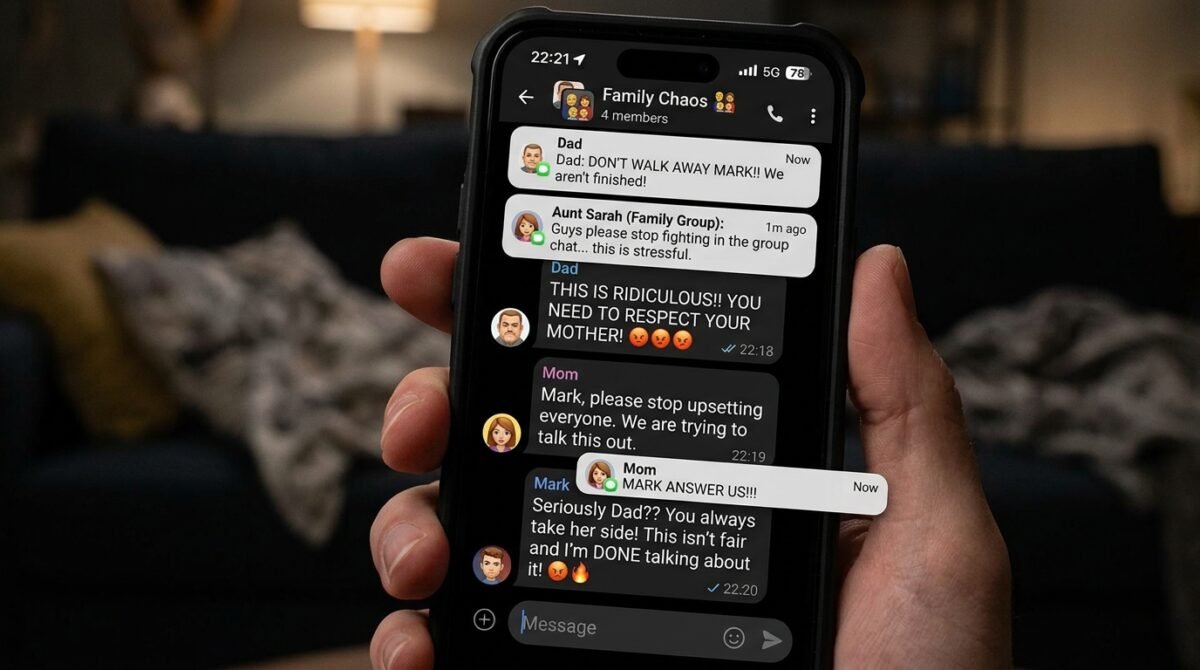
I was halfway through a coffee at a nearby cafe when the notifications started pinging incessantly. My phone vibrated against the table, a constant, rhythmic buzzing that made my stomach turn. I took a deep breath, braced myself, and opened the family group chat.
Clara: Where the hell is the piano? Did you have it moved for cleaning? If you did, you better have it back by tomorrow because the painting crew is coming on Monday morning!
— Clara, in the family group chat
I waited a moment, letting the silence build. I knew if I responded too quickly, I would reveal how much I had planned this. My father chimed in shortly after, his tone confused and escalating into panic. He clearly hadn’t known about the ‘painting project’ until just then, which made the situation even more explosive.
Dad: What painting project? Clara, what are you talking about? And where is the Steinway? OP, please tell me you know where the piano is. This isn’t funny.
— Dad, caught in the crossfire
I decided to be blunt. There was no point in dancing around the truth anymore. I typed my response, my fingers steady despite the turmoil inside. I explained that the piano was safe, but it was no longer in their possession. I didn’t mention the sale—I just said it was ‘rehomed’ to protect it from being ruined by paint.
The response was immediate. Clara’s typing bubble appeared and disappeared for what felt like ten minutes. My father called me immediately, his voice tight with frustration. He demanded to know how I could move property that he had ‘allowed’ me to keep in the house. The entitlement in his voice was the final push I needed to justify my decision.
I told him that the piano was never his to ‘allow’ anything with. It belonged to my mother, and by extension, to me. I told him that I wouldn’t stand by and watch her legacy be turned into a piece of kitsch art. I hung up the phone before he could continue, turning my phone onto silent. I knew the hurricane was coming, and I was finally ready for it.
The Confrontation at the Dinner Table
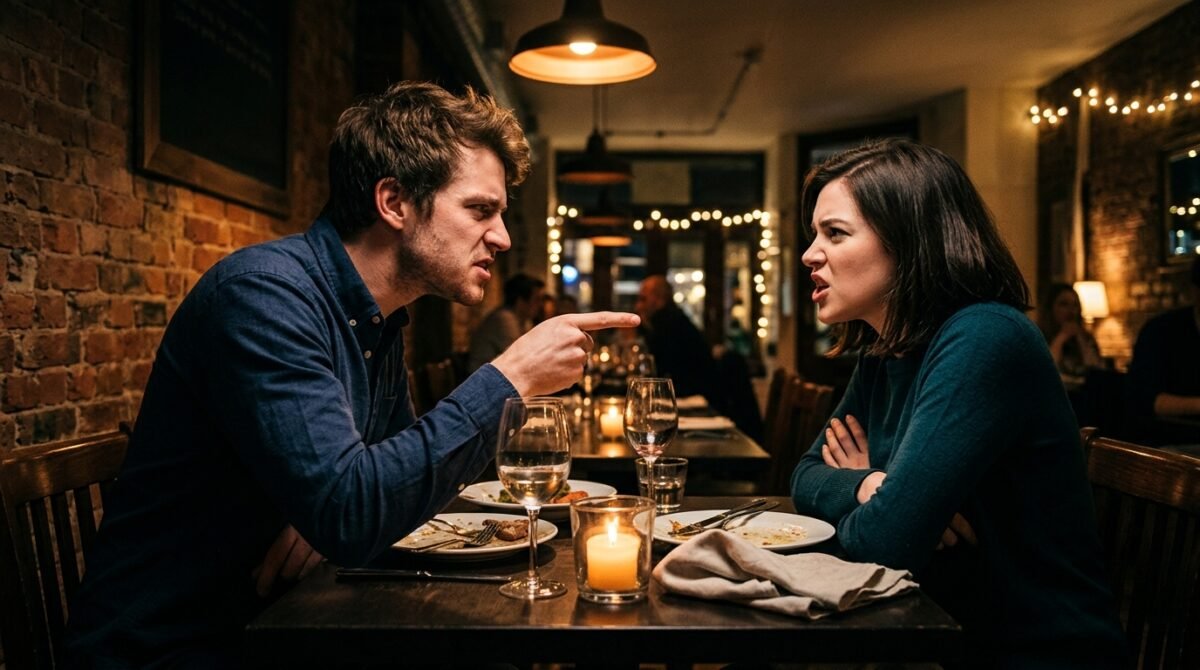
When I returned home that evening, the tension in the house was so thick I could practically feel it against my skin. Clara was sitting at the dining table with a glass of wine, her posture rigid. My father was pacing the kitchen, his face flushed. The atmosphere was a powder keg, and I was the match.
They cornered me the moment I stepped inside. Clara didn’t even try to hide her rage. She went on a tirade about disrespect, about ‘family property,’ and about how I had undermined her authority in the home. She spoke as if the piano was a shared asset that I had stolen, completely ignoring the fact that it was my inheritance.
“You sold it? You actually sold your mother’s piano behind our backs? Do you have any idea how much that could have been worth for the family? You are selfish, and you have no respect for the people who pay for your roof!”
— Clara, during the heated confrontation
I looked at my father, waiting for him to correct her, but he didn’t. He looked at me with a mix of disappointment and exhaustion. I told them that the money from the sale was going into a trust I had set up for my future, and that the piano was no longer their concern. I told them that the house felt like a place where my mother’s memory was being erased, and I had simply saved the last piece of her that mattered.
Clara tried to argue that the ‘aesthetic’ was for the good of the house, which would increase its value. I laughed, a bitter, sharp sound that seemed to shock them both. I told her that she was obsessed with superficiality and that she had no right to dictate the legacy of a woman she didn’t even know. The insults flew back and forth, hitting raw nerves that had been exposed for months.
I felt a strange sense of liberation as I stood my ground. For the first time, I wasn’t the daughter trying to keep the peace; I was the guardian of my own history. I told them that if they wanted to continue this conversation, it would be on my terms, and I wouldn’t be bullied by her ridiculous design choices anymore.
The Financial Reality Check
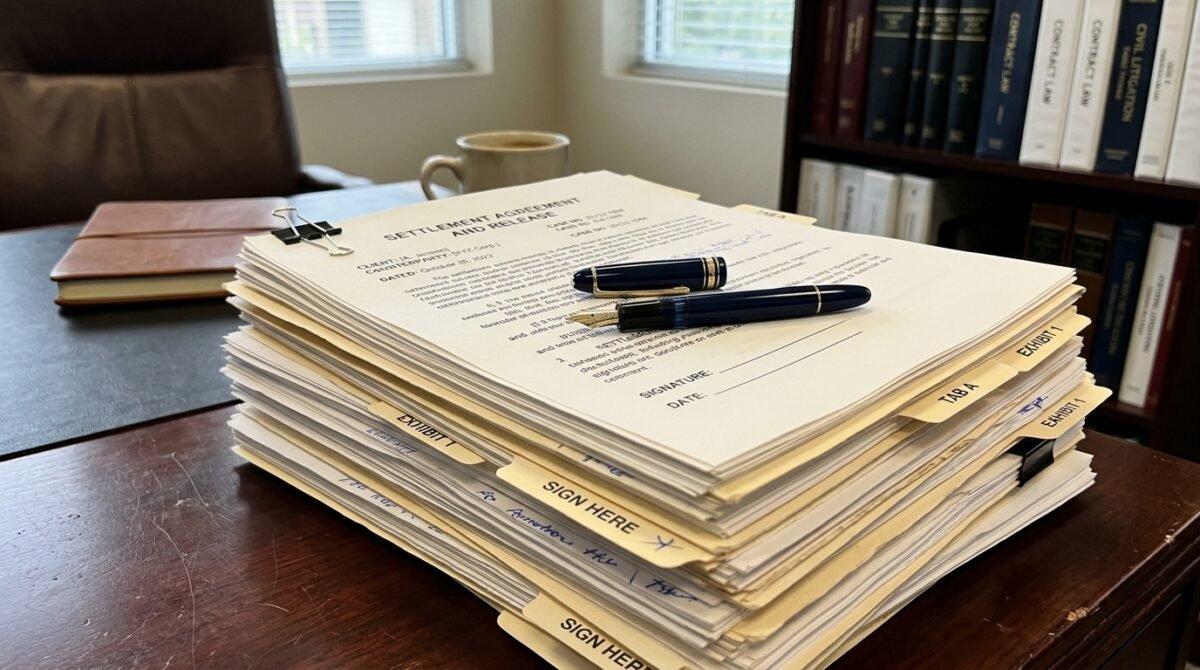
The following morning, I received a legal notice—or at least, a very strongly worded email from my father’s attorney—demanding that I return the ‘proceeds’ of the sale. They were claiming that because the piano had been in their house, the insurance policy and the general household asset pool included it. It was a laughable claim, but it showed how far they were willing to go.
I contacted my own lawyer, a family friend who had helped with the estate planning when my mother passed. She walked me through the documents. The piano had been explicitly willed to me in my mother’s final testament. My father’s attempt to claim ownership of the sale was legally baseless, but it was an attempt to scare me into submission.
| Claim | Legal Standing | The Verdict |
|---|---|---|
| House Insurance | Household items coverage | Does not supersede a specific will |
| Shared Property | Marital asset claim | Piano was pre-marital/inherited asset |
| Sale Proceeds | Claiming ownership | Funds are protected by trust law |
The legal threats felt like a desperate grasp at control. I spent hours reading over the paperwork, realizing that my mother had been far more thorough than my father had realized. She had anticipated that someone might try to misappropriate her things, and she had ironclad protections in place. I felt a surge of gratitude for her foresight.
I sent a firm response back, attaching the relevant sections of the will and the bill of sale. I made it clear that any further legal action would be met with a countersuit for harassment. It was a bold move, but I had the truth on my side. The silence that followed was deafening, but it was the kind of silence that precedes a long-term shift in dynamics.
I realized then that this wasn’t just about a piano anymore. It was about whether I was going to be an adult who stood up for herself or a child who yielded to every unreasonable demand. The financial aspect was the final piece of the puzzle; by securing the money, I was also securing my independence. It was time to start planning my exit from this house.
Reddit Weighs In

I needed perspective, so I posted the story to a popular subreddit dedicated to family conflicts. I didn’t expect much, but within an hour, the post had thousands of views. The community was incredibly supportive, with many people sharing their own stories of step-parents trying to rewrite history.
“NTA. Your stepmother is an absolute nightmare for even suggesting painting a Steinway. That is a crime against music and history. You did the right thing. Move out as soon as you can, because this will only get worse.”
— u/PianoLover88 (Top Comment, 32.4k upvotes)
There were some dissenting voices, of course. A few people argued that I should have discussed it with my father more openly, or that I owed it to the ‘household’ to keep the peace. But the overwhelming majority were on my side. Reading the comments helped me realize that I wasn’t crazy for being upset. The gaslighting I had been experiencing was real, and it was classic behavior for someone like Clara.
“I’m an interior designer, and if a client asked me to paint a Steinway neon pink, I’d fire them on the spot. You saved a piece of art from a Philistine. Never apologize for protecting your inheritance.”
— u/DesignExpert (15.2k upvotes)
The sense of validation was overwhelming. It wasn’t about the money or the piano; it was about the principle of the thing. People shared tips on how to handle the legal threats, how to set boundaries with toxic step-parents, and how to find peace after a family fallout. It was the community I hadn’t realized I needed.
I spent the afternoon reading through the responses, feeling a weight lift off my shoulders. I wasn’t the villain; I was the hero of my own story. I had saved my mother’s legacy, and I had done it on my own terms. The drama wasn’t over, but I felt equipped to handle whatever came next.
I updated my post, thanking everyone for their advice. It was a small gesture, but it felt important. The internet, for all its flaws, had provided me with the clarity I couldn’t find within my own walls. I was ready to face my father and Clara again, not as a victim, but as a person with clear, defined boundaries.
The Final Moving Out Day

Deciding to move out was the easiest decision I had ever made. I had been saving for an apartment for a while, and the sale of the piano gave me the extra cushion I needed to put a down payment on a place of my own. I packed my bags, leaving behind the ‘modern’ furniture that Clara had so lovingly curated.
The day I moved out, the house was tense. My father was at work, and Clara was in the living room, reading a book. She didn’t look up as I dragged my suitcases to the door. I paused at the threshold, looking back at the house that had been my home for so long. It didn’t look like mine anymore, and I realized I didn’t want it to.
I told her I was leaving. She finally looked up, her expression unreadable. She didn’t offer to help, and she didn’t ask where I was going. She just said, ‘Good luck,’ in a voice that was devoid of any sincerity. It was the perfect ending to our relationship—cold, detached, and final.
I walked out to my car, the crisp air hitting my face. I felt a sense of freedom that I hadn’t felt since my mother died. The weight of the house, the expectation of being ‘the kid,’ and the pressure to conform were all gone. I was starting fresh, and I had the memory of my mother to guide me.
As I drove away, I didn’t look back. I thought about the piano, now in the hands of someone who would cherish it, someone who would play it and keep it in tune. That was all I had ever wanted. My mother’s legacy was safe, and I was free to build my own.
Reflecting on the Aftermath

It has been six months since I moved out. I have a small apartment with a beautiful view and enough space for a digital keyboard—not a Steinway, but it’s mine. I still visit my father on holidays, but we don’t talk about the piano, and we don’t talk about Clara’s decorating choices. Our relationship is strained, but it is civil, which is more than I thought possible.
Clara and I are strictly low-contact. We exchange polite messages on birthdays and holidays, but that’s it. It’s better this way. I’ve realized that some people just don’t have the capacity to respect others, and the best way to handle that is to simply step away. I’m not angry anymore; I’m just indifferent, which is a much healthier place to be.
I learned a lot about myself through this ordeal. I learned that I can stand up for what I believe in, even when it’s uncomfortable. I learned that my boundaries are mine to set, and I don’t need anyone else’s permission to enforce them. And most importantly, I learned that my mother’s love wasn’t in the piano; it was in the values she instilled in me.
Every time I sit down to play, I think of her. I don’t feel the need to preserve an object anymore. I preserve her memory through my actions, through my integrity, and through the way I treat the people in my life. The piano was a bridge, but I have crossed it, and I am standing on the other side, stronger than before.
If you find yourself in a similar situation, don’t be afraid to take a stand. Whether it’s an heirloom, a boundary, or a dream, it’s yours to protect. Don’t let someone else’s ‘aesthetic’ or entitlement dictate your life. You are the author of your own story, and you have every right to protect the chapters that matter most.
A Message to the Community

I wanted to write this final section to thank everyone who commented on my post. The support I received was instrumental in helping me make the right decision. I know there are others out there dealing with similar situations—step-parents who don’t respect boundaries, or family members who think they have a say in your inheritance. You are not alone, and you are not wrong for wanting to protect what is yours.
Remember that you don’t owe anyone an explanation for why you choose to protect your peace. If someone is pushing you to do something that violates your values or feels wrong, trust your gut. Your feelings are valid, and your boundaries are important. Don’t let anyone make you feel small or unreasonable for standing up for yourself.
I’ve received so many messages from people asking how I’m doing, and I’m happy to say that I’m doing great. I’m happy, I’m safe, and I’m at peace. The drama of the past is behind me, and I’m looking forward to the future. I hope my story serves as a reminder that it’s never too late to take control of your life.
Thank you for listening, and thank you for being a part of this journey. I’m closing this chapter of my life with a heart full of gratitude and a mind full of clarity. If you’re going through a tough time right now, know that it gets better. Keep holding your head high and stay true to who you are.
What about you? Have you ever had to choose between your family’s expectations and your own values? I’d love to hear your thoughts and experiences in the comments below. Let’s keep the conversation going.
Conclusion
The story of the neon pink piano was never really about the paint. It was about the collision of two worlds: one that prioritized legacy and connection, and one that prioritized surface-level control. By selling the piano, I didn’t just save an object; I reclaimed my autonomy and set a boundary that defined the rest of my relationship with my father and his new wife. It was a painful, messy, and necessary process that forced me to grow into the person I am today.
Reflecting on it now, the outcome was the best possible version. The piano found a home where it is loved, and I found a home where I am respected. Sometimes, the most radical act of self-care is knowing when to pack your bags and walk away from a space that no longer reflects who you are. We must always remember that our pasts are ours to curate, not someone else’s to redecorate.
What is your take on this dilemma? Should I have tried to negotiate further with my father, or was my ‘heist’ the only logical way to ensure the heirloom’s survival? Share your thoughts below, and let’s discuss the ethics of inheritance and boundaries in blended families.
What's your verdict on this dilemma?
Vote below to contribute to the official community consensus.

Have a Dilemma Keeping You Up at Night?
Share your real-life feud, wedding chaos, or relationship crossroads anonymously with our editorial team.
What do you think ?
0 Comments🛡️ Comments are moderated to protect community integrity. Your comment will appear once approved by the editorial team.