
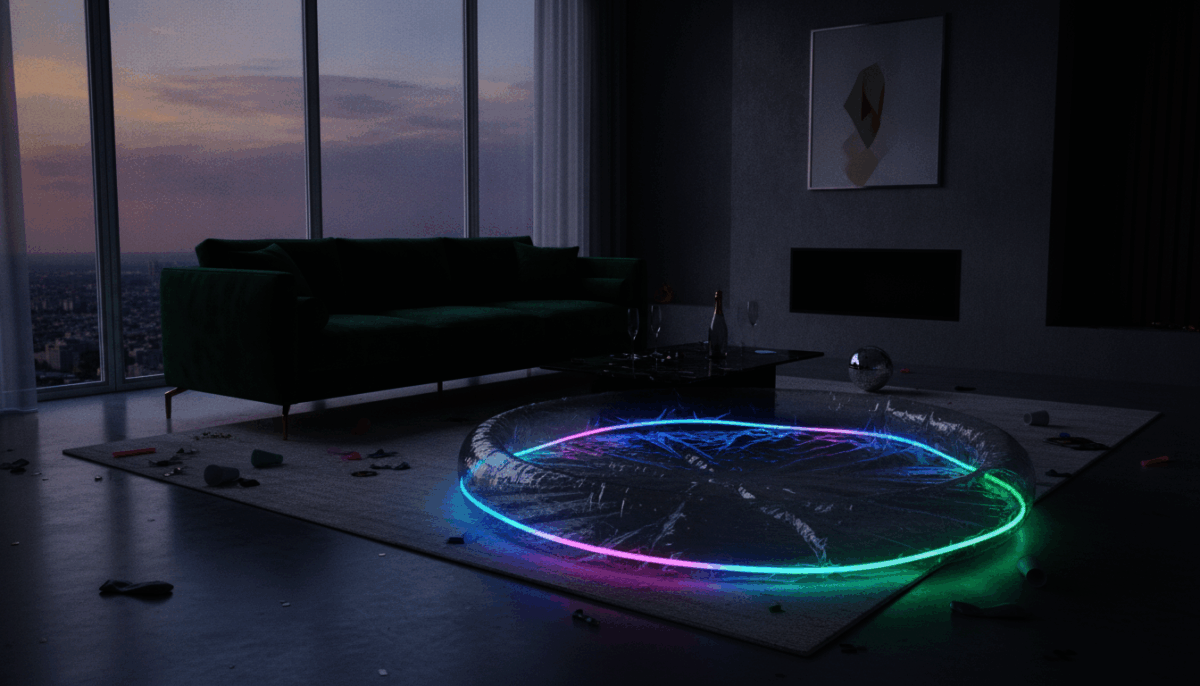
Living with roommates is often described as a trial by fire, a delicate dance of chore charts, shared fridge space, and the unspoken agreement that your belongings are off-limits. I thought I had mastered this art. My apartment in the city was my sanctuary, anchored by a custom, deep-emerald velvet sofa that had been in my family for three generations. It wasn’t just furniture; it was a masterpiece of mid-century design, reupholstered at significant personal cost, and the centerpiece of my life.
My roommate, let’s call him ‘Kyle,’ was always the ‘energetic’ type. We had been living together for eighteen months, a period marked by his increasing penchant for high-decibel gatherings and a complete disregard for communal space. I tolerated the late-night music and the occasional stray beer can, assuming it was the price of a decent rent split in a city where square footage is gold. I was wrong. The line wasn’t just crossed; it was erased with a permanent marker.
The incident occurred while I was away for a three-day work conference. I returned home on a Sunday evening, exhausted and anticipating the comfort of my velvet sofa. Instead, I walked into a living room that had been transformed into a neon-lit, sticky, suffocating ‘rave pit’ constructed of cheap inflatable plastic tubes and strobe lights. The sofa was gone. Not moved to a spare room, not tucked away in the closet—it was sitting on the curb in the rain, three blocks away, already being picked apart by scavengers.
When I confronted Kyle, his reaction wasn’t one of remorse. It was one of genuine confusion, as if I were the one who had committed a social faux pas by valuing a piece of history over his ‘visionary’ party space. That moment, standing amidst the ruins of my living room, was the moment I stopped being a lenient roommate and started being a plaintiff. This isn’t just about a sofa; it’s about the audacity of entitlement and the cold, hard reality of the law.
The Neon Nightmare in the Living Room

I unlocked the door, my bags heavy in my hands, expecting the familiar sight of my emerald sofa bathed in the soft glow of my floor lamp. Instead, I was met with a jarring blast of synth-pop and a strobing light that hit my retinas like a physical blow. The living room had been completely gutted. In place of my curated furniture sat a massive, pulsating inflatable structure that smelled faintly of cheap vinyl and sweat. It looked like a neon-colored fungus had bloomed in the center of our apartment.
I dropped my bags, the sound swallowed by the thrumming bass. Kyle emerged from the kitchen, wearing a bucket hat and a grin that suggested he was riding a wave of chemical-induced euphoria. He looked at me, blinked, and turned down the music with a casual flick of his wrist. ‘Oh, hey! You’re back early. I was just about to inflate the side pods for the pre-game tonight. The rave pit is a total vibe, right? You should try it.’
My eyes darted around the room. The shelves were cleared of books, my side tables were stacked precariously in the hallway, and the center of the room was entirely dominated by this inflatable monstrosity. I felt a cold, sharp spike of panic in my chest. ‘Kyle,’ I said, my voice dangerously steady. ‘Where is my sofa?’
He gestured vaguely toward the window with a plastic cup. ‘Oh, that old thing? It was such a vibe-killer. It took up way too much space, and the velvet just looked dated, man. It’s on the curb. Someone probably picked it up already. You’re welcome, by the way—I cleared the space so we can host legitimate events now.’
“You threw out a three-thousand-dollar custom piece of furniture because you wanted to inflate a glorified bouncy castle for your amateur DJ sessions?”
— Me, realizing the full extent of the betrayal.
The silence that followed was heavy and suffocating. Kyle’s expression shifted from smug satisfaction to mild annoyance, as if my inability to appreciate his ‘design intervention’ was a personal failing. He shrugged, turning back to his laptop to adjust his equalizer settings. ‘It’s just furniture, dude. Don’t be so material. The space is much better this way. Honestly, you should thank me for making the place feel more modern.’
The Curb, The Rain, and The Realization

I didn’t wait for him to finish. I bolted out the door and sprinted down the stairs, my heart hammering against my ribs. I reached the street, scanning the sidewalk in the drizzling rain. The neighborhood was quiet, the evening air cool and damp. There, near the corner, lay the remains of my family’s legacy. The velvet, once a deep, rich emerald, was soaked through, matted with mud, and already losing its shape. A stray dog was sniffing at the mahogany legs, and a group of teenagers was laughing near the alley, pointing at the discarded ruin.
I approached it like a mourner at a funeral. I touched the fabric—it was cold, slick with grime, and utterly ruined. The cost to restore it alone would have been thousands, if it were even possible. The realization hit me then: this wasn’t an accident. It was an act of complete, unadulterated disrespect for my life and my boundaries. He hadn’t asked. He hadn’t warned me. He had simply decided that my history was less valuable than his temporary amusement.
I stood there for a long time, the rain soaking into my hair, while the weight of the situation settled in. I thought about the hours I had spent researching the original mid-century designer, the money I had saved to have the upholstery restored to match the original patterns, and the memories of my grandmother sitting in that exact chair, reading to me. It was a tangible piece of my past, and it was now garbage on the side of a city street.
When I finally walked back into the apartment, the bass was thumping again. Kyle didn’t even look up as I entered. He was busy chatting with someone on his phone, likely bragging about his ‘spacious new setup.’ I didn’t say a word. I went to my room, locked the door, and opened my laptop. I didn’t need to scream; I needed to document. I needed to build a case.
“I took photos of the curb, the rain-soaked wood, and the neighbors who saw him dragging it out. I started documenting every interaction from that point on. I wasn’t going to get angry—I was going to get a lawyer.”
— My internal monologue that night.
I spent the next four hours creating a folder of evidence. Receipts for the restoration, photos of the room before and after, and a timeline of the events. I knew that small claims court was my best bet. The limit in my state was high enough to cover the value of the sofa, and I had every intention of making Kyle pay for every single cent of his ‘vibe-check’ decision.
The Digital Paper Trail
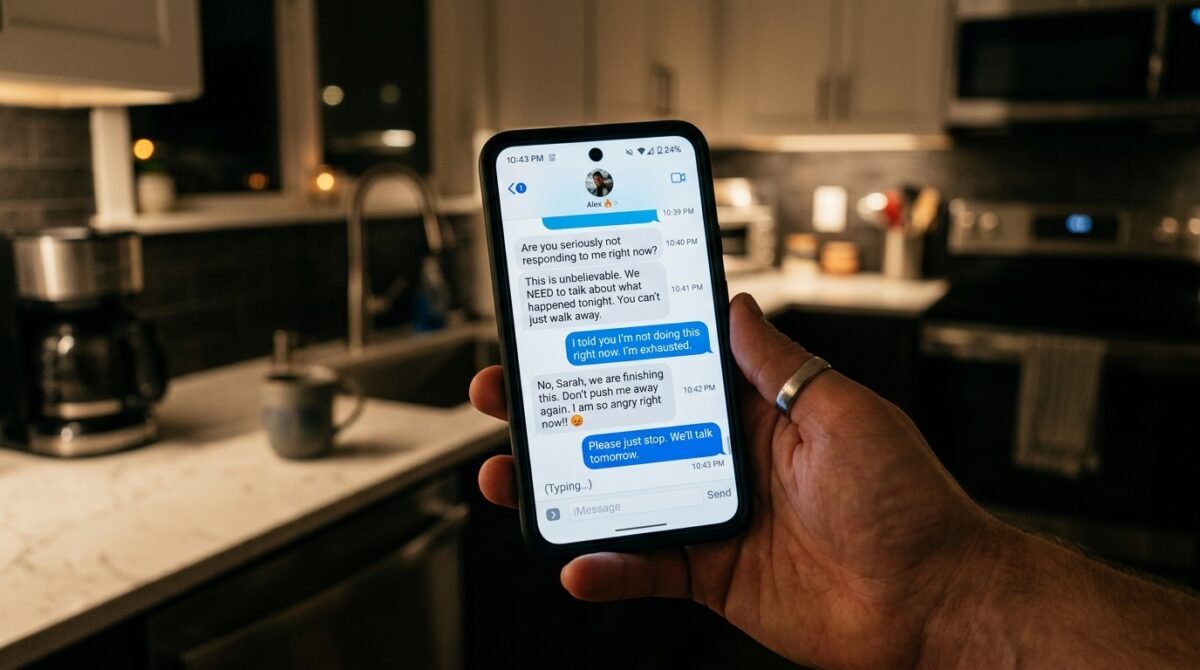
The next morning, the apartment felt like a battlefield. Kyle was in the kitchen, blending a protein shake, his neon rave pit still dominating the living area. He glanced at me as I walked past, his demeanor still annoyingly casual. ‘Morning. Are we good? You seemed pretty stressed last night. It’s just stuff, man. Let’s move past it.’
I didn’t stop. I walked directly to the sink, poured a glass of water, and turned to look him in the eye. ‘Kyle, we aren’t moving past anything. I have the receipts for the sofa. I have the appraisal from when I had it insured for its heritage value. You destroyed three thousand dollars worth of property without my consent. You will be paying for it.’
His jaw dropped. He actually laughed—a short, incredulous sound. ‘You’re joking. You’re going to sue me over a couch? We’re roommates, dude! That’s so incredibly toxic. I thought we were friends. I did us both a favor by getting rid of that dusty old relic. You should be paying me for the space I opened up.’
“Kyle, you don’t get to decide what’s ‘dusty’ when it belongs to me. You crossed a line. This isn’t about friendship anymore. It’s about property damage.”
— My response during the kitchen confrontation.
I went back to my room and sent him a formal email, outlining the replacement value of the sofa and requesting payment within seven days. I wanted a paper trail. I wanted proof that I had attempted to resolve this amicably before escalating. His response arrived within twenty minutes, and it was exactly as inflammatory as I expected.
“LOL. You are literally insane. Go ahead, sue me. You’ll be laughed out of court. I have freedom of expression in my own home, and that includes redecorating. You didn’t pay for the whole apartment, I have a say too! Good luck finding a judge who cares about a trashy old couch.”
— Kyle, via email, 10:42 AM.
I screenshotted the email. It was gold. He was admitting to destroying the property, albeit in a dismissive way. I didn’t respond to the text. I didn’t need to. I had everything I needed to show the court that this wasn’t a misunderstanding; it was a willful, malicious act of destruction driven by sheer, unearned entitlement.
The Community Weighs In

That evening, I did something I rarely do: I posted the story to a popular subreddit dedicated to roommate disputes. I didn’t use names, but I laid out the facts in excruciating detail. The response was immediate and overwhelming. Within an hour, my inbox was flooded with support, advice, and outrage on my behalf. People were shocked—not just by the destruction of the sofa, but by the sheer, unmitigated gall of someone thinking they could unilaterally dispose of a housemate’s property.
The community was a mix of legal advice and shared horror stories. Many users who worked in property law or small claims court chimed in with specific steps I should take. Others just wanted to express their disbelief. It was cathartic to see so many strangers validate my anger. It reminded me that while Kyle might be delusional, the rest of the world still understood basic human decency and the concept of personal property.
“This is absolutely insane. Please tell me you’ve already started the filing process. This isn’t just ‘redecorating’; this is criminal mischief. Document everything, get a police report if you can, and don’t let him gaslight you into thinking this is about ‘the vibe’.”
— u/LegalEagle88 (Top Comment, 18.2k upvotes)
Another user provided a sobering perspective that helped me focus my resolve. They pointed out that roommates who feel entitled to destroy your property often have a history of boundary-crossing behavior that goes much deeper. They advised me to look for other ‘small’ violations I might have been ignoring. As I sat in my room, listening to Kyle’s bass thumping in the living room, I realized they were right. He had been stealing my groceries, using my expensive skincare, and ‘borrowing’ my clothes for months. The sofa was just the final, unignorable straw.
“It’s not just the couch. It’s the fact that he thinks your space belongs to him. Check your other stuff. He’s been testing your boundaries for a long time, and you’ve been letting him. This is your chance to draw a hard line that he won’t ever be able to cross again.”
— u/BoundariesMatter (12.4k upvotes)
The thread became a rallying point. People were invested in the outcome, asking for updates and cheering me on. I felt a sense of clarity I hadn’t possessed when I walked through the door two days prior. The court wasn’t just a way to get my money back; it was a way to reclaim my autonomy. I was finished being the ‘chill roommate’ who allowed himself to be stepped on.
The Certified Letter and the Changing Tide

I didn’t wait for the seven days to pass. I went to the local courthouse, filed the paperwork for the small claims lawsuit, and hired a process server to deliver the notice to Kyle. There is a particular, icy satisfaction in watching a person realize that their ‘LOL’ text message has real-world, legal consequences. When the process server arrived at our door, Kyle was in the middle of one of his ‘rave prep’ sessions.
The atmosphere shifted instantly. The music stopped. I heard the muffled sound of a conversation, then the door closing, and then a heavy, pregnant silence. Kyle walked back into the living room, his face pale. He was holding the envelope as if it were a bomb. He looked at me, his bravado completely evaporated. ‘You… you actually went to the court? Over a couch?’
I didn’t smile. I didn’t gloat. I kept my voice perfectly flat. ‘I told you I was serious, Kyle. The court date is in three weeks. You should probably start looking for a lawyer, though I don’t think you’ll find one who will tell you that destroying property is protected by your ‘vibe’ requirement.’
“I don’t have the money for this, man! Can’t we just talk about this? I’ll buy you a new couch—well, a beanbag or something. Why does it have to be a legal thing?”
— Kyle, clearly panicking.
I walked to the kitchen and grabbed a glass of water. ‘A beanbag? You think a custom, family-heirloom velvet sofa is worth a beanbag? No, Kyle. We are way past talking. We are past beanbags. You destroyed property worth three thousand dollars, and that is exactly what you are going to pay. Maybe even more, once the court costs are added on.’
He slumped into a kitchen chair, his phone buzzing with notifications from his ‘rave’ friends. For the first time, I saw him not as a loud, annoying roommate, but as a terrified, entitled child who had finally met a consequence he couldn’t ignore. It was a pathetic sight, and it confirmed that my decision was the right one. He hadn’t respected me for eighteen months; he was only respecting me now because he was afraid of losing money.
The Sunday Silence and the Deflating Vibe

The next few days were the quietest I had ever known in that apartment. The rave pit was still there, a deflated, sad-looking pile of plastic, but the music had stopped. Kyle was constantly on his phone, likely calling his parents or trying to crowdsource legal advice from his equally clueless friends. He avoided me entirely. If we happened to be in the kitchen at the same time, he would leave, his eyes fixed on the floor.
I took the opportunity to start packing. I had already decided that no matter the outcome of the court case, I was moving out. The trust was entirely destroyed. I couldn’t live in a place where I had to worry about my belongings being thrown out, used, or abused. I began researching new places, looking for a studio where I could finally have total control over my environment.
I also took the time to reach out to my landlord. I sent a formal email detailing the destruction of the sofa and the fact that I was pursuing legal action. I wanted to make sure the landlord knew exactly what was happening in the apartment, in case Kyle tried to spin a story about me being the ‘problematic’ one. The landlord’s response was swift and supportive; he was horrified by the story and confirmed that Kyle’s ‘rave’ activities were a violation of the lease terms.
“I am shocked to hear about the destruction of your property. I will be issuing a warning to Kyle regarding the noise and the unauthorized use of communal space. Please let me know if you need any assistance with the lease termination process.”
— Our Landlord, via email.
The dynamic had completely flipped. The person who had once been the ‘master of the house’ was now a liability, a tenant on thin ice. It was a powerful reminder of how quickly things can change when you stop accepting bad behavior. I felt a surge of confidence. I wasn’t just surviving the situation; I was navigating it with precision and purpose.
The Day of Judgment
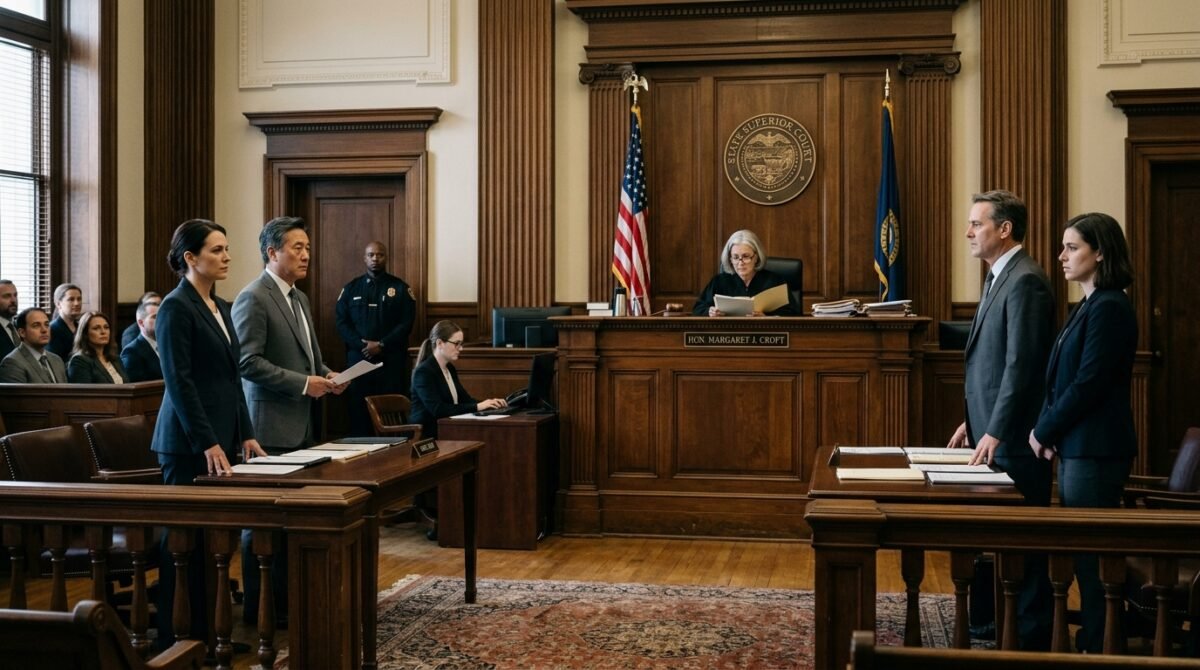
The morning of the court date, the city was gray and drizzling, mirroring the day I found my sofa on the curb. I dressed in professional attire, feeling more like a surgeon about to perform an operation than a plaintiff in small claims court. Kyle showed up looking disheveled, clearly having pulled an all-nighter trying to prepare some sort of defense. He looked smaller, less confident, and significantly more anxious than the guy who had thrown my sofa out for a rave.
The judge was a woman with a no-nonsense demeanor who looked like she had seen every bizarre roommate dispute in the book. She listened to my opening statement, reviewed the receipts and the photographic evidence, and then turned her gaze to Kyle. When he tried to argue that the sofa was ‘taking up space’ and ‘didn’t fit the aesthetic,’ she didn’t even let him finish. She stopped him with a sharp wave of her hand.
“Mr. Kyle, unless the lease specifically grants you the right to dispose of your roommate’s personal property, you have no legal basis for your actions. You destroyed property that did not belong to you. That is not a ‘vibe’ issue. That is a liability issue.”
— The presiding Judge, cutting through his excuses.
The hearing lasted less than twenty minutes. The judge didn’t care about the rave, the aesthetic, or his ‘vision.’ She cared about the facts: the sofa was mine, he threw it away without permission, and he owed the value. She ordered him to pay the full replacement cost, plus court fees, within thirty days. If he failed, the judgment would be referred to a collection agency, which would destroy his credit.
Kyle didn’t say a word as the judge delivered the verdict. He just stared at the floor, his face drained of all color. I walked out of the courtroom, my head held high. I had won. But more importantly, I had proven to myself that I could stand my ground, that I could handle the uncomfortable, the confrontational, and the difficult, and come out on the other side with my integrity—and my finances—intact.
The Aftermath of the Verdict

When we got back to the apartment, the atmosphere was thick with tension. Kyle didn’t go to his room; he went to the kitchen and sat at the table, his head in his hands. I went to my room and closed the door, finishing my final load of packing. I had already signed a new lease on a quiet, beautiful studio, and I was planning to move out in two days. The victory in court was the final seal on the end of my time there.
Kyle eventually knocked on my door. I opened it, keeping the door only partially ajar. He looked up at me, his eyes red. ‘Look,’ he said, his voice cracking. ‘I know I screwed up. I was just… I was so caught up in the party scene, I lost touch with reality. I didn’t think you’d actually do it. I’m sorry.’
“I don’t need your apology, Kyle. I need the money. And I need to get out of here. We aren’t friends, and I don’t think we ever really were. You aren’t sorry for what you did; you’re sorry you got caught and have to pay for it.”
— My parting words to my former roommate.
He didn’t try to argue. He didn’t try to make an excuse. He just nodded and walked away. It was the most honest interaction we had ever had. For the first time, he wasn’t trying to manipulate me, and I wasn’t trying to appease him. The air was finally clear, even if the apartment was still full of his inflatable junk.
I moved out two days later. The satisfaction of walking out of that apartment for the last time, knowing that I had handled everything with absolute, unshakable resolve, was worth more than the money I recovered. I left a note on the table with my forwarding address for the payment. It was over. I had reclaimed my life, my dignity, and my peace of mind.
Life After the Rave

Living in my new studio has been a revelation. Every piece of furniture, every item on the shelves, is there because I chose it. There is no one to ask, no one to negotiate with, and no one to ruin my things. I have reclaimed my sanctuary. I still think about the sofa sometimes, the way it felt when I sat in it, but I don’t feel the same sharp, stabbing pain I did that day in the rain.
I’ve learned a lot from this experience. I’ve learned that I am capable of standing up for myself in ways I never thought possible. I’ve learned that ‘chill’ is often just a synonym for ‘passive,’ and that passivity can be a dangerous quality to have when living with the wrong people. I’ve learned to trust my gut—when something feels off, it usually is.
My friends have noticed the change in me. They say I’m more confident, more decisive. I don’t let people walk over me anymore, whether it’s in my personal life or my professional one. The court case wasn’t just a legal battle; it was a character-defining moment. I faced a bully, I documented his actions, and I held him accountable. It’s a lesson that stays with you long after the money is paid.
“You didn’t just win a lawsuit. You grew up. You showed everyone that you have standards, and that you’re willing to fight for them. That’s a level of strength that a lot of people never reach.”
— A friend after hearing the full story.
I still check in on the Reddit thread occasionally. People are still posting their own stories, using mine as a reference point for when to draw their own lines. It’s amazing to see how one person’s experience can help others feel empowered. I’m glad I shared it. If it saves even one person from the same kind of betrayal, then it was all worth it.
The Lessons of the Living Room

If I could give advice to anyone currently living through a nightmare roommate situation, it would be this: document everything. Emails, texts, photos, receipts—build a fortress of facts. Don’t rely on verbal agreements; get everything in writing. And above all, don’t be afraid of the confrontation. The discomfort of a legal battle is temporary, but the damage of allowing someone to treat you like a doormat is long-lasting.
I look back at the photos of the rave pit now and I don’t even get angry. I just shake my head at the absurdity of it all. It feels like a lifetime ago. I am in a different space now, both physically and emotionally. I’ve learned to value my own peace above anything else, and I’ve learned that the right people—the people you should be living with—will never make you feel like you have to sacrifice your life to make room for theirs.
Sometimes I miss the sofa. I’ll admit that. But then I remember why I fought for it, and the fight itself becomes the memory I value. It wasn’t about the velvet. It was about the principle. And the principle is that I am the curator of my own life. I decide what stays, what goes, and who is allowed to share the space I’ve built.
“Boundaries aren’t walls you build to keep people out. They are the clear lines you draw to keep your own sanity in. Once I started drawing them, everything in my life began to fall into place.”
— My closing thoughts on the experience.
I’m finally at peace. The money arrived, the move was successful, and my new life is exactly what I needed it to be. I am no longer the victim of a roommate’s whims. I am the architect of my own home, and that is a victory that money can’t buy.
Conclusion
The story of the velvet sofa and the inflatable rave pit is more than just a tale of petty revenge or a viral internet drama. It is a fundamental lesson in the importance of self-respect, the power of documentation, and the necessity of boundaries in shared living arrangements. Too often, we allow ourselves to be steamrolled by the ‘energetic’ or the ‘entitled’ in the name of keeping the peace, only to find that the peace we were keeping was never truly ours to begin with.
By choosing to pursue legal action, the protagonist didn’t just recover a financial loss; they regained a sense of agency that had been systematically eroded. The court’s judgment served as a definitive affirmation: your boundaries matter, your property is sacred, and you are not obligated to tolerate the intolerable. It is a powerful reminder that we always have more recourse than we realize, provided we are willing to step out of the shadows of conflict and into the light of accountability.
What about you? Have you ever had a roommate who pushed things too far? How did you handle the situation, and what would you do differently today? Share your thoughts, your own roommate horror stories, or your questions about the legal process in the comments below. Let’s start a conversation about reclaiming our space and our sanity.
What's your verdict on this dilemma?
Vote below to contribute to the official community consensus.

Have a Dilemma Keeping You Up at Night?
Share your real-life feud, wedding chaos, or relationship crossroads anonymously with our editorial team.
What do you think ?
0 Comments🛡️ Comments are moderated to protect community integrity. Your comment will appear once approved by the editorial team.