

Friendship is often described as a sacred bond, one built on mutual respect, shared memories, and an unspoken code of conduct. However, that bond is rarely tested more severely than when money, greed, and a sense of unearned entitlement enter the equation. We’ve all been there—the group dinner where someone orders the most expensive item on the menu, only to suggest the classic ‘split the bill evenly’ maneuver at the end of the night. Usually, we laugh it off, pay the extra twenty dollars, and move on. But what happens when the disparity isn’t just twenty dollars, but hundreds of dollars?
My story begins with a birthday celebration that should have been a joyous occasion. Sarah, a friend I’ve known since college, decided she wanted an upscale experience at one of the city’s most exclusive seafood bistros. The arrangement was simple: we were a group of four, and we all agreed to keep things relatively moderate given that not everyone was in the same financial bracket. Or so I thought.
The evening started with laughter and cocktails, but it took a sharp turn the moment the menu arrived. Sarah, whose financial situation I knew to be precarious at best, suddenly developed an appetite for the most extravagant offerings on the list. I watched, initially with curiosity and then with growing alarm, as she proceeded to order items without a second glance at the prices, her eyes dancing with the excitement of an ‘all-expenses-paid’ fantasy that she had unilaterally decided I would be financing.
The moral dilemma here isn’t just about the money; it’s about the audacity of assuming that your desires should be subsidized by your friends. It’s about the breach of trust that occurs when someone decides to weaponize a social custom—splitting the check—to hide their own reckless spending. As the night unfolded, I realized that I wasn’t just paying for a meal; I was being audited on my own boundaries. This is the story of how a salad, a side of caviar, and a walk-out changed my friendship forever.
The Setup: A Birthday Dinner Under False Pretenses

The reservation was for 8:00 PM at ‘The Gilded Anchor,’ a place where the waiters wear white gloves and the prices on the menu aren’t even listed in whole numbers. Sarah had been planning this for weeks, constantly dropping hints in our group chat about how she ‘deserved’ a night of luxury after a stressful month at work. We all agreed, thinking it would be a nice way to celebrate her turn around the sun. I remember sending a quick text earlier that day to confirm we were keeping it casual, just a nice meal and some drinks.
When we arrived, the atmosphere was thick with the scent of expensive perfume and ocean spray. We were seated at a circular table that felt intimate, perfect for conversation. Sarah arrived fashionably late, looking like a million dollars, and immediately began steering the conversation toward the wine list. I could tell she was already buzzing with anticipation, perhaps a little too much. She insisted on ordering a bottle of vintage champagne before we even looked at the appetizers, dismissing my hesitation with a wave of her hand.
“Don’t worry about the cost tonight, guys! We’re celebrating! Let’s just order whatever we want and split it at the end. It’s so much easier than doing individual calculations, don’t you think?”
— Sarah, initiating the trap
I felt a knot of anxiety form in my stomach. ‘Splitting’ sounded simple, but in my experience, it was usually a code word for ‘I plan on spending more than the rest of you.’ I looked over at Mark and Elena, our other two companions for the evening, but they seemed caught up in the celebratory mood and didn’t pick up on the subtle warning signs. I tried to suggest that we look at the menu thoroughly, but Sarah was already signaling the waiter for another round of appetizers.
The waiter arrived with a flourish, and Sarah didn’t even open the main menu. She pointed directly to the most expensive item on the appetizer section: the Royal Osetra Caviar, accompanied by blinis and crème fraîche. It was listed at $250. My heart sank. That one dish cost more than my entire projected budget for the evening, including my main course and a few cocktails. I looked at the price again, blinking, hoping I had misread it.
I tried to intervene, but the momentum of the evening was against me. Sarah was laughing, regaling us with stories from her office, completely oblivious to the sudden tension that had gripped my posture. She ordered the caviar for the table, but it was clear that she was the only one who really wanted it. When the plate arrived, she monopolized it, piling thick mounds of the black pearls onto her blinis while the rest of us stared at our menus, feeling increasingly uncomfortable.
The Escalation: When the Appetizers Cost More Than the Entrees

The caviar was just the beginning. By the time we reached the main course, Sarah was already three glasses of champagne deep and ordering the ‘Chef’s Special’ seafood tower, which was priced at $300. Again, she acted as if it was a group treat, encouraging us all to ‘dig in,’ even though the platter was clearly intended for one person. My own meal, a modest garden salad and a side of roasted vegetables, sat there feeling like an indictment of my own frugality.
I watched as Sarah consumed the food with a sense of entitlement that I had never witnessed before. She wasn’t just eating; she was performing. She would take a bite, sigh in ecstasy, and then look at us, expecting some sort of validation. ‘Isn’t this incredible?’ she would ask, and we would murmur our agreement, our voices tinged with the bitterness of knowing we were essentially being coerced into paying for her indulgence.
“Sarah, the seafood tower is a bit much, don’t you think? Maybe we should order individual plates instead? It would make the bill split much easier later.”
— My attempt to steer the ship back to reality
She rolled her eyes, a sharp, dismissive gesture that cut through the polite veneer of the table. ‘You are so obsessed with money,’ she laughed, looking to the others for support. ‘We’re here to have a good time. Live a little! It’s my birthday, after all. Stop being such a buzzkill.’
I felt my cheeks flush with heat. I wasn’t being a buzzkill; I was being responsible. I knew exactly what was going to happen when the bill arrived. It was a classic scenario: the person who spends the most is always the loudest advocate for splitting evenly. I realized that if I didn’t speak up now, I would be paying for her caviar, her champagne, and her seafood tower. The unfairness of it boiled in my veins.
The rest of the meal was a blur of forced pleasantries and internal monologue. I barely tasted my salad. I was too busy calculating the potential damage in my head. If the total bill came to $1,000, that meant $250 each. For a salad and a glass of water. The math was infuriating, but the lack of consideration was even worse. How could a friend knowingly put me in a position where I had to choose between being broke or being ‘rude’?
The Moment of Reckoning: The Check Arrives

The final act of our little tragedy began when the waiter placed the leather-bound check folder in the center of the table. It looked innocent enough, but I knew it held a monster. Sarah, still in high spirits, reached for it before anyone else could. She didn’t even open it to check the items; she simply pulled out her credit card and said, ‘I’ll put my card down, and you guys can Venmo me your share later.’
I didn’t wait for her to tell me the total. I opened the folder and took a look. The total was $985. My stomach did a somersault. I looked at the itemized list. $250 for caviar. $300 for the seafood tower. $150 for the vintage champagne. The rest was our actual food and drinks. It was a massive, lopsided figure that made my blood pressure spike.
I looked at Sarah, who was already chatting with the waiter about dessert options. I realized that she had no intention of calculating our actual shares. She expected us to split it four ways, no questions asked. She had effectively made a $600 purchase on my dime without asking. The audacity was breathtaking. I took a deep breath, trying to keep my voice steady as I spoke.
“Sarah, I’ve looked at the bill. It’s nearly a thousand dollars. My share for what I ordered is about $45. I’m not splitting this four ways, especially since I didn’t have any of the caviar or the seafood tower.”
— The moment the air left the room
The table went dead silent. The ambient noise of the restaurant seemed to fade away. Sarah stopped talking to the waiter and looked at me with an expression of pure, unadulterated shock. It wasn’t the shock of someone who realized they were wrong; it was the shock of a queen being told ‘no’ by a commoner. Her eyes narrowed, and the playful demeanor vanished, replaced by a cold, sharp glare.
‘You’re joking, right?’ she whispered, her voice tight with anger. ‘We’re all friends here. We agreed to split the bill. You’re really going to make a scene over a few dollars at my birthday dinner?’ The gaslighting started immediately. She was framing my request for fairness as an attack on our friendship.
The Walk-Out: Taking a Stand for My Wallet

I didn’t argue. I didn’t try to explain the math again. I knew that at this point, any further explanation would just be fuel for her fire. I pulled out my wallet, placed $50 in cash on the table—enough to cover my meal and a generous tip—and stood up. The physical act of standing felt like a release of years of pent-up pressure. The chair scraped against the hardwood floor, a sound that seemed deafening in the quiet room.
Sarah looked at the money on the table as if it were an insult. ‘Where do you think you’re going?’ she demanded, her voice rising to a volume that caused a few heads at nearby tables to turn. ‘You’re going to just walk out? After everything I’ve done for you? This is unbelievable. You’re such a pathetic, cheap person.’
I looked at her, really looked at her, and realized that I didn’t care what she thought anymore. The mask of our friendship had slipped, revealing the person underneath—someone who valued her own comfort over the well-being of those around her. I felt a strange sense of liberation. I wasn’t being cheap; I was setting a boundary that I should have set months ago.
“I’m paying for what I ordered, Sarah. If you wanted the caviar, that’s on you. You shouldn’t have assumed I would pay for it. Happy birthday.”
— My parting words
I walked away. I didn’t look back to see the expressions on Mark or Elena’s faces. I didn’t wait for her to scream at me. I walked through the crowded restaurant, my heart pounding in my chest, and stepped out into the cool night air. The city lights looked different, brighter, as if I had finally cleared the fog from my eyes. I had lost a ‘friend,’ but I had kept my integrity, and honestly? That was a trade I was willing to make.
As I walked to my car, my phone started buzzing. Notifications from the group chat were flooding in. I didn’t bother checking them yet. I knew exactly what they would say. I drove home in silence, the radio off, thinking about how often we sacrifice our own values to avoid a moment of social discomfort. Tonight, I had chosen the discomfort, and it felt remarkably good.
The Fallout: The Group Chat Explosion
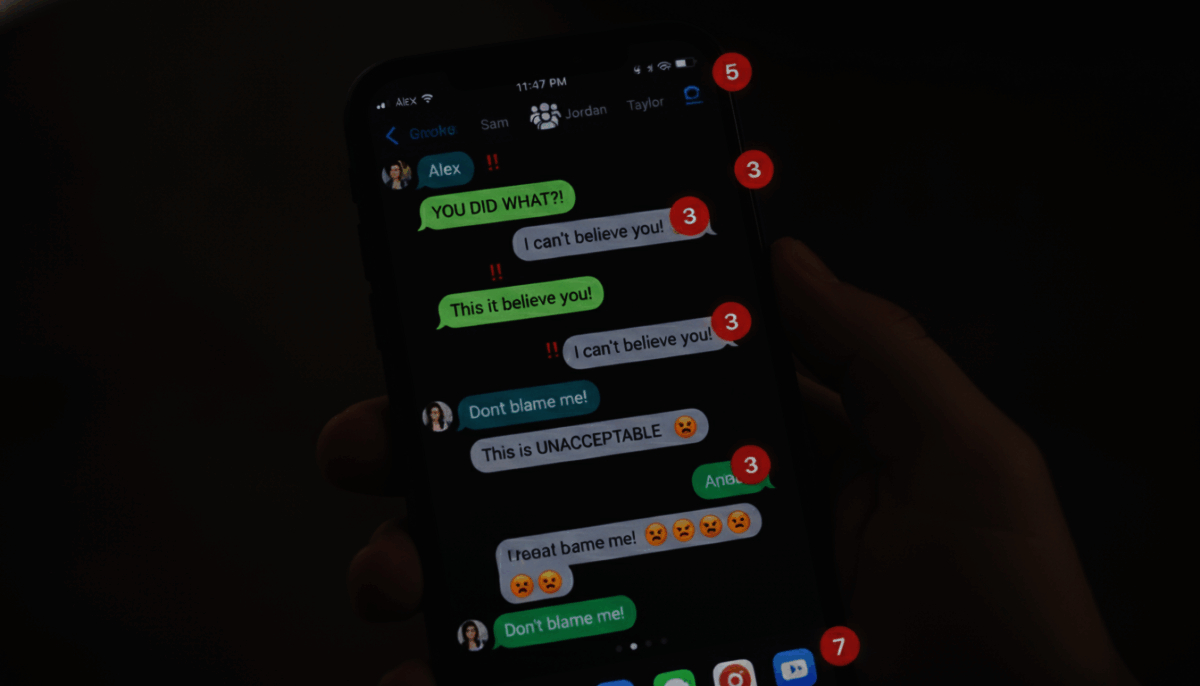
By the time I reached my apartment, my phone was practically vibrating off the coffee table. The group chat was on fire. Sarah was in full victim mode, painting me as a monster who ruined her birthday celebration over ‘a couple of bucks.’ Mark and Elena were caught in the middle, trying to play peacemaker but clearly shaken by the confrontation. The messages were coming in so fast I had to scroll up to see where it all began.
“I can’t believe she actually did that. On my birthday! I’m literally shaking right now. I had to cover the rest of the bill because of her selfishness. Who does that?!”
— Sarah in the group chat
“Guys, can we please calm down? This is getting out of hand. Maybe we can all just talk about this tomorrow when things have cooled off?”
— Mark, trying to mediate
I read through the messages with a detached sense of curiosity. It was fascinating to see how the narrative was being spun. Sarah wasn’t mentioning the caviar or the $985 total. She was just talking about the ‘insult’ of me leaving. She had conveniently omitted the fact that her ‘birthday treat’ was essentially a tax on her friends’ bank accounts. I decided to reply, but I didn’t want to engage in a back-and-forth battle.
I typed a simple, clear message. I laid out the facts: the cost of the items I didn’t order, the expectation of the even split, and my refusal to subsidize her lifestyle. I kept it professional and firm. I didn’t call her names; I just presented the math. As soon as I hit send, the chat went silent for a long moment. It was the digital equivalent of a room freezing over.
Then came the barrage. Sarah accused me of being a ‘gaslighter’ for pointing out the truth. She claimed that our friendship was ‘worth more than money’—an ironic statement considering she had just tried to squeeze $200 extra out of me for a plate of fish eggs. I realized then that there was no winning this conversation. She was committed to her version of reality, and I was committed to mine. I muted the chat and put my phone down.
Reddit’s Verdict: The Internet Weighs In
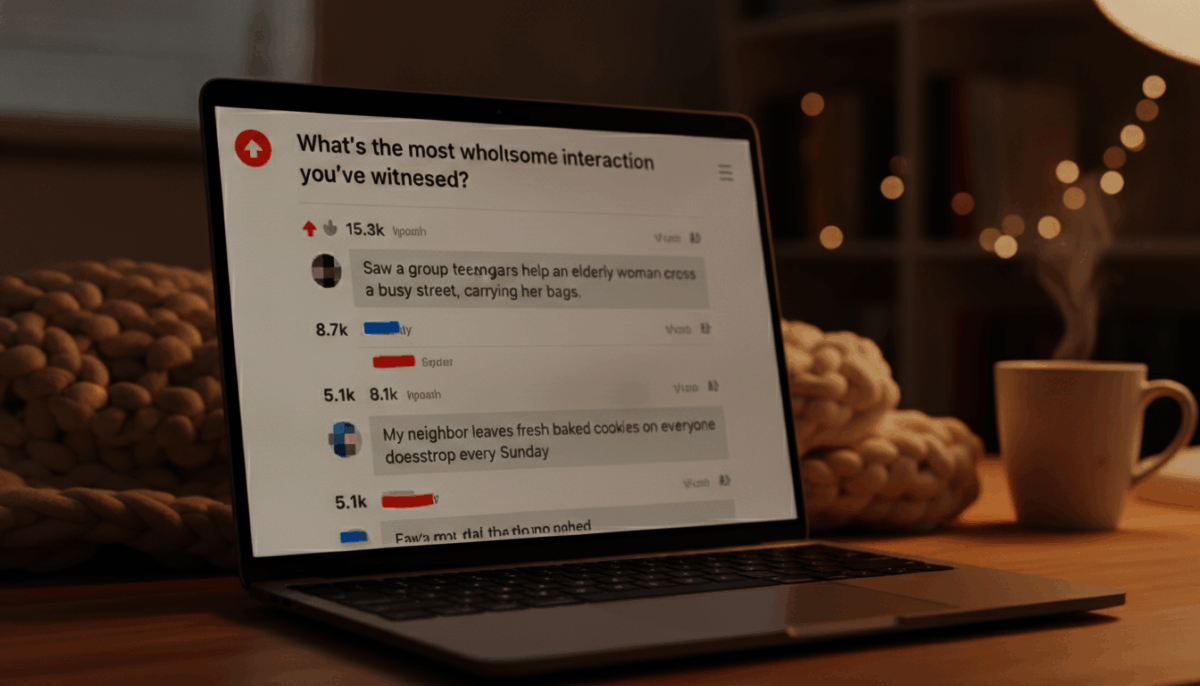
I knew I needed an objective perspective, so I did what everyone does in these situations: I took it to Reddit. I wrote up the entire story, from the arrival at the restaurant to the moment I walked out, including the specific prices and the conversation at the table. I posted it on a popular subreddit for relationship advice and sat back, waiting for the swarm of comments to roll in. I was nervous—what if I was the one who was wrong? What if the ‘split the bill’ culture was more pervasive than I thought?
“NTA. Your ‘friend’ is a massive entitled brat. You don’t get to order luxury items and then demand everyone else pay for them. The fact that she tried to shame you for it just proves she’s not a friend; she’s a parasite. Good on you for walking out.”
— u/BudgetBoss (Top Comment, 32.5k upvotes)
“I’ve been in this situation before, and the best way to handle it is exactly how you did: Pay for what you ate, put the cash on the table, and leave. You don’t owe anyone an explanation for not wanting to be robbed.”
— u/FinancialFreedom (15.2k upvotes)
The support was overwhelming. It was refreshing to see that most people agreed that financial boundaries are not only okay but necessary. Some users pointed out that the ‘split the bill’ mentality is often used by people who know they are spending more than their fair share, a tactic known as ‘social extortion.’ It made me realize that I wasn’t alone; thousands of other people had dealt with this exact kind of entitlement.
There were a few contrarians, of course. A handful of users argued that I should have just ‘sucked it up’ to maintain the peace, but they were quickly drowned out by the majority. The consensus was clear: the friendship was likely dead, but it was a loss that was long overdue. The validation helped me realize that my discomfort wasn’t just ‘me being cheap’—it was a natural reaction to being treated with disrespect.
I spent the next few hours reading through the comments, laughing at the shared experiences of others. Someone shared a story about a friend who ordered a $500 bottle of wine and then claimed they ‘forgot’ their wallet. Another shared a similar story about a wedding dinner where the bride expected guests to pay for their own expensive meals. It was a goldmine of bad behavior, and it made me feel much less crazy for taking a stand.
The Aftermath: Re-evaluating the Friendship

A few days passed, and the dust began to settle. Sarah didn’t reach out to apologize. Instead, I started hearing rumors through mutual friends that I was the one who had ‘totally lost it’ and ‘made a scene’ for no reason. It was clear that she was trying to rewrite the narrative to protect her own reputation. It was disappointing, but not surprising. I had seen her true colors, and I was finally beginning to understand the pattern of her behavior.
Looking back, I realized there were signs I had ignored for years. There were the small things: the times she would ‘forget’ her wallet at a coffee shop, the way she would constantly borrow my clothes and never return them, the subtle belittling comments she would make about my job or my lifestyle. I had been making excuses for her, calling it ‘just Sarah being Sarah,’ but it was actually a pattern of manipulation and entitlement.
I decided to cut ties. I sent a final, short message to the group chat wishing them all the best, then blocked Sarah on all platforms. I didn’t want to leave room for further drama or manipulation. I knew that keeping her in my life would only lead to more of the same, and I was finished with that. It was time to focus on surrounding myself with people who actually valued me, not just my potential contribution to their lifestyle.
The process of letting go was easier than I expected. Once the initial anger faded, it was replaced by a sense of peace. I had reclaimed my financial autonomy and my self-respect. I realized that friendship shouldn’t be about keeping score, but it shouldn’t be about being taken advantage of either. It’s about balance, and Sarah was never interested in balance—she was only interested in her own gain.
Lessons in Financial Boundaries

The biggest lesson I learned from this entire ordeal is the importance of setting boundaries early and clearly. If I had spoken up the moment she ordered the caviar, the rest of the night might have been different. Instead, I waited until the end, when the pressure was at its peak. I learned that you don’t have to be ‘polite’ when someone is blatantly trying to take advantage of you. You can be firm, and you can be direct.
I’ve also started being much more transparent about money with my friends. Before a dinner out, I’ll now suggest that we get separate checks at the start of the meal, or I’ll be clear about my budget beforehand. It’s not about being stingy; it’s about managing expectations. When everyone is on the same page about what they’re comfortable spending, the focus can stay on the conversation and the celebration, not on the fear of an inflated bill.
It’s also important to recognize that some people will use ‘social norms’ to manipulate you. The idea that we *must* split the bill is a social convention, not a law of physics. When that convention is used to exploit someone, it loses its moral weight. I have no problem breaking that convention if it means protecting my own boundaries.
I’ve moved on, and I’m much happier for it. I still go out to dinner with friends, but I’m much more selective about who I invite and how we handle the bill. And if I ever see caviar on a menu again, you can bet I’ll be the first one to clarify: ‘That’s all for Sarah, right?’
A New Perspective on Social Etiquette

In the wake of this incident, I’ve spent a lot of time thinking about what ‘etiquette’ actually means. We’re taught to be polite, to avoid confrontation, and to go with the flow, especially in group settings. But when those rules of etiquette are used as a weapon, they lose their value. The ‘polite’ thing to do would have been to pay the $250 and be miserable, but that would have only reinforced the bad behavior. By walking out, I chose a different kind of politeness—a politeness to myself.
I’ve also realized that money is one of the last great taboos in our culture. We’re so afraid of talking about it that we let it poison our relationships. If we were all a little more honest about what we can afford and what we’re willing to spend, we’d have fewer of these disasters. It’s okay to say, ‘I have a budget of $50 tonight,’ or ‘I’m not interested in ordering the expensive wine.’ It’s not rude; it’s mature.
I’ve seen a shift in how I view my other friendships as well. I’ve become more appreciative of the friends who are respectful, who never make me feel like a wallet, and who are just as happy with a cheap pizza as they are with an expensive dinner. Those are the relationships that matter, the ones that are built on something more substantial than a desire for luxury.
I’m grateful for the experience, even though it was painful at the time. It was a wake-up call that forced me to re-examine my own values and my place in the world. I’m no longer the person who will sit quietly while someone else tries to pick my pocket. I’m the person who will speak up, set a boundary, and leave if I have to. And honestly? That’s a person I’m much happier being.
The Final Verdict: Could This Have Been Avoided?

I often ask myself if I could have done anything differently. Could I have been more proactive? Could I have caught the disaster before it started? Perhaps. I could have insisted on separate checks the moment we sat down. I could have voiced my concerns about the caviar before the waiter even took the order. But at the same time, I shouldn’t have had to. A real friend wouldn’t have put me in that position in the first place.
The issue wasn’t my lack of communication; the issue was Sarah’s lack of respect. You can’t ‘communicate’ your way out of someone else’s selfishness. No matter how clearly I had phrased my boundaries, she was determined to push them because she felt entitled to my money. That’s not a misunderstanding; that’s a character flaw.
So, instead of focusing on what I could have done differently, I focus on what I did right. I stood up for myself. I didn’t let guilt dictate my actions. I prioritized my own financial well-being over a social expectation that was being used against me. That is a victory, regardless of how messy the process was.
If you find yourself in a similar situation, remember this: your money is your own. Your time is your own. And your boundaries are your own. Don’t let anyone—friend, partner, or family—make you feel like you owe them your financial security. You are the only one responsible for your bank account, and that’s a responsibility you should never take lightly.
Conclusion
In the end, the ‘Caviar Incident’ was more than just a bad night out; it was a defining moment of personal growth. It forced me to strip away the pretense of a toxic friendship and confront the reality of my own worth. While losing a friend is never easy, losing someone who views you as a financial resource rather than a human being is a gain you can’t put a price on.
We all have boundaries, and we all have moments where we are tested. The key is to recognize when those tests are happening and to have the courage to pass them, even if it means walking away from the table. My life is quieter now, but it’s also much more authentic. I’m surrounded by people who respect my boundaries, and that is a luxury far greater than any plate of caviar.
What about you? Have you ever had a ‘friend’ try to manipulate your finances, or have you ever had to walk out on a situation that was clearly crossing the line? Let’s talk about it in the comments. Is there ever a scenario where splitting the bill evenly is truly fair, or is it always a trap for the most responsible person at the table?
What's your verdict on this dilemma?
Vote below to contribute to the official community consensus.

Have a Dilemma Keeping You Up at Night?
Share your real-life feud, wedding chaos, or relationship crossroads anonymously with our editorial team.
What do you think ?
0 Comments🛡️ Comments are moderated to protect community integrity. Your comment will appear once approved by the editorial team.