
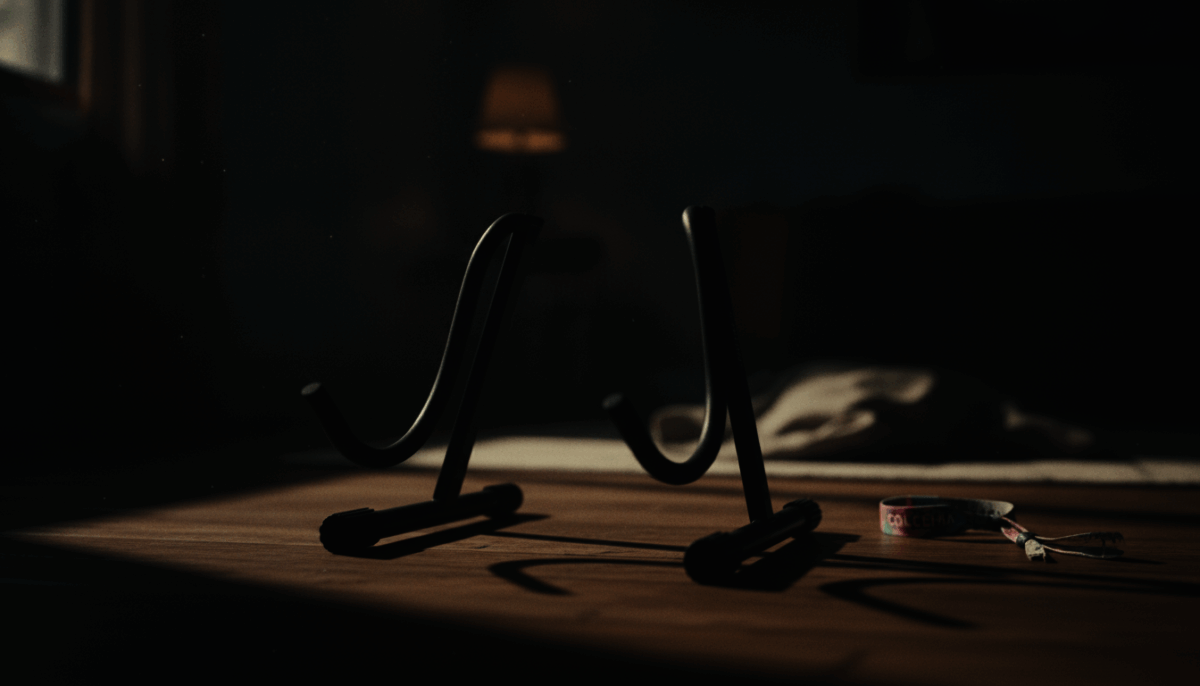
It began as a typical Tuesday evening, the kind where the silence of my apartment felt like a sanctuary after a grueling week of corporate deadlines. I had come home early, looking forward to nothing more than a glass of wine and an hour of practicing on my 1994 limited edition Fender Stratocaster. It wasn’t just a guitar; it was a relic of my late father’s touring days, signed by the man himself and kept in pristine condition in the corner of my living room. I reached for the stand, and my hand grasped nothing but air.
My roommate, Chloe, had been complaining for weeks about the high cost of her Coachella pass and the ‘once-in-a-lifetime’ experience she felt she was entitled to. I had laughed off her jokes about needing a sugar daddy or hitting the lottery, assuming she understood the boundaries of our living arrangement. But as I scanned the room, the absence of the instrument hit me with the force of a physical blow. The guitar case was gone, the stand was empty, and a cold dread settled into the pit of my stomach.
When I finally confronted her via text, the casual nonchalance of her reply was what truly shattered me. She didn’t just borrow it; she had liquidated my history to pay for a weekend of overpriced cocktails and desert heat. This wasn’t a misunderstanding or a simple case of misplaced property—it was a calculated act of conversion, a legal term that I would soon become all too familiar with as I prepared to reclaim what was stolen.
The betrayal was deeper than the monetary value of the guitar, though at four thousand dollars, that was significant enough. It was the audacity of someone I had trusted with a spare key, someone who knew exactly what that instrument meant to my family’s legacy. As I sat at my kitchen table drafting the initial demand letter, I realized that some friendships don’t end in arguments; they end in courtrooms.
This article chronicles the descent from best friends to bitter adversaries, the legal intricacies of proving conversion, and the inevitable fallout that occurs when you decide to hold someone accountable for their choices. From the initial denial to the final judgment, here is how the Coachella tickets cost my roommate far more than just the price of admission.
The Empty Stand and the Casual Admission

The moment I realized the Stratocaster was missing, I felt a singular, sharp panic. I searched the closets, the storage unit, and even under her bed, thinking perhaps she had moved it to vacuum. When Chloe finally walked through the door, smelling of expensive perfume and looking far too cheerful for a Tuesday, I barely waited for her to put her bag down.
“Chloe, where is my father’s guitar? The stand is empty, and the case is gone. Please tell me you moved it for cleaning.”
She paused, taking a slow sip of her water before looking me dead in the eye with a shrug that made my blood boil. It was the look of someone who had already calculated the fallout and decided it was worth the risk. She didn’t offer an excuse; she offered a justification.
“Oh, the Fender? Honestly, it was just sitting there gathering dust. I sold it to a collector who posted on a gear forum. It paid for the Coachella ticket, the flights, and even the Airbnb. It was a win-win, really. You weren’t even playing it that much, and I was going to miss out on the trip of a lifetime.”
I felt the room spin. The sheer entitlement of her words left me speechless for a solid minute. She had sold my inheritance to fund a music festival, and she truly believed that because I wasn’t playing it every single day, it was fair game. She treated my property like it was a communal resource, something she could trade in for social status.
I asked her for the name of the buyer, the amount she received, and the location of the transaction, but she simply waved me off. She insisted that I was being ‘dramatic’ and that she would pay me back eventually, perhaps after the festival. That was the moment I realized that she wasn’t sorry; she was just annoyed that I was interfering with her plans.
By the time I went to bed that night, I had already opened my laptop and started researching the statutes for conversion and theft in our state. I wasn’t just going to ask for the money back; I was going to ensure she felt the full weight of her decision. The friendship was already dead; now, it was time to make it expensive.
The Digital Paper Trail of Betrayal
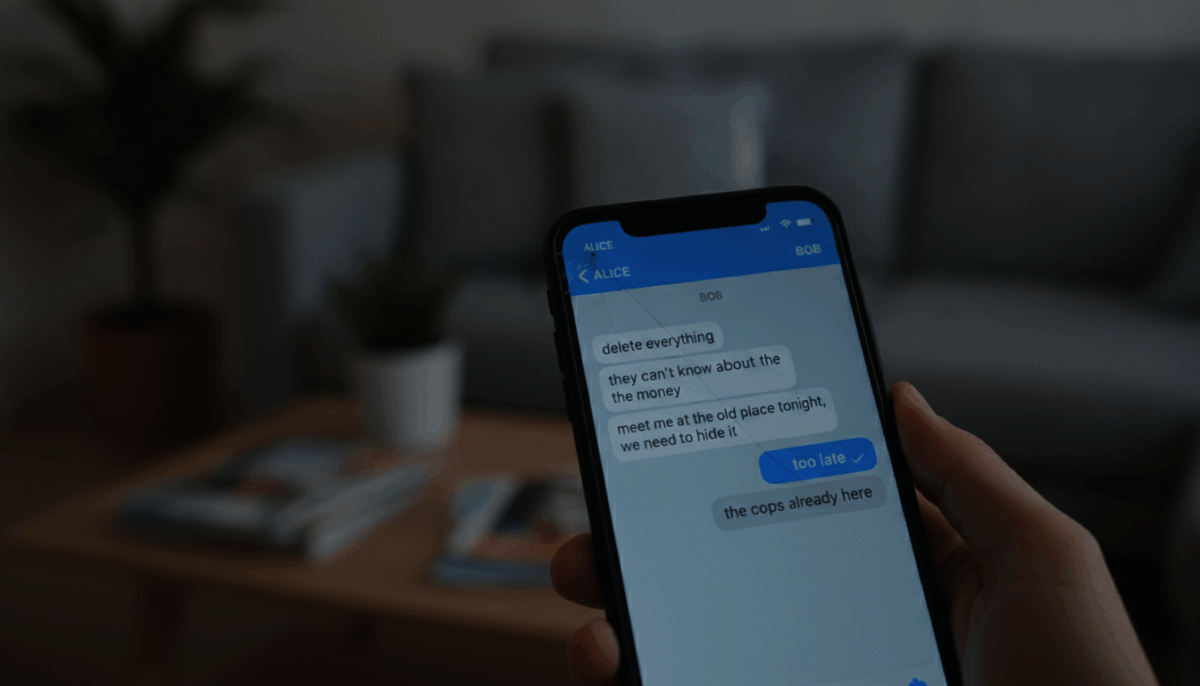
The next morning was filled with the frantic energy of documentation. I knew that in a legal setting, emotions meant nothing compared to hard evidence. I scoured our shared group chats, the trash folders in our emails, and even the browser history on the shared iPad in the living room. I needed to see exactly how she had planned this.
It turned out she had been plotting this for weeks. I found saved searches for vintage guitar appraisal websites and a long, sordid thread of messages between her and a local pawn shop owner who dealt in high-end instruments. The level of premeditation was staggering. She hadn’t just made a snap decision; she had scouted the market to get the highest price for my father’s pride and joy.
“Hey, do you think I can get at least three grand for a 94 Strat? Signed by the original owner. It’s in mint condition. I need the cash for an urgent ‘travel expense’ by Friday.”
— Leaked text from Chloe to a pawn broker
The broker’s reply was equally damning, asking if the item was ‘clean’ and advising her on how to list it on a secondary market to avoid local police scrutiny. She had knowingly engaged in a transaction involving stolen property. The evidence was right there in black and white, time-stamped and undeniable.
I took screenshots of every single message and printed them out. I also contacted the bank and checked my own records to see if there were any other missing items I hadn’t yet noticed. My jewelry box was still locked, thankfully, but the invasion of my space felt total. Every corner of the apartment felt compromised.
I didn’t confront her with the evidence immediately. I wanted her to think she had gotten away with it right up until the moment she was served. I kept the house quiet, I made my coffee in the mornings without saying a word, and I watched her pack her bags for Coachella with a smile that she interpreted as me finally ‘accepting’ the situation.
Little did she know, the process server was already on his way to the apartment. She was about to learn that there was a massive difference between a roommate and a thief, and that the law doesn’t care about your festival plans when you’ve violated someone else’s property rights.
The Morning of the Server’s Arrival
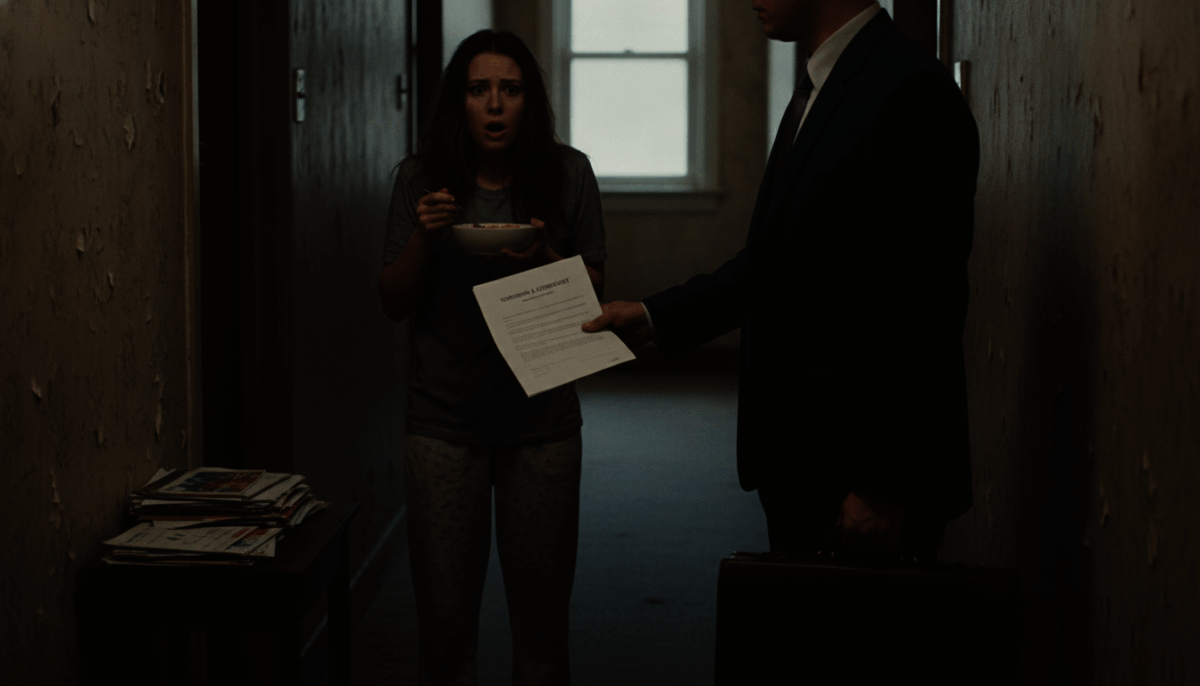
The day before she was scheduled to leave for the desert, the doorbell rang at 8:00 AM. Chloe was still asleep, hungover from a going-away party she had thrown for herself the night before. I opened the door to find a man in a windbreaker holding a thick manila envelope. He didn’t say a word, just asked for my roommate by name.
I pointed toward her bedroom door and watched with a morbid sense of satisfaction as he walked over and knocked firmly. Chloe emerged, looking disheveled and confused, clutching a silk robe around her. When the server handed her the documents, her face went from sleepy confusion to a pale, terrified mask within seconds.
“What is this? Are you kidding me? You’re actually suing me over a stupid guitar? I was going to pay you back! This is so toxic!”
I didn’t argue with her. I stood in the doorway of the kitchen, sipping my coffee and watching her read the petition. I had drafted it with the help of a local legal aid clinic, ensuring that all the necessary elements for a claim of conversion were present. I had included the market value of the guitar, the cost of legal fees, and a demand for punitive damages for the emotional distress caused by the theft.
She started screaming, accusing me of ruining her life and her reputation. She mentioned that she had already spent the money on the festival, the hotel, and a new wardrobe. To her, the lawsuit was just an inconvenience—a bill she could worry about later. She didn’t realize that a court order isn’t a bill; it’s a command.
As she frantically called her parents, her voice rising in pitch, I went back to my room and closed the door. I didn’t want to hear her excuses. I wanted the guitar back, or the full value of it in my bank account. I didn’t care about her Coachella plans, her social media posts, or the ‘vibes’ she was supposedly losing by dealing with my legal action.
The silence in the apartment after she finished her phone call was deafening. She spent the rest of the day in a state of high-strung panic, trying to find a lawyer who would tell her that she could just ignore the filing. She was about to find out that the judicial system is far less forgiving than a disappointed roommate.
The Reddit Community Weighs In
I decided to post the gist of the story on a popular subreddit to see if I was actually the one being unreasonable. The response was immediate and overwhelming. Within hours, the post hit the front page, with thousands of people weighing in on the morality and legality of the situation. It was a strange comfort to see that the vast majority of people were horrified by her actions.
“NTA. This is literal theft. It doesn’t matter if it was a guitar or a toaster; she sold your property without your consent to fund a vacation. That’s not a ‘roommate dispute,’ that’s a criminal act. Keep the lawsuit going and don’t let her pressure you into dropping it.”
— u/LegalEagle88 (Top Comment, 32.4k upvotes)
There were, of course, the contrarians who thought I was being ‘petty’ for not just letting her pay me back slowly. They argued that friendships should be about forgiveness and that legal action was the ‘nuclear option.’ I read those comments with a grain of salt, noting that those people likely haven’t had their own property sold out from under them by someone they trusted.
“ESH. She’s definitely wrong for stealing, but suing your roommate right before a big trip? That’s just going to create a hostile environment. Why not just ask for the money back and move out? You’re escalating this way too far.”
— u/ConflictAvoider (1.2k upvotes)
The community debate turned into a fascinating look at how people perceive boundaries. Some viewed the guitar as a replaceable object, while others understood the sentiment and the value of a high-end instrument. It validated my decision to involve the courts, proving that I wasn’t just being sensitive—I was protecting my rights.
I kept updating the thread as the process moved forward, which only fueled the engagement. People were invested in the outcome, wanting to know if she would actually show up to court or if she would try to flee. The internet, for all its toxicity, acted as a mirror, showing me that the world generally agrees that you don’t sell your friend’s stuff to pay for a music festival.
By the time I left for the courthouse on the day of the hearing, I had thousands of strangers cheering me on, rooting for the legal system to work. It gave me the confidence I needed to stand in front of the judge and present my case without stuttering or apologizing for my actions.
The Confrontation at the Courthouse
The courthouse was a sterile, intimidating place, filled with people looking just as nervous as I felt. Chloe arrived at the last possible minute, looking like she had been crying for hours. She had tried to dress ‘professionally,’ but the panic was still etched into her features. She sat on the opposite end of the wooden bench, refusing to make eye contact.
When our case was called, we stood before a judge who looked like he had seen a thousand petty disputes exactly like this one. He didn’t care about the festival or the ‘bad vibes.’ He cared about the facts. He asked me to present my evidence, and I laid out the photos of the guitar, the pawn shop texts, and the bank records showing the missing item.
“The defendant admitted to selling the plaintiff’s property without consent. Does the defendant deny these allegations?”
— The Honorable Judge Miller
Chloe tried to speak, her voice trembling as she attempted to explain that she ‘intended’ to replace it later. She tried to frame it as a misunderstanding, a joke that had gone too far. The judge cut her off within thirty seconds. He didn’t care about her intentions; he cared about the act of conversion.
“Intent to pay back is not a defense for the unauthorized sale of someone else’s property. This is a clear case of conversion. You took something that did not belong to you and liquidated it for personal gain. That is theft, regardless of your future plans to rectify the situation.”
— The Honorable Judge Miller
Watching her face crumble as the judge lectured her was a moment I would remember for the rest of my life. She had spent the last two weeks calling me names, accusing me of being heartless, and playing the victim. Now, the reality of the law was staring her in the face. She wasn’t just a girl who made a mistake; she was a defendant who had committed a tort.
The hearing didn’t last long. The evidence was simply too overwhelming. The judge ordered her to pay the full current market value of the guitar, plus the court fees and interest. He also gave her a strict deadline to make the first payment, warning that failure to comply would result in a wage garnishment order.
As we walked out of the courtroom, the air felt lighter. I hadn’t regained the guitar—it was likely already gone—but I had regained my agency. I had faced the person who betrayed me and stood my ground. The drama wasn’t over, but the power dynamic had shifted irrevocably.
The Aftermath: Living in a Ghost Town

Returning to the apartment after the judgment was surreal. Chloe was still living there, but the dynamic had completely changed. The air was thick with resentment and silence. She had paid the first installment of the judgment using money she borrowed from her parents, which only added to her bitterness toward me.
She stopped speaking to me entirely. We lived in the same apartment like two ships passing in the night, avoiding each other in the kitchen and the hallways. It was a suffocating existence, but it was necessary for the time being. I had a lease to finish, and I wasn’t going to let her drive me out of my own home.
I started looking for a new place, something smaller and quieter where I could finally heal. The apartment, once a place of comfort, was now a constant reminder of the betrayal. I spent my evenings packing boxes, carefully wrapping my things and making sure that nothing else could be ‘misplaced’ or ‘liquidated’ by my roommate.
“You’re actually going to leave me with the full rent, aren’t you? After everything you’ve done? You really are a monster.”
— Chloe, hissed while I was packing my kitchenware
I didn’t even look up from the box I was taping. I just kept working, the sound of the packing tape gun filling the space between us. It was the only answer she deserved. She still didn’t understand that the ‘monster’ wasn’t the person who filed the lawsuit—it was the person who sold a friend’s legacy for a weekend of dancing in the desert.
I realized then that her anger was a shield. If she could paint me as the villain, she didn’t have to face the fact that she was the one who destroyed our friendship. She didn’t have to look at the wreckage of her own choices. It was easier to be a victim of my ‘cruelty’ than it was to be the architect of her own disaster.
Packing the final box felt like shedding a skin. I was leaving behind the tension, the fear, and the constant vigilance. I had won the legal battle, but the real victory was in the realization that I didn’t need to be around people who saw me as an opportunity rather than a friend. My life was about to get much smaller, but also much safer.
The Final Settlement and the Parting of Ways
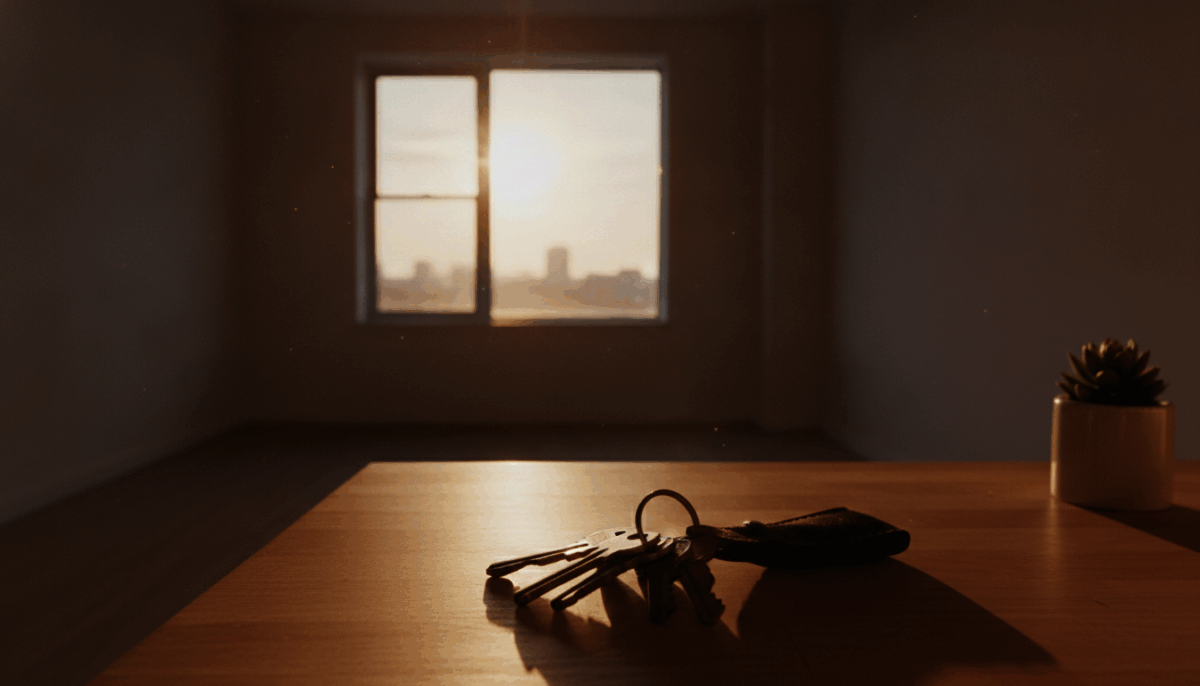
The final payment for the judgment came through just days before I moved out. It was a transfer from her parents, not her, which made me realize that she had never truly taken responsibility. She had simply offloaded the consequences of her actions onto someone else. I took the money and closed the bank account where we had once shared utility expenses.
On my last day, I left the keys on the counter. She was in her room, presumably scrolling through her phone, not even bothering to say goodbye. I didn’t expect a farewell, but the lack of acknowledgement was the final nail in the coffin of our time together. I walked out of the front door and didn’t look back.
The move was therapeutic. My new apartment was smaller, but it was mine. No more worrying about who was coming into my room or what was being taken from my shelves. I replaced the Stratocaster with a modest, beginner-friendly model, not because it was the same, but because it was mine. Every time I played it, I felt a sense of ownership that I had lost during those final months.
“I hope you find whatever it is you’re looking for, Chloe. But I hope you realize that you can’t buy your way out of the consequences of your character. Good luck.”
— My final text to her, sent after I turned in my keys
She never replied. She likely deleted the thread, blocking my number in a final act of denial. That was fine by me. I didn’t need closure from her; I had found it in the courtroom and in the act of walking away. I had set a boundary, and I had enforced it.
Looking back, I don’t regret the lawsuit. I regret the fact that it had to happen, but I don’t regret the action. It was a hard lesson, but it taught me that I am capable of standing up for myself, even when the person I’m standing against is someone I once called my best friend. The price was a guitar, but the gain was a much stronger sense of self-respect.
I still see similar stories online, and every time I do, I think of the empty stand. I hope those people have the courage to do what I did. Because if you don’t fight for what’s yours, you’re only teaching the people around you that your boundaries are negotiable. And in my life, they aren’t anymore.
Reflecting on the Cost of Betrayal

When the dust finally settled, I found myself sitting in my new living room, looking at the empty space where the guitar stand would have gone. For months, the absence of that instrument had felt like a hollow in my life. I spent time reflecting on the nature of trust—why we give it so easily and why it’s so devastating when it’s shattered by someone who was supposed to be in our corner.
Chloe wasn’t just a roommate; she was someone I had shared holidays with, someone whose secrets I knew, and someone I had mentored in the city. The betrayal felt personal, but the theft was clinical. That was the hardest part to reconcile. How could someone who knew me so well treat me with such cold detachment? The answer, I realized, was that she never really knew me at all—or worse, she did, and she simply didn’t care.
I started attending therapy to deal with the lingering anxiety of the situation. It wasn’t about the money anymore. It was about the feeling of being violated in my own home. My therapist helped me understand that my reaction—the lawsuit, the coldness, the need to move out—was a healthy response to an unhealthy environment. I hadn’t escalated; I had simply stopped being a pushover.
“You didn’t ‘sue a friend,’ you held a person accountable for a crime. The fact that she was your roommate is irrelevant to the legal reality of the situation. You are allowed to protect your peace and your property.”
— My therapist, during one of our final sessions on the matter
I realized that the ‘friendship’ had likely been one-sided for a long time. The signs were there—the borrowing without asking, the subtle guilt-tripping, the way she made everything about her needs. I had just been too blind to see them, blinded by my own desire for a ‘perfect’ roommate situation. Now, I see red flags much earlier. I guard my space and my belongings with a much firmer hand.
The ordeal changed how I view relationships. I no longer subscribe to the idea that you have to ‘take the high road’ when someone hurts you. Sometimes, the high road is just a path to being taken advantage of again. Sometimes, the road you need to take leads straight to a courtroom. And that’s okay.
I’m in a better place now, surrounded by people who respect my boundaries and appreciate the value of our shared trust. The Fender Stratocaster is still gone, but in its place, I have a newfound respect for myself. That, I’ve found, is worth far more than any vintage gear.
Lessons Learned and Moving Forward

If there’s anything I’ve learned from this experience, it’s that boundaries are not suggestions; they are the foundation of any healthy relationship. Before this happened, I thought I was ‘chill.’ I thought letting things slide made me a better friend, a more likable person. I realize now that ‘chill’ is often just a synonym for ‘exploitable.’ People will push until they hit a wall, and if you don’t provide that wall, they will keep pushing until there’s nothing left.
I’ve also learned that the legal system is not a monster. It’s a tool. It’s not meant to be used for every little disagreement, but for cases of clear, objective wrongdoing, it is the only mechanism we have to ensure fairness. Using that tool didn’t make me a bad person; it made me a person who knows the value of justice.
I have started a blog where I share tips on roommate agreements and legal protections. It’s my way of paying it forward, helping others who find themselves in similar situations feel empowered enough to take the steps they need to take. The feedback has been incredible, with so many people reaching out to share their own stories of betrayal and recovery.
“I was afraid to confront my roommate for stealing my laptop, but reading your story gave me the courage to file a claim. Thank you for showing me that I don’t have to just accept being robbed.”
— A message from a reader, one of many I’ve received
I’m finally at a point where I can play the guitar again without thinking about the one I lost. I find myself looking at my new, modest instrument and feeling a sense of pride—not because it’s a vintage heirloom, but because it’s mine, and I bought it with the peace of mind that comes from knowing I can protect my own world.
My advice to anyone currently dealing with a nightmare roommate? Don’t be afraid to document everything. Save the texts, keep the records, and don’t let anyone make you feel bad for standing up for your rights. Friendship is earned through mutual respect, not through the sacrifice of your own assets. If someone doesn’t respect you enough to keep their hands off your things, they don’t deserve the privilege of your company.
The Coachella tickets may have been ‘the trip of a lifetime’ for her, but for me, this entire ordeal was the lesson of a lifetime. I’m stronger, I’m smarter, and I’m finally living in a home that feels like my own. And honestly? I wouldn’t trade that for all the vintage guitars in the world.
The Final Verdict: Where Are They Now?

It has been a year since the judgment was handed down. Chloe moved back home, and according to mutual acquaintances, she’s still struggling to find her footing. She never quite understood why her friends drifted away, and she still frames the lawsuit as an act of ‘unprovoked cruelty’ from an ex-roommate. She’s still on social media, posting photos of herself at festivals, but the shine of the life she was chasing seems a bit dimmed.
I, on the other hand, have moved on. I’m doing well at work, my relationships are healthy and grounded in mutual respect, and I’ve learned to enjoy the quiet of my own home without the constant fear of being violated. The judgment is a closed chapter in my life, one that I look back on with a sense of closure rather than anger. I’ve forgiven her, not for her sake, but for mine—holding onto the resentment only gave her more power over my future.
I look back at the process—the fear, the Reddit threads, the courtroom nerves—and I see it as a necessary evolution. I wasn’t just losing a guitar; I was gaining the ability to say ‘no’ to the people who didn’t deserve my ‘yes.’ That shift in perspective has been the most valuable takeaway from the entire experience.
“Some losses are just the price of admission for finding out who people really are. Don’t be afraid to pay the price to get the truth.”
— A piece of advice from my mentor, which I hold dear
If you’re out there reading this and you’re currently in a situation that feels wrong, trust your gut. You are not being dramatic. You are not being ‘extra.’ You are defending your right to live with dignity. Don’t wait for things to fix themselves. Take the steps you need to take to reclaim your life, even if it feels terrifying in the moment.
I’m thankful for the struggle, because without it, I wouldn’t be the person I am today. I’m stronger, I’m more resilient, and I’m surrounded by people who would never dream of doing what Chloe did. And that, in the end, is the real victory. Thanks for reading my story, and I hope it helps you find the courage to hold the line in your own life.
Conclusion
The story of the stolen Stratocaster is more than just a legal drama; it is a reflection of the boundaries we set and the people we allow into our lives. When we are faced with betrayal, the temptation is often to downplay the impact to keep the peace, but as this story demonstrates, peace without boundaries is just a fragile illusion. By taking the legal route, I reclaimed not just the value of my property, but the integrity of my own life.
What about you? Have you ever had to draw a hard line with a friend or roommate, even when it cost you the relationship? Do you believe legal action is a bridge too far, or is it a necessary last resort for personal integrity? Share your thoughts and your own stories of boundary-setting in the comments below. Let’s start a conversation about what it really means to protect our space and our self-respect.
What's your verdict on this dilemma?
Vote below to contribute to the official community consensus.

Have a Dilemma Keeping You Up at Night?
Share your real-life feud, wedding chaos, or relationship crossroads anonymously with our editorial team.
What do you think ?
0 Comments🛡️ Comments are moderated to protect community integrity. Your comment will appear once approved by the editorial team.