

It began with the smell. At first, it was a subtle, yeasty tang that I dismissed as my roommate, Chloe, experimenting with a new candle or perhaps a particularly ambitious batch of beer brewing. I lived in a reasonably priced apartment in the city, a space I shared with Chloe for nearly two years. We were, by all accounts, cordial. We split utilities, respected each other’s quiet hours, and generally kept to ourselves. But then, the sourdough craze—a hobby that seemed to consume her every waking thought—began to encroach upon our shared sanity.
Chloe wasn’t just baking bread; she was creating a lifestyle, or perhaps, a full-blown, unregulated manufacturing operation. It started in the kitchen, which was expected, but quickly migrated to the most humid, bacteria-friendly room in the house: the bathroom. She claimed it was all about the ‘ambient moisture levels’ and ‘microbial stability’ for her proprietary starter, which she had named ‘Mother Superior.’ I called it a health hazard. The rest of the apartment soon followed suit, turning into a labyrinth of cooling racks, flour-dusted surfaces, and the ever-present, sticky scent of fermenting dough.
When I first raised the issue, she laughed it off as a ‘temporary inconvenience.’ I wasn’t just annoyed by the mess; I was genuinely concerned about the cross-contamination. I had to navigate around cooling racks just to reach the shower, and the sink was perpetually caked in a fine, white powder that turned into a cement-like sludge whenever it got wet. My polite requests for her to relocate the bakery were met with patronizing lectures about the artisanal nature of her business and how I was ‘stifling her creative entrepreneurial spirit.’
The situation escalated rapidly. It wasn’t long before I started finding ‘customer pickup’ envelopes taped to our front door and hearing strangers knocking at 11:00 PM to claim their weekly loaf. The bathroom, our sanctuary, had been converted into an illegal laboratory of flour and humidity. I realized then that I wasn’t living with a roommate; I was living with a rogue, unlicensed food manufacturer who had no regard for hygiene, lease agreements, or the boundaries of shared living space. This is the story of how that realization turned into a full-scale war.
The Rise of Mother Superior
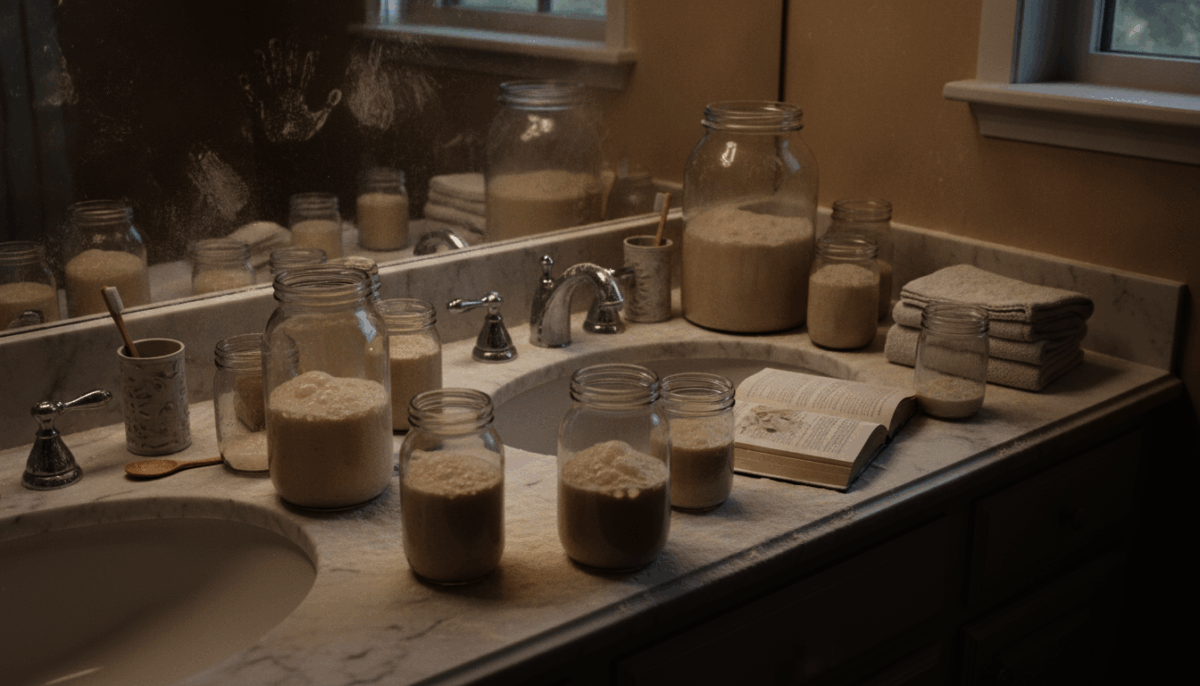
Chloe’s obsession with sourdough wasn’t a slow burn; it was an explosion. Within weeks, the kitchen counters were entirely occupied by glass jars of varying sizes, each bubbling with a different stage of yeast culture. She began attending workshops, buying professional-grade proofing baskets, and spending hundreds of dollars on organic heirloom flours that she insisted were the only kind worth using. At first, I supported her. Who doesn’t like fresh bread, right? But the novelty wore off when the kitchen became a restricted zone.
The shift to the bathroom was the true turning point. I walked in one Saturday morning to brush my teeth and found the vanity completely covered in plastic bins and jars. The humidity she was cultivating to help her bread ‘thrive’ had caused the bathroom mirror to fog up in a way that never quite cleared, and the smell of fermenting grain was thick enough to taste. When I confronted her, she was defensive, clutching a jar as if it were a pet.
“You don’t understand the science, Sarah. The bathroom has the perfect consistent humidity. If I keep the starter in the kitchen, the temperature fluctuates too much. Mother Superior needs a stable environment to develop the flavor profile that my customers are paying for.”
— Chloe, defending the bathroom bakery
I pointed out that this was a shared space, not a climate-controlled laboratory. I had guests coming over that weekend, and the idea of them using a bathroom that looked—and smelled—like a science experiment was mortifying. Chloe simply shrugged, telling me that if my friends were ‘truly cultured,’ they would appreciate the artisanal process. It was the first time I realized that her hobby had shifted from passion to a dangerous form of entitlement.
By the following week, the flour had migrated. It was in the floor tiles, the towel rack, and even the vent. I started experiencing allergies I’d never had before. Every time I stepped into the bathroom, I felt like I was breathing in a bakery’s ventilation system. The conflict was no longer about bread; it was about the basic right to inhabit a clean home. I tried to talk to her again, but she had already started selling the loaves on local Facebook groups, acting as if her enterprise was the most natural thing in the world.
She had even started scheduling ‘pickups’ for her customers. I would come home from work to find strangers hovering in our hallway, waiting for their artisan sourdough. When I told her this was a safety risk, she brushed me off, citing her ‘community-building’ efforts. It was clear that she felt the apartment was her personal business headquarters, and I was just an unsupportive obstacle in the way of her rise to bakery stardom.
The $400 Utility Bill Surprise
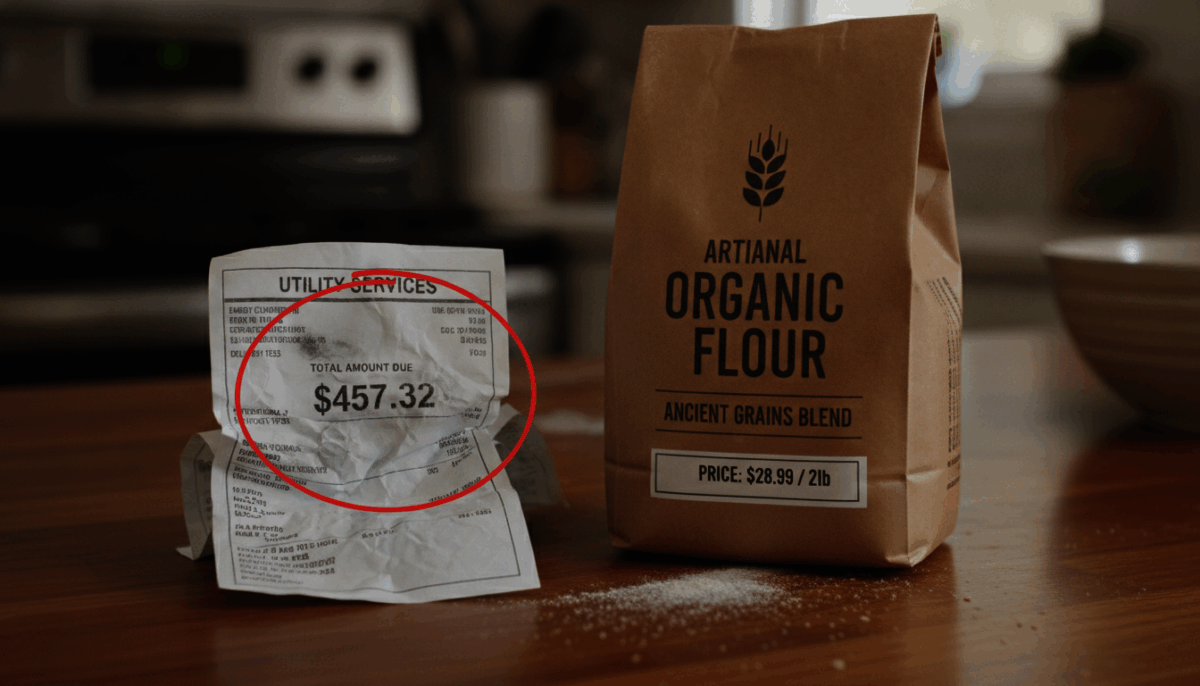
The financial impact of the bakery started appearing on our utility bills almost immediately. Our electric bill for the previous month was nearly double what we had paid the year prior. At first, I assumed it was a clerical error, but when I took a closer look at the usage dates, they aligned perfectly with Chloe’s ‘experimental baking’ sessions, which often required the oven to run for twelve hours straight to maintain constant heat, plus the use of space heaters in the bathroom to regulate the temperature.
I sat her down at the dining table with the bill in front of us. She barely looked at it, her eyes glued to her laptop where she was finalizing an order form for her ‘Sourdough Subscription’ service. I had to physically close the laptop to get her attention. The confrontation was immediate and sharp. She didn’t offer to pay more; instead, she argued that the costs were just ‘part of living in a shared space’ and that her business would eventually pay for itself.
“I am investing in our future, Sarah! Once I get my bakery license—which I’m working on, by the way—this will all be a tax write-off. You’re being incredibly petty about a few extra dollars on the electric bill when I’m trying to build a brand.”
— Chloe, gaslighting me about our finances
I was floored. A tax write-off? She wasn’t even close to being a legitimate business. She was a hobbyist operating without a kitchen permit, let alone a business license. I told her that she needed to cover the difference in the bill, and that the bathroom was off-limits for ‘Mother Superior’ starting immediately. She refused, claiming that the ‘ecosystem’ she had established would be ruined if she moved the jars now. The entitlement was staggering.
She then suggested that I should be grateful for the free samples. I told her I hadn’t had a piece of bread in weeks because the kitchen was always covered in flour, making it impossible to cook a simple meal for myself. She looked at me like I was the one being unreasonable. It was a complete lack of reality. She was living in a bubble where her sourdough reigned supreme, and everyone else’s needs were secondary.
That night, I started documenting everything. I took photos of the bathroom, the kitchen, and the mounting pile of flour bags in our living area. I needed evidence. I didn’t know yet what I would do with it, but I knew that conversations weren’t working. I was dealing with someone who believed that their passion project superseded our lease agreement and my basic human right to a sanitary living environment.
The Midnight Flour Delivery
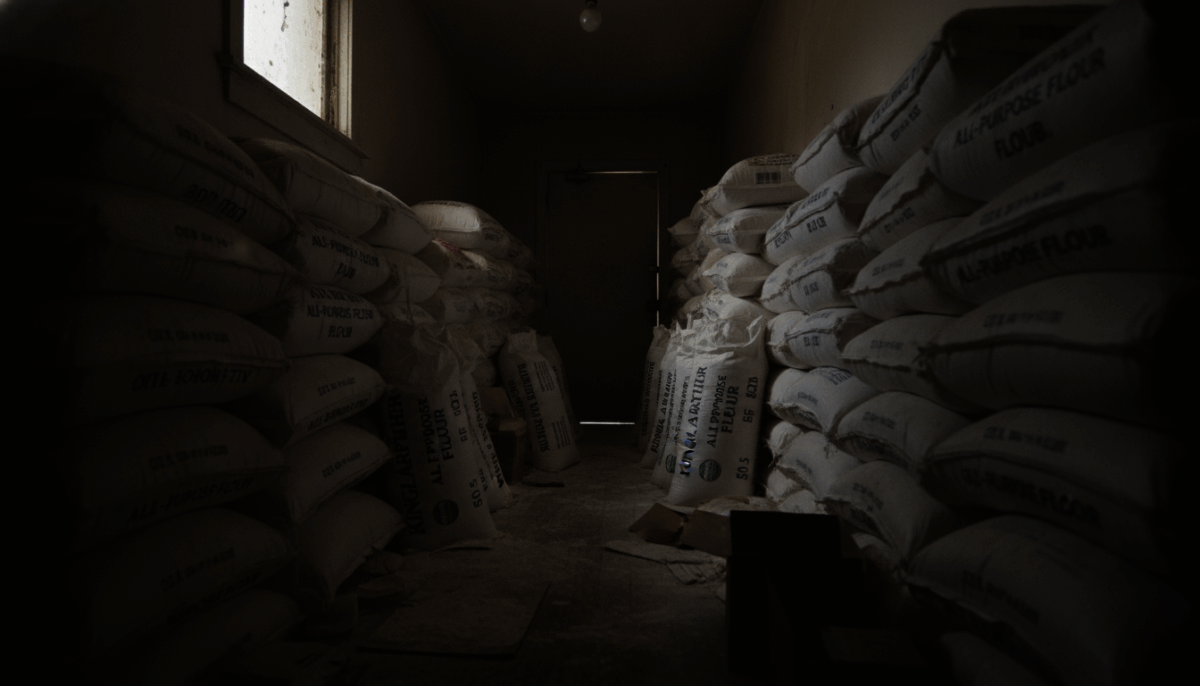
The situation hit a breaking point when I woke up at 2:00 AM to the sound of our front door being unlocked. I thought we were being robbed. I grabbed a kitchen knife and crept into the hallway, only to find a delivery driver dropping off a massive pallet of 50-pound bags of artisanal flour. Chloe emerged from her room, wearing a silk robe and looking entirely unbothered, as if this were a perfectly normal occurrence for a Tuesday night in an apartment complex.
I was shaking. I asked her what the hell was happening, and she calmly explained that she had found a wholesaler who offered free delivery if she bought in bulk. She told me she had cleared space in the hallway to store the bags. I looked at the hallway—it was completely blocked. We wouldn’t even be able to get out in an emergency if there was a fire. I demanded she have them removed immediately.
“It’s just for a few days, Sarah! Why are you always making a scene? I have a massive order for a local farmer’s market coming up, and I can’t afford to lose this business opportunity just because you want to keep the hallway clear for no reason.”
— Chloe, after I discovered the bulk flour delivery
I told her the hallway was a fire hazard and that she was violating our lease in multiple ways. She just rolled her eyes and went back to her room. I spent the next hour dragging the heavy bags into the storage closet, straining my back, and feeling an absolute sense of hopelessness. How had my life become this? I was living with a person who treated our apartment like an industrial warehouse.
The next morning, I sent her a formal text message. I was done with verbal pleas. I needed a paper trail. I clearly stated that if the flour wasn’t removed and the bathroom cleared of her sourdough operation, I would be contacting the landlord. Her response was immediate and venomous. She told me that I was a ‘dream killer’ and that she would make sure everyone in our social circle knew how ‘unsupportive’ I was.
I realized then that she was banking on my fear of conflict. She thought I would eventually just give up and let her do whatever she wanted. But she didn’t know that my patience had already hit zero. The flour bags were just the icing on a very bitter cake. I spent the day looking up the local health department regulations. I learned exactly what kind of permits were required for home baking, and surprise, surprise—they were extensive.
The Health Department Intervenes
I didn’t tell her I was calling the health department. I waited until she was at work, dropped off a few orders, and then made the call. I described the situation in detail: the unhygienic conditions, the use of a bathroom for food production, the lack of proper storage for ingredients, and the illegal distribution of food to the public. The woman on the other end of the line was shocked. She told me they had received reports like this before, but rarely one so specific.
Two days later, an inspector arrived. Chloe was at work, but the inspector was authorized to enter because I, as a tenant on the lease, granted them access. Walking through the apartment with a health official was one of the most surreal experiences of my life. The inspector went from room to room, taking photos of the bubbling jars, the flour-coated surfaces, and the bags of ingredients stored in the bathroom cabinet next to cleaning supplies.
“This is highly irregular, miss. We have strict guidelines about home-based bakeries. Storing food in a bathroom is an immediate violation of every health code we have. This entire operation must be shut down, and the area needs to be sanitized professionally.”
— The health inspector, assessing the damage in the bathroom
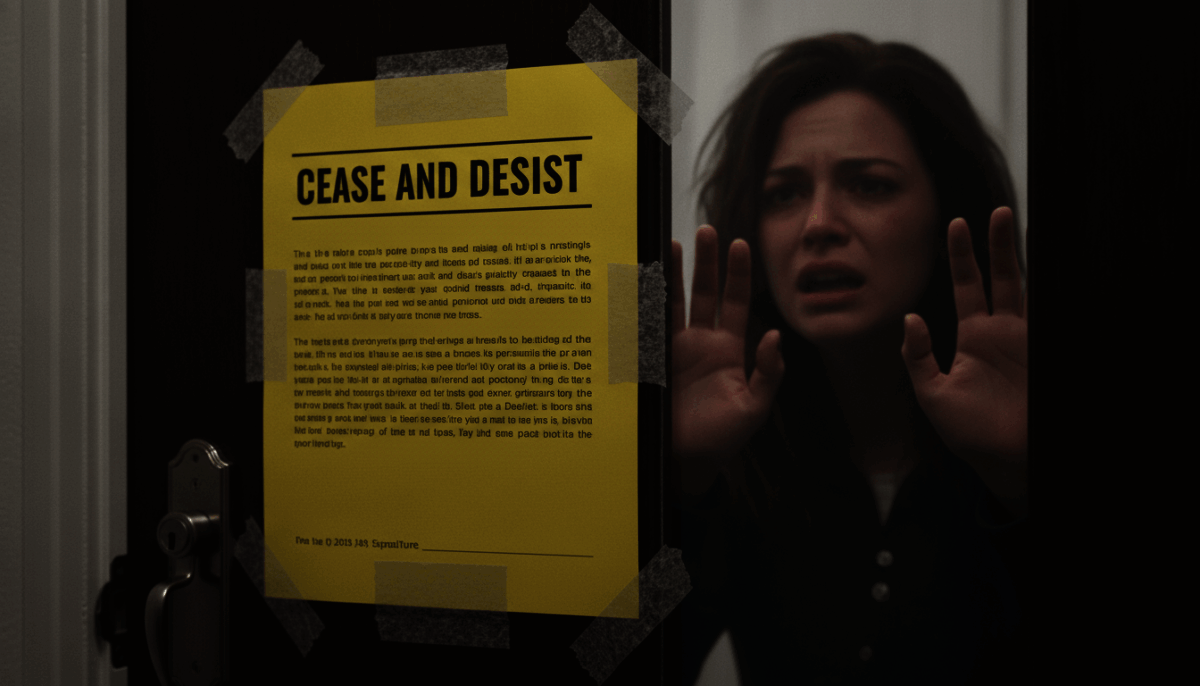
The inspector was thorough. They checked the kitchen, finding that the refrigerator was packed with dough instead of food, and that there was no proper separation between the business ingredients and the household items. They slapped a ‘Cease and Desist’ notice on our door before they even left. It was the most satisfying moment of the entire saga. I felt a weight lift off my shoulders that I hadn’t realized was crushing me.
When Chloe came home that evening, the scene was catastrophic. She saw the notice, she saw the photos the inspector had left behind as a record of the violations, and she absolutely lost it. She screamed, she cried, and she accused me of ruining her life. She said she had investors lined up, that she was going to be a local legend, and that I had destroyed it all out of pure jealousy.
I stood there in the living room, calm and collected, and told her that she did this to herself. I didn’t make her put sourdough in the bathroom. I didn’t make her ignore the health codes. I didn’t make her treat me like a roommate she could walk all over. The look on her face was a mix of pure rage and total disbelief. She couldn’t comprehend that I had actually stood up for myself.
The Fallout and the Eviction Notice
The health department report had reached our landlord by the next morning. Our landlord, a no-nonsense property manager who lived in the unit below us, was livid. He took his property seriously, and the idea of someone turning his apartment into a clandestine bakery—complete with potential mold issues from the constant humidity—was his worst nightmare. He served us both an eviction notice, citing the breach of lease and the health hazard.
Chloe tried to bargain with him, but he wasn’t having it. He told her the damage to the bathroom tiles and the potential risk of pest infestation from the flour meant he had to bring in a cleaning crew and likely redo the plumbing. She was responsible for the costs, he explained, but since her business had no assets, that cost was going to come out of our security deposit, and potentially a lawsuit for damages. Her dream was officially dead.
“You think this is over, Sarah? You’ve ruined everything! I was going to pay for this apartment with the bakery profits, and now I’m homeless because you couldn’t handle a little bit of flour. I hope you’re happy in your empty, boring home.”
— Chloe, during the final argument before she moved out
The irony of her blaming me for our eviction was not lost on me. She had been the one violating the lease from day one. I spent the next week packing my things, feeling a strange mixture of relief and sadness. I loved that apartment, but it had become a toxic place to live. I found a new, smaller place, and I felt like I was finally breathing clean air again for the first time in months.
Chloe moved back in with her parents, and the last I heard, she was ‘rebranding’ as a consultant for home bakers. I couldn’t help but laugh. She had learned nothing. She still saw herself as a victim and me as the antagonist in her grand, failed narrative. I blocked her on every platform, not wanting to hear any more about her sourdough or her ‘entrepreneurial journey.’
The Reddit thread I started about this whole ordeal blew up, which I hadn’t expected. People were horrified by the bathroom bakery. It seemed like everyone had a story about a nightmare roommate, but the absurdity of the sourdough in the bathroom struck a nerve. It was validation that I wasn’t the crazy one, and that setting boundaries—even if they involved the government—was sometimes the only way to save your sanity.
Reddit Weighs In: The Community Verdict
I posted my story on a popular subreddit, expecting a few comments and maybe some advice. Instead, I got thousands of responses. The consensus was overwhelmingly on my side, with many users sharing their own horror stories of roommates who thought their ‘hobbies’ were everyone else’s problem. The validation was immense, but some of the comments were even more shocking than my actual experience.
“The sheer audacity of using a shared bathroom for a professional kitchen setup is mind-boggling. Flour dust is a massive respiratory irritant, and the humidity in a bathroom is a breeding ground for mold. You didn’t just ‘report’ her; you saved that apartment from becoming a biohazard.”
— u/BreadWinnerMom (Top Comment, 28.5k upvotes)
“I worked in food safety for ten years, and this is exactly why cottage food laws exist. People think they can just ‘start a business’ from their kitchen, but they don’t realize the legal and physical risks they’re imposing on themselves and their neighbors. You were 100% in the right.”
— u/SafetyInspector99 (12.4k upvotes)
There were, of course, a few ‘devil’s advocate’ comments. Some people thought I should have tried ‘harder’ to talk to her before calling the authorities, but most of them were shut down by other users who pointed out that I had tried multiple times, and the situation had become a literal health risk. The sheer volume of support made me realize that I hadn’t just been dealing with a messy roommate; I had been dealing with a boundary-violator of the highest order.
Reading the comments helped me process the guilt I had been feeling. Even though I knew I was right, a part of me felt bad about Chloe losing her dream. But the comments reminded me that her ‘dream’ was built on the backs of my comfort and safety. You can’t build a business, even a small one, if it requires destroying the lives and homes of the people around you.
The thread became a repository for all kinds of advice on how to spot a toxic roommate early. It turned into a community discussion about the importance of clear expectations and what to do when those expectations are completely ignored. I felt like I had played a small part in helping others avoid a similar fate. The power of the internet, in this case, was genuinely helpful.
The Aftermath: Finding My New Normal

Moving out was the best thing I could have done for my mental health. I’m living alone now, and the silence in my apartment is bliss. I don’t smell fermenting dough, I don’t see flour on my counters, and I don’t have to worry about who is going to be waiting in my hallway when I get home. It’s a level of peace I haven’t felt in years, and I cherish every second of it.
I’ve started a new hobby of my own—gardening. It’s quiet, it’s clean, and it doesn’t require any permits or health board interventions. I’ve kept in touch with some of my friends, and we still laugh about the ‘Sourdough Saga.’ It’s become a funny story, a cautionary tale that we share over dinner, but at the time, it was genuinely traumatic. I’ve learned to set boundaries much faster now.
“The most important lesson I learned? Never assume that just because someone is ‘passionate’ about something, they’re being reasonable. Passion is not an excuse for infringing on others’ rights. I’ll never let a hobby take over my living space again.”
— My own reflection, months later
I still see bread at the bakery, and I’ll admit, I get a little twinge of PTSD. I’ll walk past a store that smells like yeast and I’ll subconsciously hold my breath, waiting for the smell of damp, fermented flour to hit me. It’s a small thing, but it’s a reminder of how much that situation affected me. I’m moving past it, but it’s going to take some time.
As for Chloe, I have no idea where she is or what she’s doing. I assume she’s out there somewhere, still trying to find her ‘big break’ and probably still making everyone around her miserable. That’s her journey, not mine. I’m just happy to be on my own path, one that doesn’t involve being an unwilling participant in someone else’s illegal sourdough empire.
The Legal Reality of Home-Based Businesses

Looking back, I did a lot of research on the legalities, and it’s shocking how little people know about home-based food production. Most states have ‘Cottage Food Laws’ that allow you to bake certain items from your home, but these laws are incredibly strict. You usually can’t sell anything that requires refrigeration, like cream-filled pastries, and you definitely can’t use a shared space like a bathroom.
The health inspector told me that they get calls like this constantly. It’s a growing trend—the ‘side hustle’ culture has people thinking they can turn their homes into mini-factories without understanding the risks. People don’t realize that they’re not just breaking the law; they’re potentially making people sick. The fines for operating without a permit can be astronomical, and if someone gets food poisoning, the liability is entirely on the ‘baker.’
“If you are considering a home business, look up your local ordinances. It’s not just about ‘starting a business’; it’s about public safety. Don’t be the person who gets hit with a five-figure fine because you thought you knew better than the health department.”
— Advice from a local food safety consultant
I feel bad for people who genuinely want to start a business, but there’s a right way to do it. You need a commercial kitchen, proper storage, and insurance. Trying to cut corners is just a recipe for disaster. My experience is a testament to what happens when ambition outstrips common sense and respect for the law.
I hope that by sharing this, other people will realize that it’s okay to say no to a roommate’s ‘business idea’ if it’s infringing on their living space. You don’t have to be a supporter of every dream, especially when those dreams come with health hazards and legal risks. Your home is your sanctuary, and you have every right to protect it.
Lessons in Boundary Setting

The biggest takeaway from this entire nightmare has been the importance of setting firm boundaries early. I let the ‘sourdough thing’ slide for way too long because I wanted to be a ‘cool roommate.’ I thought I was being supportive, but in reality, I was just enabling behavior that was fundamentally disrespectful. If I had put my foot down when the first jar appeared in the bathroom, I might have saved myself a lot of heartache.
I’ve learned that saying ‘no’ isn’t a sign of being unsupportive; it’s a sign of being self-respecting. You can be supportive of someone’s goals without sacrificing your own comfort and health. It’s a balance, and it’s one that I’m much better at navigating now. I don’t feel guilty about prioritizing my own needs anymore.
“Boundaries aren’t about being mean. They’re about creating a space where you can feel safe and comfortable in your own home. If someone respects you, they’ll understand your boundaries. If they don’t, then they probably shouldn’t be your roommate.”
— Reflections on personal growth
I’ve also learned to trust my instincts. If something feels off—if a smell is wrong, if a situation feels uncomfortable, or if you feel like you’re being walked over—it usually is. You don’t need to have a ‘rational’ explanation to set a boundary. Your comfort is reason enough. It took me a long time to learn that, but I’m glad I did.
I’m looking forward to the future now. I’m focusing on my own life, my own goals, and my own happiness. I’m surrounded by people who respect my boundaries and value my comfort. It’s a different world from the one I lived in with the sourdough baker, and I’m so grateful for the change.
Final Reflections on the Sourdough Craze

In the end, the sourdough craze is just that—a craze. People get swept up in the idea of ‘artisan’ this and ‘homemade’ that, but they often lose sight of the practical realities of living in a shared world. The romance of the ‘micro-bakery’ is a powerful thing, but it’s not worth the cost of our relationships, our homes, or our health. It’s important to remember that there’s a difference between a hobby and a business, and that difference is huge.
I don’t hate sourdough. I think bread can be beautiful, and the science behind it is fascinating. I just hate the way it was handled in my home. I hope that Chloe, wherever she is, has found a better way to pursue her passions, one that doesn’t involve turning someone else’s life upside down. And I hope she learns that respect is the most important ingredient in any endeavor.
“Life is too short to live in a house that smells like fermentation. Protect your peace, set your boundaries, and never let someone else’s ‘side hustle’ become your main nightmare.”
— My final thoughts on the experience
If you’re currently living with a roommate who has a ‘business’ that’s taking over your life, take this as your sign: it’s okay to speak up. It’s okay to prioritize your needs. It’s okay to be the ‘bad guy’ in their story if it means being the hero in your own. Don’t let your home become a place you dread coming back to at the end of the day.
I’m moving on, and I’m leaving the sourdough, the flour, and the drama behind. I’ve learned so much about myself, about setting boundaries, and about the kind of life I want to live. And that, in the end, is worth more than any artisan loaf of bread ever could be.
Conclusion
Living through this experience taught me more about human nature, entitlement, and the absolute necessity of boundaries than any self-help book ever could. What started as a harmless hobby spiraled into a cautionary tale about the dangers of unchecked ambition and the total disregard for the sanctity of a shared home. I hope that by sharing my story, I can provide some comfort and clarity to others who might be trapped in a similar situation. You are not alone, and your comfort in your own home is not a negotiation point.
I would love to hear from you. Have you ever had a roommate whose ‘passion’ completely took over your shared living space? How did you handle it, and what did you learn from the experience? Let’s talk about it in the comments below, and let’s keep the discussion about healthy boundaries going. Remember, your home is your sanctuary, and you have every right to protect it.
What's your verdict on this dilemma?
Vote below to contribute to the official community consensus.

Have a Dilemma Keeping You Up at Night?
Share your real-life feud, wedding chaos, or relationship crossroads anonymously with our editorial team.
What do you think ?
0 Comments🛡️ Comments are moderated to protect community integrity. Your comment will appear once approved by the editorial team.