
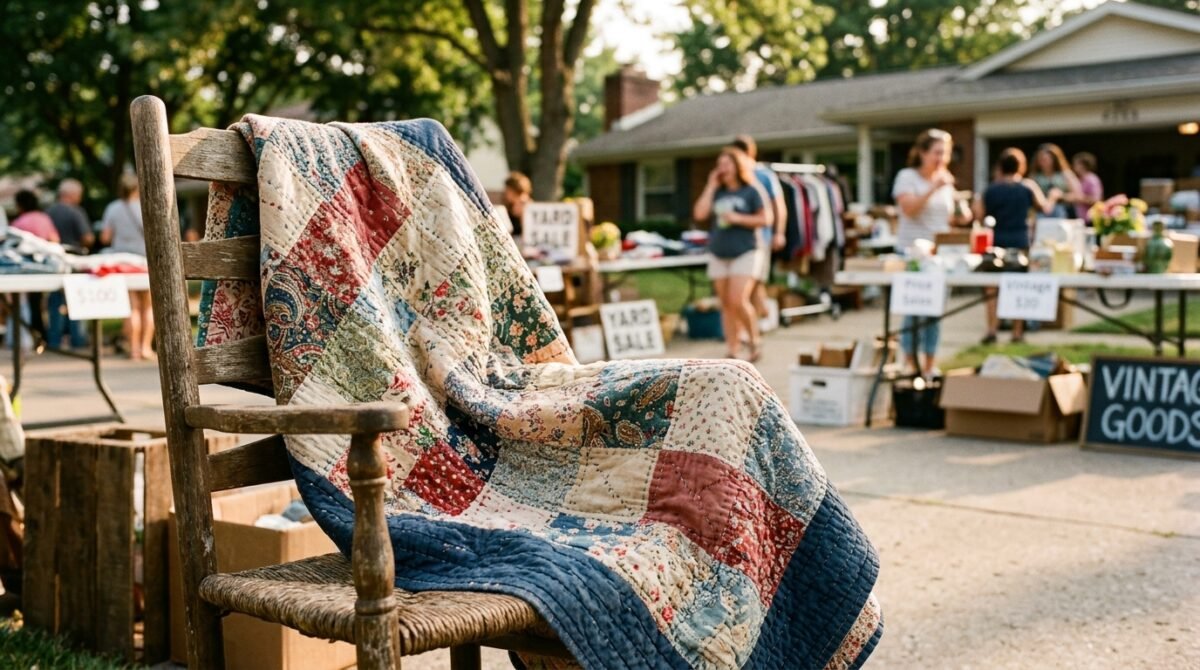
Grief is a strange landscape, one that we navigate with the physical remnants of those we have lost. For our family, that landscape was anchored by a singular object: Grandmother’s hand-stitched quilt. It was not merely a blanket; it was four hundred hours of labor, a tapestry of history stitched together during the long, freezing winters of the late 1960s. Every square represented a story, a scrap of fabric from a dress worn to a dance or a shirt from a harvest long since passed.
When Grandmother passed away last year, the quilt became the centerpiece of our inheritance, a silent witness to our childhoods. It was meant to be passed down through the generations, a sacred trust kept by the family. We all understood its value, or so I thought. We treated it with the kind of reverence reserved for holy relics, folded neatly in a cedar chest, protected from the ravages of time and neglect.
Then came the yard sale. It was supposed to be a simple, cathartic exercise—cleaning out the garage, shedding the weight of excess possessions to make room for new beginnings. My sister, Clara, took charge of the event, promising to manage the inventory with the same care she applied to her own curated life. I trusted her. That was my first mistake.
The revelation that the quilt was gone didn’t come in a dramatic confession. It came in a casual, offhand comment while she was scrolling through her phone, buzzing with the excitement of an upcoming pop concert. She needed quick cash, and my grandmother’s legacy was the collateral damage. What followed was not just a fight over a piece of fabric, but a collision of values that shattered our family foundation.
The Disappearance at the Driveway Sale
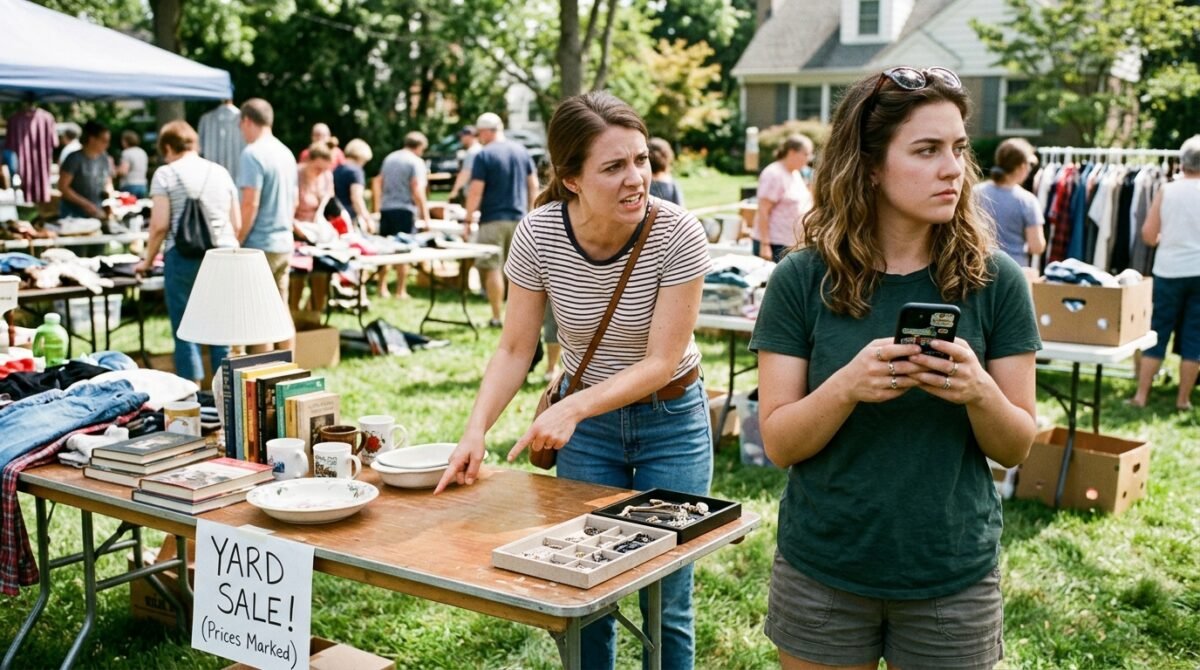
The morning of the sale was humid and chaotic. Neighbors swarmed the driveway like vultures, picking over old kitchenware and dusty board games. I was inside, sorting through the final boxes in the attic, oblivious to the fact that the cedar chest in the corner had already been breached. Clara was in her element, marking prices with a sharpie and a predatory grin, eager to turn our shared history into concert ticket money.
I didn’t notice the absence of the quilt until the early afternoon. I walked downstairs, expecting to see the familiar floral patterns of the quilt draped over the display table, but there was only a pile of moth-eaten sweaters. A cold feeling settled in my stomach. I approached Clara, who was currently laughing at a text message, her fingers flying across her screen.
“Clara, where is the quilt? The one Grandmother made? I thought we agreed that wasn’t for sale.”
She didn’t even look up at first. She just shrugged, her voice airy and dismissive. “Oh, that old thing? It was taking up too much space, and let’s be honest, it was kind of itchy. Some woman bought it for ten dollars about an hour ago. She seemed happy enough with it.”
Ten dollars. The audacity of that number hit me like a physical blow. It wasn’t about the money; it was about the desecration. I felt the breath leave my lungs as I realized the permanence of what she had done. She had traded a lifetime of love for a nosebleed seat at a show she would likely forget in a year.
“Ten dollars? You sold a hundred hours of hand-stitching for the price of a mediocre lunch? How could you, Clara? That was the only thing I asked to keep safe.” My voice was shaking, drawing the attention of a few lingering neighbors who suddenly found the nearby pile of books very interesting.
She finally looked up, her expression hardening into that familiar, defensive mask she wore whenever she was caught in a lie. “It’s just fabric. It was rotting in that chest. You’re being dramatic, as always. Maybe if you spent more time living in the present, you wouldn’t be so obsessed with dead people’s junk.”
The Justification in the Digital Ether
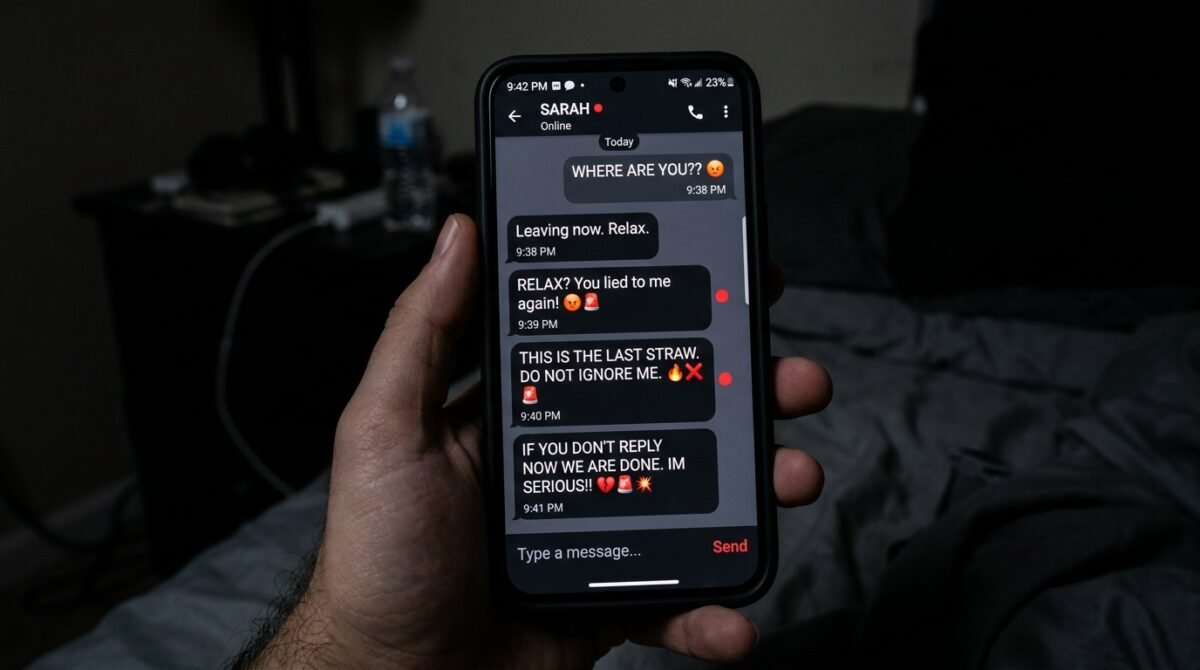
The aftermath of the discovery wasn’t a quiet discussion; it was a digital war. Within hours of the yard sale ending, the family group chat began to ping incessantly. I had already vented my frustration to our parents, who were horrified, but Clara was already ahead of the narrative, spinning a web of ‘minimalism’ and ‘financial pragmatism’ to shield herself from the fallout.
“Honestly, the house was drowning in clutter. I was doing everyone a favor by clearing out the junk. If people want to be sentimental about old rags, that’s their problem, not mine.”
— Clara, Family Group Chat
I read the message, my thumbs trembling as I typed out my response. I wanted to scream, to call her every name in the book, but I kept my tone icy and factual. I knew that if I lost my cool, she would just paint me as the ‘unstable one’ again. I had to document this. I had to show the family exactly what her ‘minimalism’ looked like when it involved someone else’s property.
My father tried to intervene, sending a long, rambling message about respect and legacy, but Clara ignored him. She was focused on the logistics of her concert, posting a photo of her ticket confirmation as if to spite me. It was a digital middle finger, a clear declaration that her immediate desires outweighed any familial duty or emotional attachment.
“You didn’t do us a favor, Clara. You stole. That quilt wasn’t yours to sell. It was a shared heirloom. Did you at least get the contact info of the person who bought it? I need to track it down.” I sent the message, praying for a reply that wasn’t a mockery. I would pay anything to get that quilt back.
The silence that followed was deafening. She read the message—I could see the ‘read’ receipt—but she didn’t answer for hours. When she finally did, it was a knife in the dark. “I didn’t take names. It’s gone. Get over it. I’ve already spent the money on the tickets, so don’t even think about asking for a refund.”
An Unexpected Ally in the Neighborhood
I couldn’t just let it go. The guilt of losing that quilt was eating me alive. I spent the next two days wandering the neighborhood, knocking on doors, and asking if anyone had attended the yard sale. It felt pathetic, a middle-aged adult chasing a blanket, but I couldn’t stop. It was the last tangible thing I had of Grandmother’s hands.
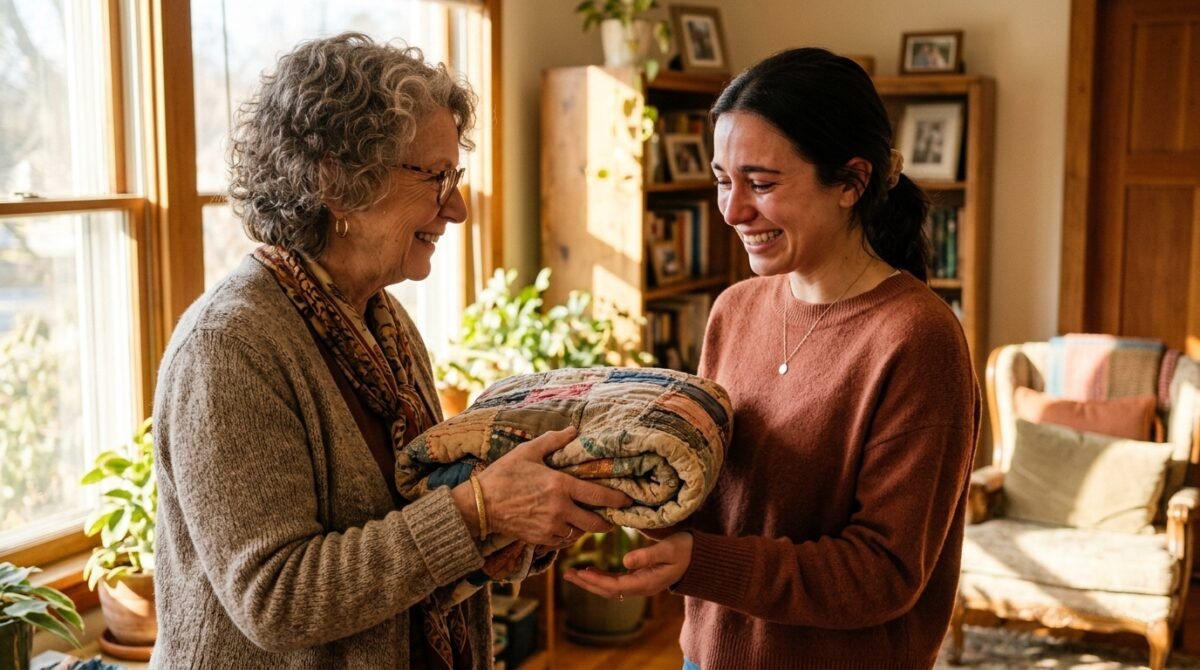
Finally, I reached the house three blocks over. An elderly woman named Mrs. Gable answered. She looked surprised to see me, but when I described the quilt—the specific pattern of the blue cornflowers and the slightly frayed corner—her face softened. She invited me in, and there, draped over her sofa, was my history.
“I thought it was a lovely find,” Mrs. Gable said softly, patting the fabric. “The girl at the sale didn’t seem to know what she had. She just wanted it gone as fast as she could take my ten dollars. I didn’t realize it had such sentimental value to anyone.”
I burst into tears. It was an undignified, messy release of all the tension I had been holding since the day of the sale. I explained the entire situation, my voice breaking as I described the fight with Clara. Mrs. Gable didn’t hesitate; she handed it back to me, refusing my offer of money. She understood the weight of memory better than my own sister did.
Walking home with the quilt clutched to my chest, I felt a strange sense of vindication. I had won this small battle, but the war with Clara was far from over. I knew she would be furious when she found out I had retrieved it, mostly because it proved that her ‘junk’ was, in fact, something of value. She hated being wrong, and she hated being exposed.
When I arrived back at the house, I didn’t hide the quilt. I hung it over the back of the living room chair. When Clara walked in, her eyes flicked to it, and the color drained from her face. She didn’t say a word, but the look of pure, concentrated hatred she shot my way told me everything I needed to know about our future.
The Reddit Trial: Setting the Stage

I needed perspective. Was I the crazy one? Was I truly being too ‘sentimental’ about ‘dead people’s junk’? I turned to the only place that would give me an unfiltered, if occasionally brutal, reality check: the AITA subreddit. I typed out the story, laying out the timeline, the dollar amount, and the blatant disregard for our shared history.
I didn’t sugarcoat it. I included the text messages, the callous comments about the ‘itchy’ fabric, and the fact that she had used the money for a concert. I wanted the internet to decide if I was the one with the boundary problem or if I was merely defending something that had been stolen from my heart.
The response was immediate and overwhelming. Within an hour, the post had thousands of upvotes. The community reaction was a mixture of outrage and genuine disbelief at the sheer pettiness of the act. I refreshed the page, reading comment after comment that validated the anger I had been suppressing for weeks.
“NTA. Your sister didn’t just sell a blanket; she sold a piece of your family history to fund her own entertainment. That’s a level of selfishness that’s hard to wrap my head around. The fact that she called it ‘junk’ tells you everything you need to know about her respect for your shared heritage.”
— u/FamilyDramaExpert (Top Comment, 18.2k upvotes)
It was cathartic to see the consensus. Strangers who knew nothing about our lives were able to identify the violation immediately. It helped me realize that my reaction wasn’t just ‘drama’; it was a rational response to an irrational and hurtful betrayal. I felt less alone, and more emboldened to stand my ground.
However, there were dissenting voices. A few people argued that if the item wasn’t explicitly willed to me, it was ‘fair game’ for anyone to sell. It was a harsh reminder that legal ownership and moral duty often exist in different spheres. I debated with them, explaining the concept of communal trust, but the majority stayed firmly on my side.
The thread became a repository for similar stories—people who had lost heirlooms to siblings, parents, or spouses. It created a sense of community, a digital support group for those who had been victimized by the ‘minimalist’ impulses of relatives who saw no value in anything that couldn’t be quantified on a receipt.
The Face-to-Face Confrontation
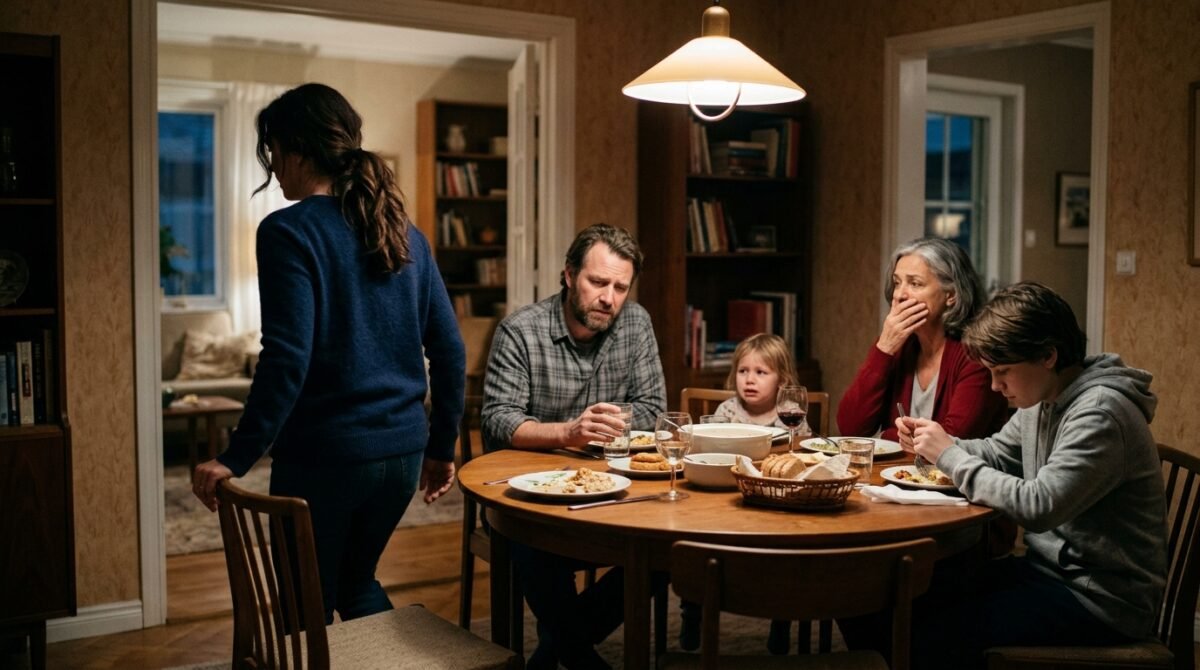
A few days later, the tension reached a breaking point. We were at our parents’ house for a mandatory Sunday dinner, an event that usually involved strained smiles and forced conversation. I knew Clara would bring up the quilt, or rather, she would try to rewrite the history of what happened. I was ready.
She sat at the table, her phone resting near her plate, her demeanor aggressively nonchalant. As we were finishing the main course, she cleared her throat, a smirk playing on her lips. “So, I heard about your little ‘detective work’ at the neighbor’s house. You really need a hobby, you know. Obsessing over a dirty old blanket is kind of pathetic.”
I put my fork down, the clatter echoing in the quiet room. My parents exchanged nervous glances, bracing for the inevitable. I didn’t raise my voice. I leaned forward, looking her directly in the eyes. “It wasn’t a hobby, Clara. It was recovering stolen property. And it wasn’t dirty. It was cared for, which is more than I can say for your sense of integrity.”
“You’re pathetic! You act like you’re the martyr of this family because you have a thing for dusty heirlooms. Nobody cares about that quilt except you. You’re just looking for an excuse to keep me down.”
The accusation hung in the air. She was projecting, as always, turning her own guilt into an attack on my character. I didn’t flinch. I calmly explained that her entitlement was the issue, not my sentimentality. I told her that if she couldn’t respect the things that mattered to the rest of us, she had no place managing our shared history.
My mother finally spoke up, her voice trembling. “Clara, that quilt belonged to your grandmother. It was not yours to sell. You need to apologize.” Clara let out a sharp, incredulous laugh and stood up, pushing her chair back with a screech. She grabbed her purse and stormed out, leaving the rest of us in a heavy, suffocating silence.
The Fallout and the Cold War
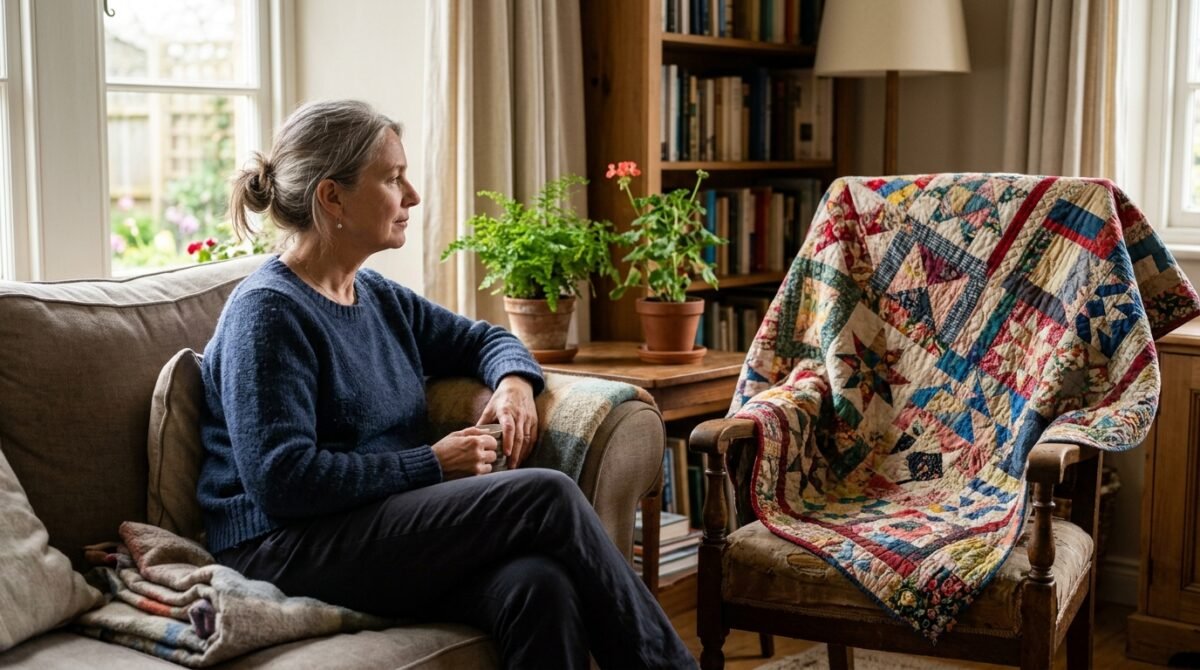
After the dinner, the ‘cold war’ began in earnest. We stopped speaking. The group chat fell silent, save for the occasional, awkward check-in from our father. It was a relief, in a way, to stop pretending that everything was fine. The tension had been simmering for years, and the quilt incident was merely the spark that ignited the powder keg.
I started setting boundaries. No more joint errands. No more ‘helping’ her with her life projects. I focused on my own recovery, taking the quilt to a professional conservator to ensure it would last another fifty years. It felt like a small act of rebellion, a way to honor the legacy she had tried to erase.
Clara, meanwhile, continued her life as if nothing had happened, posting photos from her concert and bragging about her ‘fresh start’ on social media. It stung, seeing her move on so easily, but I forced myself to disengage. I realized that her validation was something I no longer needed, and her opinion of me was no longer a currency I accepted.
Our parents were caught in the middle, trying to play the mediators. They would call me with updates on Clara—how she was ‘sorry’ in her own way, how she was ‘stressed’—but it never translated into an actual apology. A forced apology isn’t an apology; it’s just another form of manipulation. I wasn’t falling for it anymore.
“I don’t need her to be sorry, Mom. I need her to understand why what she did was wrong. But she doesn’t. She thinks she’s the victim here. And as long as she thinks that, there’s no path forward for us.” I kept my stance firm, refusing to engage in the cycle of excuses that had defined our relationship for so long.
The Financial Ledger of Resentment
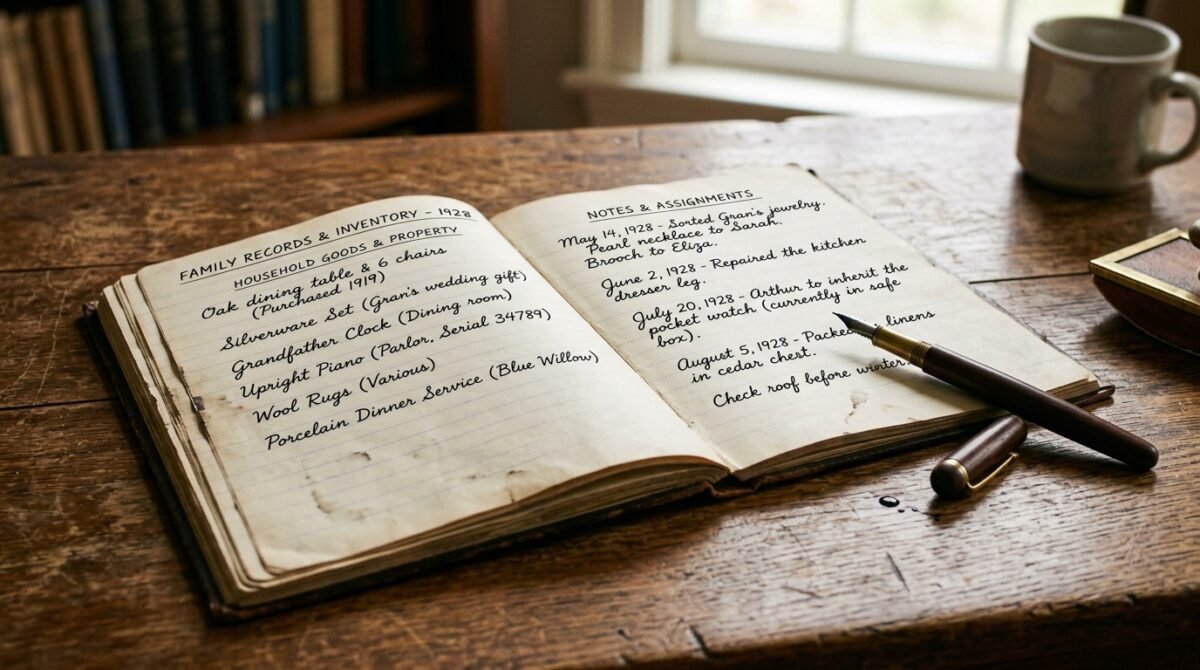
I decided to put the entire incident into perspective. I started a ledger, not just of the quilt, but of the years of boundaries crossed and items ‘borrowed’ and never returned. It was a sobering document. The quilt was just the tip of the iceberg; there was a history of disregarded property rights that I had chosen to ignore for the sake of ‘keeping the peace.’
| Item/Event | Clara’s Claim | The Reality |
|---|---|---|
| Grandmother’s Quilt | Junk/Clutter | Heirloom/$500+ Value |
| Vintage Jewelry | ‘Borrowing’ | Never Returned |
| Family Photos | ‘Digitizing’ | Lost/Discarded |
| Common Space | ‘Minimalizing’ | Destruction of Shared Assets |
Seeing it on paper made me realize how much of my energy I had poured into a bottomless pit of entitlement. I had been subsidizing her lifestyle with my emotional and physical capital for way too long. The ‘minimalism’ she claimed was just a convenient cover for a complete lack of regard for anything that didn’t serve her immediate interests.
I realized that the quilt incident had been a blessing in disguise. It had forced me to confront the pattern. If she hadn’t sold the quilt, she would have eventually sold something else, or crossed another line that would have caused even more damage. This was the moment that finally allowed me to cut the cord.
I started separating my life from hers completely. I took back the items that were rightfully mine, and I stopped participating in the ‘shared’ tasks that she inevitably sabotaged. It was a liberating feeling to realize that I wasn’t responsible for her behavior, and I certainly wasn’t responsible for fixing the messes she made.
The ledger was my final piece of evidence, not for her—she wouldn’t care—but for me. It was the proof I needed that my feelings were not just valid, but based on a long history of objective facts. I was done being the enabler. I was done being the one who had to ‘get over it’ while she continued to take everything for granted.
Community Reflection: The Ethics of Inheritance

The Reddit thread kept growing. People from all over the world weighed in, not just on my specific situation, but on the broader issue of family heirlooms and the ‘right’ to sell them. It was fascinating to see the cultural differences in how people valued physical remnants of the past.
“My sister did the same thing with our grandmother’s china. She sold it to a vintage shop to pay for a vacation. I didn’t speak to her for three years. Some people just don’t have the capacity to understand that some things aren’t replaceable. They see value only in money, not in meaning.”
— u/LostMemoryCollector (12.4k upvotes)
Others brought up the legal aspects—the ‘executor’ role and the responsibilities that came with it. Many people didn’t realize that managing an estate wasn’t just about clearing out a house; it was about fiduciary duty. It was a complex conversation about the intersection of law, emotion, and morality.
I learned that I wasn’t alone in the feeling that an heirloom is a bridge to the past. People shared stories of quilts, furniture, and letters that kept their loved ones ‘alive’ in a sense. The debate shifted from ‘was it right’ to ‘how do we protect these things before they are gone?’ It was a helpful, constructive direction for the discussion to take.
Some suggested that in the future, all heirlooms should be documented and legally willed to specific individuals to avoid the ‘yard sale’ scenario. It was sound advice, and one I plan to implement for my own estate. Protecting history is a proactive, not reactive, process. I appreciated the community’s practical wisdom amidst the emotional turmoil.
The thread became a space of healing, not just for me, but for anyone who had experienced the same kind of casual erasure of their history. We shared stories of loss, but also of recovery and the strength it takes to set boundaries with those who do not respect the things we hold dear. It was a reminder that we choose our own families, and we choose how much access we give to those who don’t share our values.
The Final Stand: No More Excuses

Months later, I finally received a call from Clara. It wasn’t an apology, of course. It was a request for money, citing a ‘temporary financial crisis.’ It was almost laughable. The cycle was playing out exactly as it always had: she would act out, ignore the consequences, and then expect me to step in and save her from the fallout.
I listened to her speech, the familiar cadence of victimhood and entitlement, and then I simply said, “No.” The word felt powerful. I didn’t explain. I didn’t justify. I didn’t argue. I just refused to participate in the drama anymore. The silence on the other end was absolute, followed by a flurry of accusations and insults that I let wash over me like water.
“You’ve changed,” she spat. “You’re so cold, so distant. You’re holding a grudge over a stupid blanket and now you won’t even help your own sister? You’re the one who ruined this family.” I didn’t bite. I didn’t need to defend myself. I knew who I was, and I knew what she was capable of.
I hung up the phone and blocked the number. It was the final step in a long process of decoupling my life from hers. I felt a weight lift off my shoulders—not just the weight of the quilt, but the weight of her expectations. I was free to define my own relationships, my own values, and my own legacy, without the shadow of her entitlement hanging over me.
I realized then that ‘family’ isn’t just about blood; it’s about mutual respect and shared values. When that is gone, the label is just a word. I had kept the quilt, I had kept my peace, and I had successfully navigated the most difficult chapter of my life. I was finally, truly, moving forward.
Reflecting on the Fabric of Our Lives
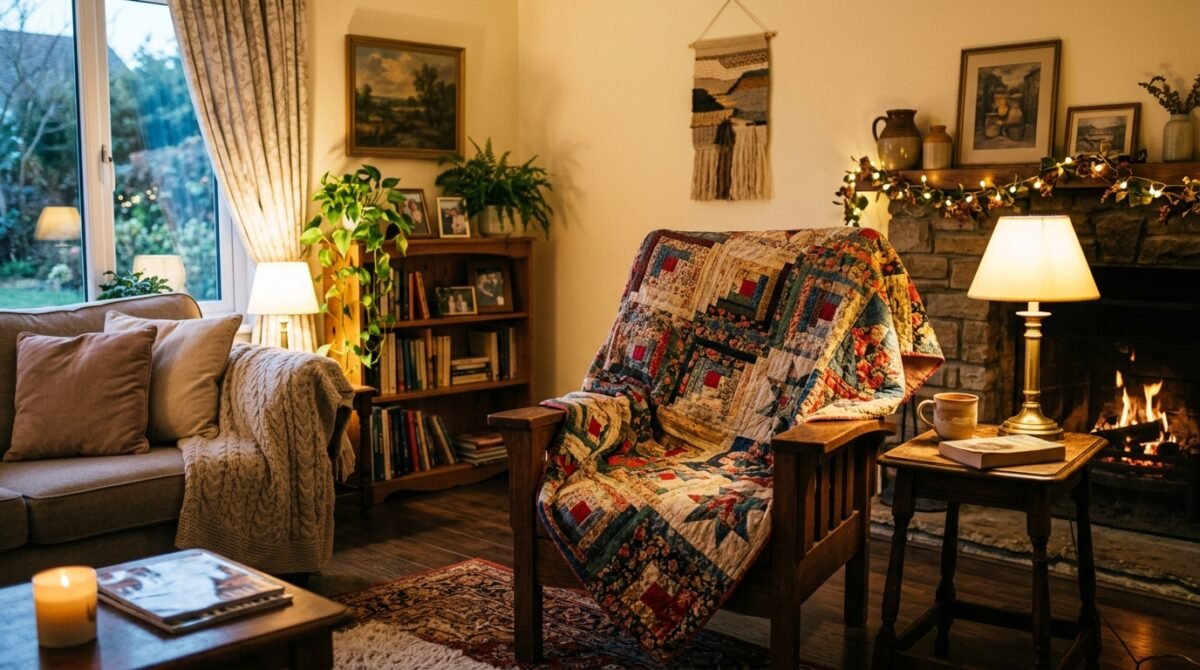
Looking back at the quilt now, hanging proudly in my living room, I see more than just stitches and fabric. I see the resilience of a history that almost vanished. I see the importance of standing up for what matters, even when it feels ‘petty’ to the rest of the world. The quilt is a symbol of the boundaries I finally learned to build, and the self-worth I finally learned to prioritize.
Clara is still out there, living her life, perhaps selling someone else’s memory for a quick buck. I don’t harbor ill will, but I don’t hold a place for her in my life either. We are on different paths, and that is okay. The lessons I learned from this incident—about ownership, about entitlement, and about the courage to say ‘no’—have served me well in every other aspect of my life.
I have started a new tradition: every year, I add a single, small patch to the corner of the quilt. It’s a new story, a new memory, and a new way of showing that the legacy continues, not through destruction, but through creation and care. It’s a way of honoring Grandmother, while also honoring the person I have become through this struggle.
The quilt will stay with me for as long as I live, and then it will go to someone who understands its value—someone who sees the history in every stitch, not the price tag. I am the steward of this legacy now, and I will protect it with everything I have. That is my promise to the past, and my gift to the future.
Conclusion
This story is a reminder that the items we inherit are not just objects; they are anchors to our identity and the people who shaped us. When we allow those anchors to be discarded or sold, we risk losing a piece of ourselves. The lesson here is clear: set your boundaries early, communicate your values clearly, and do not be afraid to stand your ground when those values are threatened.
Whether it’s a hand-stitched quilt or a small keepsake, your heirlooms are your history. Protect them, cherish them, and ensure they go to those who will honor them. Have you ever faced a similar betrayal with a family member? How did you handle the loss of an item that meant the world to you? Share your stories below—let’s discuss how we can better protect our family legacies.
What's your verdict on this dilemma?
Vote below to contribute to the official community consensus.

Have a Dilemma Keeping You Up at Night?
Share your real-life feud, wedding chaos, or relationship crossroads anonymously with our editorial team.
What do you think ?
0 Comments🛡️ Comments are moderated to protect community integrity. Your comment will appear once approved by the editorial team.