

When I bought my loft in the city’s industrial district, it wasn’t just a purchase; it was the culmination of ten years of brutal freelance work and aggressive saving. The space was designed by a renowned local architect, featuring exposed brick, polished concrete floors, and a sweeping view of the skyline that felt like a reward for every sleepless night I had endured. It was quiet, it was mine, and for a short time, it was my sanctuary.
My childhood best friend, Sarah, had fallen on hard times after a messy breakup and a sudden layoff. When she asked to crash on my couch for a few weeks, I didn’t hesitate. We had grown up together, survived high school drama, and supported each other through every major life transition. Opening my door to her felt like the natural, honorable thing to do. I never expected that my hospitality would be weaponized against me in the most calculated way imaginable.
The first signs were subtle. I’d come home to find the furniture slightly rearranged or a ring light tucked away in the closet, which I initially brushed off as Sarah being a bit messy with her vanity projects. But as the weeks turned into months, the atmosphere in the loft shifted. There was a lingering scent of unfamiliar perfume, a stray velvet rope tucked into a corner, and a strange, persistent buzz of activity that seemed to happen only during the hours I was away at my office.
The moral dilemma crystallized when I walked through my front door two hours early on a Tuesday, only to find a complete stranger—a fitness influencer I vaguely recognized from Instagram—posing on my designer sofa while a camera crew moved my custom art pieces to capture better lighting. Sarah was standing in my kitchen, holding a clipboard and looking at the stranger with the cold, practiced gaze of a landlord. That was the moment the veil of friendship was torn away, revealing a parasitic scheme that had been thriving under my roof.
The Unannounced 2:00 PM Kitchen Intrusion
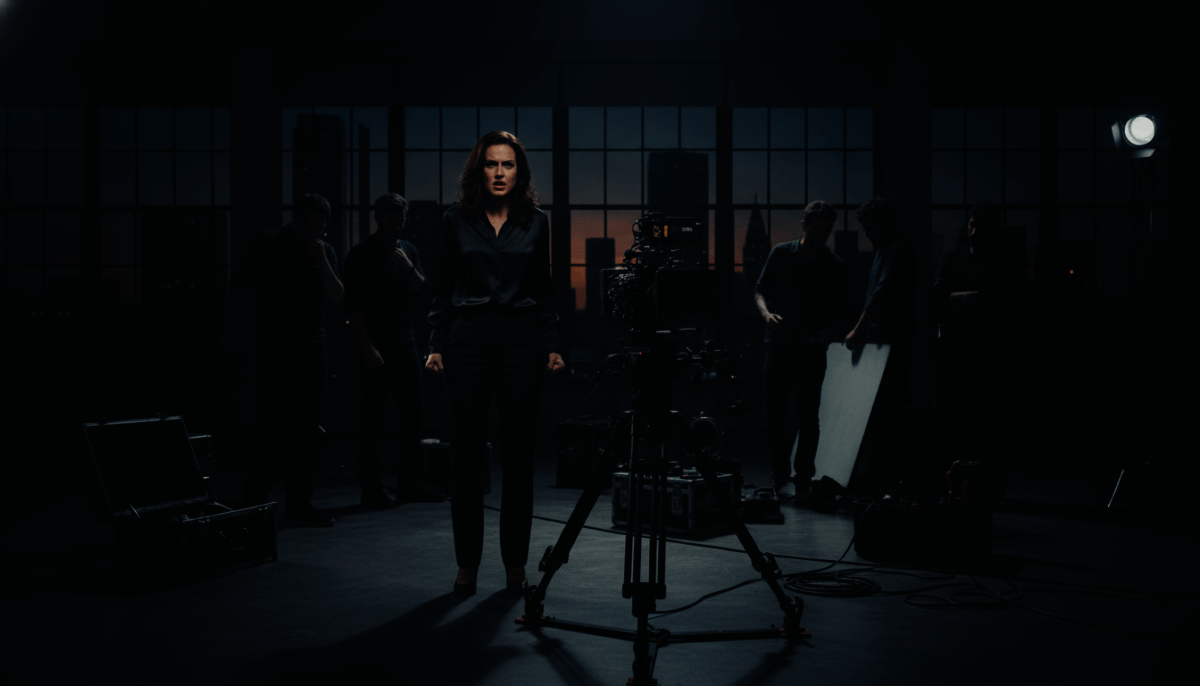
I stood in the doorway, paralyzed by the sheer absurdity of the scene. My living room had been transformed into a temporary production set. A professional ring light was positioned near the window, and my mid-century modern coffee table was pushed aside to make room for a pile of branded athletic gear. The influencer, a woman with two million followers, was mid-squat, oblivious to the fact that her host was currently witnessing the unauthorized transformation of her private home into a profit machine.
Sarah didn’t look guilty. She looked annoyed. She stepped toward me, her heels clicking against the concrete, and tried to steer me back into the hallway as if I were an unwanted guest in my own home. Her voice was hushed, frantic, and entirely devoid of the warmth I had associated with our friendship for two decades. She wasn’t worried about being caught; she was worried about the disruption to her workflow.
“What are you doing here? You aren’t supposed to be home until six. Go grab a coffee, come back in an hour, and I’ll explain everything. You’re ruining the lighting.”
— Sarah, attempting to gaslight me in my own entryway
I pushed past her, my heart hammering against my ribs. I walked straight to the influencer, who looked up, startled, as she realized she had been filming in a private residence without the owner’s consent. I felt a surge of cold, sharp anger that was far more powerful than the confusion I had felt seconds before. It wasn’t just the invasion; it was the audacity of Sarah using my personal sanctuary as a commodity.
The influencer’s team began to scramble, packing up lenses and cables in a flurry of nervous energy. Sarah stood by, her arms crossed, watching them leave with a look of pure disdain. When the door finally clicked shut, the silence that returned to the loft was heavy and suffocating. It was no longer a place of comfort; it was a crime scene of broken trust.
I looked at Sarah, who was already pulling her phone out to text someone, likely a client. The sheer detachment was what hit me hardest. She had lived in my home, shared my food, and accepted my support, all while calculating the hourly rental value of every square foot of my living space. She wasn’t a friend in need; she was a squatter with a business plan.
The Spreadsheet of Deceit
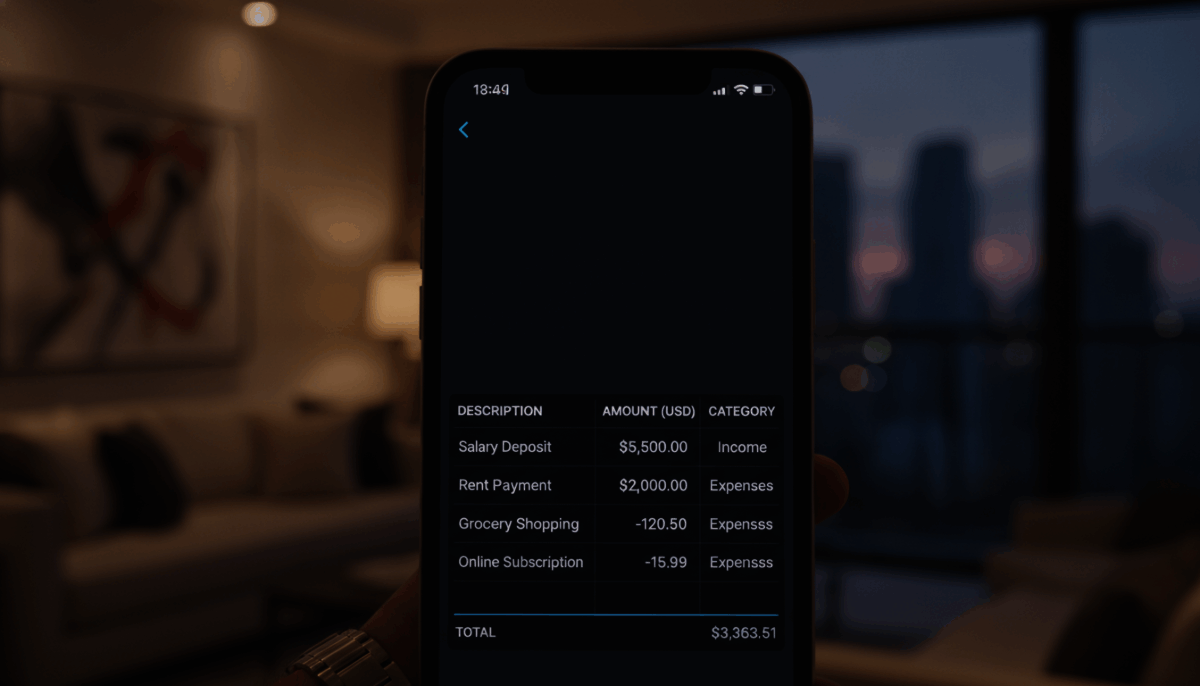
After the confrontation, I demanded to see her phone. I didn’t ask nicely; I simply took it, and for the first time in our long history, Sarah didn’t argue. She knew the game was up. I opened the notes app, and there it was: a meticulously organized spreadsheet titled ‘Loft Rental – Clients.’ My eyes scanned the rows and columns, tracking dates, times, and amounts. She had been charging between $200 and $500 an hour, depending on the influence of the creator and the equipment involved.
The sheer scale of the operation was staggering. She had been running this business for four months. She had documented every transaction, every ‘deposit’ paid to her Venmo, and every single ‘no-show’ fee she had collected. She had even included a column for ‘User Satisfaction,’ which listed local photographers and influencers who were ‘reliable’ and ‘easy to work with.’ It was a business model built on the exploitation of my hospitality.
“I was just trying to get back on my feet. You have everything, and I had nothing. I thought, since you aren’t home most of the day, the space was just sitting there gathering dust. It was a victimless crime, and frankly, I was doing us both a favor by subsidizing the utilities.”
— Sarah’s justification when confronted with her spreadsheet
The logic was so twisted that it almost made me laugh. She viewed my hard-earned assets as a wasted opportunity because I wasn’t actively using them to turn a profit every second of the day. To her, the loft wasn’t a home; it was a dormant asset in a portfolio. Her sense of entitlement was so deeply ingrained that she couldn’t even see the moral bankruptcy of her actions.
I sat on the edge of my bed, scrolling through the list of names. Some of them were people I respected in the industry—colleagues who had been in my home for drinks, people I considered peers. The realization that they had participated in this, knowing full well the loft belonged to me and not Sarah, felt like a betrayal of my entire professional reputation. She had positioned herself as the ‘manager’ of the space, successfully convincing dozens of people that she had sublet the property.
I felt a deep, hollow ache in my chest. This wasn’t just about the money, which amounted to over $12,000 by my quick estimation. It was about the way she had curated a life of lies. She hadn’t just used the loft; she had used my identity as a successful professional to bolster her own credibility as a studio manager. Every dollar she made was a testament to how easily she could discard our friendship for a quick profit.
The 2:00 AM Ultimatum
That night, the tension in the loft was thick enough to cut with a knife. Sarah stayed in the guest room, probably texting her conspirators to figure out how to navigate the fallout. I couldn’t sleep. I spent the hours pacing the hardwood floor, debating whether to call the police, file a lawsuit, or simply kick her out that second. The legal reality was complex; she was a guest, not a tenant, but the ambiguity of ‘friendship’ made the process feel messy.
I eventually knocked on the guest room door. She opened it, looking tired and defiant. I didn’t yell. I didn’t cry. I simply held out my phone, showing her the spreadsheet. I told her that she had until 8:00 AM to pack her things, clear her equipment, and be out of my life permanently. I told her that if there was so much as a single scratch on the walls or a piece of my furniture missing, I would involve the authorities without a second thought.
“You’re really going to throw me out? After everything we’ve been through? I’m your best friend. This is just a misunderstanding about how we can help each other. We can split the profits from here on out. Don’t be petty.”
— Sarah, attempting to negotiate her way out of eviction
Her suggestion that I should become her silent business partner was the final nail in the coffin. It was so incredibly insulting that it finally gave me the clarity I needed. She had no remorse. She saw our friendship as a tool for leverage, and the fact that I was hurt was just a secondary annoyance she had to negotiate around. I realized then that I hadn’t lost a best friend; I had discovered that the person I called my best friend never existed.
The next morning was a blur of silence. Sarah packed her bags with a calculated slowness, clearly hoping I would change my mind or offer some kind of compromise. I stood by the front door, arms crossed, watching her empty the guest closet. I felt nothing but a profound sense of relief as each of her belongings left my space. It was like watching a fever finally break.
As she walked out the door with her final suitcase, she didn’t look back. There were no apologies, no final pleas for reconciliation. She just walked out into the hallway, her heels clicking on the tile, and the heavy door finally locked behind her. I stood in the middle of my loft, in the quiet, empty space, and for the first time in months, it finally felt like mine again.
The Digital Trail of Betrayal
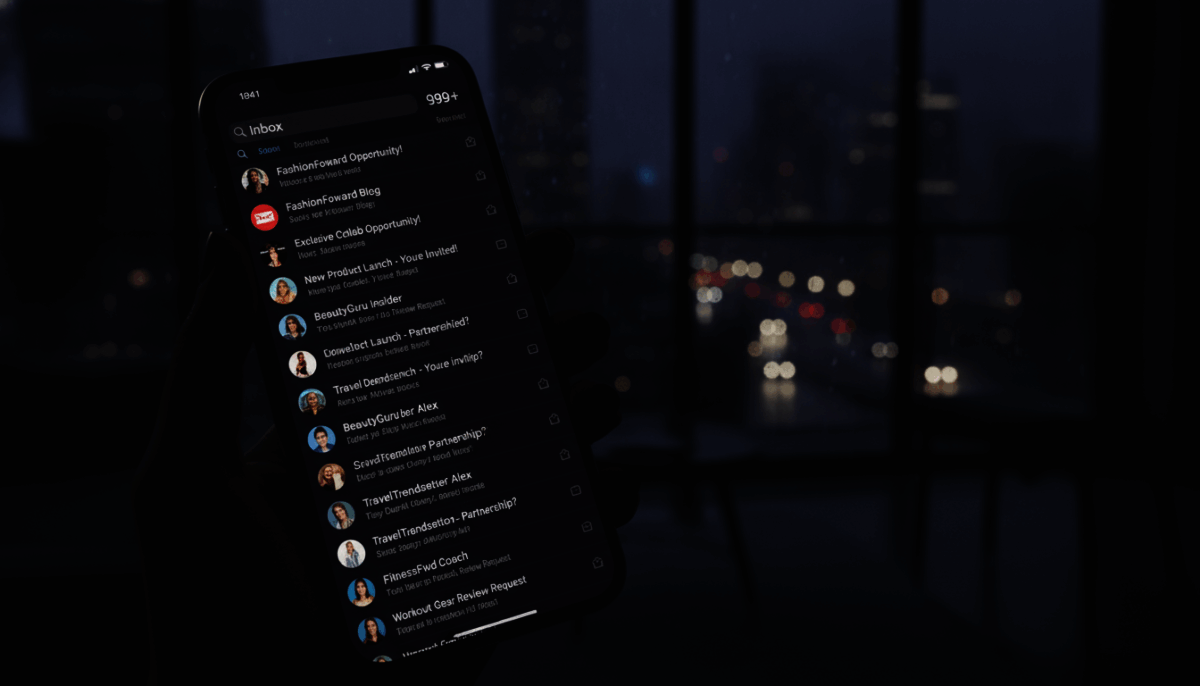
Within forty-eight hours, the fallout began to leak into the digital world. I started receiving DMs from the influencers and photographers who had been regular ‘clients’ of Sarah’s. They were confused, angry, and, in some cases, terrified. They had paid deposits, booked time slots, and were now suddenly being told their sessions were canceled. It turned out Sarah had been taking ‘advance booking fees’ for the next three months, totaling nearly $5,000.
One influencer in particular, a major figure in the local beauty scene, sent me a long, panicked message. She had already paid for a ‘premium lighting package’ that included access to my balcony and kitchen. She was furious when she realized the ‘manager’ she had been working with had no legal standing to rent out the space. The emails she forwarded me were chilling—they were professional, cold, and entirely designed to deceive.
“I am so sorry to hear this, but Sarah told me she had full power of attorney and was managing the property for you while you were abroad for work. She showed me a contract that looked completely legitimate. I’ve already sent out marketing materials with this location tagged. Who do I contact to resolve this?”
— Leaked DM from an influencer client
The ‘contract’ she had forged was a masterpiece of deception. She had even gone so far as to create a fake email address that looked like my personal handle. The sheer amount of effort she had put into this scam was honestly impressive, in a dark, twisted way. She had built a complete facade, using my home as the foundation for a business built entirely on lies.
I spent the next two weeks cleaning up the mess. I had to issue public statements on my own social media to clear my name and distance myself from the scam. I had to contact my building’s property management to ensure I wasn’t being held liable for the unauthorized commercial activity. It was a nightmare of bureaucracy and public image management that I never asked for.
Through it all, I kept wondering: how many people did she trick? How many of my friends had been aware of what she was doing but stayed silent because she gave them a discount on the studio space? The paranoia started to set in, and I began to view every interaction through a lens of suspicion. It was a difficult period, but it was necessary for the full audit of my life.
The Community Verdict: Reddit Responds
I finally decided to post the story on a popular advice subreddit, needing an objective perspective to make sure I wasn’t being too harsh or missing a legal angle. The response was immediate and overwhelming. Thousands of people weighed in within the first few hours. The consensus was shockingly unanimous, though the reasons varied from legal warnings to moral outrage.
“This isn’t just a ‘friendship issue.’ This is fraud. She forged your signature, impersonated you, and engaged in commercial activity that could have jeopardized your lease or mortgage. You need a lawyer, not a friend. Get all the documentation ready and don’t look back.”
— u/LegalEagle99 (Top Comment, 32.1k upvotes)
The community support was validating, but there were also those who urged me to take the legal route. I hadn’t realized until the comments started coming in just how much liability I had been exposed to. If one of those influencers had been injured while filming in my loft, or if they had damaged the building’s infrastructure, the legal blowback could have destroyed my financial future.
“You evicted her? You should have sued her for every dime she made off your property. That’s not ‘friendship’—that’s a parasitic relationship. She wasn’t just using your couch, she was using your life as her retirement fund. Don’t let her get away with just moving out.”
— u/JusticeSeeker (14.2k upvotes)
Some users pointed out the gray areas of the relationship, suggesting I might have been ‘too passive’ in the beginning, but most were firmly on my side. The thread became a hub for people sharing similar horror stories of friends who had taken advantage of their kindness. It was strangely comforting to know that while my situation was extreme, the feeling of being violated by someone you trust was, unfortunately, a universal experience.
I took the advice to heart and started documenting everything. I kept every email, every text, and every screenshot. I knew that if Sarah ever tried to come back or if her ‘clients’ tried to sue, I would be ready. The Reddit community didn’t just give me advice; they gave me the confidence to stand my ground and treat this like the business disaster it actually was.
The Quiet Aftermath

The weeks following the eviction were the quietest I’ve ever known. I redecorated the entire loft, changing the layout and getting rid of the furniture Sarah had ‘helped’ me choose. I wanted to erase her influence from every corner of the space. It was a therapeutic process, though it was also a painful reminder of how much I had allowed her to change my environment.
I started attending therapy to deal with the fallout. It wasn’t just about the money or the loft; it was about the realization that my trust was so easily manipulated. I had to learn how to set boundaries that weren’t just suggestions but actual walls. I had to learn how to say ‘no’ to people I cared about, even when they seemed like they were struggling.
“You have to understand that your generosity was being treated as a weakness. It’s not that you were ‘too nice.’ It’s that you didn’t have a system for protecting your personal life from your professional life. That’s not a character flaw; it’s a boundary issue.”
— My therapist, during our session
The financial recovery was easier than the emotional one. I didn’t sue Sarah, mostly because I realized she had already spent the money and there was nothing left to recover. I decided to consider it the ‘tuition’ for a very expensive lesson in human nature. The money was gone, but the peace of mind I gained was worth far more in the long run.
I kept the loft, and I keep the door locked now. I don’t let people stay over for extended periods unless there’s a clear, written agreement that covers every contingency. It might sound cold to some, but after what I went through, it feels like the only way to ensure that my home remains my own. I finally feel like I have control over my life again.
Conclusion
The final tally of the betrayal was not just in dollars, but in the lost sense of innocence regarding my own home. I learned that trust is not a static state; it is a dynamic process that requires active maintenance and clear, firm boundaries. Sarah was a cautionary tale, a reminder that the people who claim to know you best are often the ones who know exactly how to exploit your weaknesses for their own gain.
Today, I am in a better place. The loft is my sanctuary once more, stripped of the influence of someone who treated it as an asset rather than a home. I have rebuilt my professional reputation, and I have learned to recognize the signs of entitlement before they turn into full-blown exploitation. I am no longer the person who lets people stay indefinitely, but I am also no longer the person who feels guilty for protecting my own space.
I often think about the community that rallied around me on Reddit. Their collective anger and empathy helped me realize that I wasn’t crazy for being hurt, nor was I being ‘petty’ for demanding my home back. It is a powerful thing to have your reality validated when you’ve been gaslit by someone you considered a sister. If you are reading this and feeling the same creeping sense of violation in your own life, know that your boundaries are yours to set, and you do not owe anyone access to your sanctuary, no matter the history you share.
What about you? Have you ever had to draw a hard line with a friend who treated your generosity as a commodity? How did you handle the aftermath? Let us know your thoughts in the comments below.
What's your verdict on this dilemma?
Vote below to contribute to the official community consensus.

Have a Dilemma Keeping You Up at Night?
Share your real-life feud, wedding chaos, or relationship crossroads anonymously with our editorial team.
What do you think ?
0 Comments🛡️ Comments are moderated to protect community integrity. Your comment will appear once approved by the editorial team.