
When my husband, Mark, and I decided to take a four-day getaway for our third wedding anniversary, we thought we were leaving our home in the capable hands of his parents. They had offered to watch our golden retriever, Buster, and water the garden. We trusted them. We handed over the spare key with a smile, never imagining that our private sanctuary would be violated in such an invasive, calculated manner.
The bed was more than just furniture to us. It was a handcrafted, heirloom-quality solid walnut platform bed that we had commissioned from a local woodworker. It cost $6,000, took three months to craft, and was the centerpiece of our master bedroom. It was solid, heavy, and smelled of polished wood. We had saved for a year to afford it. It wasn’t just a place to sleep; it was a symbol of the home we were building together.
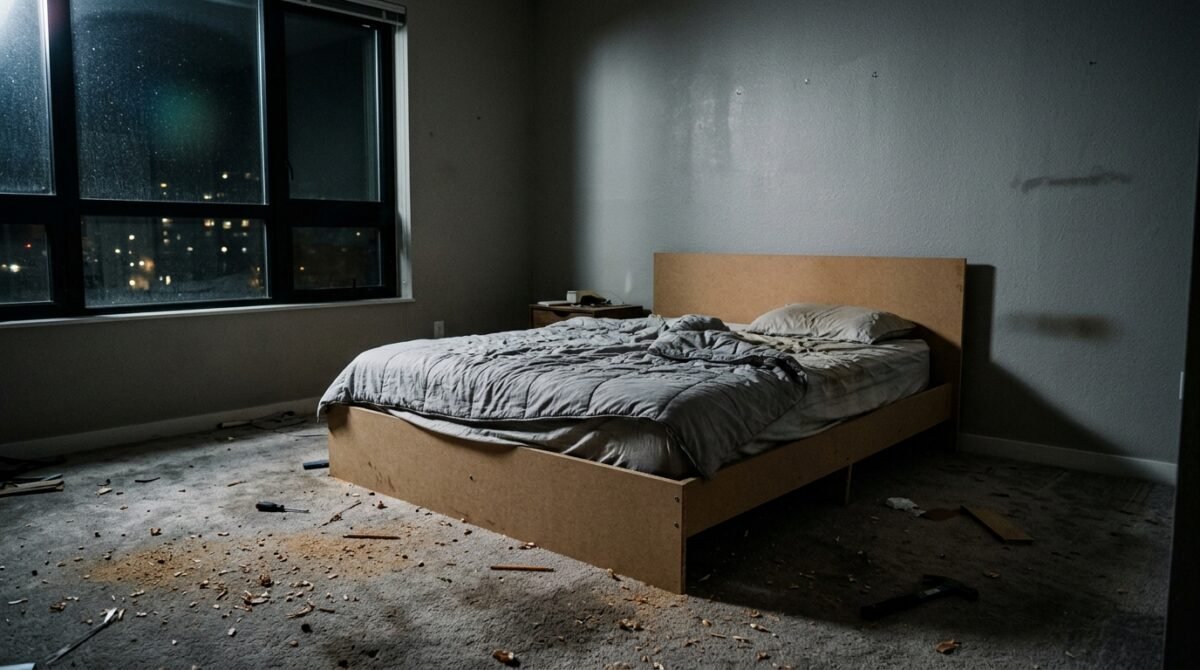
Returning home on Sunday night, I was exhausted and looking forward to nothing more than sinking into my comfortable mattress. As I turned the handle and stepped into the bedroom, the air felt wrong. It was stale. Then, I saw it. The walnut was gone. In its place stood a generic, white-painted particle board frame that looked like it belonged in a college dormitory.
My heart dropped into my stomach. I stood there in the doorway, my suitcase still in my hand, feeling an icy numbness wash over me. Mark stood behind me, his confusion quickly turning into a frantic, panicked realization. This wasn’t a mistake. This was an intervention. But the question remained: why would anyone think they had the right to replace our furniture without our consent?
This is the story of how a weekend getaway turned into a battle for autonomy, respect, and the sanity of my marriage. It is a story about the audacity of family members who believe their preferences outweigh our property rights, and the lengths they will go to enforce their version of what our lives should look like.
The Initial Discovery of the Void
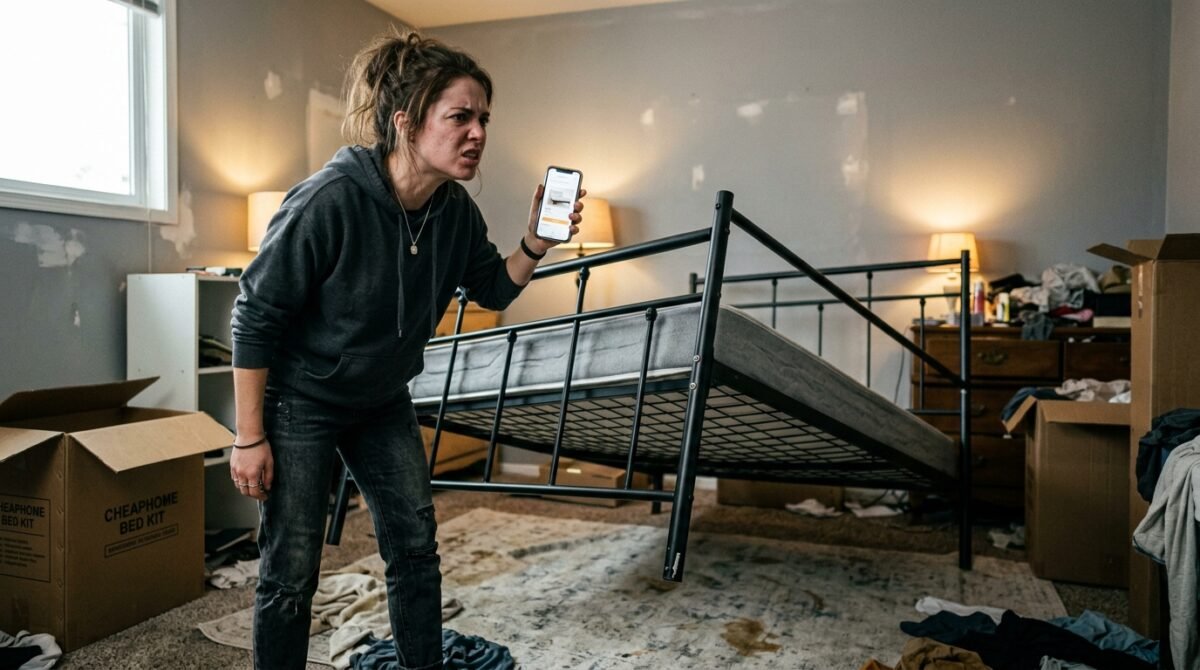
The silence in the house was deafening. I remember the exact texture of the carpet under my feet as I approached the new, hideous bed frame. I touched the white paint; it felt chalky, cheap, and cold. My hands were shaking. I turned to Mark, whose face had gone pale. He was staring at the wall where our custom headboard used to be, his eyes darting around the room as if he expected our real bed to materialize out of thin air.
“Mark, where is it?” I whispered, my voice barely audible. “Where did they put our bed?” He didn’t answer. He was already pulling out his phone, his thumb moving frantically over the screen. I walked into the garage, hoping—praying—that they had just moved it to make room for something else, but the garage was empty. Our beautiful walnut bed had vanished, likely hauled off to a dump or sold for parts.
The realization hit me harder than any physical blow. This wasn’t just about the money, though the financial loss was significant. This was about the violation of our home. They had entered our space, decided our aesthetic was wrong, and physically removed our property. The entitlement required to do that while we were hundreds of miles away was staggering.
“Mark, tell me you’re joking. Tell me you told them they could rearrange the room while we were gone. Please, tell me this is a nightmare.”
— Me, the moment I realized the scale of the intrusion
We spent the next thirty minutes frantically searching the rest of the house, calling his mother, Susan, and his father, Robert. They didn’t pick up. Of course they didn’t. They were probably sitting at home, smugly waiting for our ‘thank you’ for the ‘upgrade’ they had gifted us. The audacity was suffocating.
I felt a deep, primal anger. This was our home. We paid the mortgage. We paid the property taxes. We chose the furniture. By what right did they think they could dictate the contents of our master bedroom? I stood in the center of the room, looking at the particle board monstrosity, and knew that the relationship with my in-laws had reached a terminal point.
The Sunday Night Confrontation
When Susan finally called back, her voice was chirpy, completely oblivious to the wreckage she had left behind. She spoke about the dog, the garden, and how ‘refreshed’ she hoped we were. I couldn’t take it. I grabbed the phone from Mark and demanded to know what they had done with our walnut bed. She paused, and I could hear the smirk in her voice before she even spoke.
“Oh, you saw it! We were worried you wouldn’t notice until morning. We thought it was a lovely surprise. That old thing was so dark and heavy, dear. It made the room look like a dungeon. We found this lovely white frame on sale, and Robert and I spent all Saturday assembling it for you.”
My blood turned to ice. She actually believed she had done us a favor. I could hear Robert in the background, chuckling about how ‘sturdy’ the new bed was. I had to step out onto the porch just to breathe. I was trembling with the kind of rage that makes your vision blur at the edges. I told her, as calmly as I could manage, that they had destroyed $6,000 worth of property and that we expected it back by morning.
“You didn’t ‘upgrade’ anything, Susan. You committed theft. That bed was custom-made and worth six thousand dollars. You had absolutely no right to touch it, let alone throw it away.”
— My response to Susan over the phone
She didn’t apologize. Instead, she got defensive. She started listing all the reasons why our walnut bed was ‘impractical’ and ‘dated.’ She talked about how they had already taken the old one to the local scrapyard because it was ‘too big to keep.’ My heart sank. It was gone. Truly gone.
I hung up on her. I didn’t want to hear another word of her justifications. I walked back inside to find Mark sitting on the edge of the cheap bed, head in his hands. He looked defeated. He had grown up with parents who constantly overstepped, but this was a new level of insanity. He realized, in that moment, that he couldn’t keep protecting them from my anger.
The Paper Trail of Destruction

The next day, we started digging. We went to the local dump where they claimed to have taken the bed. The manager confirmed that a large delivery truck, matching Robert’s description, had dropped off a ‘large pile of high-quality walnut lumber’ early Sunday morning. They didn’t even try to sell it; they treated it like literal trash. It was a calculated act of erasure.
We contacted the woodworker who made the bed, hoping he might have records or could help us understand the value for insurance. When he heard what happened, he was livid. He had put months of labor into that piece. He offered to provide a formal valuation letter for our records, which we knew we would need if we were going to pursue this legally.
Mark’s father sent an email that afternoon. It was the most condescending thing I have ever read. He argued that since they had ‘donated their time and labor’ to ‘improve’ our home, we owed them a debt of gratitude. He claimed that the bed was a ‘fire hazard’ and that they were doing us a ‘service’ by removing it. It was pure, unadulterated gaslighting.
“We are shocked by your ingratitude. We spent a full day working for you, and all we get is a call accusing us of theft? We saved you from a heavy, dust-collecting eyesore. You should be thanking us.”
— Email from Mark’s father, Robert
I read the email over and over, trying to find a shred of logic. There wasn’t one. These were people who saw their children’s lives as an extension of their own, subject to their aesthetic preferences and moral judgment. They felt entitled to our space because they were ‘family.’ But family doesn’t destroy your belongings while you’re away.
We spent the evening printing out receipts, photos of the original bedroom, and the email chain. We weren’t going to let this slide. We needed to establish a boundary, and for that to happen, there had to be consequences. We decided to file a police report, not necessarily to put them in jail, but to have an official record of the theft.
The Family Group Chat Explosion

By Monday afternoon, the news had leaked to the rest of the family. Susan had clearly gone on a campaign to frame herself as the ‘misunderstood benefactor.’ My phone started buzzing with messages from Mark’s sister, Sarah, and his cousins. They were all echoing the same sentiment: ‘It’s just a bed, why are you being so dramatic?’
I didn’t engage at first, but the pressure became impossible to ignore. They were painting me as the ‘ungrateful, cold daughter-in-law’ who was attacking her elderly parents for a ‘nice gesture.’ It was the classic manipulation tactic: turn the victim into the villain so you don’t have to face your own wrongdoing.
“Hey, I heard about the bed drama. Susan is really upset. Can’t you just let this go? They’re getting older, and they just wanted to help out while you were gone. It’s really petty to threaten them with police over furniture.”
— Message from Mark’s sister, Sarah
I finally replied to the group chat. I didn’t hold back. I detailed exactly what the bed was, how much it cost, and the fact that it was our personal property. I made sure everyone knew that they had entered our home without permission to discard our belongings. The chat went dead silent for a full ten minutes after I sent it.
Then, the arguments started. Some family members were on our side, horrified by the audacity. Others, mostly those who benefited from Susan’s ‘help’ in the past, were doubling down on the ‘it’s just stuff’ narrative. It was a microcosm of the toxicity we had been dealing with for years, finally coming to a head in a public forum.
Mark eventually stepped in, backing me up completely. It was the first time he had ever publicly stood against his parents in front of the extended family. You could see the shift in the tone of the chat. The enablers stopped talking when they realized that Mark wasn’t going to play the ‘peacekeeper’ role anymore. It was a small victory, but it felt like a turning point.
The Legal Ultimatum

We spoke to a lawyer on Tuesday. It turns out that destroying someone’s property, even if you are a parent, is still illegal. The fact that they had a key didn’t grant them ownership of our assets. The lawyer drafted a letter. It wasn’t a lawsuit, not yet, but it was a formal demand for the replacement value of the walnut bed. We gave them fourteen days to pay or we would move to small claims court.
When we delivered the letter to their house, Susan tried to laugh it off. She thought it was a joke. Robert, however, looked nervous. He knew that the receipt for the walnut wood and the custom labor was bulletproof. He started talking about ‘family matters,’ trying to pull the emotional card, but we stayed firm. We were done with the excuses.
“This isn’t about family,” I told them, standing on their front porch. “This is about you crossing a line that should never have been crossed. You don’t get to treat our home like your personal project. You owe us the money for the bed, and until that is resolved, we will not be seeing you.”
“We are not interested in an apology. We are interested in restitution. You destroyed our property. You will pay for it, or we will settle this through the legal system.”
— My final words to the in-laws before walking away
They looked at us like we were strangers. The mask of the ‘loving parents’ had slipped, revealing something much colder underneath. They weren’t sorry they had hurt us; they were sorry they were being held accountable. It was a crushing realization, but it also brought a strange sense of clarity. We finally knew exactly who we were dealing with.
Driving away from their house, I felt a weight lift. The bed was gone, yes, but the illusion that we had to keep the peace at the expense of our own boundaries was gone too. We were officially on our own terms, and for the first time in three years, I felt like I was actually in charge of my own life.
Community Reaction: The Reddit Verdict

I posted about the situation on a popular subreddit to get some perspective. I expected some people to call me dramatic, but the response was overwhelmingly supportive. It was heartening to see thousands of people validating the idea that our home is our sanctuary and that no one, not even family, has a right to touch our property without consent.
The comments were a mix of outrage, legal advice, and personal stories of similar boundary-crossing. Many people pointed out that this wasn’t just about a bed; it was about power. By replacing the furniture, the in-laws were trying to assert dominance over our household. It was a classic ‘alpha’ move disguised as a gift.
“This is not just ‘stuff.’ This is a massive violation of privacy. Do not back down. If you let them get away with this, they will be redecorating your kitchen or choosing your car next. Go to small claims court and make them pay every cent.”
— u/LegalEagleEye (Top Comment, 28.5k upvotes)
“The audacity to think they can just throw away someone else’s property and get away with it because ‘we’re family’ is peak narcissism. Stick to your guns. This is the hill to die on.”
— u/BoundariesMatter (12.4k upvotes)
Reading the comments helped me realize that my anger wasn’t disproportionate. It was a rational response to an irrational act. People shared stories about in-laws who had thrown away wedding photos, rearranged appliances, and even gotten rid of pets. It made me feel less alone, but also more determined to protect my space.
The community support provided the backbone we needed to keep going. When the family started reaching out again, trying to guilt us into dropping the legal claim, we just pointed them to the Reddit thread. It was a way of showing them that society at large doesn’t accept this kind of behavior. It wasn’t just me; it was everyone.
The Silence That Followed

The two weeks following the delivery of our legal letter were the quietest of our marriage. No phone calls, no passive-aggressive texts, no surprise visits. It was a forced low-contact period, and it was glorious. We spent the time focused on our own needs, finally feeling like we could breathe in our own home without looking over our shoulders.
We took the opportunity to redecorate the bedroom, but this time, it was on our terms. We didn’t buy a new walnut bed right away. We wanted to take our time, to make sure that the space was truly ours, not a reaction to what had happened. We bought a simple, sturdy frame that was temporary, a placeholder for the future.
It was a process of healing. Every time I walked into the room, I remembered the shock of seeing the particle board, but the sting was fading. I realized that the space wasn’t ruined, just changed. And the change had forced us to grow, to stand up for ourselves, and to define what a healthy relationship with my in-laws looked like.
“You know, I think I was waiting for them to apologize. I was waiting for them to say they were wrong. I’m finally realizing that might never happen. And the weird thing is, I don’t think I even need it anymore.”
— Mark, during a quiet evening at home
That was the breakthrough. We stopped waiting for their validation. We stopped hoping they would understand. We accepted that they were who they were, and that we had the power to protect ourselves from them. It was a mature, if painful, realization that changed the dynamics of our marriage forever.
We stopped letting them have a key. We changed the locks the day after the ultimatum was delivered. It was a symbolic gesture, but it meant everything. We were no longer their children; we were adults with our own domain. The silence was the sound of a new, healthier life beginning.
The Small Claims Court Showdown

When the fourteen days passed without payment, we filed the claim in small claims court. It was a nerve-wracking experience. We had to prepare our evidence: the original receipt for the walnut bed, the photos of the old room, the email from Robert admitting he had ‘removed’ the bed, and the quote from the woodworker. We were ready.
The courtroom was small and intimidating, but we stayed focused. The judge was a no-nonsense individual who seemed to have seen it all before. When Robert and Susan walked in, they looked small. They tried to tell the judge that it was a ‘gift’ gone wrong, that they were trying to help, but the judge cut them off almost immediately.
The judge asked one simple question: ‘Did you have permission to enter their home and dispose of their property?’ When Robert admitted they didn’t, the case was essentially over. It wasn’t about whether they meant well or whether the bed was ‘ugly.’ It was about property rights. It was a clear-cut case of unauthorized destruction of property.
“The law is very clear on this. You do not have the right to dispose of someone else’s property, regardless of your intentions. You are ordered to pay the full value of the bed plus the court costs. This matter is resolved.”
— The presiding judge
We walked out of the courtroom with a judgment in our favor. It wasn’t about the money, though having the $6,000 returned to our account was a nice bonus. It was about the validation. The system had recognized that we were right, and that they had been wrong. It was the final nail in the coffin of their entitlement.
Robert and Susan were stunned. They looked like they had been hit by a truck. They had spent their whole lives thinking that their ‘good intentions’ gave them immunity, and for the first time, they were proven wrong. It was a quiet, crushing defeat that I think they are still trying to process.
The Aftermath and New Boundaries

Life after the court case settled into a new rhythm. We remained low-contact with my in-laws. We saw them at major holidays, but only in public, neutral spaces. No more hosting them at our house, no more spare keys, and no more ‘help’ with our home. We built a firewall around our lives, and it felt secure.
Mark’s relationship with his parents was permanently altered. He stopped trying to be the bridge between us and them. He accepted that they had crossed a line that couldn’t be uncrossed. He became a better partner, more invested in our shared reality and less focused on satisfying their endless demands for control.
We eventually saved up again and commissioned a new bed. We didn’t get the same design—we wanted something that felt like a fresh start. It was a beautiful, minimalist frame made of local white oak. Every time I lay down in it, I feel a sense of pride. It’s not just a bed; it’s a monument to the fact that we protected our home.
“We built this home, brick by brick, piece by piece. No one gets to touch it. Not them, not anyone. We decide what goes in these rooms.”
— My commitment to Mark, and to myself
The incident taught us that boundaries are not something you ask for; they are something you enforce. If you don’t build them, others will tear them down. And if they do, you have the right to demand restitution, to walk away, and to define your own path. It was a hard lesson, but it was worth it.
We are stronger for it. Our marriage is deeper, more resilient, and built on a foundation of mutual respect that didn’t exist before. The walnut bed is gone, but we kept our autonomy. And in the end, that was the most valuable thing we could have possibly saved.
Reflecting on the Lesson

Looking back, I realize that the bed was never the real issue. The bed was just the catalyst. The issue was a lifetime of entitlement that had never been checked. My in-laws had raised a son to believe that their opinions were mandates, and they had expected me to fall into the same pattern of subservience. They were wrong.
I learned that family is not an excuse for bad behavior. If someone in your family treats you in a way that a stranger would be arrested for, treat them like a stranger. Do not make excuses for them. Do not let the ‘family’ label blind you to the reality of the harm they are causing. Stand your ground, protect your space, and know that you deserve better.
I’ve heard from many people since I shared this story who are dealing with similar issues. It’s heartbreaking to see how many people struggle to set boundaries with their parents. But I hope that my story encourages them to realize that it is possible. You can say ‘no.’ You can take legal action. You can cut ties. You are the architect of your own life.
“Your home is your life. Protect it with everything you have. Don’t let anyone, no matter how ‘close’ they are, dictate the terms of your existence.”
— My final takeaway
We are still healing, and we still have moments of frustration when we think about what they did. But we are moving forward. We are building a life that is truly our own, and that is a victory that no one can take away from us. The walnut bed was a sacrifice, but it was the price of our freedom.
I invite anyone reading this to share their own experiences. Have you ever had to draw a line in the sand with family? How did you handle it? Let’s talk about it. Because the more we share, the less power they have to control us with their expectations and their sense of entitlement.
Conclusion
The story of our bed is a story of reclamation. It’s about the moment we stopped being the children in someone else’s play and became the authors of our own lives. The financial loss was real, but the emotional gain was far greater. We learned that our boundaries are our own to define and that we are the only ones responsible for protecting our sanctuary.
We now live with a firm ‘no access’ policy for our in-laws regarding our home renovations and personal belongings. It’s a boundary that has brought peace, stability, and a deep sense of ownership back into our marriage. We didn’t just replace a bed; we replaced a dynamic that was stifling our growth.
What about you? Have you ever had a family member assume control over your home or life decisions? How did you react, and do you regret it or stand by your choice? Let’s keep this conversation going in the comments below. Your stories matter, and they help others find the strength to set their own boundaries. Would you have taken your in-laws to small claims court, or would you have chosen to keep the peace for the sake of the family?
What's your verdict on this dilemma?
Vote below to contribute to the official community consensus.

Have a Dilemma Keeping You Up at Night?
Share your real-life feud, wedding chaos, or relationship crossroads anonymously with our editorial team.
What do you think ?
0 Comments🛡️ Comments are moderated to protect community integrity. Your comment will appear once approved by the editorial team.