
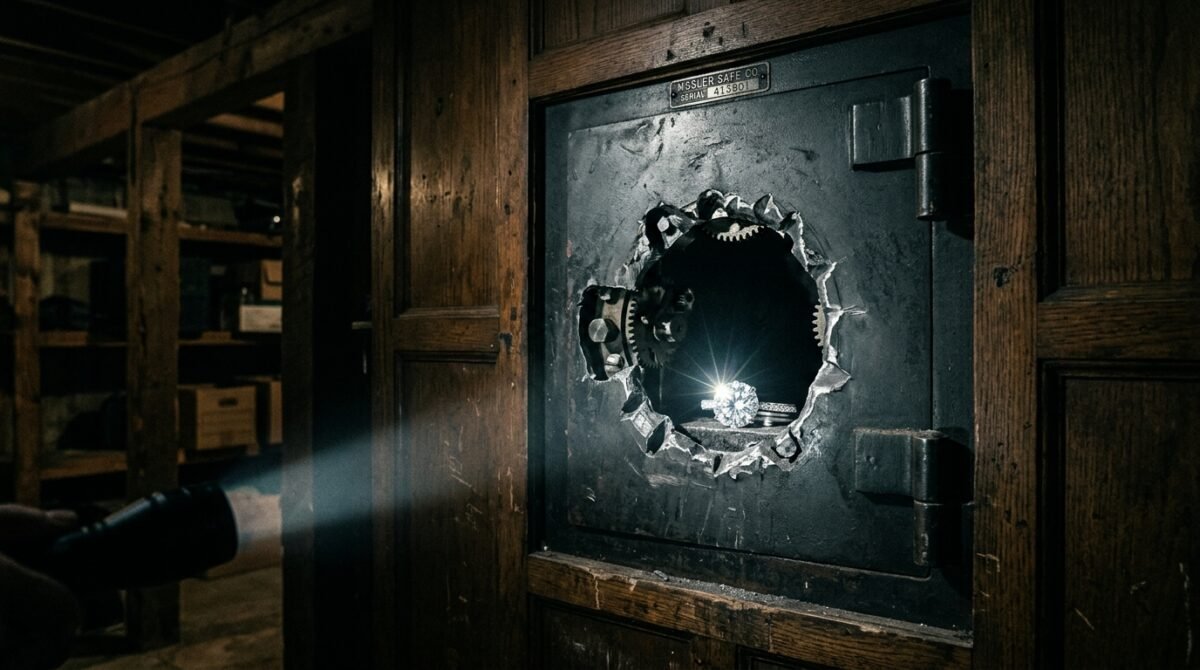
Grief does strange things to people, but for my sister, Sarah, it acted as a catalyst for a kind of greed I never thought possible. After our mother passed away six months ago, the house became a battleground of memories and legal obligations. While I was busy handling the probate and the endless mountain of paperwork, Sarah was busy keeping a very close, predatory eye on the physical assets left behind. She had always been the golden child, the one who could do no wrong in Mom’s eyes, but behind closed doors, Sarah was a person governed entirely by her own impulsive desires.
We had been estranged for two years before Mom’s passing—a silence born from Sarah’s inability to respect boundaries and her blatant disregard for anyone else’s financial autonomy. When the reading of the will occurred, the air in the lawyer’s office was thick enough to choke on. The house and its contents were split evenly, but specific heirlooms—including the Cartier eternity band Mom wore every day for thirty years—were designated for me, given that I was the one who had cared for her during her long decline. Sarah didn’t take the news well. She viewed the ring not as a symbol of love, but as a payday she was being denied.
The bank safe in the basement was Mom’s fortress. It held the family’s most precious documents and a few choice pieces of jewelry. I had insisted on upgrading the security in the house immediately after the funeral, installing a state-of-the-art surveillance system. It wasn’t because I didn’t trust my family; it was because I knew exactly who Sarah was. I kept the house keys, changed the locks, and made it clear that any visit to the property had to be scheduled in advance. Sarah, however, decided that rules were merely suggestions meant for lesser people.
This story isn’t just about a piece of jewelry. It is a chronicle of a slow-burning resentment that finally ignited. When I arrived home last Tuesday to find the basement door splintered and the smell of ozone and burnt metal hanging in the air, I didn’t cry. I didn’t scream. I felt a cold, sharp clarity wash over me. I walked over to the DVR, pulled the hard drive, and made the call that would effectively end my relationship with my sister forever. This is what happened when entitlement met the unblinking eye of the law.
The Tuesday Afternoon Surprise
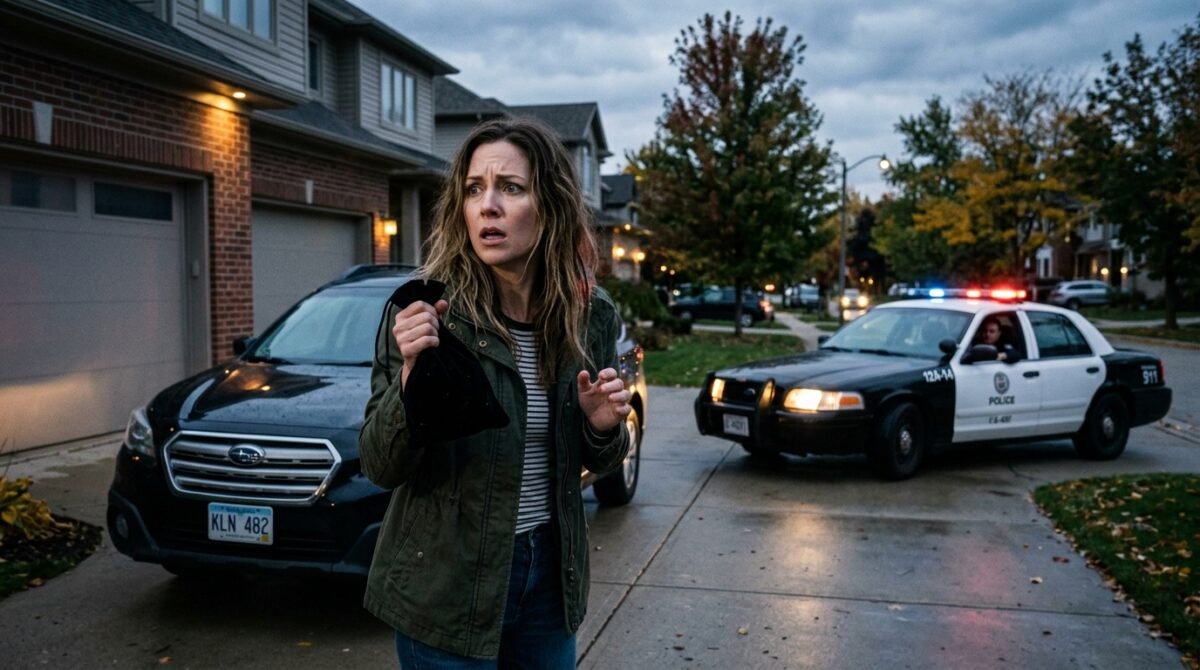
The moment I pulled into the driveway, I knew something was wrong. The garden gate was hanging off its hinges, and the basement window—the one I had reinforced with security bars—was shattered. My heart hammered against my ribs, a dull, rhythmic thud that signaled danger. I didn’t enter the house through the front door. Instead, I stood in the driveway, phone in hand, waiting to see if anyone was still inside. It was 3:15 PM, and the neighborhood was quiet, the kind of quiet that feels heavy and expectant.
I didn’t call Sarah first. I didn’t text. I called the local precinct. I knew that if I went inside and confronted her, I would be playing into her hands. She would turn it into a family spat, a misunderstanding, a ‘sisterly squabble’ that the police would be inclined to ignore. I needed this to be documented as what it was: a felony breaking and entering. As I stood there, I watched a shadow move past the window. It was her. She wasn’t rushing. She was methodical.
She came out of the back door ten minutes later, clutching a small velvet bag. She looked flushed, triumphant, and completely unaware that her entire life was about to be upended. She didn’t see me until she reached her car. The look on her face when she realized I was waiting for her wasn’t fear—it was indignation. She truly believed that because we were sisters, she was entitled to whatever she wanted from Mom’s estate.
“You’re really going to call the cops on your own blood over a ring? Are you that pathetic, or just that spiteful? It was Mom’s, and I’m her daughter too. I have every right to it.”
— Sarah, minutes before the police arrived
I didn’t answer her. I just stared, watching the way her fingers gripped the velvet bag. She had actually brought a heavy-duty power drill. I could see the extension cord trailing out of the basement door, a bright orange snake lying in the grass. The absurdity of it was almost comical, if not for the blatant criminality of the act. She thought she was the protagonist in a movie where she was reclaiming what was hers. She had no idea that I had been documenting every single boundary violation for the last two years.
When the patrol car pulled up, the sirens were muted, but their presence was absolute. Sarah’s face drained of color as the officer stepped out, hand resting on his holster. She started to stammer, trying to explain that she was ‘just retrieving family heirlooms,’ but her voice cracked. She hadn’t expected the reality of the situation to match her internal narrative. She had lived her whole life getting away with things by being charming or manipulative, but that charm didn’t work on a sworn officer of the law.
The Evidence of a Broken Bond
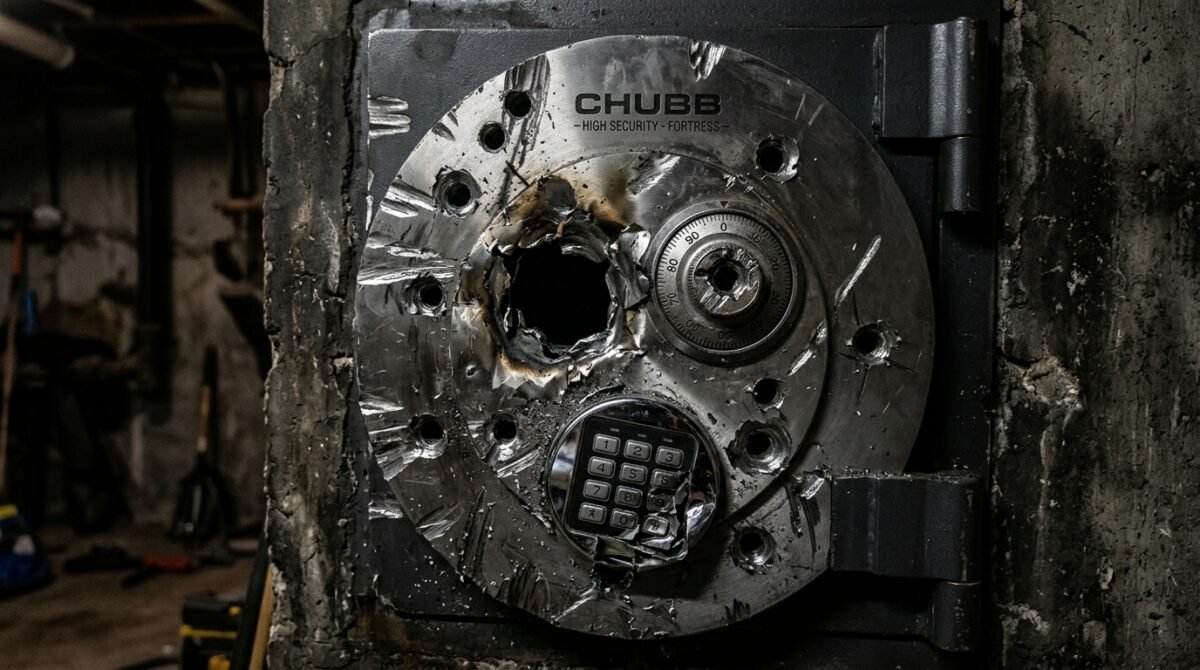
While the officers were busy reading Sarah her rights, I walked into the basement. The destruction was worse than I had imagined. The heavy steel door of the safe had been mangled. She had spent hours, it seemed, drilling through the locking mechanism. The floor was covered in metal shavings and the remnants of the drill bits she had gone through. It was a scene of desperation, a testament to a mind that had completely unraveled over the prospect of a few thousand dollars.
I handed the lead officer the USB drive containing the footage. I didn’t need to say a word. The footage was pristine—high definition, perfect audio. It showed Sarah arriving, breaking the lock, setting up the drill, and the long, grueling process of destroying the safe. It was undeniable proof of premeditation. There was no ‘misunderstanding’ here. She had brought tools, she had bypassed security, and she had stolen property that was legally assigned to me.
My phone started buzzing incessantly while the police were still processing the scene. My aunt, my cousin, and even my brother-in-law were calling, all of them having heard the news through the grapevine of our toxic family circle. Sarah had clearly been broadcasting her ‘heroic quest’ to recover Mom’s jewelry to anyone who would listen. They all thought they were in on a secret mission. Now, they were all witnesses to a crime.
“You need to drop the charges immediately. Do you have any idea how this looks for our family? Sarah is hurting, and you are being a monster. Think about Mom’s legacy.”
— Aunt Linda, in a voicemail left while I was at the station
It was fascinating, in a sick way, to see how quickly they circled the wagons to protect the perpetrator. None of them mentioned the damage to the house, or the fact that Sarah had committed a felony. Their only concern was optics. They wanted me to sweep it under the rug, to pretend that the theft didn’t happen, because that would be the ‘nice’ thing to do. That was the exact same logic that had allowed Sarah to walk all over me for decades.
The lead officer, Sergeant Miller, returned from the cruiser and looked at me with a mixture of pity and respect. He told me that they had everything they needed. Sarah was being processed, and because of the value of the ring and the clear evidence of forced entry, this wasn’t going to be a simple misdemeanor. My life, as I knew it, was changing in real-time. The cord had been cut, and for the first time, I didn’t feel the weight of the family expectations pressing down on my shoulders.
The Digital Paper Trail of Entitlement

When I finally got back to my computer, I realized the full extent of Sarah’s planning. I logged into the family shared drive—a relic from when we were managing Mom’s care—and found the files she had left behind. She had been keeping a spreadsheet. It was titled ‘Asset Allocation Plan,’ and it listed every single piece of jewelry, every appliance, and even the furniture, assigning values and marking who ‘deserved’ what. My name was absent from the list, or rather, it was marked with a red ‘X’ next to every item.
She had been talking to our cousin, Jessica, about the safe for weeks. The messages were stored in an unencrypted folder she’d forgotten to delete. Reading them made my skin crawl. It wasn’t about sentimentality or wanting a piece of Mom to remember her by. It was purely financial. Sarah was in deep credit card debt, and she viewed the eternity band as her way out. She even joked about how easy it would be to pawn it once the ‘dust settled’ from the inheritance process.
“The safe is old school. I looked up the model online, and if I hit it at the hinges with a high-torque drill, the plate should pop right off. Don’t worry, Jess, I’m getting my payday. That ring is worth at least ten grand.”
— Recovered text message from Sarah to her accomplice
The realization that she had planned this out so cold-bloodedly shifted my perspective on the last few months. Every time she had come over to ‘cry’ about Mom, she was actually scoping out the security measures. Every time she had ‘checked in’ on me, she was assessing whether I was home or at work. It was a long con, and I had been the target the entire time. The grief I had felt for our relationship vanished, replaced by a cold, hard resolve.
I took screenshots of everything—the spreadsheet, the texts, the planning documents. I sent them all to my lawyer and to the detective handling the case. There would be no ‘misunderstanding’ defense. There would be no ‘I just wanted a keepsake’ excuses. This was a calculated crime, and I was going to make sure that the legal system treated it as such. The vulnerability I had felt earlier in the week was gone. In its place was a fierce, protective instinct over my own life and my boundaries.
I spent the rest of the night reviewing the security footage one more time. Seeing her laugh as she cracked the safe was the final nail in the coffin of our sisterhood. I didn’t hate her, not exactly. Hate requires a level of emotional engagement I was no longer willing to give. I felt a profound indifference. She was a person who had made a choice, and now she would have to deal with the consequences of that choice. The digital paper trail was just the evidence I needed to ensure she couldn’t wiggle out of it.
The Fallout in the Family Group Chat

The family group chat, which had been silent for months, suddenly exploded around 8:00 PM. It started with Aunt Linda posting a long, vitriolic paragraph about how I was ‘tearing the family apart’ and that I should be ashamed of myself. Then, my cousins jumped in, one after another, throwing insults and demands that I drop the charges. They acted as if I were the one who had broken into a house, not the one who had been robbed.
I read through the messages without responding. They were throwing around words like ‘betrayal,’ ‘vindictive,’ and ‘unforgivable.’ It was a masterclass in gaslighting. They were trying to make me feel responsible for Sarah’s actions. They wanted me to prioritize their comfort over my own safety and property rights. It was the same dynamic I had dealt with my entire life: be the bigger person, suck it up, and let Sarah win.
“We are all so disappointed in you. Your mother would be devastated to see you doing this to your own sister. Family is forever, even when things get tough. Drop the police report or don’t expect to be invited to Thanksgiving.”
— Aunt Linda, in the family group chat
I finally decided to respond, not with an apology, but with a simple, clinical statement of fact. I attached a screenshot of the ‘Asset Allocation’ spreadsheet and the timestamped photos of the damaged safe. I didn’t use emotional language. I didn’t defend myself. I just laid out the reality of what had happened, and then I muted the chat. I didn’t need to see their reactions. I knew how they would spin it, and I didn’t care.
The silence that followed my message was deafening. It lasted for about ten minutes before the chat started buzzing again, but this time, the tone had shifted. My cousin Mark, who had always been the most level-headed of the bunch, chimed in. He wasn’t defending Sarah anymore; he was asking for clarification. He had seen the spreadsheet and the damage. The reality of the theft had finally penetrated their collective denial.
By the time I checked the chat again, the tone had turned defensive. Sarah was being called out by others, not for being a thief, but for being ‘stupid enough to get caught.’ It was cold comfort, but it was enough. The narrative had shifted from me being the bad guy to the realization that one of their own had committed a crime. The cracks in the family facade were becoming gaping holes, and I was perfectly fine watching the whole thing crumble.
The Lawyer’s Cold Reality Check

The next morning, I met with my attorney, Mr. Henderson. He had been our family’s estate lawyer for years, and he looked exhausted. He had already seen the police report and the evidence package I had sent over. He didn’t offer any platitudes about family reconciliation. He was all business, and that was exactly what I needed. He told me that with the evidence I had, the prosecution would have a very easy time building a case for grand larceny and burglary.
We discussed the implications of the inheritance. Sarah had technically violated the terms of the will by attempting to steal items that had been specifically bequeathed to me. Mr. Henderson noted that this could allow us to move to have her removed as a beneficiary entirely. The idea was jarring, but as he explained the legal reasoning, it started to make sense. She had acted in bad faith, and the law provided a path to protect the estate from her interference.
“This is not a family squabble anymore. This is a criminal matter. If you want to pursue the full extent of the law, I can ensure that she faces the maximum penalties. But you must be prepared for the fact that there is no coming back from this.”
— Mr. Henderson, my attorney, during our morning consultation
I told him that I was prepared. I had spent years trying to maintain a relationship with Sarah, trying to see the best in her, trying to bridge the gap. All it had earned me was a broken safe and a lifetime of stress. I was ready to close this chapter. We started drafting the paperwork to formally contest her involvement in the estate and to ensure that the criminal charges were pushed through with absolute priority.
He warned me about the public perception. Sarah had already started telling people that I was the one who had stolen the ring and that I had planted the evidence. It was a desperate, transparent lie, but it was one that would travel far in our small community. He suggested I keep a low profile and let the legal process play out. Don’t fight her on social media; fight her in the courtroom. It was the best advice I had ever received.
Leaving his office, I felt a strange sense of weightlessness. For years, I had carried the burden of being the ‘responsible one,’ the one who had to manage Sarah’s messes and apologize for her behavior. Now, I was handing those responsibilities over to the state. The legal system was a much more efficient enforcer of boundaries than I had ever been. I wasn’t just defending a ring; I was defending my right to live without the constant fear of my sister’s next outburst.
The Public Spectacle of Denial
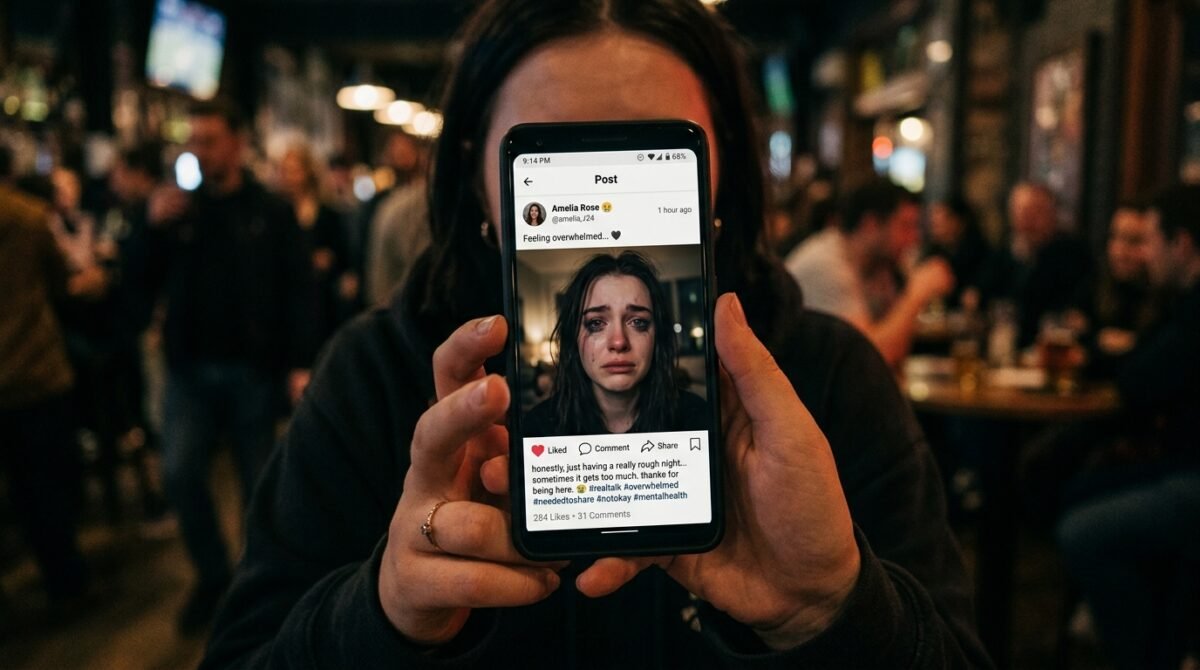
Sarah didn’t go quietly. She started posting on social media, claiming that the whole thing was a setup, that I had ‘frame-jobbed’ her because I was greedy, and that the police were biased against her. It was a bizarre, almost feverish display of denial. She shared pictures of herself crying, with captions about how ‘the system’ was failing her and how her own flesh and blood was ‘putting her in a cage’ for a ring she supposedly inherited.
The internet, as always, had a field day. People were commenting on her posts, some offering sympathy, but many others pointing out the absurdity of her claims. When I saw the screenshots being sent to me by friends, I didn’t feel angry. I felt a deep, profound sadness for her. She was so desperate to be the victim that she was willing to destroy her own reputation, legal standing, and family relationships just to maintain the illusion.
“My own sister is trying to ruin my life over a stupid piece of jewelry! She called the police on me when I was just trying to honor Mom’s wishes. This is what narcissism looks like. She wants it all for herself.”
— Sarah’s public Facebook post, which later became evidence in the defamation case
The posts eventually grew so erratic that even her friends started to back away. The evidence of the safe-cracking was too damning to be ignored, even by her most dedicated enablers. Seeing someone you grew up with devolve into such a transparently dishonest character is a harrowing experience. It stripped away the last vestiges of the nostalgia I had for our childhood. I realized that the sister I missed was a person who only existed in my memory.
My attorney cautioned me against engaging with her online. He said that every word she posted was essentially digging her own hole deeper. He was right. She was providing a roadmap of her own lack of remorse and her continued intent to harm my reputation. I stayed off social media, focusing on my work and my home. The silence I kept was the most powerful weapon I had. It made her look increasingly unhinged as she screamed into the void, with no one left to validate her delusions.
The public spectacle was a test of my own resolve. People would stop me in the grocery store, asking me if I was ‘really’ going to send my sister to prison. I just looked them in the eye and said, ‘She broke into my home and stole from me. The law will decide the outcome.’ It wasn’t an apology, and it wasn’t a defense. It was the truth, delivered without emotion. Most of them didn’t know how to respond to that, and they would quickly change the subject.
The Reddit Verdict: Community Perspectives

I finally decided to post the story on Reddit, using a throwaway account, just to see if I was losing my mind. I wanted to see if the world agreed that I had gone too far. Within hours, the post hit the front page. The response was overwhelming. Thousands of people weighed in, and the vast majority were firmly on my side. They didn’t see me as a ‘vindictive sister’; they saw me as someone who had finally hit their breaking point and taken the necessary steps to protect their peace.
“NTA. Your sister is a common thief who thought she was entitled to your property because of ‘family.’ You did the right thing by calling the police. If you hadn’t, she would have continued to escalate until she destroyed everything you have. Don’t let the family guilt-trip you into thinking otherwise. You’re not the one who broke the law, she is.”
— u/JusticeForOP, 45.2k upvotes
There were, of course, the dissenters. Some people argued that ‘family should be handled internally,’ that prison is ‘too harsh for a first-time offender,’ or that I should have ‘tried harder to talk to her.’ But those comments were quickly buried by the sheer weight of the consensus. People were tired of the ‘family-first’ rhetoric that allowed abusers and thieves to continue their behavior unchecked. They were hungry for stories of boundaries being enforced and consequences being served.
“I had a brother like this. He stole from me for years, and I let him get away with it because I was afraid of the family blowback. Now, I have no money, no property, and no relationship with him anyway. OP, you saved yourself. Don’t look back.”
— u/LessonLearnedHard, 12.8k upvotes
Reading the comments was therapeutic in a way I hadn’t expected. It validated my decision to involve the police. It reminded me that I wasn’t alone in having to set hard boundaries with toxic family members. The sheer volume of support made it clear that what I was experiencing was a common, if tragic, human drama. I was finally part of a community that understood that love is not a license to exploit, and that family is not an excuse for crime.
The thread became a repository for similar stories, a testament to the pain of families shattered by entitlement. It helped me process the finality of the decision I had made. I wasn’t just protecting myself from Sarah; I was honoring the person I was becoming. I was someone who wouldn’t let themselves be a victim anymore. The Reddit thread served as a mirror, showing me that the path I was on, while lonely, was the only one that led to true freedom.
By the time I closed the browser, the post had reached over 100k upvotes. It was a strange, surreal validation of my life. I had taken the most painful, private moment of my life and turned it into a shared, public understanding of what it means to stand up for yourself. It was a turning point, not just in the legal case, but in my own internal journey of healing and self-acceptance.
The Day of the Hearing
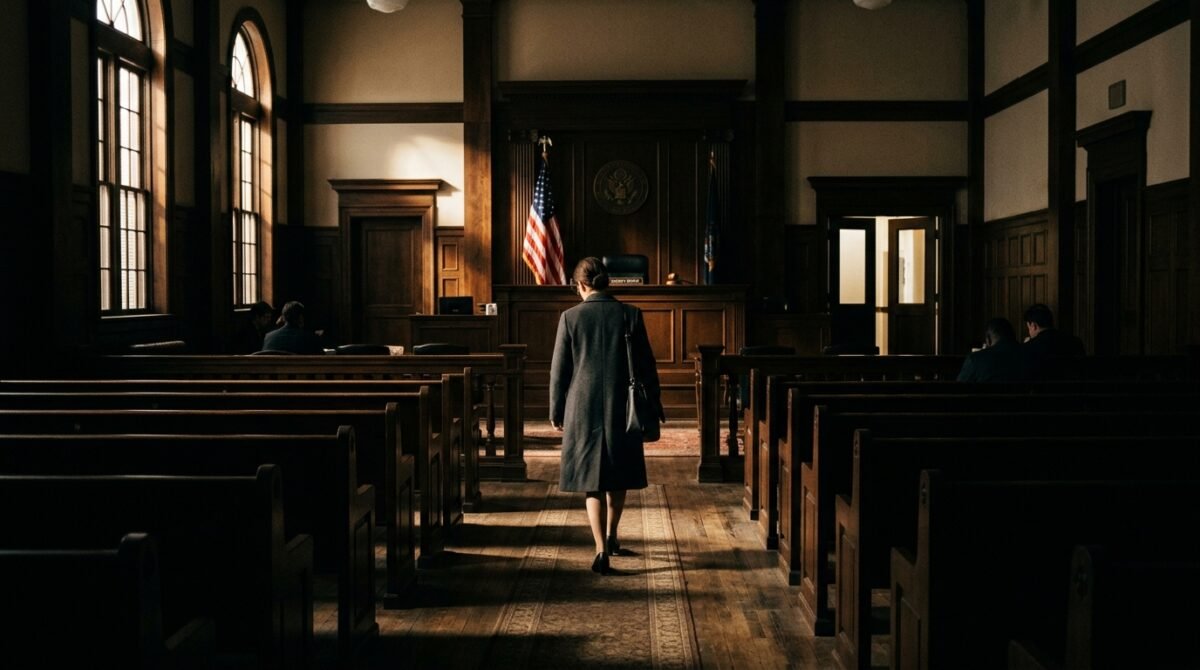
The day of the preliminary hearing arrived with a cold, biting wind. I walked into the courthouse feeling like I was stepping into a different world. The halls were echoing with the footsteps of people dealing with their own private disasters. Sarah was there, sitting in the front row, looking small and defiant. She hadn’t spoken to me since the day of the arrest, and as our eyes met, I saw no remorse, only a lingering, desperate anger.
When she stood up to address the judge, her voice trembled, not with shame, but with the frustration of a child who had been told ‘no’ for the first time. She told the court that she was just trying to get what she was ‘rightfully owed’ and that I had been keeping the ring from her. The judge listened patiently, his face unreadable. When it was my turn to speak, I kept it brief. I recounted the facts, the security footage, and the planning documents I had found. I didn’t look at Sarah. I spoke only to the judge.
“Your Honor, this was not a simple family disagreement. This was a premeditated act of burglary. I have documented every step of her planning, and I have provided the evidence to the police. I am here to ensure that the law is upheld, not just for my sake, but for the safety of my home and my future.”
— My testimony before the judge
The judge looked at the evidence I had provided, his eyes scanning the photos of the drilled safe. He looked up at Sarah and asked her if she had anything further to say. She started to ramble again, but he cut her off, his voice firm and final. He noted that the evidence of forced entry and the recorded planning made it impossible to view this as anything other than a criminal act. He set the trial date and denied her request for a reduction in bail.
Watching her face fall as the bailiff approached was the hardest, yet most necessary moment of the entire process. She had expected a slap on the wrist, a ‘family intervention,’ a return to the status quo. Instead, she was getting the cold, impartial reality of the criminal justice system. The courtroom was a vacuum where all her charm, her manipulation, and her sense of entitlement simply didn’t exist. There was only the law, and in this, she was clearly on the wrong side.
I walked out of the courtroom feeling lighter than I had in years. The process was far from over, but the first major hurdle had been crossed. The system was working. It was doing exactly what it was designed to do: protect the individual from the whims of those who would trample their rights. I didn’t feel triumphant, and I didn’t feel happy. I felt a sense of closure. The bond was broken, the crime was recognized, and I was finally free to move on with my life, unencumbered by the shadow of my sister’s greed.
The Final Severing of Ties

The months following the hearing were a blur of legal filings and the slow, agonizing process of cleaning up the debris left behind. I had to repair the basement, replace the safe, and deal with the constant, low-level harassment from distant relatives who still didn’t get it. But with each day, the noise grew quieter. I changed my number, blocked the toxic family members on all platforms, and focused on building a life that was entirely my own.
I eventually decided to sell the house. It was filled with too many memories—not just of Mom, but of the trauma of the theft and the subsequent legal battle. I needed a fresh start, a space that hadn’t been violated. Finding a new home was the final act of reclaiming my life. I chose a place that was secure, private, and entirely mine. It was a symbol of the new boundaries I had set and the peace I had finally found.
“You’ve done a remarkable job, given the circumstances. You’ve stood your ground when many would have folded, and you’ve ensured that the law was applied equally. You have nothing to apologize for.”
— Mr. Henderson, on the day the house sale closed
I still think about the ring sometimes. It’s sitting in a safety deposit box now, not in my home, but in a bank. It’s just an object, a piece of gold and diamonds. It’s not worth the years of stress and the loss of a sibling. But it stands as a reminder of the day I stopped being a victim and started being the architect of my own life. I don’t regret my actions, but I do mourn the relationship that had to die for me to realize my own worth.
I’ve moved to a new city, changed my routine, and started focusing on my career again. The trauma of the event has faded, replaced by a quiet, steady confidence. I don’t feel the need to explain myself to anyone anymore. I know who I am, and I know what I’m capable of. I’ve learned that sometimes, the most loving thing you can do for yourself is to walk away from people who are only capable of taking from you.
The final legal proceedings concluded with a plea deal that ensured Sarah would receive the counseling she clearly needed, along with restitution for the damage she caused. It wasn’t the dramatic finale I had imagined, but it was a quiet, practical conclusion. The chapter was closed. I haven’t heard from her in months, and for the first time, the silence doesn’t feel heavy. It feels like peace. I am finally, truly, on my own.
Reflecting on the Cost of Boundaries

Looking back, the cost of these boundaries was high. I lost a sister, my extended family, and a year of my life to the legal system. But the price of *not* setting those boundaries would have been much higher. It would have cost me my integrity, my financial stability, and my peace of mind. I’ve come to realize that boundaries are not just walls we put up to keep people out; they are the foundation upon which we build a healthy, respectful life.
People often ask if I feel ‘guilty’ about the outcome. It’s a strange question. Why should I feel guilty for the choices someone else made? Why should I feel responsible for the wreckage caused by another person’s actions? I’ve realized that guilt is a tool used by manipulators to keep us in line. Once you recognize that, it loses its power. I don’t feel guilty; I feel relieved that I’m no longer being held hostage by the expectations of people who didn’t care about my well-being.
“We are not responsible for the consequences of the choices other people make, even when those people are our own family. Boundaries are the ultimate act of self-love, and you have demonstrated that in the most profound way possible.”
— A therapist during one of my post-trauma sessions
I’ve learned that true family is not defined by blood, but by mutual respect, shared values, and the ability to support each other without exploitation. I’ve found a new community—friends who have seen me through this, who have respected my boundaries, and who have reminded me that I am capable of being loved for who I am, not for what I can provide or what I can tolerate. That is a lesson that was worth every penny of the legal fees.
The story of the safe is a story of a breakdown, yes, but it’s also a story of a breakthrough. It was the moment I stopped looking for validation from people who were incapable of giving it. I’ve found that validation in myself. I’ve found it in the knowledge that I didn’t back down, that I didn’t fold, and that I stood up for myself when it mattered most. That’s a gift that no one can steal, no matter how hard they try to break into my life.
If there’s one thing I’d say to anyone in a similar position, it’s this: don’t wait until the safe is broken. Don’t wait until the trust is shattered beyond repair. Set your boundaries early, communicate them clearly, and be prepared to enforce them. The people who truly love you will respect those boundaries; the ones who don’t are the ones you need to be protecting yourself from. It’s a hard, painful lesson to learn, but it’s one that will change your life forever.
Conclusion
My journey from a sibling being exploited to someone who stood their ground and demanded justice was not an easy one. It was a year defined by legal battles, public scrutiny, and the slow, painful process of detaching from toxic family dynamics. Yet, standing on the other side of this, I see that the destruction of that safe was the necessary catalyst for my own freedom.
We are often told that family is ‘forever,’ but that myth can be a cage. When a relationship is built on theft, manipulation, and the blatant disregard for boundaries, it is not a relationship; it is a liability. By involving the authorities, I didn’t just protect my property—I protected my right to exist as an independent individual, free from the shadow of my sister’s greed.
I have moved on to a life where I am the author of my own experiences. The memory of the event remains, but its power to harm me has been replaced by the quiet, steady strength of knowing I did the right thing. I am no longer waiting for permission to live my life on my own terms. I am simply living it.
What about you? Have you ever had to choose between your integrity and keeping the peace in your family? Have you ever had to enforce a boundary that cost you everything, only to realize that you gained so much more in the process? Share your stories below—let’s discuss the true cost of boundaries and how to move forward when the bonds of family become a weight we can no longer carry.
What's your verdict on this dilemma?
Vote below to contribute to the official community consensus.

Have a Dilemma Keeping You Up at Night?
Share your real-life feud, wedding chaos, or relationship crossroads anonymously with our editorial team.
What do you think ?
0 Comments🛡️ Comments are moderated to protect community integrity. Your comment will appear once approved by the editorial team.