

Growing up, the narrative in our household was always the same: my brother, Caleb, was the golden boy, the visionary, the creative spirit who needed constant nurturing. I was the steady one, the ‘accountant’ of the family, the one who worked hard, saved diligently, and always, without fail, carried the extra weight. For years, I watched my parents pour their retirement savings into Caleb’s ‘innovative’ business ideas—a failed organic juice bar, a boutique streetwear line that never launched, and two previous food trucks that ended up as rusted hulks in a scrap yard.
I had successfully avoided being roped into the chaos for most of my adult life. I lived in a different city, maintained a stable career, and bought a modest home that represented every bit of my sweat and sacrifice. I thought my distance was my shield, but I severely underestimated the desperation of a family that had finally run out of other people’s money to burn. The request didn’t come with an apology or a conversation; it came with a demand, wrapped in the familiar, suffocating language of ‘family duty.’
It was a Tuesday evening when the phone call happened. The air in my apartment felt heavy, charged with a premonition I couldn’t quite shake. My mother’s voice was uncharacteristically shaky, not with sadness, but with a brittle, rehearsed urgency that sent a chill down my spine. She didn’t ask how I was. She didn’t ask about my promotion. She went straight for the jugular, framing my home as a mere asset waiting to be deployed for the ‘greater good’ of the family legacy.
The dilemma wasn’t just about money. It was about the fundamental erosion of my identity. They viewed my security not as an achievement, but as a resource they were entitled to harvest. By standing my ground, I wasn’t just saying no to a bank loan; I was rejecting a lifetime of subservience to a brother who had never known the meaning of accountability. This is the story of how I drew a line in the sand, the fallout that followed, and the painful process of choosing myself over the demands of those who raised me.
The Tuesday Night Ultimatum

The call began like any other, with small talk about the weather, but the pivot was sharp and surgical. My mother started talking about Caleb’s ‘new vision’—a taco truck with a focus on fusion cuisine that she claimed was ‘guaranteed to be the next big thing.’ I had heard this pitch three times before. I listened, my grip tightening on the counter, waiting for the inevitable ask.
When she finally brought up the second mortgage, she spoke about it as if she were asking me to borrow a cup of sugar. ‘It’s just a small loan against the equity, honey,’ she said, her voice dripping with a casual dismissal that made my blood boil. ‘Caleb has everything mapped out. He just needs the capital to secure the vintage truck he found. You’re in such a strong position; it would be so easy for you to help your brother get his start.’
“You have to understand, we are a family. When one of us is down, the others step up. Your home isn’t going anywhere. This is a temporary bridge for Caleb’s dream.”
— My Mother, during the phone call
I felt a sudden, sharp clarity. I realized then that they had been planning this for weeks, probably discussing it with Caleb while I was completely in the dark. They hadn’t even bothered to ask if I wanted to be involved. I was merely a tool in their toolbox, a piece of capital they thought they could leverage to keep the charade of Caleb’s success alive for just a few more months.
“Mom, stop,” I interrupted, my voice steady despite the adrenaline coursing through my veins. “I am not leveraging my home. I am not taking out a second mortgage. I worked for years to get out of debt and build security. I’m not throwing it into a furnace for a fourth food truck.” The silence on the other end was deafening, a vacuum of shock followed by a rising tide of cold, calculated anger.
She didn’t try to reason with me. She didn’t ask why I felt that way. Instead, she immediately shifted to guilt. She brought up my childhood, my father’s sacrifices, and the implied debt I owed them for ‘giving me a head start.’ It was a masterclass in emotional manipulation, designed to make me feel like the villain for simply protecting the roof over my head.
The Inevitable Group Chat Explosion
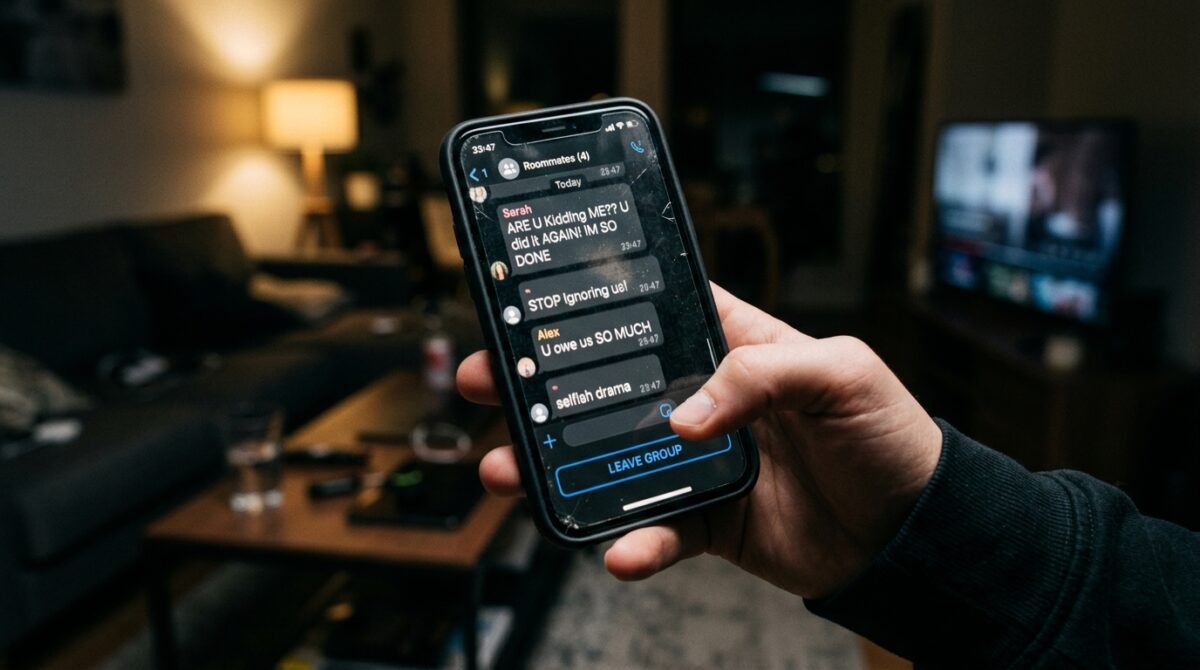
Less than an hour after hanging up with my mother, my phone started buzzing incessantly. It was the family group chat—the one I had been trying to leave for months but couldn’t without causing a ‘scene.’ The messages were coming in fast, a stream of venom and disappointment from my parents and, eventually, Caleb himself.
Caleb didn’t even try to be subtle. He went straight for the insults, calling me selfish, greedy, and a ‘traitor to the family.’ He claimed that I was holding back his potential, that I was the reason he was struggling, and that I would regret this ‘pathetic display of arrogance’ for the rest of my life. It was a projection so transparent it was almost comical, if it hadn’t been so infuriating.
“Wow. Really? I thought we were a team. I’m out here busting my back trying to make something of myself and you’re just sitting on your piles of cash. It’s pathetic.”
— Caleb, in the family group chat
“We raised you to be better than this. We sacrificed everything for you to get where you are, and you can’t help your brother for six months? Disgusting.”
— My Father, joining the chat
I read the messages, one after another, feeling the weight of their toxicity. It was clear that they viewed my success as a collective resource. There was no respect for my boundaries, no acknowledgment of the work I had done, and certainly no shame in their request. The audacity was staggering. They weren’t just asking; they were demanding that I sacrifice my future for their comfort.
I chose not to respond immediately. I knew that anything I said would be used as ammunition. Instead, I took a screenshot of the entire thread, documenting their behavior for my own sanity. I realized in that moment that this wasn’t just a disagreement over money—it was a systemic issue. They would keep coming back, kept pushing, until I finally slammed the door shut.
I typed a single, final message into the chat: ‘I have made my decision. I will not be discussing this further. Please respect my boundaries.’ I then hit ‘Leave Group’ and tossed the phone onto the sofa. The silence that followed in my apartment was the most peaceful thing I had experienced in years, even as my heart hammered against my ribs.
The Morning After the Storm

I woke up the next morning feeling oddly hollow. The adrenaline had faded, replaced by the heavy realization that I had fundamentally changed my relationship with my parents. There was no going back to the way things were. I checked my phone—dozens of missed calls, voicemails, and emails from my mother and my aunt, who had clearly been roped in to ‘talk sense’ into me.
I didn’t listen to a single one. I knew exactly what they would say: pleas for mercy, accusations of cruelty, and the inevitable ‘don’t be like this.’ I spent the morning drafting a formal email, a boundary-setting document that left no room for interpretation. I didn’t want to engage in a back-and-forth; I wanted to set the terms of our future interactions, or the lack thereof.
The email was cold, professional, and firm. I told them that I would not be participating in any financial discussions, nor would I be available for family gatherings where the topic of my finances or my brother’s business was on the table. I told them that I needed space, and that if they crossed these boundaries, I would be forced to go no-contact for an extended period.
“I love you both, but I will not be used as a financial safety net for projects I do not believe in. My home is my sanctuary, and it is off-limits. Do not call, text, or email me about this again.”
— Excerpt from my email to my parents
The response was almost immediate. My mother called again, crying, claiming that I was ‘abandoning’ them. She didn’t acknowledge the boundaries; she just pushed against them, trying to find a crack in my resolve. It was heartbreaking, but it was also confirming. They didn’t care about my well-being; they cared about the utility I provided.
I stood in my kitchen, staring at the coffee maker, realizing that I had finally broken the cycle. The anxiety I felt was sharp, but it was also accompanied by a strange sense of liberation. For the first time in my adult life, I wasn’t waiting for their approval or fearing their disappointment. I was simply living my own life, on my own terms.
By noon, I had blocked their numbers. It was a drastic step, one that felt like a permanent scar, but as I looked around my home, I felt a sense of ownership that I had never experienced before. This was mine. It was safe, it was secure, and it was entirely, unapologetically, mine.
The Enablers and the Whispering Campaign

It didn’t take long for the rest of the extended family to get involved. My aunts, uncles, and cousins started reaching out, some questioning my ‘coldness,’ others clearly acting as messengers for my parents. The narrative that had been spun was one of a wealthy, heartless child who had turned their back on a struggling family member.
I was accused of being ‘stuck up’ and ‘forgetting where I came from.’ It was infuriating to see how easily they manipulated the story. They didn’t mention the three previous failed business attempts or the thousands of dollars already lost; they focused entirely on the ‘taco truck’ and how it was going to save Caleb’s life. They made me the villain in a story I never chose to participate in.
“You’re really going to let your brother fail? We all know you have the money. It’s just a loan. Why are you being so selfish?”
— My Aunt, in a phone call I regret answering
I found myself having to defend my financial decisions to people who didn’t even know what a mortgage was, let alone the risks involved in second-leveraging a home. I realized then that my parents had been grooming the rest of the family to view me as the ‘success story’ that was obligated to prop up everyone else. It was an expectation that had been built over a decade, and breaking it was causing a total collapse of their social narrative.
I decided to stop explaining myself. Every time I tried to justify my position, I was just giving them more material to twist. I stopped answering calls from anyone who wasn’t a close friend. I deactivated my social media accounts to avoid the subtle jabs and ‘concerned’ comments that were starting to appear.
The pressure was immense. There were moments when I doubted myself, when I wondered if I was being too harsh, if I should have just helped them to make the noise stop. But then I would remember the look on Caleb’s face when he talked about his ‘visions’—the absolute lack of reality, the entitlement that radiated from him like heat from a stove. I knew, deep down, that this was the only way to save myself.
The Legal Reality Check
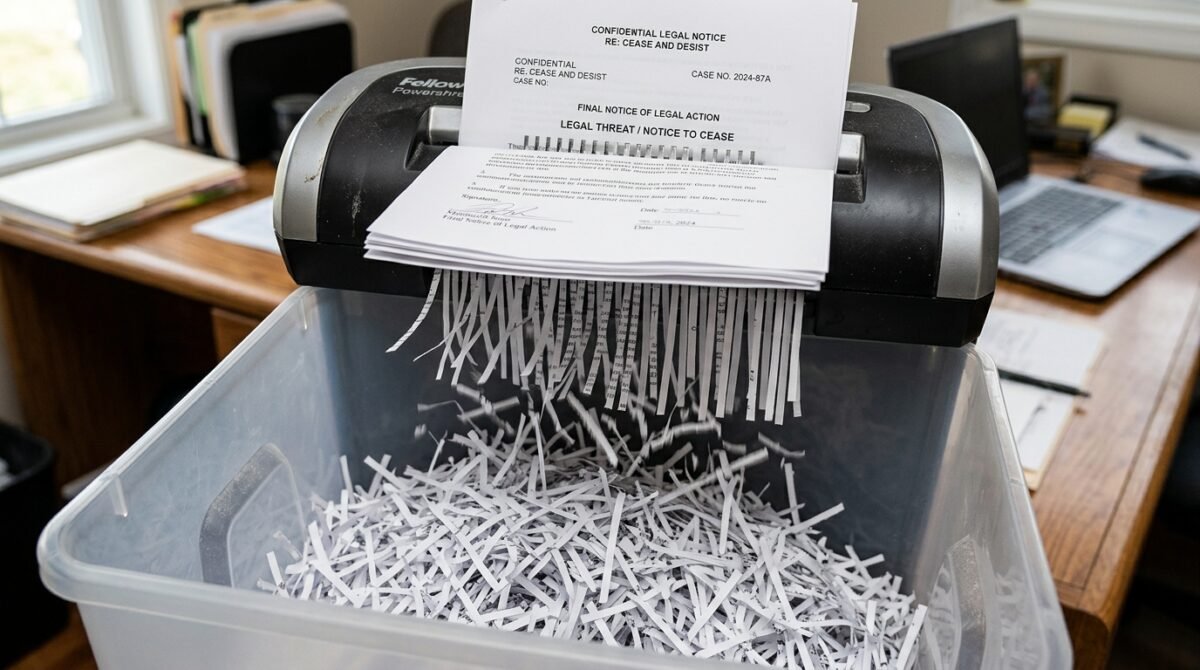
A week later, my father sent me a ‘formal’ letter from a lawyer he apparently knew. It was a threatening document, hinting at a lawsuit or some kind of inheritance claim, essentially trying to bully me into reconsidering. They were trying to manufacture a legal crisis to force my hand, hoping that the fear of a lawsuit would make me fold.
I took the letter to a friend of mine who is a real estate attorney. She read it, laughed, and tossed it back on the desk. She explained that there was no legal basis for their demands. The home was entirely in my name, and I had no obligation to fund their business ventures, regardless of ‘family duty’ or whatever other nonsense they were trying to cook up. It was a bluff, pure and simple.
“This is a classic intimidation tactic. They know they have no standing. They’re just trying to scare you into doing what they want. Don’t respond, don’t engage, and definitely don’t pay for a lawyer to reply to this garbage.”
— My friend, the attorney
Knowing that the threat was hollow was the final piece of the puzzle. I realized that my parents were desperate, grasping at straws, and completely out of options. They had burned through their bridges, and now they were trying to burn mine. The realization was both sad and empowering. I felt a sense of pity for them, for how far they were willing to go to keep their delusions alive.
I took the letter and put it in a shredder. It was a satisfying sound. I wasn’t going to give them the satisfaction of seeing me panicked. I wasn’t going to give them the stage they wanted to play out their drama. I was done.
This was the moment the internal conflict finally resolved itself. The fear of being the ‘bad child’ was replaced by the confidence of being a responsible adult. I knew who I was, I knew what I had earned, and I was not going to let anyone, family or not, take it from me.
The Reddit Community Weighs In

I decided to post my story on a popular forum, not because I needed validation, but because I needed to hear from people who had been through similar situations. The response was overwhelming. Thousands of people reached out, sharing their own stories of toxic families and the struggle to set boundaries. The consensus was clear: I was not the villain.
“Your parents and brother are leeches. They don’t see you as a person; they see you as an ATM that they are mad is currently locked. Stay strong, keep them blocked, and do not, under any circumstances, give them a single penny. You are doing the right thing.”
— u/StoicSurvivor (15.2k upvotes)
“The moment they involve lawyers and threats, the relationship is effectively dead. Don’t feel guilty for protecting your future. They chose to prioritize a failing business over their relationship with you. That is on them.”
— u/LegalEagleEye (8.4k upvotes)
Reading these comments was like a weight being lifted off my chest. I realized that my experience wasn’t unique, but that didn’t make it any less valid. There were so many others who had faced the same manipulation, the same guilt-tripping, and the same pressure to sacrifice everything for family. It was a community of survivors who had learned the hard way that blood does not equal obligation.
The discussion also helped me see the patterns in my family’s behavior more clearly. The ‘golden child’ dynamic, the financial enabling, the emotional blackmail—it was all a textbook case of a dysfunctional system. Understanding the mechanics of the toxicity made it easier to detach myself emotionally. It wasn’t about me failing them; it was about them failing to raise healthy, self-sufficient adults.
I spent hours reading through the comments, taking notes on the advice people gave. The most helpful piece of advice was to treat my life as a separate, protected space. To build my own ‘found family’ and to focus on the people who valued me for who I was, not for what I could provide. It was a roadmap for healing, and it gave me the courage to move forward with my life without looking back.
Reflections on the ‘Golden Child’ Myth

Looking back, I can see how the ‘golden child’ narrative was never really about Caleb. It was about my parents’ need to feel like successful parents, to have a vision they could pour their identity into. Caleb was just the vessel. When he failed, they didn’t blame him; they blamed the ‘circumstances,’ the ‘bad luck,’ or, in this case, me for not providing the necessary capital to fix it.
My brother was a casualty of their enabling just as much as I was a casualty of their expectations. He had never been forced to face the consequences of his actions, so he never learned how to build something real. He was stuck in a loop of failed ideas and superficial fixes, always waiting for the next rescue. It was a tragedy, but it was not one I could fix. Trying to fix it had only dragged me down with him.
“They didn’t just want my money. They wanted to control the narrative. They wanted to prove that their way was right, even when it was clearly failing. I was the last piece of the puzzle that refused to fit, so they tried to force me.”
— My own internal reflection
The resentment I once felt toward Caleb started to turn into a strange sort of pity. He was a man-child who had been stunted by the very people who claimed to love him most. He didn’t have the skills to run a business because he had never been held accountable for failure. He didn’t have the grit because he had never been allowed to struggle.
I realized that by saying ‘no,’ I was actually doing him a favor, though he would never see it that way. I was finally forcing him to face the reality that he wasn’t entitled to other people’s success. It was a harsh lesson, one that might lead to him failing spectacularly, but it was a necessary step if he was ever going to become an adult.
The ‘golden child’ myth is a poison, not just for the ‘black sheep’ but for the golden child themselves. It creates a false reality, a fragile bubble that eventually bursts. I am just glad I finally stepped out of the blast radius before it happened.
The Cost of Silence

The weeks following the final confrontation were quiet. The lack of contact was a physical sensation, a missing background noise in my life. I went from having a family that was constantly in my business to a life that was entirely my own. The silence was intimidating at first, but slowly, it started to feel like freedom.
I started focusing on my career again, throwing myself into projects that were actually productive and rewarding. I started reaching out to friends I had neglected while dealing with my family’s drama. I started going to the gym, eating better, and actually sleeping through the night. The physical manifestations of my stress—the tension headaches, the racing heart—began to fade.
“It is amazing how much energy I was spending on them. I feel like I have been living on half-power for years, and now, finally, the batteries are fully charged.”
— My journal entry, written three months later
I realized that I had been carrying a massive, invisible load. Every phone call, every family dinner, every ‘check-in’ was a draining experience that left me feeling diminished. Cutting ties wasn’t just a financial decision; it was a health decision. I was choosing my own well-being over their dysfunction.
I still think about them sometimes. I wonder if they’re happy, if they’re still searching for the next big thing, if they ever talk about me. But the thoughts don’t have the same teeth they used to. They don’t hurt. They are just remnants of a past that no longer dictates my present.
The cost of silence was high—I lost my family—but the cost of staying silent was higher. I would have lost myself. And that is a price I am simply not willing to pay.
Establishing New Boundaries

I have started setting boundaries in other areas of my life as well. I’ve become much better at saying ‘no’ to things that don’t serve me, whether it’s overbearing colleagues, demanding friends, or projects I don’t have the time for. I’ve realized that my time and energy are finite, and I need to be much more intentional about how I spend them.
I’ve also started building a ‘found family’—a group of friends who are supportive, understanding, and respect my boundaries. We have our own traditions, our own way of celebrating, and our own version of ‘family’ that doesn’t rely on guilt or manipulation. It’s been a revelation to be part of a group where I’m not expected to perform or provide.
“Boundaries aren’t about keeping people out. They’re about creating a space where you can actually be yourself. Once you have that space, you realize how much you were missing.”
— My therapist, during one of our sessions
It’s not always easy. Sometimes, I still feel the urge to check in, to see if they’re okay. But I remind myself that they have each other, and that my absence is the most respectful thing I can offer them. If they wanted me in their lives, they would respect me. Since they don’t, my absence is the only honest response.
I am learning to trust my own judgment again. I am learning that my ‘gut feeling’ is a powerful tool, one that I should have listened to years ago. I am learning that it is okay to put myself first, and that doing so doesn’t make me a bad person.
Life is much simpler now. It’s not perfect, and it’s not without its challenges, but it’s mine. And for the first time, I am excited about what the future holds, not because I am waiting for someone else’s permission, but because I am the one steering the ship.
What the Future Holds

I often wonder what would happen if my parents reached out, if they apologized, if they truly understood the damage they had done. I think about it in the abstract, as a hypothetical. I don’t hold my breath. I know the cycle they are in is deeply entrenched, and it would take a level of self-awareness they haven’t shown in decades to break it.
But even if they did reach out, my response would be different now. I wouldn’t be the angry, defensive person I was when they asked for the mortgage. I would be calm, firm, and clear. I would be able to listen without feeling attacked, and I would be able to hold my ground without feeling guilty. I have grown, and I have changed.
“If they ever come back, I’ll be ready. Not with anger, but with clarity. I know what I will accept, and I know what I won’t. That’s the power of having done the work.”
— My closing thought on the matter
I have plans to travel, to take courses in things I’ve always been interested in, to deepen the relationships I have with the people who truly care about me. I am no longer defined by the expectations of my family. I am defined by my actions, my choices, and the person I am becoming.
I hope that Caleb finds his way, eventually. I hope he realizes that he doesn’t need a fourth food truck to be a person of value. But that is his journey, not mine. I have my own path to walk, and I am finally, truly, walking it.
The story of the mortgage demand is just a chapter, not the whole book. And I am looking forward to writing the rest of it.
Conclusion
This experience has been the hardest, yet most transformative, period of my life. I learned that family is not a status to be maintained at any cost, but a relationship that requires mutual respect and boundaries. When those boundaries are violated, you have the right—and often the responsibility—to protect your own peace.
I don’t regret saying no. I don’t regret the silence. I don’t regret the distance. I only regret that it took me so long to see the situation for what it was. I hope this serves as a reminder to anyone else struggling with family financial demands: you are not a bank, you are not an enabler, and you are worthy of respect. Your future belongs to you.
What about you? Have you ever had to draw a hard line with family over money or expectations? How did you handle the guilt, and what would you do differently if you had the chance? Let’s talk in the comments below.
What's your verdict on this dilemma?
Vote below to contribute to the official community consensus.

Have a Dilemma Keeping You Up at Night?
Share your real-life feud, wedding chaos, or relationship crossroads anonymously with our editorial team.
What do you think ?
0 Comments🛡️ Comments are moderated to protect community integrity. Your comment will appear once approved by the editorial team.