
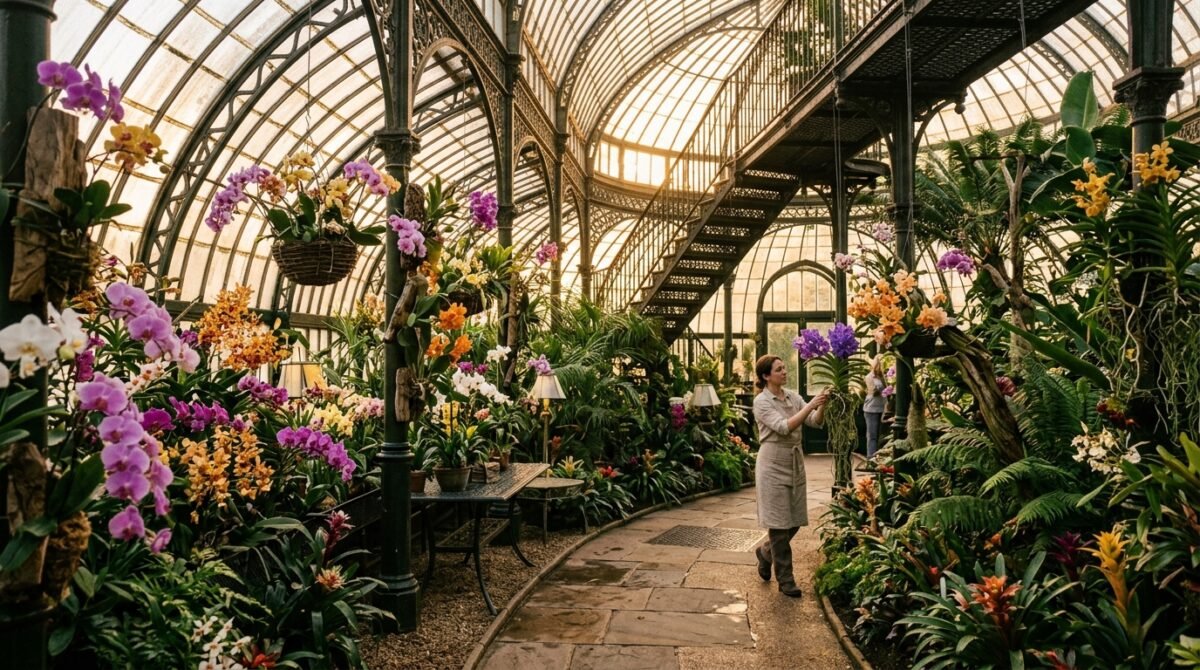
Inheritance is rarely just about the assets; it is a magnifying glass held over the cracks in a family foundation. When my Great-Aunt Elara passed away last spring, she didn’t leave behind a sprawling estate or a mountain of cash. She left behind something far more precious to me: ‘The Verdant Sanctuary,’ a bespoke, temperature-controlled botanical greenhouse that served as the heart of her life’s work. I spent my childhood summers there, learning the delicate art of orchid hybridization while the rest of the world felt miles away.
My stepsister, Chloe, had spent the last decade making it abundantly clear that she viewed gardening as a menial, dirty hobby. She was a high-powered consultant who preferred sterile office suites to the humid, earthy reality of a greenhouse. Yet, the moment the will was read and the legal ownership of the property was transferred solely into my name, Chloe’s interest in ‘botanical conservation’ suddenly blossomed with a ferocity that bordered on clinical obsession.
The moral dilemma started as a simple request for ‘collaboration’—a thin veil for her desire to monetize the land and sell off the rare specimens I had worked years to cultivate. But when I politely declined, the situation shifted from greedy overreach to something far more sinister. I began noticing that my prize-winning specimens were failing, their leaves curling and yellowing in ways that didn’t align with any natural blight or nutrient deficiency.
Then came the day I found the chemical residue. It wasn’t just neglect; it was a targeted campaign to destroy the very thing I refused to share. This is the story of how I stood my ground against a sibling who thought she could poison my passion, and why, in the end, blood is definitely not thicker than the orchids I protected.
The Reading of the Will and the Sudden Bloom of Interest
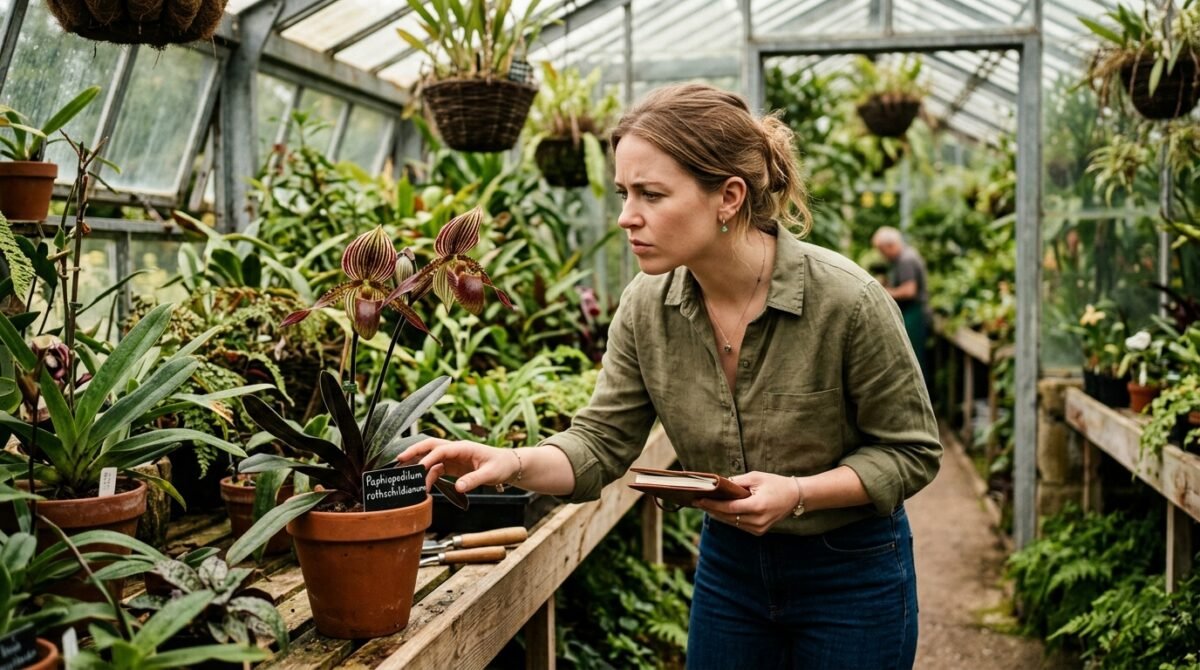
The reading of Aunt Elara’s will took place in a somber, wood-paneled law office that smelled of old parchment and expensive leather. I had expected the greenhouse to go to me, as Elara had spent years mentoring me in the craft, but seeing my name on the deed alongside the property felt like the final validation of our bond. Chloe, meanwhile, was bequeathed a modest sum of money and some family heirlooms, which she seemed satisfied with—until she walked through the greenhouse doors the following weekend.
The change in her demeanor was instantaneous. She paced the aisles, her designer heels clicking sharply against the stone floor, her eyes scanning the rare species with the calculating gaze of a real estate developer. She didn’t look at the flowers as living art; she looked at them as assets with a potential market cap.
“You know, honestly, this space is completely wasted on just hobbyist collections. If we cleared out these rows of, what are they, orchids? We could build a stunning yoga studio or a high-end conservatory rental space for weddings. The ROI would be astronomical.”
— Chloe, standing in the middle of the greenhouse
I tried to explain to her that this wasn’t a commercial venture. It was a living archive, a place where Elara had spent forty years perfecting rare hybrids that existed nowhere else in the world. I told her the humidity control systems were tuned specifically for these plants, and that tearing them out would be akin to burning a library. She just offered a tight, patronizing smile, the kind that made me realize I was already being viewed as an obstacle to be moved.
Over the next month, Chloe started showing up unannounced. She would ‘help’ by watering, but I noticed the soil was often waterlogged or bone-dry immediately after her visits. I brushed it off as incompetence initially, thinking she was just trying to force her way into my life through a shared project. I was wrong.
It wasn’t until I found a group chat screenshot left open on her iPad during a family dinner that I realized the scale of her scheme. She had been talking to an associate about ‘liquidating the inventory’ before I could even settle into the estate management. She wasn’t just interested in the greenhouse; she was planning to gut it from the inside out while I was busy tending to the flowers she clearly despised.
The First Signs of the Silent Sabotage
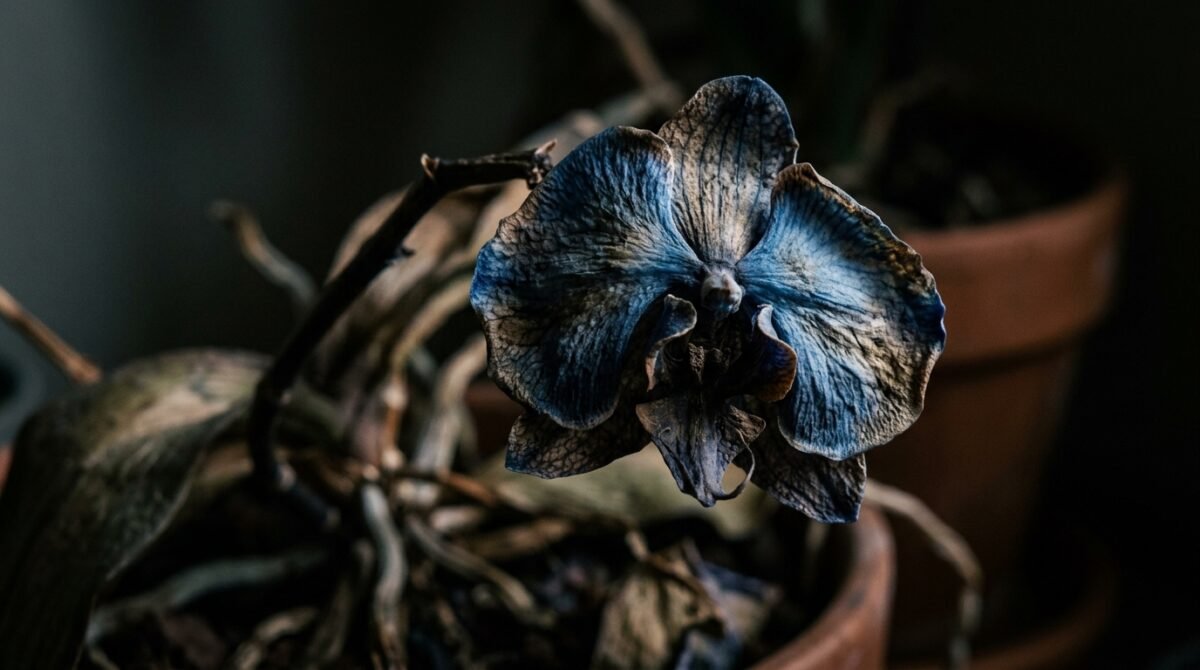
The first casualty was the ‘Blue Ghost’ orchid, a temperamental, sky-colored rarity that had taken me three years to coax into bloom. I walked in one Tuesday morning to find it limp, its vibrant petals turning a sickly, mottled brown. It wasn’t dehydration; the plant looked as though it had been scorched from the roots up. I spent the entire day testing the soil pH and inspecting the leaves for pests, but there was nothing.
By Friday, three more of my most valuable plants had begun to show the same rapid decay. The speed of the deterioration was impossible. Orchids are resilient in their own way, but they don’t simply collapse in forty-eight hours without a catastrophic external factor. My heart sank as I realized the greenhouse had been compromised, but I couldn’t understand how.
I began sleeping in the small potting shed at the back of the property, armed with a digital camera and a heavy heart. The trust I had placed in my family was dissolving with every falling leaf. I watched the security footage, but there was nothing—until I noticed the pattern of the water jugs being swapped out. Chloe had been bringing her own ‘organic fertilizer’, which she claimed was a special blend she found online.
“I’m just trying to help, really. You’re so stuck in the past with your old-school methods. This organic feed is the latest thing in the botanical community. If you’d just let me take over the maintenance schedule, you’d see a major improvement.”
— Chloe, defending her ‘fertilizer’ usage
I felt a cold shiver run down my spine. The ‘improvement’ she was talking about was the death of my collection. I took a sample of the liquid from her jug to a local agricultural lab, paying for a rush analysis. I didn’t tell anyone, not even my parents, because I knew they would dismiss my suspicion as ‘sisterly tension’ or ‘jealousy’ over the inheritance.
The lab report came back three days later. It wasn’t fertilizer. It was a high-concentration systemic herbicide, disguised with a strong-smelling seaweed extract to mask the chemical scent. She wasn’t just killing my plants; she was trying to clear the greenhouse so she could claim the land was ‘unusable’ for my specific hobby, making it easier to convince the family to let her sell the property.
The Confrontation in the Glass Cathedral
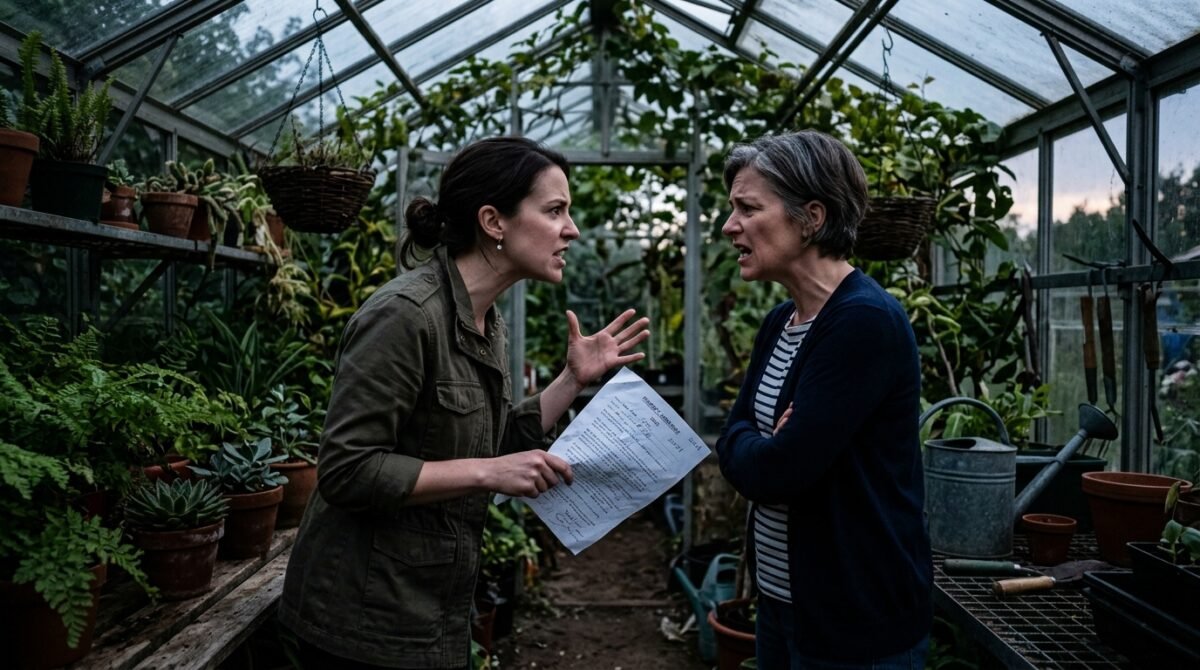
I didn’t wait for her to come back. I called her directly and told her we needed to talk in the greenhouse. I wanted her to be standing exactly where she had committed her betrayal when I dropped the truth. When she arrived, she was dressed in her usual power suit, looking entirely out of place among the dying plants, holding a cup of overpriced coffee as if she were inspecting a warehouse.
She looked around at the drooping, yellowing foliage with a feigned expression of concern. She didn’t know yet that I knew. She walked over to the ‘Blue Ghost’ and touched a dying leaf with a gloved finger, sighing loudly. It was such a hollow performance that it made me feel physically ill.
“It’s such a shame, truly. Maybe this place is cursed, or you just don’t have the touch Aunt Elara had. You really should consider letting me list this property before the value drops any further. I have a buyer waiting who doesn’t care about the plants.”
— Chloe, trying to gaslight me one last time
I held up the lab report. My hand was shaking, but my voice was steady. I told her I knew about the herbicide, the seaweed mask, and the intent behind the destruction. I told her that the plants weren’t just dying; they were evidence. The shift in her face was a masterpiece of cold, calculated survival instinct. She didn’t apologize; she didn’t even look guilty. She just looked annoyed that her plan hadn’t reached completion.
She started to pace, her composure cracking. She admitted to the herbicide, but argued that she was only doing it to ‘liberate’ me from a burden. In her mind, she was actually helping me by getting rid of the plants, because she felt that my inheritance should have been split equally, and that my love for the greenhouse was an ‘expensive hobby’ that was keeping me from being a ‘productive member of the family’ by selling the lot.
“You’re delusional,” I told her. “You didn’t care about my productivity. You wanted the payout. And now, you’re never stepping foot on this property again.” I pointed to the gate. She laughed, a sharp, ugly sound, and told me that she would see me in court to contest the inheritance. She thought she could drag me into a legal battle until I was forced to sell just to pay the lawyers.
The Family Group Chat Explosion
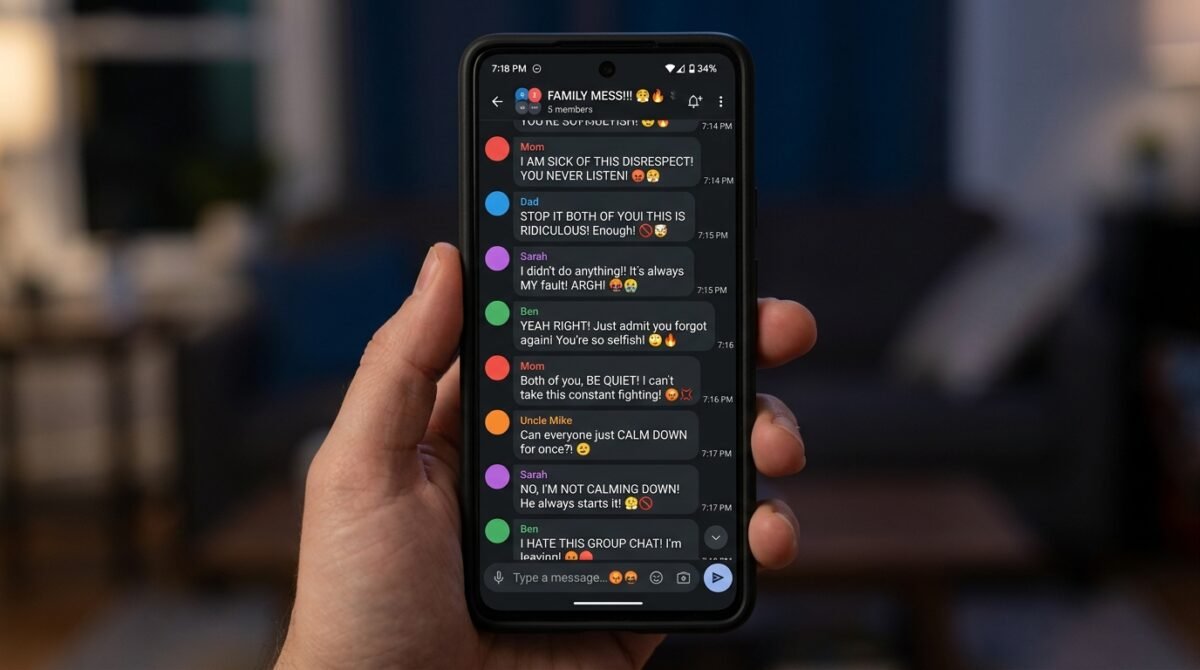
Within hours of Chloe leaving the greenhouse, my phone was buzzing incessantly. The family group chat—a place usually reserved for holiday planning and birthday wishes—had become a war zone. Chloe had spun the narrative, painting me as a neglectful owner who had killed the ‘family legacy’ and refused to share the assets fairly. She didn’t mention the poison, of course; she framed it as me failing to maintain the garden properly.
My mother was the first to chime in, clearly having been coached by Chloe. She sent a series of messages that made my blood boil. It wasn’t about the truth; it was about keeping the peace, which always seemed to come at my expense. They expected me to just ‘share’ the greenhouse and let Chloe take over the ‘business side’ of things to stop the fighting.
“Look, can’t you just let her help? Chloe is good with business, and you are good with plants. Why does it have to be all-or-nothing? Just split the management and stop making everyone uncomfortable. It’s for the good of the family.”
— Mom, via the Family Group Chat
I didn’t hold back. I screenshotted the lab report, the security footage of her pouring the liquid, and a record of the threatening texts she had sent me earlier. I posted them all directly into the chat. The silence that followed was deafening. The ‘peace’ my mother was so desperate to protect had been shattered by the reality of Chloe’s actions.
The reactions ranged from shocked silence to outright horror. My uncle, who had always been the voice of reason, was the first to speak up. He wasn’t having any of Chloe’s spin. He had known Aunt Elara well and knew exactly how much that greenhouse meant to her. He was the one who pointed out that poisoning the plants wasn’t just a mistake; it was an act of malice against a final wish.
Chloe tried to leave the group chat, but not before she sent one last, vitriolic message. She claimed that the lab report was faked and that I was the one who had poisoned the plants to frame her. It was a desperate, transparent lie that only served to solidify her status as the villain in the eyes of the rest of the family. The mask had completely slipped, and she was left with nothing but her own toxicity.
The Legal Ultimatum and the Cease and Desist
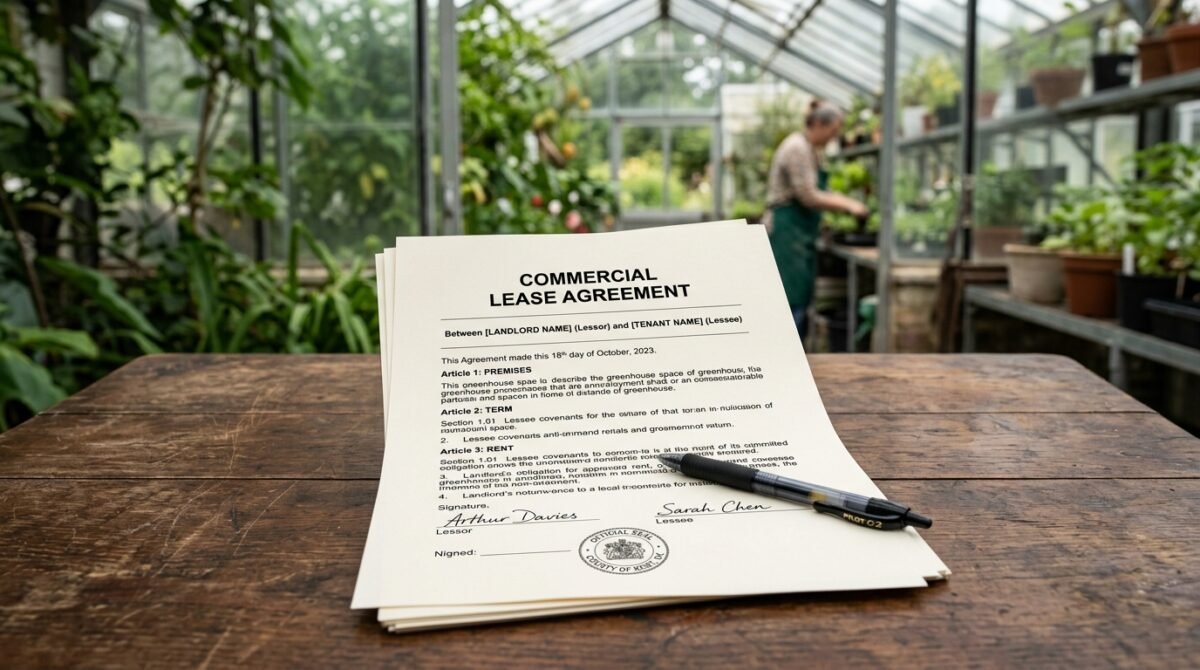
The next day, a lawyer’s letter arrived on my doorstep, but it wasn’t from Chloe. It was from me to her. I had contacted a specialist in estate law the moment I realized this was going to turn into a legal battle. I wanted to make sure that my ownership of the greenhouse was airtight and that any attempt at interference by Chloe would be met with swift, punitive measures.
The cease and desist was clear: if she ever stepped foot on the property again, or if she contacted me or anyone else with defamatory lies about my management of the estate, I would pursue a harassment suit. I also included the evidence of the sabotage, stating that I would be filing a police report for property damage if she didn’t drop her claims to the land entirely.
It was the only language she understood. The threat of public exposure and legal consequences was far more terrifying to her than any moral argument. She had built her life on a facade of competence and success, and the thought of being dragged into a courtroom over petty criminal mischief—poisoning plants—was enough to stop her in her tracks.
“This is ridiculous. You’re really going to involve the authorities over some flowers? You are pathetic. Keep your stupid greenhouse. It’s a rotting hole in the ground anyway. I never wanted it.”
— Chloe, responding to the cease and desist
I didn’t respond. I didn’t need to. The battle was over. She had backed down because she had run out of moves, and more importantly, she had run out of family support. She had played the victim, but the moment the evidence was laid bare, she was left standing alone in her own resentment.
I spent that afternoon in the greenhouse, cleaning up the mess she had made. I pruned the damaged leaves and flushed the soil of the remaining toxins. It was hard work, and some of the plants were lost forever, but as I worked, I felt a sense of peace I hadn’t known for months. The greenhouse was finally mine, not just on paper, but in spirit.
Reddit Weighs In: The Verdict of the Internet
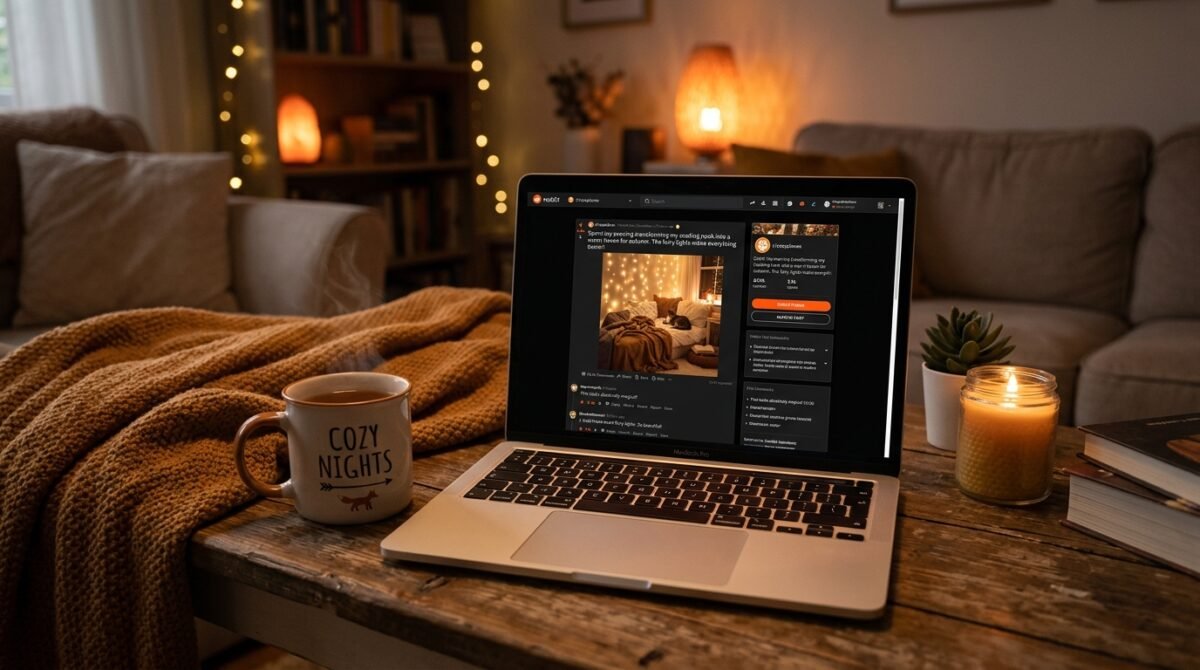
I posted my story on a popular subreddit, needing an objective perspective to make sure I hadn’t lost my mind. The response was overwhelming. Thousands of people weighed in, and the consensus was absolute. The community didn’t just support my decision; they were outraged on my behalf, sharing their own stories of toxic family members who felt entitled to the rewards of others’ hard work.
The comments were a mix of validation and practical advice. Many users pointed out that I had been far too lenient for too long. They urged me to cut all contact with Chloe, warning that someone who is willing to poison living things to get what they want won’t just stop because they were told ‘no’. They encouraged me to change the locks and tighten security immediately.
“NTA. Your stepsister isn’t just entitled; she’s dangerous. You’re dealing with someone who has no problem destroying something precious to you just to spite you or get a payday. Cut her out, change the locks, and never look back. Do not engage with her legal threats. She has nothing to stand on.”
— u/PlantParent_99 (Top Comment, 28.5k upvotes)
Some users even offered expert advice on how to rehabilitate the soil and ensure the toxins were fully neutralized. It was heartening to see how many people cared about the fate of the orchids, which felt like a validation of everything Aunt Elara had taught me. The community became a source of strength, reminding me that while family is important, it doesn’t excuse abuse or theft.
There were a few contrarians, of course, suggesting that I should have tried ‘family therapy’ or ‘mediation,’ but they were quickly drowned out by the vast majority who understood that you cannot mediate with a person who acts in bad faith. The experience taught me that setting firm boundaries is not being ‘cruel’; it is a necessary act of self-preservation.
The post stayed on the front page for forty-eight hours, and reading through the thousands of comments helped me process the emotional turmoil I had been keeping bottled up. I wasn’t the bad guy. I was a person protecting their legacy, and the internet confirmed that I was well within my rights to do so.
The Long Road to Recovery for the Greenery
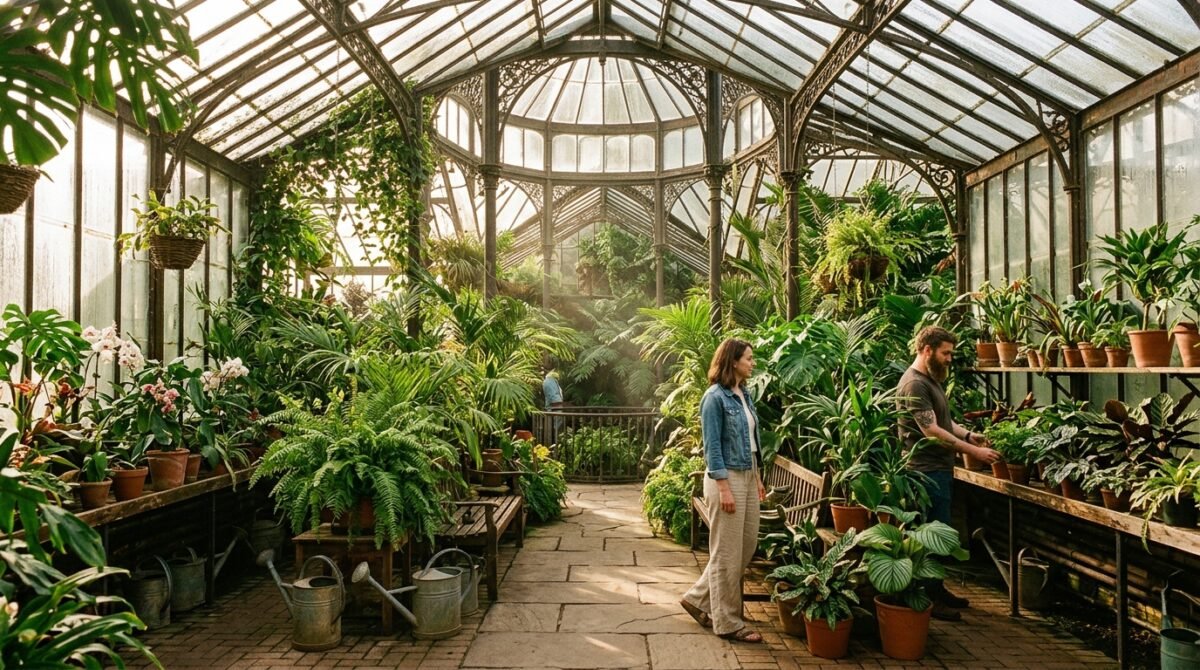
With the legal threat neutralized, I shifted my focus to the long-term recovery of the greenhouse. Some of the plants had been severely damaged, and I had to accept that a few of the more delicate hybrids were unsalvageable. It was like losing a piece of history, a physical connection to Aunt Elara that could never be replaced. I spent many nights out there, talking to the plants, apologizing for the harm that had come to them.
I brought in a professional soil scientist to test the beds and ensure the herbicide hadn’t leached into the groundwater. It was an expensive process, but necessary for the health of the entire ecosystem. The greenhouse required a complete overhaul of its filtration systems, which I paid for using the savings I had intended for a vacation. It was a trade-off I made without hesitation.
The process of restoration became a form of therapy. As I stripped away the dead tissue and replaced the contaminated soil, I felt like I was stripping away the toxicity of my relationship with Chloe. I was reclaiming the space, turning it back into the sanctuary it was always meant to be. The plants began to respond, new shoots appearing in the spring, a sign of resilience that mirrored my own.
“You know, Elara always said that the garden is a reflection of the gardener’s heart. You’ve done a remarkable job saving these, despite everything. She would be proud of you for fighting for them.”
— Our family friend and former gardener, visiting the greenhouse
The garden started to thrive again, more vibrant than it had been in years. I added new varieties, some that I had been wanting to try for years but never felt I had the time for. I turned the space into a true refuge, a place where the air felt cleaner and the light seemed to dance more brightly on the glass panels. I wasn’t just growing plants; I was growing a new life for myself, one free from the shadow of family expectations.
I also installed a new, state-of-the-art security system, not just for the plants, but for my own peace of mind. Every camera, every motion sensor, and every locked door was a testament to the boundaries I had set. I was no longer the person who would let someone walk all over them for the sake of ‘keeping the peace’.
The Silent Aftermath and the New Normal
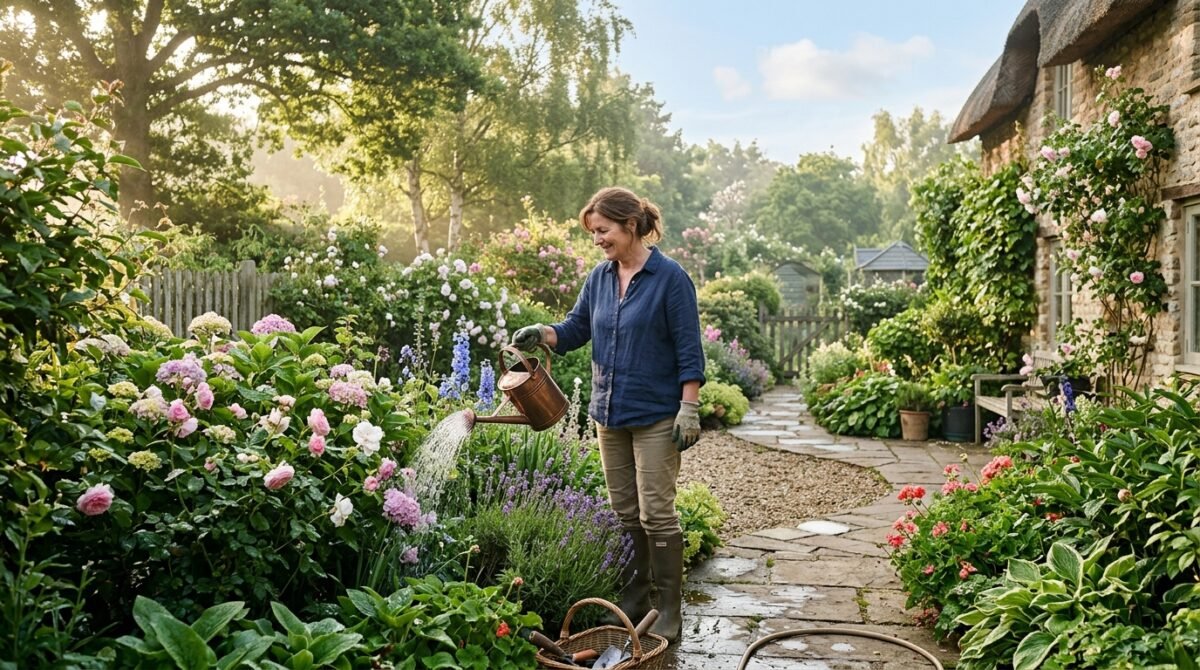
Months have passed since the confrontation, and the silence from Chloe has been absolute. She hasn’t tried to contact me, hasn’t challenged the legal documents, and hasn’t shown up at any family events I’ve attended. It’s as if she vanished into the ether, which is exactly what I needed. The rest of the family has also learned to respect my boundaries, having seen the evidence of what she was capable of.
There was a awkward family reunion over the summer, and while the atmosphere was slightly tense, it was manageable. I made it clear that I wouldn’t be discussing the ‘greenhouse incident’ with anyone who wasn’t ready to acknowledge the truth of what happened. Most people wisely decided to just talk about the weather and the food, which I was perfectly fine with.
I’ve reached a state of ‘low contact’ with most of the family, and ‘no contact’ with Chloe. It’s been a liberating experience. I’ve realized that I don’t need the approval of people who would stand by and watch me be exploited. I have my community of fellow gardeners, my own sense of purpose, and the sanctuary that Elara left me.
“Boundaries aren’t walls to keep people out; they’re gates to keep the wrong ones from hurting you. You did the right thing by protecting your peace and your garden.”
— A wise friend, during a quiet afternoon in the garden
I still think about the ‘Blue Ghost’ sometimes, and the other plants I lost. It’s a bittersweet memory, a reminder of the price of standing up for myself. But it’s a price I would pay again in a heartbeat. I’ve learned that the things we cherish are worth the effort it takes to defend them, and that the true value of an inheritance isn’t in its monetary worth, but in the love and care we pour into it.
Today, the greenhouse is a place of joy. I host small workshops for local gardening enthusiasts, sharing the techniques Elara taught me. I’m no longer just a custodian of a legacy; I’m building a new one, one that is firmly mine. And that is the greatest gift of all.
Reflecting on the Cost of Entitlement

Looking back at the whole ordeal, the most staggering thing is the absolute entitlement that Chloe displayed. It wasn’t just a simple disagreement over assets; it was a fundamental misunderstanding of what ownership means. She believed that because we were stepsisters, she had a right to my life, my work, and my happiness. She saw no boundary between her desires and my reality.
This entitlement is a poison, much like the chemical she used on my plants. It spreads, it kills the good things, and it leaves behind a barren landscape where nothing can grow. I see it in other families too—the way people feel entitled to your time, your money, or your successes simply because they share your bloodline. It’s a toxic dynamic that needs to be called out.
I’ve learned that the only way to deal with this kind of entitlement is to be firm, to be clear, and to be absolutely unapologetic about your choices. You don’t owe anyone an explanation for why you’re protecting your own future. If they call you ‘selfish’ or ‘difficult,’ take it as a badge of honor. It means your boundaries are working.
“When you set a boundary, you’re not saying you don’t love them; you’re saying you love yourself enough to not let them destroy you. Never apologize for that.”
— Advice from a therapist I saw after the incident
The lesson of the greenhouse is one of resilience. Things will get damaged, people will try to take what isn’t theirs, and you will face challenges that seem insurmountable. But if you have a solid foundation, if you have your own sanctuary, you can rebuild. You can grow again, and you can come back stronger than you were before.
I’m grateful for the experience in a strange, roundabout way. It taught me exactly who I am and what I’m made of. It showed me that I’m capable of standing up to bullies, that I can navigate complex legal and emotional situations, and that I have the strength to build a life that is entirely my own.
Lessons Learned from the Verdant Sanctuary
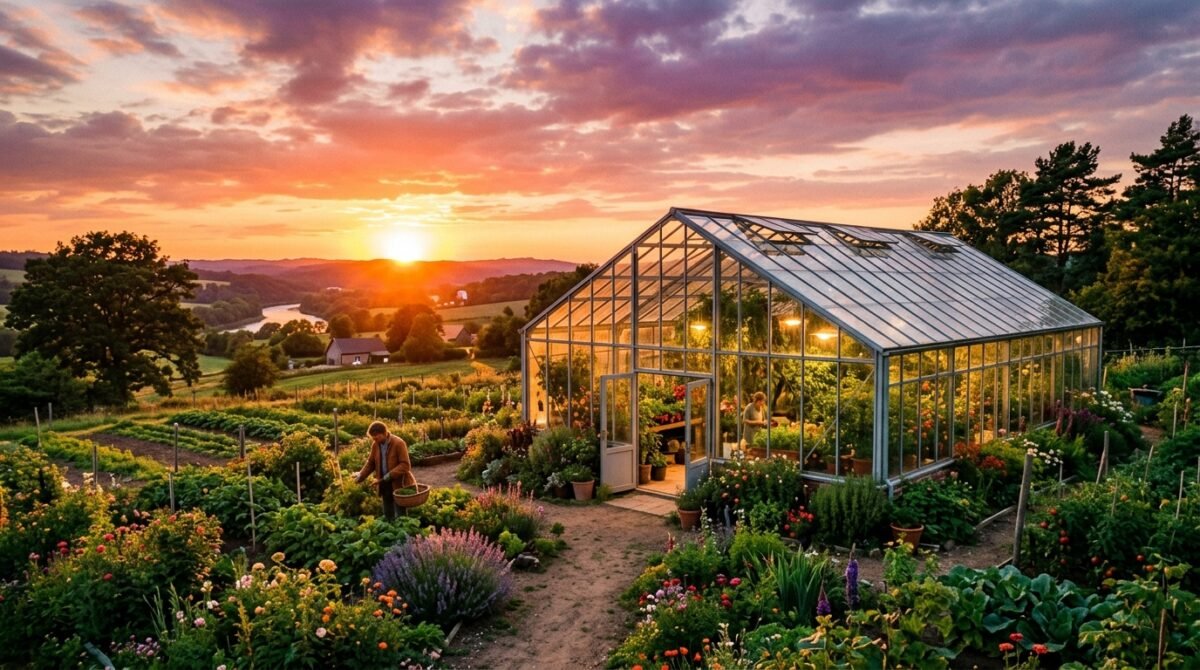
If there’s one thing I want anyone reading this to take away, it’s that your passion is your power. When you commit your life to something, whether it’s a garden, a business, or an art form, you are creating something that is uniquely yours. Don’t let anyone make you feel guilty for protecting it. Don’t let anyone convince you that your efforts aren’t worth the cost of maintaining them.
We live in a world that is obsessed with monetization, with turning everything into a ‘side hustle’ or a ‘revenue stream.’ It’s easy to feel pressured to give in to that, to turn your heart’s work into something that fits into a spreadsheet. But there are some things that should never be sacrificed on the altar of ROI. Your peace, your dignity, and your integrity are not for sale.
I have a new rule now: if someone in my life makes me feel like I have to apologize for my success or my boundaries, they don’t get to be in my life. It’s a simple rule, but it has transformed my world. I’m surrounded by people who support me, who celebrate my growth, and who understand the value of the work I do.
“Your life is a garden. Tend to it with care, weed out the toxicity, and don’t let anyone trample the flowers you’ve worked so hard to grow.”
— My personal mantra for the new year
The greenhouse is more than just a place to grow plants now; it’s a symbol of my independence. It’s a place where I feel safe, where I feel productive, and where I feel connected to the legacy of a woman who taught me that the best things in life are the ones we grow ourselves. And that is a legacy I will continue to defend, no matter what.
So, to everyone who has ever felt like they were being pushed around by family, or who has ever had to fight to keep what is rightfully theirs: stay strong. You aren’t alone, and your boundaries are worth every ounce of effort you put into maintaining them. Keep growing, keep blooming, and never let anyone turn your sanctuary into a wasteland.
Conclusion
This experience has been a grueling journey, but one that ultimately led me to reclaim not just my greenhouse, but my own sense of self. Protecting ‘The Verdant Sanctuary’ was never just about saving a collection of plants; it was about defining the limits of what I would allow into my life. The toxicity of entitlement can be a silent killer, but once it is brought into the light, it holds no power over those who refuse to be its victim.
I’ve walked away from this with a stronger sense of purpose and a deeper appreciation for the people who have stood by me. Life is too short to nurture relationships that only aim to cut you down to size. Sometimes, the bravest thing you can do is to walk away, lock the door, and tend to your own garden.
What do you think? Have you ever had to draw a hard line with a family member who felt entitled to your hard-earned assets or accomplishments? Did you face similar backlash, or did your family rally behind you? Share your stories and advice in the comments below. Let’s start the conversation.
What's your verdict on this dilemma?
Vote below to contribute to the official community consensus.

Have a Dilemma Keeping You Up at Night?
Share your real-life feud, wedding chaos, or relationship crossroads anonymously with our editorial team.
What do you think ?
0 Comments🛡️ Comments are moderated to protect community integrity. Your comment will appear once approved by the editorial team.