
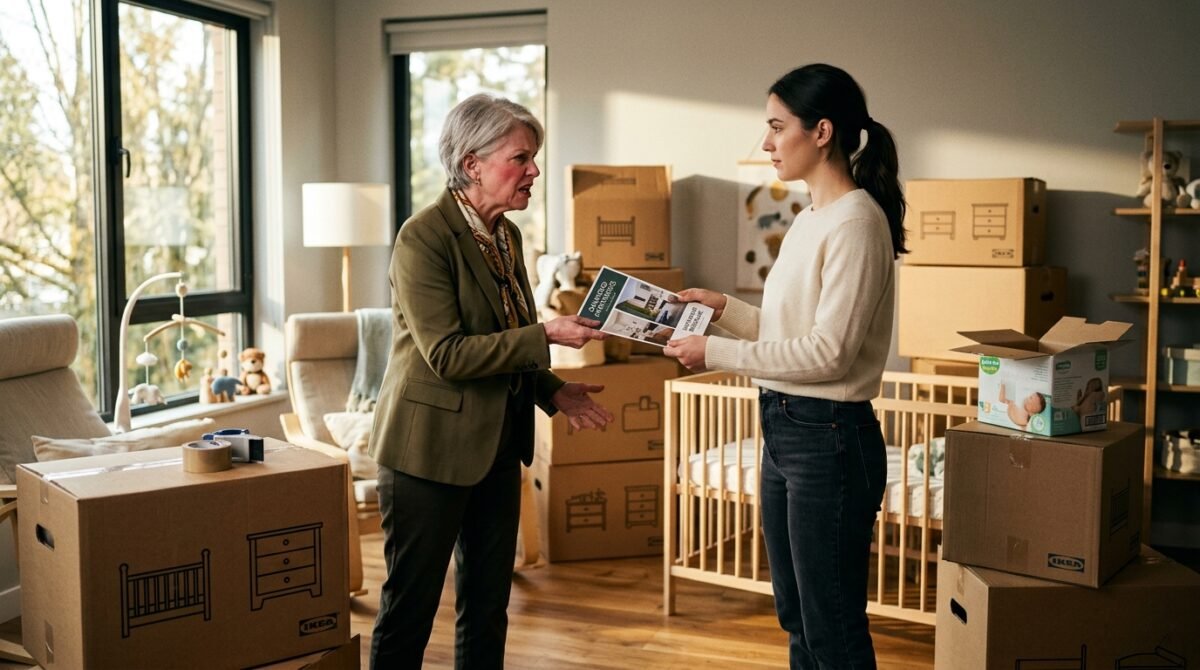
They say that marriage is a union of two families, but nobody warns you about the annex clause. For Sarah and Mark, the dream of becoming parents was supposed to be the culmination of years of hard work, saving, and meticulous planning for their first home. They had finally found the perfect property: a quiet house on a cul-de-sac with enough room for a home office, a guest space, and, most importantly, a dedicated nursery for their unborn child.
However, the ink on the deed was barely dry before Sarah’s mother-in-law, Linda, began staking her claim. It started with subtle comments about how lonely her own apartment had become. Then, it escalated to unsolicited opinions on how Sarah and Mark were ‘wasting’ the spare bedroom that was clearly intended for the baby. But the true conflict ignited when Linda arrived for a Sunday dinner, suitcase in hand, announcing her permanent move-in date—and her intention to claim the nursery as her personal sanctuary.
The audacity of the move wasn’t just a physical encroachment; it was a fundamental disrespect of the life Sarah and Mark were trying to build. As the tension thickened, Sarah faced a crossroads: succumb to the pressure to maintain family peace or set a boundary that would inevitably burn bridges. She chose the latter, opting for a cold, calculated approach that left Linda speechless and the entire family group chat in a state of absolute chaos.
This is a story about the intersection of entitlement and reality. It explores the moment a boundary becomes a shield, and how the act of handing over a simple apartment guide became the catalyst for a total reconfiguration of familial power dynamics. Through the lens of a viral Reddit saga, we trace the path from the initial shock of the demand to the fallout that followed, revealing why some doors are meant to remain closed to certain family members.
The Sunday Afternoon Ambush
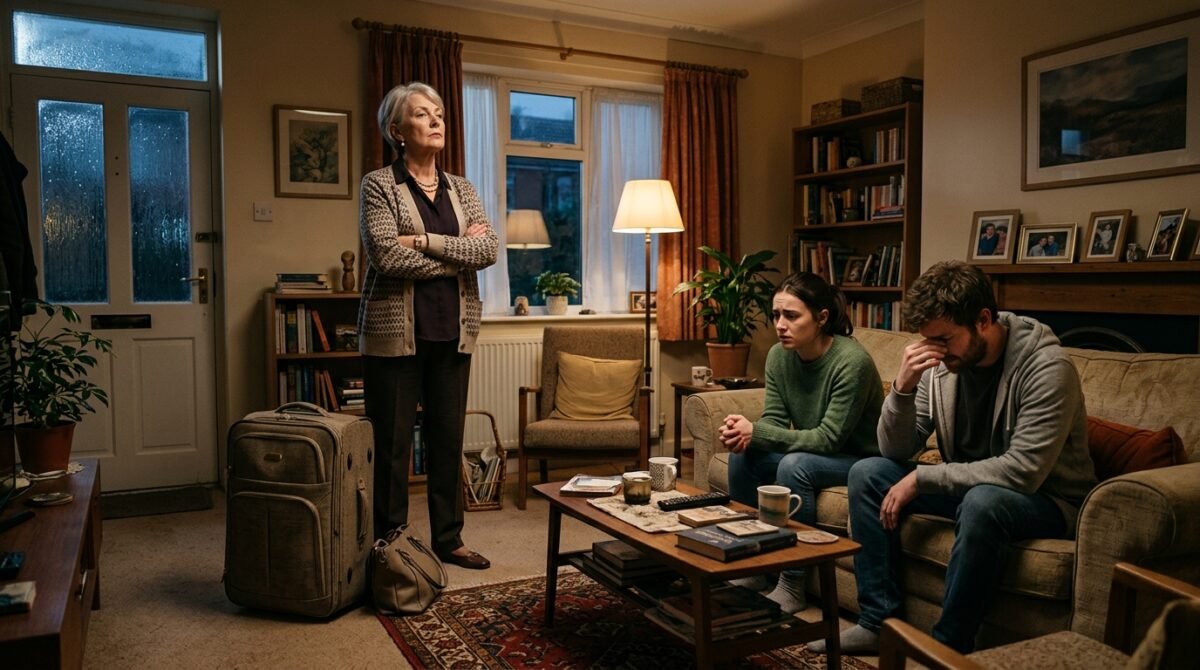
It was a quiet Sunday afternoon when the sound of a heavy suitcase dragging across our porch tiles shattered the peace. Mark and I were in the middle of assembling the crib, our hands covered in cardboard dust and excitement. I looked up to see Linda standing in our entryway, looking not like a visitor, but like a woman who had arrived at a hotel she had pre-booked months ago.
She didn’t offer a greeting. Instead, she walked straight into the nursery, sniffing the air as if checking the quality of the linen. She stood in the center of the room, looking at the half-assembled crib with a mixture of disdain and authority. Her presence felt like a damp squib in our happy little world, a sudden intrusion of reality into our fantasy of parenthood.
“Well, I suppose this will work, though it is quite small. I’ve already moved my furniture into storage. I expect you two to have this cleared out by next weekend. The light here is much better for my morning reading.”
— Linda, standing in our nursery
I felt my blood run cold. Mark, usually so quick to jump to my defense, stood frozen, holding a screwdriver like it was a relic of a forgotten past. The silence in the room was deafening. I realized then that this wasn’t a sudden whim; it was a planned maneuver. Linda had clearly decided that our life was an extension of her own, and she was simply coming to collect what she believed she was owed.
I looked at Mark, waiting for the ‘no’ that never came. His eyes were downcast, his jaw tight. He was paralyzed by the conditioning of a lifetime spent trying to placate his mother. It was in that moment that I realized if I wanted this boundary held, I couldn’t rely on him to be the bad guy. I had to step into the role of the villain, not for my own sake, but for the sake of the child who was due to arrive in three months.
I stood up, wiping the dust from my jeans. The shift in my demeanor was palpable. I felt a cold clarity wash over me, the kind of focus that only arrives when you have absolutely nothing left to lose. I didn’t yell; I didn’t even raise my voice. I simply walked over to the kitchen counter where I had left my laptop and a stack of papers I had prepared just in case her hints became reality.
The Practicality of the Pivot
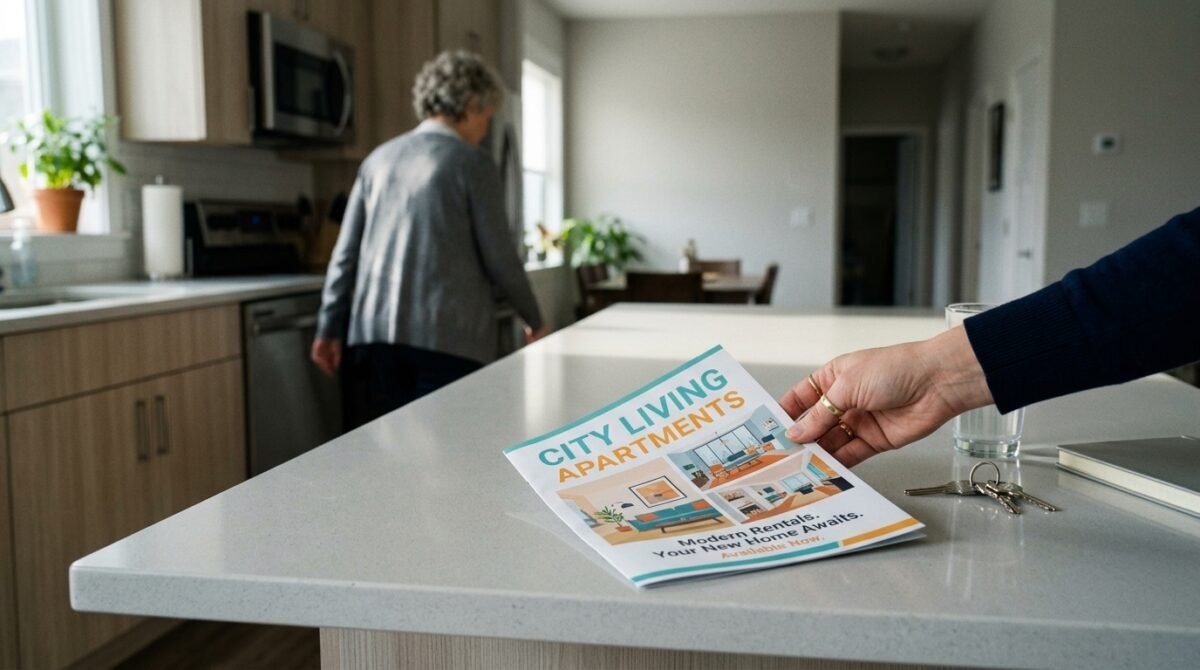
I didn’t argue. I didn’t explain the medical necessity of a nursery or the psychological importance of a private space for a new mother. Instead, I walked over to the kitchen island and pulled out a manila folder I had kept hidden in the pantry. It contained a neatly organized list of one-bedroom senior apartments in the area, complete with pricing, amenities, and proximity to her friends. I laid it on the counter with a quiet thud.
Linda looked at the folder as if I had handed her a dead fish. Her face twisted into a mask of pure indignation. She had expected a negotiation, a debate, or perhaps a tearful surrender. She had not expected a cold, administrative dismissal of her plans. I watched her eyes dart over the list, her lips pursing tighter with every line she read.
“What is this, Sarah? I am talking about my transition into your life as a grandmother. I am not looking for an apartment. I am looking for a home, and this is clearly the only spare room in the house.”
— Linda, looking at the apartment guide
I leaned against the counter, my arms crossed, maintaining a neutral, pleasant expression that I knew would infuriate her more than any shouting match could. I told her that our home was meant for our growing family, not as a retirement wing. The logic was so simple, so undeniably reasonable, that her attempts to argue felt like they were slipping off me. I wasn’t fighting her; I was simply refusing to play the game she had set up.
Mark finally looked up, his eyes meeting mine. There was a flicker of realization there, a moment where the veil fell away and he saw his mother not as the matriarch to be obeyed, but as a person making an unreasonable demand on his marriage. He stood up, walked over to me, and placed a hand on my shoulder. It was a small gesture, but it was the most important thing he had done all year.
Linda turned, her face flushed with a mixture of embarrassment and rage. She grabbed her handbag, snapped it shut with a sharp, metallic click, and marched toward the front door. She didn’t say goodbye. She just left, leaving the folder behind on the counter like a scorched-earth tactical retreat. We heard her car peel out of the driveway, the sound echoing in the stillness of our house.
The Digital Firestorm
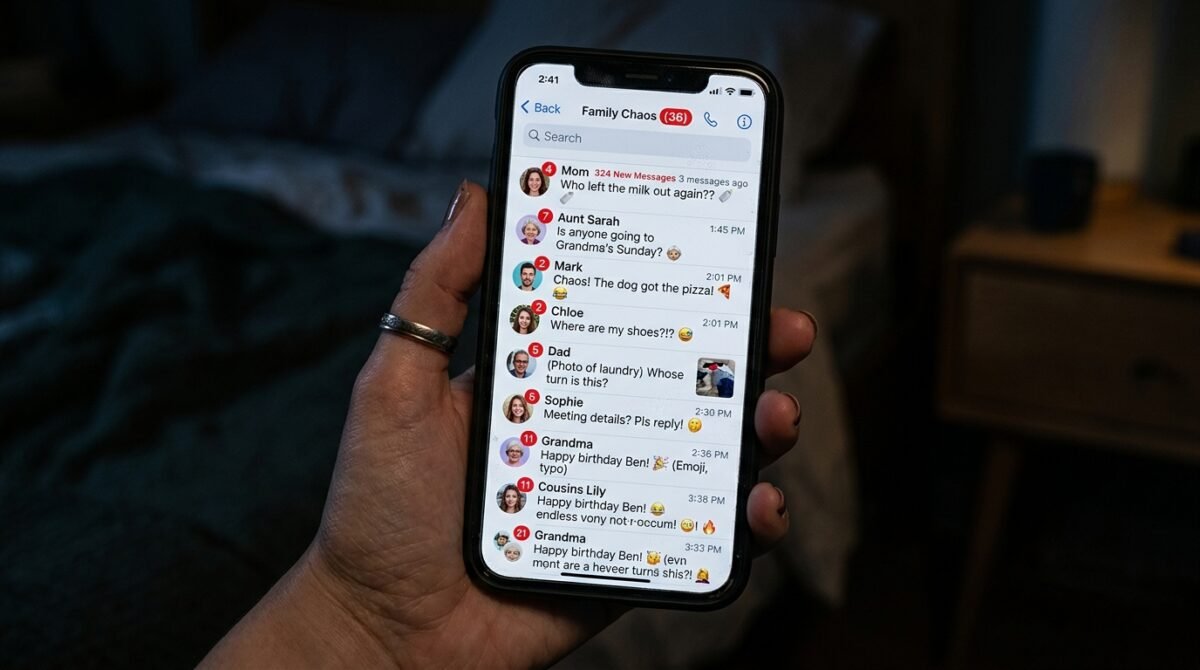
Within an hour of Linda’s departure, my phone started buzzing. Then, it started ringing. Then, it began to vibrate uncontrollably as the family group chat—a place usually reserved for sharing cat photos and birthday well-wishes—became a war zone. My sister-in-law, my husband’s aunt, and even his cousins were chiming in, demanding to know why we had ‘kicked his mother out’ in her time of need.
The narratives were shifting at lightning speed. To hear them tell it, we hadn’t just denied a request; we had physically thrown an elderly woman into the street in the middle of a thunderstorm. The hyperbole was almost impressive. I muted the chat, but Mark kept reading, his face growing paler with every message he scrolled through. The guilt was being weaponized, and it was being aimed directly at his soft spots.
“Are you two serious? Mom is crying in her car outside the house. You can’t just treat her like an intruder. She needs a place to stay while she figures out her next steps. You have a guest room. Be a family.”
— Mark’s sister, from the family group chat
I took the phone from Mark’s hand and read the message. I didn’t respond to the group. I looked at Mark and asked him a simple question: ‘Is this what you want? A life where every room in your house belongs to your mother?’ He sighed, a long, weary sound that seemed to drain the last of his resistance. He finally understood that there was no middle ground here; there was only the house, or the interference.
We spent the rest of the evening blocking numbers and turning off notifications. It was an exercise in digital hygiene that felt like scrubbing a wound. The silence that followed was heavy, but it was our silence. We weren’t beholden to the expectations of distant relatives who didn’t have to live with the consequences of their advice. For the first time, we were truly alone in our own house.
The next day, we woke up to a barrage of missed calls and voicemails. We didn’t listen to any of them. I started looking for a security camera for the front door. It felt like overkill, but given the way Linda had walked in without a key—a spare we had conveniently ‘misplaced’—it seemed like a necessary evolution of our new, boundary-focused lifestyle.
The Reddit Trial
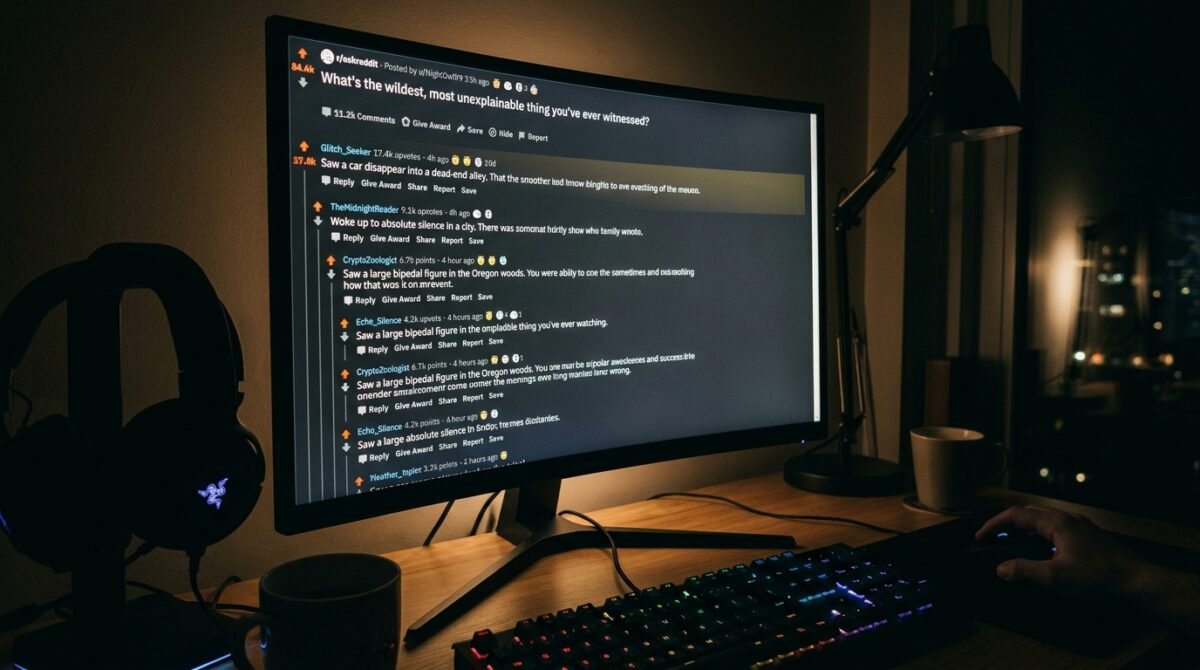
I knew I needed perspective, so I did what any millennial in a crisis does: I posted the story to Reddit. I didn’t use names, and I kept the details vague enough to remain anonymous, but the core of the dilemma was there for the internet to judge. Within minutes, the replies started pouring in. The validation was immediate, but the intensity of the debate was surprising.
The community was split, but the majority were firmly on my side. They saw the ‘mother-in-law moving in’ scenario for exactly what it was: a classic case of boundary crossing wrapped in the language of family duty. Many users shared their own horror stories, detailing how once a parent gets a foothold, they never leave. It was a cathartic experience to read that we weren’t alone in our struggle.
“NTA. The moment you give her that room, you lose your house. She isn’t looking for a ‘guest space,’ she is looking for a permanent residence where she gets to make the rules. Print those apartment guides by the dozens and hand them out like business cards.”
— u/BoundariesQueen (Top Comment, 18.5k upvotes)
There were, of course, the dissenters. A few users argued that family should always come first, and that I was being ‘cold’ and ‘calculating.’ I found these comments interesting; they often came from people who clearly valued compliance over autonomy. I didn’t engage with them. I just watched as the community corrected them, pointing out that ‘family’ doesn’t mean ‘doormat.’
The thread became a repository of advice on how to handle invasive in-laws. People suggested everything from changing the locks to installing a doorbell camera, to setting up a ‘meeting schedule’ that would prevent any unannounced visits. It was like a crash course in defending one’s territory. I felt empowered, not just by the support, but by the realization that our decision was a standard, healthy response to an abnormal demand.
By the end of the day, the post had hit the front page. It was bizarre to see our personal drama analyzed by thousands of strangers, but it brought a strange sense of comfort. The collective wisdom of the internet had confirmed what I already knew: we were in the right, and we were doing the right thing for our child. We were building a home, not a hotel.
The Unexpected Olive Branch
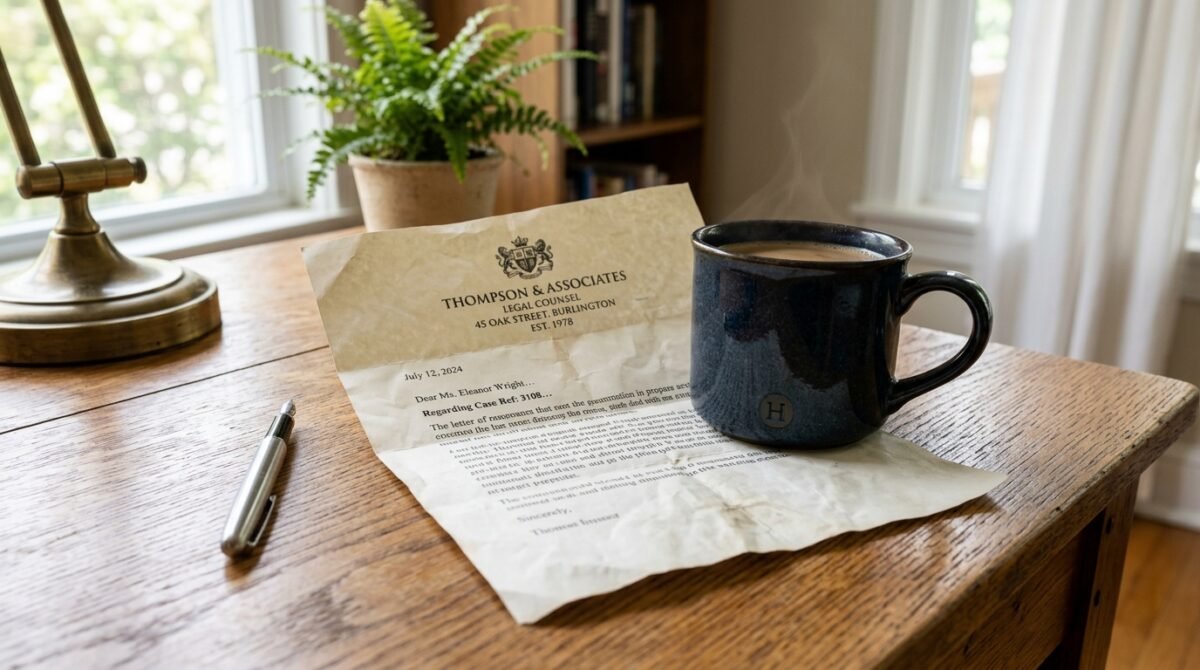
A week later, just as we thought the drama had subsided, we received a hand-delivered letter. It wasn’t from Linda, but from her attorney—or at least, a firm that looked remarkably like it was trying to sound like one. It was a formal request for us to ‘reconsider our position’ and allow Linda to ‘visit’ for a trial period. The audacity was almost laughable, but the underlying threat of legal trouble was a sour note.
I showed the letter to a friend who practiced family law. She laughed, told me to shred it, and reminded me that ownership of a home comes with the right to exclude anyone we don’t want there. ‘She has no claim,’ she assured me. ‘Unless you’ve invited her to stay and she has established residency, you are in the clear.’ It was the professional validation I needed to finally stop worrying about the legal threat.
“Dear Sarah, we believe that in the spirit of reconciliation, you might reconsider your stance regarding the spare bedroom. A trial stay of two weeks would be of great benefit to the entire family and would prevent further escalation.”
— The letter from Linda’s ‘attorney’
We responded with a short, polite email. We didn’t mention the ‘attorney’ or the legal threats. We simply stated that our home was not open for long-term guests and that we would be happy to meet for coffee in a public place if she wanted to talk about something else. It was a firm ‘no’ wrapped in a polite suggestion. We didn’t hear back, and for a few days, the silence was bliss.
But the silent treatment was only the calm before the storm. We knew Linda wouldn’t take this lying down. The ‘attorney’ letter was a desperate attempt to regain control, and now that it had failed, she would likely turn to more personal tactics. We prepared ourselves for the next round of emotional warfare, knowing that our greatest strength was our unity.
I started focusing on the nursery again. I painted the walls a soft, calming shade of blue and organized the tiny clothes in the dresser. Every time I walked into that room, I reminded myself that I had fought for it. It wasn’t just a room; it was the physical manifestation of our boundary, a space that belonged to us and our child, and no one else.
The Unannounced Visit at 6:00 AM
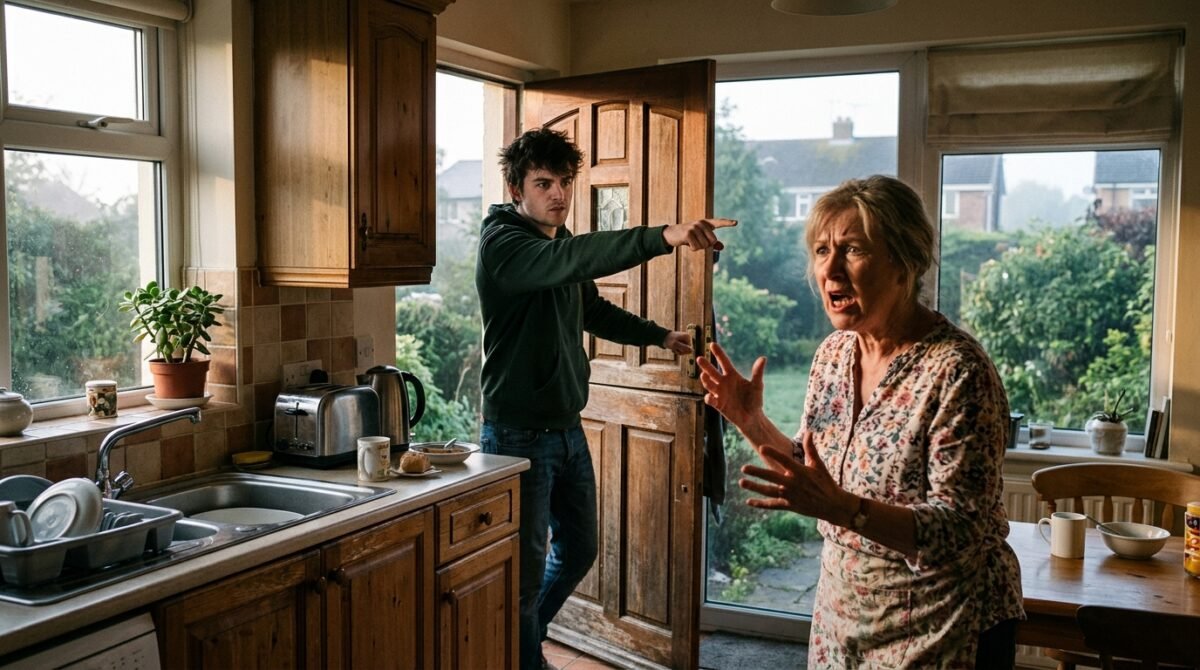
The next incident came at the worst possible time: 6:00 AM on a Tuesday. I heard the sound of a key turning in the lock—the spare key we had forgotten to reclaim from the last time she house-sat. I bolted upright in bed, my heart racing. Mark was already moving, his face a mask of sudden, cold fury. We scrambled out of bed, grabbing our robes as we rushed to the hallway.
Linda was standing in our kitchen, kettle in hand, looking as if she had just walked in for a normal morning chat. She had a bag of groceries with her, and she had already started taking items out of our fridge. The sheer, unadulterated entitlement was breathtaking. She didn’t even look up when we entered; she just continued to organize our pantry, moving things to ‘her’ preferred spots.
“I figured since you two were so busy, I’d come over early and help with the breakfast prep. I’ve decided to stay for a while until we get this whole living arrangement sorted out. Don’t worry, I’ve brought my own tea.”
— Linda, in our kitchen at dawn
Mark didn’t let her finish. He walked over to the door and opened it wide. ‘Out,’ he said, his voice quiet but deadly serious. Linda looked at him, her smile faltering for the first time. She tried to laugh it off, as if he were joking, but he held the door open, his posture rigid. He wasn’t the yielding son she had known for thirty years; he was a man protecting his home.
She started to protest, her voice rising in volume, but Mark remained unmoved. ‘You have no right to be here,’ he told her. ‘You are trespassing.’ The word hung in the air, heavy and final. She looked at me, hoping I would be the mediator, the one to soften the blow, but I just stood behind Mark, watching her with a blank stare. I wasn’t going to save her from herself this time.
She eventually left, muttering about ‘disrespect’ and ‘ungrateful children.’ We watched her walk to her car, and the moment she pulled away, Mark went to the locks. He had already purchased a locksmith service to come that morning to re-key the entire house. It was a small cost for peace of mind, and it felt like the final step in securing our borders.
The Fallout in the Neighborhood

The neighborhood grapevine is a powerful thing. By the end of the week, word had gotten around that Linda had been ‘kicked out’ of our home. We started getting strange looks from neighbors, and a few people even stopped by to ask if ‘everything was okay.’ It was clear that Linda had been telling a very specific version of the story to anyone who would listen.
I felt a strange sense of detachment from the gossip. Let them talk. Let them think what they wanted. I knew the truth, and more importantly, Mark knew the truth. We started going for walks in the evening, hand in hand, ignoring the whispers. It was a liberating experience to realize that we didn’t owe anyone an explanation for how we ran our private lives.
“I heard what happened with your mother-in-law. Is it true she’s looking for a place? My sister has an apartment she’s trying to rent out. Maybe you should pass that along to her? It might stop the constant visits.”
— A neighbor, with a knowing wink
The neighbor’s comment was a small victory. It meant that even people who heard the distorted version of the story could see the common-sense solution. It validated our decision further. We actually thanked the neighbor and took the contact information for the apartment, just in case Linda tried to corner us again. It was a way of taking control of the narrative, one rental listing at a time.
We started to notice that the tension in our relationship was dissipating. Without the looming threat of the mother-in-law move-in, we could focus on each other again. We had dinner, watched movies, and talked about the baby. It was like we were seeing each other for the first time in months, unburdened by the external pressure of family expectations.
The ordeal had changed us. We were more cautious, more guarded, but also stronger. We had learned that setting a boundary was not an act of cruelty, but an act of preservation. We had learned that we were allowed to say ‘no,’ and that the world wouldn’t end if we did. It was a hard-won lesson, but one that would shape our parenting and our marriage for years to come.
The Final Confrontation
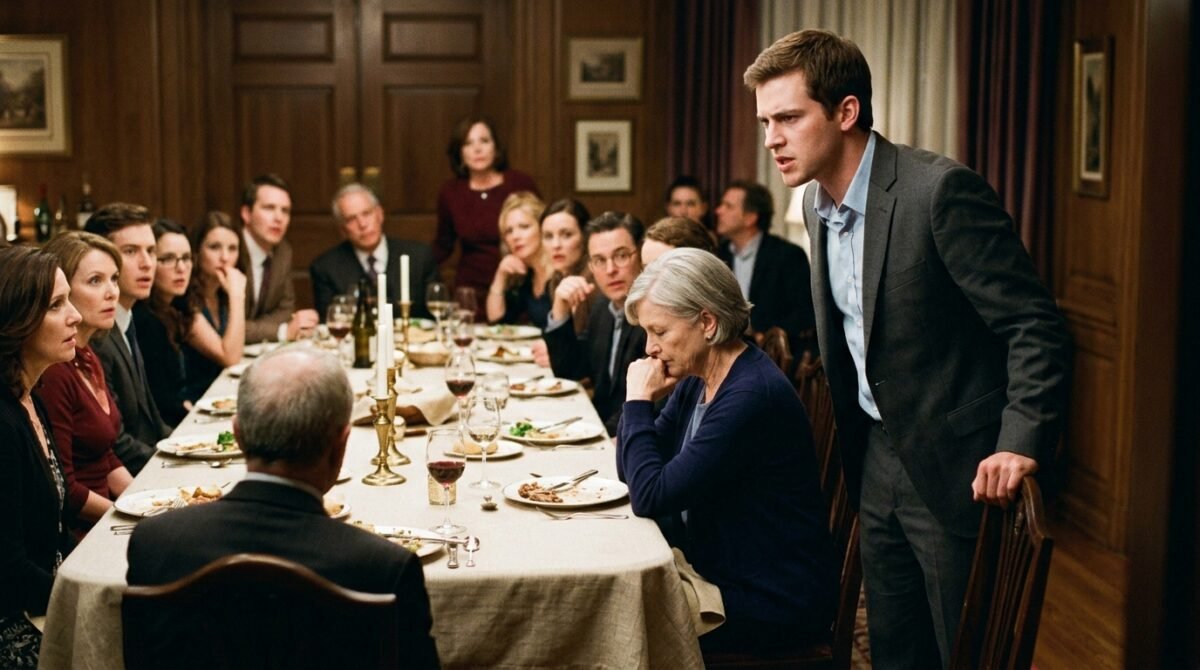
The final confrontation happened at a family gathering we were essentially ‘tricked’ into attending. It was supposed to be a small, low-key lunch, but when we arrived, it was clear that the entire extended family had been invited. It was a setup, an intervention designed to make us ‘see reason’ and apologize to Linda for our ‘cold behavior.’ I could feel the trap closing in the moment we walked through the door.
Linda sat in the center of the room, looking frail and wounded, surrounded by people who were clearly taking her side. As we walked in, the room went silent. It was a palpable, uncomfortable stillness. We didn’t back down. We sat down at the table, greeted everyone politely, and waited. We knew exactly what was coming, and we were prepared to handle it with grace, not guilt.
“We are all here today because we are worried about the rift in this family. Sarah, Mark, don’t you think it’s time to apologize and make space for your mother? She’s family, after all. You can’t just turn your back on her.”
— An uncle, acting as the spokesperson for the family
Mark stood up. He didn’t yell, and he didn’t apologize. He spoke with a clarity that silenced the room. He explained the boundary, the unannounced visits, and the entitlement. He spoke about the need for privacy and the right to build a home on our own terms. He didn’t attack Linda; he simply stated the facts. The room remained silent, the gravity of his words settling over the guests.
I watched Linda’s face. She looked not just angry, but genuinely confused, as if she couldn’t understand why her usual tactics weren’t working. She tried to interrupt, but the uncle held up a hand. For the first time, she wasn’t the center of the story; she was just one person in a room full of people who were finally hearing the truth. It was the end of her reign of influence.
We didn’t stay long after that. We finished our meal, thanked the hosts for the food, and said our goodbyes. We didn’t apologize, and we didn’t promise to change our minds. As we walked to the car, the relief was so intense it felt like a physical weight had been lifted. We hadn’t won a battle; we had won our autonomy.
The Aftermath: Finding Peace
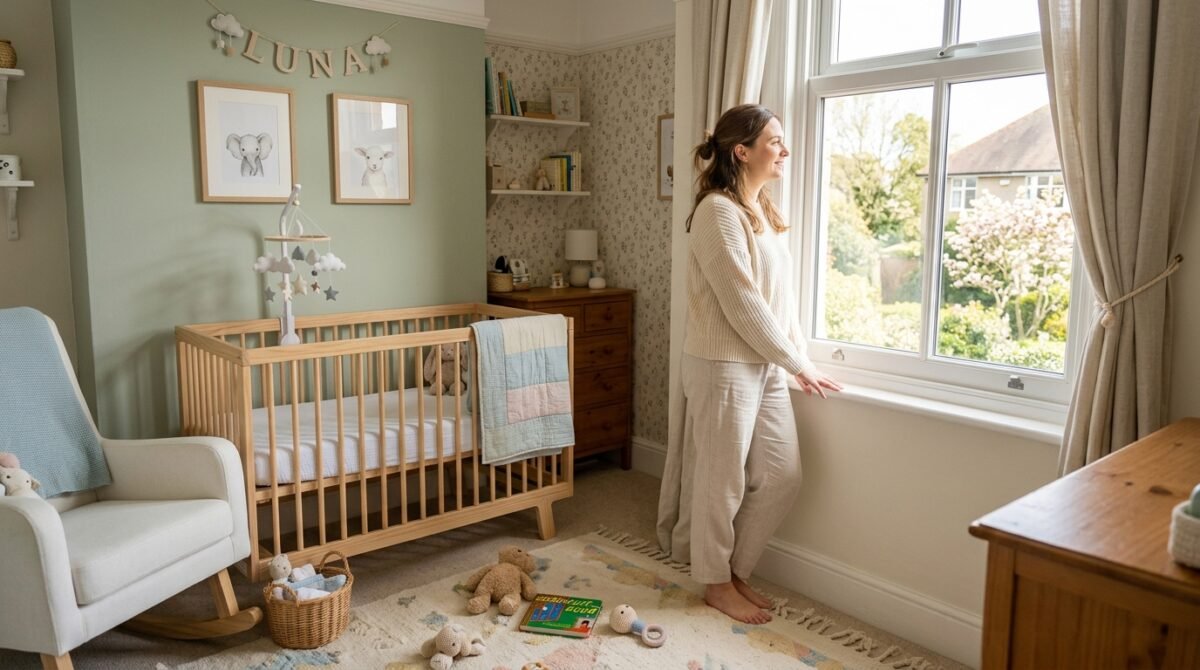
Life in the aftermath has been remarkably peaceful. We went no-contact with Linda for a while, and it was the best decision we ever made. The anxiety that used to follow every phone call or text simply vanished. We started to enjoy our home again, knowing that the front door was secure and the nursery was ours. It was a space of quietude and anticipation.
We eventually opened the lines of communication again, but only on our terms. We meet in public, we keep the visits short, and we never discuss our living arrangements. It’s a polite, distant relationship, the kind that preserves the peace without sacrificing our integrity. It’s not the relationship we once hoped for, but it’s the only one that works for us.
“Boundaries aren’t about keeping people out; they’re about keeping the peace inside. Sometimes the hardest part is realizing that the person you’re setting a boundary with is the one who needs it most, even if they’ll never admit it.”
— A reflection from my personal journal
The baby is here now, and the nursery is filled with soft light and the sound of cooing. Every time I rock the baby to sleep, I look around that room and I remember the folder, the locks, and the courage it took to say ‘no.’ It was worth it. The room belongs to our child, and it will always be a sanctuary, a testament to the boundaries we drew when it mattered most.
We still get the occasional comment from family about how we ‘should’ be closer to Linda, but it doesn’t sting anymore. We know who we are, and we know what we built. We have created a life where our choices are our own, and that is a freedom that no amount of family pressure can take away. We are a team, a family of three, and we are exactly where we need to be.
If you’re facing a similar dilemma, remember that your home is your castle. You don’t owe anyone a place in it, especially when that person refuses to respect your boundaries. It might be hard, it might be messy, and it might burn a few bridges, but the ground you stand on when you finally plant your feet is worth every single second of the struggle.
Community Reflection: The Verdict

Looking back at the Reddit thread, it’s fascinating to see how the community continues to interact with the story. Even months later, people are still commenting, offering their own updates, and asking for advice. It’s become a case study in boundary-setting, a go-to example for anyone struggling with an entitled relative. The discourse has moved from shock to validation to long-term advice.
The consensus remains firm: we did the right thing. But the deeper conversation has shifted toward the psychological toll of these dynamics. People are talking about ‘the fog’—the feeling of being trapped by familial duty—and how difficult it is to break free. It’s a powerful, collective experience that has helped so many people realize they aren’t alone in their struggles.
“Reading this story was the push I needed to finally set boundaries with my own mother. It’s not just about the room; it’s about the respect. Thanks for showing that it’s possible to stand your ground and still be a happy, functioning family.”
— u/HopefulBoundaries (Comment, 4.2k upvotes)
The variety of responses is still surprising. Some people share their own successes, detailing how they reclaimed their homes and their lives after years of interference. Others ask for tips on how to handle the inevitable guilt trips. It’s a supportive, albeit complex, community that has emerged from the chaos, and I’m grateful for the part our story played in it.
The debate about ‘family duty’ vs. ‘individual autonomy’ rages on, but it’s a healthy debate. It’s forcing people to question the status quo and to define what family means for themselves. We didn’t set out to start a movement; we just wanted to keep our spare room. But the ripple effect of our decision has been profound, and it’s a legacy I’m proud to leave behind.
As we move forward, we’re taking the lessons we learned and applying them to every aspect of our lives. We’re more intentional with our time, more protective of our energy, and more confident in our decisions. We are no longer the people who would have let someone walk all over us; we are the architects of our own peace, and that is the greatest gift we could have given our child.
Conclusion
The story of the nursery and the apartment guide is, at its heart, a story about the transition from being someone’s child to being someone’s parent. It’s about the moment you realize that the roles you were assigned don’t have to dictate the life you live. The demand for the bedroom was never about the room itself; it was a test of who held the authority in our household. By handing over that guide, I wasn’t just rejecting a guest; I was asserting our right to define our own future.
We often fear the fallout of setting boundaries, worrying that we will be seen as the ‘bad guy’ or that we will lose our connections to the people who matter. But the truth is, the connections that rely on our compliance are often the ones that were never truly healthy to begin with. When we stood our ground, we didn’t lose our family; we redefined the terms of our membership. We learned that true family respects the boundaries that keep the house standing.
What about you? Have you ever had to draw a line in the sand with an entitled family member, only to be met with a storm of criticism? Or have you struggled to assert your own needs when they clash with the expectations of those around you? Let us know in the comments below. We’d love to hear your experiences, your victories, and your lessons learned on the road to establishing your own space.
Poll: If you were in our shoes, would you have handed over the apartment guide, or would you have tried a softer approach? Share your thoughts and vote below!
What's your verdict on this dilemma?
Vote below to contribute to the official community consensus.

Have a Dilemma Keeping You Up at Night?
Share your real-life feud, wedding chaos, or relationship crossroads anonymously with our editorial team.
What do you think ?
0 Comments🛡️ Comments are moderated to protect community integrity. Your comment will appear once approved by the editorial team.