
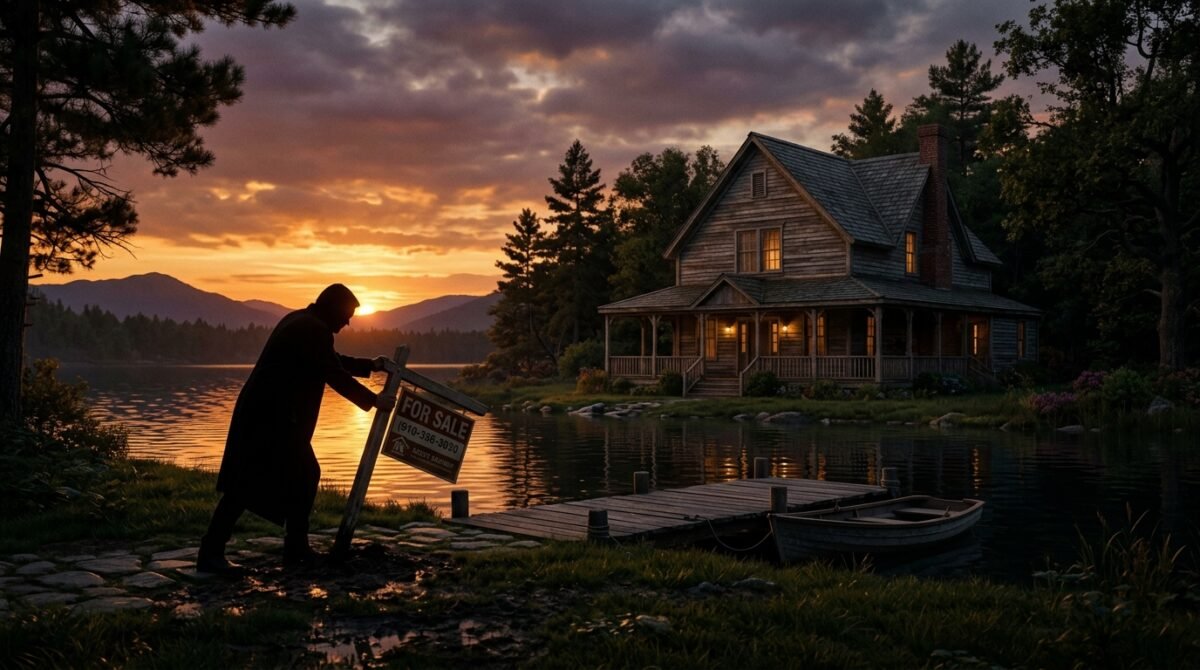
Growing up, the house on Miller’s Lake was the center of our universe. Every summer, our extended family would pile into the small, four-bedroom cottage my grandfather built with his own two hands. We had barbecues on the weathered deck, swam until our fingers pruned, and listened to Grandpa tell stories about the days when the forest around us was untouched. To my cousins, aunts, and uncles, that house wasn’t just wood and glass; it was a birthright, an ancestral shrine that they assumed would belong to the collective family forever.
But Grandpa saw things differently. As he aged, he watched how my cousins squandered their own savings and how my aunts treated his generosity like an endless bank account. He watched me—the only one who spent my weekends helping him fix the roof, stain the deck, and clear the brush—with a different kind of appreciation. He didn’t want the house to be a burden or a battleground for people who only showed up for the free food and the lake access.
The day the executor read the will, the air in the room grew heavy enough to choke on. When the lawyer announced that the house, the land, and the contents were bequeathed exclusively to me, the silence was deafening. My mother’s face went pale, and my Aunt Sarah looked like she’d been slapped across the face. They didn’t see a gift; they saw an injustice. They saw a betrayal of the ‘family unit.’
For three years, I tried to keep the peace. I let them visit. I let them host their parties. But the entitlement only grew. When the maintenance costs skyrocketed and the structural integrity began to fail, I realized I couldn’t afford to keep it, nor did I want to keep it as a monument to their demands. I made the call to sell. That was when the real war began, and I went from the ‘golden child’ to the ‘greedy monster’ in the span of a single afternoon.
This is the story of how I reclaimed my future, the absolute hell my family put me through to stop the sale, and the reality of what happens when you decide that your inheritance belongs to you, and only you.
The Day the Will Shattered the Illusion
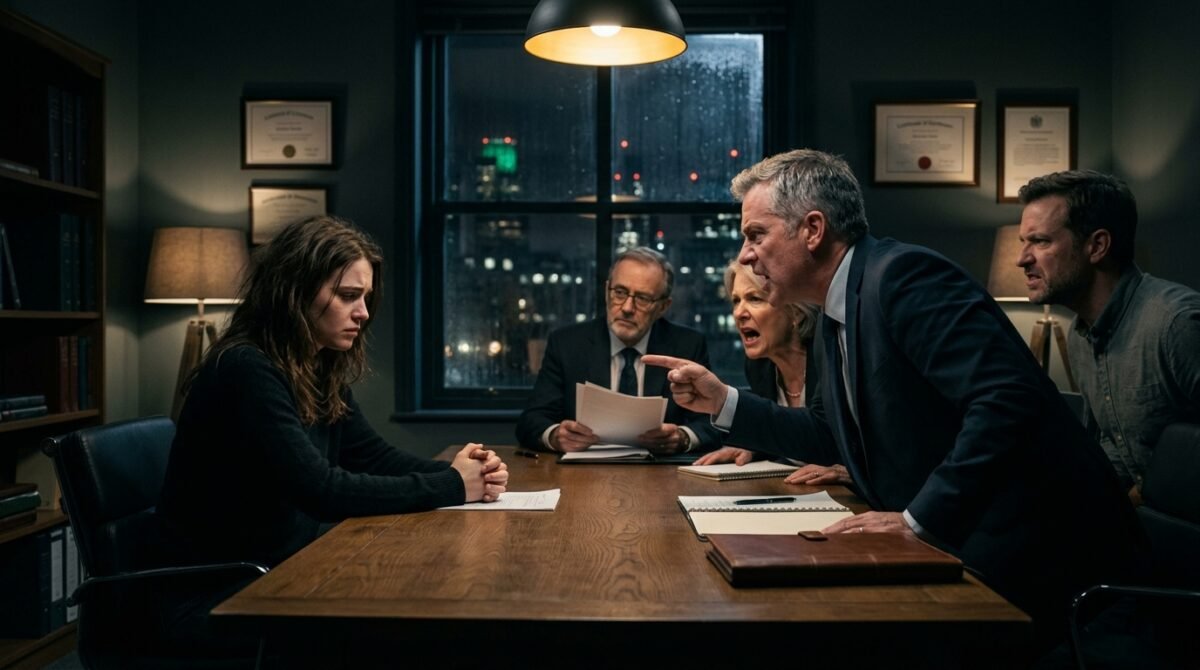
The probate lawyer’s office was a sterile, beige room that smelled faintly of lemon polish and stale coffee. I remember the sound of the pages turning, the rhythmic scratching of a pen, and the way my heart hammered against my ribs. I had no idea what Grandpa had written. I expected the house to be split among the grandchildren, or perhaps kept in a trust for everyone. When the lawyer stated, clearly and without hesitation, that the property was transferred to me in its entirety, the atmosphere in the room shifted instantly.
My cousin Greg, who had spent the last decade working part-time jobs and living off his parents, stood up abruptly. He didn’t look at me; he looked at his mother. The room felt like a pressure cooker. My aunt was already whispering into her phone, her eyes darting between me and the lawyer. I felt a cold knot of dread in my stomach, not because I was surprised by their greed, but because I knew exactly how this was going to play out.
“This is clearly a mistake. Grandpa was suffering from cognitive decline. We are going to contest this entire thing. You can’t just take the family legacy for yourself.”
— Aunt Sarah, immediately following the will reading
I didn’t argue. I just sat there, listening to them discuss the house as if it were a public park that I had illegally fenced off. They talked about ‘family memories’ and ‘our rights’ as if those sentiments somehow superseded a legal document signed by a competent man who knew exactly what he was doing. They viewed my inheritance as a communal asset that I had somehow pilfered.
Over the next few weeks, the phone calls started. Not the ‘how are you’ calls, but the ‘how could you do this’ calls. My mother called me at midnight, sobbing about how I was tearing the family apart. She told me that I needed to sign a document promising to share the proceeds of the house with my cousins when I eventually sold it. She called it an ‘equitable distribution.’
I realized then that I wasn’t being treated as a nephew or a cousin anymore. I was being treated as an administrator of a fund they felt entitled to. Every conversation centered on the property value, the market trends in the area, and how much each person ‘deserved’ based on how often they had visited during the summer. It was a transactional nightmare that had nothing to do with Grandpa’s memory.
The Unannounced 6:00 AM Kitchen Intrusion
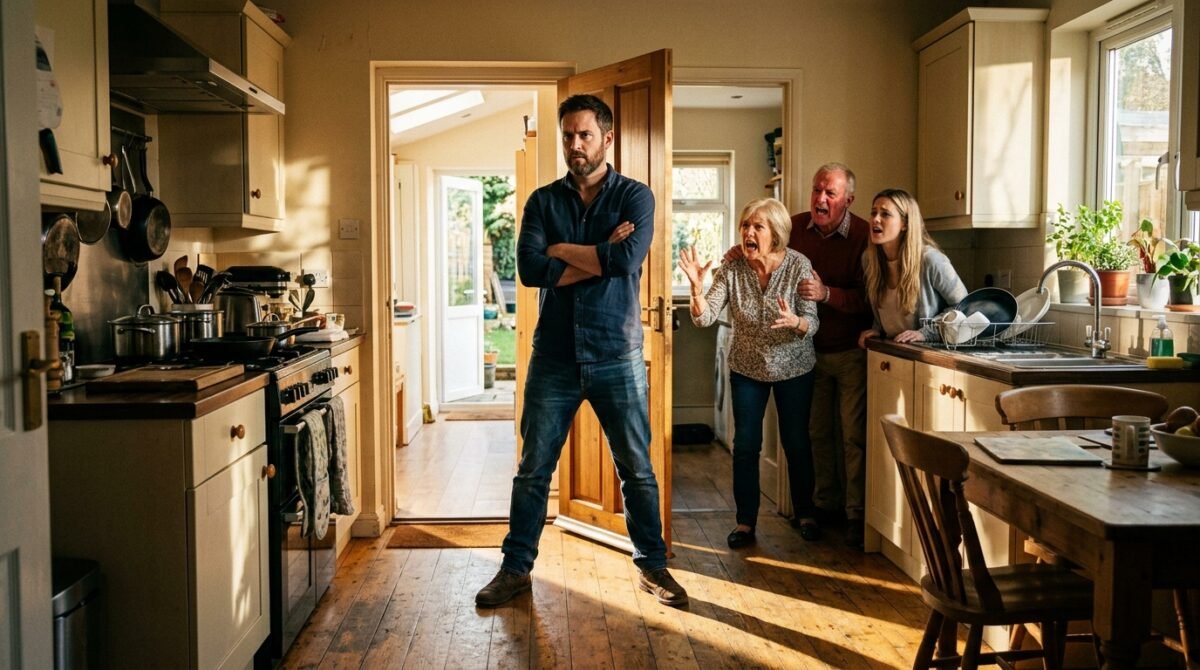
The breaking point came on a humid Tuesday morning in July. I was staying at the house to prepare it for a professional appraisal, hoping to get an early jump on the cleaning before the market opened. I was still in my pajamas, brewing a pot of coffee, when the back door creaked open. I assumed it was the wind, or perhaps a neighbor, but then I heard the unmistakable sound of voices—my cousin Greg and his father, my Uncle Mark.
They didn’t knock. They walked in like they owned the place, carrying boxes of cleaning supplies and a stack of old photos. They had clearly planned a ‘work day’ to prepare the house for the family reunion they had scheduled without asking me. When they saw me, they didn’t look embarrassed. They looked annoyed, as if I were the intruder in my own home.
“What are you doing here at six in the morning? We have a schedule, and we need the house ready by noon. Don’t just stand there with your coffee; grab a rag and get to work.”
— Uncle Mark, to me, while walking into the kitchen
I was stunned. I looked at the mess they were already creating—moving furniture, laying down rugs, and rearranging the kitchen cabinets according to their personal preference. I told them to leave, that the house was private property and they had no right to be there. Greg laughed, a cold, condescending sound that made my blood boil.
I had to physically block them from entering the living room. It turned into a shoving match that ended with me threatening to call the police. The look of pure, unadulterated shock on their faces when they realized I was serious was the first time I felt a sense of power. They couldn’t fathom that I would actually escalate to legal intervention against my own blood.
They left, but not before promising that I would regret it. As they drove away, I saw my Uncle filming the house with his phone, likely looking for ‘damage’ to prove I was unfit to manage the property. That morning, I didn’t finish my coffee. I called a locksmith, and by noon, every lock on that house had been changed.
The Secret Group Chat OP Wasn’t Supposed to See
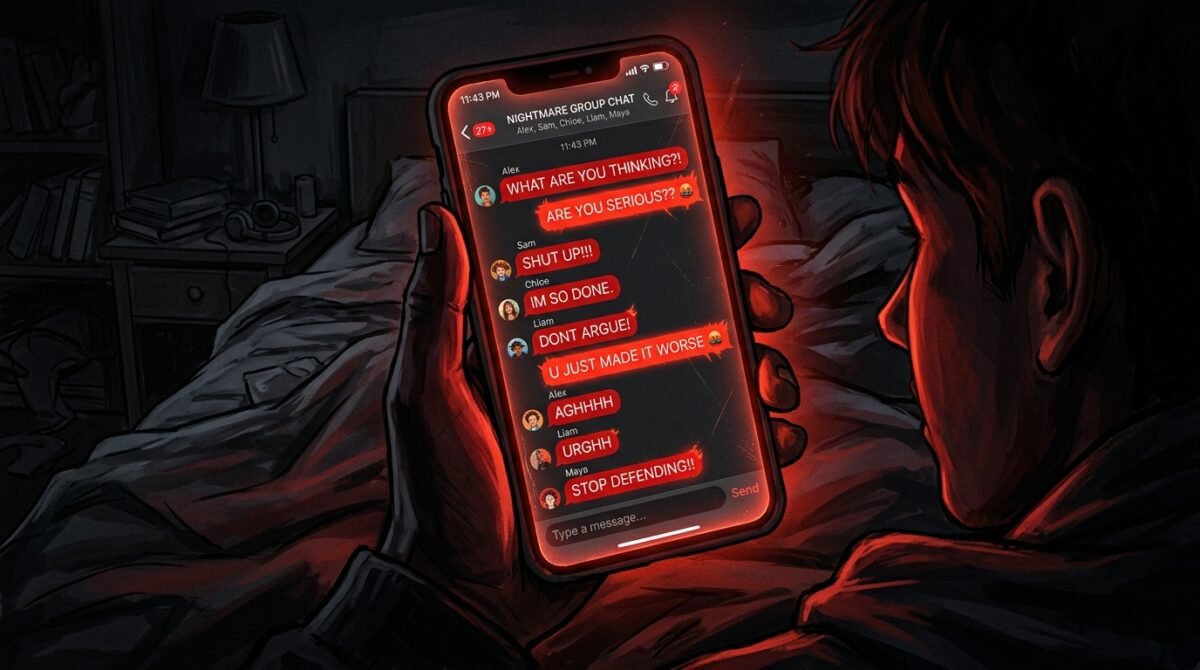
Two days later, I received a screenshot from a cousin who wasn’t part of the ‘inner circle.’ She told me that she was tired of the toxicity and wanted me to know what was being said about me in the family group chat. It was a digital manifesto of hatred. They weren’t just angry; they were organizing. They were discussing ways to force me to sell the house to a ‘family trust’ at a fraction of the market value, or to get me declared mentally unfit.
“He thinks he can keep it all for himself. If we make his life miserable enough, he’ll be forced to sell it to the family for pennies. Just keep pressuring him. Call him every day. Tag him in posts about how he’s a traitor to his own blood. He’ll break.”
— Screenshot from the ‘Family Legacy’ WhatsApp group
Reading those messages felt like a physical blow. These were the people I grew up with, the people I shared holidays with, and they were plotting my financial and social ruin because they couldn’t handle the fact that Grandpa chose me. It became clear that this wasn’t about the house. It was about control. They needed to believe that they were entitled to my life, my choices, and my assets.
I spent the next six hours documenting everything. I took screenshots of every threat, every demand, and every attempt to coerce me. I didn’t reply in the chat. I didn’t confront them. I simply archived the evidence and started looking for a real estate agent who dealt with high-conflict property sales. I knew then that there was no saving the family dynamic. The family dynamic was already dead; they had killed it with their own greed.
I realized that the only way to end the abuse was to remove the catalyst. If I sold the house, there would be nothing left to fight over. The house, in its current state, was a magnet for their worst impulses. I would take the money, pay off my own debt, and build a life that didn’t include them. The realization was liberating, even if it meant becoming the villain in their version of the story.
The Realtor’s Warning
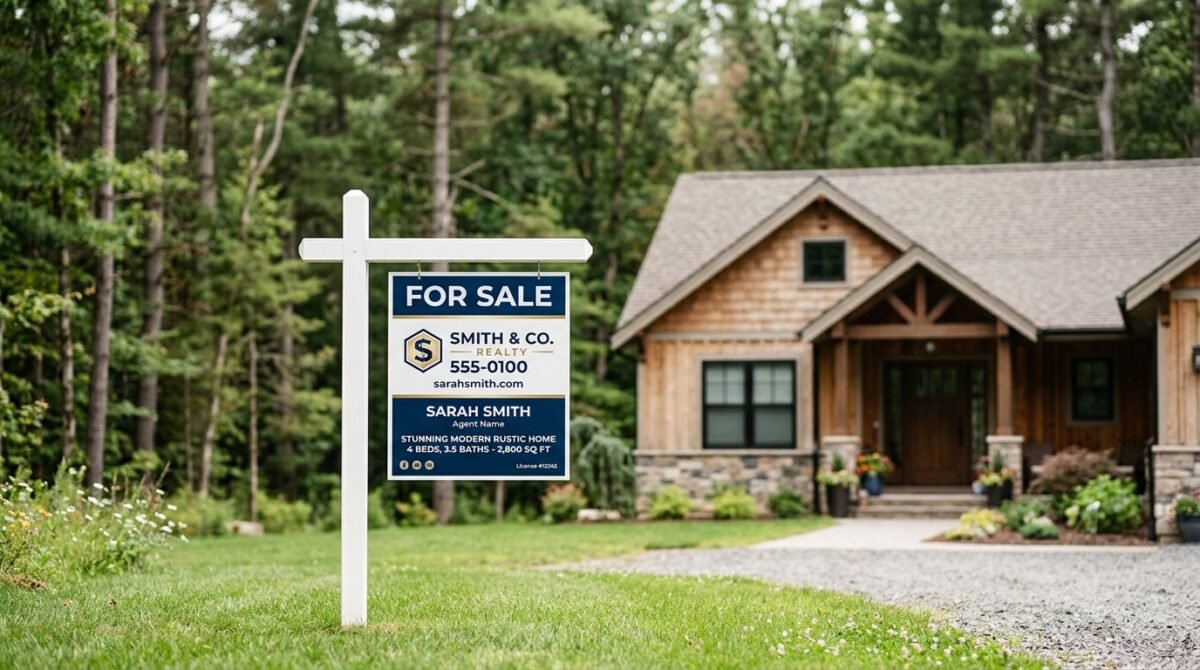
When I finally sat down with the realtor, I didn’t sugarcoat the situation. I told her about the threats, the break-in, and the family’s obsession with the property. She looked at me with a mixture of pity and professional concern. She had seen this before. Estates are often where families go to die, but this was a particularly volatile situation. She advised me to get a restraining order against my Uncle and cousin before we even listed the place.
She explained that once the ‘For Sale’ sign went up, the harassment would likely intensify. They would try to sabotage viewings, spread rumors to potential buyers, and perhaps even try to squat in the property. We needed a security plan. We installed cameras, motion-activated lights, and a smart alarm system. I was turning my grandfather’s sanctuary into a fortress, and it felt like a betrayal of the place, but it was the only way to move forward.
“You need to be prepared for the ‘family war.’ They will tell everyone that you are stealing from them. You will lose people you thought were your friends. You have to decide if the money is worth the social cost.”
— My Realtor, during our first consultation
I told her that the cost was already paid. I had already lost my family. Now, I was just cleaning up the aftermath. We put the house on the market three weeks later. We didn’t hold an open house; we only did private, vetted showings. It was the only way to keep the peace. The house sold in record time—not because it was a perfect property, but because the market was desperate and I was motivated to get out.
During the final walkthrough, I walked through every room one last time. I remembered the spot where Grandpa taught me to carve wood, the corner of the deck where we watched the meteor showers, and the kitchen table where we ate our weight in pancakes. I wasn’t selling the house; I was ending a chapter that had become a source of poison. I walked out the door and never looked back.
The Viral Reddit Thread: ‘Am I The A**hole?’

I posted my story on Reddit, looking for some semblance of sanity. I was drowning in the guilt my mother was heaping on me, and I needed to know if I was truly the monster they said I was. Within three hours, the post had blown up. My phone was vibrating constantly with notifications, and for the first time in months, I felt heard by someone other than my immediate, toxic circle.
“Your family is disgusting. They are treating your inheritance like a lottery win they deserve a cut of. You owe them absolutely nothing. Sell the house, buy yourself a nice condo, and block every single one of them. You aren’t a monster; you’re a target.”
— u/JusticeForAll (Top Comment, 18.2k upvotes)
The support was overwhelming, but there were also the ‘devil’s advocates.’ Some people argued that family is family and that I should have compromised. They talked about ‘keeping the peace’ and ‘preserving family legacy.’ It was fascinating to see how many people held the same values as my aunt—that blood relation somehow grants you a stake in your relatives’ assets.
“I don’t know, man. Selling the family home feels like a bridge you can never cross back over. Maybe offer them a small percentage to keep the peace? It’s just money, but family is forever.”
— u/FamilyFirst_Always (Downvoted, -450 points)
Reading those comments helped me solidify my position. I realized that the people who thought I should compromise were often the same people who had been walked over by their own families. I didn’t want to live that life. I wanted to set a precedent. If I gave them a dime, it would never end. They would expect more, and they would continue to treat me like a subordinate. The Reddit community gave me the permission I needed to walk away without looking back.
The $1,400 Restaurant Bill Left on the Table

The final confrontation happened at a family restaurant two weeks after the sale was finalized. My mother had begged me to meet her for ‘one last lunch’ to talk things through. I arrived, thinking perhaps she had finally accepted the reality of the situation. I was wrong. She was joined by my aunt and uncle, and they had clearly been drinking. They didn’t even order food; they just stared at me with pure venom.
They spent the entire time berating me, calling me names, and demanding I disclose exactly how much I made from the sale. They claimed they had a ‘legal right’ to know because it was ‘family property.’ When I refused to answer, my uncle stood up, threw a napkin on the table, and announced to the entire restaurant that I was a thief who stole from his own grandfather.
“You’re a parasite. You took what was meant for all of us and you liquidated it for your own gain. Don’t you ever call yourself part of this family again. We are finished with you.”
— Uncle Mark, shouting across the table in front of other patrons
I just sat there. I didn’t get angry. I didn’t yell back. I looked at the bill they had already run up—$1,400 worth of wine and appetizers they expected me to pay for, as if I were the host. I stood up, put a twenty-dollar bill on the table for my own drink, and walked out. I heard them screaming my name as I left, but I didn’t turn around.
As I walked to my car, I felt the last shred of my connection to them evaporate. I wasn’t just ‘the kid who sold the house’ anymore; I was the person who finally said ‘no.’ It was the most liberating feeling of my life. I drove away, and as I merged onto the highway, I blocked every single one of their numbers. The silence that followed was the most beautiful thing I’d ever heard.
The Aftermath: Building a Life Without the Shadow

Six months later, life looks completely different. I moved to a city three hours away, started a new job, and finally finished my degree. I haven’t heard from any of them in months. Every now and then, I get a strange email from a burner account or a message from a distant cousin, but I delete them immediately. I don’t care about their excuses. I don’t care about their ‘family events.’ I don’t even care about the house anymore.
The money from the sale allowed me to pay off my student loans and put a down payment on a place of my own—a place where I don’t have to share the kitchen with anyone, and where I don’t have to worry about who is coming through the door at six in the morning. I’ve realized that the ‘legacy’ wasn’t the house; it was the freedom to choose my own path, something my grandfather wanted for me all along.
I’ve started therapy to deal with the trauma of the last year. It’s hard to unlearn the idea that I owe my family everything. I grew up believing that my worth was tied to how much I served them, and breaking that cycle has been the hardest thing I’ve ever done. But every morning when I wake up in my own home, I know I made the right choice.
The family is still fighting, I hear. They’re arguing over who ‘should’ have had the house, and they’ve apparently tried to sue me for ’emotional damages,’ which got laughed out of court immediately. They are miserable, and they are looking for someone to blame for their own failures. I am just glad that for the first time in my life, I am not that someone.
Lessons Learned in the Fire

If there is one thing I’ve learned, it’s that boundaries are not just suggestions; they are necessities. If you don’t draw a line in the sand, people will walk over you until there is nothing left of you. My biggest regret isn’t selling the house; it’s waiting three years to do it. I should have sold it the day after the funeral. I should have listened to my gut instead of trying to be the ‘nice guy.’
I’ve learned that blood doesn’t make you family. Shared history doesn’t make you family. Respect and boundaries make you family, and if those aren’t present, you aren’t in a family—you’re in a hostage situation. I’ve found a new community, a group of friends who support me, who don’t want anything from me, and who celebrate my success instead of resenting it. That is what a real family looks like.
The house on the lake is gone, and that’s okay. It’s just a house. It served its purpose, and it held the memories it was meant to hold. Trying to force it to be something it wasn’t—a communal retreat for a broken family—was a mistake. Sometimes, you have to let go of the physical symbols of your past to create a future that actually belongs to you.
I don’t miss the lake. I don’t miss the parties. I don’t miss the drama. I miss the grandfather who saw me for who I was, and I honor him by living the life he wanted for me—a life of independence, self-respect, and, above all, freedom.
The Final Verdict: Are You Entitled to Your Family’s Wealth?
Looking back at the entire saga, the question remains: does your family have an inherent right to your inheritance? The answer, at least in my experience, is a resounding no. An inheritance is a gift, a final expression of someone’s wishes. When you turn that gift into a battleground for your own financial gain, you are the one who is failing, not the person who received the gift.
We live in a culture that fetishizes ‘family legacy’ while ignoring the reality of family dynamics. We are told that we have to sacrifice our own well-being for the sake of ‘keeping the peace,’ but at what cost? Peace is not the absence of conflict; it is the presence of respect. If you have to sacrifice your life, your home, or your financial stability to keep the peace, you aren’t keeping peace—you are paying a ransom.
The internet debate has been endless, and it has taught me that this problem is far more common than I thought. So many people are trapped in the same cycle of guilt and obligation. If you are reading this and you are in the middle of a similar situation, know this: you have the right to say no. You have the right to walk away. You have the right to sell the house, take the money, and never look back.
Your family’s resentment is not your responsibility. Their financial failures are not your burden to bear. You are the protagonist of your own life, not an extra in theirs. Stop letting them dictate your reality and start living the life that you were meant to live, free from the weight of their expectations.
Community Perspectives: How Others See the Betrayal

The comments keep rolling in even months after the sale, and the consensus seems to be shifting toward support. People who were once unsure are now seeing the bigger picture. Many are sharing their own stories of inheritance disputes, and the patterns are always the same: greed, entitlement, and the eventual destruction of relationships. It’s a sad reality, but it’s a universal one.
“I dealt with this exact thing when my dad passed. My siblings tried to take my house. I sold it out from under them while they were on vacation. Best decision I ever made. The family never spoke to me again, and that was the greatest gift they ever gave me.”
— u/SurvivorOfGreed (12.4k upvotes)
Others are reflecting on the ‘why’—why do families become like this? Is it the money, or is it the power? It seems to be both. Money is just the tool they use to assert their dominance. By trying to control my inheritance, they were trying to control me. They wanted to see if they could break me, if they could make me bend to their will. Failing that, they turned to character assassination.
It’s important to see these people for who they really are. They aren’t ‘family’ in the traditional sense; they are people who want to use you. Once you realize that, the guilt disappears. You stop mourning the loss of a relationship that never existed, and you start celebrating the freedom you’ve gained. The Reddit community has been a mirror, showing me that I am not alone, and that my reaction was not only justified but necessary.
If you are still waiting for them to apologize, stop. They won’t. They can’t. In their eyes, they are the victims. They are the ones who were ‘robbed.’ Trying to get them to understand your side is a waste of time. Your side is already written in the decisions you’ve made. Stand by them, own them, and let the rest fall where it may.
Conclusion
In the end, I sold the house that my grandfather left me, and I lost my family in the process. People call me a monster, but I know the truth: I am simply someone who chose to survive. The house was a symbol of their entitlement, and by selling it, I broke the cycle that had defined my life for years. I am no longer the ‘golden child’ or the ‘thief.’ I am just myself, and for the first time, that is enough.
The money didn’t buy me happiness, but it bought me the silence and the space to find it. I don’t look back at the lake, and I don’t wait for phone calls that I hope never come. I have moved forward, and I have never felt more alive. The moral of this story isn’t about property or inheritance; it’s about the courage to set boundaries, even when the world—and your own family—tells you that you’re doing the wrong thing.
I’m curious—what would you have done in my position? Would you have stayed, compromised, and kept the family house at the cost of your sanity, or would you have done exactly what I did and walked away, even if it meant becoming the villain? Share your thoughts below, because the debate is far from over.
What's your verdict on this dilemma?
Vote below to contribute to the official community consensus.

Have a Dilemma Keeping You Up at Night?
Share your real-life feud, wedding chaos, or relationship crossroads anonymously with our editorial team.
What do you think ?
0 Comments🛡️ Comments are moderated to protect community integrity. Your comment will appear once approved by the editorial team.