
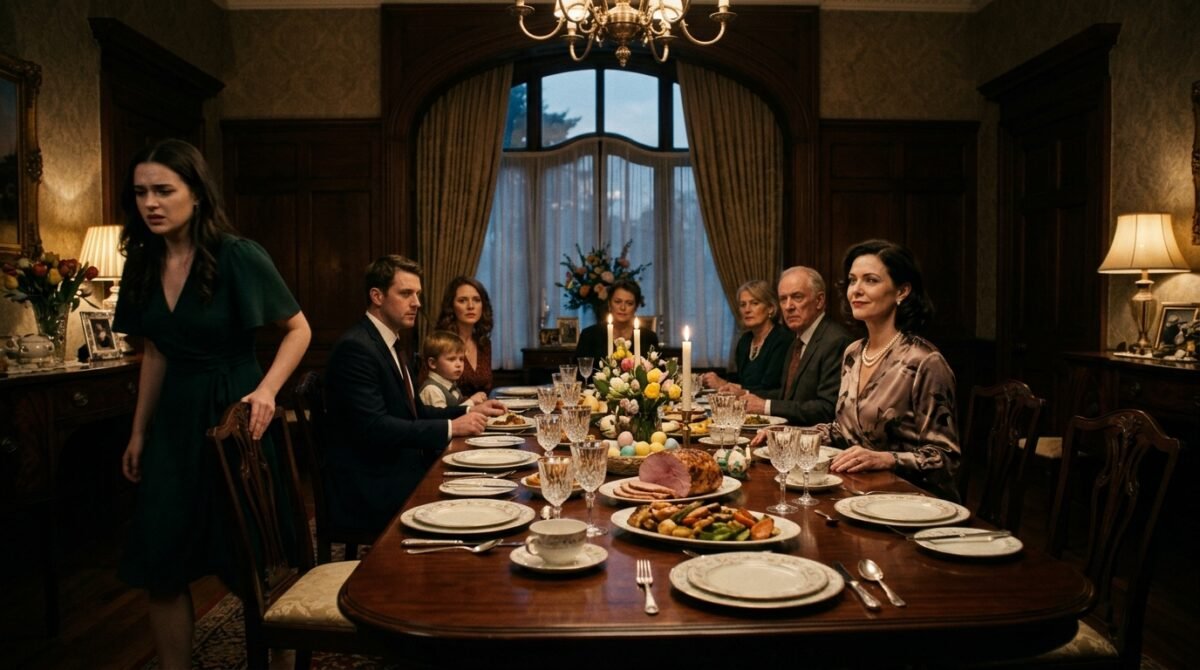
Easter was supposed to be a peaceful afternoon. It had been six months since my father’s passing, and this was the first major holiday our family was attempting to navigate without him. My stepmother, Linda, had insisted on hosting, promising that we would keep things light, focus on the ‘new chapter’ of our lives, and honor my father’s memory through shared nostalgia. I arrived with my partner, ready to support my younger half-siblings and maintain a facade of civility, despite the underlying tension that had permeated our interactions since the funeral.
For the first hour, the dinner was surprisingly normal. We talked about the garden, the weather, and the kids’ school projects. I even found myself laughing at a joke my brother made about the overcooked asparagus. It felt like, perhaps, we were finally turning a corner. I wanted to believe that the friction of the last few months was merely a byproduct of grief—a temporary misalignment of perspectives that would resolve itself as we all processed our loss.
The shift occurred right as the dessert course was served. Linda cleared her throat, tapped her wine glass with a silver spoon, and signaled for our attention. Her expression was bright, almost unnervingly so, as if she were about to announce a vacation rather than a legal maneuver. I felt a sudden, cold knot tighten in my stomach, a visceral intuition that the peace we had enjoyed was about to be shattered completely.
“I have some wonderful news,” she began, her eyes darting around the table to ensure she had every pair of eyes locked on her. She reached into her handbag and pulled out a thick, legal-looking envelope. ‘I’ve been working with a consultant to honor your father’s final wishes in a way that truly captures his spirit of… generosity and love for animals.’ At that moment, I knew. The air in the room seemed to thin, and the laughter from moments prior felt like a lifetime ago.
The proposal that followed was not just an insult to my father’s memory; it was a calculated attempt to dismantle the inheritance that he had carefully earmarked for his children. As she described her ‘vision’ for a luxury dog daycare enterprise funded by the family trust, I realized that the house I was sitting in was no longer a place of family; it was a battleground. I didn’t scream. I didn’t throw my plate. I simply stood up, pushed my chair in, and walked toward the front door as her voice trailed off into a confused, indignant silence.
The Champagne Toast to a Canine Future

Linda’s announcement was delivered with the precision of a stage play. She stood at the head of the table, clutching a glass of Pinot Noir, and began to wax poetic about how my father had always secretly ‘loved the idea of giving back to the community’ through pet ownership. I watched my half-siblings, who were far too young to grasp the financial implications, look at her with wide, expectant eyes. My own hands were trembling under the table, gripping my napkin so hard my knuckles turned white.
She laid out a plan to liquidate a significant portion of my father’s investment portfolio to renovate our family’s summer property into a ‘five-star boutique dog boarding facility.’ She claimed that this was what he ‘wanted,’ as if his silence in the grave was an endorsement of her reckless financial whims. The audacity was staggering. My father had spent thirty years building that legacy for his children’s futures, specifically for college tuition and home deposits, not for designer dog beds and climate-controlled kennel runs.
“I know he would be so proud to see us taking his hard-earned money and turning it into something that brings joy to so many furry friends. It’s exactly the kind of legacy he envisioned.”
— Linda, during the dinner
I felt a wave of nausea. I looked at my partner, who was staring at his plate in absolute horror. The room felt incredibly small, the walls seemingly closing in as Linda started detailing the square footage of the ‘luxury grooming suite’ that would replace the library where my father once read to us. It was a complete erasure of his identity, replaced by a commercialized fantasy that felt utterly alien to the man I knew.
When I finally spoke, my voice was uncharacteristically low and steady. I didn’t want to give her the satisfaction of a temper tantrum. I asked her point-blank how she had obtained the legal authority to redirect the trust funds. She gave me a condescending smile, the kind she usually reserved for when she was explaining how to properly set a table, and told me that ‘things had changed’ since the will was updated in his final weeks of hospice.
The implication was clear. She had pushed a dying man to sign a document he likely didn’t understand or had coerced him during a moment of profound vulnerability. I realized then that this wasn’t an impulse; it was a siege. The trust was the only thing standing between us and total financial exclusion, and she had already gone behind our backs to gut it. The audacity of announcing this during an Easter dinner—in front of the entire family—was the final, unforgivable insult.
The Silent Walk to the Exit

The silence that followed my realization was suffocating. I stood up slowly, the screech of the chair against the hardwood floor sounding like a gunshot in the quiet room. Linda paused, her smile faltering for a split second before she regained her composure, clearly expecting me to play along or at least argue the point. I had no interest in arguing. You cannot argue with someone who has already decided to burn your bridges for you.
I grabbed my coat from the back of the chair. My brother, who was sitting next to me, reached out to grab my sleeve, looking confused and scared. I squeezed his hand, gave him a small, sad smile, and told him I’d call him later. I didn’t make a scene; I didn’t shout. I simply walked toward the door. The sound of my footsteps on the floorboards felt like the only real thing in a world that had suddenly become a surreal nightmare.
Linda called after me, her tone shifting from patronizing to shrill. She shouted about ‘gratitude’ and ‘family unity,’ the classic gaslighting tactics I had learned to identify over the past decade. She accused me of being selfish, of not wanting to see her thrive after the ‘tragedy’ of losing my father. It was a masterful display of turning victimhood into a weapon, a skill she had perfected over years of calculated maneuvers.
“Where do you think you’re going? This is a family meal! You’re being incredibly disrespectful to your father’s memory by walking out on this announcement!”
— Linda, shouting after me
I didn’t turn back. I opened the front door, the cool spring air hitting my face like a reprieve. The transition from the stifling, perfume-heavy air of the dining room to the natural, quiet breeze outside was like waking up from a fever dream. My partner followed me out, closing the door firmly behind him. We didn’t speak until we reached the car, both of us still processing the sheer magnitude of what had just been revealed.
As we pulled out of the driveway, I watched the house through the rearview mirror. It looked the same as it always had, but I knew that inside, the dynamics had shifted permanently. I had left the dinner, but I had also left behind the last vestiges of the hope that we could somehow be a functional family. The bridge wasn’t just burned; it had been dismantled by the very person who was supposed to be the architect of our togetherness.
Leaked Texts and the Strategy Revealed

By the time I reached home, my phone was blowing up. A flurry of messages from Linda, followed by confused texts from my cousins, and finally, a screenshot from my brother. He had managed to take a picture of the legal document Linda had left on the table before she moved to her bedroom. It wasn’t a formal update to the will, but a ‘memorandum of intent’ drafted by a paralegal she had hired. It was legally flimsy, but it was enough to intimidate the executor, who happened to be her own brother.
The family group chat was a mess. Linda had already started her narrative, painting me as a volatile, ungrateful child who couldn’t handle the ‘generosity’ she was bestowing upon the family by ‘investing’ in the community. She was framing the dog daycare as a way to keep the estate solvent, despite the fact that the estate was already well-funded and stable. It was a transparent grab for control and a way to burn cash on a vanity project that would likely never turn a profit.
“I don’t know what’s wrong with OP. I was trying to share a beautiful vision for the family’s future, and they just stormed out like a child. It’s very hurtful during such a sensitive time.”
— Linda, Family Group Chat
I didn’t respond to her directly. Instead, I messaged my lawyer. The realization that she had been planning this for months—likely since my father was still in the hospital—made my skin crawl. I recalled the late-night visits she had paid him, the way she had blocked access to his phone in his final days, and the ‘private’ sessions she held with his attorney. It all made sense now. She hadn’t been nursing him; she had been lobbying him.
The texts from my relatives were a mix of pity and confusion. Some thought I was overreacting, suggesting that ‘maybe it’s a good idea for the dogs.’ They didn’t understand that this wasn’t about the dogs. It was about the theft of our father’s legacy, the manipulation of his final wishes, and the total lack of respect for his children. I felt a deep, aching loneliness as I read their messages, realizing how easily people could be swayed by a pleasant-sounding story, regardless of the truth behind it.
I sat on my couch, staring at the messages, feeling the weight of the coming legal battle. I knew that fighting this would be expensive, draining, and public. It would force me to dredge up the details of my father’s final days, to challenge his mental capacity in his last weeks, and to alienate myself even further from the family. But I also knew that if I didn’t stand up now, there would be nothing left for any of us when the dust finally settled.
The Legal Reality Check

My lawyer, a sharp, no-nonsense woman named Sarah, sat across from me in her office two days later. She laid out the reality of the situation with clinical precision. Because my father had signed the document while he was technically sound of mind—at least, according to the records Linda had manufactured—it would be an uphill battle. We would need to prove undue influence, which is notoriously difficult in probate law.
“She’s betting on the fact that you won’t want to go through the emotional trauma of a court battle,” Sarah explained. “She’s counting on the family name being protected by silence. If you fight this, it becomes public record. Every detail of your father’s medical state, his vulnerability, and his private affairs will be exposed. That’s her primary defense.”
I listened, feeling the weight of her words. It was a classic trap. If I kept quiet, I lost the inheritance and let her win. If I fought, I had to expose my father’s final, most vulnerable moments to the world. It was a lose-lose situation designed by someone who knew exactly how to weaponize shame. I asked Sarah what the likelihood was of us successfully contesting the memorandum. She gave me a cautious percentage—maybe thirty percent, provided we could find witnesses to his state of mind during those final weeks.
“You have to ask yourself, OP, what is more important to you: the money, or the preservation of your father’s dignity during his final days? Because this legal route will force you to compromise one for the other.”
— Sarah, my attorney
I left the office feeling more conflicted than ever. The money was never about the luxury of it; it was about the security my father had promised me, the money that was supposed to fund my own future and help my siblings. By choosing to let it go, I wasn’t just losing cash; I was letting Linda dictate the terms of our future. By choosing to fight, I was potentially tarnishing the memory of my father.
I spent the night looking through old photos of my father. I thought about the man who taught me how to ride a bike, who saved every penny so we could go on family trips, and who always put his kids first. He would have hated this. He would have hated the thought of his money being squandered on a whim, and he would have been horrified by the idea of his children fighting over his estate. But he also wouldn’t have wanted Linda to be the one to decide his legacy.
The next morning, I made my decision. I would not let her win through intimidation. If the price of justice was the public airing of the truth, then so be it. The truth was not something to be ashamed of; the actions taken by Linda were. I called Sarah and told her to proceed with the filing. The battle had officially begun, and there was no turning back now.
The Fallout Within the Family

As word spread through the extended family that I was taking legal action, the reaction was immediate and polarized. My aunt, who had always been close to Linda, called me, screaming about ‘greed’ and ‘disrespect.’ She couldn’t believe I was going to court over ‘some money’ when family was supposed to come first. It was almost comical how she failed to see the irony in her own accusation.
My siblings were caught in the middle. The older ones understood my position, but they were terrified of losing their mother’s favor or their living situation. Linda was holding the house and the trust over their heads, threatening to cut off their allowances if they didn’t ‘stand by the family.’ It was a masterclass in emotional manipulation, effectively turning my own brothers and sisters into hostages in her war against me.
I found myself in a position where I was the villain in their stories, the cold, calculating child who was tearing the family apart for a payout. It was incredibly painful to hear those accusations, especially from people I had grown up with. I realized that the narrative Linda had crafted was so strong that even the truth couldn’t easily penetrate it. I felt isolated, like an outcast in my own history.
“How can you do this to us? Do you have any idea how much stress you’re putting on everyone? You’re acting like a total sociopath, going after your own stepmother right after Dad died.”
— Text from my Aunt
Despite the backlash, I kept my head down. I focused on the documents, the timeline, and the medical records. Every day was a new challenge, a new piece of evidence to uncover. I learned things about my father’s final month that I never wanted to know—the isolation, the confusion, the way he had been manipulated by people he trusted. Each revelation made me angrier, but it also made me more determined.
I started attending therapy to deal with the constant stress. My therapist helped me understand that this wasn’t just about the money; it was about setting a boundary. For years, I had walked on eggshells around Linda, trying to keep the peace. By taking this step, I was finally claiming my own agency. Even if I lost in court, I would have the satisfaction of knowing I didn’t just walk away when things got hard.
The most difficult part was the silence from my friends. Some didn’t know what to say, and others were uncomfortable with the drama. I learned who my real supporters were during this time—the ones who asked, ‘How can I help?’ instead of ‘Why are you doing this?’ It was a painful but necessary filter for my relationships. I was shedding the people who valued convenience over integrity, and it was, in its own way, a growth process.
The Reddit Trial: A Community Weighs In
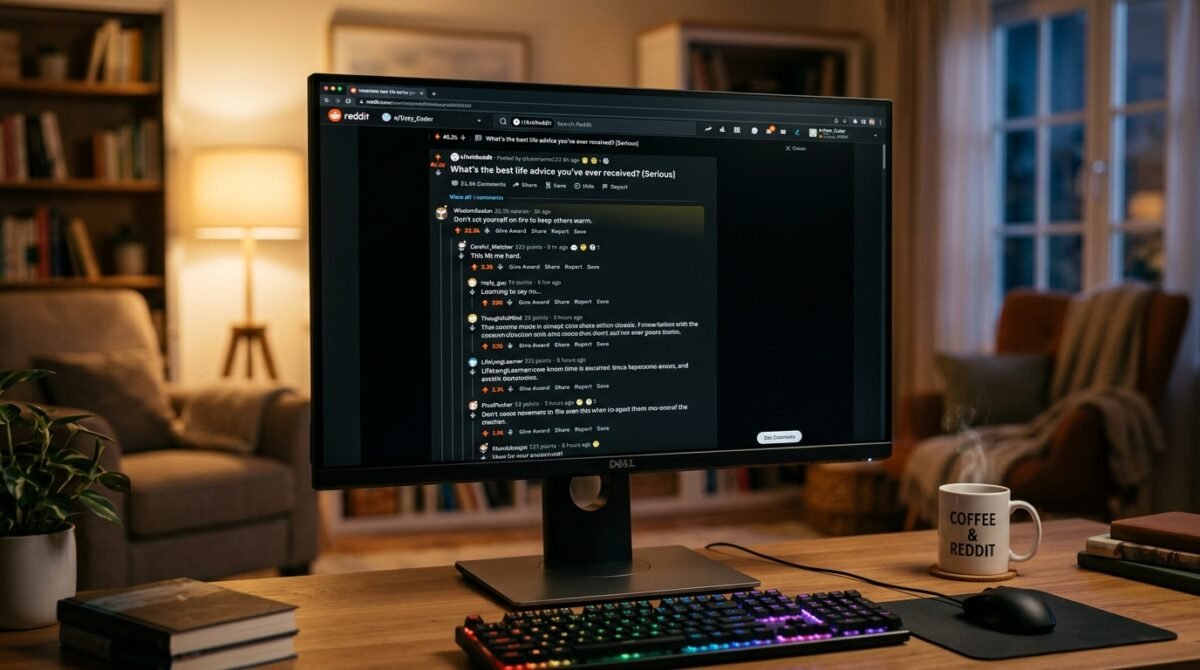
I eventually decided to share my story on a popular forum, needing an outside perspective to see if I was truly the villain in this scenario. The response was overwhelming. Within hours, the post had thousands of views and hundreds of comments. People were outraged on my behalf, dissecting the situation with a level of cold, analytical logic that I desperately needed.
“NTA (Not the Asshole). This is classic financial elder abuse. She’s using your dad’s death to fund her mid-life crisis and calling it a ‘legacy.’ Document everything and get a probate lawyer who specializes in undue influence. Do not feel guilty for protecting what is yours.”
— u/LegalEagleEye (Top Comment, 18.2k upvotes)
The community support was a validation I hadn’t realized I needed. There were comments from people who had been through similar situations, offering advice on how to handle the probate process and warning me about the pitfalls of family mediation. They saw the situation for what it was: a clear case of someone exploiting a position of power to seize assets. It made me feel less alone in the madness.
Of course, there were dissenters. Some commenters thought I should have just let it go for the sake of ‘keeping the peace.’ They argued that money wasn’t worth the family estrangement. I read those comments carefully, but they didn’t shake my resolve. They mostly came from people who hadn’t experienced this kind of betrayal, or who perhaps had their own complicated relationship with money and family duty. I stood by my choice.
“ESH (Everyone Sucks Here). Sure, she’s wrong for the dog thing, but by dragging this through the courts, you’re destroying any chance of reconciliation. Is the money really worth never speaking to your siblings again?”
— u/FamilyFirstOnly (2.4k upvotes)
The variety of opinions was exhausting but enlightening. It highlighted how different families have different ‘rules’ for dealing with conflict. In my family, the rule had always been to hide the conflict, to keep it ‘under wraps.’ Breaking that rule was the most radical thing I could do. The Reddit debate became a mirror for my own internal conflict, helping me refine my arguments and prepare for the reality of the legal fight.
The thread became a repository for my own notes. I started linking the commenters’ suggestions to my lawyer’s strategy. It turned into a collaborative effort, with strangers providing the encouragement I couldn’t get from my own blood relatives. It was a strange, digital comfort, but it was effective. I felt empowered, not just by the legal path I was taking, but by the community of people who were standing with me in spirit.
The Confrontation at the Law Firm

Two months into the legal process, we were ordered to attend a mandatory mediation session. Linda arrived with her lawyer, a slick man who clearly specialized in intimidating younger, less experienced opponents. She was wearing a designer suit that I knew had been purchased with money from the trust. Seeing her walk into that room, so composed and entitled, made my pulse quicken.
The mediator was a neutral third party, a retired judge who had seen it all. He started by laying out the terms: Linda wanted to maintain the ‘business’ and keep the trust assets as they were, while I wanted a full accounting of the trust and a redistribution of the assets as per the original will. It was an impossible gap to bridge. Linda immediately launched into a monologue about how ‘uncooperative’ I was being.
“I don’t understand why we’re even here. I’m just trying to fulfill your father’s final, oral instructions. He was so excited about the project. Why are you so obsessed with money that you’d disregard his dying wish?”
— Linda, during mediation
I looked her in the eye and didn’t blink. I told her that his oral instructions weren’t worth the paper they weren’t written on, and that the only reason she was pushing this was because she knew she couldn’t afford the lifestyle she wanted without the trust. I laid out the timeline of her ‘consultations’ with his attorney and the suspicious timing of the changes. The mediator took note, his expression unreadable.
Her lawyer tried to cut me off, but the mediator held up a hand. For the first time, I felt like the power dynamic was shifting. The truth was being placed on the table, and it wasn’t the polished, emotional story Linda had crafted. It was a cold, hard timeline of events. She grew visibly agitated, her composure fracturing. She kept glancing at her lawyer, looking for a way out, for a line to feed her that would make me look like the bad guy again.
We spent four hours in that room. It was grueling, filled with accusations and counter-accusations. By the end, we had reached a tentative agreement: she would be allowed a smaller, fixed amount to start her project, but the majority of the trust would be locked in a blind fund for the children until they hit certain age milestones. It wasn’t everything I wanted, but it was a victory. I had forced her to concede and protected the bulk of the inheritance.
Reflecting on the Cost of Truth

Leaving the mediation, I felt a strange sense of emptiness. Yes, we had achieved a compromise, but the relationship with Linda was effectively dead. There would be no more family holidays, no more ‘trying to make it work.’ The line had been drawn, and we were firmly on opposite sides. My siblings were still cold toward me, influenced by the narrative that I had ‘ruined’ their mother’s dream.
I spent that evening in total silence. I thought about the trade-off. I had secured the inheritance, but at the cost of my family’s cohesion. Was it worth it? I looked at my bank account, then back at the photos of my father. I realized that the value of the money wasn’t the point. The point was that I had refused to be a pawn in someone else’s game. I had stood my ground, and in doing so, I had regained my self-respect.
I started reaching out to my siblings individually, trying to rebuild those relationships on my own terms, without the influence of the family dinner drama. It was slow going. They were still deeply entrenched in Linda’s version of reality, but a few of them were starting to ask their own questions. They were beginning to see that the ‘dream’ project was far from the reality they had been promised.
“I’m starting to think you were right. The project is already behind schedule, and Mom is constantly stressed. She doesn’t even like dogs that much. I don’t know what she was thinking.”
— Text from my younger brother
That text was the first crack in the facade. It was a small, quiet validation, but it meant more to me than the legal win. It meant that the truth was starting to surface, even if it took longer than I had hoped. I realized that my role wasn’t to ‘save’ them, but to be there when they finally woke up. I had played my part, and now I had to trust that they would eventually see the situation for what it was.
I feel a sense of relief now, looking back on the chaos of the last year. I’ve learned that family is not just about blood; it’s about respect, honesty, and shared values. When those things are missing, you have to be brave enough to walk away. I am still, in many ways, the outsider in my family, but I am an outsider who is free. And that is a price I am willing to pay.
The Aftermath: Setting New Boundaries

It has been six months since the mediation. Linda’s dog daycare project has hit a massive hurdle—the zoning board denied her request for a commercial permit, citing the residential nature of the neighborhood. The money is tied up, the dream is failing, and the house is on the market. The reality of the situation is finally catching up with her, and the family is starting to see the truth of her ‘vision.’
I have established a strict boundary. I am no longer involved in any family discussions regarding the estate. I’ve handed over my interest to a neutral trustee. I attend family gatherings only on my terms, and I refuse to participate in any conversations that involve Linda’s ‘projects’ or personal attacks. It has been liberating. I no longer feel the need to defend my actions; the results of those actions speak for themselves.
My siblings have begun to distance themselves from her, too. They’ve seen the way she handles failure—by blaming everyone else and turning the victim card into a profession. It’s been a painful maturation for them, but a necessary one. We are starting to build a new dynamic, one that is not centered around the trauma of the past, but around our own individual lives and goals.
“I’m sorry for the things I said. I see now that you were trying to protect us, even if I didn’t want to hear it back then. I’m ready to move forward.”
— Email from my sister
I replied with a simple, ‘I understand.’ It wasn’t the grand apology I might have wanted, but it was enough. We are in a place where we can start fresh. The trauma of the last year will always be a part of our history, but it doesn’t have to define our future. We are learning to be a family again, in the wake of the wreckage.
I’ve learned that the most important thing you can do for yourself is to listen to your own intuition. When something feels wrong, it usually is. Don’t be afraid to walk away from a dinner table, a job, or a relationship that requires you to sacrifice your integrity. You are the only one who has to live with the consequences of your choices, so make sure they are choices you can live with.
Lessons in Inheritance and Integrity

Looking back, the biggest lesson I’ve learned is that money has a way of revealing character. It acts as a catalyst, accelerating the tendencies that were already there, whether for good or for ill. In my family, the inheritance became the ultimate test of character. Linda failed that test, but I am proud to say that I passed it, even if the process was messy and painful.
I hope that sharing this story helps others in similar situations recognize the signs of manipulation before it’s too late. Don’t let your grief blind you to the reality of what’s happening in your family. Protect yourself, get legal counsel early, and don’t be afraid to set firm boundaries. Your father’s legacy is not just the money; it’s the values he instilled in you. Hold onto those, and you’ll never truly lose anything of value.
The journey was long, and I’m still recovering from the stress of it all, but I have no regrets. The decision to walk out of that dinner was the first step toward reclaiming my life. It was a small act of defiance that turned into a turning point. If you find yourself in a similar position, know that you are not alone, and that choosing your own integrity is always the right decision, no matter the short-term cost.
“Integrity is doing the right thing, even when no one is watching—and especially when everyone is watching and judging you for it.”
— A thought I kept returning to throughout this entire ordeal.
Moving forward, I’m excited for what’s next. I’m focusing on my career, my partner, and my own goals. The shadow of the estate battle is finally fading, and I feel like I can finally breathe again. I’ve learned that I am stronger than I thought, and that I can survive even the most difficult family dynamics. And that, in itself, is the best inheritance I could have asked for.
Conclusion
The story of my family’s Easter dinner and the subsequent fallout is a reminder that boundaries are not just suggestions; they are the foundation of our self-worth. When we allow others to trample over our dignity, we lose a piece of ourselves. Walking away was the hardest thing I’ve ever had to do, but it was also the most liberating. I hope that by sharing this, others will feel empowered to stand up for themselves when the situation demands it.
The debate over who was truly in the wrong—and whether or not I was ‘too harsh’—will likely continue in my family for years. But that’s their debate to have. I’ve made my peace with the past. I invite you, the reader, to share your own experiences. Have you ever had to walk away from a family gathering because of a toxic ultimatum? How did you handle the fallout? Let’s keep the conversation going in the comments below.
What's your verdict on this dilemma?
Vote below to contribute to the official community consensus.

Have a Dilemma Keeping You Up at Night?
Share your real-life feud, wedding chaos, or relationship crossroads anonymously with our editorial team.
What do you think ?
0 Comments🛡️ Comments are moderated to protect community integrity. Your comment will appear once approved by the editorial team.