
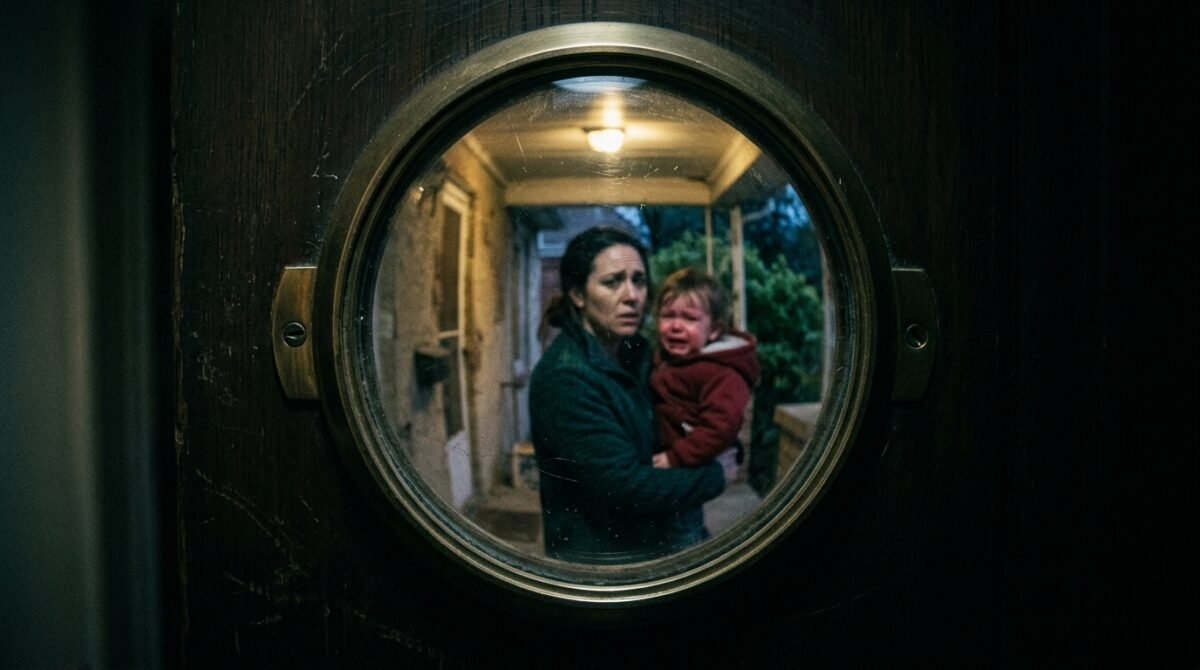
Motherhood is supposed to be a journey of grace and connection, but for me, it began with a battlefield of protective instincts. My son, Leo, was born twelve weeks premature. For the first four months of his life, his world consisted of glass, machines, and sterile hands. When he finally came home, our pediatrician gave us one non-negotiable instruction: ‘Protect his lungs at all costs.’ A simple common cold for a healthy baby could mean a life-threatening medical emergency for Leo.
We decided to host a small, ‘safe-space’ baby shower once he hit his six-month milestone, strictly limiting guests to those who were vaccinated and symptom-free. We sent out clear, bold invitations: ‘If you have so much as a sniffle, please celebrate with us from afar.’ I thought it was simple. I thought it was common sense. I was wrong.
My sister-in-law, Sarah, has always viewed my boundaries as personal slights. She treats parenting as a competitive sport, and her toddler, Jax, is her star athlete—even when he is actively infectious. The day of the shower, the atmosphere in my home was light and joyous, until a notification on my Ring camera shattered the peace.
I watched from my living room, the color draining from my face as I saw Sarah standing on my porch, Jax hacking into his sleeve, his forehead beaded with sweat. She wasn’t just dropping off a gift; she was demanding entry. And when I didn’t open the door, the real war began.
The Explicit Warning in the Fine Print
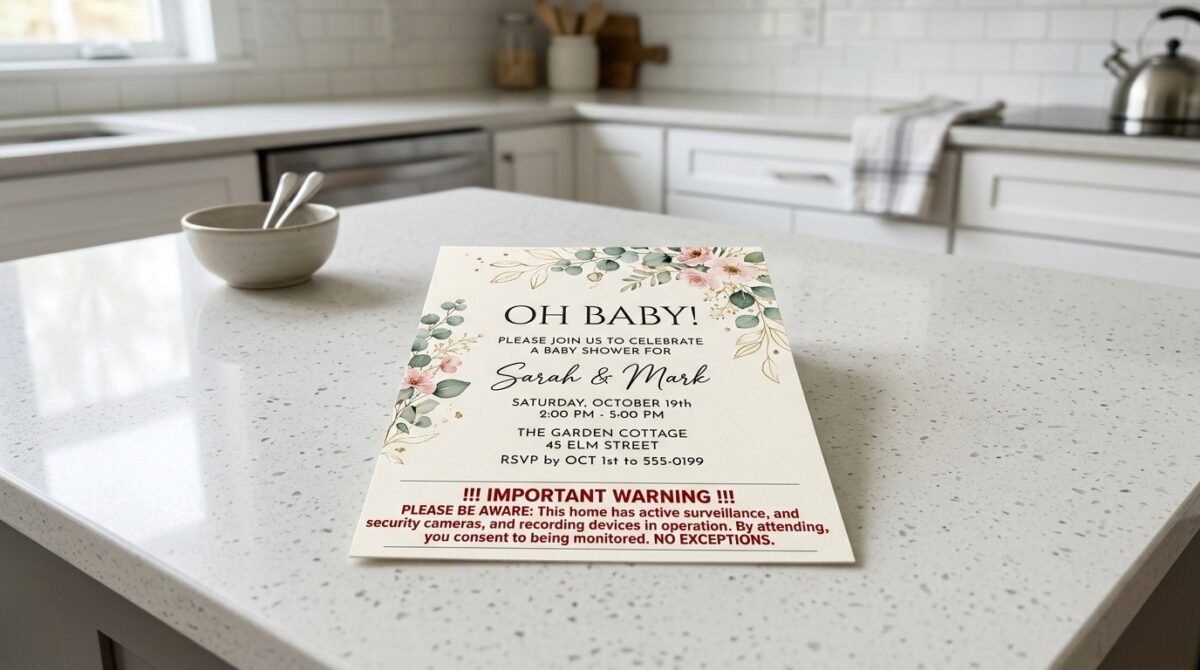
The invitation was designed to be impossible to misunderstand. We had spent weeks agonizing over the guest list, crossing off names of those who hadn’t kept up with their boosters or who lived in households with high exposure to daycare germs. The RSVP card explicitly stated: ‘Due to Leo’s immunocompromised status, we will be enforcing strict health protocols. Please do not attend if you or your children have shown any signs of illness in the last 72 hours.’
My husband, Mark, had even called his sister, Sarah, personally. He knew how she operated. He had explicitly told her, ‘Sarah, if Jax is sick, please don’t come. We love you guys, but we can’t take the risk.’ Sarah had laughed it off, promising that Jax was ‘just teething’ or ‘maybe had a mild allergy.’ It was the kind of dismissal that made my blood run cold.
I spent the days leading up to the party sanitizing surfaces, arranging for a HEPA air purifier to run in the main room, and preparing individual, pre-packaged snacks to avoid cross-contamination. Every decision was made with Leo’s fragile health in mind. To me, this wasn’t just a party; it was a carefully choreographed exercise in survival.
The morning of the event, the sun was shining, and I felt a rare moment of peace. My mother was helping me arrange flowers, and the house smelled of fresh lilies and sterile sanitizer. I felt like I had finally built a fortress around my son. I didn’t realize that the walls were about to be tested by someone who refused to believe the danger was real.
“I don’t get why you’re being so dramatic. Every kid in daycare is always sick. You’re just going to turn him into a bubble boy if you keep this up.”
— Sarah’s text message sent at 9:00 AM
I didn’t respond. I didn’t have the energy to argue. I just archived the message and focused on the centerpieces. I believed that by ignoring the bait, I was keeping the peace. I didn’t understand that for people like Sarah, silence isn’t an acknowledgment—it’s a challenge to be conquered.
The Ring Camera Confrontation
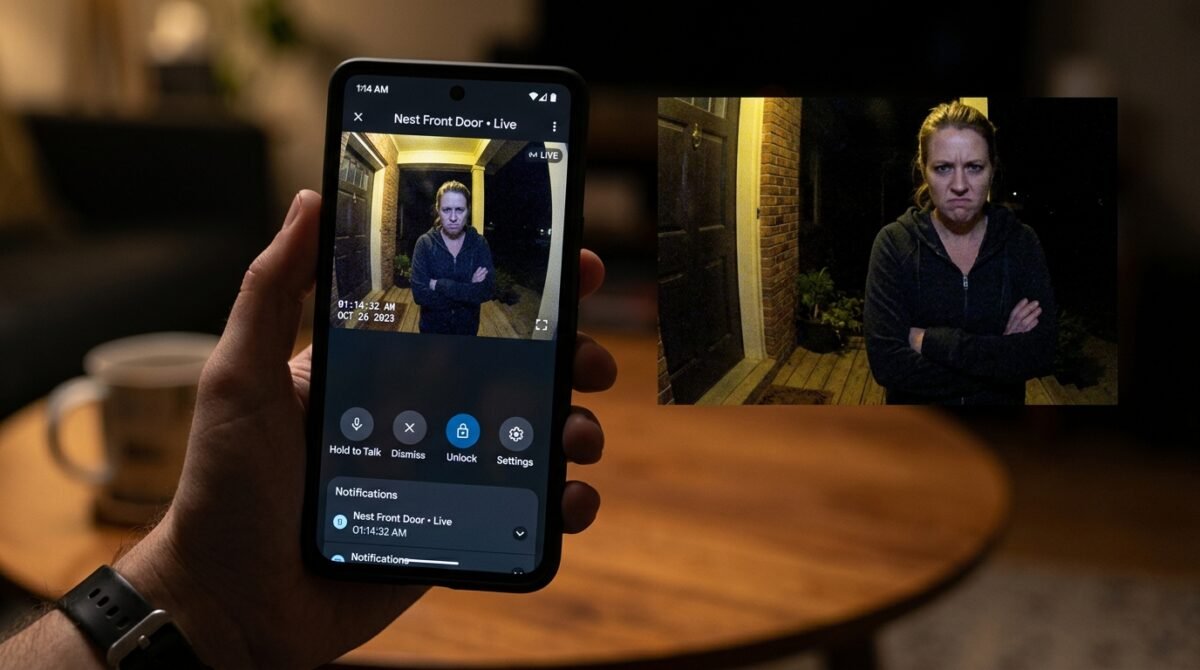
The party was in full swing when the chime sounded. I wasn’t expecting anyone else; the guest list was locked. I pulled up the camera feed on my phone, expecting to see a late delivery person. Instead, I saw a scene that made me stop breathing. Sarah was standing on my porch, holding Jax. He looked miserable. His eyes were glassy, and I could see the way he was leaning heavily against her shoulder.
I saw her reach for the doorbell again, her expression shifting from impatience to genuine irritation. She was staring directly into the camera, knowing I could see her. I stood in the middle of my living room, frozen. I couldn’t open that door. Opening the door meant letting the enemy in, and I knew what that meant for my son.
Mark walked over, sensing my distress. He looked at the screen, and his face hardened. He didn’t even speak to me; he just reached for his phone and started typing, his thumbs moving with angry speed. Outside, Sarah started pounding on the wood. It was a rhythmic, aggressive sound that echoed through the house, turning the heads of the guests nearby.
One of my aunts walked over, looking concerned. ‘Is everything okay, sweetie?’ she asked, her voice hushed. I didn’t know how to explain it. How do you tell your family that your own sister-in-law is trying to expose your preemie to a virus? I felt a surge of adrenaline, a protective rage that I hadn’t known I possessed. I realized then that I wasn’t going to let her in. Not today. Not ever.
“I know you’re in there. Don’t be ridiculous. It’s just a little cold. Jax needs to see his cousin. Open this door right now.”
— Sarah shouting toward the Ring doorbell
I gripped the phone tighter, my knuckles turning white. Mark looked at me and whispered, ‘I’ve got this.’ He stepped away to call her, his voice low and firm, but I knew that the damage was already done. The peace of the day had been shattered.
The Unfolding Social Media Meltdown
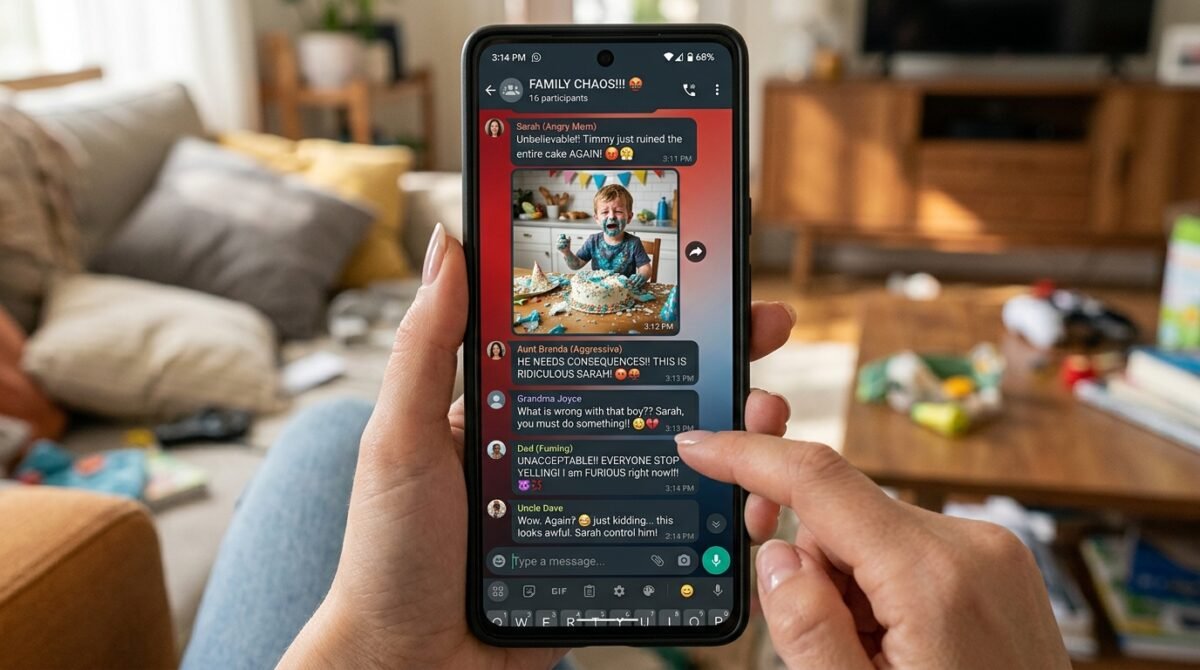
While the standoff continued, my phone began to vibrate incessantly. It wasn’t just Sarah anymore; it was the family group chat. The notifications were coming in so fast that my phone screen was just a blur of text. My mother-in-law, my sister-in-law’s husband, and a few cousins I barely spoke to were all weighing in. The narrative was shifting, and in their version, I was the villain.
Sarah had taken a picture of herself on my porch with the door shut and posted it to her Instagram story with the caption: ‘Heartbroken that my own family would lock us out on a day meant to celebrate new life. So much for inclusion.’ It was a masterclass in manipulation, cropping out the fact that her child was visibly sick. The messages in the group chat were a mix of confusion and indignation.
I sat on the stairs, trying to keep my composure while the virtual assault continued. My mother-in-law was demanding to know why we were being ‘so cold’ to Sarah. She hadn’t seen the camera footage. She hadn’t seen the state of the toddler. To her, I was just a new mother who had let power go to her head. The isolation I felt was suffocating.
I finally typed a response into the group chat, attaching a screenshot of the doorbell camera feed. I didn’t add any fluff. I just sent the image of Jax’s flushed, sweaty face next to the timestamp. The silence that followed in the chat was deafening. It was a moment of objective truth, but I knew it wouldn’t be enough to satisfy those who wanted to believe the worst of me.
“Look at the picture. My son is immunocompromised. This is not about exclusion; it is about his survival. I will not apologize for protecting my child.”
— My text response to the family group chat
The messages stopped for a few minutes, but then the rebuttals started. ‘He’s just a baby,’ one cousin wrote. ‘You’re overreacting to a toddler’s cough.’ The gaslighting was so intense I began to doubt myself for a split second. Was I being unreasonable? No. I looked at the photo again. I had done the right thing. And I would do it a thousand times over.
The Fallout at the Dinner Table
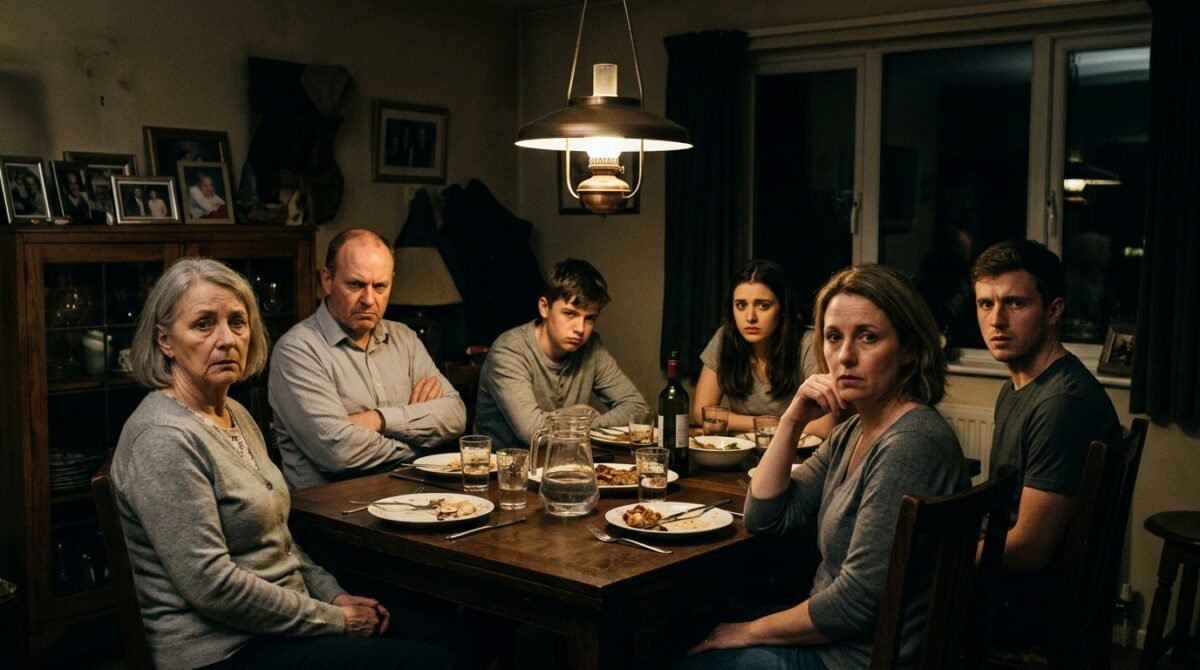
The dinner following the baby shower was supposed to be a celebration of our family’s growth. Instead, it was an autopsy of our relationships. We arrived at my mother-in-law’s house, knowing that Sarah would be there. The air was thick enough to choke on. The moment we walked through the door, the temperature in the room seemed to drop by twenty degrees.
Sarah didn’t even look at us. She kept her head down, fussing over Jax, who was miraculously ‘feeling better’ now that the drama had served its purpose. My mother-in-law, Susan, was the first to break the silence. She sat at the head of the table, her hands folded over a napkin as if she were about to deliver a verdict in a court of law. She spoke with a measured, icy tone that I had only heard once before.
‘We need to discuss what happened at the house,’ she said. The entire table stopped eating. Mark squeezed my hand under the table, his grip steadying. I looked around the room. My father-in-law was staring at his plate, clearly uncomfortable. My sister-in-law’s husband, who had been vocal in the group chat, was staring at me with open hostility.
I chose to speak first, before anyone could twist the events further. I recounted the events clearly, detailing the medical risks that Leo faced and the explicit instructions we had given regarding illness. I didn’t raise my voice; I didn’t need to. The truth was my armor. But as I finished, Sarah looked up, her eyes bright with unshed tears. She was preparing her counter-attack, and it was going to be a doozy.
“I just wanted to be a part of the day. You made us feel like lepers. Jax has a right to be with his family, regardless of your irrational fears.”
— Sarah, defending her choice to bring a sick child
The accusation hung in the air. ‘Irrational fears.’ That was the crux of it. They didn’t see the hospital bills, the heart monitors, the terrifying nights where we had to count his breaths. They saw a woman with a baby who wanted to be invited to a party. The divide in the room was not just about a door; it was about the fundamental way we viewed the world.
The Calculated Campaign of Exclusion
Following the dinner, the situation devolved from a family disagreement into a full-blown campaign. Sarah began a subtle, yet effective, smear campaign. She made sure that every time we were all together—at birthdays, holiday gatherings, or even casual outings—I was framed as the ‘difficult, controlling’ mother. She would make comments about how sad it was that Leo was growing up so sheltered, or how I ‘kept him away’ from everyone who loved him.
It was a death by a thousand cuts. She started leaving us out of group chats, then out of invitations to smaller family gatherings. When I would ask why, the answer was always the same: ‘Oh, we didn’t think you’d want to come because of your strict requirements.’ It was a way to make my boundaries feel like a burden to the rest of the family, effectively weaponizing my own care for my child against me.
I felt the support of the family waning. My mother-in-law, who had once been my greatest advocate, started to pull back. She began to treat me with a polite, distant formality that stung more than an outright argument. I was being punished for being a parent, and it was becoming clear that in this family, the ‘peace’ of the group was valued far more than the health of the individual.
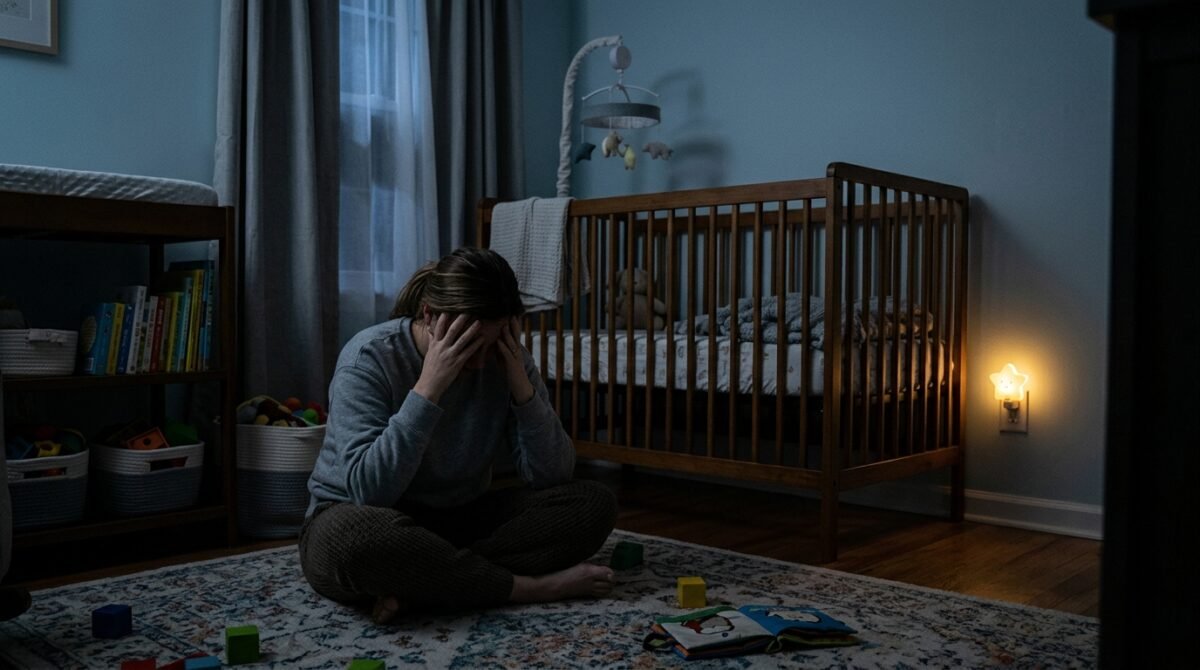
I spent nights crying in the nursery while Leo slept soundly in his crib. Mark was my rock, but even he was hurting. He was watching his family turn against his wife and child, and he was struggling to find a way to navigate the wreckage. We decided that we needed to draw a harder line, but we didn’t know how to do it without losing our connection to the rest of the family.
“Maybe we should just stop going for a while. If they can’t respect the bare minimum requirements for Leo’s health, they don’t deserve our time.”
— Mark, during a tearful late-night discussion
It was the turning point. We realized that by trying to keep the peace, we were only allowing the disrespect to grow. We needed to step back, not to punish them, but to protect ourselves. The decision to go low-contact was not made lightly, but it felt like the only way to save our sanity.
The Reddit Trial: Community Verdict
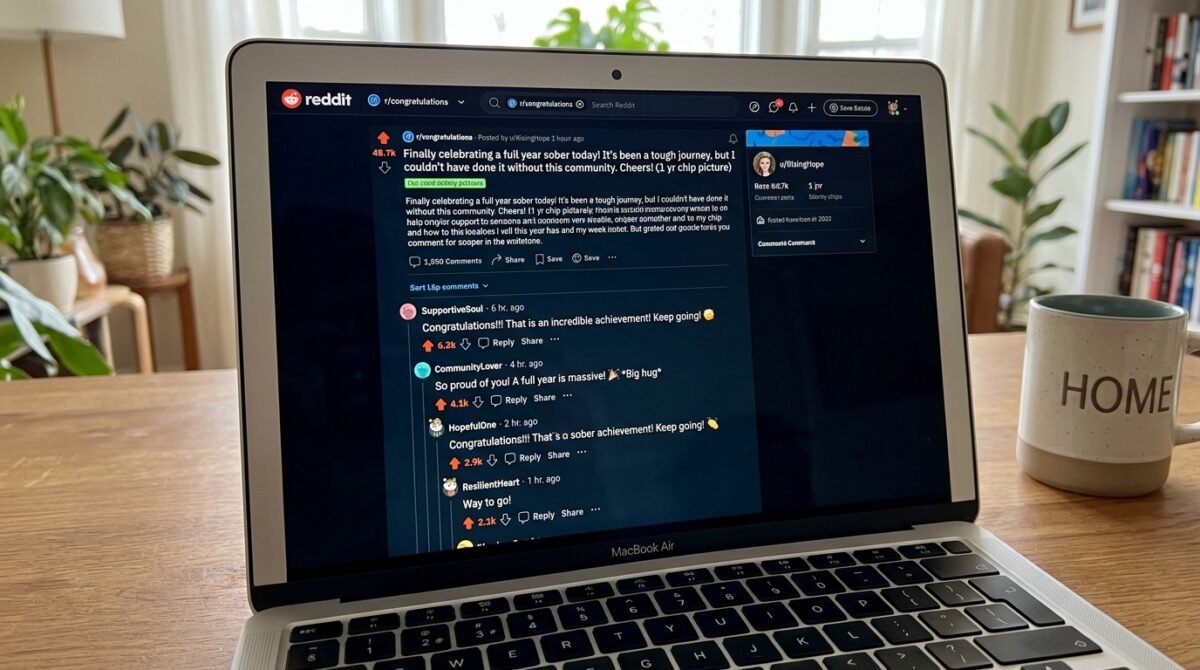
I finally decided to post about the incident on a popular subreddit. I needed to know if I was crazy. I typed out the story, leaving out no details, including the Ring camera footage and the subsequent family dinner. I hit ‘post’ and braced myself for the worst. I expected to be labeled as the ‘crazy, overprotective mom.’ Instead, I was met with a wave of validation that left me reeling.
The comments poured in by the thousands. People from all over the world, many of them parents of medically fragile children, shared their own stories of boundary-breaking relatives. The consensus was overwhelming: I was in the right, and the way I had been treated was unacceptable. It was the first time I felt like I hadn’t lost my grip on reality.
The thread became a repository for people who had dealt with similar ‘Sarahs’—those who prioritized their own feelings over the safety of others. I read through the comments for hours, finding comfort in the shared experiences of strangers. I realized that my struggle wasn’t unique, and that my reaction was a perfectly healthy response to a toxic environment.
Of course, there were the inevitable few who called me ‘arrogant’ or ‘self-important,’ but they were quickly drowned out by the support of others. I felt a weight lift off my chest. I didn’t need the validation of my in-laws; I needed the truth to be recognized. And for the first time in months, I felt capable of standing tall in my decision.
“NTA. You are the gatekeeper of your child’s health. If someone can’t respect that, they don’t get to be in his life. It’s that simple. Do not apologize for keeping your son safe.”
— u/MamaBearWarrior (Top Comment, 32.5k upvotes)
The Reddit community gave me the courage to stand by my convictions. I realized that my boundaries weren’t ‘irrational fears’; they were non-negotiable requirements for my child’s survival. And I was done feeling guilty about it.
The Unsolicited Visit
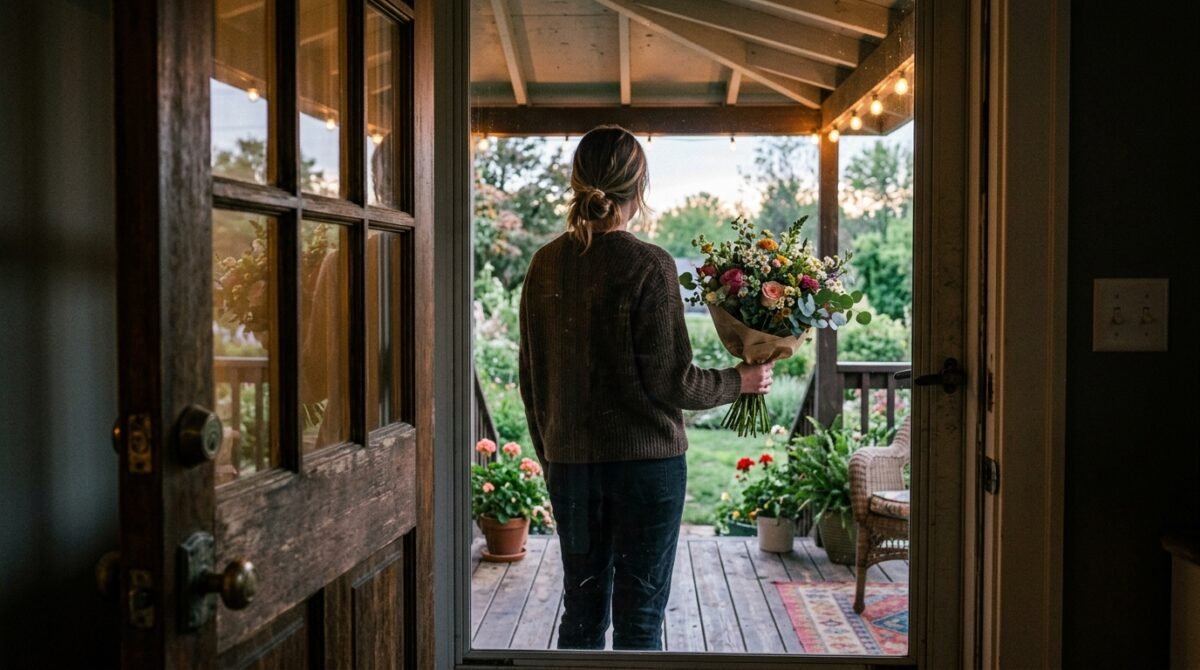
A few weeks after the post, I was in the kitchen, preparing dinner, when a knock on the door startled me. I wasn’t expecting anyone. I looked at the camera monitor on the counter and felt my blood pressure skyrocket. It was Sarah. Again. Alone this time, without the toddler. She looked calm, almost professional, standing there with a bouquet of flowers and a card.
I didn’t answer. I just watched. She waited, then knocked again, this time harder. ‘I know you’re in there!’ she called out, her voice much less aggressive than before. ‘I just want to talk. I brought flowers.’ I stood still, my hand gripping the edge of the counter. I had no interest in ‘talking’ to someone who had spent the last month trying to alienate me from my husband’s family.
I sent a quick text to Mark, who was in the home office. He came out, saw the monitor, and sighed. He walked to the door, opened it just a crack, and stood there, blocking the entrance. I stood back, listening to the muffled conversation through the door. It was a strange, performative dance. She was offering an apology, but it felt hollow, designed to get her foot back in the door.
‘Sarah, we’ve already discussed this,’ Mark said, his voice steady. ‘We aren’t ready to move past what happened. We need time and space.’ She tried to push the flowers into his hand, but he didn’t take them. He just stood there, a firm barrier between the life we were trying to build and the chaos she insisted on bringing. It was the most empowered I had ever felt.
“I’m just trying to make things right! Why are you acting like I’m a monster? I love my nephew!”
— Sarah, during the unsolicited visit
She eventually left, the flowers sitting on the porch like a silent, discarded peace offering. I didn’t feel guilty. I didn’t feel sad. I just felt relieved. We had set a boundary, and we had held it. It was a victory, however small, for our little family.
The Legal Threat
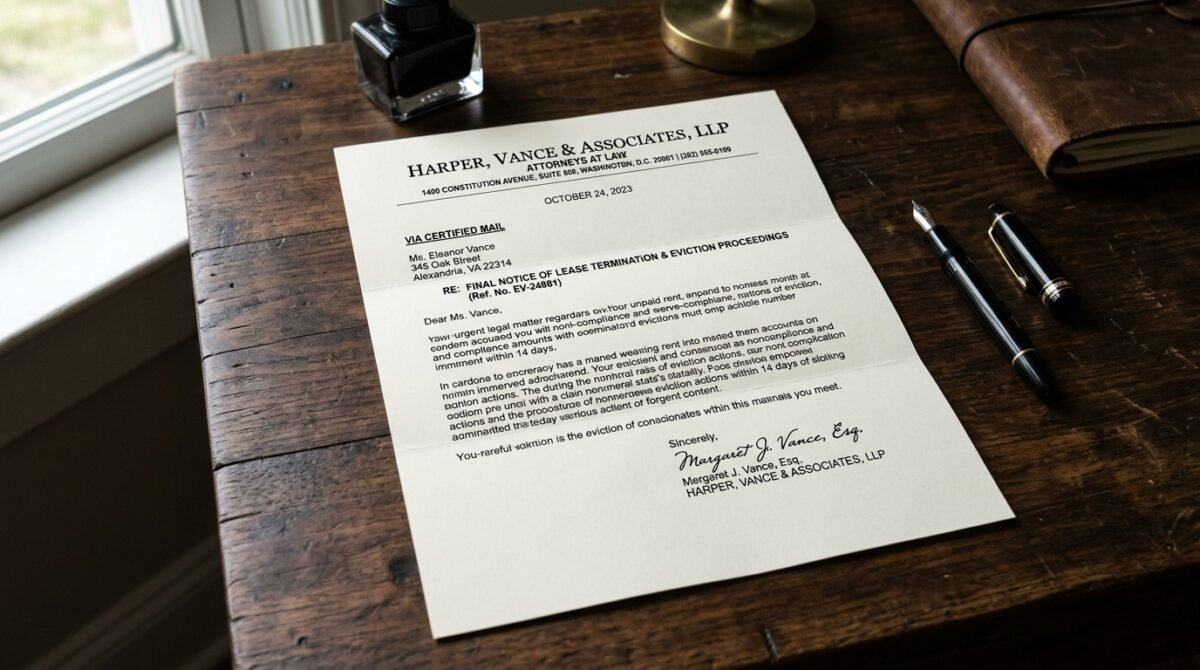
I thought the visit would be the end of it, but Sarah had other plans. A week later, we received a certified letter in the mail. My hands shook as I opened it. It was from a lawyer—a distant relative of hers who moonlighted in family law. The letter alleged that we were ‘unlawfully denying contact’ between the child and his extended family, and threatened to pursue mediation to establish ‘reasonable visitation.’
I was floored. The audacity was almost breathtaking. They were trying to use the legal system to force me to let them see my child? I read the letter over and over, trying to find the logic in it. There was none. It was purely an act of intimidation, a way to show us that they were willing to go to extremes to regain their control over our lives.
Mark was furious. He called the number on the letter, not to negotiate, but to tell them that any further contact from their office would be considered harassment. It was the most aggressive I had ever seen him. He was done playing games. He was protecting his wife and child with a ferocity that made me fall in love with him all over again.
We spent the evening talking about our options. We knew the letter was largely bluster, but the stress was undeniable. It felt like we were being pushed into a corner, forced to fight for the right to raise our child without outside interference. But we realized that if we backed down now, we would be setting a precedent that they could always control us.
“This is harassment. If they want to play the legal card, we’ll get our own representation. We are not going to be bullied into silence.”
— Mark, discussing the legal threat
The letter was a wake-up call. We realized that our relationship with the extended family was likely over, and we needed to make our peace with that. It was a painful realization, but it was the necessary first step toward our new, independent life.
The New Normal: Finding Our Own Tribe

In the months that followed the legal threat, the silence from the family was almost total. It was jarring at first, the lack of texts, calls, and invitations. But slowly, a new kind of peace began to settle over our home. We started to find our own tribe—other parents who understood the importance of boundaries, who didn’t view them as ‘irrational,’ but as the necessary scaffolding of a healthy life.
We started attending support groups for parents of preemies, where we met people who were going through the same struggles. We found friends who would never dream of coming over while sick, friends who asked, ‘Is it okay if I stop by?’ before just showing up. The quality of our connections improved exponentially. We realized that family isn’t just about blood; it’s about mutual respect and shared values.
Leo grew, strong and healthy, his immune system gradually strengthening with every passing day. Every time he hit a milestone, we celebrated not just his progress, but our success in protecting him. We had built a life on our own terms, one that wasn’t beholden to the expectations of those who didn’t have our best interests at heart.
We still get the occasional inquiry from a relative, usually a well-meaning aunt or uncle asking when we’re going to ‘make up’ with Sarah. We tell them the same thing: ‘We’re happy, we’re healthy, and we’re doing what’s best for our child.’ And for the first time, we don’t feel the need to explain any further. We are at peace with our choices.
“You’ve learned that your peace is worth more than their approval. That’s the greatest lesson a parent can learn.”
— Advice from a support group friend
The journey was long, and it wasn’t easy. But it was worth it. We learned that while we can’t control the actions of others, we have absolute control over the boundaries we set for our family. And that, more than anything, is the secret to a happy, healthy life.
Reflecting on the Cost of Boundaries

As I sit here writing this, watching Leo play with his blocks, I think about the cost of the boundaries we’ve set. Yes, we lost our relationship with a significant portion of my husband’s family. We’ve missed out on holidays, parties, and the ‘traditional’ family gatherings that we once thought were essential. But what did we gain? We gained a home where we feel safe, a marriage that is stronger than ever, and a son who is growing up in an environment of respect and care.
I’ve learned that boundaries are not just for the other person; they’re for yourself. They define the space where you are safe to be who you are, without the constant pressure to conform to someone else’s expectations. They are the filter through which you decide who gets access to your life, and they are the only thing that stands between you and the chaos of the world.
I know there will be those who say I was too harsh, that I should have ‘forgiven’ and ‘moved on.’ To them, I say: forgiveness does not mean allowing someone to endanger your child. It means letting go of the anger so that you can move forward with your own life. And that is exactly what I have done.
I am proud of the woman I have become. I am proud of the mother I am. And most of all, I am proud of the family we have built. We have learned that the most important thing we can do for our child is to show him that his health, his safety, and his well-being are worth fighting for. And that is a lesson he will carry with him for the rest of his life.
“Boundaries aren’t walls; they are the gates that allow you to choose who you let in and who you keep out. Don’t be afraid to keep the gate locked.”
— A thought on the importance of boundaries
We are doing well. Better than well—we are thriving. And I wouldn’t change a single thing about the way we handled it. It was the hardest thing I’ve ever had to do, but it was also the most important. And I would do it all over again in a heartbeat.
Conclusion
Looking back, the confrontation at the front door feels like a lifetime ago. It was the moment I stopped being a passive participant in my own life and started actively guarding the things that mattered most. The fallout was brutal, the isolation was real, but the clarity I gained has been worth every ounce of the pain. We didn’t lose family; we simply stopped pretending that toxic behavior was a form of love.
The debate about boundaries often feels like a generational divide. Some argue for ‘tradition and keeping the peace,’ while others argue for ‘autonomy and health.’ My experience has taught me that these two concepts are not mutually exclusive—unless one side refuses to respect the basic humanity of the other. When you are a parent, your primary duty is to your child. If that means making difficult decisions that ruffle feathers, then so be it.
I invite you to consider your own boundaries. Are you letting people into your life who consistently make you feel unsafe, unheard, or disrespected? Are you sacrificing your own peace to keep the peace for everyone else? It’s a heavy question, but it’s one that every single one of us needs to answer at some point. I’d love to hear your thoughts in the comments—how do you handle family members who refuse to respect your parenting boundaries?
What's your verdict on this dilemma?
Vote below to contribute to the official community consensus.

Have a Dilemma Keeping You Up at Night?
Share your real-life feud, wedding chaos, or relationship crossroads anonymously with our editorial team.
What do you think ?
0 Comments🛡️ Comments are moderated to protect community integrity. Your comment will appear once approved by the editorial team.