

Growing up, my sister Sarah and I were as close as siblings could be. We shared secrets, clothes, and dreams of one day taking our families to the ‘Most Magical Place on Earth.’ As I moved into a successful career in tech while Sarah struggled with early motherhood, I always told myself that once I had the means, I would treat her and her two kids to a vacation they could never afford on their own. It was a promise made from love, not obligation.
When I finally hit my career milestones, I decided to make good on that promise. I spent months meticulously planning a week-long Disney adventure, covering every single cost: flights, lodging at a luxury resort, park hopper passes, and even a dining plan. It was meant to be a celebration of family, a way to build memories that would last a lifetime. I didn’t want a thank you, I just wanted to see those kids smile.
However, the narrative shifted the moment the final payment was confirmed. What started as a gift quickly morphed into a transaction in Sarah’s mind. The entitlement wasn’t a sudden explosion, but a slow, creeping rot that tainted the excitement of the trip. The underlying assumption—that my time was hers to command—became the central pillar of our relationship, and ultimately, the bridge that I would eventually have to burn.
This isn’t just about a vacation. It is about the fundamental misunderstanding of what a family is supposed to be. It is about the difference between being a supportive sibling and being a domestic servant. When the realization hit that I was expected to be the full-time nanny during the vacation I paid for, the magic didn’t just fade; it turned into a nightmare of manipulation and boundary-crossing.
In the following sections, I will break down the chain of events that led me to cancel the entire itinerary, the fallout within our family, and the lessons I learned about toxic expectations. This story serves as a reminder to anyone who has ever been made to feel like their generosity is actually their burden to carry.
The Initial Pitch and the Hidden Expectations

I remember the day I called Sarah to break the news. I had the brochures spread out across my desk, the glossy images of Cinderella’s castle gleaming under my office lights. I told her I wanted to cover the entire cost of the trip for her, her husband, and their two young children. I expected tears of joy, or perhaps a moment of stunned silence. Instead, I got a list of demands.
Sarah didn’t talk about the rides or the characters. She immediately began talking about the ‘logistics.’ She explained that since I was going, she and her husband would finally be able to have ‘proper dates’ every night. She assumed that since I was the one paying, my primary role was to facilitate their leisure time by taking over the parenting duties.
“Oh, that’s so sweet of you! This is perfect. I was actually just telling Mark that we needed a break. Since you’re going, you can just take the kids back to the room every night at 6:00 PM while we go to dinner. It’s the least you can do for being the aunt, right?”
— Sarah, via phone call
I felt a cold knot form in my stomach. I had imagined us all walking through the parks together, sharing meals, and watching the fireworks as a family. The idea that I was essentially being brought along as an unpaid, full-time nanny was never part of the conversation. I tried to push back gently, but Sarah brushed it off, citing the ‘aunt obligation’ as if it were a legal binding contract.
The conversation ended with me feeling like I had just accidentally hired myself out for a week of labor. I should have spoken up then, but I was so invested in the idea of the trip being a success that I convinced myself she was just stressed. I thought once we got there, the reality of the situation would sink in and she would realize she had overstepped. I was wrong.
The Group Chat That Changed Everything
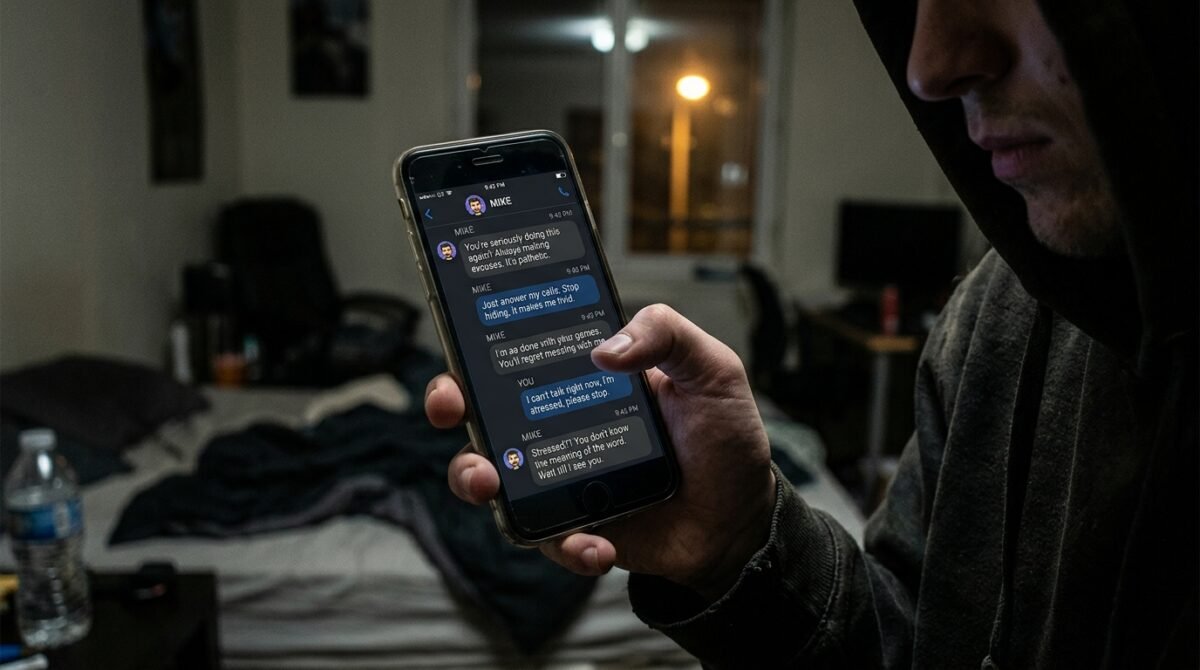
A few weeks later, I was added to a group chat titled ‘Disney Squad 2024.’ I thought it would be for organizing travel logistics or sharing excitement about the trip. Instead, it was a planning document for how I was going to be utilized during the vacation. Sarah and her husband were actively discussing my ‘shifts’ as if I were a hotel employee.
I sat at my desk in silence as the notifications pinged one after another. They were debating whether I should handle the morning breakfast routine so they could sleep in until noon. It was surreal. They weren’t just discussing the trip; they were dissecting my personal time with a level of entitlement that made my skin crawl. The level of detail was staggering, including specific demands for when I needed to be ready to leave the hotel room with the children.
“I’ve created a schedule for the aunt. She has the kids from 7 AM to 11 AM, then again from 5 PM to bedtime. We need to make sure she knows this is non-negotiable if she wants to go on the trip.”
— Mark (Sarah’s husband), in the Family Group Chat
I read the message three times, unable to process the audacity. I wasn’t just being asked to help; I was being dictated to. They had treated my gift as a bargaining chip, leverage to ensure I would be at their beck and call. The feeling of being used replaced the excitement I once felt. It wasn’t about the kids anymore; it was about them securing a vacation for themselves at my expense.
I didn’t respond immediately. I took screenshots. I needed to see it in writing, to make sure I wasn’t going crazy. Every message added another layer of resentment. They were talking about me like I was a piece of furniture that they had purchased to make their life easier. The realization that they didn’t respect my boundaries was total and complete.
The Confrontation at Sunday Dinner

I decided to address it face-to-face. I invited Sarah over for dinner, hoping that in a neutral setting, we could reset the expectations. I laid out the dinner, cooked her favorite meal, and tried to keep the atmosphere light. But as soon as I brought up the group chat and the ‘shifts,’ the mask slipped.
Sarah didn’t even try to apologize. She doubled down. She argued that being an aunt comes with inherent duties, and if I wasn’t willing to step up, then I didn’t deserve to be part of the ‘magical family experience.’ It was a masterclass in gaslighting. She made me feel like the selfish one for wanting to enjoy the vacation I paid for.
“You’re the one with all the money, and you don’t have kids. This is your chance to prove you actually care about them. If you can’t handle a few hours of babysitting, maybe you shouldn’t be coming at all. I thought you wanted to be an aunt, not just a bystander.”
— Sarah, during the dinner confrontation
I looked at her, really looked at her, and realized I didn’t know this person. Or perhaps, I had been ignoring who she was for a long time. The entitlement was deep-seated, a byproduct of a lifetime of being enabled by the rest of our family. She truly believed that my money and my time were communal resources that she had a right to access.
I stayed calm, which only seemed to irritate her more. She was looking for a reaction, a fight she could win by playing the victim. When I refused to play along, she grew louder, creating a scene that forced me to realize that our relationship was fundamentally broken. There was no room for negotiation because she didn’t view me as an equal partner in this vacation.
The Financial Breakdown of the ‘Gift’

After Sarah left, I sat down and looked at the numbers. I had been so caught up in the emotional aspect of the gift that I hadn’t properly audited the impact of her demands on the trip’s actual quality. I realized that if I followed her schedule, I wouldn’t actually be experiencing Disney. I would be a glorified chaperone, stuck in a hotel room or standing on the sidelines while they enjoyed the parks.
| Category | Cost Covered By Me | The ‘Duty’ Expected |
|---|---|---|
| Resort Lodging | $4,500 | Must stay in the room with kids |
| Park Hopper Passes | $2,200 | Used as leverage for babysitting |
| Dining Plan | $1,800 | Excluding me from evening meals |
| Airfare | $1,600 | Expected to handle luggage/logistics |
The numbers were stark. I was spending over $10,000 to facilitate their vacation while I was essentially relegated to the role of a support staff member. It wasn’t a gift; it was a subsidy for their lifestyle. I had worked hard for that money, sacrificing my own free time and energy, and they were treating it like an entitlement.
I realized that if I went through with this, I would be miserable. I would spend the entire trip seething with resentment, and the kids would sense that energy. It would be a disaster for everyone involved. I had to make the decision to cut the cord before the damage became permanent.
The Decision to Cancel

The decision wasn’t impulsive. It was the result of a long, sleepless night of weighing the consequences. I knew that canceling would cause a massive family rift. My parents would get involved, Sarah would play the victim, and I would be the villain in their narrative. But I also knew that if I didn’t set this boundary now, I would be setting a precedent that would last for the rest of our lives.
I sent a short, professional email to the travel agency to cancel all reservations. I didn’t involve Sarah in the process. I didn’t want to give her a chance to argue or manipulate me. Once the confirmation of the cancellation arrived, I felt a weight lift off my shoulders. It was done.
I then sent a message to Sarah. It was firm and clear. I didn’t attack her; I simply stated that the vacation was no longer going to happen because the expectations were not aligned with my intentions for a family trip. I didn’t leave room for debate.
“I’ve decided to cancel the Disney trip. It’s become clear that our expectations for this vacation are completely different. I wanted to enjoy a family trip together, but it has become a chore-based transaction. I’m not willing to spend my time and money under these conditions.”
— My text to Sarah
The silence that followed was deafening. I knew the storm was coming, but for the first time in months, I felt like I was in control of my own life. I had reclaimed my money, my time, and my sanity.
The Family Backlash and the Flying Monkeys

It didn’t take long for the fallout to begin. Within hours, my phone was blowing up with messages from my mother, my aunt, and even my cousins. Sarah had obviously painted a very specific version of the story—one where I was the rich, heartless sister who took away her nieces and nephews’ dream because I was too lazy to help out for a few hours.
My mother was the loudest. She called me, sobbing, telling me about how ‘disappointed’ she was that I would do this to Sarah. She didn’t ask for my side of the story. She didn’t ask why I canceled. She just assumed that Sarah was the victim and I was the aggressor.
“How could you be so cruel? You know how hard Sarah works. She was so looking forward to this, and you pull the rug out from under her over some minor babysitting? You have so much, and you’re acting like a child.”
— My mother, over the phone
I listened to her lecture, feeling the familiar sting of being misunderstood. It was clear that in my family, Sarah’s struggles were always the priority, and my boundaries were always treated as ‘selfishness.’ I realized that this dynamic had existed for years, and I had simply been too busy or too accommodating to notice the pattern until now.
I calmly informed them that I would not be discussing the matter further. I wasn’t going to justify my financial decisions to a group of people who only saw me as a resource to be tapped. The ‘flying monkeys’ as they are often called on the internet, were out in full force, and I had to learn how to close the gates.
The Internet Weighs In: Was I the Villain?

I decided to post my story on a well-known community forum to see if I was losing my mind. I wanted an objective perspective. The response was immediate and overwhelming. Thousands of people chimed in, and the consensus was not what I expected. The support was almost unanimous.
People were shocked at the level of entitlement Sarah showed. Many shared their own stories of family members who used them for money or free labor under the guise of ‘family love.’ It was validating to hear that my feelings of resentment were not only normal, but justified.
“NTA (Not the Asshole). This wasn’t a gift; it was a contract for free labor. The fact that they expected you to pay for the privilege of being their nanny is insane. You were right to pull the plug. Protect your peace.”
— u/BoundariesMatter, 15.2k upvotes
The thread became a hub for discussion about toxic family dynamics and the importance of financial boundaries. I saw comments from people who had been in similar situations and regretted not standing up for themselves sooner. It gave me the strength to stay firm in my decision, despite the ongoing pressure from my family.
Reading the comments, I realized that I wasn’t the selfish one. The selfish ones were the people who felt they had a right to my resources and my time. It was a powerful realization that helped me detach from the guilt my family was trying to impose on me.
The Aftermath: Going Low Contact

The weeks following the cancellation were incredibly difficult. I had to navigate the social fallout, which meant dealing with family gatherings that were now filled with tension. I decided to go ‘low contact’ with Sarah. I didn’t cut her off completely, but I stopped participating in the group chats and stopped offering financial help.
It was a necessary step for my mental health. I needed to separate my identity from my role as the ‘successful sister’ who was there to solve everyone’s problems. It was a painful transition, but it was also liberating. I started focusing on my own hobbies, my own friends, and my own goals.
“I need some space to process what happened. I’m not interested in discussing the vacation anymore, and I’m not going to be available for family events for a while. I hope you can respect that.”
— My final message to Sarah before limiting contact
Sarah didn’t take it well. She tried to guilt-trip me, but I didn’t engage. I left the messages unread or gave short, polite responses. It was the hardest thing I’ve ever done, but it was also the most effective way to protect myself from further manipulation.
I learned that you can love someone and still not allow them to treat you poorly. I learned that saying ‘no’ is a complete sentence. And most importantly, I learned that my value as a human being is not tied to what I can provide for others.
The Lessons Learned About Generosity

Looking back, I don’t regret the initial intention of the gift. I wanted to share my success with the people I loved. But I do regret not setting boundaries from the very beginning. I let the excitement of the idea blind me to the reality of the relationships I was dealing with.
Generosity, I’ve learned, is only healthy when it is given without expectation and received with gratitude. When it becomes a leverage point or a source of resentment, it stops being a gift and starts being a burden. I had to learn that the hard way, through a very public and painful family fallout.
I also learned that money changes dynamics in ways we often don’t want to admit. When there is a disparity in wealth, it creates a power imbalance that people will exploit if you don’t keep your guard up. I now approach my generosity with much more caution, ensuring that my contributions are clear, bounded, and based on mutual respect.
The experience changed me. I am more guarded now, yes, but I am also more confident. I no longer feel the need to buy people’s love or approval. I am content in my own skin, and that is a lesson that was well worth the cost of the canceled Disney trip.
Final Reflections: Reclaiming My Peace

If you are in a similar situation—feeling pressured to provide or perform for family members who don’t respect your boundaries—know that you are not alone. It is easy to get caught up in the ‘but they are family’ mentality, but family is not an excuse for poor treatment. You have the right to say no, even if it disappoints people.
My relationship with Sarah is still evolving. We aren’t where we were, and we may never be. But that is okay. Sometimes, growing up means growing apart, and that is a natural part of life. I am moving forward, focusing on the people who truly respect me and value me for who I am, not what I have.
I have spent the last few months rediscovering myself. I’ve taken up new hobbies, spent time with friends who treat me as an equal, and finally started putting my own needs first. It’s a work in progress, but for the first time in a long time, I feel like I’m finally living my own life instead of someone else’s.
The Disney trip was just a catalyst. The real journey was the one I had to take within myself to realize that I am worth more than the services I can provide. And that, in the end, is the true magic.
Conclusion
This story of boundaries, entitlement, and the difficult choices we make to protect our mental health has clearly struck a chord. The saga of the canceled Disney trip serves as a stark reminder that even the most well-intentioned gifts can become toxic when they are met with demands rather than gratitude. It is a cautionary tale for anyone who finds themselves being treated as a ‘resource’ rather than a family member.
The fallout from this incident has been significant, but it has also led to a profound sense of clarity. By choosing to prioritize my own well-being over the comfort of others, I have reclaimed my life and learned that true relationships are built on respect, not obligation. The lesson is simple but powerful: don’t light yourself on fire to keep others warm, especially when they aren’t even grateful for the heat.
What about you? Have you ever had to cancel a generous gift because the recipient’s expectations became too much to handle? Have you ever stood up to a family member who viewed your kindness as an entitlement? Share your experiences and thoughts in the comments below—let’s start a conversation about healthy boundaries and the strength it takes to say ‘no.’
Poll: If you were in my shoes, would you have canceled the trip, or would you have sucked it up to keep the peace? Vote below!
What's your verdict on this dilemma?
Vote below to contribute to the official community consensus.

Have a Dilemma Keeping You Up at Night?
Share your real-life feud, wedding chaos, or relationship crossroads anonymously with our editorial team.
What do you think ?
0 Comments🛡️ Comments are moderated to protect community integrity. Your comment will appear once approved by the editorial team.