

Christmas is supposed to be a time of warmth, tradition, and the building of memories that last a lifetime. For my family, it has always been the anchor of our year—a day where the outside world stops, and we retreat into the comfort of our shared history. This year, however, that tradition was shattered into a thousand pieces by a four-legged wrecking ball and a brother who believes the world owes him an endless supply of forgiveness.
My two-year-old daughter, Lily, had finally reached the age where she understood the magic of the holiday. She spent the better part of December talking about Santa, and for her, we had curated a collection of delicate, handcrafted keepsakes—heirlooms passed down from my grandmother and new, custom-made ornaments that were meant to be her legacy. They were kept in a special display case, safe from the chaos of our daily lives, or so I believed.
When my brother, Mark, arrived for our breakfast gathering, he didn’t come alone. He brought ‘Buster,’ his oversized, high-energy rescue dog that he insists is ‘just a misunderstood soul.’ I had explicitly requested that the dog stay home, citing the fragility of our decorations and the smallness of our space. Mark, as he always does, dismissed my concerns with a wave of his hand and a chuckle about how I was being ‘uptight’ and ‘ruining the festive spirit.’
The events that followed weren’t just a simple accident; they were the culmination of years of boundary-crossing and entitlement. As I stood in the doorway of our living room, watching the tail-wagging chaos unfold, I felt something inside me snap. The joy of the morning vanished, replaced by a cold, hard clarity. This wasn’t about a dog being a dog; it was about the fundamental disrespect for my home, my child, and my boundaries. By the time the morning was over, the gifts remained unopened, and my brother was no longer a guest in my home.
The Inevitable Arrival of the Uninvited Guest

The morning started with a level of domestic peace that I should have known was too good to be true. I had spent hours the night before carefully arranging the living room, ensuring the heirloom display was secured behind a glass barrier that I foolishly thought would be enough. The scent of cinnamon and pine filled the air, and Lily was already awake, her laughter ringing through the house as she anticipated the day ahead.
Then, the doorbell rang. It was 8:00 AM, an hour earlier than agreed upon. When I swung the door open, I didn’t see just my brother, Mark. I saw a massive, shedding, twitchy dog straining against a thin leash. Mark was grinning, clearly pleased with himself, as if he had just done me a massive favor by bringing this creature into my home on a day meant for quiet family celebration.
“Merry Christmas! Look, I know you said no dogs, but I couldn’t bear to leave Buster alone on such a special day. He’s family, too, right? Besides, he’s been so well-behaved lately!”
— Mark, moments before the disaster
I felt my blood pressure spike immediately. I had spent three weeks of text messages and one very firm phone call establishing that Buster was not welcome. My apartment is small, and with a toddler, there is no room for a dog of his size, regardless of his temperament. But Mark has a way of making you feel like the villain for simply having a preference, and in that moment, I didn’t have the energy to start a fight in front of my daughter.
I ushered them inside, hoping that if I kept the dog in the entryway or the kitchen, we might salvage the morning. I was wrong. The moment the leash was clicked off, Buster was a whirlwind. He didn’t just walk; he barreled through the furniture, his tail acting like a whip against the lower shelves where I had placed the delicate, non-glass ornaments that Lily could touch.
I watched in horror as he knocked over a basket of pinecones, his claws skittering across the hardwood floor. Mark, meanwhile, didn’t even look up from his phone, seemingly oblivious to the fact that his dog was currently terrorizing my living space. I stood there, paralyzed by the feeling that this was about to go from bad to worse in the blink of an eye.
The Sound of Shattering Heirlooms
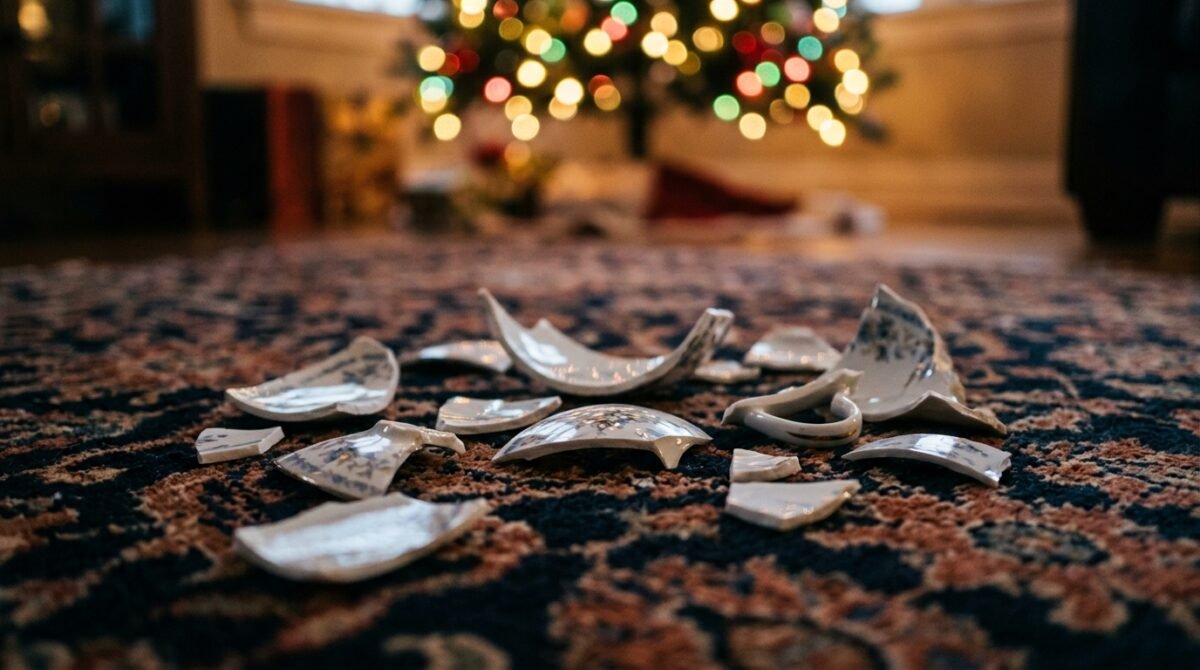
It happened in a heartbeat. Buster, in his frantic excitement to greet Lily, lunged toward the corner of the room where the display shelf sat. He didn’t mean to be malicious, but he was clumsy, and his massive tail caught the edge of the shelf. The sound of porcelain hitting the floor is something I will never forget—a sharp, high-pitched crunch followed by the sickening slide of ceramic shards across the wood.
I screamed, more out of shock than anger, and ran to the corner. The display was in ruins. A set of hand-painted porcelain dolls from my great-grandmother—items that had survived wars and migrations—were reduced to dust. Even the custom-made ornament with Lily’s first Christmas photo had been swept off and snapped in two. The room went dead silent, save for the heavy, panicked breathing of the dog and the sudden, confused crying of my daughter.
“Oh man, chill out! It’s just stuff. We can glue it back together. Why are you screaming at him? You’re scaring the poor dog!”
— Mark, immediately downplaying the destruction
I turned to look at Mark, expecting an apology, or at the very least, an admission of guilt. Instead, he was standing there with a look of annoyance on his face, as if I were the one who had ruined the morning by reacting to the destruction of my family’s history. He reached out to pull the dog away, but he didn’t check on Lily, and he didn’t offer to help clean up the jagged shards that were now scattered across the carpet where my toddler was standing.
The adrenaline in my system was replaced by a cold, sharp clarity. I realized then that Mark didn’t see this as a tragedy; he saw it as an inconvenience. He couldn’t conceive of why these objects mattered more than his desire to have his dog with him at all times. It wasn’t just about the objects; it was about the lack of respect for the space I had cultivated for my child.
I stood up, gripping the broken pieces of the ornament in my hand, my knuckles white. My daughter was still crying, clutching my leg, while Buster continued to sniff around the mess, oblivious to the fact that he had just effectively ended the holiday. The air in the room was thick with tension, and I knew that if I didn’t act now, I would regret it for the rest of my life.
The Ultimatum in the Kitchen
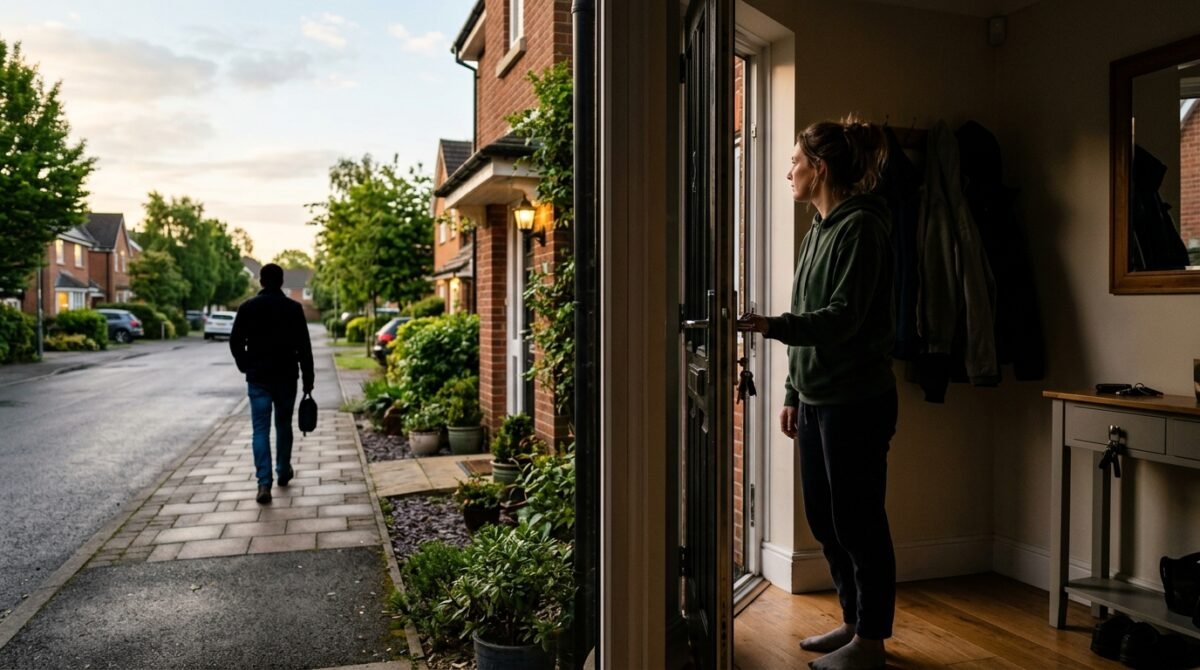
I didn’t yell. I didn’t throw things. I simply walked over to the front door, opened it wide, and stood there, waiting. Mark followed me, his face a mask of indignation, still holding his coffee cup as if this were just another Sunday morning visit. He looked at the open door, then back at me, his brow furrowed in genuine confusion.
“What are you doing? I’m not leaving. We’re supposed to have breakfast. You’re being incredibly dramatic over a few broken trinkets. It’s Christmas, for god’s sake!”
— Mark, protesting my decision
I looked at him, really looked at him, and saw the pattern of his entire life reflected in that moment. He always expected people to accommodate his chaos. He always expected his mistakes to be viewed as ‘accidents’ while mine were judged as failures. I told him, in a voice that didn’t shake, that he had two choices: he could take his dog and leave, or I would call the police to report a nuisance animal and a disturbance of the peace.
He laughed, a sharp, dismissive sound that only made my resolve stronger. He tried to step past me, presumably to go back to the living room to finish his breakfast, but I blocked his path. I told him that if he stepped one foot further into the house, I would make sure he was forcibly removed. The audacity he had to think he could just steamroll over my boundaries after what he had done was staggering.
He looked at me for a long time, his face flushing red. He realized, perhaps for the first time in his life, that I wasn’t going to back down. I wasn’t going to offer him a cup of coffee to smooth things over, and I wasn’t going to apologize for his dog’s behavior. I was done being the ‘understanding’ sibling who carried the weight of his irresponsibility.
He grabbed the leash, yanked the dog toward the door, and muttered something under his breath about how I was ‘dead to him’ before storming out. I watched him go, then slammed the door and locked it. I stood there for a moment, listening to the silence of the house, and realized that for the first time in years, the air actually felt lighter.
The Digital Fallout Begins
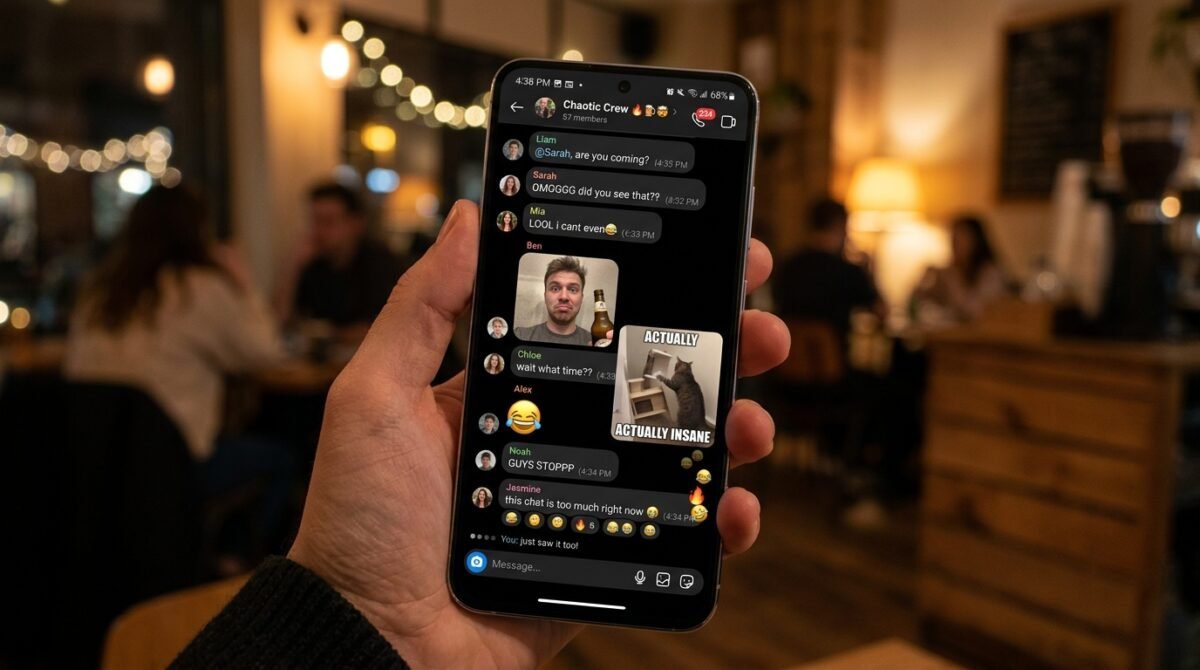
The relative peace didn’t last long. By noon, my phone began vibrating incessantly in my pocket. It was the family group chat, and it was blowing up. Mark had obviously taken to his phone the moment he reached his car, painting a picture of me as a heartless, hysterical sibling who kicked him out on Christmas morning for a minor accident.
“I cannot believe you threw your own brother out in the cold on Christmas. Buster is a rescue! He didn’t know any better. You’ve always been so obsessed with your ‘stuff’ that you’ve lost the meaning of family. Mom is crying. How could you?”
— A message from my sister, influenced by Mark’s version of events
I took a deep breath before responding. I didn’t want to engage in a mud-slinging contest, but I also refused to let the narrative stand. I typed out a concise, factual account of what happened: that I had explicitly told him no dogs, that he had ignored me, and that his dog had destroyed irreplaceable family heirlooms that meant the world to me and my daughter.
The chat went quiet for a few minutes, followed by a barrage of ‘reactions.’ Some family members were shocked, while others—mostly those who hadn’t seen my home or knew how much those items meant—tried to mediate. My mother sent a private message, begging me to just apologize and ‘keep the peace,’ which only fueled my internal fire. Why was it always my job to keep the peace when others were the ones setting the house on fire?
I put the phone on ‘Do Not Disturb’ and tucked it away. I knew that no matter what I said, there were people who would always side with the status quo. If they wanted to think I was the villain for protecting my home and my child, then so be it. I had reached a point of exhaustion where the opinions of those who refused to see the truth no longer mattered to my peace of mind.
I spent the rest of the day focused on Lily. We made a new, messy batch of cookies, we watched cartoons, and we didn’t mention the dog or my brother once. It was a different kind of Christmas, one that wasn’t built on old traditions or fragile heirlooms, but on the simple, quiet act of being present with the person who mattered most.
The Reddit Trial: AITA?

Later that night, with Lily finally asleep, I found myself opening Reddit. I had been a lurker for years, often reading these exact types of drama threads, but I never thought I’d be the one posting. I typed out the story, trying to remain as objective as possible, though the sting of the day still felt fresh. I wanted to know if I was truly the monster my family made me out to be, or if I had finally drawn a line that needed to be drawn.
The response was almost immediate. Within an hour, the thread had hundreds of comments. The consensus was swift and, to my surprise, overwhelmingly on my side. It was validating to read the perspectives of strangers who didn’t have a personal stake in my family dynamics, people who could see the situation for what it was: a clear violation of consent and property.
“NTA. Your brother is a classic boundary-pusher who uses his ‘misunderstood’ dog as an excuse to ignore your rules. He didn’t just break items; he broke the trust you had for him. Do not apologize, or he will never respect your home again.”
— u/FamilyDramaExpert (Top Comment, 18.2k upvotes)
Another user chimed in with a more practical perspective, warning me about the long-term implications of allowing this behavior to continue. It was like they were looking into my past, seeing the years of small slights that led up to this one, catastrophic event. I felt a sense of relief wash over me, knowing that I wasn’t crazy for feeling the way I did.
There were a few ‘YTA’ comments, mostly from people who seemed to think that family should override all rules, but they were quickly drowned out by the sheer volume of support. People shared their own stories of relatives who brought uninvited pets, or who disrespected their homes, and the common thread was always the same: if you don’t stand your ground, the disrespect only grows.
I read through the comments until the early hours of the morning. Each one was a reminder that I was not alone in this, that I was not the one who had caused the rift, and that I had every right to protect my sanctuary. The validation was a soothing balm, helping me prepare for the inevitable confrontation that would come when the holidays were officially over.
The Aftermath: Defining New Boundaries

A few days passed, and the silence from my brother was deafening. My mother called a few times, trying to bridge the gap with empty platitudes, but I held my ground. I told her that until Mark apologized, not just for the ‘accident’ but for the blatant disregard of my rules, there would be no communication. It was a hard line to draw, and it felt incredibly lonely, but it was necessary.
I also took the time to assess the damage properly. I contacted a restoration specialist to see if any of the shards could be salvaged. While most were beyond repair, a few key pieces might be restored. It would cost a significant amount of money, but I decided that if I could get them fixed, I would pay for it myself. I didn’t want Mark’s money; I wanted his accountability, which I knew was something he didn’t have the capacity to give.
I also began to notice how much anxiety had been tied to my relationship with Mark. I was always waiting for the next shoe to drop, the next intrusion, the next demand. By cutting him off, I had accidentally removed a constant source of stress in my life. The house felt like mine again, and I no longer felt the need to apologize for being an adult with a home and a child.
I started setting up new security measures, not just for the house, but for my time. I decided that from now on, visits would be on my terms, in public spaces, or not at all. If I was going to be a parent, I needed to model what healthy boundaries looked like for my daughter. I didn’t want her growing up thinking that it was okay for people to ignore her needs because they were ‘family.’
The process was slow, but it was cathartic. I realized that the keepsakes were just things, but the lesson I was teaching myself—and eventually, my daughter—was priceless. We didn’t have to be doormats to be loved, and we certainly didn’t have to endure disrespect just because we shared a bloodline with someone.
The Truth About Entitlement

It became clear to me that Mark’s behavior wasn’t just about a dog. It was about a lifetime of being enabled. He had been the ‘baby’ of the family, the one who could do no wrong, the one who always had an excuse. My parents had treated him like a perpetual teenager, and he had adopted that identity as his shield against accountability. Every time he broke a rule, he expected someone to clean up after him.
I remembered back to his wedding, where he had ‘accidentally’ ruined my dress with red wine because he was being reckless on the dance floor. Everyone told me to ‘get over it’ because it was his big day. I realized that my entire history with him was a series of these moments, each one smaller than the last, but collectively carving away at my self-esteem and my autonomy.
By banning him that morning, I wasn’t just reacting to the broken ornaments. I was reacting to a lifetime of being told my feelings didn’t matter, that my boundaries were inconvenient, and that his needs were inherently more important than mine. It was a realization that hit me with the force of a physical blow, but it was also the most liberating moment of my adult life.
I had to face the fact that he might never change. He might continue to go through life breaking things and blaming others, surrounded by a family that insists on looking the other way. But I no longer had to be a part of that cycle. I could choose my own family, my own peace, and my own rules.
It was a difficult truth to accept, but it made everything so much simpler. I didn’t need him to understand. I didn’t need him to agree. I only needed to know that I was finally acting in my own best interest, and for the first time, that was enough.
The Rejection of the Apology Tour

Two weeks after the incident, a message appeared on my screen from Mark. It wasn’t an apology. It was a ‘just checking in’ text, followed by a link to a local dog trainer, as if that somehow erased what had happened. He was testing the waters, seeing if the storm had passed and if he could return to his life of minor infractions and major inconveniences.
“Hey, I know things were heated, but I sent you that trainer link. Buster is going to start sessions next week. Can we move past this? I miss hanging out and the family is starting to get weird about it. Let’s just grab dinner and act like adults.”
— Mark, in a typical attempt to rug-sweep
I didn’t respond immediately. I took the time to think about what I wanted. I didn’t want dinner. I didn’t want to ‘act like adults’ if that meant pretending the destruction of my heirlooms didn’t happen. I wanted to see if he could actually articulate why he was wrong, and this text showed me that he still didn’t have a clue.
I sent him a short, firm reply. I told him that while I appreciated that he was training the dog, it didn’t change the fact that he had crossed a boundary I had explicitly set. I explained that for me to even consider having him back in my life, there needed to be a sincere apology for his actions, not just a vague attempt to ‘move past’ them.
He didn’t reply to that. He didn’t offer an apology, he didn’t offer to pay for the damages, and he didn’t acknowledge the hurt he had caused. He just went silent again. That silence was the answer I needed. It confirmed that he wasn’t interested in a relationship based on mutual respect; he was interested in a relationship where he could do whatever he wanted without consequence.
I blocked his number. It was a small act, but it felt monumental. I wasn’t doing it out of malice, but out of a need to protect my peace. I was no longer waiting for him to grow up, and I was no longer waiting for him to apologize. I was just moving on.
Finding Strength in the New Normal

The rest of the winter passed with a strange, quiet tranquility. I stopped looking at my phone, waiting for a dramatic message from family members. I stopped worrying about how I would explain the missing ornaments to visitors. I just lived my life, and for the first time in years, that life felt like it was truly mine, not a performance for my family’s expectations.
I found that I was a better parent, too. I was more patient, more focused, and more present. Lily didn’t know about the drama, of course, but she seemed to sense the change in the atmosphere. The house felt safe, and that was the most important thing. I was creating a home where boundaries were respected and where we felt secure enough to be ourselves.
I started reaching out to friends who actually respected my home. We had small gatherings, and they were always careful, always considerate, and always appreciative of the effort I put into hosting. It was a stark contrast to the chaotic, entitled energy that Mark had brought into my life, and it served as a reminder that healthy relationships do exist.
I realized that the ‘family’ I had been so worried about alienating wasn’t actually a source of support. It was a source of stress that I had been conditioned to accept as ‘normal.’ Now that I had broken that conditioning, I could see things clearly for the first time. I didn’t have to be a part of their drama if I didn’t want to.
I was finally free. It wasn’t the kind of freedom that comes with a grand celebration or a public announcement; it was a quiet, internal kind of freedom that I carried with me every day. And it was worth more than any heirloom, any holiday tradition, or any family expectation that had ever been placed on me.
Lessons from a Shattered Christmas
Looking back at the whole ordeal, I can see that the shattered ornaments were a catalyst. They were the physical representation of the fragility of our family dynamic, and their destruction forced me to see the reality of the situation. I had spent so long trying to hold onto things—both literal and figurative—that were already broken, and the incident forced me to finally let go.
I learned that boundaries are not just suggestions; they are the foundation of healthy relationships. If you don’t enforce them, you’re essentially saying that you don’t value your own well-being. It took a long time for me to understand that saying ‘no’ is not an act of hostility, but an act of self-preservation. It was a lesson I was proud to be teaching my daughter.
I also learned that you can’t control other people’s behavior, but you can control your own reaction to it. I couldn’t make Mark be a responsible brother, but I could make sure he no longer had a platform to be an irresponsible one in my home. I couldn’t make my family understand my perspective, but I could choose not to participate in their attempts to invalidate it.
The pain of the situation didn’t disappear overnight, but it did get easier to live with. I stopped questioning whether I had made the ‘right’ decision and started focusing on the peace that the decision had brought me. I had reclaimed my space, my child’s environment, and my own sense of self-worth. That was a success by any metric.
Ultimately, the story of my Christmas isn’t about a dog or a brother or broken porcelain. It’s about a person who finally decided that their own life was worth protecting. It’s about the power of saying enough is enough, and the unexpected joy that comes from finally choosing yourself.
Conclusion
My experience has taught me that the hardest thing to do is often the most necessary. By banning my brother that morning, I didn’t just protect my home; I protected my peace. It wasn’t an easy decision, and the fallout was painful, but looking back, I know I would make the same choice again. I have finally realized that blood is not a free pass for disrespect, and that true family is built on mutual care, not shared trauma or forced obligation.
I am now in a place where I feel empowered by the boundaries I have set. My life is no longer defined by the chaos of others, and my daughter is growing up in a home where she is prioritized. If you find yourself in a similar situation—where you are constantly apologizing for your own rules—I hope my story gives you the strength to stand your ground. You are worthy of respect, and your sanctuary is yours alone to guard.
I want to hear from you. Have you ever had to cut off a family member over a boundary violation? Do you think I went too far, or was it the only way to send a clear message? Let’s talk about it in the comments below—I’m curious to see how many of you have had to make the difficult choice to put yourself first over the holidays.
What's your verdict on this dilemma?
Vote below to contribute to the official community consensus.

Have a Dilemma Keeping You Up at Night?
Share your real-life feud, wedding chaos, or relationship crossroads anonymously with our editorial team.
What do you think ?
0 Comments🛡️ Comments are moderated to protect community integrity. Your comment will appear once approved by the editorial team.