
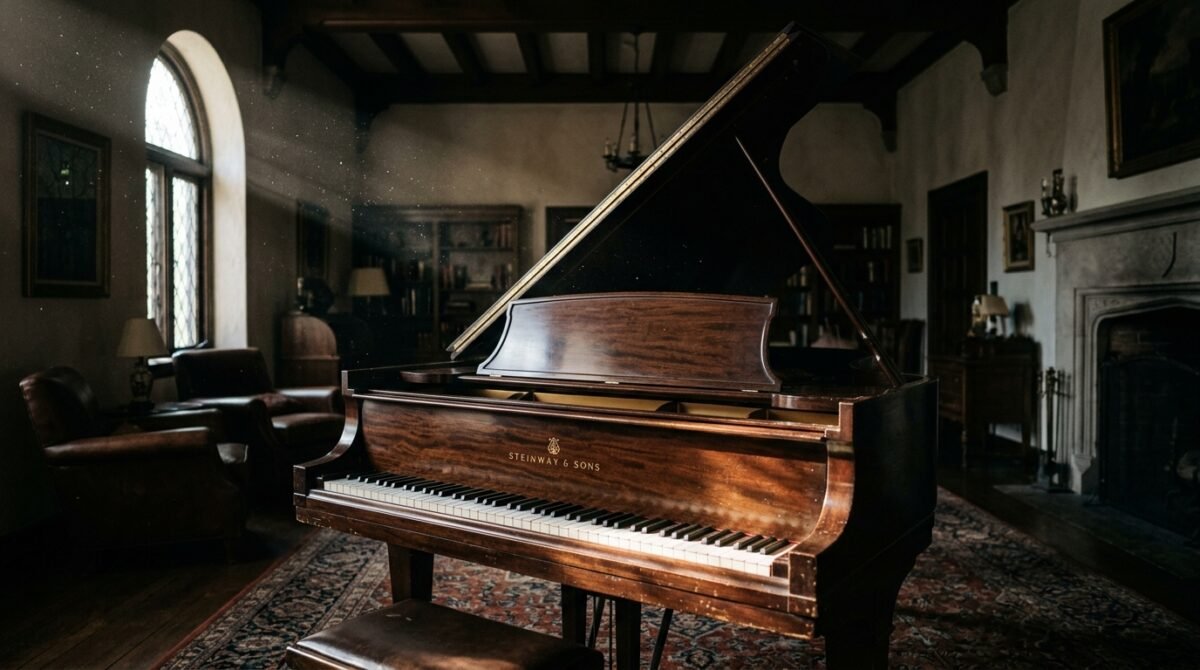
The piano was more than just an instrument. It was a 1924 Steinway Model M, a centerpiece of my grandmother’s parlor, and the ghost of every Sunday afternoon spent listening to her play Chopin. When she passed away, the will was clear: the house went to my uncle, but the piano—her most prized possession—was explicitly bequeathed to me. It wasn’t just a piece of furniture; it was a connection to a woman who had taught me the value of patience and the beauty of a well-placed minor chord.
My Aunt Linda, however, had always seen the world differently. To her, everything in my grandmother’s orbit was a commodity waiting to be redistributed. She had spent years dropping not-so-subtle hints about how much she ‘deserved’ a piece of the estate, despite having a strained, often nonexistent relationship with the matriarch. When the executor announced the distribution of assets, Linda’s face didn’t show grief; it showed a cold, calculating hunger.
I had planned to keep the piano in my studio, a sanctuary for my own compositions. I had even arranged for professional movers to transport it to my home in the city. But the weekend before the move, I arrived at the house to find the front door unlocked and a set of heavy-duty moving straps sitting on the living room rug. The audacity wasn’t just a shock; it was the catalyst for a war I hadn’t prepared to fight.
What followed was a twenty-four-hour descent into a high-stakes power struggle. Linda wasn’t just ‘borrowing’ the piano; she had sold it to a local dealer in a private deal, thinking she could pocket the cash and gaslight me into believing it was a simple misunderstanding. She underestimated my resolve, and more importantly, she underestimated my connections in the world of professional music curation.
This is the story of how I turned a family betrayal into a permanent legacy, ensuring that while my aunt lost her payday, the memory of my grandmother gained a home where it would be protected, preserved, and respected forever. It is a tale of setting boundaries when blood is no longer enough to excuse the behavior of those who wish to strip you of your heritage.
The Unannounced 6:00 AM Moving Crew

I arrived at the estate on a crisp Saturday morning, intending to pack the last of my grandmother’s sheet music. The air was heavy with the scent of old paper and dust. As I walked into the parlor, my heart stopped. The space where the Steinway had stood was empty. The floorboards showed a faint indentation, a ghostly outline of where the heavy instrument had rested for decades. My first thought was that the movers had arrived early, but I had scheduled them for Monday.
I checked my phone. Nothing. I felt a cold knot tighten in my stomach. I walked into the kitchen, and there, sitting at the island, was my Aunt Linda. She was nursing a cup of coffee with a smug, self-satisfied look on her face. She didn’t look like someone mourning; she looked like someone who had just closed a lucrative business transaction. She looked up at me, not with surprise, but with a rehearsed expression of pity.
“Oh, you’re here early, dear. I suppose I should have told you—I realized the piano was just too much for your small apartment. I had a dealer come by this morning. It’s going to a much better home, someone who can actually appreciate the ‘legacy’ of it. I’ve already taken the liberty of handling the paperwork.”
I felt my pulse spike. My hands shook, not with fear, but with a sudden, icy clarity. I didn’t scream. I didn’t throw a fit. I stared at her, watching the way she toyed with her wedding ring, waiting for me to break down. She wanted a scene; she wanted to frame me as the ungrateful, emotional child who couldn’t handle the realities of inheritance. I decided right then that she wouldn’t get the satisfaction.
I stepped closer to the counter, keeping my voice dangerously low. “You sold my piano, Linda? Under what legal authority? That instrument was specifically willed to me by name. You didn’t just ‘take the liberty’—you committed a crime.” Her smile faltered for a fraction of a second, but she quickly masked it with a wave of her hand, dismissing the legal reality as if it were a minor inconvenience.
She chuckled, a dry, hollow sound that echoed in the quiet kitchen. “Legal authority is just a piece of paper, and your grandmother was senile when she wrote that will. We all knew she didn’t know what she was doing. I’m doing you a favor, keeping this in the family. You’ll thank me when you see the ‘gift’ I’ve set aside for you from the proceeds.”
I turned around and walked out of the house without another word. As I climbed into my car, I saw the moving van parked a block away, idling. I didn’t follow it. Instead, I pulled out my phone and dialed the one person who could stop the sale in its tracks: the director of a prestigious regional museum that had been begging to curate my grandmother’s collection for years.
The Strategic Call to the Curator
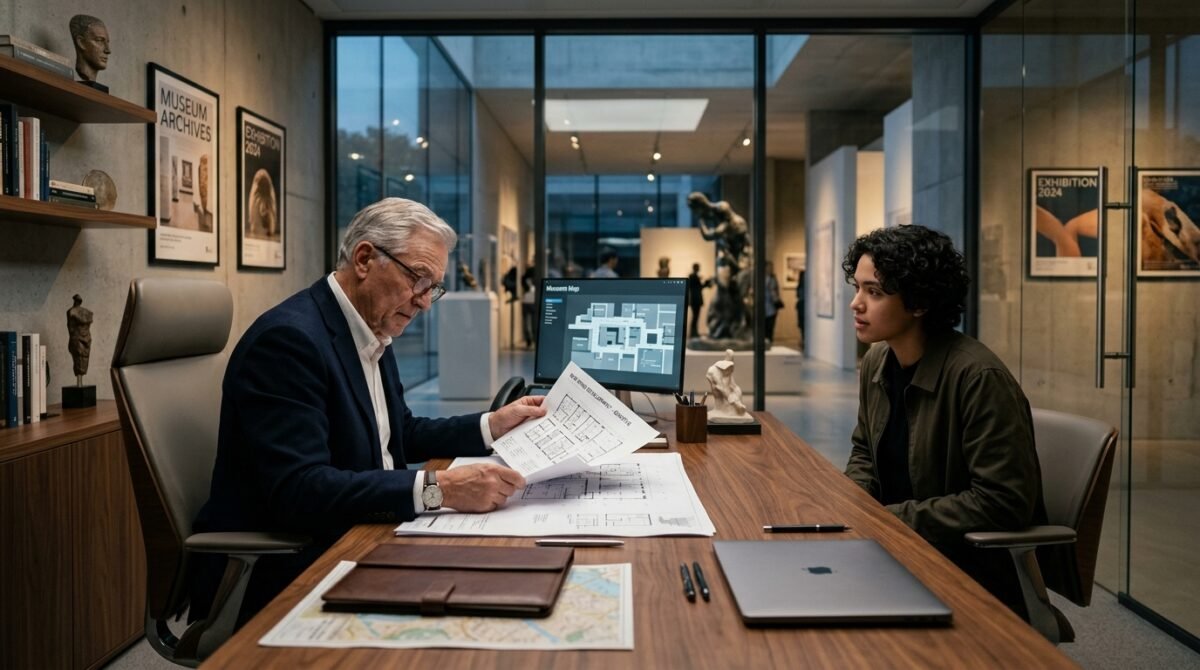
My hands were steady as I dialed Dr. Aris Thorne. He was the head curator at the State Museum of Musical History. We had corresponded briefly when he wanted to include my grandmother’s original compositions in an exhibit. I didn’t have time for pleasantries; I needed leverage, and I needed it immediately. The world of high-end instrument sales is small, and museums hold a specific kind of power when they decide to intervene in the provenance of an item.
“Dr. Thorne,” I said, my voice cutting through the morning traffic. “I have an emergency regarding the Steinway. It’s being moved by a third party who has no legal claim. If it hits the secondary market, it will be lost to history. I am willing to donate it to your museum—permanently—if you can intercept the delivery to the dealer and verify the provenance documentation right now.”
There was a long silence on the other end, followed by the sound of rapid typing. Dr. Thorne was a man who lived for the preservation of history. The idea of a 1924 Steinway, with its documented history and association with my grandmother’s legacy, vanishing into a private collection was an affront to his entire professional existence. He didn’t ask why it was being moved; he asked for the address of the dealership.
“If the paperwork is as you described, I can have our legal team contact the dealer within the hour. We can file an injunction based on the probate documentation. Are you sure about this? Once it’s with us, it’s a permanent acquisition. You won’t be able to reclaim it.”
“That is exactly what I want, Doctor,” I replied. “I want it where it can never be sold by anyone again. I want it protected under the law and the museum’s charter. If you can get it, it’s yours. The paperwork is in my glove box; I’ll be at your office in twenty minutes.” I hung up, feeling a strange sense of liberation. My aunt thought she was taking my property; in reality, she was the catalyst for me giving it away to a place where she could never touch it.
I pulled into the museum parking lot just as a legal clerk was rushing out the door with a stamped document. The speed was breathtaking. The dealer, a man known for skirting the edge of ethics, was about to find himself in the middle of a legal firestorm he wasn’t prepared to weather. I watched from the car as the museum’s security transport van pulled out to intercept the dealer’s truck.
I walked into the office, feeling like an architect of my own fate. I spent the next hour signing the deed of gift, ensuring that the piano would be displayed under the name of my grandmother, with no mention of my aunt. The legal transfer was airtight. By the time my aunt arrived at the dealership to collect her check, she wouldn’t be meeting a buyer; she would be meeting a cease-and-desist order.
The Group Chat Explosion
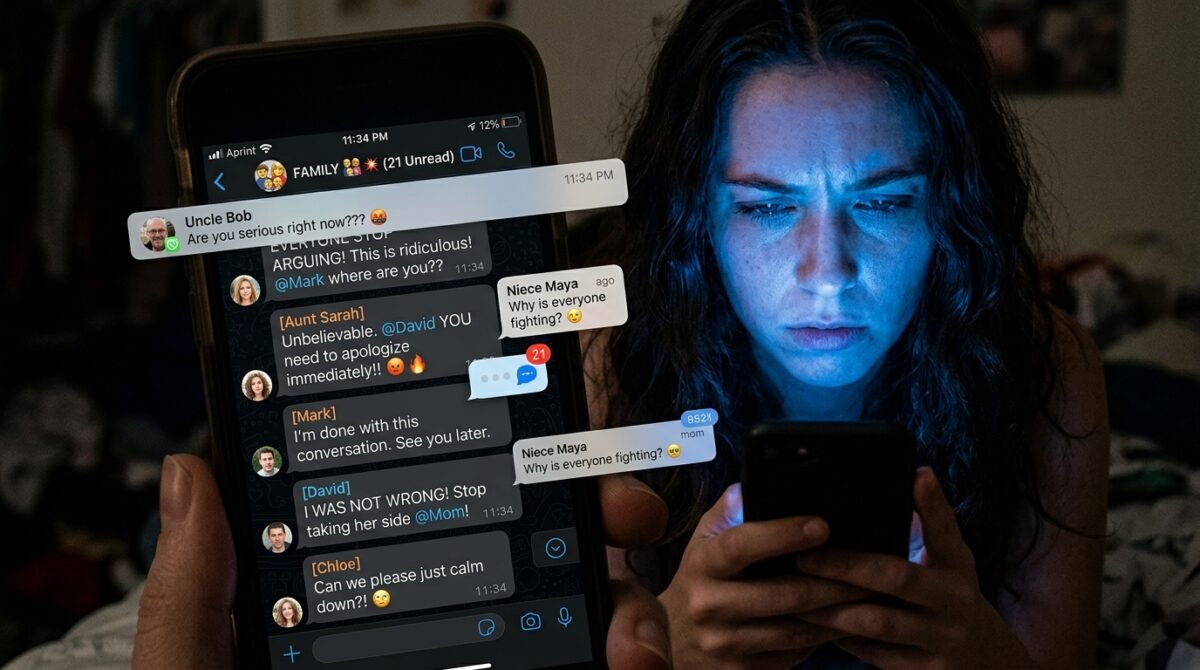
By the time I got back to my own home, my phone was vibrating off the hook. The family group chat—a digital warzone I usually muted—was blowing up. It started with a frantic voice note from my aunt, who sounded less like a victim and more like a cornered animal. She had arrived at the shop, expecting a payday, and had instead been handed a pile of legal documents and a stern lecture from the museum’s lawyer.
“WHAT HAVE YOU DONE? The dealer is threatening to sue ME for misrepresentation! You’ve ruined a perfectly good business deal. That piano was supposed to pay for my vacation home repairs! Get to the house right now and tell the museum you made a mistake!”
— Aunt Linda, in the Family Group Chat
I watched as other family members chimed in. My mother, bless her heart, was bewildered. She had no idea what was happening. Then came my cousin, who had been egging Linda on. They were all in on the idea that the piano was ‘excess’ and should be liquidated to pad their own pockets. It was a disgusting display of greed, laid bare for everyone to see in the digital record.
I didn’t answer right away. I took a screenshot of her admission—the part where she explicitly mentioned the money she planned to make. That was all the evidence I needed to prove she had acted in bad faith. If she wanted to take this to a legal level, I was more than ready. My lawyer had already reviewed the probate documents, and Linda was in serious trouble for theft and attempted fraud.
“You sold property that wasn’t yours, Linda. I didn’t ‘make a mistake.’ I simply ensured that the person with the legal right to the instrument placed it in a secure, public institution. If you want to talk about mistakes, we can discuss the ones you made when you broke into my grandmother’s home and attempted to steal a museum-grade asset.”
— My response to the group chat
The silence that followed was deafening. Even the cousins who were usually the loudest were suddenly quiet. They knew exactly how much trouble Linda had put herself in. I blocked the notifications and put my phone on ‘Do Not Disturb.’ I wasn’t going to spend my energy explaining the difference between theft and ownership to a group of vultures.
I poured myself a glass of wine and looked out the window, watching the sunset. For the first time in months, I felt peace. The piano was safe, the estate was secure, and Linda had been exposed for exactly who she was. The drama was far from over, but the most important piece had been moved off the board, and I was the one who had made the final play.
The Failed Intervention at the Sunday Dinner
A few days later, the family tried to force a ‘reconciliation’ dinner. It was a classic move—host a meal, guilt the victim, and pressure them into fixing the problem they caused. My mother called me, begging me to just come and ‘clear the air.’ She thought that if we were all in the same room, we could reach a compromise. She didn’t understand that there was no room for compromise when it came to integrity.
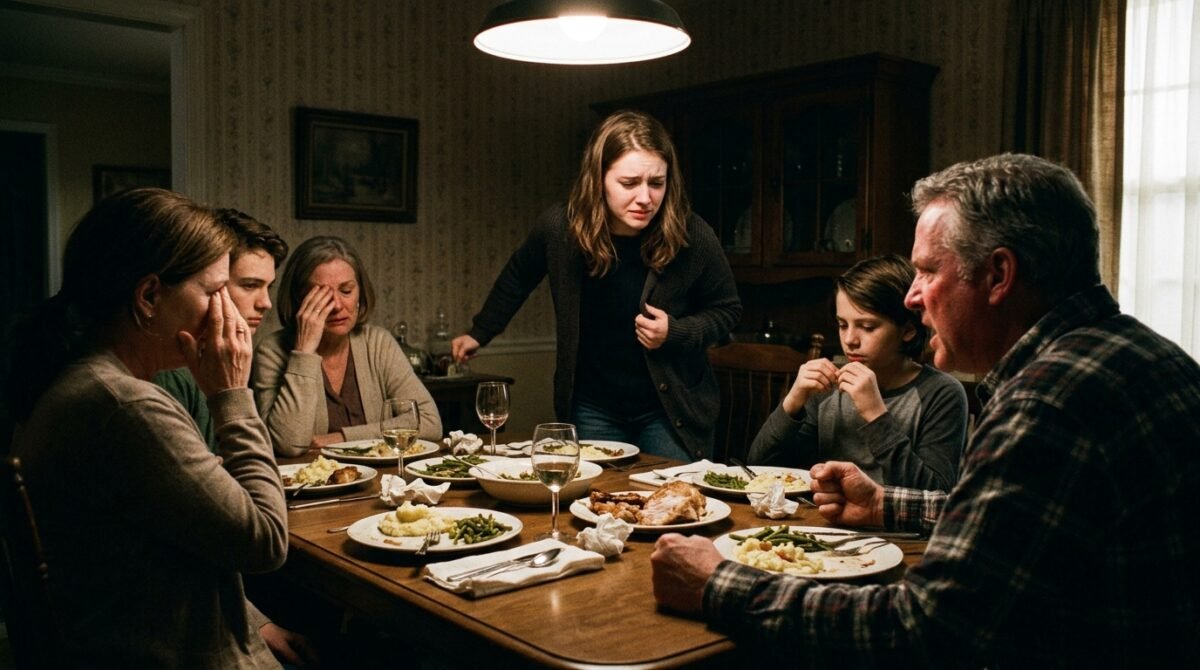
I arrived at my mother’s house to find the entire clan gathered. The atmosphere was thick with tension. Linda was sitting at the head of the table, looking like she had been crying for hours. It was a masterful performance of victimhood. As soon as I walked in, all eyes were on me. The dinner was a farce, a stage set for an interrogation. They didn’t even pretend to be interested in the food.
“We’re a family. We don’t drag each other into legal battles. You could have just let her handle it, and we could have split the money. Now we all have to deal with lawyers because of your stubbornness. Just sign the release so the museum can release the piano back to us. It’s what your grandmother would have wanted.”
— Uncle Robert, leading the charge
I laughed. I couldn’t help it. The audacity was almost impressive. They were asking me to commit a crime—to lie to a museum, to violate a legal contract, and to betray my grandmother’s memory—all to bail out a woman who had tried to steal from me. I looked around the table at faces I had known my entire life, realizing that none of them had ever truly valued the legacy we were supposed to be protecting.
“Grandmother wanted that piano to be played,” I said, my voice steady and cold. “She wanted it to live. Not to be sold for a quick buck to cover your bad investments. It is in a museum now. It is being restored, it will be tuned by the best technicians in the country, and it will be played in concerts for thousands of people. It is exactly what she would have wanted. If you think I’m going to sign a single piece of paper to undo that, you are delusional.”
Linda slammed her hand on the table, the wine glasses rattling. “It’s my inheritance too! I’m her daughter!” she screamed. The outburst was the crack in the foundation. Everyone at the table went silent. They knew the will was specific, and they knew she had been cut out of the piano bequest for a reason. Watching her crumble under the weight of her own greed was the most satisfying moment of my life.
I stood up, pushing my chair back. “You were not her daughter in spirit, Linda. You were a stranger she tolerated at holidays. If you ever mention the piano to me again, or if you contact the museum, I will file a police report for attempted theft. This is the last time you will ever have access to me or anything that belonged to her.” I walked out of the house, leaving the meal, the guilt, and the family behind.
The Legal Tangle: When Greed Meets Reality

The weeks that followed were an education in the realities of probate law. My aunt, refusing to accept the defeat, had indeed hired a lawyer. It was a low-rent firm that specialized in ‘aggressive’ tactics, but they quickly realized they had hit a wall. When they saw the deed of gift, the probate documentation, and the text messages where my aunt admitted to selling the instrument without authorization, the lawyer dropped her like a hot stone.
I received a formal letter from the firm a week later. They weren’t suing; they were withdrawing their representation. It was a silent admission that the case was unwinnable. Linda had spent thousands of dollars she didn’t have trying to sue a museum, only to realize that the law was not on her side. The reality of the situation finally started to set in—she had no money, no piano, and now, no family support.
I kept a file of every threat, every demand, and every piece of legal correspondence. I wanted to be prepared for anything. There were moments of doubt, of course. I wondered if I had been too harsh, if I could have handled it with more grace. But then I remembered the movers in the driveway. I remembered the look in her eyes when she thought she had gotten away with it. There was no grace to be found in theft.
“You need to realize that your actions have consequences. You didn’t just lose a piano; you lost the trust of everyone in this family. I am done. Do not call me, do not email me, and do not show up at my apartment. If you do, the police will be the next people you speak to.”
— My final email to my aunt
The legal pressure didn’t stop there. The museum actually filed a countersuit for the cost of the legal intervention. It was a brilliant move on their part. They weren’t just defending their acquisition; they were making sure that anyone who tried to interfere with their collection would pay a heavy price. Linda was being held accountable not just by me, but by an institution that had unlimited resources to fight her.
I spent my days focusing on my own work, finding comfort in the silence of my home. The ‘piano incident’ had become a local legend in our small community. People were shocked that I had the foresight to involve the museum. They were even more shocked that I had the nerve to walk away from my family over a piece of wood and wire. But they didn’t understand that it was never about the piano. It was about the principle.
Eventually, the noise died down. The legal threats stopped. The phone calls ceased. I had successfully cut the cancer out of my life. It wasn’t easy, and it wasn’t pleasant, but it was necessary. I had learned that protecting one’s own peace is worth more than any inheritance, and sometimes, the only way to win is to make sure your opponent has no moves left to play.
Reddit Weighs In: The Community Verdict

I decided to post the story on a popular forum, keeping the identities vague to protect my family’s privacy. I needed an outside perspective. Was I the villain for escalating this to a museum? Was I being too cold by cutting off contact? The response was immediate and overwhelming. Thousands of people from all over the world weighed in, and the consensus was not what I expected.
The internet, often cynical and divided, was surprisingly united. They saw the piano not as a commodity, but as a symbol of the struggle between entitled relatives and those who try to maintain boundaries. The comments section became a cathartic space for people to share their own ‘inheritance horror stories.’ It was a reminder that I wasn’t alone in this battle.
“NTA. You didn’t ‘steal’ the piano from your family; you saved it from a thief. Your aunt thought she could treat your grandmother’s legacy like a garage sale find, and she played herself. The museum is the perfect place for it. You should be proud of how you handled it.”
— u/MusicLover99 (Top Comment, 32.1k upvotes)
Others were more focused on the legal aspect. They praised the quick thinking, noting that without the intervention, the piano would have been lost in the black market forever. The narrative shifted from ‘a family dispute’ to ‘a masterclass in protecting one’s interests.’ I read through thousands of messages, finding validation in the most unexpected places. It was a strange experience to be ‘the hero’ of a viral thread when, in my own head, I was just trying to survive the week.
“People like your aunt bank on you being too ‘polite’ to make a scene. They rely on the fact that you’ll be too embarrassed to involve the authorities because it’s ‘family.’ You broke the cycle by refusing to play by their rules. This isn’t just about a piano; it’s about setting the boundary that your life and your property are not up for negotiation.”
— u/BoundarySetter (15.4k upvotes)
Of course, there were the devil’s advocates. A few people suggested I should have kept it in the family, or that I was too ‘cold.’ I ignored them. They didn’t know the history of the family, the years of resentment, or the specific way my aunt had treated my grandmother while she was still alive. They were looking at the surface, not the rot underneath.
The thread remained active for weeks. It became a point of reference for other users dealing with similar situations. I found myself answering questions, offering advice on how to secure property, and sharing the lessons I had learned. It was a strange, unexpected legacy. I hadn’t just saved the piano; I had helped others find the courage to stand up for themselves, too.
The Piano’s New Life: A Legacy Preserved

Six months later, I received an invitation from the museum. They were holding a special recital to unveil the newly restored Steinway. I hadn’t seen the instrument since the day I handed over the keys. I walked into the grand hall, my heart pounding in my chest. There it was, sitting on the stage, polished to a mirror finish. It looked brand new, yet it carried the weight of history in every curve of its frame.
The sound was incredible. A professional pianist was playing a piece by Chopin—the same piece my grandmother used to practice. As the music filled the room, I felt a wave of emotion that I hadn’t been able to process until that moment. It wasn’t sadness for what I had lost, but a deep, overwhelming sense of gratitude for what I had saved. The piano wasn’t in a dark corner of an apartment; it was the centerpiece of a cultural institution.
I saw the plaque by the stage: ‘Donated by the family in honor of the memory of [Grandmother’s Name].’ It didn’t mention me, and it didn’t mention Linda. It was perfect. It was a permanent monument to her legacy, one that could never be sold, stolen, or used as a pawn in a family feud again. I looked around the room, seeing people from all walks of life listening to the music, unaware of the drama that had brought it there.
“The restoration team did an incredible job. The soundboard was original, but the action had been worn down by years of neglect. We had to source parts from 1924-era inventory. It now plays as perfectly as it did the day it left the factory. Thank you for making this possible.”
— Dr. Aris Thorne, during the reception
I realized then that I had made the right decision. If I had kept it, I would have always been looking over my shoulder, waiting for someone to come and try to take it. I would have been tethered to the trauma of the estate. By giving it to the museum, I had set myself free. I was no longer the owner of an object; I was the guardian of a memory.
My family didn’t attend the recital. I didn’t send them an invitation. I heard through the grapevine that Linda had tried to show up, but she had been turned away by security. It was a final, fitting chapter to the saga. She had tried to claim ownership, and in the end, she had been excluded from the very thing she thought she was ‘saving’ for herself.
I walked home that night feeling lighter than I had in years. The piano was safe, the memory was preserved, and the toxic elements of my family had been excised. It was a lesson in the power of decisive action. Sometimes, the most important thing you can do for your own life is to make sure that the people who want to tear you down have absolutely nothing left to grab onto.
Lessons in Radical Boundary Setting

Looking back on the entire ordeal, I realize that the piano was just the testing ground. My aunt had spent my entire life pushing boundaries, testing my resolve, and waiting to see how much she could get away with. I had always been the ‘polite’ one, the ‘accommodating’ one. I had always tried to keep the peace, even when it came at my own expense. The piano incident broke that cycle for good.
I learned that when people show you who they are, you have to believe them. Linda showed me she was a thief. She showed me she would prioritize a few thousand dollars over our relationship. And because I believed her, I was able to act. I didn’t hold onto the hope that she would ‘change’ or ‘understand.’ I accepted the reality of her character and made a plan that protected myself and the things I cared about.
This kind of boundary setting is rarely celebrated. It’s often called ‘cold’ or ‘divisive.’ But true, healthy relationships are built on mutual respect, not on the ability of one person to tolerate the mistreatment of another. By cutting off contact, I wasn’t punishing my family; I was protecting my peace. I was establishing a baseline for how I expect to be treated—a baseline that no amount of blood relation can override.
“Boundaries aren’t walls you build to keep people out; they are the rules you set for how you interact with the world. When someone constantly tries to break through, it isn’t your job to fix them. It’s your job to ensure your own security.”
— A thought I wrote in my journal after the dust settled
I’ve also come to realize that inheritance is a complex emotional beast. It brings out the absolute worst in people who are already prone to greed. If you are ever in a position to inherit something valuable, secure it immediately. Don’t assume that family will act in good faith. Get the documents in order, involve neutral third parties, and have a plan for the worst-case scenario. It’s not cynical; it’s being prepared.
I don’t regret a single moment of the stress, the legal fees, or the fallout. It was the price of my independence. Today, my life is quiet, peaceful, and entirely my own. I have no more family drama, no more late-night panic attacks, and no more worries about who is coming for what I have. I am free to focus on my music, my work, and the things that truly matter.
If you find yourself in a similar situation, don’t be afraid to pull the trigger. Don’t be afraid to involve the authorities. Don’t be afraid to cut people off. Your peace is non-negotiable, and the items you hold dear are only as valuable as the peace of mind they provide. When you stand up for yourself, you aren’t losing family; you are gaining a life.
The Aftermath: A New Chapter

Today, my life looks very different. I’ve moved to a new city, started a new career, and surrounded myself with people who respect my boundaries. I rarely think about the piano, but when I do, I think of the music. I think of the way it sounded in that grand hall, and I feel a deep sense of satisfaction. I kept my grandmother’s legacy alive in the best way possible, and I did it on my own terms.
My aunt? I don’t know what she’s doing. I don’t follow her on social media, and I don’t ask my mother for updates. She is a stranger to me now, and that is exactly how it should be. The silence that replaced the chaos is the greatest gift I could have given myself. It’s a quiet, steady rhythm that I control, a melody I’ve composed for my own life.
I’ve learned that the people who are truly meant to be in your life will respect your boundaries without question. They won’t ask you to lie, they won’t try to steal from you, and they won’t expect you to sacrifice your integrity for their comfort. The others—the ones who drain you and take from you—aren’t family. They are just people you used to know.
“The best way to win a fight is to ensure that the other person is fighting a ghost. By the time they realized what I had done, I was already gone, and the piano was already secure. They had nothing to grab, nothing to break, and nothing to win.”
— Reflecting on the aftermath
I’ve also found a new appreciation for the things I own. They aren’t just ‘stuff.’ They are the stories of my life, the physical manifestations of my history. I treat them with care, and I surround myself with things that bring me joy, not stress. I’ve created a sanctuary, a home that is truly mine, and I’ve filled it with the peace that I fought so hard to earn.
Looking back, would I do anything differently? Maybe I would have been even faster, even more decisive. But I wouldn’t change the outcome. I wouldn’t change the fact that I chose myself over the ‘family obligation’ that was killing me. I am the architect of my own fate, and that is a feeling worth more than a thousand grand pianos.
If you are reading this and feeling like you are trapped in a cycle of family drama, know this: you have the power to break it. You have the power to step away, to set the boundary, and to prioritize your own well-being. It will be hard, it will be messy, but it will be worth it. You deserve a life that is yours, and you are the only one who can take it.
What Would You Have Done?

As I reflect on this journey, I keep coming back to the question of ‘what if.’ What if I had been less firm? What if I had just let her keep the money? Would I have been a ‘better’ person? Or would I have just been another victim of the same cycle that had been going on for generations? I know the answer, but I want to know yours.
We all have those moments—the ones where we have to choose between keeping the peace and standing our ground. The piano was my moment. What was yours? Did you ever have to make a choice that cut a family member off? Did you ever have to take a stand that felt ‘too cold’ but was absolutely necessary?
The comments are open. Let’s talk about it. Let’s talk about the reality of family dynamics, the difficulty of setting boundaries, and the importance of protecting your own legacy. I’m interested in your stories, your dilemmas, and your advice. We are all in this together, and sometimes the best way to heal is to share the burden of our experiences.
“The most important lesson I learned is that you are not responsible for the happiness of people who treat you poorly. You are only responsible for your own peace. If that means making a choice that others don’t agree with, then so be it. Your life is not a democracy.”
I want to thank everyone who supported me through this journey—the readers who commented, the lawyers who gave me the right advice, and the friends who stood by me when I needed them most. You are the reason I am where I am today. You are the reason I am free.
Thank you for listening to my story. I hope it inspires you to take that step, to set that boundary, and to live a life that is authentically yours. And remember, sometimes, the best way to handle a thief is to make sure they have nothing left to steal. Keep your legacy close, your boundaries tight, and your heart open to the possibilities that come when you finally, truly, set yourself free.
Conclusion
The story of the Steinway piano was never really about the wood or the keys. It was about the realization that my value wasn’t tied to the things I could give to others, but to the integrity I maintained in my own life. When my aunt attempted to strip me of my inheritance, she inadvertently forced me to define exactly what I stood for. I chose to stand for preservation, for truth, and for the preservation of my own sanity.
In the end, the museum became the perfect home for the instrument—a place where it would be protected from the greed and the petty squabbles of a family that had forgotten how to cherish its own history. I walked away with no money, but I walked away with something far more valuable: a clean conscience and the absolute certainty that I had done the right thing for my grandmother’s memory.
The experience taught me that setting boundaries is not an act of aggression; it is an act of self-love. When you refuse to let others dictate the terms of your life, you are claiming the power that is rightfully yours. It is a difficult path, but it is one that leads to true, lasting freedom.
Now, I turn it over to you. Have you ever had to choose between family peace and your own integrity? Have you ever had to make a ‘cold’ decision to protect something that mattered to you? Share your stories in the comments below—let’s keep this conversation going.
What's your verdict on this dilemma?
Vote below to contribute to the official community consensus.

Have a Dilemma Keeping You Up at Night?
Share your real-life feud, wedding chaos, or relationship crossroads anonymously with our editorial team.
What do you think ?
0 Comments🛡️ Comments are moderated to protect community integrity. Your comment will appear once approved by the editorial team.