
Motherhood is a labyrinth of trust. You hand over your child to a grandmother, believing that the bond of family is a sacred, unbreakable contract of safety and respect. For three years, I had navigated the complex dynamics with my mother-in-law, Linda, with the precision of a tightrope walker. She was traditional, opinionated, and occasionally overbearing, but she loved my daughter, Maya. Or so I thought. I believed that love was enough to bridge the gap between our wildly different parenting styles.
The weekend in question was meant to be a simple respite. My husband and I were attending a mandatory work retreat three states away, leaving Maya in the care of my mother-in-law. I had laid out her clothes, pre-portioned her meals, and left a detailed schedule that even included specific nap-time lullabies. It was supposed to be a low-stress, joyful weekend of bonding for them, while I caught a rare moment of professional advancement.
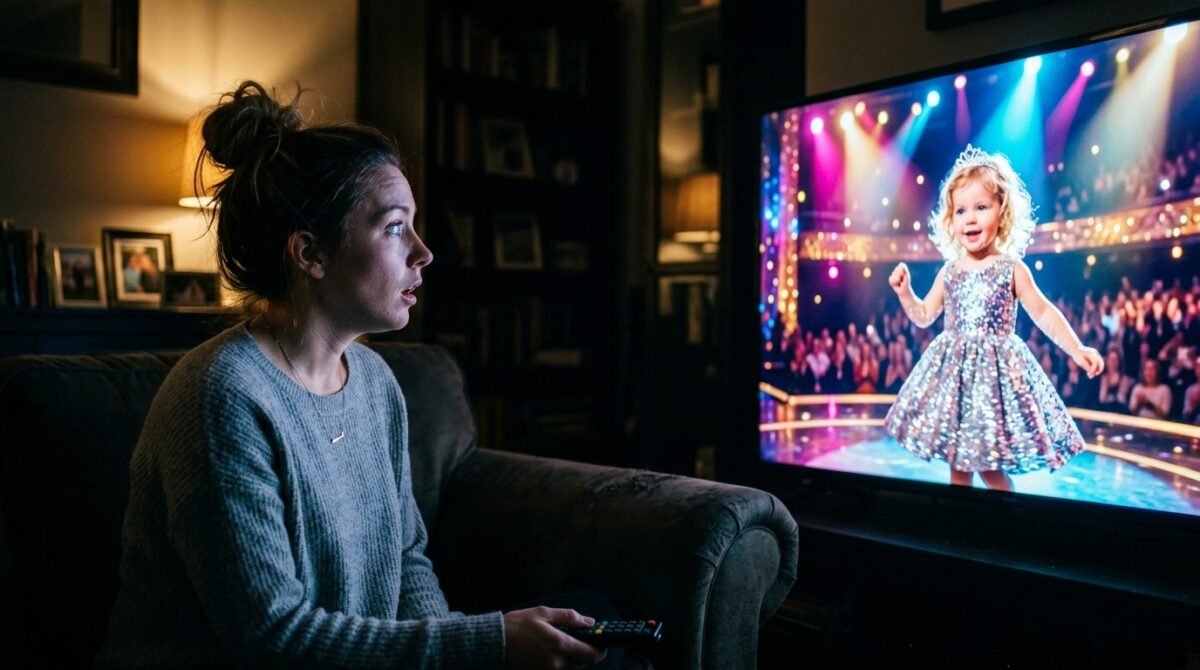
When I returned home on Sunday evening, I expected a tired, happy toddler and a laundry list of unsolicited advice on how I should have packed more snacks. Instead, I walked into a house that felt eerily quiet and turned on the television to unwind, only to be met with a sight that made my blood run cold. There was Maya, splashed across the screen, wearing a crown twice the size of her head, dancing to a pop song that was entirely inappropriate for a three-year-old.
My heart didn’t just sink; it shattered. It wasn’t just that she had taken her to a pageant; it was the realization that an application had been signed, a legal release form had been executed, and my own identity had been stolen to facilitate a spectacle I would have fought to the death to prevent. The betrayal was absolute, cold, and calculated, unfolding in real-time as the camera panned to Linda, who was beaming from the sidelines, looking every bit the proud stage grandmother.
The Glow of the Screen and the Chill of Betrayal

The living room was dim, illuminated only by the frantic, neon glow of a televised ‘Toddler Tiara Extravaganza.’ I stood frozen, my suitcase still in the hallway, as my brain struggled to process the visual data. My daughter, usually dressed in comfortable cotton overalls and grass-stained sneakers, was currently draped in layers of stiff, itchy tulle and heavy, dramatic stage makeup. She looked like a miniature, distressed doll.
My husband, Mark, came down the hallway behind me, his voice trailing off as he noticed the screen. The air in the room grew heavy, charged with a sudden, suffocating pressure. We watched as the host announced Maya’s name, noting that she was ‘a favorite of the judges.’ The reality didn’t hit me all at once; it came in waves, each one more nauseating than the last.
I reached for my phone, my hands shaking so violently I nearly dropped it. I didn’t want to scream; I wanted to understand. I wanted to believe that this was a deep-fake, a prank, or a cruel misunderstanding. But as I pulled up the show’s website, the digital footprint was undeniable. There was a scanned copy of the consent form—a document that required my signature—dated three days ago.
“Mark, look at this. Look at the signature. That is not my handwriting. That is not even a good attempt at my handwriting. She forged my name to put our daughter on national TV.”
— Me, realization setting in
The implications began to spiral. This wasn’t just a day out at the park; this was a pre-meditated event. She had to have scouted the location, prepared the outfit, and convinced a toddler to perform. The sheer audacity required to steal a mother’s legal consent is a line that, once crossed, destroys the foundation of any relationship.
I felt a profound sense of violation. My child had been used as a prop in a game she didn’t understand, by a woman who thought she was entitled to rewrite the terms of our parenting. I realized in that moment that the quiet, ‘helpful’ grandmother I had allowed into our lives was actually a stranger with an agenda I hadn’t even begun to fathom.
The Sunday Night Confrontation

Linda arrived at our house an hour later, expecting to be praised for her ‘initiative’ and the ‘opportunity’ she had provided for Maya. She walked in with a bag of stage costumes, her smile bright and unapologetic. When she saw the two of us standing in the living room, the atmosphere shifted instantly. I didn’t greet her; I didn’t offer her tea. I simply handed her the printout of the signed consent form.
She didn’t even try to deny it. That was the most jarring part. She looked at the paper, then at me, and shrugged with a casual indifference that made my skin crawl. To her, this wasn’t a crime; it was a ‘surprise’ that she felt I would eventually appreciate once the photos were developed and the fame settled in.
“You have no idea what you’ve done. You signed my name on a legal document, Linda. Do you have any idea what the penalties are for fraud? You didn’t just take her to a pageant; you stole my authority as her mother.”
— My confrontation with Linda
Mark stepped forward, his voice low and dangerous. He was usually the mediator, the one who wanted to keep the peace at all costs, but even he couldn’t stomach this. He told her to leave, and for the first time in our marriage, I saw him choose a hard boundary over his mother’s feelings. He looked at her not as his mother, but as a person who had fundamentally endangered our child’s privacy and our legal standing.
Linda tried to play the martyr, claiming she was doing it for ‘Maya’s future’ and that she knew I was ‘too protective’ to allow her to shine. She talked about the talent agents who had already approached her, the ‘big break’ she had secured for my three-year-old. The delusion was absolute. She wasn’t acting out of malice; she was acting out of a total lack of respect for my autonomy.
She left, but not without a parting shot about how we would eventually thank her when Maya was a star. The door closed, and the silence that followed was heavy. We hadn’t won the argument; we had simply survived the first wave of a conflict that was clearly going to define the next year of our lives.
The Digital Breadcrumbs and the Secret Group Chat

The night was spent doing what I do best: investigating. I dove into the ‘Toddler Tiara’ social media pages, digging through every post, every comment, and every tagged photo. It was there that I found it: a private group chat for the pageant contestants’ grandparents. It was a goldmine of information. Linda had been planning this for months, bragging to other ‘pageant grannies’ about how she had ‘tricked’ the ‘stubborn daughter-in-law’ into compliance.
“The mother is so difficult, but I have a plan to get the forms signed. I’ll make sure she’s too busy with the work retreat to double-check anything. It’s all for the best; the child is a natural and she needs someone who sees her potential.”
— A leaked text from Linda in the group chat
Reading those words, the coldness in my chest turned to a burning, white-hot fury. She hadn’t just made a mistake; she had executed a campaign. She had looked me in the eye for months, played the role of the loving grandmother, all while plotting to bypass my authority the moment my back was turned. The entitlement was staggering.
Mark sat with me, reading the threads, his face turning pale. We saw photos of Maya being coached in secret, videos of her being told to ‘smile bigger’ and ‘walk like a lady.’ It was invasive, and it was wrong. Every comment from the other grandparents validated Linda’s behavior, creating an echo chamber where children were treated like accessories to be polished and displayed.
The sheer amount of effort she had put into this deception made me realize that this wasn’t an isolated incident. It was the culmination of a philosophy of parenting where she believed she was the senior authority and I was merely a temporary guardian. We didn’t sleep that night. We spent it documenting everything—screenshots, timestamps, and the forged documents—preparing for the inevitable fallout.
The Legal Reality Check
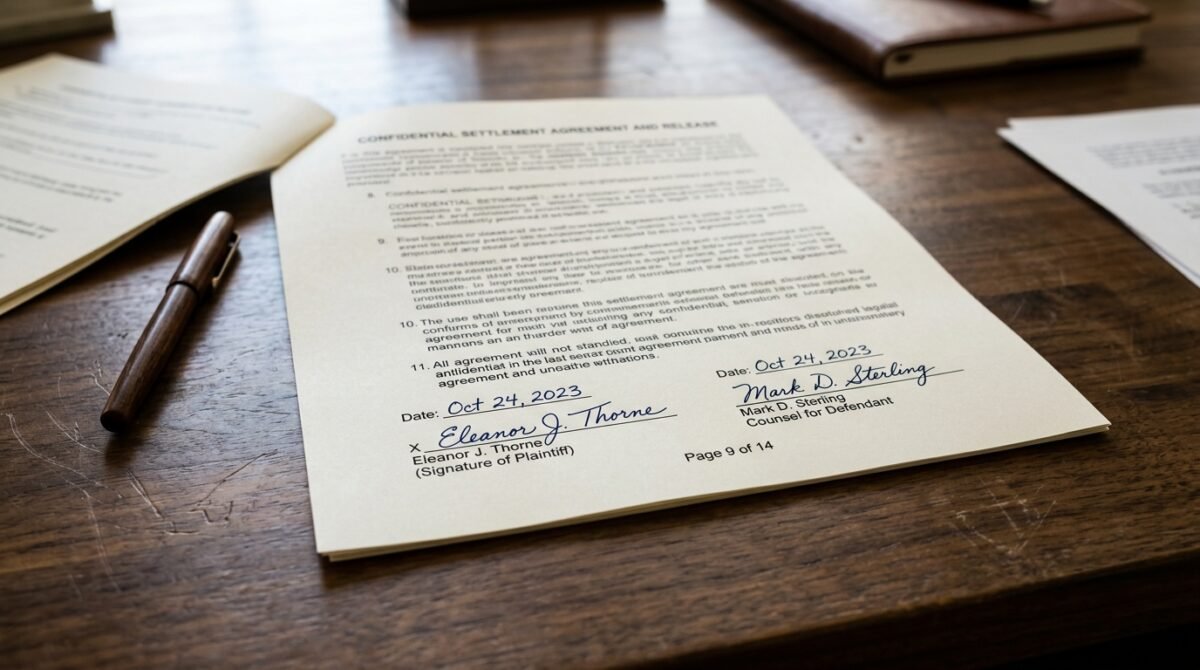
The next morning, we were at a lawyer’s office. I wasn’t playing around. While the pageant organization was technically shielded by the forged document, the act of forgery itself was a criminal matter. We needed to know exactly how much damage she had done and what we could do to prevent her from ever having that kind of power over our daughter again.
The lawyer was blunt. He explained that while a police report for forgery against a grandmother might seem extreme to some, it was necessary to create a paper trail. If she was capable of this, what else was she capable of? We needed a restraining order, not just against the pageant involvement, but against her unsupervised access to Maya.
The consultation felt surreal. I was talking about my mother-in-law like she was a dangerous stranger. Yet, the lawyer pointed out that in the eyes of the law, identity theft is identity theft, regardless of the family tree. The act of signing my name was a direct assault on my rights, and it needed to be treated as such.
“You need to make it clear that this isn’t about the pageant. It’s about the fraud. Once you set the legal precedent that her actions have consequences, she will either back down or face the criminal justice system.”
— Our attorney’s advice
We left the office feeling a strange mix of empowered and utterly defeated. We had started this journey wanting a peaceful family dynamic, and now we were looking at a future of litigation and estrangement. It was the price of setting a boundary that should have been obvious to everyone involved.
By noon, we had the paperwork drawn up. It was a formal cease-and-desist regarding the use of our daughter’s image and a notice that we were filing a police report for the forgery. It was the hardest thing I’ve ever had to sign, knowing that it meant the end of the ‘happy family’ charade for good.
The Fallout Within the Family

The family group chat, usually reserved for birthday wishes and holiday plans, became a battlefield. News of our actions had leaked, and Linda had already spun her version of the story. She was the victim, the ‘devoted grandmother’ who was being ‘sued’ for simply trying to give her granddaughter an opportunity of a lifetime.
Calls started pouring in. My husband’s siblings, aunts, and cousins were divided. Some were horrified by what Linda had done, but others—the ones who had always enabled her—thought we were being ‘excessive’ and ‘cruel.’ The pressure to ‘drop it for the sake of family harmony’ was immense. It was the classic ‘but she’s family’ argument, weaponized to keep us quiet.
“You are tearing this family apart over a little pageant. She loves Maya. She was just trying to help. This is so petty and vindictive.”
— A text from Mark’s sister, Sarah
Mark took the brunt of the calls. He stood firm, repeating the same message: this wasn’t about the pageant, it was about the forgery. He was firm, he was calm, and he was absolutely unwavering. It was the strongest I had ever seen him, and it solidified my love for him. He understood that protecting Maya meant protecting her from the people who thought they were entitled to her life.
I stayed off the phones. I didn’t need to hear their excuses. I had seen the evidence, I had felt the betrayal, and I knew that no amount of ‘family harmony’ was worth the cost of my integrity or my daughter’s safety. We blocked the most aggressive relatives, setting a boundary that was as much for our mental health as it was for our daughter’s future.
The house felt like a bunker. We were under siege by a family that valued appearances over truth, and it was incredibly isolating. But every time I looked at Maya, sleeping soundly in her own bed, free from the stress of stage lights and fake smiles, I knew we were doing the right thing.
Reddit Weighs In: The Verdict of the Internet

I posted our story to a popular subreddit, needing an objective perspective. I expected a mix of opinions, but I wasn’t prepared for the sheer volume of support. The internet, for all its toxicity, can sometimes be a place of cold, hard truth. The comments poured in by the thousands, and they were overwhelmingly, unequivocally on our side.
“This is not just about a pageant. This is about a person who feels entitled to override your parenting decisions using fraud. If she’s willing to forge a document for a pageant, what is she willing to forge when it comes to medical decisions or legal documents? You are 100% NTA and you need to go NC immediately.”
— u/LegalEagleEye (Top Comment, 32.1k upvotes)
The community analyzed every facet of the situation. They highlighted the danger of the ‘grandparent entitlement’ culture, where family members feel they have a stake in a child’s life that supersedes the parents’. They pointed out the legal risks, the psychological impact on the child, and the necessity of complete, total estrangement.
There were also the cautionary tales. People shared their own experiences with ‘overstepping’ in-laws, stories that started with ‘small’ boundary violations and escalated into full-blown kidnapping or permanent legal custody battles. It was a sobering reminder of why we couldn’t afford to be ‘nice’ or ‘accommodating’ any longer.
“The fact that she bragged about it in a group chat proves she didn’t just ‘make a mistake.’ She knew exactly what she was doing. She was testing your boundaries, and when you didn’t catch it, she escalated. You didn’t break this family; she broke it the moment she picked up that pen.”
— u/TruthSeeker88 (15.2k upvotes)
Reading the comments helped me realize that the guilt I felt—the lingering, nagging feeling that I was somehow being ‘too hard’ on her—was the result of years of conditioning. The world was telling me that I was justified in my anger, that my boundaries were not only valid but necessary. It was the validation I needed to stop apologizing for protecting my child.
The Cease and Desist and the Final Silence

The letter from our lawyer arrived at Linda’s home on a Thursday morning. It was formal, cold, and legally binding. It detailed the forgery, the unauthorized use of our daughter’s likeness, and the explicit demand for the deletion of all photos and videos of Maya from the pageant’s social media. It also stipulated that any future contact with our daughter would be strictly supervised and contingent upon her acceptance of our terms.
For three days, there was nothing but silence. It was a terrifying, heavy silence. I kept waiting for the phone to ring, for the inevitable outburst, for the threats to increase. But there was only the quiet hum of our home, the mundane routine of Maya’s life, and the strange peace that comes with finally taking control of your own boundaries.
Then, the response came. It wasn’t an apology. It was a long, rambling email full of victimhood, shifting the blame, and claiming we were ‘tearing the family apart’ over a ‘minor misunderstanding.’ She refused to take responsibility, she refused to acknowledge the forgery as a crime, and she refused to apologize to me directly.
“I hope you’re happy. You’ve destroyed a grandmother’s relationship with her granddaughter because you can’t handle a little bit of fun. You’ll regret this when Maya realizes what you’ve kept from her.”
— Email from Linda
Mark read it, looked at me, and hit ‘delete’ without a word. That was our final reply. We didn’t need to argue, we didn’t need to convince her, and we certainly didn’t need her validation. We had set our terms, she had chosen her path, and that was the end of the negotiation. It was a moment of profound, quiet victory.
The Aftermath: Reclaiming Our Peace

Life has shifted into a new, healthier rhythm. We have significantly reduced contact, moving to a model of ‘low contact’ that is strictly monitored. We don’t share details of our lives, we don’t ask for favors, and we certainly don’t leave Maya alone with her. It’s a sad reality, but it’s the only one that keeps us safe. We have learned that trust isn’t something you give away; it’s something that must be earned, and she has lost hers entirely.
Maya doesn’t ask for her grandmother as much as I feared she would. She’s three, and her world is big and bright, filled with parks, books, and genuine, unstaged fun. She doesn’t need to be a star; she just needs to be a child. The pageant world, with its artificial lights and high-pressure expectations, is a world we have closed off for good.
We have also begun to mend the fences with the rest of the family, but on our own terms. We are selective about who we spend time with, and we don’t tolerate the ‘she’s family’ excuse anymore. If someone wants to be in our lives, they have to respect the boundaries we’ve set. It’s been a painful, necessary pruning of our social circle, but we are stronger for it.
“Boundaries aren’t about punishing the other person. They are about protecting your own peace. If someone can’t respect that, they don’t deserve access to your life or your children.”
— My therapist’s reflection during our last session
We are still healing. There are days when the anger flares up, when I think about the forgery and the audacity, and I have to remind myself that we did the right thing. We are the architects of our own family life, and that is a privilege I will never take for granted again.
Reflecting on the Mother-In-Law Dynamic

Looking back, I realize that the signs were always there. The small criticisms of my parenting, the subtle attempts to override my decisions, the ‘helpful’ suggestions that were actually demands in disguise. I had ignored them because I wanted to be the ‘easy’ daughter-in-law, the one who didn’t cause trouble. I thought that by being accommodating, I would earn her respect.
I was wrong. You don’t earn respect from someone who doesn’t respect you to begin with. You earn it by standing your ground, by enforcing your boundaries, and by refusing to be a pawn in someone else’s game. The pageant was just the final, most egregious act in a long play of boundary-crossing behavior.
I’ve learned to trust my gut. If something feels off, if I feel like I have to walk on eggshells, if I feel like I’m being manipulated, I now stop and address it immediately. No more ‘letting it slide.’ No more ‘keeping the peace.’ The peace I have now, knowing that my daughter is safe and my authority is respected, is worth infinitely more than any superficial harmony.
“The most important lesson I’ve learned is that I am the parent. My voice is the one that matters. My signature is the one that counts. And I will protect that authority with everything I have.”
— My internal mantra moving forward
We are moving forward, one day at a time. The scars of the experience are still there, but they are reminders of how far we’ve come. We are a stronger couple, a more intentional family, and we have learned that the best way to handle a toxic in-law is to, above all else, prioritize the truth and our own family unit.
Lessons in Parental Autonomy

If there is one thing I want others to take away from this, it is this: your children are not props. They are not extensions of your ego or your family’s legacy. They are individuals who deserve to grow up without being forced into roles or spectacles that serve someone else’s vanity. Your authority as a parent is not a suggestion; it is a mandate.
Never underestimate the importance of your boundaries. Whether it’s about childcare, nutrition, discipline, or social media, you have the right to decide how your children are raised. If someone in your life thinks they have the right to bypass those decisions, they are not acting in your child’s best interest—they are acting in their own.
Don’t be afraid to be ‘the bad guy.’ It’s a term used by people who want to keep you quiet and compliant. Being the ‘bad guy’ often just means being the one who is brave enough to say ‘no’ when everyone else is saying ‘yes’ for the sake of appearances. It’s a lonely road, but it’s the only one that leads to true, sustainable integrity.
“Your family, your rules. It sounds simple, but it is the hardest thing to enforce. Stay strong, stay firm, and never, ever apologize for putting your child’s well-being above anyone else’s feelings.”
— My message to the readers
We are finally in a place where we feel secure. We have built a home that is truly our own, free from the shadow of the past, and we are teaching our daughter that her voice, her boundaries, and her identity are hers alone to define. It’s the most important lesson she will ever learn.
Conclusion
The journey from that initial shock in our living room to the present day has been one of the most transformative experiences of my life. I have moved from a place of blind trust to a place of empowered, intentional parenting. The sting of the betrayal has faded into a quiet, firm resolve. I now understand that family isn’t defined by blood or tradition, but by respect, boundaries, and the shared commitment to protect the ones we love.
We still have our challenges, and the fallout with the extended family continues to ripple outward, but we are no longer afraid of the consequences. We have learned that the price of our integrity is a small one to pay for the safety and happiness of our daughter. We are the guardians of her childhood, and we will never again hand over the keys to anyone, no matter who they claim to be.
What about you? Have you ever had to draw a hard line with a family member who refused to respect your boundaries? How do you maintain your parental authority in the face of ‘well-meaning’ relatives? Let’s discuss in the comments below. Do you think I was too harsh, or was the move to involve the law the only way to ensure this would never happen again?
What's your verdict on this dilemma?
Vote below to contribute to the official community consensus.

Have a Dilemma Keeping You Up at Night?
Share your real-life feud, wedding chaos, or relationship crossroads anonymously with our editorial team.
What do you think ?
0 Comments🛡️ Comments are moderated to protect community integrity. Your comment will appear once approved by the editorial team.