
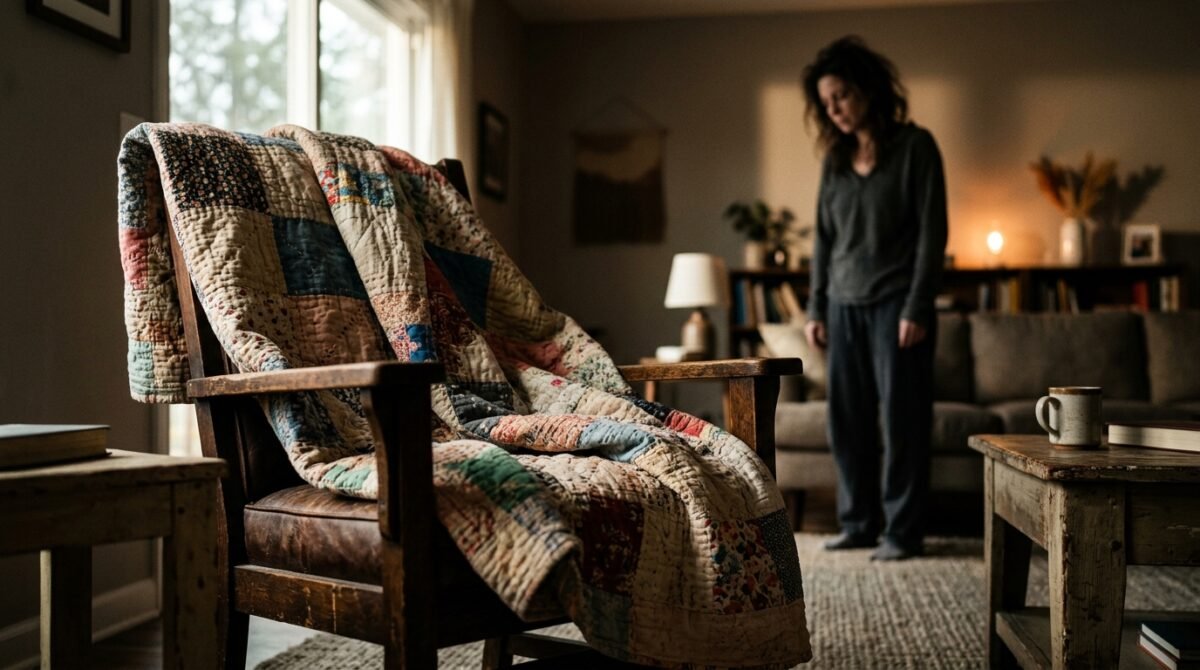
Grief has a strange way of manifesting. For some, it is a quiet meditation; for others, it is the desperate need to cling to physical remnants of the departed. When my grandmother passed, I spent six months meticulously deconstructing her favorite floral house dresses, her thick wool cardigans, and the silk scarves she wore to Sunday mass. I hand-stitched them into a quilt—a heavy, kaleidoscopic memory of a woman who shaped my entire worldview. It wasn’t just fabric; it was a sanctuary of tactile history.
My sister, Clara, never understood the sentimental weight. To her, everything in life was a transaction, a potential asset to be liquidated or leveraged. While I was burying my head in the comfort of that patchwork, she was eyeing my apartment, assessing what could be sold to fund her latest venture. The boundaries of our sibling relationship had always been frayed, but I assumed there was a line—a line drawn in the threads of family legacy.
The disappearance of the quilt felt like a physical amputation. I woke up one Tuesday morning to find my bedroom trunk empty, the latch clicking uselessly in the morning breeze. I knew instantly it was her. I knew the specific, frantic energy she emitted whenever she was desperate for cash. But when I confronted her, she looked at me with a detached coolness that chilled me to the bone, claiming ignorance, claiming I had probably ‘misplaced’ it.
What followed was a descent into the dark underbelly of online marketplaces. I tracked the quilt through a series of digital breadcrumbs, finding it listed on a boutique vintage auction site with the description ‘Rustic, Handmade Heirloom Textile.’ The price was insulting, but the betrayal was catastrophic. That quilt wasn’t just a possession; it was a piece of my grandmother’s soul. And I was about to go to war to get it back.
This is the story of how I bought back my own inheritance, how I exposed my sister’s deception to the entire family, and why I eventually decided that some bridges aren’t just burned—they are demolished by the heavy machinery of the law.
The Morning the Trunk Stood Empty
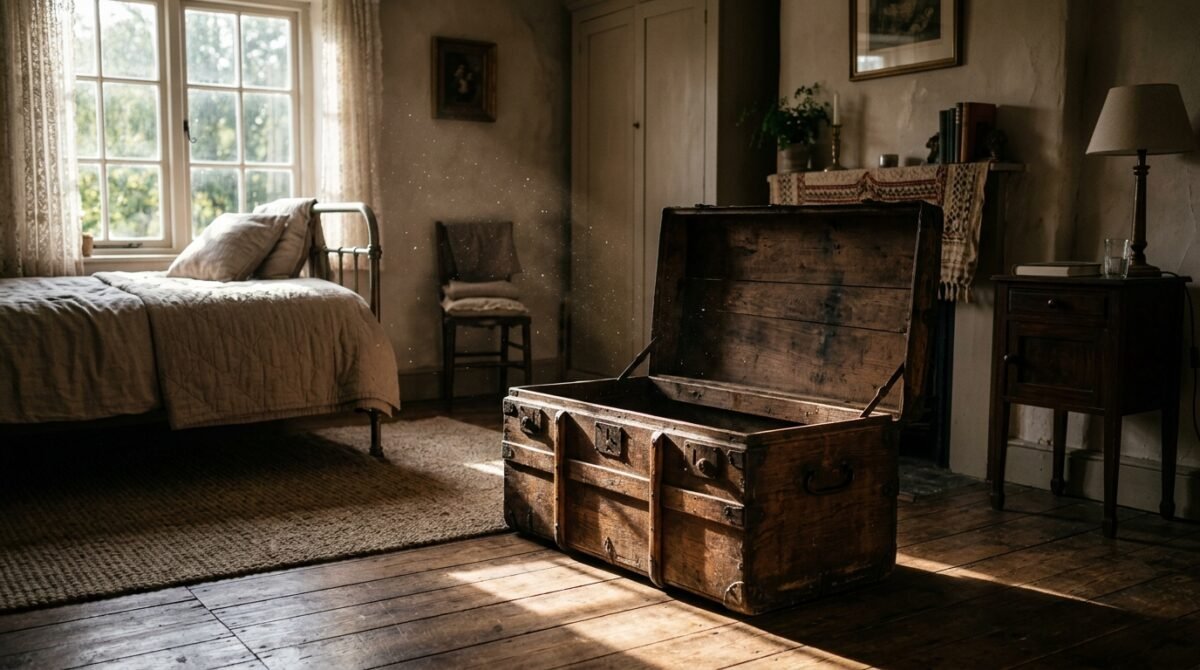
The Tuesday morning I discovered the quilt was gone, the air in my apartment felt thin. I remember the silence—that heavy, oppressive stillness that only occurs when you realize your sanctuary has been violated. I had left it draped over the foot of my bed, a ritualistic placement I performed every night. It was the last thing I saw before sleep and the first thing I reached for when the nightmares of grief took hold.
I checked the window, then the door. Everything was locked. My mind immediately went to the duplicate key Clara had ‘borrowed’ for emergencies months prior, a key I had repeatedly demanded back. The realization hit me like a physical blow: she didn’t just walk into my life; she walked into my private mourning process and took the only thing that made me feel safe.
I called her immediately. My hands were shaking so hard I could barely dial the numbers. When she answered, her voice was saccharine, too smooth, the tone of someone who had rehearsed their innocence in the bathroom mirror.
“Clara, where is it? Don’t lie to me. I know you were here. The quilt is gone.”
— Me to Clara, 8:14 AM
She didn’t skip a beat. She sighed, a long, dramatic exhale that was designed to make me feel irrational and paranoid. She told me I was spiraling again, that I probably packed it away somewhere and forgot, or that maybe I had lost it during my ’bouts of emotional instability.’ It was a masterclass in gaslighting, delivered with the casual confidence of someone who had done this a thousand times before.
I hung up the phone, but the doubt didn’t set in. Instead, a cold, hard clarity took its place. I stopped grieving, and I started calculating. I knew exactly what she was capable of, and I knew that if she had taken it, she wouldn’t keep it. She would try to monetize it. I sat down at my laptop, opened a browser, and began a search that would consume the next forty-eight hours of my life.
I scoured every marketplace, every obscure vintage forum, and every social media group dedicated to ‘reclaimed textiles.’ I searched by keywords: ‘handmade patchwork quilt,’ ‘grandmother clothes quilt,’ ‘vintage floral blanket.’ I refreshed the pages until my eyes burned, ignoring the messages from friends asking if I was okay. I wasn’t okay. I was hunting.
The Digital Breadcrumb Trail
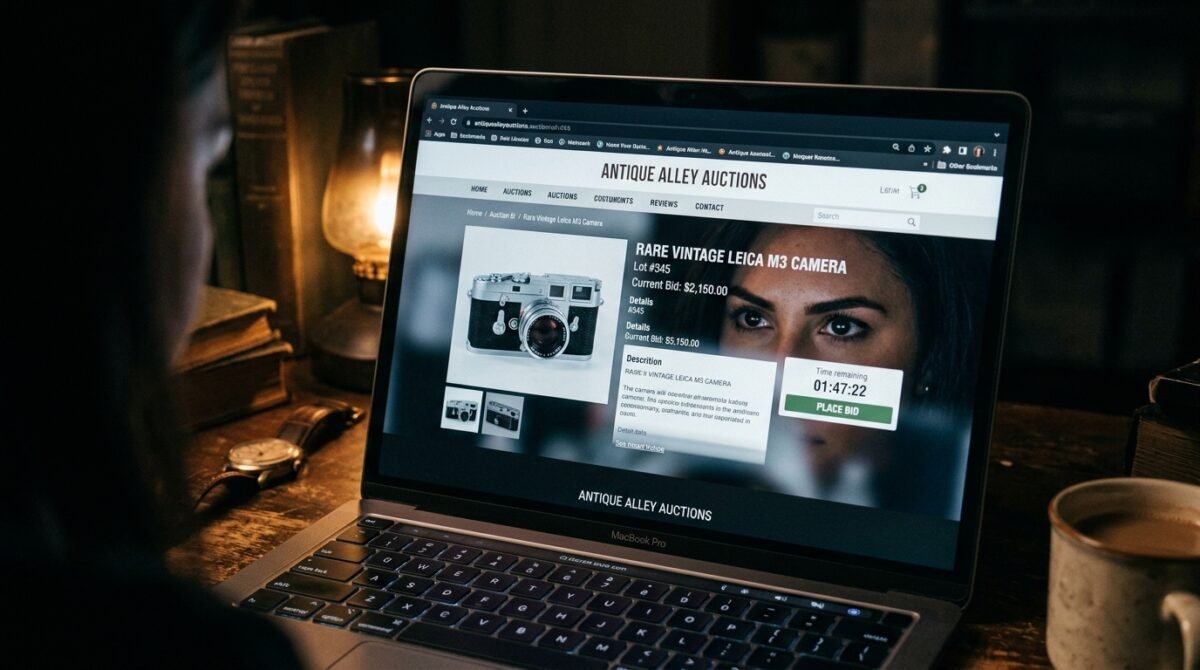
I found it at 3:00 AM on a platform I had never used before—a niche site for high-end vintage collectors. There it was, unmistakable in the photograph. The sunlight hit the blue silk from my grandmother’s favorite dress, a piece I had sewn in with my own trembling fingers. The listing title was ‘Rustic Handmade Heirloom Textile – Unique Provenance.’ The price tag was $1,200.
My heart stopped, then resumed with a violent, rhythmic thumping. The seller’s username was ‘C_VintageStyles.’ I clicked on her profile. There were other items: a set of vintage silver spoons that had disappeared from my mother’s house three months ago, and a collection of designer scarves that our aunt had claimed were lost during a family move. It was a digital archive of our family’s stolen history.
“I found the listing, Clara. I know it’s you. ‘C_VintageStyles’? You really aren’t as smart as you think you are. Take it down, or I am calling the police.”
— My text to Clara, 3:12 AM
The response was delayed by twenty minutes, likely the time it took for her to realize her cover was blown. She didn’t apologize. She didn’t offer to return it. She went straight to the defensive, trying to claim that she had ‘found’ it in a donation pile and was ‘doing the work’ of finding it a better home. It was the audacity that stung the most—the way she attempted to frame her theft as an act of curation.
I didn’t argue. I didn’t beg. I realized that arguing with Clara was like trying to fill a bucket with a hole in the bottom; it was a waste of resources. Instead, I created a new account on the site, masked my IP address, and waited. I had to ensure the quilt didn’t disappear into the hands of a stranger while I prepared my next move. I was going to buy it back, but I was also going to make sure the transaction was documented in a way that could be used against her.
I watched as other people viewed the listing. Each ‘like’ on the page felt like a knife twisting in my gut. Someone else wanted my grandmother’s history. They wanted to buy it to decorate a guest room or a nursery. They didn’t know the sweat and the tears that had gone into those stitches. They were just buying a commodity, and that commodification felt like a second death.
By morning, I had a plan. I would pay the $1,200, but I would pay it through a method that required a verified identity. I would also save every single screenshot of the conversation, the listing, and the shipping details. I was building a case, and I was going to be the most meticulous prosecutor she had ever faced.
The Transaction of Betrayal
Purchasing the quilt felt like paying a ransom. My fingers hovered over the ‘Checkout’ button for what felt like an hour. Every cent of that $1,200 was money I had saved for my car insurance, but at that moment, money felt like paper—useless compared to the weight of the fabric I was trying to reclaim. I clicked ‘Confirm’ and watched the funds leave my account.
The notification flashed: ‘Transaction Successful.’ I breathed out a ragged sigh. A few seconds later, my phone vibrated. A notification from the site: ‘Your order has been confirmed by the seller.’ It was done. But the transaction didn’t just end with a confirmation; it triggered a series of frantic, panicked messages from Clara. She had realized, through the shipping address, that the buyer was me.
“You bought it? Are you insane? That money was for my rent! You’re literally sabotaging me, this is harassment!”
— Clara, 9:45 AM
“You sold my property. I bought it back. We are done talking over text. Expect a certified letter.”
— My reply to Clara, 9:47 AM
The interaction turned toxic immediately. She began calling me, her voice shrill and demanding. She claimed I was ‘obsessed’ and ‘unhinged,’ trying to flip the narrative so that *I* was the aggressor. She told me that if I reported her, she would tell the rest of the family that I was stealing from her, that I was the one who had been ‘hoarding’ family heirlooms for years. She was gaslighting the entire family tree, preparing the ground for a smear campaign.
I kept a recording of the call. I kept everything. I went to a local print shop and printed every text, every timestamp, and every screenshot of the listing. I was no longer interested in family peace; I was interested in justice. I realized that my sister had spent her entire adult life banking on the fact that no one would hold her accountable because we were ‘family.’ She assumed that familial obligation was a shield for her bad behavior.
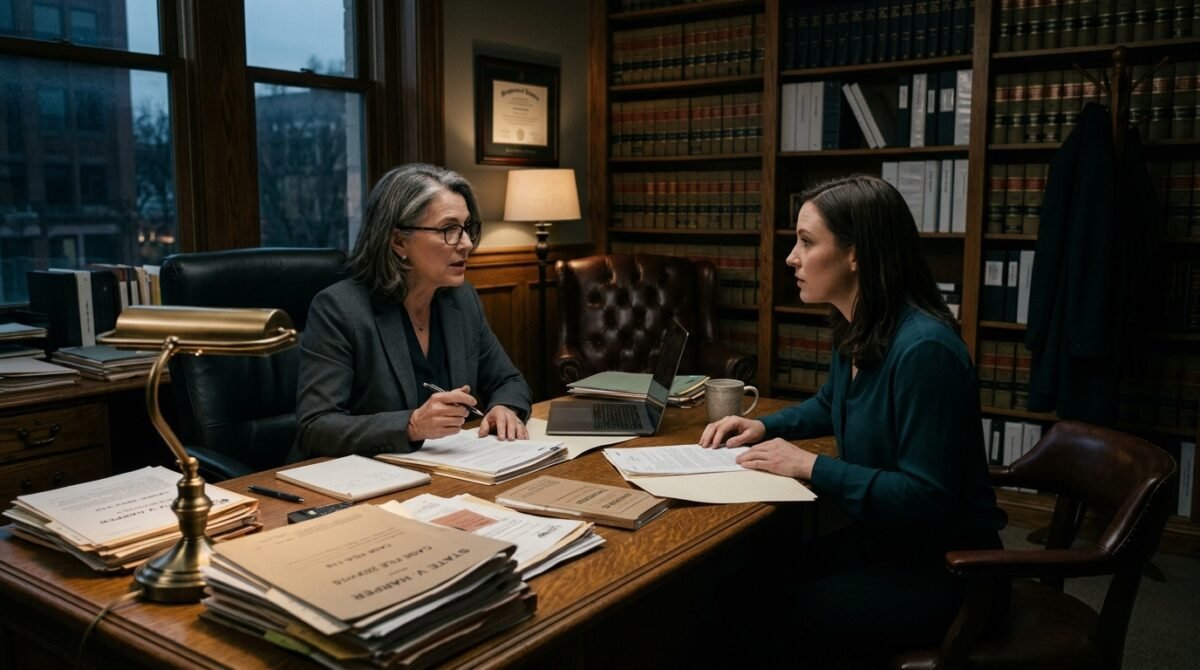
I spent the afternoon at a law firm. I didn’t go for a high-powered corporate lawyer; I went to a small-claims specialist who looked at my mountain of evidence with a mixture of pity and professional interest. He told me that while the emotional value of the quilt was immeasurable in my heart, in a court of law, it was about conversion, theft, and the violation of personal property rights. He helped me draft the formal notice.
The Sunday Dinner Silence
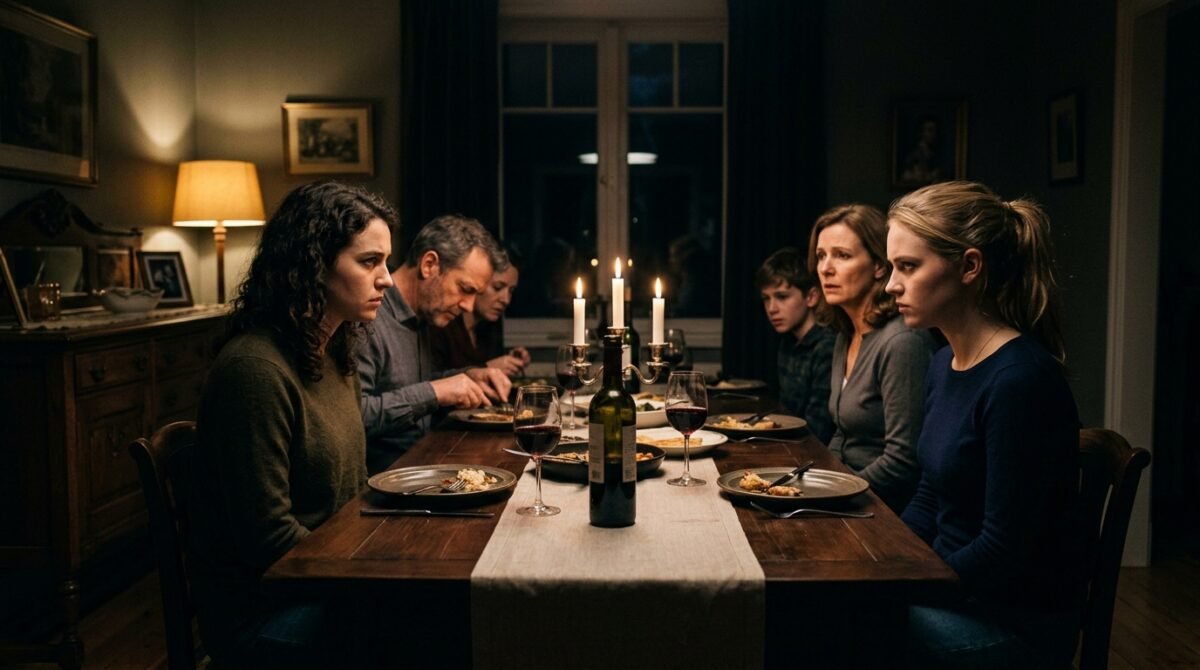
The family dinner was scheduled for that Sunday, and I knew Clara would be there. I almost skipped it. My stomach was in knots, and the thought of seeing her face made my skin crawl. But I needed to do this. I needed to show her that the days of her impunity were over. I arrived early, sitting at the long oak table that had hosted a hundred Sunday dinners. The air smelled of rosemary and roast chicken, a scent that now seemed tainted.
When Clara arrived, she was the picture of innocence. She kissed my cheek like nothing had happened, her eyes scanning the room to see if anyone else had heard her side of the story. She was playing the part of the ‘misunderstood, struggling artist’ perfectly. The family was eating, laughing, and discussing the upcoming summer vacation, completely oblivious to the fact that a lawsuit was being hand-delivered to the front porch as we spoke.
I waited for the right moment. I didn’t want to cause a scene in front of our grandparents’ photos, but I needed her to know that the consequences were already in motion. During a lull in the conversation, I leaned over to her, keeping my voice low enough that only she could hear, but loud enough to command her attention.
“The courier is arriving at your apartment in twenty minutes. It’s a formal notice of legal action for the theft of my property and damages. You have until Monday to return the rest of the items you stole from this house.”
— Me to Clara, at the dinner table
Her face went pale, then a deep, mottled red. She dropped her fork, the clatter echoing through the room. Everyone stopped and looked at her. ‘Is everything okay, dear?’ our mother asked. Clara looked at me, her eyes wide with a mixture of terror and pure, unadulterated hatred. She couldn’t say anything without revealing her own guilt, so she just nodded, her jaw locked tight.
The rest of the meal was a blur of forced pleasantries. I didn’t participate in the conversation. I just watched her. She couldn’t eat. She spent the entire time checking her phone, her thumb twitching over the screen. She knew that the document served on her doorstep was the end of her ability to play the victim. She had miscalculated, and the cost was going to be far higher than the $1,200 she had made from the sale.
As we left, she cornered me by the driveway. She tried to grab my arm, her voice shaking. She told me I was ‘destroying the family’ over a ‘bunch of old rags.’ I looked at her, really looked at her, and realized that she didn’t see people—she saw inventory. She didn’t have a conscience; she had a ledger. And for the first time in my life, I felt absolutely no guilt for what I was doing.
The Reddit Trial: Community Verdict

I posted the story on a popular forum, keeping the names and specific details vague to protect my legal standing. I needed to know if I was crazy. I needed to know if the guilt I felt—the small, nagging voice saying ‘she’s your sister, you shouldn’t sue her’—was valid. I posted a detailed timeline of events, including the theft, the discovery of the sale, and the legal action taken.
“You are not the asshole. Your sister is a thief. She didn’t just ‘take’ something; she sold an heirloom that had significant emotional and monetary value. Bringing legal action is the only way to establish boundaries with someone who clearly lacks any respect for you. Don’t back down.”
— u/JusticeSeeker99 (Top Comment, 18.2k upvotes)
The response was overwhelming. Thousands of people shared their own stories of family members who treated heirlooms like assets. It was validating to see that I wasn’t the only one who had dealt with a ‘Clara.’ It gave me the strength to follow through with the legal process, even when my mother began calling me, pleading with me to ‘drop it and keep the peace.’
“I had a brother who did the exact same thing with our dad’s watch collection. I didn’t sue, and I regret it every single day because he never stopped. He sold the next thing, and the next. You are stopping the cycle, OP. Good for you.”
— u/MemoryKeeper (5.4k upvotes)
Some people, however, urged caution. They warned me about the ‘family fallout’—the long-term repercussions of bringing a lawyer into a sibling dispute. They said that no amount of money or justice is worth the permanent destruction of a family relationship. I read those comments too, and I weighed them. But I kept coming back to the fact that the relationship was already destroyed by her actions; I was just the one documenting the wreckage.
The thread became a hub for people discussing the ethics of family law vs. family loyalty. It made me realize that ‘family’ is a word often used to manipulate people into accepting abuse. If a stranger had done this, I would have called the police immediately. Why was my sister held to a different standard? Because of blood? I decided that blood didn’t give her a license to strip-mine my life for parts.
By the time I stopped reading the comments, I had a clearer head. The internet had provided me with a sense of perspective that I couldn’t find in my own family, where everyone was too afraid of conflict to acknowledge the truth. I was ready to go to court, or to whatever arbitration was necessary. The quilt was back in my trunk, safe and sound, but the war was just beginning.
The Aftermath of the Legal Notice
The week following the service of the papers was a psychological thriller. Clara tried everything. She had our cousins call me, she had our aunt send me guilt-tripping texts, and she even showed up at my workplace once, trying to catch me during my lunch break. She was frantic, her desperation leaking through every interaction. She didn’t want to face the legal system; she wanted to go back to the status quo where she could manipulate me into silence.
I stayed professional. I didn’t engage with the family members who were trying to intervene. I simply told them, ‘This is a legal matter between Clara and me. Please do not involve yourself unless you want to be subpoenaed as a witness to her theft.’ That usually shut them up pretty quickly. Nobody wants to get involved in a lawsuit, especially when they realize the evidence is as damning as mine.
“We are family! You are literally ruining my life over a blanket. Do you have any idea how much debt I’m in? I needed that money to survive!”
— Clara, text message at 2:00 AM
“You are responsible for your own financial situation. You do not get to solve your problems by stealing from me. See you in court.”
— My reply, 2:05 AM
It was exhausting. Every time my phone pinged, I felt a spike of adrenaline. I started sleeping with my phone on ‘Do Not Disturb.’ I had to focus on my job, my life, and my own healing. I realized that my obsession with the quilt had been a distraction from the fact that my sister was a toxic force in my life. The quilt was just the symptom; the disease was her total lack of empathy.
I began to see the patterns I had ignored for years. Every borrowed item that never returned, every ‘loan’ that was never repaid, every time she made a scene at a gathering to draw attention to herself. She had been taking from me for years, and I had been letting her, under the guise of being the ‘bigger person.’ I realized that being the bigger person just makes it easier for people to step on you.
The lawyer told me we had a very strong case for ‘conversion’ and ‘replevin.’ He said that the digital trail I had created—the screenshots of her listings, the logs of our conversations, and the proof of purchase—made it nearly impossible for her to argue that she hadn’t known what she was doing. She was caught, red-handed, in a cycle of theft that she couldn’t explain away.
The Courtroom Confrontation
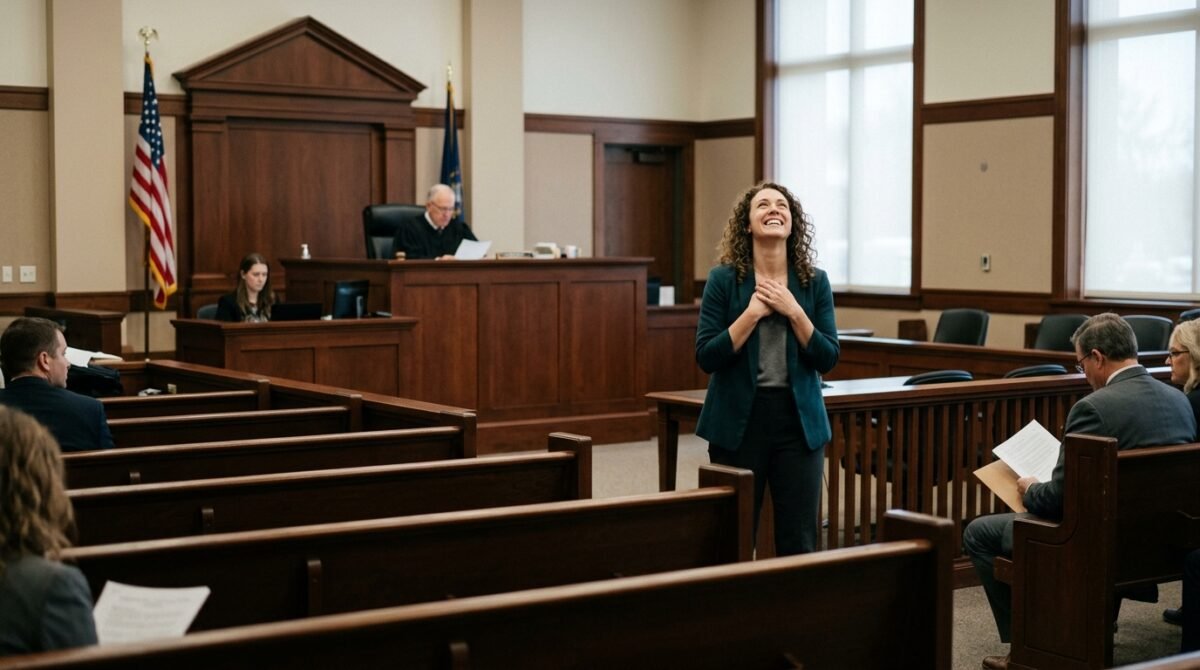
When we finally stood in the small-claims courtroom, the atmosphere was sterile and unforgiving. Clara looked small. The bravado she had used to harass me over text was gone, replaced by a nervous, twitchy energy. She was wearing an expensive suit—one I’m sure was bought with the proceeds of other stolen items—but it looked ill-fitting on her. She wouldn’t look me in the eye.
The judge was a no-nonsense woman who looked like she had seen it all. She listened as my lawyer laid out the case. He presented the evidence with clinical precision: the dates of the thefts, the photos of the stolen items on the auction site, and the records of the messages where Clara admitted to selling the quilt. When it was Clara’s turn to speak, she stuttered. She tried to claim it was a ‘family misunderstanding’ and that she ‘didn’t know’ the quilt was valuable.
“Your Honor, I thought it was just an old blanket. I didn’t know it meant anything to her. I was just cleaning out her apartment, trying to help!”
— Clara, in court
The judge interrupted her, pointing to the listing description. ‘You described this item as a “unique heirloom with significant provenance” and you priced it at $1,200. Does that sound like a blanket you thought was trash, Ms. Clara?’ The courtroom went silent. Clara had no answer. She looked down at the table, her face burning with shame, though I knew it was shame at being caught, not shame for what she had done.
The verdict was swift. The judge ruled in my favor, ordering her to pay the full value of the quilt, the costs of the legal proceedings, and a fine for the conversion of property. But more importantly, she issued a stern warning that any further harassment or theft would lead to criminal charges. It wasn’t just a win; it was a permanent injunction against her behavior.
Walking out of the courthouse, I felt a lightness I hadn’t experienced in years. The weight of the secret, the weight of the theft, and the weight of the guilt were all gone. I didn’t celebrate. I didn’t gloat. I just walked to my car, took a deep breath, and realized that for the first time in my adult life, I was free from my sister’s influence.
Reclaiming the Threads of Memory

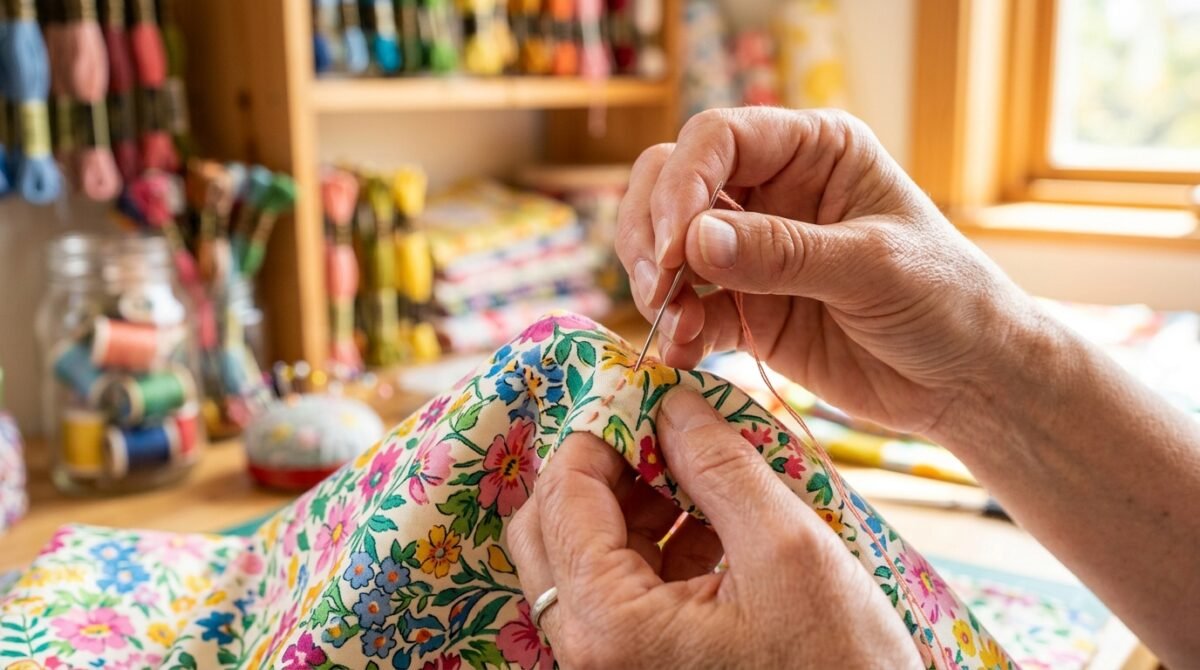
Back home, I took the quilt out of the trunk. It smelled like the shop where she had sold it—a faint, chemical scent of mothballs and dust. I spent the next three days carefully cleaning it, restoring its integrity. I sat on my floor, needle and thread in hand, reinforcing the stitches that had been pulled during its journey. It was a meditative act. Every stitch was a declaration that I was taking my life back.
I realized that the quilt was a metaphor for my boundaries. I had let them get frayed, let them get pulled apart by people who didn’t respect them. Now, I was mending them. I was making them stronger. I decided that the quilt would no longer be a blanket I slept with every night. It was too precious for that. I bought a display case, a museum-grade frame that would protect it from dust and handling.
I placed the frame on the wall in my living room. It was the first thing people saw when they walked in. It was a reminder to myself, and a warning to anyone else, that my boundaries were not negotiable. I wasn’t the same person who had been easily manipulated by my sister’s tears and pleas. I was someone who knew the value of my history and was willing to defend it.
Our mother eventually stopped calling me to ‘make peace.’ She saw the court documents. She saw the reality of who her daughter was. It broke her heart, I know, but it was a necessary heartbreak. You cannot heal a rot by pretending it doesn’t exist. She had enabled Clara for so long that she had lost the ability to see her clearly. Now, the truth was laid bare, and we were all forced to adjust to a new reality.
I don’t regret the lawsuit. I don’t regret the distance I’ve put between myself and the rest of the family. Sometimes, the most ‘family-oriented’ thing you can do is to step away from the toxicity that is destroying everyone involved. I kept the quilt, I kept my sanity, and I kept my dignity. And in the end, that was more than enough.
The Silence of No-Contact

The months that followed were characterized by a profound, blissful silence. No more frantic texts, no more guilt-tripping calls from cousins, no more unexpected visits. I had officially gone ‘no contact’ with Clara, and the relief was palpable. I had blocked her on every platform, changed my locks, and moved on. The legal threat acted as a barrier that she finally respected, not out of love, but out of fear of further consequences.
I found myself becoming more assertive in other areas of my life. I started saying ‘no’ to things I didn’t want to do, setting boundaries with friends and colleagues, and taking stock of the people I actually wanted in my life. It was as if the lawsuit had acted as a catalyst for a total transformation of my personal philosophy. I was no longer interested in being the ‘easy’ one.
I still occasionally wonder what she is doing. I wonder if she is still stealing, still selling, still searching for the next quick buck. I don’t harbor any ill will, but I don’t harbor any illusions either. I know who she is, and I know that her capacity for change is limited by her lack of empathy. I’ve accepted that we are not meant to be in each other’s lives.
“You have to remember that people who don’t respect your boundaries are not your friends or your family; they are just people who are waiting to be stopped. Don’t be afraid to be the one who stops them.”
— My advice to a friend going through a similar situation
The quilt stays on the wall, a silent guardian of my history. Every time I look at it, I see not just my grandmother, but a version of myself that I am proud of. A version that fought back, that held her ground, and that refused to let her past be sold for parts. It is a story I tell occasionally, not to seek sympathy, but to remind people that their belongings, their memories, and their boundaries have value.
If you are in a similar situation—if you are being manipulated or stolen from by someone you love—don’t wait. Don’t hope that they will change. Document everything, protect your assets, and do not be afraid to use the law. It is not about revenge; it is about preservation. And sometimes, preservation requires a fight.
The Final Reflection on Inheritance
When I think about the concept of inheritance, I no longer think about money or physical items. I think about values. What did my grandmother leave me? She left me a capacity for hard work, a love for the tangible, and a sense of integrity that I refused to compromise. Those are things that cannot be stolen or sold. Clara might have the items she stole from other people, but she has nothing of substance.
The legal battle cost me a lot of money, but it was an investment in my own autonomy. I paid for the freedom to move forward without the shadow of my sister’s behavior hanging over me. It was the best money I have ever spent. I hope that by sharing this story, others can find the courage to stand up to the ‘Claras’ in their own lives, whether they are siblings, parents, or partners.
I have started a new project. I am creating a new quilt, this one made from my own clothes, marking the chapters of my own life. It is my way of reclaiming my narrative. I am not defined by the trauma of what I lost, but by the strength of what I kept. And every stitch I sew is a promise to myself that I will never let anyone take that away from me again.
The community support I received during this process was life-changing. It taught me that there are people out there who understand the weight of these things. It also taught me that when you stand up for yourself, you often find that you aren’t as alone as you thought you were. You are part of a larger conversation about respect and boundaries.
If you have a story, tell it. Don’t let it stay hidden in the dark. Silence is the thief’s best friend. Shine a light on the behavior, hold people accountable, and don’t look back. You have your own life to live, and it is far too precious to spend it guarding against the people who are supposed to be in your corner.
Conclusion
The aftermath of my legal battle with Clara wasn’t just about winning a lawsuit; it was about reclaiming my agency. The quilt, once a source of deep grief and trauma, has become a symbol of my resilience. It stands as a testament to the fact that boundaries are not just suggestions; they are the fundamental architecture of healthy relationships. By choosing to sue, I didn’t ‘destroy’ the family; I simply refused to be a participant in a cycle of theft and manipulation.
I’ve learned that the most painful part of these dilemmas is the guilt—that societal expectation that ‘family comes first.’ But family shouldn’t come at the cost of your dignity or your history. When I look back at the emails, the texts, and the court transcripts, I see a clear path of someone who prioritized my well-being over their own greed. I have no regrets.
Today, I am in a place of peace. My house is quiet, my boundaries are firm, and my grandmother’s quilt is safe. For those reading this who are currently struggling with a similar situation, remember: you are not responsible for other people’s actions, but you are responsible for your own reaction. Don’t let your history be sold out from under you.
What about you? Have you ever had to draw a hard line with a family member over an heirloom or a violation of property? How did you handle it, and do you regret your decision? Let’s discuss in the comments below.
What's your verdict on this dilemma?
Vote below to contribute to the official community consensus.

Have a Dilemma Keeping You Up at Night?
Share your real-life feud, wedding chaos, or relationship crossroads anonymously with our editorial team.
What do you think ?
0 Comments🛡️ Comments are moderated to protect community integrity. Your comment will appear once approved by the editorial team.