
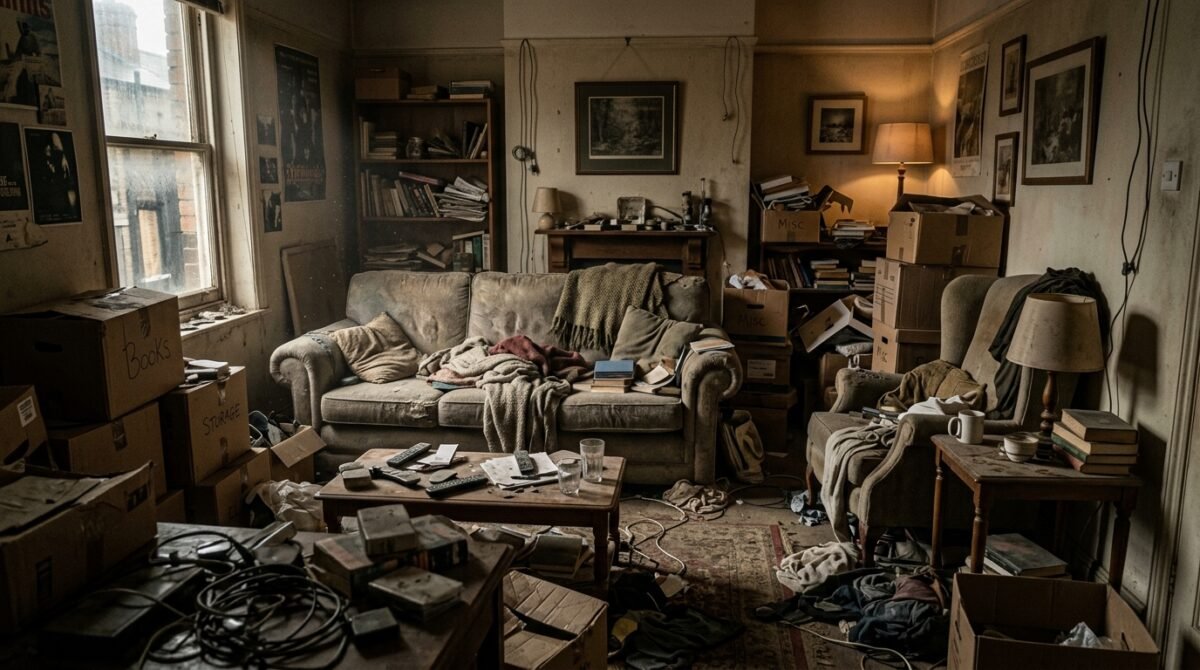
We all have that one family member who treats our home like a public warehouse. For me, that person is my older sister, Clara. It started with a simple, frantic phone call—a classic ’emergency’ that turned out to be a poorly planned transition between leases. She promised me that her life would be back on track in a fortnight. Two weeks, she said. Just enough time for her to find a new apartment and move her life out of my living room.
I, being the younger sibling who was conditioned by years of familial guilt-tripping to always say yes, agreed without hesitation. I cleared out my reading nook, pushed my own small coffee table against the wall, and waited. That was eight months ago. What began as a favor to a sister in distress transformed into a slow-moving, agonizing occupation of my living space that eroded my mental health and my respect for her boundaries.
The furniture wasn’t just ‘stored’; it was lived around. I navigated a maze of particle-board bookshelves and a heavy, velvet sofa every single day. I couldn’t host friends, I couldn’t relax in my own home, and I couldn’t even walk to the kitchen without maneuvering through her discarded life. Every time I brought it up, I was met with ‘you’re so lucky you have space’ or ‘family is supposed to help each other, right?’
The tipping point arrived on a Tuesday morning when I looked at my bank statement and realized I was paying for a larger apartment specifically to accommodate someone who didn’t even live there. The sheer audacity of the situation hit me like a physical weight. That afternoon, I sat down at my desk, opened a spreadsheet, and decided that if Clara wanted to run her life out of my living room, she was going to start paying the market rate for the privilege.
This is the story of how a single PDF invoice sent to a family group chat dismantled months of passive-aggressive silence and ignited a war that would force me to choose between being the ‘nice’ sibling and reclaiming my own existence. It wasn’t just about the furniture anymore; it was about the cost of being taken for granted.
The Two-Week Promise That Turned Into A Lifetime
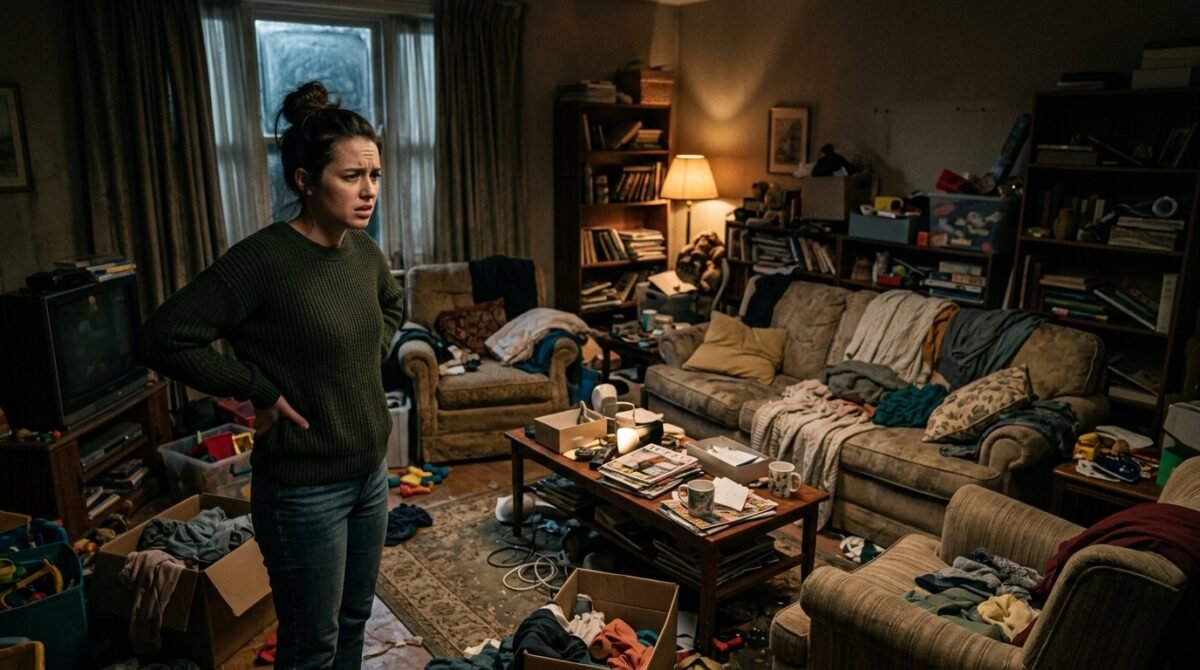
When Clara first moved her things into my apartment, she was crying. She spoke about a toxic landlord, a sudden rent hike, and the sheer desperation of needing a place to stash her belongings while she ‘scoped out the market.’ I felt for her. I really did. I spent an entire Saturday helping her boyfriend move these bulky, heavy items up three flights of stairs. By the end of the day, my living room was unrecognizable. It felt like a storage locker disguised as a home.
The first two weeks passed in a blur. I didn’t mind the clutter at first because I truly believed she was looking for a new place. I even offered to help her look at listings. She would brush it off, saying, ‘Oh, the market is just so bad right now, I don’t want to settle.’ I started to notice that she wasn’t actually looking for an apartment; she was looking for a free ride. She was perfectly happy living with her boyfriend in a cramped studio, while I was effectively subsidizing her furniture storage.
The friction started in the second month. I asked her when she planned to move the items, and she snapped at me. She acted as though I was being heartless. She told me that since I had ‘all this extra room,’ I should be happy to help her get back on her feet. It was the first time I realized that my kindness was being interpreted as an invitation to exploit me. The dynamic had shifted from a temporary favor to a permanent fixture.
“I just thought you were a better sister than this. Most people would be glad to help family out during a hard time instead of acting like a landlord.”
— Clara, during our first heated argument in the kitchen.
I tried to explain that it wasn’t about being ‘better’ or ‘worse’; it was about the fact that I couldn’t use my own living room. I couldn’t have people over, and I felt stressed every time I walked through my front door. She wouldn’t listen. She just rolled her eyes and told me I was being dramatic. That’s when I stopped talking and started documenting everything. I began taking photos of the clutter, tracking the dates, and, most importantly, calculating the cost of what it would have cost her to rent a storage unit in our neighborhood.
I kept track of the space she occupied, the square footage, and the local rates. It was a cold, calculated exercise, but it was the only thing that kept me sane. I realized that if I didn’t put a value on my space, she never would. I wasn’t just losing my living room; I was losing my peace of mind. Every day that passed was another day I was forced to live in a warehouse of her making, and I knew I had to do something drastic to break the cycle.
The Spreadsheet Heard ‘Round The Family

I didn’t just send her a text message; I created a formal, professional-looking invoice. I used a standard template and listed the items: ‘One (1) Velvet Sofa,’ ‘Two (2) Bookshelves,’ ‘Six (6) Boxes of Decor,’ and ‘One (1) Dining Set.’ I calculated the daily storage rate based on the cheapest local facility, added a small ‘convenience fee’ for my own emotional labor, and generated a total that, quite frankly, looked terrifying on paper.
The total for the first eight months came out to just over $3,200. I didn’t send it to her privately. I knew that if I sent it privately, she would just ignore it or delete it. Instead, I sent it to our family group chat. I titled the message, ‘Update on the storage situation.’ I wanted my parents and my other siblings to see exactly what had been happening behind the scenes. I was done being the secret martyr.
“Hey everyone, I’ve been storing Clara’s furniture for 8 months now. Since it’s become a long-term arrangement, I’ve decided to charge the market rate for storage. Here is the invoice. Please have the payment transferred by the end of the week.”
— The message I sent to our family group chat.
The silence in the group chat was immediate. For three hours, nobody said a word. I sat on my couch—well, the tiny corner of it that wasn’t covered in her boxes—and stared at my phone. My heart was pounding. I knew I had crossed a line, but it was a line that needed to be crossed. I was tired of being the ‘accommodating one’ while everyone else looked the other way.
Finally, my mom typed something. ‘Is this really necessary? She’s your sister!’ I replied that my sanity was necessary. I didn’t back down. I explained that I had been patient for eight months, and that my living room wasn’t a charity. The backlash from Clara was instant. She called me, screamed at me, and threatened to never talk to me again. I just kept repeating the same thing: ‘Pay the invoice, or move the furniture by Friday.’
It wasn’t about the money. I honestly didn’t care if she paid it or not; I cared about the furniture being gone. I knew that by putting a price tag on her behavior, I was forcing her to face the reality of her entitlement. If she didn’t want to pay, she had to move. It was the only way I could reclaim my home without having to get into a physical fight to clear the place out.
The Immediate Fallout And The Family Intervention

By the next morning, my phone was blowing up. My aunt, my uncle, and even my grandma were chiming in, most of them taking Clara’s side. They were calling me ‘petty’ and ‘materialistic.’ It was surreal to watch them twist the narrative. Suddenly, I was the villain for wanting to walk through my own apartment without tripping over a chair.
Clara had clearly played the victim card perfectly. She told them I was ‘evicting her furniture’ without any warning, even though I had been asking her to move it for months. They didn’t care about the facts; they cared about the drama. I realized then that my family had a habit of enabling Clara because she was ‘the one who needs help,’ while I was ‘the one who has their life together.’ It was a trap I had been falling into for years.
I had to stand my ground. When my mom called me to ‘talk some sense into me,’ I told her exactly how it was. I told her that if she was so concerned about the furniture, she could pay the invoice herself and keep it in her own basement. That shut her up for a second. She started backpedaling, saying she didn’t mean it like that, but I wasn’t having it. I was done with the double standards.
“I don’t care if you think I’m petty. You aren’t the one living in a storage unit. If you’re so worried about her, you take the stuff.”
— My response to my mother during a heated phone call.
The pressure was immense. I felt like the walls were closing in, not just because of the furniture, but because of the emotional manipulation. I had to disconnect from the family group chat to keep my head clear. I turned off my notifications and just focused on my work. I was shocked by how much of my energy had been spent worrying about what my family thought of me, rather than what I needed to survive.
I kept the invoice active. I didn’t delete it, and I didn’t apologize. Every day that the furniture stayed, I added another daily rate to the total. I was essentially creating a ticking clock. I knew that Clara’s pride wouldn’t allow her to pay, and her laziness wouldn’t allow her to move it easily, so I had to be the one to force the issue. I was essentially playing a game of chicken with my own sister.
The 6:00 AM Kitchen Confrontation

On Wednesday morning, I woke up to find Clara in my apartment. She had a spare key that I had given her ‘for emergencies’ months ago. I hadn’t changed the locks yet—a massive oversight on my part. She was standing in my living room, looking at her furniture with a look of pure disgust. She didn’t look like a sister who was grateful for my help; she looked like an intruder in her own territory.
I walked out of my bedroom, still in my pajamas, and asked her what the hell she was doing. She didn’t even look at me. She just started pointing at her stuff, saying she was ‘organizing it better’ so I couldn’t complain about the space. I told her that wasn’t the point. I told her she had no right to be in my apartment at 6:00 AM, and she definitely had no right to be here without asking.
The argument that followed was the most explosive one we’ve ever had. She screamed about how I was ‘destroying the family’ for a few hundred dollars. I screamed back that she had destroyed our relationship by treating me like a doormat. We were both crying, both exhausted, and both completely fed up with each other. It was the moment where I realized that the relationship might be beyond repair, and strangely, that realization brought me a sense of peace.
“You are not family right now. You are just a tenant who doesn’t pay rent and ignores the lease terms. Get out of my house.”
— Me, during the 6:00 AM confrontation.
She eventually stormed out, leaving the door wide open. I didn’t follow her. I locked the door behind her, and for the first time in eight months, I felt like I was in control of my own home. I knew she would try to come back, or that she would send her boyfriend, but I was prepared. I had already called a locksmith. I was done being the accommodating sibling who sacrifices her own needs for someone else’s convenience.
The aftermath of that morning was a strange cocktail of adrenaline and regret. I felt bad about the way I yelled, but I felt empowered by the fact that I stood up for myself. I realized that my sister had been using me as a crutch for years, and by finally saying ‘no,’ I was actually forcing her to grow up. It was a harsh lesson, but one she desperately needed to learn.
The Internet Weighs In: The Reddit Verdict

I decided to post my story on Reddit to see if I was crazy. I needed an objective perspective, because I couldn’t trust my family, and I didn’t know if I was being too hard on her. I kept the post anonymous but included all the details about the invoice, the family group chat, and the 6:00 AM ‘visit.’ The response was overwhelming. Within hours, the post had thousands of upvotes and hundreds of comments.
The consensus was clear: I was not the asshole. Almost everyone agreed that I had been more than patient, and that charging for storage was a completely reasonable response to a boundary-stomping sibling. People shared their own stories of family members who overstayed their welcomes and how they eventually had to set firm boundaries to keep their homes from becoming dumping grounds.
“NTA. Your sister is not just ‘forgetful’ or ‘busy.’ She is actively exploiting your kindness. Eight months is not a favor; it is a lifestyle. The invoice was a brilliant way to force her to recognize the value of the space she is taking up. Stick to your guns.”
— u/ReasonableBoundary (Top Comment, 32.1k upvotes)
Reading those comments was incredibly validating. I realized that I wasn’t ‘petty’ or ‘mean’; I was simply someone who had finally reached their limit. The internet gave me the confidence to stick to my decision even when my parents were still trying to guilt-trip me. I realized that the narrative my family was spinning was designed to keep me in line, and the outside perspective gave me the clarity to see through it.
There were a few comments that suggested I might have gone too far by sending the invoice to the group chat, but most people agreed that it was necessary to stop the enabling behavior. I felt like a weight had been lifted off my shoulders. I realized that I didn’t owe my sister my peace of mind, and that it was okay to prioritize my own living situation over her convenience.
The Final Ultimatum And The Moving Truck
The following Friday, I made sure I was home when I knew Clara would try to come by. I had an eviction notice ready—not an official legal one, but a sternly worded document that I had typed up, stating that if her belongings were not out by the end of the weekend, they would be placed on the curb. I wasn’t joking. I had already looked up the local laws, and since she wasn’t on the lease and hadn’t paid rent, I was within my rights to remove them.
When she arrived with her boyfriend, she looked shocked to see me sitting there with the paper in my hand. I didn’t let her speak. I told her, ‘You have forty-eight hours. After that, I am hiring movers to clear this place out and I am charging you for the cost, which will be added to the invoice.’ She looked at her boyfriend, then at the furniture, then at me. She finally realized that the game was over.
She started to argue, but I just pointed to the door. I told her that if she didn’t like it, she could take it up with the court, but that I was done talking about it. The boyfriend, surprisingly, didn’t say a word. He just started moving the boxes. It was a tense, silent afternoon of packing. I didn’t help. I sat in my kitchen, sipping coffee, and watched as my living room slowly started to look like an apartment again.
“You have exactly forty-eight hours. If this furniture isn’t gone, it goes to the curb. I’m done.”
— Me, delivering the final ultimatum to my sister.
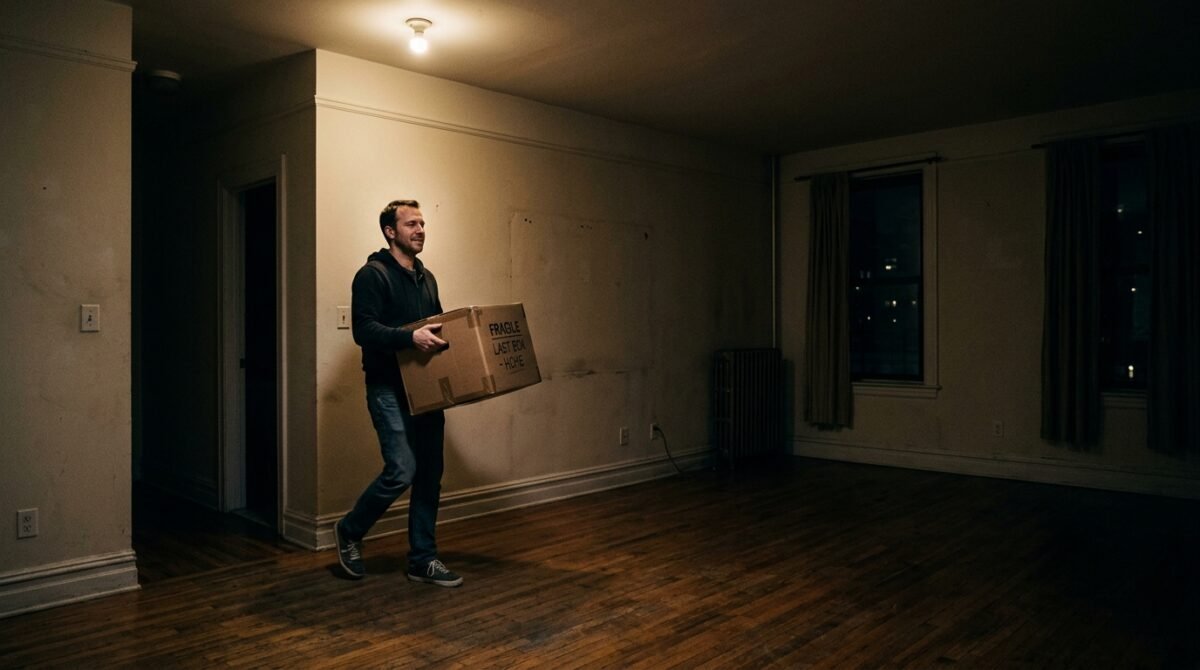
Watching them work was a strange experience. I felt a sense of relief, but also a lingering sadness. It shouldn’t have come to this. We should have been able to talk it out, but our relationship had reached a point where negotiation was impossible. The move took all night. By 2:00 AM, the apartment was empty, and I felt a sense of peace that I hadn’t felt in months. The furniture was gone, and so was the weight of the entitlement.
I didn’t care about the money anymore. I just wanted my home back. When they finally left, I took a deep breath and walked through my living room. I could see the floorboards again. I could walk in a straight line. I felt like I had finally reclaimed my life, and for the first time in a long time, I was excited to be in my own home again.
The Aftermath: Silence And New Boundaries

It has been three months since the furniture was removed. Clara and I haven’t spoken since that night. My parents are still giving me the cold shoulder, but I don’t care. I’ve started seeing a therapist to help me deal with the guilt-tripping and the family dynamics that made me feel like I had to be the ‘nice’ one at the expense of my own happiness. It’s been a transformative experience.
I’ve learned that setting boundaries isn’t about being mean; it’s about preserving your own well-being. I was so afraid of being seen as the ‘bad sibling’ that I almost destroyed my own peace. Now, I see things differently. I see that family members who push your boundaries don’t actually care about you; they care about how you can serve them. And that is a realization that has changed the way I interact with everyone in my life.
My living room is now exactly how I want it. I have a comfortable reading chair, a small coffee table, and plenty of space to breathe. I host dinner parties, I invite friends over, and I actually enjoy spending time at home. It’s a simple pleasure, but after eight months of living in a warehouse, it feels like the greatest luxury in the world.
“I learned the hard way that you can’t set yourself on fire to keep others warm. My home is my sanctuary now, and I’m never letting anyone compromise that again.”
— My personal reflection after months of healing.
I still get messages from my aunt every once in a while, trying to guilt me into calling Clara, but I don’t respond. I know that if I open that door, the cycle will just start all over again. I’ve come too far to go back to being the person I was, and I’m finally okay with that. I am the one who lives in my home, and I am the one who gets to decide who is welcome there.
If you are in a similar situation, my advice is simple: don’t wait eight months. Don’t let your kindness be weaponized against you. If someone is disrespecting your space, set a clear boundary early. It’s not your job to fix their life, especially when they aren’t willing to fix it themselves. You are allowed to be happy in your own home, even if it makes other people uncomfortable.
Reflecting On The Financial Realities

I often look back at the spreadsheet I created. It serves as a reminder of how much I was willing to tolerate. The total amount, which ended up being nearly $4,000 when factoring in the final months, is a number I will never forget. It’s not just a monetary value; it’s the cost of my patience. It was a expensive lesson, but one that was worth every single penny in the end.
Sometimes people ask me if I regret sending the invoice. I tell them that the only thing I regret is not sending it in the first month. I was so worried about being ‘the bigger person’ that I became the ‘smaller’ one. I let someone else dictate my life, and that’s a mistake I will never make again. The invoice wasn’t about the money; it was about the power dynamic, and by reclaiming that, I reclaimed my life.
I’ve started to look at my finances differently as well. I don’t just see numbers; I see the value of my time and my environment. I’ve started putting aside money for my own home, a place that will truly be mine, where I will never have to worry about someone else’s clutter. It’s a goal that has given me a new sense of purpose and direction.
“The financial cost was high, but the emotional cost was even higher. Never underestimate the price you pay for keeping the peace at the expense of your own boundaries.”
— My concluding thought on the value of boundaries.
Every time I look at my empty, clean living room, I’m reminded of the strength it took to make that decision. It wasn’t easy to stand up to my family, to be the ‘bad guy,’ or to endure the silent treatment. But it was worth it. I am finally at peace, and for the first time, I feel like I am in control of my own destiny. That, to me, is priceless.
Navigating The Family Holiday Tension

The upcoming holidays are going to be a real test. For the first time in years, I’m planning to spend them away from my parents’ house. I know they’ll be upset, and I know Clara will probably be there, playing the victim. But for once, I don’t feel the need to be there. I’m creating my own traditions, spending time with people who respect my boundaries, and prioritizing my own happiness.
It’s hard to break away from family traditions, even when those traditions are toxic. But I’ve realized that I don’t owe my family my presence at the expense of my well-being. If they want to be around me, they have to respect the boundaries I’ve set. It’s a simple rule, but one that has been incredibly difficult to enforce. But I’m ready.
I’ve started to build my own ‘family’—friends who support me, who appreciate my boundaries, and who don’t treat me like a resource to be tapped. It’s a different kind of relationship, one built on mutual respect rather than obligation. It’s a change that I’m grateful for, and one that I know will make this holiday season the best one yet.
“You don’t have to set yourself on fire to keep your family warm. Sometimes, the most loving thing you can do is walk away and create your own space.”
— My mantra for the holiday season.
I know there will be pressure to ‘make amends,’ but I’m not interested in amends if it means compromising my values. I’m interested in respect, and until I get that, I’m content to keep my distance. It’s a hard position to hold, but it’s the only one that allows me to sleep soundly at night. I’m finally living for me, and that is a feeling I wouldn’t trade for the world.
Lessons Learned In The Art Of Saying No

The biggest lesson I’ve learned is that ‘no’ is a complete sentence. I used to think I had to justify every boundary, to explain why I couldn’t do something, or why I needed space. I don’t anymore. I can just say no. It’s a power I’m still getting used to, but it’s been incredibly liberating. I don’t feel the need to argue my case; I just stand by my decision.
I’ve also learned that people who are used to you being ‘nice’ will often be the most shocked when you finally set a boundary. They’ll call you ‘changed’ or ‘different,’ and they’ll mean it as an insult. But I take it as a compliment. I *have* changed. I’ve become someone who values herself enough to say no, and that is a change that I’m incredibly proud of.
I hope that by sharing my story, I can inspire others to set their own boundaries. It’s not easy, and it’s not always pretty, but it is necessary for your own survival. You are the only person who can advocate for yourself, and you are the only person who can define what your life looks like. Don’t let anyone else take that away from you.
“The moment you realize your worth is the moment you stop letting others dictate the terms of your life. Boundaries are not walls; they are guardrails that keep you safe.”
— Final reflection on the power of boundaries.
I’m finally at a point where I can look back at the last year and smile. Not because it was easy, but because I survived it. I came out the other side stronger, wiser, and more confident in myself. I’m not the same person I was a year ago, and for that, I’m truly grateful. I’m ready for whatever comes next, and I’m ready to live a life that is entirely my own.
Conclusion
In the end, my sister moving her furniture out was about so much more than clearing floor space. It was about reclaiming my autonomy and deciding that my mental health was worth more than the ‘peace’ of being a convenient doormat. It’s a journey that I’m still navigating, but for the first time, I’m the one holding the compass.
The silence in my home is no longer a void; it’s a canvas. It’s the space where I’ve started to build a life that I love, on my own terms. If there’s one thing I want you to take away from this, it’s that you don’t have to carry the weight of other people’s chaos. You have the right to say no, to demand respect, and to live in a space that makes you feel at home.
What about you? Have you ever had to draw a line in the sand with a friend or family member who treated your home like a public storage facility? Did you take the ‘polite’ route, or did you go full-invoice mode? Let me know your thoughts and share your stories in the comments below—I’m curious to see how many of you have survived your own living room nightmares.
What's your verdict on this dilemma?
Vote below to contribute to the official community consensus.

Have a Dilemma Keeping You Up at Night?
Share your real-life feud, wedding chaos, or relationship crossroads anonymously with our editorial team.
What do you think ?
0 Comments🛡️ Comments are moderated to protect community integrity. Your comment will appear once approved by the editorial team.