
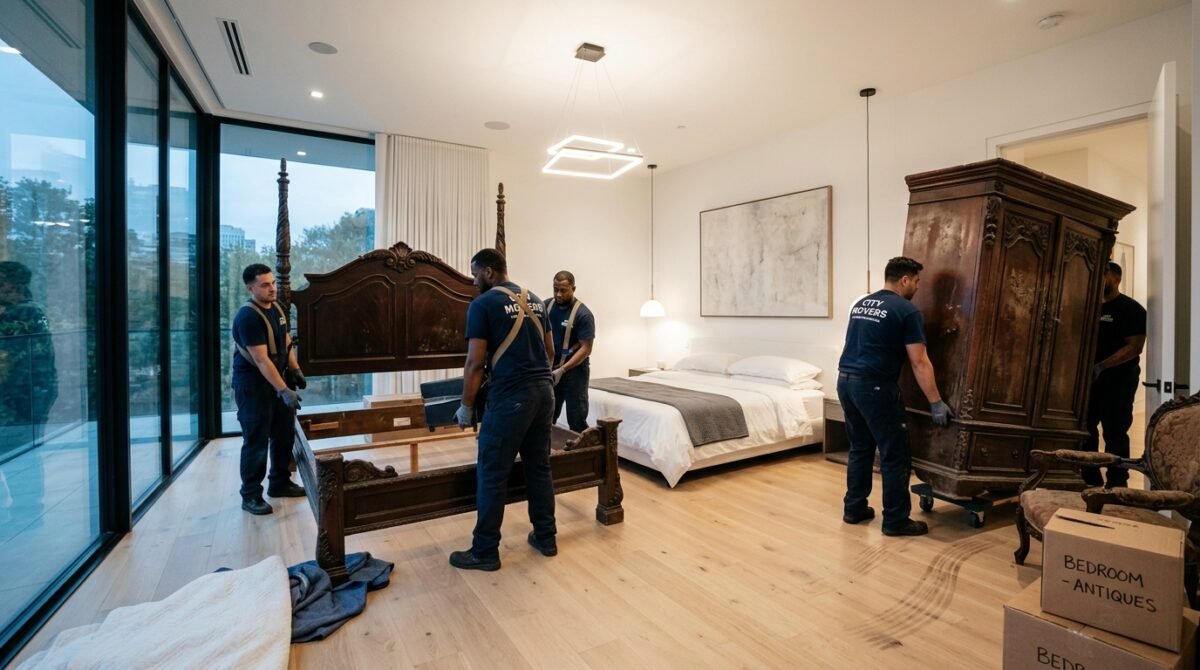
When Mark and I planned our honeymoon to the Amalfi Coast, we envisioned a blissful escape from the chaos of wedding planning. We spent months curating the perfect itinerary, booking boutique hotels, and dreaming of sun-drenched terraces. The last thing on our minds was the state of our own home, a sanctuary we had spent two years renovating together. It was supposed to be our private fortress, a place where we could start our married life without the lingering shadows of family drama.
My mother-in-law, Susan, had always been ‘involved,’ a euphemism I had learned to tolerate for the sake of peace. She was a woman of rigid traditions and deep-seated, often irrational, attachments to her past. For years, she had talked about her ‘heirloom’ bedroom set—a massive, imposing collection of carved mahogany that had sat in her guest room collecting dust since the late nineties. She considered it a masterpiece; I considered it an eyesore that didn’t fit our clean, Scandinavian-inspired home.
We had explicitly told her that while we were away, we wanted total solitude. No drop-ins, no house-sitting, and certainly no ‘projects.’ We had even changed the locks on our garage and side doors, leaving only the front door key with my sister, Sarah, for emergencies like checking on our cat. We felt secure. We felt safe. We had no idea that we had underestimated the sheer audacity of a woman who felt entitled to every corner of her son’s life.
The return flight was long, filled with dreams of our own bed and a quiet morning coffee in our own kitchen. When we pulled into the driveway at 2:00 AM, the house looked different. There was a lingering scent of beeswax polish in the air, even from the porch. As we unlocked the front door and stepped into the hallway, the realization hit us like a physical blow: our home had been violated. And as we walked toward the master suite, the scale of the betrayal became clear.
The Mahogany Invasion of the Master Suite
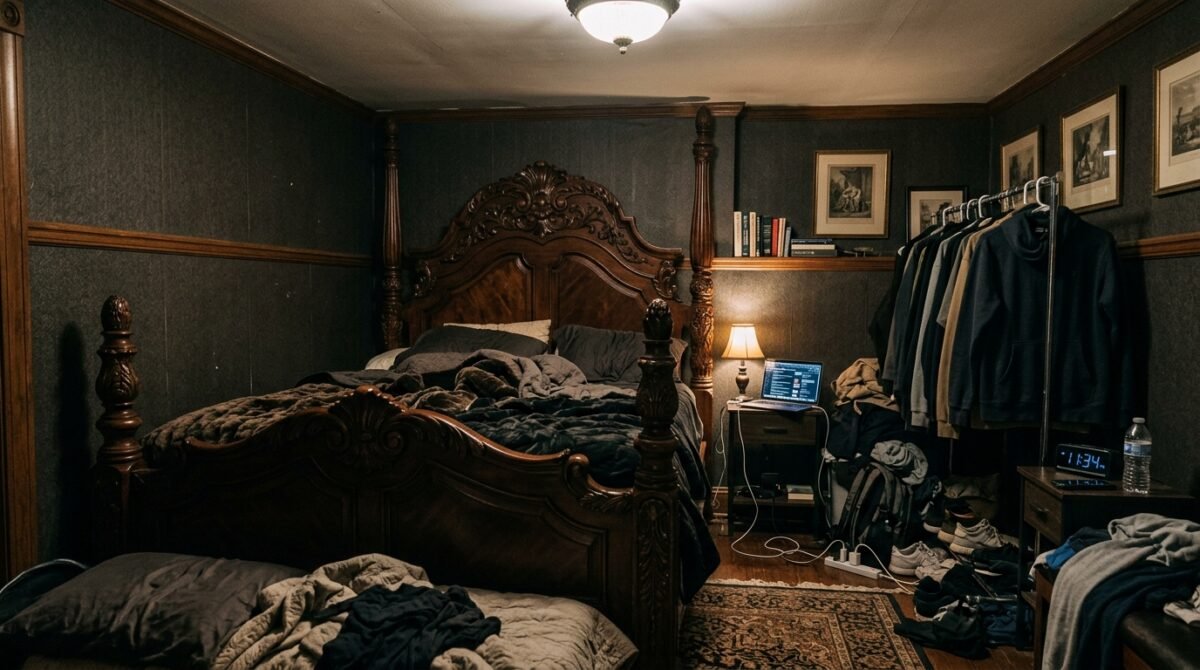
The door to our master suite was slightly ajar. Pushing it open, I didn’t see our plush, modern bed or the minimalist dresser we had painstakingly curated. Instead, I was met with the hulking, dark silhouettes of a four-poster bed frame, two matching nightstands that looked like relics from a funeral home, and a vanity that took up nearly the entire width of our bedroom wall.
The air was stifling, thick with the smell of decades-old dust and furniture wax. My husband, Mark, stood frozen in the doorway, his mouth agape. He reached for the light switch, and the glow revealed the full extent of the nightmare. Our own belongings—our duvet, our pillows, our clothes—had been unceremoniously shoved into the walk-in closet, piled haphazardly on the floor.
Mark immediately called his mother, his voice trembling with a mix of exhaustion and rage. It was 2:30 in the morning, but he didn’t care. When she finally picked up, her tone wasn’t one of apology. It was one of serene satisfaction, as if she had just performed a great act of charity by ‘upgrading’ our living space.
“Mark, darling, please don’t be dramatic. That set was gathering dust, and it deserves to be in a master suite, not a storage room. I hired the movers as a surprise; you’re welcome.”
— Susan, over the phone at 2:35 AM
The audacity left me shaking. She hadn’t just moved furniture; she had effectively colonized our most private space. She spoke as if she had gifted us a treasure, ignoring the fact that our bedroom was now unusable and our personal items had been treated like garbage.
“Susan,” I interjected, stepping into the fray, “you didn’t just ‘surprise’ us. You broke into our house, moved our belongings, and filled our room with furniture we don’t want. You have exactly twenty-four hours to have those movers back here to take it all away, or I am donating every single piece of that set to the nearest thrift store.”
Her gasp on the other end of the line was theatrical. She didn’t respond to the threat; she simply hung up the phone. The silence that followed in our bedroom was heavy, punctuated only by the ticking of the clock and the realization that the honeymoon was truly, and devastatingly, over.
The Sunday Dinner Confrontation
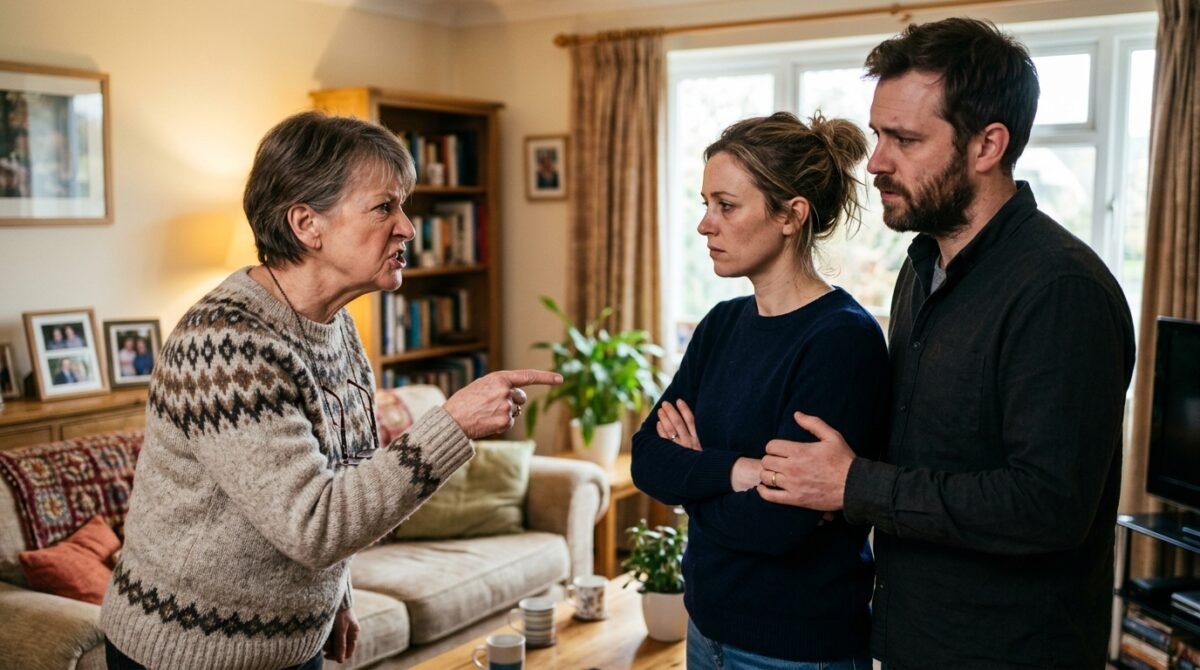
By Sunday, the house was a war zone. We had left the furniture exactly where it was, refusing to touch it, which only seemed to embolden Susan. She arrived at our house at noon, expecting, I assume, to be thanked for her ‘generosity.’ She had brought a casserole, as if a layer of cheese could erase the boundary violation of the century.
When she walked into the master suite and saw the furniture still sitting there—and our suitcases still on the floor—she didn’t look remorseful. She looked wounded. She began talking about how this furniture had been in the family for three generations, how it was a ‘sacred’ piece of our heritage that we were failing to honor.
“I thought you would be grateful. It cost me five hundred dollars to hire that team to move it while you were away. Do you have any idea how hard it is to find reliable movers on such short notice?”
— Susan, during the confrontation
I felt a cold, sharp anger rise in my throat. I looked at Mark, waiting for him to step up, to be the barrier between his mother and our sanity. He looked at the floor, his hands deep in his pockets, struggling with the lifetime of conditioning that taught him to keep the peace at all costs. I realized then that if I didn’t hold the line, no one would.
“Susan,” I said, my voice steady despite the adrenaline. “You paid five hundred dollars to commit a trespass. That is not a gift. That is a hostile act. You are not going to decorate our home. You are not going to decide what ‘heritage’ belongs in our master suite. Either the furniture goes, or you lose access to this house permanently.”
The room went deathly silent. Susan looked at Mark, her eyes welling with tears, waiting for him to contradict me. He looked up, his jaw set, and for the first time, he spoke with real resolve. ‘Mom, she’s right. You need to leave. And you need to hire the movers to come back tomorrow. We are not sleeping in this room until that stuff is gone.’
The Leak of the Secret Group Chat

The fallout wasn’t contained to our four walls. Within hours, my sister-in-law, Jessica, sent me a screenshot that made my blood run cold. It was from a family group chat that I had been intentionally excluded from—a chat labeled ‘The Family Council.’ Susan had been busy, painting herself as the victim of a ‘heartless daughter-in-law’ who was trying to ‘erase the family legacy.’
“Can you believe she wants to throw away the antique set? It’s pure jealousy. She wants to turn their home into some sterile, soulless box. I just wanted to make sure they had something of value in that house. Please, someone talk some sense into Mark.”
— Susan, to the Family Group Chat
The comments that followed were a mix of enabling and outright vitriol. Cousins I barely spoke to were chiming in, calling me ‘ungrateful’ and ‘controlling.’ They were discussing how I had ‘changed’ Mark and how he was ‘under my thumb.’ It was a masterclass in gaslighting, orchestrated by a woman who couldn’t stand the idea of her son having a life that didn’t revolve around her.
I felt sick. This wasn’t just about furniture; it was about power. Susan had weaponized the entire extended family against me, turning a simple boundary setting into a moral failing on my part. I decided to respond, not in the chat, but by calling each of them out individually. I sent the photos of how our room had been treated—the piles of clothes, the dust, the sheer disruption.
“If any of you think this is acceptable,” I wrote to the group chat before blocking Susan, “you are welcome to take the furniture into your own homes. I have a feeling it would fit perfectly in your guest rooms. If you’d like the address of the moving company, let me know.” The silence that followed was deafening.
The Reddit Community Weighs In

I turned to the only place that would give me an objective perspective: Reddit. I posted the full story, the timeline, and the screenshots of the group chat. I didn’t sugarcoat anything. Within minutes, the replies started rolling in, and the solidarity was both overwhelming and validating. I wasn’t crazy. I wasn’t the villain.
“This is not just ‘entitlement,’ this is a massive boundary violation and a potential legal issue. Changing locks is a good start, but you need to go NC (No Contact) for a while. She clearly has zero respect for your autonomy. NTA (Not The Asshole) a million times over.”
— u/BoundariesQueen (Top Comment, 32.5k upvotes)
Another commenter provided a more tactical approach, pointing out the financial and legal ramifications of Susan’s actions. The advice ranged from filing a police report for trespassing to seeking legal counsel regarding the ‘heirloom’ status of the items. It was eye-opening to see how many people had dealt with similar ‘narcissistic’ behavior from in-laws.
The thread grew to thousands of comments, with people sharing their own horror stories of house invasions. It felt like a global support group. I realized that my situation wasn’t an anomaly; it was a symptom of a larger issue where parents viewed their children’s homes as extensions of their own. The consensus was clear: do not apologize, do not negotiate, and do not let her back in until she acknowledges the severity of her actions.
Reading the support gave me the strength to stand my ground. When Mark read the comments, his eyes were opened. He had been conditioned to view his mother’s ‘eccentricities’ as harmless, but seeing them labeled as abuse by thousands of strangers forced him to reevaluate the entire dynamic of their relationship.
The Final Stand at the Doorstep
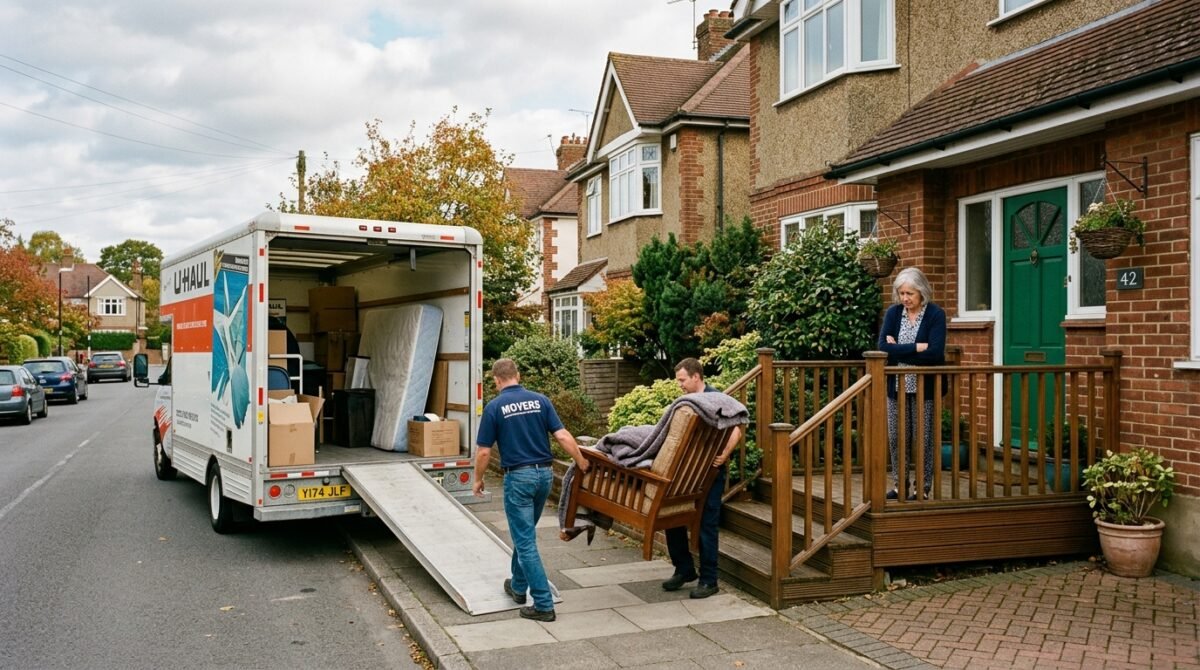
When the movers finally arrived on Tuesday—hired by Susan after Mark threatened to bill her for the cost of professional junk removal—it wasn’t a peaceful affair. Susan showed up with them, still convinced she could talk us out of it. She stood on our front porch, arms crossed, trying to block the entrance.
“You are making a mistake you will regret for the rest of your life,” she declared, her voice trembling with indignation. She looked at the movers, trying to sway them to her side, as if they were part of some grand crusade. The lead mover, a burly man who clearly just wanted to get paid and go home, ignored her and started walking toward our bedroom door.
I didn’t argue. I didn’t engage. I just stood behind the door, holding my phone with the security camera footage ready to record. ‘Susan, step aside, or I am calling the police for trespassing,’ I said, my voice calm and firm. She looked at Mark, hoping for a flicker of weakness, but he didn’t even look at her. He was busy helping the movers navigate the heavy vanity out of our tight hallway.
Seeing her son walk past her without even a glance was the moment the reality seemed to hit her. She realized she had lost the battle for our space, and more importantly, she had lost her grip on his loyalty. As the last piece of mahogany was loaded into the truck, she turned to me and whispered, ‘You’ve won, but you’ve ruined this family.’ I simply closed the door and locked it behind her.
The Aftermath of No Contact

The weeks following the ‘Great Furniture Heist’ were quiet. We went strictly No Contact with Susan. No texts, no phone calls, no Sunday dinners. It was the best decision we could have made. Our home began to feel like ours again, not a museum for things we didn’t want. We reclaimed our bedroom, painted the walls a soothing sage green, and bought a bed that was our own choice.
Mark had a hard time at first. He felt the pull of guilt, the ingrained desire to please the woman who raised him. But we went to counseling together, and it helped him process the years of manipulation. He learned that setting boundaries wasn’t about hurting his mother; it was about protecting his marriage. He began to see his mother’s actions not as ‘love,’ but as a way to control him.
We also had to deal with the fallout from the rest of the family. Some cousins reached out to ‘mediate,’ but we set a firm boundary: if they wanted to talk about Susan, they could take it elsewhere. We were not discussing our private lives, our home, or our marriage with anyone who didn’t respect our decisions. It was a lonely road, but it was a peaceful one.
The weight of the constant surveillance and judgment lifted. We could finally exhale. Our home, once a place of tension and potential intrusion, became a sanctuary. We realized that family is a choice, and we were choosing to build a family based on mutual respect rather than obligation.
Healing and Moving Forward

It’s been six months since the incident. We haven’t spoken to Susan, and honestly, we haven’t missed it. We spent the time focusing on our marriage, traveling to places that were actually ours, and building a life that was truly independent. We even installed a smart security system, one that lets us know exactly who is on our property at all times.
Mark recently received a letter—the classic ‘I’m sorry, but…’ letter. It was filled with justifications and attempts to minimize what she did, claiming she was just ‘trying to help.’ We didn’t respond. We didn’t even read the whole thing. We just filed it away in a box of ‘things that don’t belong in our life’ and moved on with our evening.
We learned that boundaries are not a one-time thing. They are a daily practice. They are the small refusals to answer a guilt-tripping text, the choice to prioritize our own peace over someone else’s comfort, and the ability to say ‘no’ without explaining why. We are stronger, both as individuals and as a couple, because of the fire we had to walk through.
If you are reading this and wondering if you should let ‘just this one thing’ slide, don’t. The small intrusions are the seeds of the big ones. Guard your space, your home, and your peace like your life depends on it, because in a way, your quality of life does.
Reflecting on the ‘Heirloom’ Fallacy
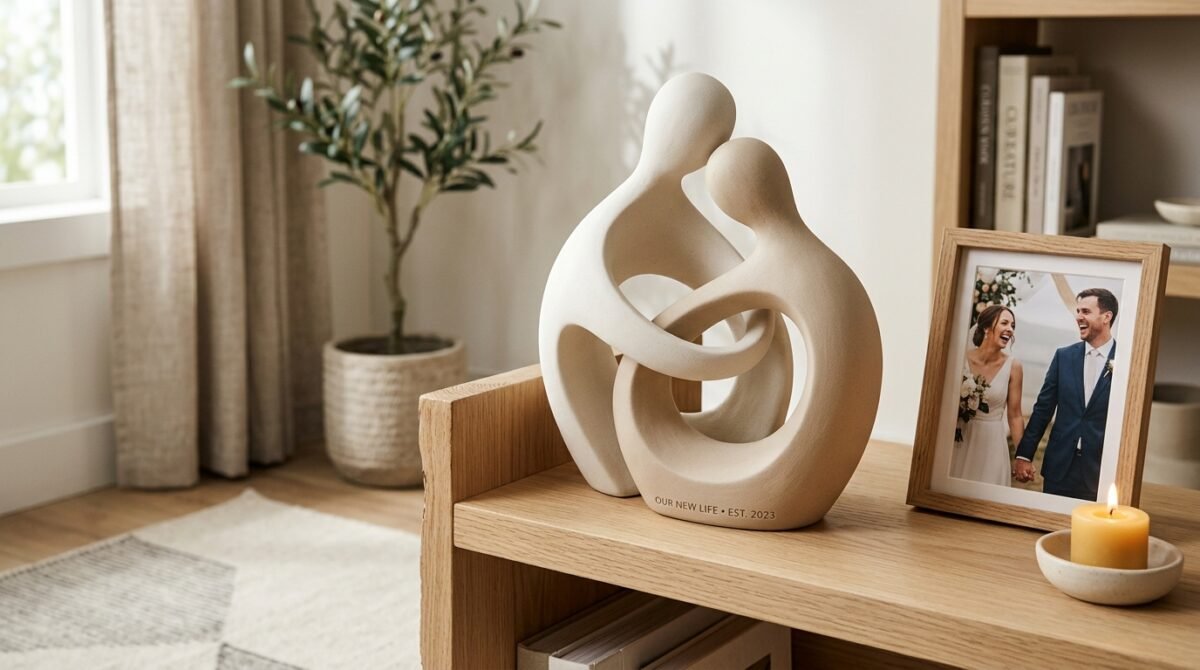
The furniture was never about the furniture. That’s the biggest lesson we took away from this entire ordeal. The bedroom set was a proxy for Susan’s need to maintain her place in our lives. By forcing her ‘heirlooms’ into our home, she was trying to physically manifest her presence, to ensure that every time we laid down to sleep, we were literally resting on her choices.
It’s a common tactic for parents who struggle with the transition of their children into independent adults. They use ‘tradition,’ ‘legacy,’ and ‘value’ as tools to guilt-trip and coerce. But true legacy is about the values you pass down, not the wood you force into your child’s home. We have decided that our home will only contain items that bring us joy and reflect who we are, not who we are expected to be.
We have also started to look at our own potential future as parents, and we’ve made a pact. We will never be the kind of parents who force our tastes or our ‘stuff’ onto our children. We want them to feel that their home is their own, a place where they can grow and evolve without our interference. We want to be the kind of grandparents who are invited, not the ones who need a key to break in.
Looking back, I am almost grateful for the incident. It forced a crisis that we needed to resolve to truly begin our marriage. Without it, we might have spent years being slowly squeezed out of our own space by subtle, ongoing intrusions. The shock of the moving vans was a wake-up call that we couldn’t ignore.
Lessons for the Community

If you find yourself in a similar situation, remember this: you are allowed to be the ‘bad guy’ in someone else’s story. You are allowed to protect your boundaries even if it hurts feelings. You are allowed to prioritize your marriage over your relationship with your in-laws. Being ‘nice’ is not a virtue if it comes at the expense of your own mental health and autonomy.
Trust your instincts. If something feels off, it usually is. Don’t wait for a grand explosion to set your foot down. The moment someone disregards your ‘no,’ they have shown you exactly who they are. Believe them the first time. Don’t wait for them to prove it again with moving vans and surprise furniture drops.
Remember that you have the right to curate your own life. Your house is a reflection of your journey, your partnership, and your future. It should not be a storage locker for the past, especially not someone else’s past. Hold your ground, keep your keys, and don’t be afraid to change your locks if you have to.
We are still in the process of healing, but we are doing it together. We are stronger than we were before the wedding, and we are more confident in our ability to handle whatever life—or mother-in-law—throws our way. The door is closed, and we are finally, truly, home.
The Final Verdict: Where Do We Stand?

Today, we live in a house that feels like ours. There isn’t a single item in our bedroom that wasn’t chosen by us. And that, in itself, is a victory. We have learned to enjoy the silence, the space, and the peace of our own company. We are no longer living in anticipation of the next intrusion; we are living in the present.
We occasionally see pictures of our extended family on social media, and we feel a twinge of sadness for the relationships that were lost, but it’s a fleeting feeling. We realized that those relationships were built on a foundation of control and compliance, and we have no interest in rebuilding them on those terms. We are focusing on our own future, our own family, and our own traditions.
Mark and I have never been closer. We have faced the ultimate stress test and come out the other side stronger. We know that we have each other’s backs, and that no amount of pressure from the outside can break the bond we’ve built. We are a team, and we are ready for whatever comes next.
Thank you to everyone who supported us, commented on our posts, and gave us the validation we needed to stay strong. You helped us realize that we weren’t just fighting for a room; we were fighting for the right to be adults in our own lives. And that, we’ve learned, is worth fighting for every single time.
Conclusion
This story is a stark reminder that boundaries are not suggestions—they are the foundation of a healthy adult life. Whether it’s a mother-in-law, a parent, or a friend, no one has the right to treat your home as their own. The betrayal of trust that comes with a secret entry and an unwanted ‘makeover’ is deep, and it takes time to heal from that level of disrespect.
Mark and I have moved past the initial shock, but the lessons we learned will last a lifetime. We now understand that saying ‘no’ is an act of self-preservation, and that the discomfort of a difficult conversation is far better than the resentment of a violated boundary. We are finally living in a house that is truly a home, and we wouldn’t have it any other way.
What about you? Have you ever had a boundary so egregiously crossed that you were forced to go No Contact? Or have you found a way to navigate the delicate balance of family involvement and personal independence without having to draw such a hard line? Share your stories in the comments below—let’s discuss how we can reclaim our peace in a world that often demands we sacrifice it for the sake of ‘family tradition.’
What's your verdict on this dilemma?
Vote below to contribute to the official community consensus.

Have a Dilemma Keeping You Up at Night?
Share your real-life feud, wedding chaos, or relationship crossroads anonymously with our editorial team.
What do you think ?
0 Comments🛡️ Comments are moderated to protect community integrity. Your comment will appear once approved by the editorial team.