
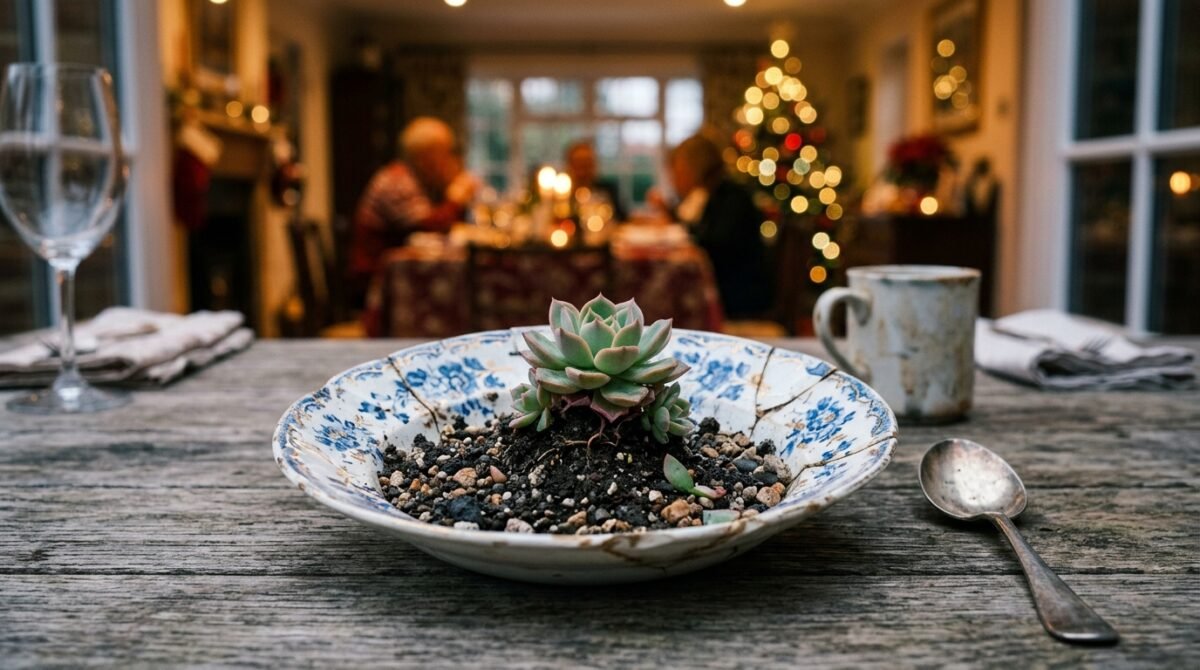
Grief is a strange, non-linear companion. For six years, I have navigated the loss of my mother, holding onto the few tangible remnants of her existence with a possessive, almost holy reverence. Chief among these was her collection of 1940s Limoges china—dainty, gold-rimmed, and infused with the memories of every Sunday dinner she ever cooked for me.
When my father remarried two years ago, I was initially optimistic, or perhaps just desperate for the family structure I felt slipping away. Brenda, my stepmother, seemed pleasant enough—efficient, modern, and decidedly minimalist. She didn’t like ‘clutter,’ a word she often used to describe my father’s sentimental attachments. I didn’t realize until it was too late that my mother’s legacy was, in her eyes, just more clutter to be optimized.
Thanksgiving was supposed to be the bridge between my old life and this new, strange reality. I arrived at my father’s house with a bottle of wine and a heart full of cautious hope, unaware that the centerpiece of my childhood—a collection meant to be passed down through generations—had been systematically dismantled to satisfy a whim for ‘boho-chic’ home decor.
The silence in the kitchen wasn’t peaceful; it was heavy. As I moved toward the sunroom to set down my bag, the sight hit me like a physical blow: rows of perfectly good, vintage saucer plates, each one bearing a small, mud-caked succulent. The gold rims were chipped, the porcelain stained, and the history of my mother’s kitchen was being used as a drainage tray for a three-dollar plant.
I stood there for a long time, the air leaving my lungs. This wasn’t a misunderstanding or a mistake. It was an erasure. And as the smell of turkey wafted through the house, I realized I had two choices: I could stay, eat the meal, and pretend my heart wasn’t breaking, or I could leave and finally draw a line in the sand that I should have etched the moment I met her.
The Sunroom Revelation
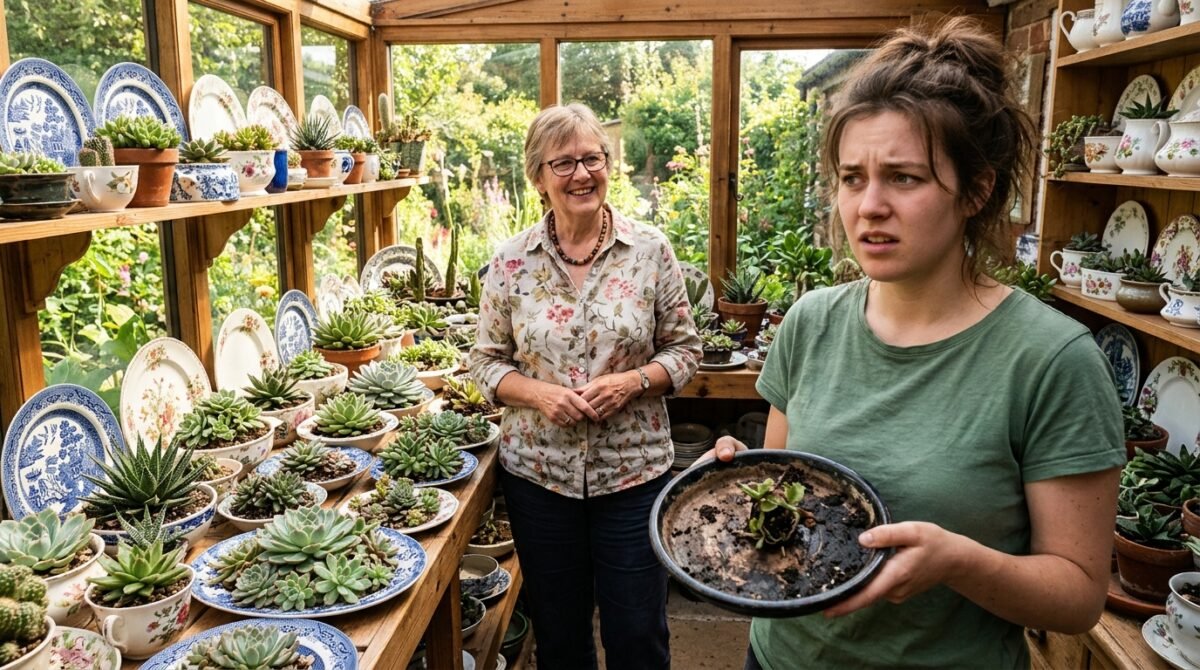
The sunroom was Brenda’s pride and joy. She often talked about her ‘aesthetic vision’ for the house, a vision that involved stripping away the dark woods and floral patterns of my childhood home in favor of cold grays and stark whites. I pushed open the sliding glass door, expecting to find the dog sleeping in the sun. Instead, I saw a workstation.
There, spread across a drop cloth, were the remnants of the Limoges collection. It looked like a graveyard. I walked closer, my stomach dropping as I recognized the distinct cornflower pattern—the same pattern my mother used to serve me hot cocoa on rainy afternoons. Now, the plates were serving as industrial-sized coasters for cactus pots.
I picked one up, my fingers trembling. The bottom of the saucer was covered in dried, crusty potting soil. The delicate porcelain, meant to be handled with gloves and soft cloths, was scratched by the grit of terracotta pots. It was desecration disguised as interior design.
Brenda walked in, wiping her hands on a rag, a bright, oblivious smile plastered on her face. She didn’t look at me with guilt; she looked at the plants with pride. She had no idea—or perhaps she simply didn’t care—what she had destroyed.
“Oh, I’m glad you’re here early! I was hoping to get these finished before everyone arrived. Don’t they look chic? I found them gathering dust in the basement and thought, why keep them in a box when they could actually be useful?”
— Brenda, my stepmother
I stared at her, the words stuck in my throat like shards of glass. The basement? She had gone through my father’s storage without even asking. She hadn’t just ‘repurposed’ them; she had pillaged the one space in the house that still felt sacred to me.
The Anatomy of an Erasure
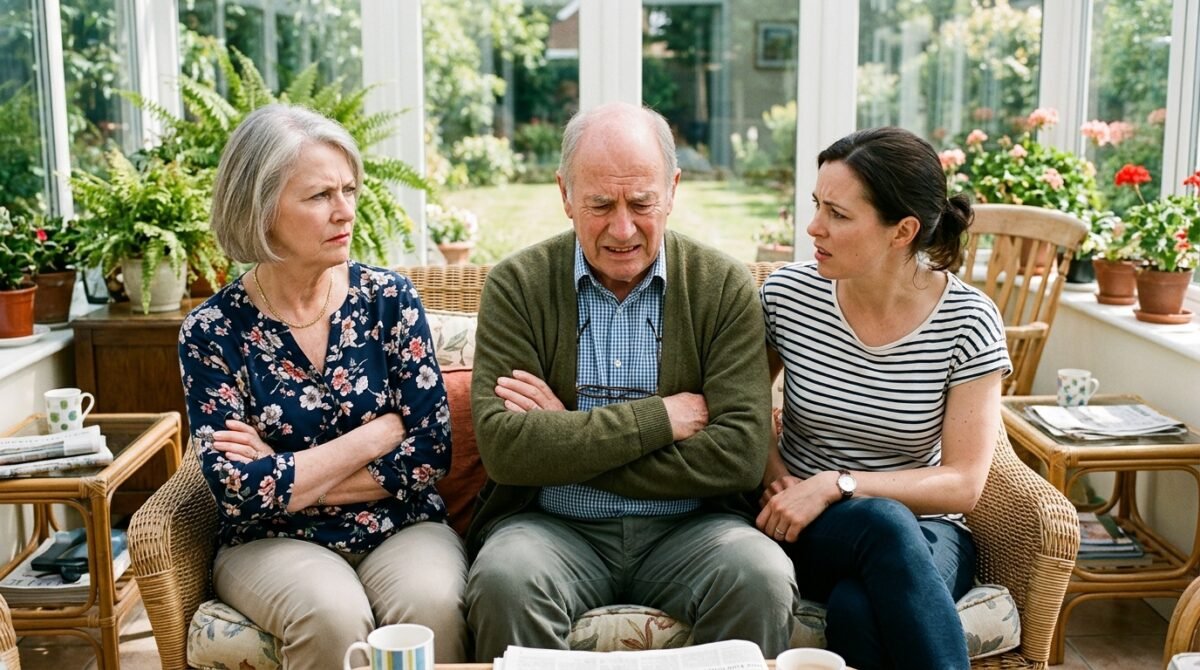
My father walked in moments later, oblivious to the tension radiating off me. He was carrying a bag of ice, whistling a tune. When he saw me standing there, holding the saucer with the soil-caked bottom, his smile faltered. He knew that set. He had bought it for my mother on their tenth anniversary.
I didn’t scream. I didn’t throw anything. I simply looked at him, my voice dangerously steady. I needed to know how this happened. How did my mother’s possessions go from a protected box in the basement to being treated like plastic garden trays? My father looked at Brenda, then back at me, his eyes darting around the room, searching for an exit strategy.
Brenda, meanwhile, was still talking about the ‘vibe’ of the room. She was describing how the gold rims of the plates ‘popped’ against the dark green of the succulents. She was treating the destruction of a irreplaceable sentimental object as if it were a DIY project for a lifestyle blog.
“Dad, these weren’t just ‘dusty plates.’ These were Mom’s. You told me they were being kept safe for me. Brenda, did you ask him if you could drill holes in these? Did you ask anyone?”
— My confrontation in the sunroom
My father sighed, a sound of pure exhaustion. He looked like a man who had decided a long time ago that his life was easier if he just let Brenda do whatever she wanted. He didn’t defend the china. He defended the peace. He told me that they were ‘just things’ and that we shouldn’t let a few plates ruin a holiday. The erasure was complete; not only were the objects gone, but the meaning behind them was being dismissed as trivial.
The Kitchen Table Ultimatum
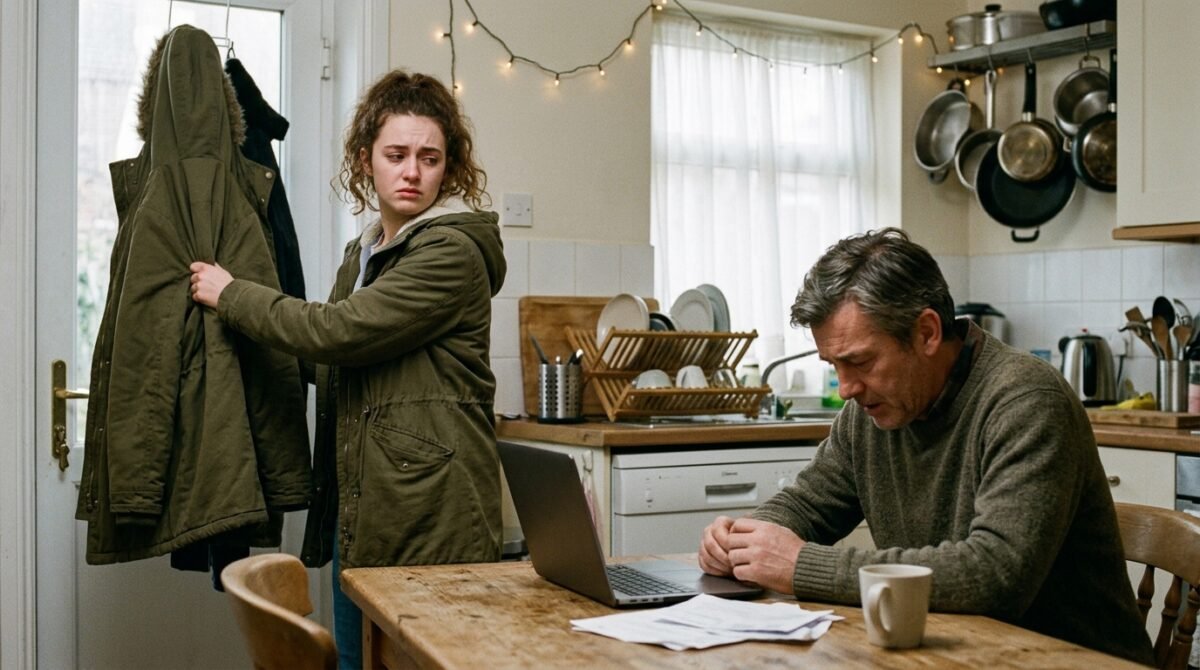
We moved the conversation to the kitchen, the heart of the home, where the turkey was already roasting. The smell of sage and butter, usually comforting, now made me nauseous. I set the saucer on the counter with a sharp ‘clack’ that silenced the room. I felt like a stranger in my own childhood home, a ghost haunting the corridors of a life that no longer belonged to me.
Brenda tried to laugh it off, suggesting we open some wine and ‘shake it off.’ She genuinely seemed to think I was overreacting to a minor decor choice. She spoke to me as if I were a petulant child who didn’t understand the ‘value’ of modernizing a home. It was the condescension that fueled the fire in my chest.
My father started to lecture me about gratitude. He talked about how hard Brenda worked to make the house ‘welcoming’ for me. He pointed at the new granite countertops and the smart-home appliances, as if the shiny newness of the kitchen could compensate for the deliberate destruction of the past.
“I don’t care about your granite, Dad. I care that you let her take the only things I have left of Mom and turn them into trash. You didn’t just throw away plates; you threw away the only memory of our family dinners. I’m done.”
— My final declaration before leaving
I turned to leave, but my father grabbed my arm. He told me I was being dramatic and that if I walked out now, I was ‘choosing’ to be alone on Thanksgiving. The manipulation was so transparent, so textbook, that it actually made me laugh. It was a cold, hollow sound that seemed to surprise everyone in the room.
The Silent Drive Home
The drive back to my apartment was a blur of gray highway and white-knuckled gripping of the steering wheel. I didn’t cry until I was in my driveway. Then, the dam broke. I sat in my car for nearly an hour, watching the neighborhood lights flicker on, one by one. I felt a strange sense of liberation mixed with the absolute devastation of knowing I had truly lost my ‘home.’
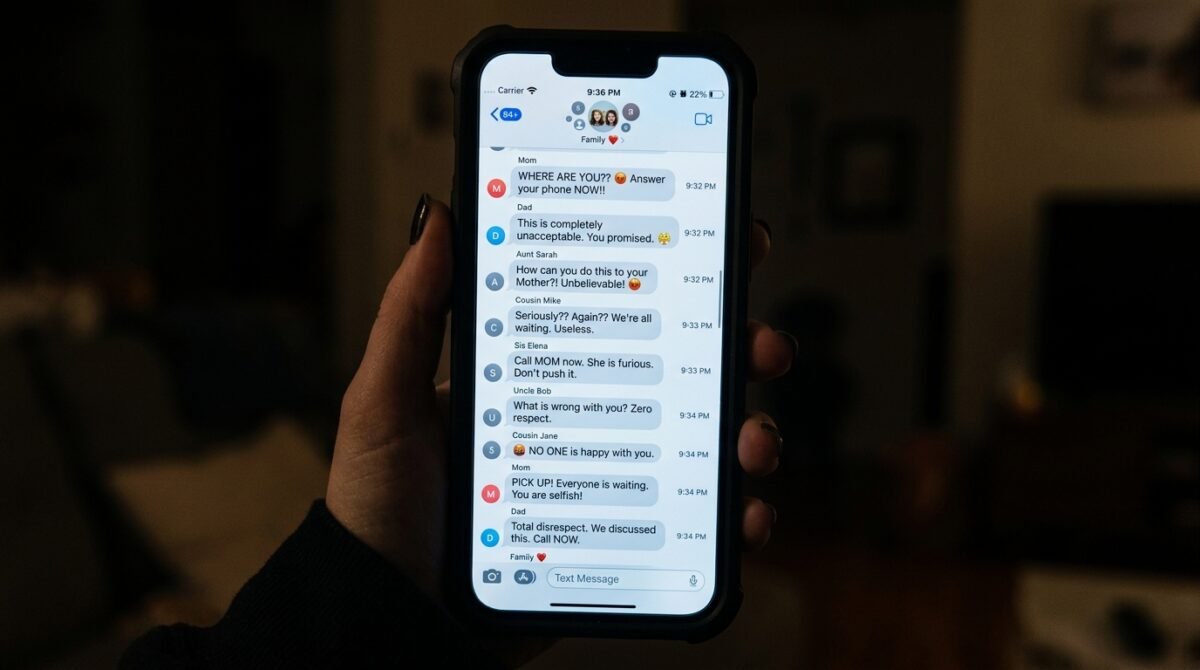
My phone buzzed incessantly in the passenger seat. Notifications flooded the lock screen. A group chat I had been added to—’Family Turkey Time’—was blowing up. My father, Brenda, and my aunt were all weighing in. I didn’t want to look, but my thumb hovered over the screen, drawn to the chaos like a magnet.
The texts were a mixture of ‘You’re being unreasonable’ and ‘Brenda is crying.’ My aunt, who usually stayed out of things, was now chiming in about how ‘family is everything’ and I should apologize for ruining the holiday. They were framing my reaction to the destruction as the problem, rather than the destruction itself.
“You are acting like a spoiled brat. Brenda put so much effort into this holiday and you ruined it over some old dishes. Grow up and come back before the turkey gets cold.”
— My father, via the family group chat
I muted the chat. I didn’t reply. I knew that anything I said would be twisted to fit their narrative. I was the ‘ungrateful daughter’ who couldn’t handle change. I went inside my apartment, turned off my phone, and spent the rest of the night eating cereal in the dark. It was the most peaceful Thanksgiving I’d had in years.
The Reddit Trial
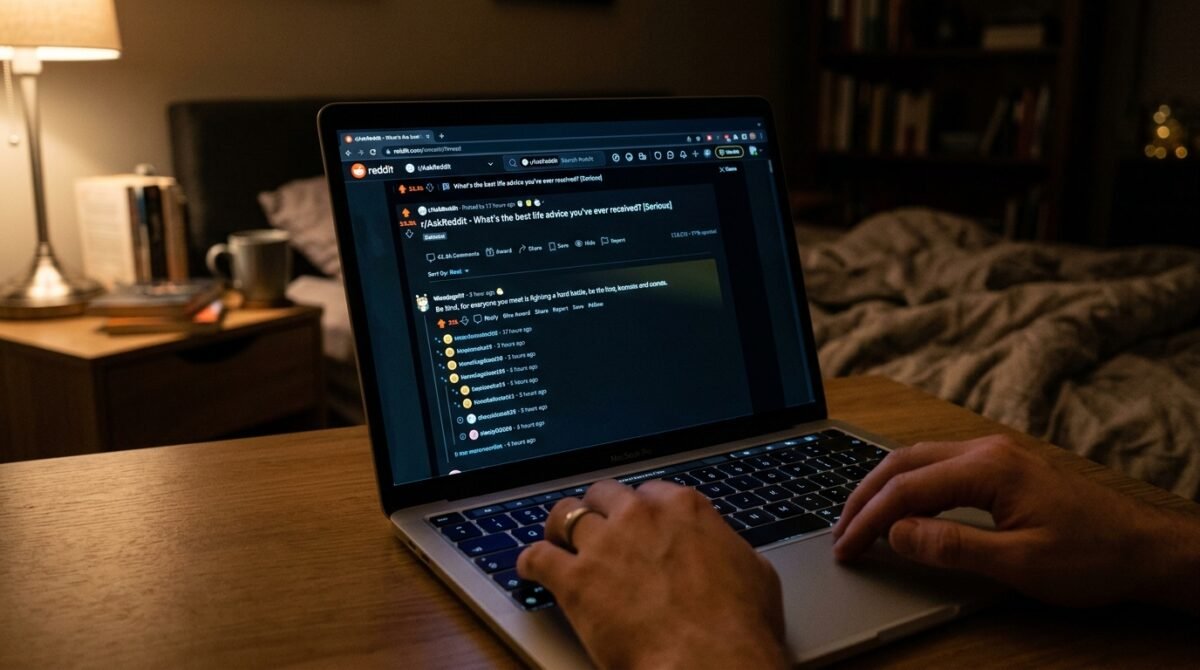
By the next morning, I couldn’t help myself. I needed validation. I didn’t want to talk to my friends; I wanted to talk to strangers who didn’t have a stake in my family dynamics. I sat at my laptop and typed out the whole story, every detail, every emotion. I posted it on a popular subreddit for family conflicts, my heart racing as I hit ‘Post.’
Within an hour, the upvotes started ticking up. Hundreds, then thousands. The comments were pouring in, a tidal wave of support that I hadn’t expected. For the first time in twenty-four hours, I didn’t feel crazy. I didn’t feel like the ‘dramatic child.’ I felt understood.
The consensus was overwhelming. People weren’t just sympathetic; they were angry on my behalf. They pointed out the psychological warfare inherent in what Brenda had done. It wasn’t just about plates; it was about asserting dominance over my mother’s memory. The ‘boho-chic’ defense was dismantled piece by piece by people who saw it for what it was: erasure.
“This isn’t about plates. She wanted to see if she could get rid of the last physical manifestation of your mother and have your father agree with her. She was testing her power. You walking out was the only way to retain your dignity. Keep the distance.”
— u/LostInTranslation (Top Comment, 32.4k upvotes)
Reading those words, I felt a weight lift. I wasn’t the villain of this story. I was the survivor of a boundary-crossing that had been building for years. The internet had spoken, and for the first time, I felt like my reality was validated by more than just my own fractured memory.
The Aftermath of Silence

The weeks following Thanksgiving were characterized by a deafening silence. My father stopped texting. Brenda didn’t reach out. I realized that the silence was their weapon of choice—a way to punish me for standing up for myself. They expected me to break, to crawl back and apologize for my ‘outburst’ just to keep the status quo.
But the silence was actually a gift. It gave me the space to grieve my mother in my own way, without the pressure of a stepmother trying to ‘update’ my memories. I started looking for ways to reclaim what remained of the china. I wondered if any of the other pieces were still salvageable, or if they had all been repurposed for the sake of the ‘aesthetic.’
I eventually sent a short, formal email to my father. No emotions, no pleas, just a request to come and collect the remaining pieces of my mother’s estate that were still in the house. I wasn’t going to have a dialogue; I was going to have a transaction. I was reclaiming my agency.
“I am coming by on Saturday to pack up the rest of the items that belonged to Mom. I do not want to see Brenda. I do not want to talk about Thanksgiving. I am simply there to take what is mine.”
— My email to my father
The response was short. He agreed, but he added a line about how ‘disappointed’ he was. I didn’t read past the first sentence. I knew that his disappointment was just a projection of his own guilt. He was disappointed that I wasn’t making it easy for him to forget.
The Packing Process
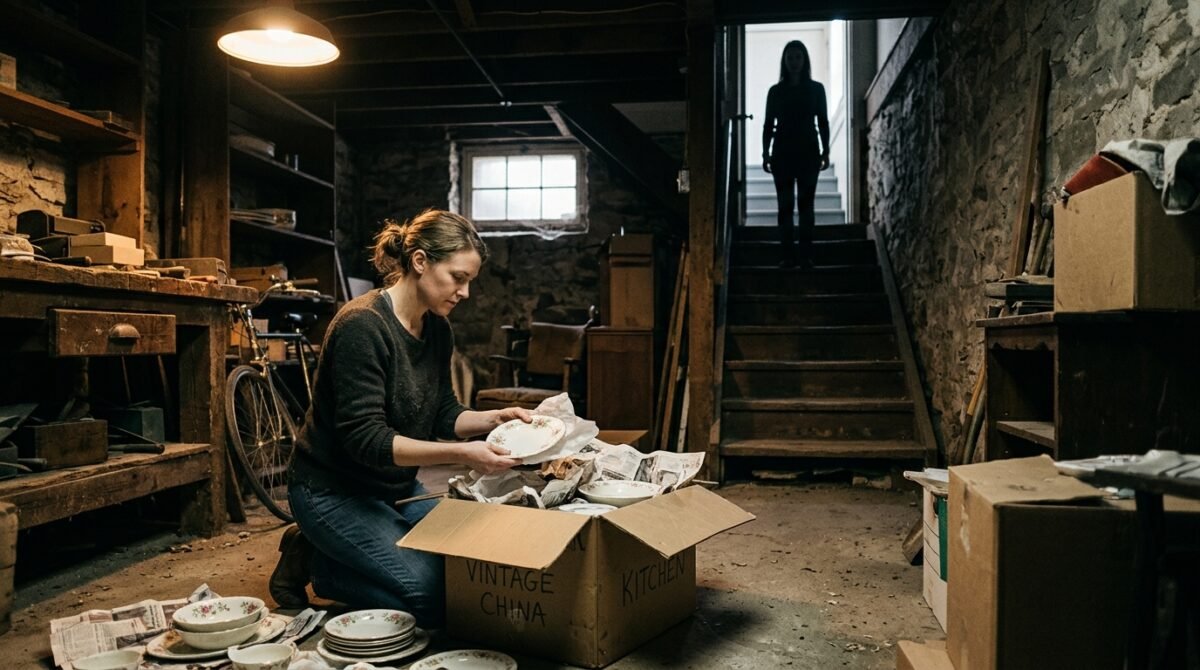
Saturday arrived with a cold, biting wind. I pulled up to the house, my car feeling like a getaway vehicle. My father met me at the door, looking older and frailer than I remembered. He tried to start a conversation, to offer me coffee, but I walked past him toward the basement stairs. The house felt foreign, stripped of the warmth I had once known.
The basement was a treasure trove of my childhood, but it was being encroached upon by Brenda’s boxes of ‘seasonal decor.’ I saw the original packing crate for the Limoges china. It was empty. My heart sank, but I pushed forward, systematically going through every box, every bin, every shelf. I found the teacups, thankfully untouched, and a few serving platters that had been spared the succulent treatment.
Brenda stayed in the kitchen the entire time. I could hear the faint sound of her podcast in the background. It was surreal—the woman who had destroyed my mother’s legacy was just feet away, oblivious and unbothered, while I was carefully wrapping each piece of porcelain in bubble wrap as if I were handling ancient artifacts.
“You’re really going to take all of this? We were actually thinking of using the teacups for candles. They’d look so cute in the bathroom.”
— Brenda, popping her head into the basement
I stopped mid-wrap. I looked at her, then at the teacups. I didn’t say a word, I just kept packing. The audacity was almost impressive, but it no longer hurt. It was just a reminder that she didn’t possess the capacity to understand value that wasn’t tied to a trend. She was a hollow person, and she was surrounded by hollow things.
The Final Departure
As I loaded the last box into my trunk, my father came out onto the porch. He looked at the boxes, then at me. There was a flicker of realization in his eyes—a moment where he understood that this wasn’t just a move; it was a permanent departure. The connection between us had been severed by his complacency.
He tried to apologize, but it was thin, weak, and full of excuses about how he ‘didn’t know’ and how he ‘just wanted peace.’ I didn’t give him the satisfaction of a confrontation. I just nodded, got in my car, and drove away. I didn’t look back at the house, at the sunroom where the plants sat in my mother’s plates, or at the life I had outgrown.
The drive back felt different this time. It felt like a return to myself. I had saved what I could, and for what was lost, I had gained a level of clarity that I couldn’t have achieved otherwise. I realized that my mother’s legacy wasn’t in the china; it was in the strength she had instilled in me.
“I’m not angry anymore, Dad. I’m just finished. You’ve made your choice, and I’ve made mine. Take care of your house.”
— My last words to my father
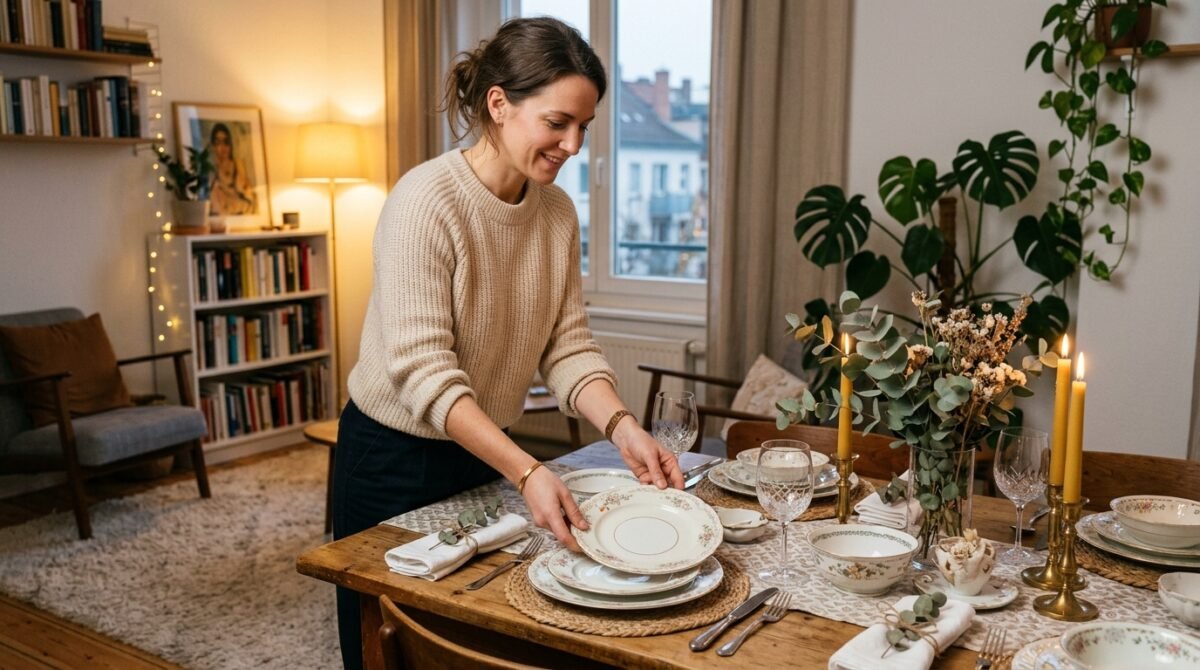
That night, I unpacked the plates on my own dining table. I didn’t put them back in a box. I set the table, even though it was just for me. I made a cup of tea in one of the teacups. It was perfect. I was honoring her memory in a way that Brenda could never understand, because I was doing it with respect, not with a drill and a bag of potting soil.
Community Echoes
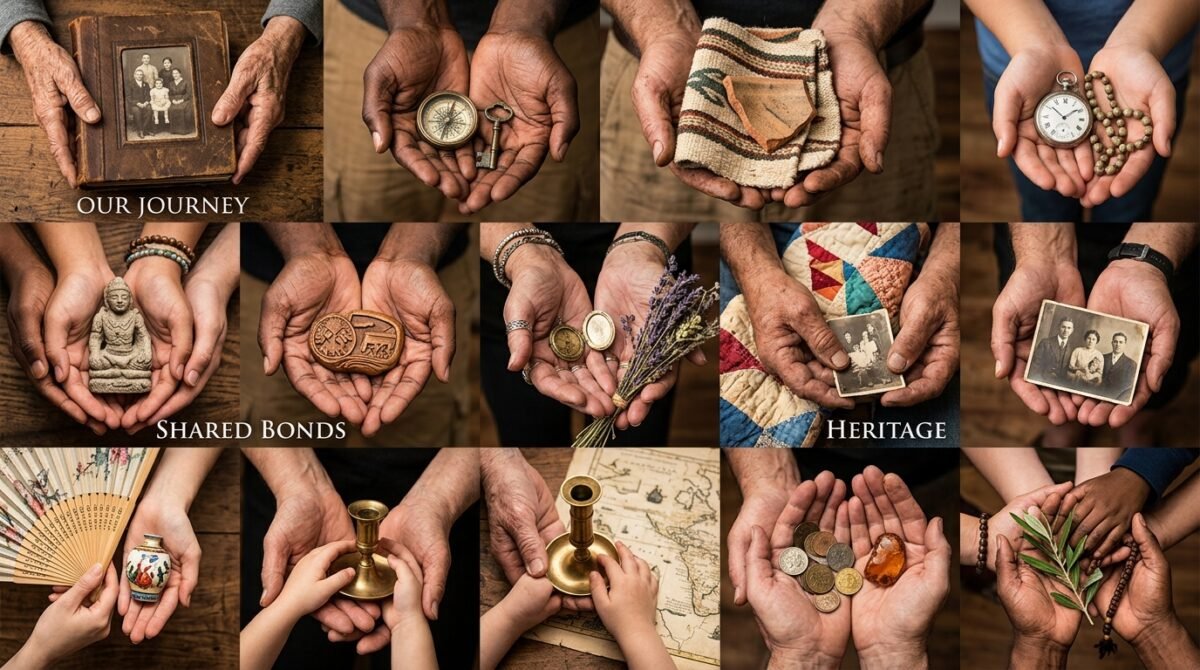
The Reddit thread lived on long after I had moved on. It became a hub for others who had experienced similar ‘step-parent overreach’ or the loss of heirlooms. People shared their own stories of grief and boundaries, creating a support network I never knew existed. It was a digital community built on shared pain and the triumph of setting firm boundaries.
I kept checking back, reading the new comments that poured in daily. It was a strange comfort to know that I wasn’t alone. There were people who had lost entire family histories to ‘modernizing’ partners, and hearing their advice on how to heal and move forward was invaluable. It wasn’t just about the china anymore; it was about the collective reclamation of identity.
“I went through the same thing with my stepmom and my grandma’s jewelry. It took me years to realize that she wasn’t just taking the items—she was trying to replace the memory of my mother with her own version of ‘family.’ Don’t feel guilty for walking away. You’re protecting the only thing you have left.”
— u/Survivor1992 (Top Comment, 15.2k upvotes)
The community was a reminder that my story was part of a larger, universal struggle. We all have things we hold onto, and we all have to defend those things when they are threatened. The thread became a testament to the fact that while some people will always try to strip away our history, we have the power to decide what we keep and how we value it.
Lessons in Porcelain
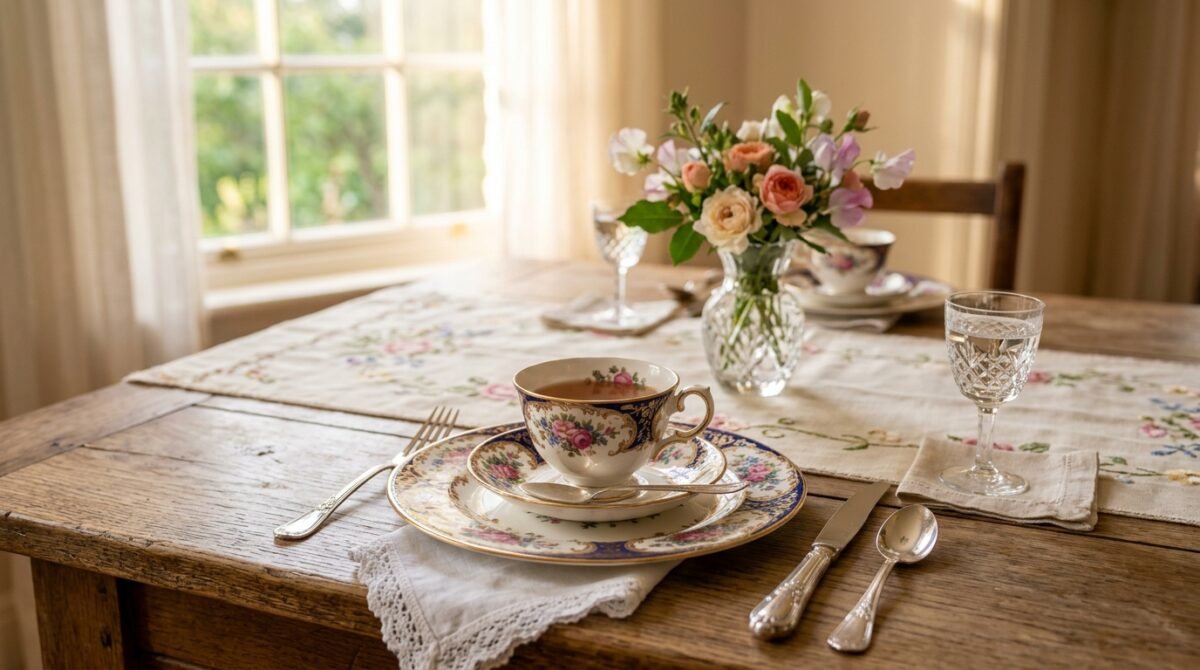
Looking back, the china was a catalyst. It was the moment the veil was lifted, and I could finally see the reality of my family dynamic. I had been living in a state of suspension, waiting for the ‘old’ family to return, when in reality, they were gone. The house had changed, the people had changed, and my role in that life had been effectively erased.
I learned that boundaries are not just about saying ‘no’—they are about defining who you are and what you stand for. By walking out of that Thanksgiving, I wasn’t just protesting the destruction of plates; I was asserting my right to my own history. I was telling myself that my feelings mattered and that I didn’t have to tolerate disrespect just for the sake of ‘family.’
Healing is an active process. It’s not just waiting for the pain to go away; it’s about filling the void with new experiences and new connections. I’m still no-contact with Brenda and low-contact with my father. It’s a hard boundary to maintain, especially during the holidays, but it’s a necessary one. It’s the price of my peace.
“The most important thing I learned? You don’t have to be a ‘peacekeeper’ if the price of that peace is your own history. Sometimes, the most loving thing you can do for yourself is to walk out of the room.”
— My reflection on the situation
I still use the china. Every time I set the table, I think of my mother. I think of the cocoa, the rain, and the laughter. I don’t see the scratches on the plates; I see the love that was poured into them. And that, I realized, is something that no one—not even a stepmother with a design vision—can ever take away from me.
Conclusion
This experience taught me that grief is not just about what we lose, but about what we choose to protect. The Limoges china was a physical anchor to my past, and when it was threatened, it forced me to confront the reality of my present. Walking out of that Thanksgiving was the hardest thing I’ve ever done, but it was also the most necessary act of self-preservation. I stopped being a passive observer in my own life and started being the guardian of my own history.
We all have ‘china’—the things that define us, the objects that carry our memories, and the boundaries we set to keep ourselves whole. When someone attempts to diminish those things, it’s not a minor incident; it’s a fundamental challenge to our identity. My hope is that by sharing this, others will feel empowered to protect their own heirlooms, their own histories, and their own mental peace.
What about you? Have you ever had to walk away from a family gathering because a boundary was crossed that you just couldn’t ignore? Or have you found yourself in a position where you had to choose between ‘keeping the peace’ and keeping your dignity? Let’s talk about it in the comments below—I want to hear how you’ve handled the pressure to conform at the expense of your own heart.
What's your verdict on this dilemma?
Vote below to contribute to the official community consensus.

Have a Dilemma Keeping You Up at Night?
Share your real-life feud, wedding chaos, or relationship crossroads anonymously with our editorial team.
What do you think ?
0 Comments🛡️ Comments are moderated to protect community integrity. Your comment will appear once approved by the editorial team.