
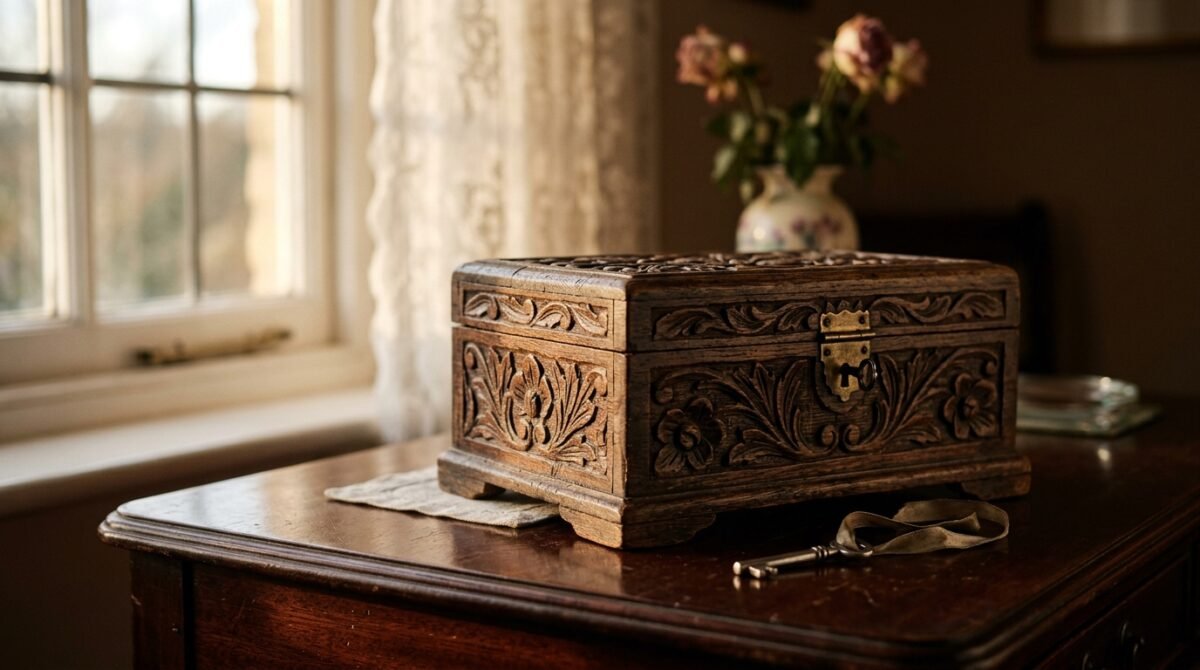
My mother passed away five years ago. Among the few things I managed to keep that felt truly ‘her’ was a small, hand-carved cherry wood jewelry box. It wasn’t worth a fortune in monetary terms, but it held the remnants of her life—a single silver earring, a dried flower from her garden, and the handwritten note she left for me on my eighteenth birthday. For my stepmother, Diane, however, it was just ‘clutter’ that didn’t match the aesthetic of the house she had spent the last three years remodeling.
Diane has always had a flair for ‘charity,’ or at least, the appearance of it. She runs a local thrift drive for a foundation that, frankly, seems to exist primarily to elevate her social status in our suburban circle. When she decided to host a massive estate-style sale under the guise of this charity, she began sweeping through the house like a hurricane. She didn’t ask; she cleared. She looked at my life and my history as inventory to be liquidated.
The tension had been bubbling for months. I lived in the guest wing of my father’s house while I finished my graduate degree, a temporary arrangement that had become increasingly suffocating. Diane viewed my presence not as a family member, but as an obstacle to her vision of a ‘minimalist sanctuary.’ She saw the jewelry box on my dresser, and in her eyes, I didn’t see a grieving daughter; I saw a donation waiting to be processed.
When she eventually confronted me, the conversation wasn’t about the box. It was about control. It was about whether or not I had any right to exist in that house with objects that weren’t curated by her. I didn’t realize then that she would actually go as far as involving the authorities, but in hindsight, the writing was on the wall. The following story is the account of how a piece of my mother’s legacy nearly became a police matter, and the fallout that shattered our family structure forever.
The Morning The Minimalism Crusade Began
It started on a Tuesday, the kind of mundane day that feels heavy with an unspoken atmosphere. I returned from a long day at the university to find my room door propped open. My heart skipped a beat, not because I had anything to hide, but because I knew Diane’s obsession with decluttering had reached a fever pitch. The room felt different. The air was colder, and the top of my dresser looked suspiciously bare.
My mother’s jewelry box was missing. I tore through my drawers, checking under the bed, frantic, my breath hitching in my throat. It wasn’t there. I ran downstairs, heart hammering, finding Diane in the kitchen, meticulously organizing a stack of flyers for the ‘Heart of the Community’ thrift sale. She didn’t look up as I approached, her focus entirely on the aesthetic of the paper stacks.
“Diane, where is my jewelry box? The wooden one, from my dresser. You moved it.”
She finally looked up, her expression one of practiced, condescending calm. “Oh, you mean that dusty little box? I put it in the donation bin, darling. It’s for a good cause. We’re clearing out the dead weight to make room for new, positive energy in this home.”
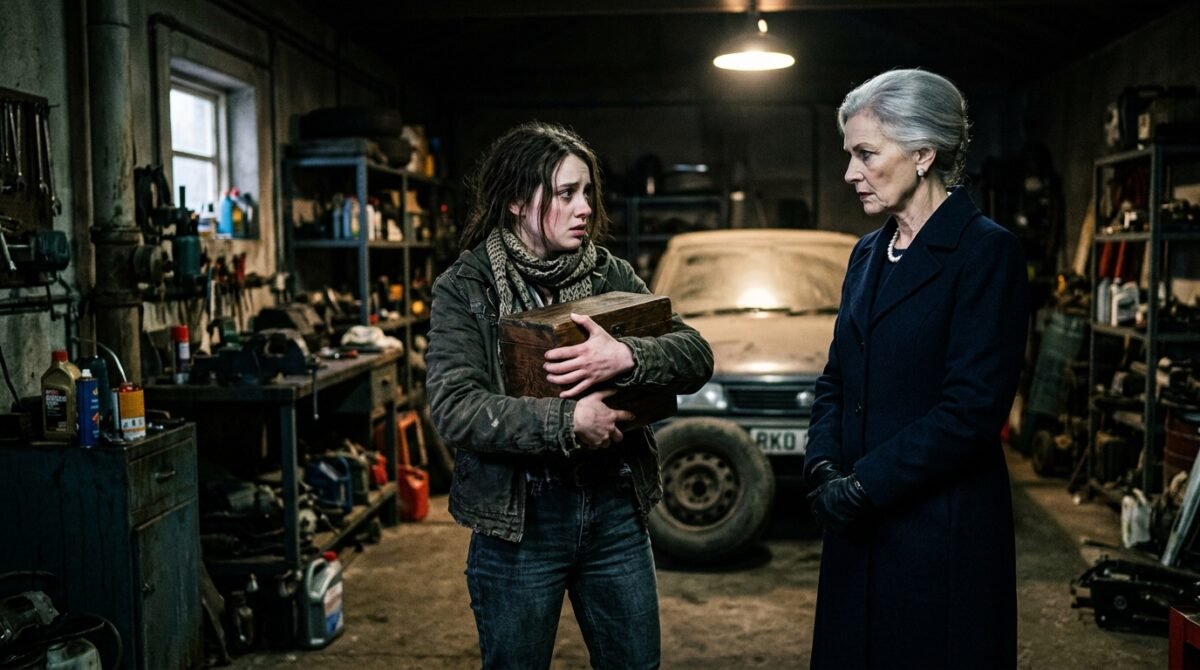
I felt a cold rage settle into my bones. ‘Dead weight.’ That was how she described the only tangible piece of my mother left in this house. I didn’t scream, though every cell in my body wanted to. I walked past her, straight to the garage where the staging area for the thrift sale was set up. There it was, sitting on a folding table, marked with a piece of blue painter’s tape that read ‘$20.’
I grabbed the box, clutching it to my chest like a shield. As I turned back toward the house, Diane was standing in the doorway, her arms crossed, her eyes narrowed. The transition from ‘helpful stepmother’ to ‘enforcer’ was instantaneous. She didn’t care about the charity; she cared that I had defied her decree to declutter. The confrontation wasn’t about the $20; it was about the fact that I was still holding onto the past, and she simply wouldn’t allow it.
The Escalation of the ‘Donation’ Dispute
Back in the kitchen, the air was suffocating. My father had walked in during our argument, looking between us with that weary, avoidant expression I had come to despise. He wanted peace, but his version of peace was always silence. He looked at the jewelry box, then at Diane, and finally at me, his eyes pleading for me to just let it go. It was a pattern, the silent enabling that had defined the last three years.
“She’s right, you know,” my father muttered, not looking at me. “It’s just a box, and the money goes to the charity. Can’t you just pick something else? Maybe one of the newer ones?”
“It’s not just a box, Dad! It belonged to Mom. Diane knows exactly what it is, and she knows I would never part with it. She’s doing this on purpose because she hates that I have memories she can’t touch.”
Diane didn’t even try to hide the smirk that touched her lips. She turned to my father, her voice soft and manipulative. “I’m just trying to help her move forward, John. She’s so attached to these old, broken things. It’s unhealthy for her to hoard memories like this. If she won’t donate it, she should at least pay the value of what it would have brought to the charity. It’s about the principle of the matter.”
I stared at them, the betrayal stinging worse than the loss of the box would have. I was being told that my emotional attachment was a sickness, and my stepmother was the doctor. I walked out of the kitchen, taking the box with me to my room, and locked the door. I knew I couldn’t stay in this house, but I also knew that leaving meant losing my security. I sat on my bed, the weight of the cherry wood against my chest the only thing keeping me grounded.
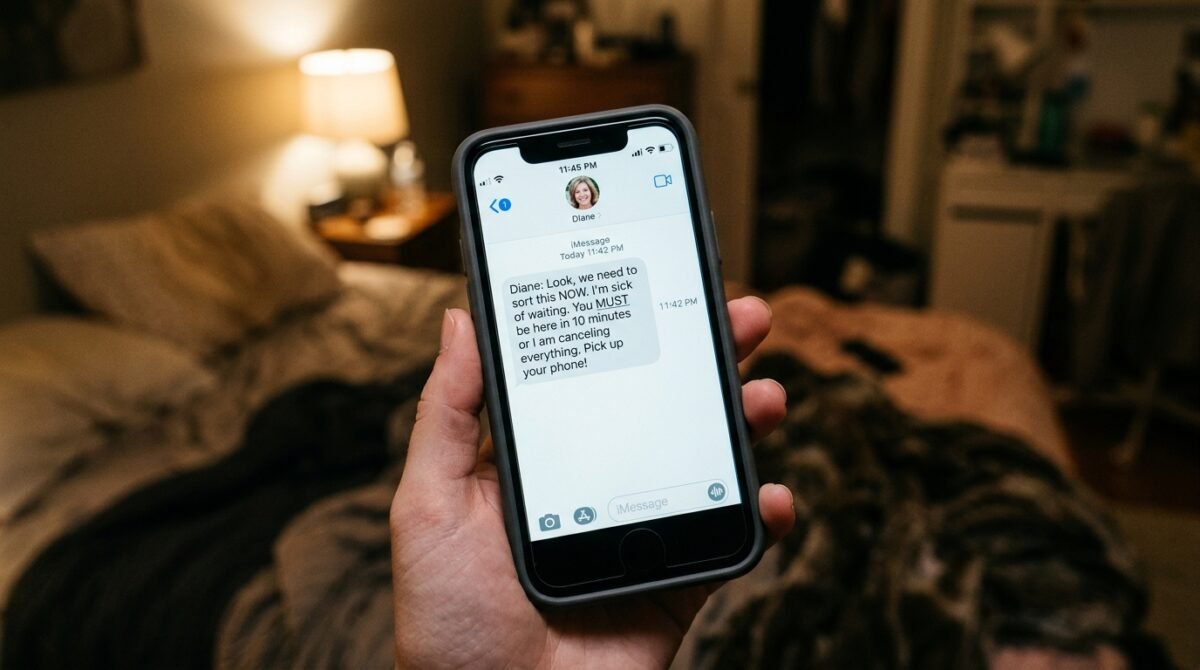
The next hour was filled with muffled voices downstairs. My phone buzzed on the nightstand—a text from Diane. It wasn’t an apology. It was a digital demand, a paper trail she was creating for herself. I read the message, my hands trembling. She was framing the jewelry box as property of the estate, something I had ‘stolen’ from the donation pile. The audacity was breathtaking, yet somehow, I wasn’t surprised.
The 6:00 AM Kitchen Intrusion

I didn’t sleep that night. I spent the hours listening to the floorboards creak, wondering if the front door would open or if I was just paranoid. At 6:00 AM, the sound I had been dreading finally came. My bedroom door handle turned, and despite it being locked, Diane had a key. She walked in as if she owned my dreams, looking at me with a mixture of annoyance and pity. She wasn’t holding a tray of coffee or an apology; she was holding a clipboard.
“You’re being very difficult,” she said, her voice sharp in the morning light. “I’ve spoken to the charity board. They are expecting those items. You are interfering with a public pledge. If you don’t return that box to the table within the hour, I’m going to have to involve the authorities. I won’t have my reputation tarnished by your petty theft.”
“You’re threatening to call the police on your own stepdaughter over a twenty-dollar box?” I asked, my voice cracking. “Are you actually insane, Diane?”
“I’m doing what’s necessary to teach you about boundaries,” she replied, her face a mask of cold resolve. “This house has rules. You don’t get to cherry-pick what belongs to the family. That box is communal property now.”
I didn’t respond. I just stared at her, waiting for her to leave. She stood there for a long moment, looking at me with a detached curiosity, as if I were a specimen she was studying. When she finally left, I didn’t feel relief. I felt a crushing sense of inevitability. She had made her threat, and she was the kind of person who followed through on them just to prove that she could.
I packed my bags. I didn’t know where I was going, but I knew I couldn’t stay under a roof where my stepmother felt empowered to weaponize the police against me. I called my aunt, my mother’s sister, and explained the situation. She told me to get out immediately. She didn’t care about the furniture or the clothes or the graduate degree logistics—she cared that I was safe from the toxic environment Diane had cultivated.
The Blue Lights in the Driveway
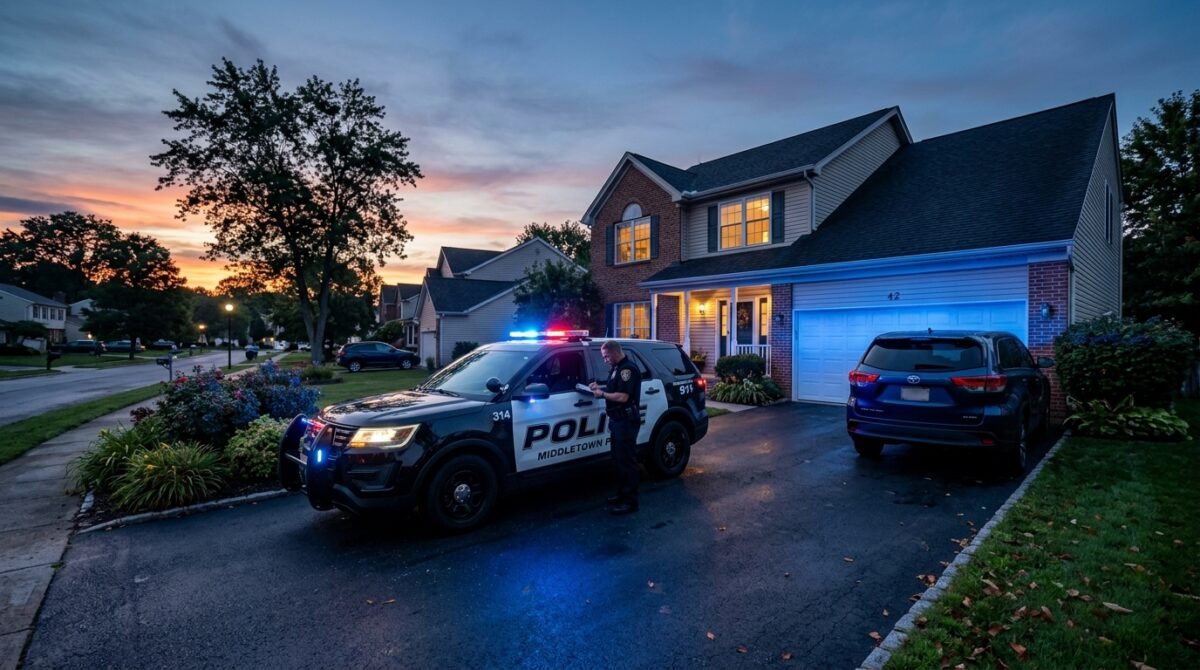
I was halfway through packing my laptop when I heard the siren. It was a low, wailing sound that grew louder until it cut through the silence of the morning. I looked out the window and saw a cruiser pulling into our driveway, lights flashing against the brick facade of the house. My stomach dropped. I couldn’t believe she had actually done it. She had called the police for a domestic dispute over a $20 thrift item.
I went downstairs just as my father was opening the front door, looking pale and terrified. Diane was standing behind him, composed, her hair perfectly styled, acting as if she were the victim of a home invasion. I walked down the stairs, the jewelry box hidden in my backpack, my heart pounding against my ribs. The officer entered, looking around the pristine living room with a confused expression.
“Officers, thank you for coming,” Diane said, her voice trembling just enough to be convincing. “My stepdaughter has been acting erratically. She’s taken property that was designated for a local charity and is refusing to return it. She’s been very aggressive.”
“Ma’am, let’s calm down,” the officer said, turning to me. “Is there a dispute over property here? We have a report of theft.”
I felt my throat tighten. ‘Theft.’ In my own home. I looked at the officer, then at my father, who was staring at the floor, unable to meet my eyes. I realized then that my father wasn’t going to defend me. He was going to let her win, even if it meant humiliating me in front of strangers. I took a deep breath, trying to summon the courage to speak clearly, to tell the truth without sounding like the hysterical person Diane had painted me to be.
The situation felt surreal, like a dark comedy playing out in the foyer of my childhood home. I held my ground, explaining that the item was a family heirloom, not a donation, and that I was currently moving out. The officer looked between us, his gaze lingering on Diane’s perfectly curated living room, then back at me, disheveled and clearly in distress. It was a battle of appearances, and I knew I was losing.
The Officer’s Verdict and the Exit

The officer asked to see the item. I slowly pulled the box from my bag. It looked small and inconsequential in the bright, clinical light of the foyer. The officer took it, examined it, and looked at Diane. He asked if there was any proof of ownership. Diane had prepared for this—she pulled out a ledger, claiming it was part of the ‘estate audit’ she had been conducting, showing that all items in the house had been ‘vetted’ for donation.
It was a forgery, or at least a fabrication of her own making. The officer, clearly tired of being caught in the middle of a rich family’s petty drama, sighed. He handed the box back to me. “This is a civil matter, not a criminal one,” he said, his voice clipped. “We aren’t here to settle inheritance disputes or manage your thrift drives. Keep your internal drama off the police dispatch line, or next time there will be citations for misuse of services.”
“But she stole it!” Diane shrieked, the mask finally slipping. “It’s for the charity! She’s keeping it from people in need!”
“It’s her mother’s box, Diane,” the officer said, shaking his head. “Walk away. Leave the girl alone, or next time I’m not being so polite.”
The officers left as quickly as they had arrived. The silence that followed was heavy, filled with the echoes of the sirens fading into the distance. My father just stood there, his face unreadable. I didn’t wait for him to speak. I grabbed my bags, walked past them both, and didn’t look back. I had my mother’s box, and I had my freedom, though the price I paid was the total destruction of my relationship with my father.
I stayed at my aunt’s house for the next week, not speaking to anyone. I blocked my father’s number for three days before finally unblocking it to send a single text: ‘I’m not coming back. I’m done.’ The relief was immense, but the trauma of the morning stayed with me. I had been willing to fight for a box, but in the end, I had fought for my autonomy.
The Aftermath: When the Dust Settled

It took weeks for the reality of the situation to sink in. My father eventually reached out, not with an apology, but with a request to ‘talk about the living arrangements.’ He still didn’t seem to grasp that there were no arrangements to talk about. I was gone. I was working, finishing my degree, and building a life that had zero space for Diane’s ‘minimalist’ manipulations. The jewelry box now sat on my own desk, a constant reminder of the day I finally stood up for myself.
My aunt helped me realize that this wasn’t just about the box. It was about the years of being pushed into the corners of my own life, of being treated as an inconvenience in my father’s house. The police incident was simply the breaking point. It forced me to see that my father was never going to put me above his comfort, and that Diane was never going to stop trying to erase my mother’s footprint.
“You realized the truth that day,” my aunt told me over tea. “You realized that being ‘polite’ in the face of cruelty isn’t a virtue. It’s just a way to let them keep hurting you. Never apologize for keeping what belongs to you.”
I started seeing a therapist to process the years of gaslighting. I learned that Diane’s behavior was a classic projection—she wanted to erase my mother to make room for her own narrative of being the ‘perfect wife.’ By refusing to give up the box, I had ruined her script. The fact that she called the police was the ultimate admission of her defeat; she had run out of social currency, so she tried to use the law to bully me.
I didn’t lose my father completely, but the relationship changed. I went to low-contact. I visited on my own terms, in neutral territory, and never again did I step foot in that house. I made it clear that Diane was not to be part of our interactions. It was a hard boundary, but it was necessary for my own sanity. I still have the box. It’s just a wooden container, but it holds everything that matters.
The Internet Weighs In: Reddit’s Verdict

I decided to post about the incident on a popular relationship subreddit, just to see if I was actually the one who was crazy. The response was overwhelming. Thousands of people chimed in, almost all of them agreeing that my stepmother’s actions were not just out of line, but potentially illegal. The community support was a validation I hadn’t realized I needed until I saw the comments.
“NTA. Your stepmother is a narcissist who weaponized the police because she couldn’t control you. The fact that your father let her do it is the most heartbreaking part. Get out and stay out.”
— u/FamilyDramaExpert (Top Comment, 32.5k upvotes)
“This is actually a criminal misuse of emergency services. If you have the record of the police visit, you should hold onto it. If she tries to claim you stole anything else in the future, you have proof of her pattern of behavior.”
— u/LegalEagle88 (15.2k upvotes)
The comments went on for days. People shared their own stories of step-parents trying to erase their biological parents’ legacies. It was a global community of people who had been through the same ‘decluttering’ trauma. Some suggested I check for other items that might have ‘gone missing’ in the house, which led me to realize that several other family heirlooms had indeed vanished over the years.
The collective outrage was a balm. It reminded me that I wasn’t just a child being difficult; I was a person being bullied by someone who used ‘charity’ as a cover for malice. The Reddit community didn’t just support me; they empowered me to look back at the past few years with a more critical eye. I realized that my father had likely been losing more than just ‘donations’—he had been losing his family history, one item at a time.
The Hidden Ledger of Lost Heirlooms
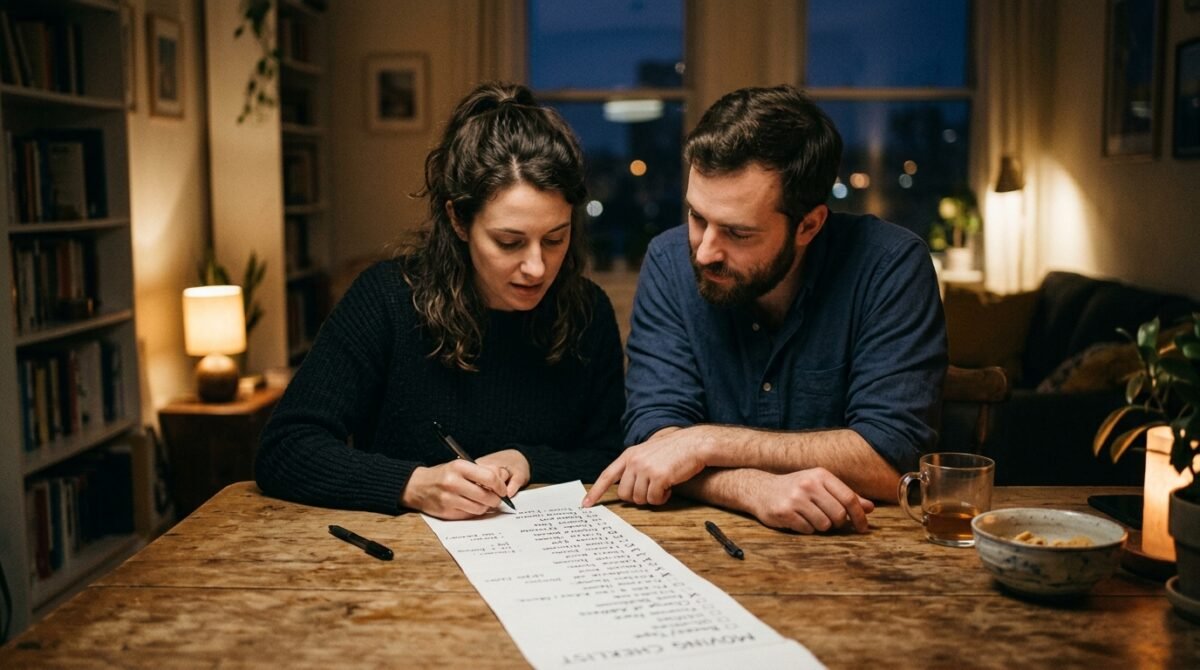
Following the advice of the commenters, I began a quiet investigation. I contacted my grandmother, who had been asking about a set of silver candlesticks that were supposed to be passed down to me. My father had told her they were lost during a move. When I mentioned the ‘thrift sale’ to her, she went silent. It turned out that the silver candlesticks, along with a collection of antique coins, had all been ‘donated’ by Diane over the last three years.
I confronted my father with the information. He was shocked, or at least he played the part well. He didn’t want to admit that his wife had been liquidating our family history. We sat down for an uncomfortable dinner, the first one in months. I brought a list—a ledger of everything I could confirm was gone. It was pages long. The realization hit him hard; he hadn’t been paying attention to the details of his own life.
“She said she was donating things we didn’t use, Dad,” I said, laying the list on the table. “She wasn’t donating. She was purging. She sold grandmother’s silver. She sold the coins. Do you really think that money went to a charity?”
He looked at the paper, his hands trembling. “I trusted her. She said she was helping us manage the estate.”
The look on his face was a mix of shame and dawning horror. He finally understood that Diane wasn’t just ‘minimalist’; she was predatory. We spent the night going through bank statements and donation receipts. It became clear that the ‘charity’ she worked for was a shell, or at the very least, she was acting as a middleman who took a significant ‘handling fee’ for her services.
The financial betrayal was the final nail in the coffin of their marriage. My father, to his credit, finally took action. He filed for a separation, citing financial impropriety and the erosion of his personal assets. It was a long, messy process, but it was necessary. I didn’t get the candlesticks or the coins back—those were long gone—but I got the truth, and for me, that was enough to start closing the chapter.
The Legal Tangle: Protecting the Future
The divorce proceedings brought out the worst in Diane. She tried to claim that the items were hers by right of marriage, but the legal team my father hired was thorough. They traced the sales and the donations, finding that she had indeed been selling family heirlooms on private auction sites. The ‘charity’ was a front, and she had been laundering the proceeds through her own personal accounts.
It was a vindication that felt surprisingly hollow. I didn’t want to see her in jail; I just wanted my family to be intact. But that wasn’t an option. The damage had been done. We spent months in court, dealing with depositions and audits. It was a bleak experience, but it served as a final, definitive barrier between my past and the future I was trying to build.
“You have to understand,” my father told me during a break in the proceedings, “I was so afraid of being alone that I stopped seeing what was right in front of me. I let her take everything because I was too lazy to defend it.”
I didn’t forgive him immediately. That was a process that took much longer. But we started to talk again, not as father and daughter, but as two adults trying to understand how we had been manipulated. The jewelry box remained on my desk throughout the entire ordeal—a symbol of the one thing I had managed to save. It became a talisman, a reminder that I was capable of protecting what mattered.
By the time the final settlement was reached, Diane was out of our lives completely. She moved to another state, taking her ‘minimalism’ with her. I don’t know what she’s doing now, and I don’t care. I have my life, my father has his, and we are both learning to navigate the silence. The house is empty of the things she ‘donated,’ but it’s full of the peace she could never create.
Reflecting on the Cost of Silence
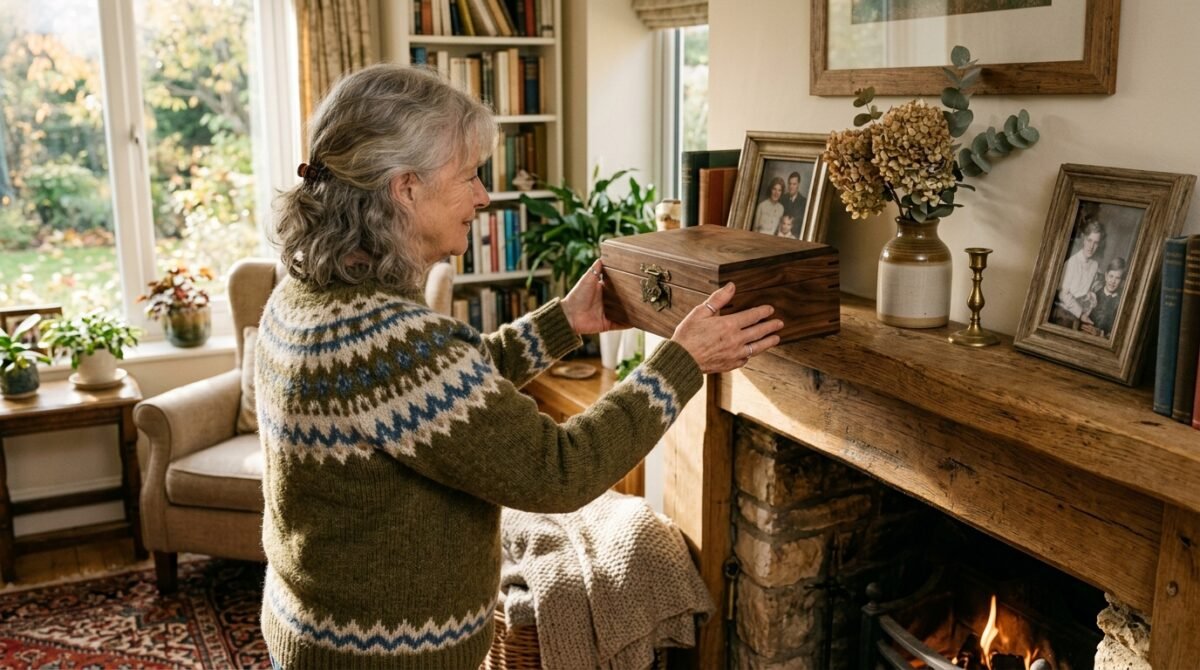
I often look at that jewelry box and wonder how different things would be if I had just stayed quiet. If I had let her take it, maybe the conflict wouldn’t have escalated. Maybe the marriage would still be intact. But then I realize that ‘peace’ bought at the cost of one’s identity is not peace at all. It’s just surrender. By standing up for the box, I started a chain reaction that exposed a much larger, darker reality.
The lesson I learned was about boundaries. I used to think that being kind meant being yielding. I thought that accommodating others’ wishes, even when they crossed my lines, was the hallmark of a good person. I was wrong. Boundaries are not walls that keep people out; they are the floor that supports our existence. When we allow people to remove pieces of ourselves, we eventually collapse.
“We don’t get to choose who comes into our lives, but we do get to choose what we allow them to take,” my therapist reminded me. “You didn’t just save a box. You saved yourself from a lifetime of being erased.”
I have moved on. I finished my degree, got a job, and moved into my own apartment. It’s not minimalist, and it’s not curated for a magazine. It’s mine. It’s filled with photos, books, and the things that make me happy. And yes, in the center of it all, on a table I picked out myself, sits the wooden jewelry box.
For anyone else dealing with a similar situation, I have one piece of advice: trust your gut. If someone is trying to take things that matter to you, they aren’t ‘helping’ you; they are testing your boundaries. Don’t wait for them to call the police to realize you’ve already lost the battle. Stand up, be loud, and protect your history. You are the only one who can.
Conclusion
Looking back at the ordeal, it’s clear that the jewelry box was never the point. It was a catalyst for a reckoning that had been brewing for years. Diane’s need for control and my father’s penchant for silence created a vacuum that allowed exploitation to flourish. The day she called the sheriff was the moment the facade crumbled, forcing everyone involved to face the uncomfortable truths we had been ignoring.
Life is messy, and families are rarely the idealized portraits we see on social media. But there is a dignity in fighting for what you value, even if the world calls you ‘difficult’ for it. I am no longer that quiet girl who hides her belongings in a locked room; I am a person who knows the value of her own story. And that is worth more than all the minimalist decor in the world.
What about you? Have you ever had to draw a line in the sand with family members who didn’t respect your boundaries? Did you fight for your heirlooms, or did you let them go to keep the peace? Let me know in the comments below—I’d love to hear your stories and see how you navigated your own family dramas.
What's your verdict on this dilemma?
Vote below to contribute to the official community consensus.

Have a Dilemma Keeping You Up at Night?
Share your real-life feud, wedding chaos, or relationship crossroads anonymously with our editorial team.
What do you think ?
0 Comments🛡️ Comments are moderated to protect community integrity. Your comment will appear once approved by the editorial team.