

The sanctity of the delivery room is often touted as a universal truth, a space reserved for the woman birthing life and those she deems essential to her support system. Yet, for some families, this intimate chamber becomes a stage for power struggles, entitlement, and the clashing of generations. My mother-in-law, Linda, viewed my pregnancy not as a life-altering medical event for me, but as a public spectacle she was entitled to headline.
For months, the pressure mounted. It started with subtle comments about ‘family traditions’ and escalated into aggressive demands that she be present at the foot of the bed. I was already navigating the physical toll of third-trimester exhaustion, so when the boundary crossing became a daily occurrence, the psychological weight began to eclipse the physical pain. I wanted a peaceful, controlled environment; she wanted a front-row seat to her son’s legacy.
The moral dilemma felt binary: yield to the matriarch and sacrifice my dignity, or stand my ground and risk the wrath of an entire family tree. I chose the latter, but the fallout was far more explosive than I could have imagined. This is the story of how I transitioned from being the ‘accommodating daughter-in-law’ to the woman who banned her husband’s mother from the hospital, and why, despite the chaos, I would do it all over again.
We have to talk about the concept of ‘the village.’ We are often told that it takes a village to raise a child, but that philosophy is frequently weaponized by overbearing relatives to strip away bodily autonomy. My experience was a masterclass in how to dismantle that weapon. This wasn’t about gatekeeping a baby; it was about reclaiming the space where I was at my most vulnerable.
By the time I reached my 38th week, the tension had thickened to the point of suffocation. My husband, Mark, was caught in the crossfire, paralyzed by a lifetime of conditioning. He loved his mother, but he loved his wife more. The decision to enforce a total ban was not made in a vacuum; it was the inevitable conclusion of a series of escalating violations that I am finally ready to share in full detail.
The Initial Audacity of the Delivery Room Claim
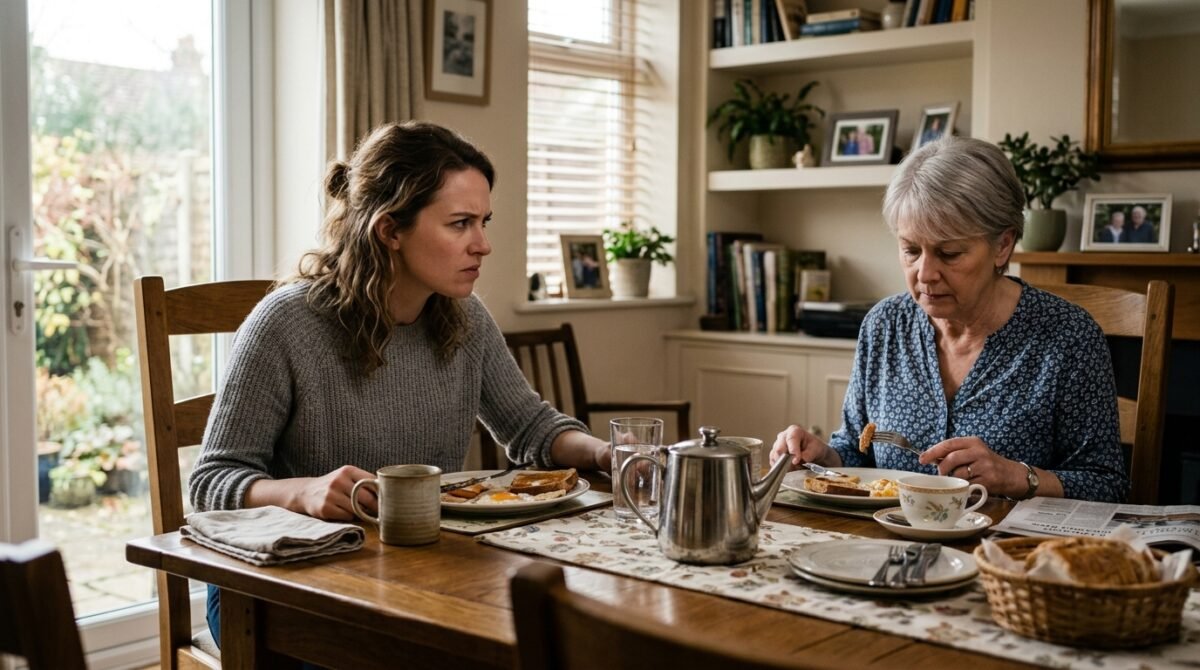
It began over a casual Sunday brunch, the kind of setting that usually feels safe but turned into a battlefield. Linda, while buttering a piece of toast with deliberate slowness, dropped the bomb as if she were discussing the weather. She insisted that she had ‘never missed a major life event’ for her son, and that the arrival of her first grandchild was a matter of ancestral record, not personal preference.
I remember the silence that followed. My fork stopped mid-air. I looked at Mark, expecting him to gently steer the conversation elsewhere, but he was staring at his coffee cup, avoiding my eyes. It was clear that this conversation had already happened between them when I wasn’t around, and Mark had likely failed to shut it down.
“Linda, I appreciate how excited you are, but the delivery room is going to be a very private space just for Mark and me. We want this to be our moment to bond with the baby immediately after birth.”
Linda’s face didn’t twitch, but the atmosphere in the kitchen shifted instantly. She laughed—a dismissive, sharp sound—and informed me that I was being ‘silly’ and that labor was a ‘natural process’ that shouldn’t be hidden from the family. She claimed she would be a ‘fly on the wall,’ a promise that I knew, based on her personality, was a blatant lie.
The audacity wasn’t just in the request; it was in the assumption that my consent was a formality rather than a requirement. She viewed my body as a community resource. I felt my pulse quicken, a physical manifestation of the boundary violation that was now officially on the table. This was the first domino in a long chain of events that would eventually lead to a total fracture in our relationship.
Mark finally spoke up, but his words were weak. He suggested that maybe we could ‘compromise,’ which only served to embolden her. I realized then that my husband didn’t fully grasp that this wasn’t a negotiation. It was my medical procedure, and I was the one who would be in a hospital gown, vulnerable and exposed.
The Unannounced 6:00 AM Kitchen Intrusion
A few weeks later, the situation escalated from verbal pressure to physical boundary crossing. I was eight months pregnant, struggling with insomnia, and had finally drifted off into a deep, much-needed sleep. The sound of my front door unlocking at 6:00 AM was not a dream. I walked into the kitchen in my robe to find Linda standing there, unpacking a bag of groceries she had ‘decided I needed.’
She didn’t apologize for the early arrival or the use of her emergency key. Instead, she started lecturing me on the ‘necessity’ of having her around during the final weeks of pregnancy. She was already organizing my kitchen cabinets, moving my coffee mugs and baby supplies around to suit her preferences. It felt like an occupation.
I stood there, exhausted and furious, trying to explain that she couldn’t just show up unannounced. Her response was chillingly calm. She told me that when she was a grandmother, she would be the one ‘running the show’ because I was ‘too young to understand the gravity of the responsibility.’ She was framing her intrusion as an act of service, but it was clearly a power play.
“I have a key for emergencies, Linda. Not for you to come in and rearrange my house because you’re bored or want to control my birth plan. Please leave. I need to rest.”
The look she gave me was one of pure disdain. She didn’t leave immediately; she lingered, making a pot of coffee that I didn’t want, making sure that her presence remained the focal point of my morning. When she finally left, I changed the locks that same afternoon. That act of changing the locks felt like the first real step in reclaiming my agency.
That day, I sent a firm text to the family group chat. I knew it would cause a stir, but I was past the point of caring about being polite. I told them that from here on out, all visits were by appointment only, and that the delivery room was officially closed to everyone except my husband. The silence that followed in that group chat was deafening.
The Secret Group Chat OP Wasn’t Supposed to See
The fallout from the ‘new rules’ was instantaneous. Mark came home that evening, looking shell-shocked. He had been flooded with messages from his mother, his sister, and even a few aunts, all questioning my ‘hostility.’ They were painting me as the villain, a cold daughter-in-law trying to alienate a grandmother from her grandchild.
However, the real betrayal came when Mark accidentally left his tablet open on the kitchen counter while he was in the shower. A notification popped up from a thread titled ‘The Strategy.’ It was a group chat with Linda, his sister, and a couple of her friends. I shouldn’t have looked, but the curiosity was a burning fire. What I read made my blood run cold.
“She thinks she can stop me. I’ve already talked to the hospital staff at the maternity ward. I told them I’m the emergency contact. If Mark is overwhelmed, they’ll have to listen to me. She’s too hormonal to make decisions.”
— Leaked Message from Linda in ‘The Strategy’ Group Chat
She was actively plotting to bypass my authority. She had planned to manipulate the hospital staff, weaponizing their protocols against me. She was going to frame me as unstable to gain access to the delivery room. I took screenshots of every single message, my hands shaking with a mixture of terror and white-hot anger.
I didn’t confront Mark immediately. I needed to process the reality that his mother was not just an annoyance; she was a threat. She was willing to compromise my medical care and my mental health just to get her way. The betrayal wasn’t just hers; it was the fact that Mark had been so passive that she felt empowered to go this far.
I sat in the living room for hours, staring at the screen. I felt like a stranger in my own life. Everything I had built with Mark—the home, the marriage, the upcoming birth—was being viewed as a conquest by his mother. That night, I decided that the hospital ban wouldn’t just be a preference; it would be a legal and ironclad requirement.
The Hospital Security Consultation
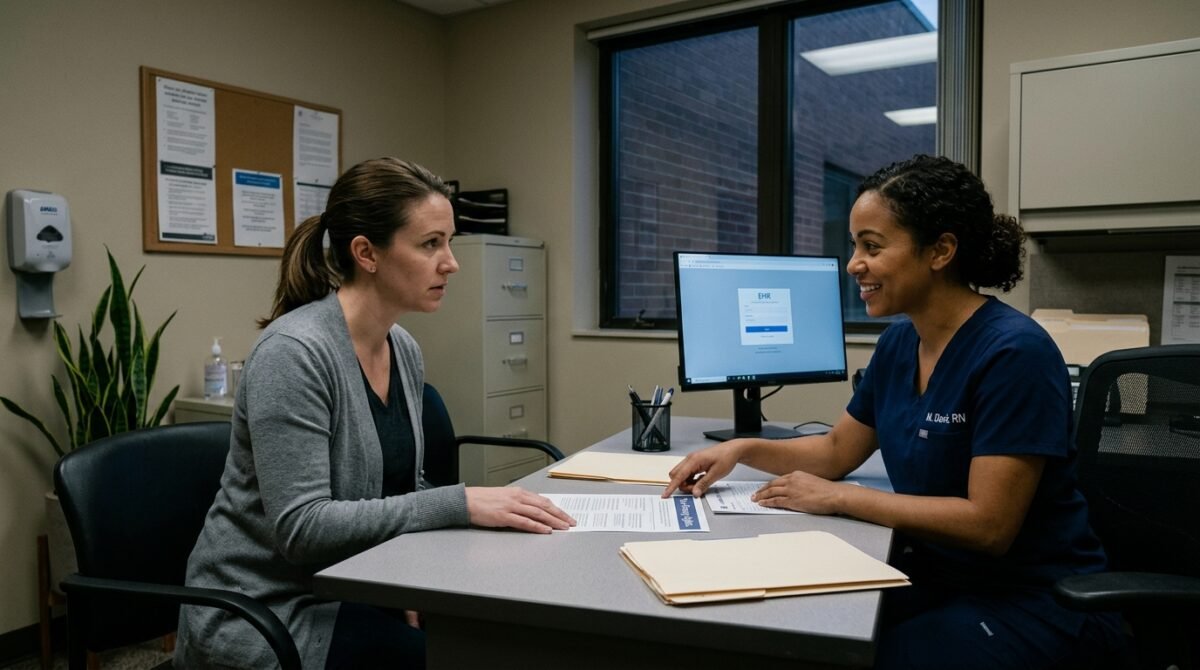
The next day, I didn’t go to work. I went to the hospital where I was booked to deliver. I asked to speak with the head nurse and the patient advocate. I presented the screenshots of the group chat. I was honest, firm, and clear about the situation. I needed to know what my rights were and how to ensure that Linda would be physically kept away.
The staff was incredibly supportive. They explained that I had total control over my visitors and that they could add a ‘restricted access’ flag to my file. They told me that if anyone tried to claim they were the emergency contact, they would verify everything with me, and only me. They even suggested that security be notified to keep a photograph of Linda on file.
It was a surreal experience, treating my mother-in-law like a security threat, but it was necessary. I felt a massive sense of relief as I signed the forms. I wasn’t being dramatic; I was being proactive. I was protecting my child, and I was protecting myself during the most vulnerable hours of my life.
“We understand completely. We see this more often than you would think. Your file is now flagged. Security will be notified the moment you check in. She will not get past the front desk, let alone into the labor and delivery unit.”
— Hospital Patient Advocate
When I got home, I finally sat Mark down. I showed him the screenshots. He went pale. He didn’t defend her. He realized that she had crossed a line that couldn’t be uncrossed. We had a long, tearful conversation about his mother’s inability to respect boundaries and his own need to step up as a father and a partner.
The shift in our marriage was profound. For the first time, Mark wasn’t looking for ways to appease his mother; he was looking for ways to protect our family unit. We were on the same page, and that unity was worth more than any peace we could have bought by caving to her demands.
The Day of the Arrival: A Silent Victory
When the contractions started, the atmosphere was calm. There was no chaos, no frantic calls, and no looming threat of an uninvited guest. We arrived at the hospital in the middle of the night. As we checked in, the staff acted with professional efficiency. They greeted me by name, and I saw the security guard at the desk nod in recognition of the file notes.
I spent the next several hours in labor, feeling empowered by the fact that I was in a room where I felt safe. Every time a nurse or doctor entered, I knew they were there for me, not for my mother-in-law. It was a beautiful, albeit intense, experience. Mark was the partner I needed him to be—focused, attentive, and entirely on my side.
Throughout the process, my phone stayed in my bag. I didn’t care who was texting or who was wondering where we were. The world outside the hospital room had ceased to exist. I was in my own bubble, and for the first time in months, I felt completely in control of my own life.
“You’re doing amazing. It’s just us, just like you wanted. Everything is perfect.”
— Mark, during labor
When our child was finally born, the silence of the room was filled with the sound of a new life. It was a quiet, intimate moment that I wouldn’t have traded for anything. There were no interruptions, no demands for pictures to be sent to family groups, and no pressure to perform as a ‘happy family’ for the grandmother.
I looked at Mark and realized that we had passed our first major test as parents. We had set a boundary, we had defended it, and we had succeeded in creating the birth experience we both deserved. The hospital ban had worked, and the peace it provided was the greatest gift we could have given our newborn.
The Explosive Aftermath and the Waiting Room Scene
We stayed in the hospital for two days, and it was blissful. When we finally returned home, we were hit with the fallout. Linda had apparently tried to visit the hospital, was turned away by security, and had caused a scene in the lobby. She had called my husband incessantly, leaving voicemails that ranged from sobbing pleas to venomous accusations.
We ignored her for the first few days while we adjusted to being new parents. When we finally felt ready to address it, we did so in a controlled environment. We invited her over for a meeting, with the clear understanding that if she raised her voice or caused a scene, she would be asked to leave immediately. She showed up with a gift for the baby, as if nothing had happened.
She tried to act like the victim, claiming that we had humiliated her by having her escorted out of the hospital. She told us that we were ‘denying her the right’ to be a grandmother. I didn’t let her spin the narrative this time. I laid out exactly what she had done, including the attempts to manipulate the hospital staff.
“You tried to bypass my medical authority. You lied, you manipulated, and you schemed. That is why you weren’t there. It has nothing to do with being a grandmother and everything to do with your refusal to respect me as a person.”
She was speechless. She had expected me to fold, to apologize for the ‘misunderstanding.’ Instead, she was met with a wall of truth. She left the house that day in a huff, and the relationship has been strained ever since. It was a necessary amputation of a toxic dynamic.
The family on her side was divided. Some thought I was ‘too harsh,’ while others, who had also suffered under her thumb, reached out to congratulate me on standing up to her. It was a messy, painful, and enlightening experience that changed our family dynamics forever.
Reddit Weighs In: The Verdict of the Hive Mind
I eventually decided to share a version of this story on a popular subreddit to see if I was truly the monster my mother-in-law claimed I was. The response was overwhelming. Thousands of people reached out to share their own experiences and to validate the steps I had taken. It was comforting to know that I wasn’t alone in this fight.
The top comments were largely supportive, with many users pointing out that birth is not a spectator sport. They emphasized that my autonomy was the only thing that mattered in that room. The legal and medical advice provided by some users also helped me realize just how serious Linda’s attempt to manipulate the staff was.
“NTA. Your MIL isn’t a grandmother; she’s an antagonist in her own movie where she’s the main character. You didn’t just ban her; you protected your medical care. That’s not a ‘family issue,’ that’s a security issue.”
— u/SafetyFirstMom (Top Comment, 28.5k upvotes)
“The fact that she was actively plotting with hospital staff to override your consent is terrifying. Honestly, a restraining order might be the next step if she doesn’t stop showing up unannounced. You did exactly the right thing.”
— u/LegalEagleEye (15.2k upvotes)
Reading these comments helped me shed the last bits of guilt I was carrying. I had been conditioned to believe that her happiness was more important than my health. The internet, in its brutal honesty, reminded me that I was the parent, the patient, and the one whose choices mattered most. The consensus was clear: I had set a boundary, and it was the right one.
There were, of course, a few ‘E-S-H’ (Everyone Sucks Here) comments, suggesting that I could have been more ‘diplomatic.’ But after months of manipulation and the ‘Strategy’ group chat revelation, diplomacy was a luxury I couldn’t afford. You can’t be diplomatic with someone who is actively working to undermine your life.
Lessons in Hard Boundaries
Becoming a parent forces you to confront the ghosts of your own history. For me, it meant realizing that the ‘family values’ I had been taught were often just a cover for control. I had to learn that saying ‘no’ is not an act of aggression; it is an act of self-preservation. This journey has made me a stronger person, and more importantly, a more confident mother.
My relationship with Mark has never been better. We are a team, and we know that we can survive anything if we stick together. We don’t owe anyone access to our lives, our home, or our child if they are not willing to respect our rules. We have learned that family is chosen by behavior, not just by blood.
I’ve also learned to recognize the red flags earlier. If someone tries to ‘compromise’ on a non-negotiable boundary, they aren’t looking for a middle ground; they are looking for a crack in your armor. I don’t leave those cracks open anymore. We have a solid, healthy, and happy home, and we are grateful for the peace we’ve built.
“Setting boundaries doesn’t make you a villain. It makes you a gatekeeper of your own peace. Don’t apologize for protecting what is yours.”
The lesson I want to pass on to others is simple: listen to your gut. If a situation feels wrong, it is wrong. You don’t need permission to say no to people who want to control your life. You are the protagonist of your story, and you have every right to decide who gets a seat in the audience, especially during your most profound moments.
I am at peace with the decision I made. I don’t look back at the hospital, the security guard, or the crying mother-in-law with regret. I look back at it as the moment I finally became the person I needed to be for my child. The boundaries I set then have become the foundation of our life now, and they are stronger than they have ever been.
Moving Forward: The Current State of Affairs
Today, we have a very limited, controlled relationship with Linda. We see her for holidays, and we meet in public places where the expectation of behavior is higher. She has learned that if she crosses a line, the visit ends. She hasn’t tried to pull anything like the delivery room stunt again, mostly because she knows there is no path to victory. She has had to adjust to our rules, and that is all I ever wanted.
Our child is thriving, surrounded by people who love them and respect their parents. We have built a support system of friends and family who understand our boundaries and celebrate them. It is a beautiful life, one that was made possible by the hard work of setting those initial, difficult boundaries. I am proud of the family we are, and I am proud of the choices we made.
I don’t hold onto the anger anymore. The anger served its purpose—it gave me the fire I needed to act. Now, I am focused on the joy of raising my child. I am focused on the future, not the ghosts of the past. Life is too short to spend it fighting for the right to exist on your own terms, but I will always fight for that right when it matters most.
“The best revenge isn’t conflict; it’s living a happy, peaceful life on your own terms, away from those who tried to stop you.”
If you are in a similar situation, know that you are not alone. Know that your boundaries are valid and that your health—both physical and mental—is the priority. Don’t be afraid to be the ‘bad guy’ in someone else’s story if it means being the hero in your own. The people who truly love you will respect your boundaries; the ones who don’t are exactly the people you need to keep at a distance.
We are doing well, and we are happy. That is the ultimate success story. We didn’t just survive the drama; we grew from it. And honestly? I would do it all over again if it meant keeping the peace we have today. It was the hardest thing I’ve ever done, but it was also the most important.
Closing Thoughts: A Community Discussion
Ultimately, this story is about more than just a birth plan. It’s about the silent, invisible labor of setting boundaries that people often don’t see. It’s about the courage it takes to break family cycles of entitlement. I shared this not to shame anyone, but to remind everyone that your life belongs to you, not to your relatives, not to your in-laws, and not to society’s expectations.
The debate around this topic is infinite. Everyone has an opinion on what ‘family’ means, but for me, family is about respect, safety, and mutual support. If those pillars are missing, the structure is hollow. I hope that by sharing my story, I’ve given someone else the permission they needed to draw their own line in the sand.
I want to hear from you. Have you ever had to enforce a major boundary with a family member? How did you handle the pressure from those who thought you were ‘overreacting’? Let’s open up the discussion in the comments. Your stories matter, and your experiences can help others navigate the complex, often messy world of family dynamics.
“What is the one boundary you wish you had set earlier in your relationships? Let’s talk about it in the comments below.”
Thank you for taking the time to read my story. It was a journey to write it, and an even bigger one to live it. I hope this serves as a reminder that no matter how difficult the situation, you have the power to change your circumstances. You have the power to define your own boundaries. You have the power to live a life that you are proud of. Keep standing your ground, and keep fighting for your peace.
Conclusion
The journey from an overbearing, entitled mother-in-law to a life of peace and established boundaries was fraught with tension and heartbreak, but it was a journey worth taking. By prioritizing my own health and the sanctity of my delivery room, I was able to secure a start for my child that was free from manipulation and chaos. It wasn’t about being ‘right’ or ‘winning’—it was about reclaiming the space that was rightfully mine.
We have all seen how quickly family dynamics can spiral when individuals fail to respect the sovereignty of another person’s choices. My story is a testament to the fact that you do not need to accept toxicity in the name of ‘family.’ You are entitled to your privacy, your choices, and your dignity. I hope that my experience empowers you to advocate for yourself, no matter how much pushback you receive from those around you.
Discussion Poll:
How do you define ‘reasonable’ when it comes to family involvement in life milestones?
1. Family should always be included, regardless of friction.
2. The parents-to-be have the final say on all boundaries.
3. It depends on the specific event (e.g., weddings vs. births).
4. I believe in total autonomy, no questions asked.
Share your thoughts and your own boundary-setting experiences in the comments below. Let’s build a space where we can support each other in living authentically.
What's your verdict on this dilemma?
Vote below to contribute to the official community consensus.

Have a Dilemma Keeping You Up at Night?
Share your real-life feud, wedding chaos, or relationship crossroads anonymously with our editorial team.
What do you think ?
0 Comments🛡️ Comments are moderated to protect community integrity. Your comment will appear once approved by the editorial team.