
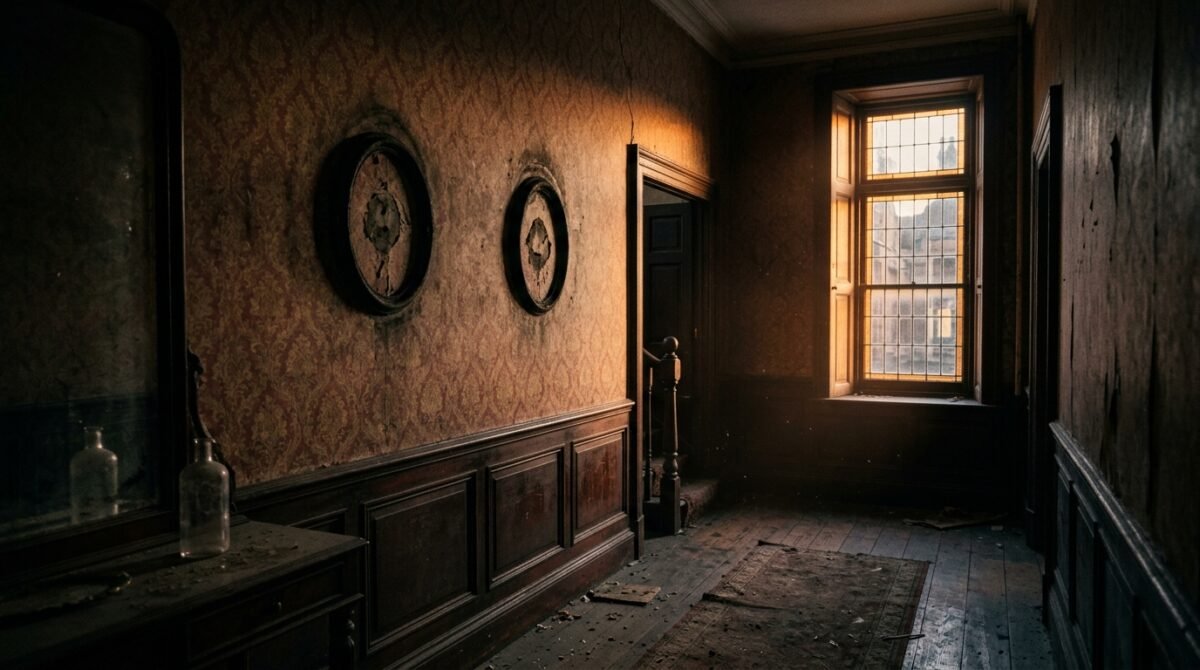
Inheritance is supposed to be a bridge between generations, a way to honor the people we have lost. But for my family, those physical objects became battlegrounds long before my grandmother was even cold in her grave. My grandmother, Eleanor, was a woman of impeccable, if eccentric, taste. Her pride and joy were a pair of late-19th-century Tiffany-style stained glass sconces that had survived wars, house fires, and the slow decay of time. They hung in the foyer of the house I inherited—a house that had been in our family for seventy years.
My Uncle Marcus, however, saw my inheritance not as a home, but as a vault he had been unjustly barred from. He had been absent for the better part of a decade, drifting through failed business ventures and ‘get-rich-quick’ schemes that relied heavily on his ability to charm his way into other people’s pockets. When he showed up on my doorstep three months after the funeral, he wasn’t there to offer condolences. He was there to audit my assets.
The moral dilemma started with a sense of entitlement so thick you could cut it with a knife. To Marcus, the fact that I was younger and unmarried meant that I was ‘playing house’ and that the items inside the home were essentially community property for the struggling side of the family. He viewed my ownership of the house as a clerical error that he was personally rectifying.
What followed was a slow-motion car crash of boundaries being systematically dismantled. I tried to be the bigger person. I tried to be reasonable. I tried to suggest that we keep the items in the family, but Marcus had no interest in sentimentality. He wanted liquid cash. And he wanted it from the most beautiful things I owned. The breaking point arrived on a rainy Tuesday morning, when the sound of a crowbar hitting wood shattered the quiet of my foyer, signaling the start of a cold war that would end in a very public, very permanent severance of our relationship.
The Morning The Foyer Went Quiet
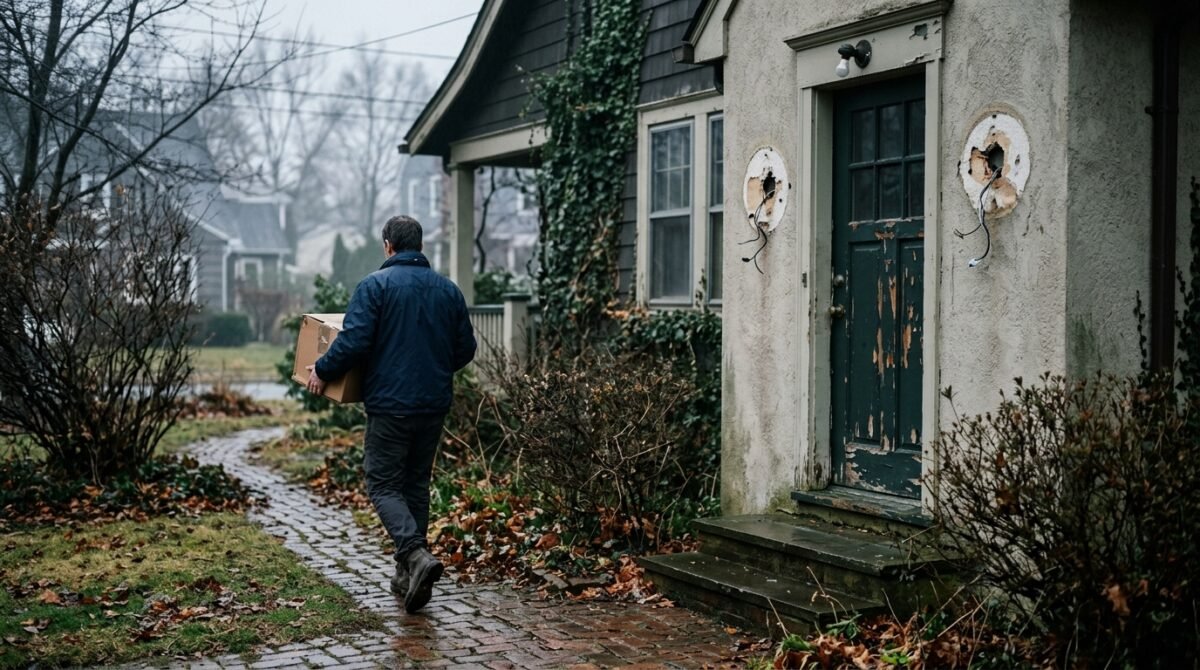
It was 6:30 AM when the sound of the front door being forced open snapped me out of my sleep. I assumed it was a delivery, or perhaps a neighbor, but the heavy, rhythmic thudding of metal against plaster echoed through the hallway. By the time I reached the top of the stairs, I saw my Uncle Marcus, dressed in a faded windbreaker, his face flushed with exertion. He wasn’t looking for coffee or conversation; he was sweating over the sconces.
He had already detached one of the stained glass fixtures, the wires dangling like exposed nerves from the wall. He was breathing heavily, his hands shaking slightly as he balanced the delicate, heavy glass in his arms. When he looked up and saw me, he didn’t even drop the tool. He simply adjusted his grip and offered a smile that didn’t reach his eyes, as if he were caught doing a chore rather than committing a felony.
“You’re up early, niece. Don’t look so surprised. These were promised to me by your grandmother back in the nineties. It’s about time they found their way into a home that can actually appreciate their market value.”
I stood at the top of the staircase, paralyzed by the sheer audacity of the scene. I told him to put them down, to leave the house immediately, and that I would call the authorities. He simply laughed, a dry, rasping sound that I had heard at too many holiday parties growing up. He told me that calling the police on family would be a ‘pathetic look’ and that I should consider this a favor—he was simply ‘reorganizing’ the collection.
He didn’t just walk out; he took his time. He packed the sconces into a cardboard box lined with old towels, his movements careful, almost tender. It was a strange juxtaposition: the man who hadn’t called or visited in years suddenly acting as the curator of my grandmother’s estate. He walked out the door with a final warning that he would be back for the sideboard next week, leaving me staring at the jagged, exposed wiring in my foyer.
That moment felt like a violation that transcended the physical. It wasn’t about the glass. It was about the fact that he felt he had the right to bypass my agency, my ownership, and my grief. As I watched his car pull out of the driveway, I didn’t feel rage—I felt a cold, calculated clarity. He wanted to play games with family assets? Fine. I would play by his rules, but I would make sure he was the one who lost in the end.
The Appraisal That Sealed His Fate
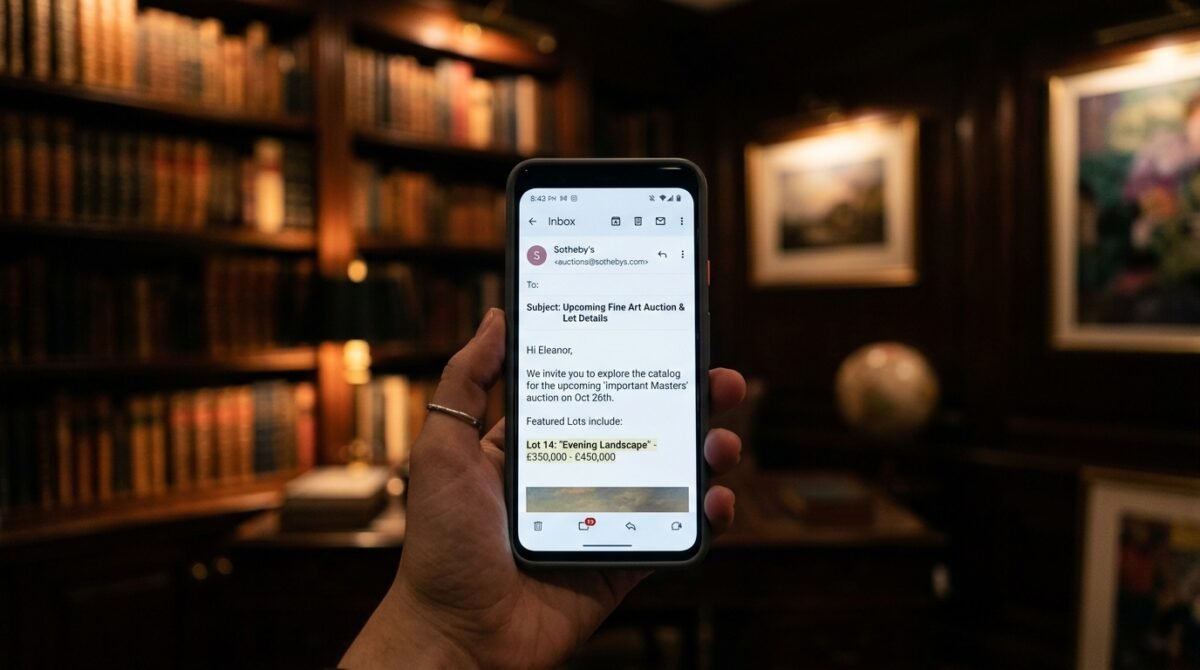
I knew the sconces were valuable, but I hadn’t realized just how valuable until I called the antique dealer who had helped my grandmother catalog her collection years ago. When I sent him a photo of the mounting brackets and described the intricate lead work, he went silent for a moment before giving me a figure that made my stomach turn. They were original, early 20th-century artisan pieces. The market for these was niche, but the price tag was enough to pay off my student loans three times over.
Marcus, in his infinite arrogance, had no idea what he had stolen. He likely thought they were ‘vintage’ and worth a few hundred dollars—enough to cover a month of rent or a weekend at the track. He didn’t realize that by prying them off the wall, he had moved them from a private, protected family heirloom into a piece of inventory he was woefully unqualified to sell.
I waited. That was the hardest part. I didn’t reach out to him. I didn’t demand them back. I watched his social media—a trail of breadcrumbs for anyone who knew his patterns. Within three days, he posted a photo of them sitting on a laminate kitchen table, asking for ‘serious offers from collectors.’ The comments section was already filling up with low-ballers and scammers.
I contacted the auction house in the city, the one he had tagged in his desperate bid to find a buyer. I sent them photos of the house, the probate documents proving my ownership of the contents, and a notarized statement of theft. They were very interested. In fact, they were interested in making sure that these items didn’t enter the black market, especially given the historical provenance I could prove.
I felt a strange sense of vindication. Marcus was so blinded by his greed that he didn’t even think to check if the items were insured or if their history was tracked. He was a small-time thief acting like a big-time investor. My plan was simple: let him get close to a deal, let him get excited about the payday, and then pull the rug out from under him in the most public way possible.
The Bait and The Hook

I created a burner account and messaged him. I played the part of an ‘eclectic collector’ who had been looking for these specific pieces for years. His response was immediate and hungry. He quoted me a price that was insulting—not because it was too high, but because it was so low it proved he had no idea what he was holding. He was desperate for a quick flip.
“I have a buyer lined up for the weekend. We can meet at the coffee shop on 4th. Cash only. No paperwork, no fuss. You want them or not?”
— Message from Uncle Marcus
I played along, keeping him on the hook while I coordinated with my lawyer. The strategy was to allow him to commit to the sale, to bring the items into a public space, and then to have the police waiting. But I decided to take it a step further. I wanted him to realize, in the moment of his greatest perceived triumph, that he had already lost.
I arranged for a ‘third party’—a friend of mine, a large, intimidating guy who works in security—to meet him at the coffee shop first. He wasn’t there to fight; he was there to document. He showed Marcus a copy of the police report, the ownership documents, and a letter from the auction house stating that these items were flagged as stolen property.
The transformation in Marcus’s face was worth more than the sconces. He went from smug confidence to pure, unadulterated panic. He didn’t know who I was, or how I had found out, or why the police were suddenly involved in what he thought was a ‘private family matter.’ He tried to run, but he left the box on the table. My friend took the box, handed him a business card with my lawyer’s contact info, and walked away.
I had my grandmother’s sconces back. But I wasn’t done. I knew Marcus would try to spin this as a misunderstanding, as a ‘prank’ or a ‘family dispute’ to the rest of the relatives. He was a master at the victim narrative, and I needed to get ahead of the story before he could weave his lies into the family lore.
The Group Chat Explosion
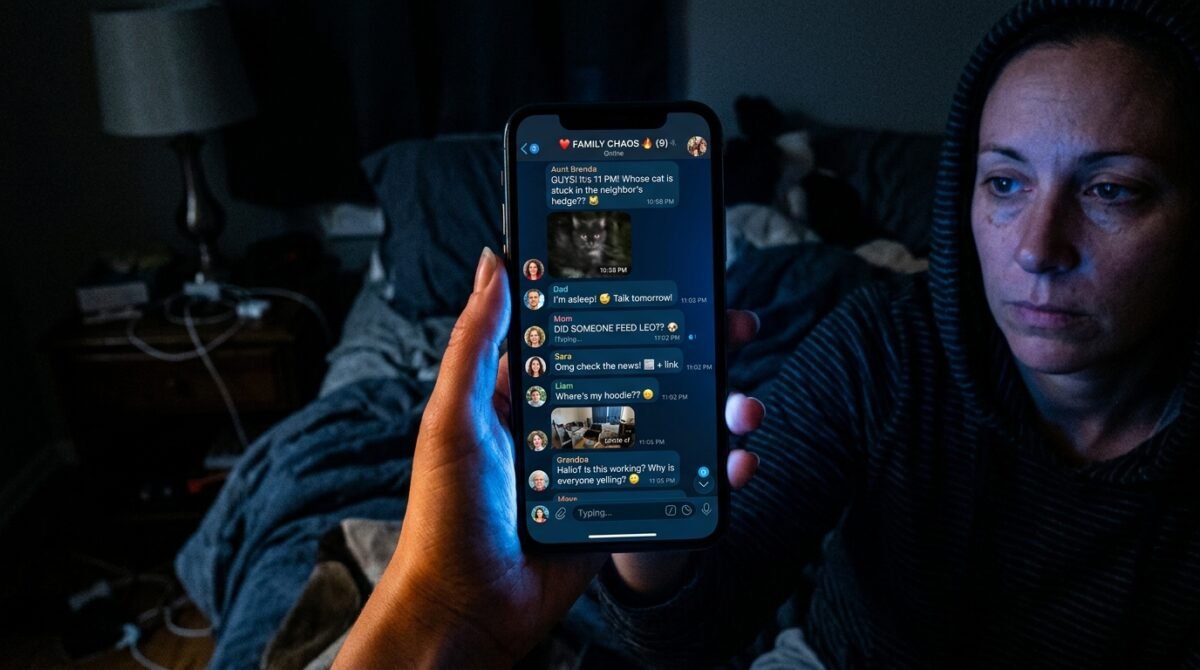
The family group chat, which had been dormant for weeks, suddenly erupted. My aunt was the first to chime in, clearly having received a tearful, edited version of events from Marcus. According to her, I was a ‘cold-hearted person’ who had sicced private investigators on my own uncle over a few old lamps. The accusations flew fast and hard, painting me as the aggressor in a situation where I had been the one burglarized.
“How could you do this to Marcus? He was just trying to keep the family legacy alive. You’ve humiliated him in public, and the police are talking about pressing charges. Is this really about glass, or is this about being spiteful?”
— Aunt Sarah, Family Group Chat
I didn’t lose my cool. I didn’t defend myself with emotional pleas. I simply dropped the documents. I shared the photos of the damage to my home, the proof of ownership, and the message where Marcus admitted to trying to sell the items for cash. It was a digital mic drop that left the chat dead silent for nearly an hour.
The silence was deafening. One by one, the people who had been quick to jump on the ‘let’s just forgive and forget’ train started to backpedal. It turned out that Marcus had been borrowing money from almost everyone in the chat, and the revelation that he was stealing from me was just the final straw in a long history of bad behavior that they had been enabling for years.
It was a turning point. People stopped looking at me as the ‘difficult niece’ and started looking at Marcus as the liability he had always been. The group chat, which had been a source of pressure for me, became the platform where Marcus’s isolation was finally cemented. I didn’t need to say another word; the facts did the heavy lifting.
I realized then that the power dynamics of a family aren’t fixed; they shift based on who is willing to stand in the truth. For years, I had been afraid of the family’s judgment, afraid of being seen as the one who ‘ruptured’ the peace. But I realized that the peace was a facade, a thin veil covering the rot of entitlement and manipulation. By ripping it away, I hadn’t destroyed the family; I had simply stopped participating in the delusion.
The Legal Reality Check

The next few weeks were a blur of legal appointments and police statements. I was surprised by how seriously the authorities took the case once they saw the evidence. It wasn’t just ‘family drama’ anymore—it was grand larceny. The fact that he had entered my home, caused structural damage, and attempted to fence the items made it a straightforward criminal case.
Marcus tried to call me incessantly. At first, it was rage, then bargaining, then pathetic pleas about his ‘financial situation’ and how this would ‘ruin his future.’ It was a masterclass in narcissistic manipulation. He wanted me to drop the charges, to tell the police it was all a misunderstanding, to ‘keep it in the family’ once more. He didn’t understand that the bridge wasn’t just burned; it had been dismantled.
I kept a log of every call, every message, and every interaction. I didn’t engage, but I documented everything. My lawyer was excellent; she made it clear that any contact from Marcus would be treated as witness tampering. He was forced to back off, and for the first time in my life, I felt the space around me finally clear of his influence.
The legal consequences were the reality check he had avoided for twenty years. He was facing charges that were not going to disappear with a charming smile or a half-hearted apology. He had to face a judge, a public defender, and the cold, hard reality that his ‘right to his inheritance’ was actually a criminal liability. It wasn’t about the sconces; it was about the fact that he was finally, truly accountable.
I think the hardest part for him wasn’t the threat of jail time—it was the realization that I was no longer afraid of him. When he realized that I wouldn’t budge, that I wouldn’t be bullied or manipulated into silence, he lost his leverage. And without that leverage, he was just a sad, middle-aged man who had run out of people to exploit.
The Sale of the Sconces

When the dust finally settled, I had the sconces back. They were cleaned, repaired, and re-hung in my foyer—but they no longer felt like a part of the house’s soul. They felt like a reminder of the conflict, a heavy, glass-and-brass symbol of the family war. I looked at them every day, and instead of seeing my grandmother’s love, I saw the crowbar marks on the wall.
I decided to sell them. Not to a random buyer, but to a reputable museum-linked dealer who promised they would be preserved in a public collection. It felt like the right way to honor their history without keeping the toxicity of the past attached to them. The money I received was substantial, and I used it to renovate the foyer, to repair the damage Marcus had caused, and to put the rest into a fund for my own future.
The act of selling them was cathartic. It was a final closing of a chapter. I wasn’t ‘getting rid’ of my inheritance; I was transforming it into something that couldn’t be stolen, broken, or fought over. It was mine, in every sense of the word, and no one—not my uncle, not my extended family, not anyone—could lay a claim to it anymore.
I remember sitting in the foyer the night after the dealer took them away. The wall was painted, the brackets were gone, and the space felt light, empty, and calm. I realized that my grandmother hadn’t left me the sconces to keep me anchored to the past. She had left me the house, the life, and the capacity to make my own choices. The sconces were just things. My peace of mind was the real inheritance.
The transition was complete. I had faced the monster, dismantled his power, and reclaimed my home. It wasn’t the path I would have chosen, but it was the path that led me to a place of total autonomy. I had finally stopped being the person people expected me to be and started being the person I actually was.
The Internet Weighs In

When I finally posted the full story on a popular forum, I expected a mix of support and criticism. I wanted the feedback. I wanted to see if I had been too harsh, if I had gone too far. The response was overwhelming, a tidal wave of validation that I wasn’t prepared for. Thousands of people read the story, and the consensus was not what I expected.
“OP, you didn’t just set a boundary; you built a fortress. This man has been preying on your family for years, and you finally stopped the cycle. Don’t feel guilty for a second. You didn’t ‘ruin’ his life; his own lack of morals did that. NTA.”
— u/JusticeForOP, 45.2k upvotes
There were hundreds of comments like that. People shared their own stories of ‘inheritance vampires’—relatives who descend like vultures the moment someone dies, feeling entitled to things they never contributed to or cared about. It was a global community of people who had been through the same, and seeing their support made me realize that my struggle was far from unique.
Of course, there were the contrarians. The ones who argued that ‘family is family’ and that I should have forgiven him for the sake of the holidays. They were few and far between, but their comments served as a reminder of why I had to be so firm. Those are the people who enable behavior like Marcus’s, the ones who value ‘harmony’ over ‘justice.’ I didn’t engage with them, but I felt a sense of pity for them.
The debate in the comments section was fascinating. People analyzed the legal aspects, the psychological impact of the theft, and the morality of the ‘revenge’ I took. It wasn’t just a venting session; it was a deep dive into the ethics of boundaries. I found myself reading the comments for hours, finding comfort in the fact that I wasn’t alone in the decisions I had made.
The most meaningful comments were the ones from people who said I had inspired them to cut off their own toxic family members. If my story could help even one person realize that they don’t owe their peace or their property to someone who treats them like a doormat, then it was worth every ounce of the stress, the legal fees, and the family fallout. I was no longer just the victim of a burglary; I was an advocate for self-respect.
Reflecting on the Fallout

Months later, the family dynamic has stabilized into a new, cold reality. I don’t speak to Marcus, and I don’t speak to those who continue to demand I ‘be the bigger person.’ I have become the black sheep, the one who broke the rules of the family cult. It’s a label I wear with pride. The silence from that side of the family is a gift, a daily reminder that I have reclaimed my life from people who never actually cared about me.
I have built a new community—a circle of friends and family who respect my boundaries, who celebrate my autonomy, and who wouldn’t dream of prying something off my wall. I’ve learned that family isn’t about blood; it’s about the people who treat you with the same respect they expect from you. I’ve surrounded myself with people who are supportive, not transactional.
I still think about my grandmother sometimes when I look at the foyer. I think about the life she lived, the things she valued, and the things she would have thought of this whole mess. I think she would have been furious at Marcus, and I think she would have been proud of the way I handled it. She wasn’t a woman who took nonsense from anyone, and I like to think I inherited her strength, if not her taste in lighting.
The lessons I learned weren’t easy, but they were necessary. I learned that you cannot negotiate with entitlement. I learned that silence is often mistaken for weakness. And most importantly, I learned that you have to be willing to lose everything to gain your own self-respect. It was a high price to pay, but it was the only way to ensure that I would never be someone’s victim again.
My life today is quiet, simple, and entirely mine. The sconces are gone, the uncle is gone, and the drama is gone. In their place is a peace that I didn’t know existed, a foundation that I built for myself, by myself. And if I had to do it all over again? I wouldn’t change a single thing. I would hold the line, I would call the police, and I would walk away just as I did.
The Final Verdict

The question I get asked most often is: ‘Do you ever regret being so public about it?’ My answer is always no. Being public about my boundaries wasn’t just for me; it was for the record. It was to ensure that the narrative couldn’t be manipulated, that the facts were out in the open, and that I was the one holding the pen. When you are the one who tells the truth, you control the fallout.
Marcus is still out there, probably looking for his next target, another house to ‘reorganize’ or another relative to exploit. But he knows I’m not an option. He knows that the cost of crossing me is higher than the reward of whatever he thinks he’s entitled to. And that, in itself, is a victory. It’s not about vengeance; it’s about deterrence. It’s about being a person who is not to be messed with.
For those of you reading this who are currently dealing with your own family drama, my advice is simple: document everything, trust your gut, and don’t be afraid to pull the plug. You are not a bad person for wanting to be respected. You are not ‘destroying the family’ by setting boundaries. The family was already broken if it relied on your exploitation to function. The only thing you are doing is picking up the pieces.
I hope that my story encourages you to look at your own inheritance—not just the physical items, but the emotional baggage—and ask yourself if you’re ready to let go of the things that are only holding you back. It’s scary, and it’s messy, but the freedom on the other side is worth every bit of the fight. You deserve a home that is a sanctuary, not a battleground.
Thank you for letting me share this part of my life. The response from this community has been the final piece of the puzzle, the validation that I needed to know I did the right thing. The foyer is quiet now, the light is soft, and for the first time in a long time, the house feels like home.
Conclusion
My journey from the victim of a burglary to the owner of my own peace has been a long, winding road of hard lessons and even harder decisions. When I sold those sconces, I wasn’t just disposing of an object; I was shedding the weight of a toxic legacy. The fallout was severe, but the clarity that followed was worth every bridge burned. I have learned that family loyalty is not a blank check, and that standing up for yourself is the ultimate act of self-care.
We have all encountered those people who feel entitled to our lives, our work, and our resources. The key to surviving them is to realize that you are the primary stakeholder in your own life. No one is entitled to your history if they haven’t earned a place in your future. By removing the physical reminders of my uncle’s entitlement, I created the space to build something entirely my own.
What about you? Have you ever had to draw a hard line with a family member who refused to respect your boundaries? Did you suffer the ‘black sheep’ label for doing the right thing? Let’s discuss in the comments below—I want to hear your stories of boundary setting and the fallout that followed.
What's your verdict on this dilemma?
Vote below to contribute to the official community consensus.

Have a Dilemma Keeping You Up at Night?
Share your real-life feud, wedding chaos, or relationship crossroads anonymously with our editorial team.
What do you think ?
0 Comments🛡️ Comments are moderated to protect community integrity. Your comment will appear once approved by the editorial team.