

Growing up, I was the ghost in my father’s house. While he spent his weekends playing the role of the devoted patriarch to his new family, I was often relegated to the background, an inconvenience he tolerated only because he had to. My father, a man who prides himself on his reputation in local circles, never missed a chance to remind me—and everyone else—that my existence was an ‘unfortunate accident’ that had stalled his upward mobility.
I worked hard to distance myself from that environment. I put myself through college on scholarships and grit, eventually landing a lucrative position at a venture capital firm by my late twenties. I had finally achieved a level of financial security I never thought possible, a life built entirely on my own merits. I had reached a state of low-contact peace, punctuated only by the occasional awkward birthday text that I usually ignored.
That peace was shattered last month. I received a phone call from my father, not to catch up, but to demand a ‘contribution.’ He wanted me to subsidize the tuition for my half-brother’s enrollment in one of the most elite boarding schools in the country. He framed it as a family obligation, a way to ‘support my own blood.’ The irony was suffocating. He wanted me to invest in the success of the son he actually loved, using the money I earned despite his neglect.
The dilemma here wasn’t just about the money, though the figure was substantial. It was about the audacity of a man who had publicly dismissed me for two decades now expecting me to bankroll his dream for his ‘golden child.’ I had to decide: do I provide the funding to keep the peace, or do I finally leverage the silence I’ve cultivated to tell him exactly what he is worth to me? This is the story of how I chose the latter, and the fallout that followed.
The Unexpected Request from the Man Who Never Called

It was a Tuesday evening, the kind of quiet, reflective time I usually spend catching up on market reports. When my phone buzzed with a call from my father, I hesitated. He hadn’t called in eight months, not since the Christmas card I didn’t send back. I answered, expecting a health crisis or some other manipulative emergency.
Instead, he skipped the pleasantries entirely. His voice was cold, transactional, and filled with a misplaced sense of authority. He launched into a lecture about how my half-brother, Leo, had been accepted into an exclusive boarding school that would ‘set him up for the success I clearly lacked in my youth.’ He didn’t ask; he dictated.
“Listen, you’ve done well for yourself, despite your humble start. Leo needs this edge. I’ve calculated that you can afford to cover two years of his tuition without much strain. It’s time you did something useful for this family.”
— My Father, over the phone
I felt my blood turn to ice. It wasn’t the request itself that shocked me, but the sheer lack of awareness. He was asking me to spend money I had earned to pay for the education of the child who had replaced me in his heart, all while ignoring the fact that he hadn’t contributed a cent to my own education or well-being.
I kept my voice steady, though my hands were shaking. I asked him why he thought I would ever agree to such a thing given the years of alienation he had fostered. His response was chilling in its dismissal of my reality. He told me that my ‘past grievances’ were childish and that I owed him a debt for ‘bringing me into this world’—a debt I had supposedly been shirking for years.
The conversation ended with me telling him I would think about it, but in reality, I had already made my decision. There was no universe in which I was going to fund his ego project. The silence that followed the call was deafening, but it was also the first time in my life I felt truly in control of my relationship with him.
The Public Humiliation That Never Faded

To understand why I said no, you have to understand the history. My father’s favorite party anecdote was always about the ‘mistake’ he made in his twenties. He would recount, with a laugh, how his life was derailed by my birth, a narrative he spun to sound like a heroic recovery from a disaster. I was that disaster.
I remember sitting in the corner of his living room at age twelve, hearing him tell his business associates that I was ‘a bit slow’ and ‘not the bright light his newer son was.’ It was a way to humble me, to ensure I never felt confident enough to demand more from him than the bare minimum. He wanted me to feel like a burden so that I would never dream of asking for anything.
When I finally started making money, he didn’t see it as a triumph of character. He saw it as a pool of resources he was entitled to. He viewed my independence as a threat to his control, and by trying to get me to pay for Leo’s school, he was testing to see if he could still exert that control over me, even from a distance.
“You’re lucky I even acknowledge you in public, let alone give you the chance to be part of Leo’s future. Don’t throw away this olive branch.”
— My Father, follow-up text message
The audacity of calling a demand for a massive financial payout an ‘olive branch’ was staggering. I realized then that he didn’t view me as a person; he viewed me as a line item in his estate planning. He wanted to secure Leo’s future by cannibalizing mine, and he felt entitled to do so because he still clung to the delusion that I was his property.
I spent that night looking through old photos and journals, reminding myself that the boy who was called a ‘mistake’ had no obligation to fund the life of the boy who was called a ‘miracle.’ The bridge wasn’t burned; it had never been built in the first place.
The Group Chat Explosion
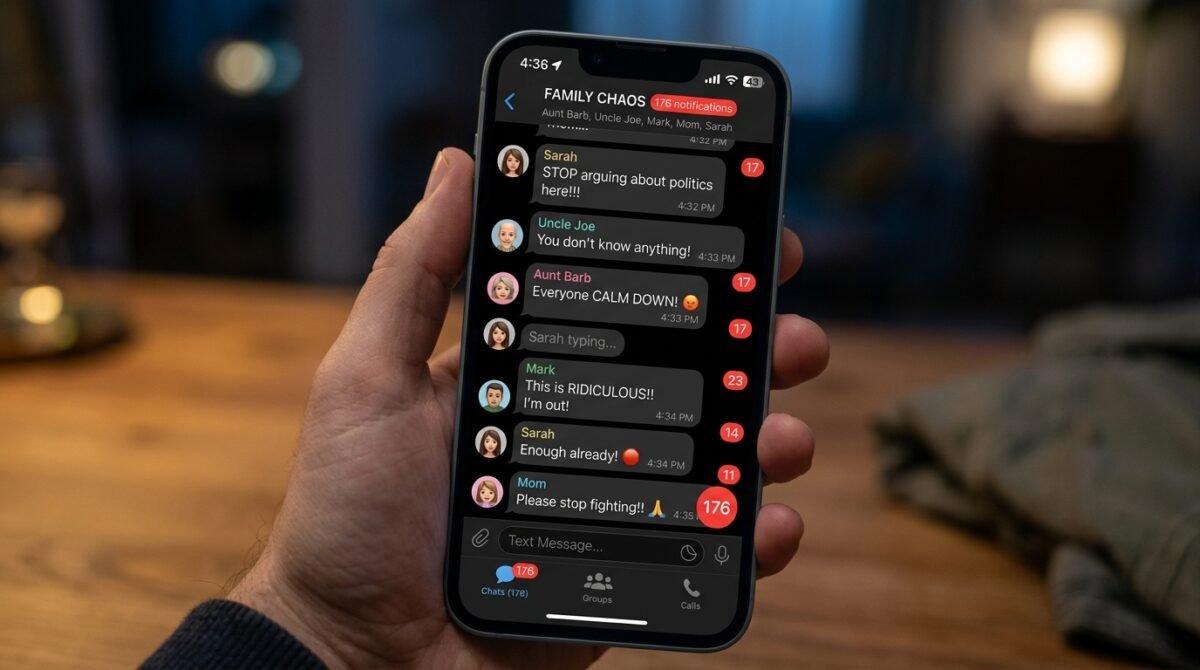
Two days later, I was added to a group chat I didn’t recognize. It was my father, my stepmother, and several relatives I hadn’t spoken to in years. The messages were already flowing, detailing the ‘investment plan’ for Leo’s schooling as if it were already a done deal. They were discussing the payment schedule as if I were a bank.
“So, when is the transfer coming through? Leo starts in three weeks, and the initial deposit needs to be cleared by Friday.”
— Stepmother in the family group chat
I felt a wave of nausea. They were doing this publicly, hoping to shame me into submission. They knew that if they made it a family project, the pressure would be unbearable. I took a deep breath and decided to dismantle their plan in front of everyone. I didn’t want to play the game of polite decline.
I typed a response that I knew would burn the house down. I kept it professional, cold, and factual. I didn’t use emotional language; I used the language of accounting. I laid out exactly how much I had received from them over the last twenty years—zero—and contrasted it with the audacity of their current demand.
The chat went silent for a few minutes. Then, the insults started flying. My father jumped in, calling me ungrateful and venomous. My stepmother claimed I was trying to sabotage a child’s future. They were painting me as the villain, but for the first time, I didn’t care. The truth was out in the open, and it felt incredibly liberating to hold my ground.
The Financial Reality Check

I decided to follow up the group chat message with an email to my father alone. I attached a spreadsheet. It was a mock-up of what his ‘investment’ in me had actually looked like throughout my life. It was a petty move, but sometimes you need to show people the math of their own neglect.
| Category | Father’s Contribution | The Reality |
|---|---|---|
| College Tuition | $0 | Student Loans/Scholarships |
| Living Expenses | $0 | Worked 2 Jobs |
| Emotional Support | $0 | Zero |
| Current Demand | $45,000 | None |
He didn’t acknowledge the spreadsheet. Instead, he called me again, screaming into the phone. He told me that I was a ‘cold-blooded machine’ and that he regretted ever allowing me to ‘leech’ off his last name. He threatened to cut me off entirely—as if I were still hanging on by a thread.
“You think money makes you better than us? You’re still just the mistake I made in college, and you’ll always be an outsider in this family.”
— My Father, mid-meltdown
I simply laughed. It was the only response I had left. The idea that he could ‘cut me off’ from a family that had spent my entire life trying to push me away was absurd. I told him he was free to do whatever he wanted, but he would never see a cent from me. I blocked his number before he could finish his next sentence.
The Fallout with the Relatives
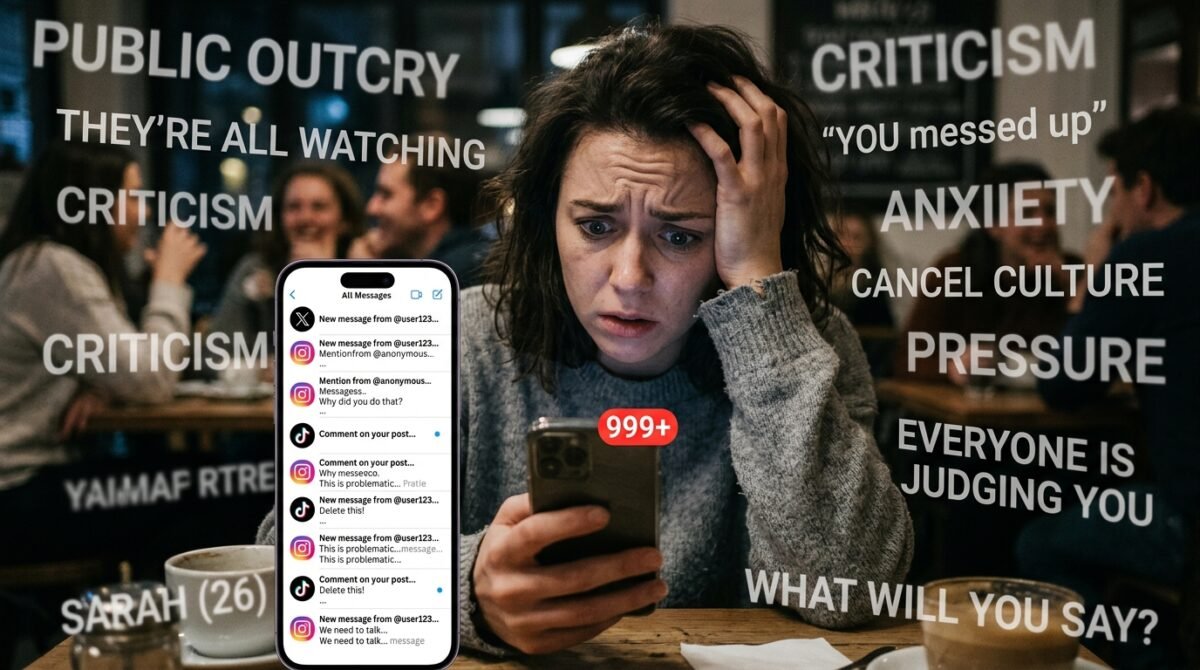
The next few days were chaos. My aunts, uncles, and cousins reached out, some siding with me, others calling me selfish. It was a fascinating study in how people view money and obligation. The ones who had always been distant were the most supportive, while the ones who relied on my father’s favor were the most aggressive.
My father had clearly painted a narrative that I was a wealthy, heartless prodigal son who was hoarding money while his ‘little brother’ suffered. It was an effective smear campaign. People who didn’t know the truth were calling me, demanding to know why I wouldn’t help a child in need. They didn’t care about the context of the abuse or the neglect.
I stood my ground, responding to each query with the same link to a document I had drafted—a timeline of my father’s ‘mistake’ comments and the total lack of support I had received. It was a scorched-earth policy, but it worked. Most people stopped calling once they realized I had receipts for everything.
“I don’t owe my father’s choices. I owe my own future. If you want to fund Leo’s school, feel free to open your own checkbook.”
— My response to a prying aunt
It was exhausting, but it was necessary. I realized that my father’s power was built on the silence of others. By breaking that silence, I was stripping him of the one tool he used to maintain his image. He couldn’t play the benevolent father if everyone knew he was a deadbeat who was now begging his ‘mistake’ for cash.
The Reddit Verdict

I posted about the situation on a popular subreddit for family dilemmas, needing to know if I was truly the monster they made me out to be. The response was overwhelming. Within hours, the post hit the front page, with thousands of people weighing in on my side.
“Your father is projecting his own insecurity onto you. He wants to use you to subsidize his son because he can’t actually afford the life he’s built. Stay strong, OP. You owe them nothing.”
— u/FamilyLawyerAdvice (Top Comment, 28.5k upvotes)
It was validating to see so many people recognize the dynamic of financial abuse disguised as family tradition. The comments were full of people sharing their own stories of being the ‘black sheep’ or the ‘mistake’ in families that only saw them as ATMs. It made me realize I wasn’t alone in this, and that my decision was the right one.
Some users warned me to be careful, telling me that people like my father rarely go quietly. They advised me to secure my accounts, check my credit, and make sure he couldn’t access any of my assets. I hadn’t even thought about the legal implications, but I spent the next day tightening my security, ensuring that he was completely locked out of anything he could possibly touch.
The thread became a repository of support, a digital community that held me up when I felt the guilt creeping back in. It reminded me that just because someone shares your DNA doesn’t mean they are entitled to your labor or your life. The internet, for all its toxicity, had given me the clarity I needed to stop doubting my own resolve.
The Last Attempted Guilt Trip

The final move came from my stepmother, who showed up at my office building. I hadn’t expected her to go that far. She looked disheveled and frantic, clutching a folder of papers. She started crying, trying to play the ‘caring mother’ card, telling me that Leo was heartbroken and that I was ‘ruining his life’ by being stubborn.
I looked at her and felt nothing. No anger, no sadness, just a clinical detachment. I asked her why she thought it was my responsibility to ensure her child had an elite education when I had to work through college to afford rent. She didn’t have an answer; she just kept repeating that family sticks together.
“We are not family. You are the woman who looked the other way while he treated me like a mistake for twenty years. Do not come back here.”
— My final words to her
I called security before she could say another word. Watching her walk away, realizing that the ‘mistake’ was no longer a child she could manipulate, was the most satisfying moment of my adult life. She tried to make a scene, but I remained calm, indifferent, and firm. That was the moment the bridge finally collapsed, and I didn’t care.
I walked back into my office, sat down, and finished my work. The world hadn’t ended because I said no. My father hadn’t magically become a better person. I was still me, but I was now free from the ghost of the ‘mistake’ I had been forced to carry for so long. It was the quietest I had felt in years.
The Aftermath and New Boundaries

It has been six months since that day. My father hasn’t contacted me, and I haven’t contacted him. I moved to a different city, a change I had been contemplating for a while, and it has given me the physical and mental space to truly heal. I no longer check my phone with the dread that he might be on the other end.
I have built a life defined by my own terms. I have surrounded myself with people who value me for who I am, not what I can provide. The financial independence I worked so hard for is now a tool for my own joy, not a piggy bank for people who never cared for me. I am finally able to invest in my own future without feeling the shadow of his ‘mistake’ comment looming over me.
The most important boundary I set was with myself: I stopped trying to prove him wrong. I realized that my success wasn’t about being better than him; it was about being free of him. Once I stopped looking for his approval, or even his acknowledgement, I found the inner peace I had been searching for since I was a teenager.
“You don’t win by convincing them of your value. You win by walking away from their table entirely.”
— A piece of advice I gave a friend in a similar situation
I still think about the money sometimes, and what it could have done for someone else, but then I remember the cost of paying it. It would have cost me my self-respect and my future autonomy. That is a price I will never be willing to pay again. I am not a mistake; I am a survivor.
Reflecting on the Nature of Entitlement

Looking back at the whole ordeal, I am struck by the sheer audacity of parental entitlement. The idea that a parent can treat a child poorly and then demand support from them in adulthood is a form of narcissism that is far too common. We are raised to believe that family is an unconditional bond, but that bond is a two-way street.
If you don’t build the foundation, you cannot expect to live in the house. My father tried to build a mansion on a foundation of sand, and he expected me to be the cement. I wasn’t just refusing to pay for school; I was refusing to participate in a system that valued his reputation over my humanity. It was a necessary act of rebellion.
The lessons I learned weren’t just about money. They were about the value of saying ‘no.’ In a society that pushes us to be polite, to keep the peace, and to honor ‘blood,’ saying no to a parent is often seen as the ultimate betrayal. But sometimes, the ultimate act of self-love is the refusal to sacrifice yourself for someone who never cared for you.
“The most powerful thing you can do when someone assumes you are a resource is to show them you are a boundary.”
— Final thought on the dilemma
I hope that by sharing this, other people who find themselves in similar traps realize they don’t have to comply. You don’t have to be the victim of their expectations. You have the right to curate your own family, your own finances, and your own future. You are the architect of your life, not the subject of their narrative.
Community Perspectives on Financial Boundaries
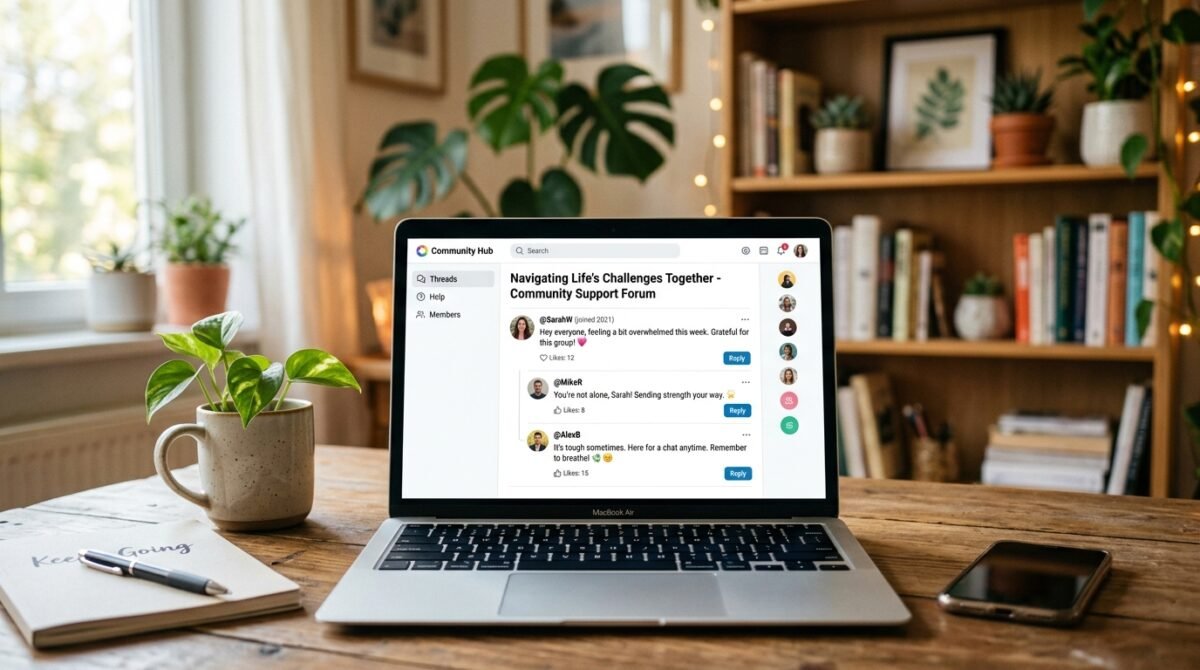
Since my story went viral, I have received hundreds of messages from people all over the world. Many are in the exact same position, struggling to set boundaries with parents who view their children as retirement plans or emergency funds. It’s a global issue, not just a personal one. The consensus is overwhelmingly in favor of protecting your own peace.
“My mother tried to do the same when I got my first promotion. I told her no, and I haven’t spoken to her in three years. My life has never been better. You made the right choice, OP.”
— u/SupportiveStranger (15.2k upvotes)
The variety of stories is staggering. Some people have been cut off for saying no, others have been harassed, and some have managed to find a middle ground. But the common thread is the relief they feel after setting the boundary. It’s clear that the pressure to provide for family is a massive weight, and dropping it is the best thing you can do for your mental health.
I’ve started a small discord group for people navigating these types of family dilemmas. It’s become a safe space for us to share advice, help each other draft firm, boundary-setting messages, and support one another when the guilt starts to creep in. It’s a reminder that we aren’t alone and that we don’t have to be defined by the people who tried to limit us.
The community support has been the most unexpected part of this journey. It’s helped me process the remaining anger I felt, turning it into something constructive. I am not just a victim of a bad father; I am part of a community of people who are choosing their own paths and refusing to accept the roles they were assigned at birth.
Conclusion
Ultimately, my story isn’t just about a boarding school or a tuition check. It is about the fundamental right to define our own worth. My father tried to reduce me to a ‘mistake’ and a financial resource, but he failed because I chose to recognize my own value first. I am the sum of my own choices, my own hard work, and my own boundaries.
If you take one thing from this narrative, let it be this: you are not responsible for fixing the failures of your parents. You are not a vessel for their unfulfilled dreams, nor are you a bank for their entitlement. Your loyalty is earned, not owed. When someone shows you who they are, believe them, and act accordingly.
I am interested to hear what the community thinks. Have you ever had to draw a line with family over money or expectations? Did it cost you the relationship, and was it worth the peace you found on the other side? Let’s discuss in the comments below.
What's your verdict on this dilemma?
Vote below to contribute to the official community consensus.

Have a Dilemma Keeping You Up at Night?
Share your real-life feud, wedding chaos, or relationship crossroads anonymously with our editorial team.
What do you think ?
0 Comments🛡️ Comments are moderated to protect community integrity. Your comment will appear once approved by the editorial team.