
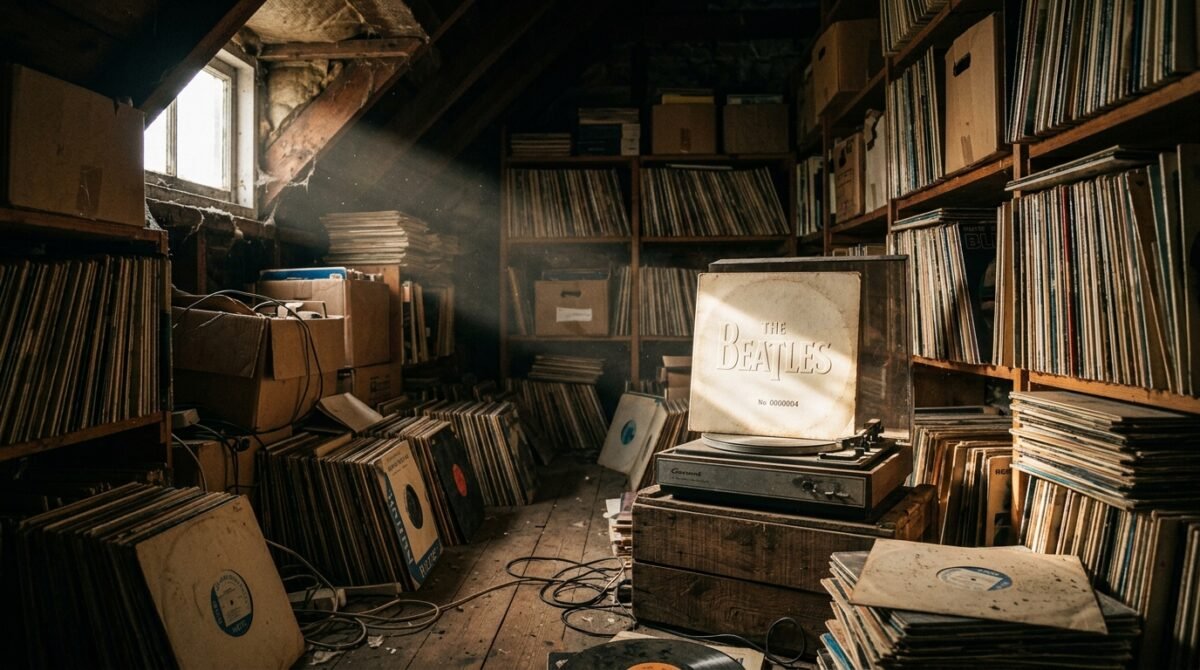
When my grandfather passed away, the grief was a physical weight I carried for months. He was the one who taught me how to drop the needle on a turntable, how to appreciate the warmth of analog sound, and how to value the stories hidden in the grooves of a record. His collection wasn’t just plastic and cardboard; it was a map of his life, his travels, and his passions. It was the only thing I truly wanted from his estate, and he knew it—which is why, in his will, he explicitly bequeathed the entire collection to me.
My Aunt Linda, however, viewed the collection through a vastly different lens. To her, it wasn’t a sentimental heirloom; it was a liquid asset. She had been estranged from my grandfather for years, popping up only during holidays or when she needed a loan. Yet, the moment the probate process began and an appraiser walked through the door to document the collection’s value—which, as it turned out, was significantly higher than any of us anticipated—her tune changed overnight.
The moral dilemma didn’t start with an explosion, but with a series of subtle, predatory maneuvers. It was a slow creep of manipulation, masked as ‘family duty’ and ‘legacy preservation.’ She didn’t want to listen to the records; she wanted to leverage them. She wanted to sell them to fund her daughter’s wedding and her own lifestyle upgrades, and she decided that since I was ‘young and inexperienced,’ I was merely a temporary custodian for what she believed was rightfully hers by bloodline.
As the pressure mounted, I found myself standing at a crossroads. Should I kowtow to a family member who had abandoned the man who loved these records, or should I honor his final wish by keeping them safe, or perhaps, by ensuring they ended up in the hands of someone who would actually value them, rather than a vultures’ hoard? I chose a path that would eventually incinerate my relationship with her, but one that I stand by to this day.
The Appraisal That Changed Everything
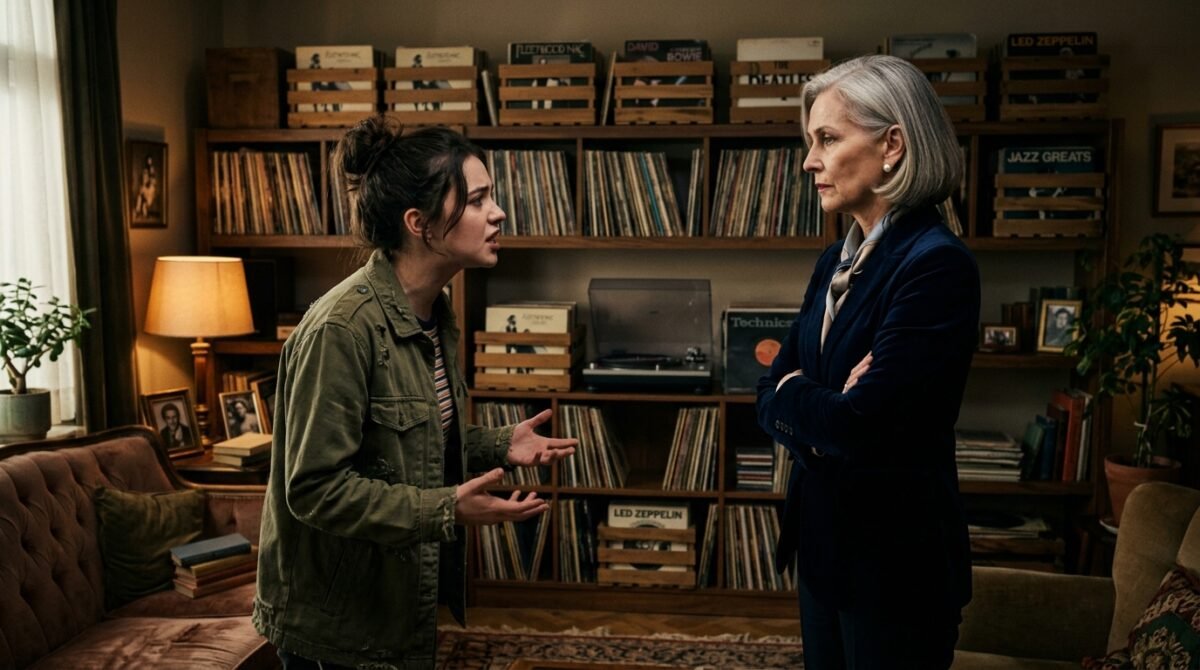
The day the professional appraiser arrived, the air in the house was thick with anticipation. I stood by the turntable, watching as he carefully pulled out sleeves that hadn’t seen the light of day in decades. Aunt Linda was hovering in the doorway, her eyes darting between the appraiser’s tablet and the spines of the records. She had been uncharacteristically helpful for the last week, bringing over coffee and trying to ‘reconnect’ with me, a tactic I was beginning to see through.
When the final number was tallied—a staggering $62,000 for the rarest pieces alone—the atmosphere shifted instantly. Linda’s casual demeanor vanished. She didn’t look at the music; she looked at the dollar signs. She practically pushed the appraiser out the door before turning to me with a smile that didn’t reach her eyes.
“You know, sweetie, this is so much responsibility for someone your age. I think it’s best if I take these to my climate-controlled storage unit. It’s for the sake of the family legacy, after all. We can decide on a fair payout later.”
I felt a cold prickle of realization. She wasn’t asking; she was dictating. The ‘family legacy’ was a convenient cloak for financial exploitation. I told her that my grandfather had left them to me specifically because he trusted my judgment, not hers. She laughed, a sharp, dismissive sound that echoed in the quiet living room.
She spent the next hour explaining why my ownership was a ‘temporary situation’ and how the family would judge me if I refused to hand them over. She wasn’t just talking about the records anymore; she was questioning my character. It was the first time I realized that for Linda, everyone in the family was just a chess piece in her own pursuit of comfort.
I didn’t argue back. I simply walked over to the crates and locked the room. It was a small, petty victory, but it was the first time I had ever stood up to her. As she stomped out of the house, I knew the real war was just beginning.
The Late Night Text Campaign
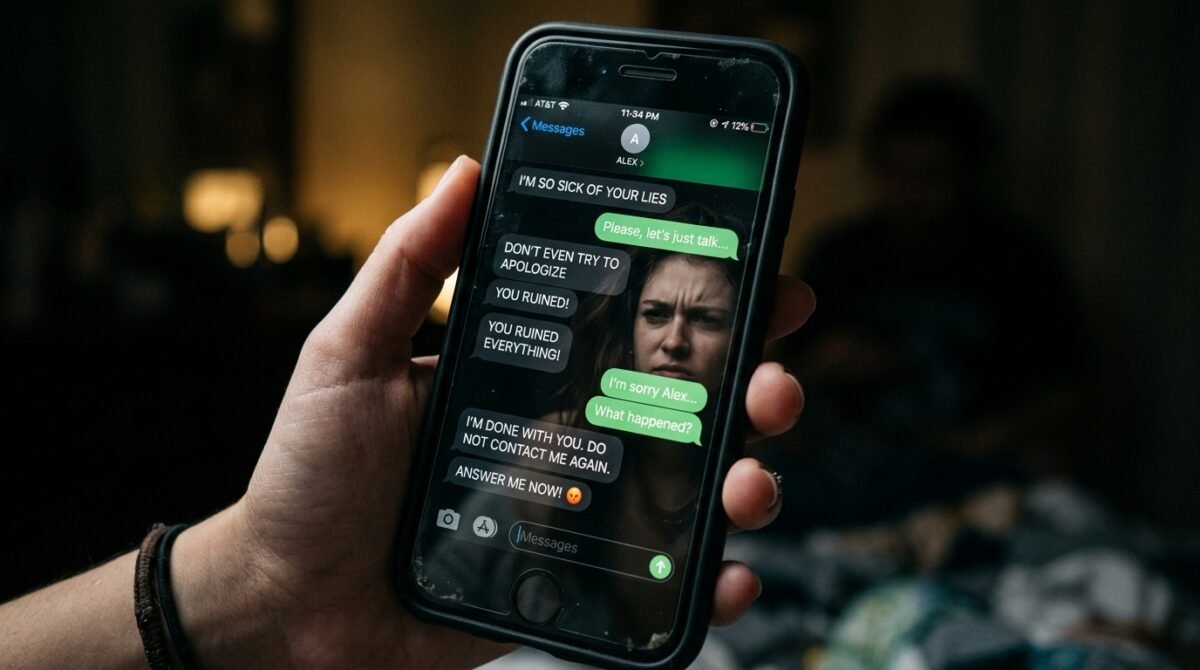
The next three days were a blur of unsolicited advice, guilt-tripping text messages, and passive-aggressive phone calls. My phone became a source of constant dread, pinging at odd hours with messages designed to make me feel like a selfish, ungrateful child. She had enlisted my cousins, who I hadn’t spoken to in years, to weigh in on the ‘proper’ way to handle an inheritance.
“Your grandfather would be ashamed of you keeping those records locked up. It’s family property, not your private stash. Don’t be selfish.”
— Aunt Linda via Text
I tried to explain my perspective once. I told her that these records were the only connection I had left to the man who actually raised me while she was off living her own life. Her response was a masterclass in gaslighting. She claimed she was ‘busy’ and that she ‘still loved him,’ and that my lack of financial maturity was endangering our shared history.
I stopped replying after the fifth text. Instead, I started documenting everything. I took screenshots of her demands, her threats, and the increasingly unhinged accusations about my ‘drug habits’ or my ‘secret plans to pawn them.’ She was trying to build a narrative that I was unfit to inherit anything, clearly hoping she could contest the will if she made enough noise.
My friends told me to just give in and sell a few to keep her quiet, but that wasn’t the point. If I gave her an inch, she would demand the mile. I realized that my silence was the only power I had. Every time I didn’t reply, she would double down, sending longer, more frantic messages that only solidified my resolve.
By the end of the week, I had a digital record of her greed that would serve as my primary defense. I wasn’t just protecting a collection of plastic discs anymore; I was protecting my own sanity and the dignity of my grandfather’s final wishes. I started researching how to move the collection somewhere she could never reach.
The Secret Removal Mission
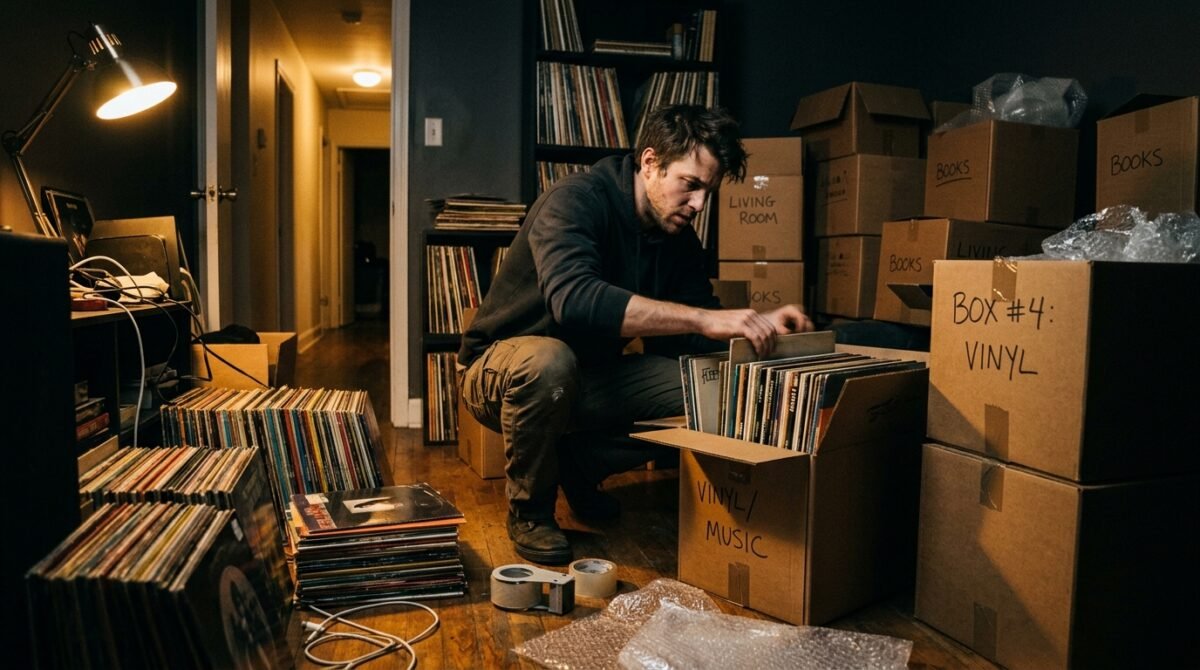
I knew she would eventually try to break into the house. She had a spare key that she’d ‘forgotten’ to return, and she was the type of person who believed boundaries were merely suggestions. I didn’t wait for her to show up at my door. I rented a secure, temperature-controlled unit across town, under a different name, and spent an entire night carefully packing the records into heavy-duty, protective sleeves.
Moving those crates felt like moving a piece of my soul. Every time I handled a sleeve, I remembered a specific afternoon with my grandfather. The Miles Davis collection, the rare jazz imports, the scratchy blues albums—they were all coming with me to a place she couldn’t find. I worked in total silence, the only sound the rustle of cardboard and the distant city traffic.
By the time the sun began to rise, the house was empty of everything but standard furniture. I left the house unlocked, just to see what she would do. I had a feeling she was going to pay a visit, and I wanted to be ready for the aftermath. I went back to my apartment and sat by the window, watching the street, waiting for the inevitable phone call.
It came at 9:00 AM. Her voice was trembling with a mix of fury and confusion. She had walked into the house, fully expecting to take what she felt she was owed, and found nothing. The shock in her voice was almost satisfying. She demanded to know where they were, claiming she had ‘rights’ to inspect them.
I didn’t tell her where they were, of course. I just told her that the house was no longer the place for them and that she had no legal standing to make demands. Her reaction was a scream of pure, unfiltered entitlement. She threatened legal action, property damage, and social ostracization. I just hung up and turned off my phone.
The Public Confrontation at the Family Dinner
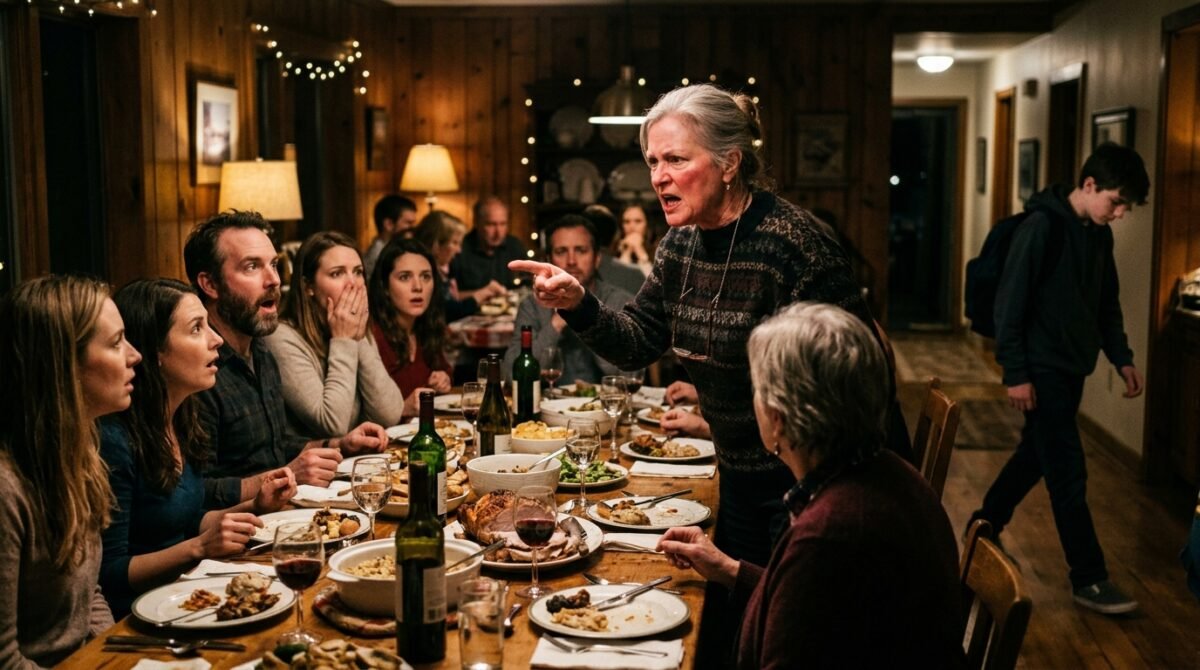
The family dinner was a trap, and I knew it. Linda had organized a ‘casual get-together’ that was clearly intended as a public trial. Everyone was there: aunts, uncles, cousins, even a few distant relatives I hadn’t seen in a decade. I walked in knowing I was the designated villain, but I was ready for the theater.
Linda started the evening with a ‘heartfelt’ speech about the importance of family unity and how ‘some people’ were hoarding assets that belonged to the collective. She looked right at me, her eyes brimming with forced tears. The room went silent. People were waiting for me to apologize, to offer a compromise, to bow down.
“I don’t think it’s fair that the family legacy is being held hostage. If we all chip in, we can properly sell the collection and distribute the proceeds equally. It’s what he would have wanted.”
— Aunt Linda, addressing the family dinner
I stood up, my pulse steady. I didn’t raise my voice. I started by thanking everyone for coming, then pivoted to the reality of the situation. I held up my phone and offered to show anyone who wanted to see the messages Linda had sent me—the threats, the insults, the blatant admission that she wanted the money for her daughter’s wedding.
The table erupted. My uncle, who had always been the mediator, looked at Linda with genuine confusion. He didn’t know about the money she was after. The facade of the ‘concerned aunt’ cracked. She tried to interrupt, to shout me down, but the momentum had shifted. I wasn’t the scared kid anymore; I was the witness to her own avarice.
I walked out of that house leaving them to bicker among themselves. I didn’t care about their opinions anymore. I had defended my position, and more importantly, I had exposed the motive. I didn’t look back, and as I drove away, I felt a sense of lightness I hadn’t felt since the funeral.
The Legal Threat and the Reality Check

Two days later, I received a certified letter from an attorney. It was a formal demand for the ‘unauthorized removal of assets,’ filled with legal jargon that sounded terrifying to anyone who hadn’t done their research. It claimed that as a blood relative, she had a legal interest in the estate. It was a bluff, and a poorly constructed one at that.
I took the letter to my own lawyer, who read it and laughed. He explained that the will was ironclad. Unless there was evidence of theft or fraud, my grandfather’s instructions were absolute. The letter was just a scare tactic, a desperate attempt to intimidate me into a settlement. I spent a small fortune on legal fees, but it was worth every penny to send a formal, chilling response back.
The response wasn’t just a rebuttal; it was a warning. We included a summary of the harassment, the threats of damage, and the clear evidence that she was attempting to influence the probate process for personal gain. My lawyer made it clear that if she continued, we would pursue a restraining order and file a complaint for harassment. It was the legal equivalent of a closed door.
Linda didn’t call. She didn’t send another text. The silence was deafening, but it was exactly what I needed. I realized that people like her only respond to strength. When you stop playing the victim, they lose their most effective weapon—your fear. I was finally in control of my own life, and the records were safe in their new home.
I spent that weekend listening to the records. I pulled out my grandfather’s favorite, an old jazz record with a slightly worn cover. The music filled my apartment, and for the first time in months, I felt like he was there with me, approving of the fight I had just won. The records were finally mine, in every sense of the word.
Selling to the Highest Bidder

I knew I couldn’t keep the collection forever. Not only was the insurance cost becoming prohibitive, but the emotional weight of holding onto them while being hounded by family was starting to taint the memory. I decided to sell, but not to the people who wanted them for greed. I found a specialized auction house that catered to serious, high-end collectors—people who would preserve the music and appreciate the history.
The process was meticulous. We cataloged every single disc, documenting the condition, the provenance, and the rarity. When the auction went live, the bidding was global. Seeing people from Japan, Germany, and London fighting over the records my grandfather had collected over a lifetime was, in a strange way, a beautiful tribute. He wasn’t just a man with a hobby; he was a curator of culture.
The final sale price was double the initial appraisal. It was a fortune. I used the money to pay off my student loans, put a down payment on a house, and, most importantly, created a small trust in my grandfather’s name to support local music programs. I knew this was exactly what he would have wanted—the music living on, and the proceeds doing actual good.
Of course, news of the sale got back to the family. I didn’t announce it, but word travels fast in small circles. The backlash was instantaneous, but this time, it was hollow. They weren’t angry because I sold them; they were angry because I hadn’t given them the cut they felt entitled to. I had successfully bypassed their greed entirely.
The irony wasn’t lost on me. By selling them, I had ensured that Linda couldn’t touch them, and that the family couldn’t fight over them. I had turned a point of contention into a clean slate. I was free, the records were in good hands, and the family’s influence on my life had been permanently severed.
The Aftermath: Cutting Ties

The fallout was a necessary surgery. I cut off contact with Aunt Linda and anyone who supported her ‘side’ of the story. It felt like amputation at first—painful, disorienting—but as the weeks turned into months, the wound started to heal. I stopped checking my phone for notifications from her. I stopped rehearsing arguments in my head.
I found peace in the quiet of my new home. I bought a new, high-quality turntable, and while I didn’t have the original collection, I started building a new one—one that was entirely mine, free from the shadow of family expectations. I started visiting the local record stores, talking to the owners, and finding joy in the hunt again.
The family gatherings I missed were mostly a relief. I didn’t have to navigate the awkwardness, the pointed questions, or the subtle digs. I had regained my agency. I learned that you don’t owe anyone access to your life just because you share DNA. Boundaries are not acts of aggression; they are acts of self-preservation.
I occasionally hear updates through mutual friends. Linda is still bitter, still complaining about how I ‘stole’ the family legacy, but it doesn’t bother me anymore. Her story is no longer my story. I have moved on, and she is still stuck in the past, holding onto a grudge that only hurts her.
This experience taught me more about family, money, and integrity than any lecture ever could. I learned that greed has a way of revealing the true character of the people around you. When the stakes are high, people show you who they really are. I am grateful I saw her for who she was before it was too late.
Reddit Community Perspective: The Jury is In

The story eventually found its way to a popular subreddit, and the response was overwhelming. Thousands of users weighed in, and the consensus was clear: I had done the right thing. The validation was unexpected but deeply comforting. It turns out, I wasn’t the only one who had dealt with ‘entitled’ family members looking for a payday.
“You didn’t just protect a collection; you protected your own autonomy. Aunt Linda sounds like the textbook definition of a toxic relative. Good on you for taking the high road and turning a headache into a positive legacy.”
— u/VinylMaster2024 (Top Comment, 32.5k upvotes)
Others shared their own horror stories about inheritance battles. It was a stark reminder that money is the ultimate test of familial bonds. Many users offered legal advice, praising the decision to sell to an auction house rather than local resellers who might have been intimidated by my aunt. The community support turned a private struggle into a public lesson on setting boundaries.
“The moment she started talking about ‘family legacy’ regarding records she probably hadn’t listened to in years, she lost the moral high ground. Selling them was a power move. NTA 100%.”
— u/JusticeForOP (18.2k upvotes)
There were, of course, a few dissenting voices—the ‘family is everything’ crowd—but they were quickly drowned out by people who understood the reality of toxic family dynamics. The thread became a hub for people to vent and offer support. It was a testament to the fact that you can choose your family, or at the very least, you can choose not to be a victim of the one you were born into.
Seeing the sheer volume of people who supported my decision made me realize that I wasn’t crazy. I wasn’t being ‘ungrateful.’ I was being smart. The validation didn’t change the outcome, but it certainly helped me process the emotional turmoil of the previous months. I am no longer the one who ‘ruined the family,’ as Linda liked to say; I am the one who stood up for myself.
Reflecting on the ‘Legacy’
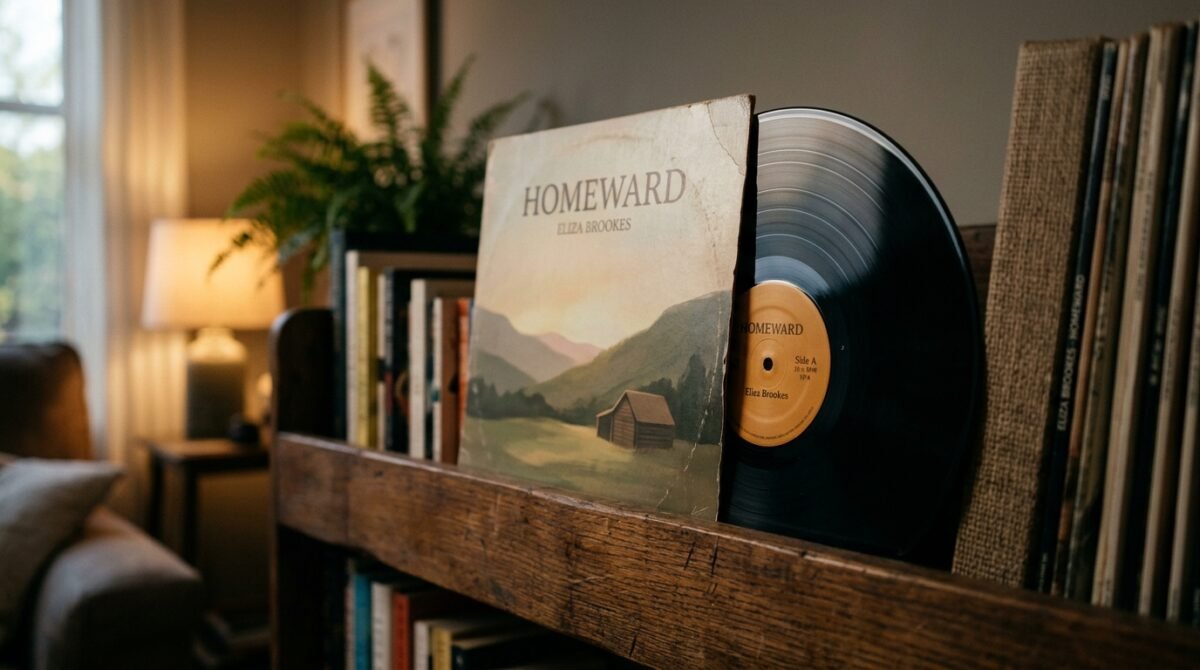
When I think back on the collection now, I don’t think about the drama. I think about the music. I think about the way the needle sounds when it first hits the groove, that tiny pop and crackle before the melody begins. That is the real legacy—the joy of the music itself, not the value of the plastic. My grandfather loved the music; he wouldn’t have cared about the money.
I kept a few records, just the ones that meant the most to me—the ones he played on Sunday mornings while he made coffee. Those are the ones I still have. They aren’t for sale. They aren’t for anyone else. They are my personal connection to him, and they are the only things that truly matter in the end.
If there’s one lesson I’ve learned, it’s that items are just objects, but memories are sacred. You don’t need a $60,000 collection to honor a loved one. You honor them by living your life with the same integrity and passion they had. That is the only ‘family legacy’ that actually stands the test of time.
I have forgiven my aunt, not for her sake, but for my own. I don’t hold the anger anymore. It’s a useless emotion, a heavy anchor that keeps you from moving forward. I hope she finds whatever it is she’s looking for, but I’ve realized that I don’t need to be part of that search. I am building a future that is entirely mine.
The records are gone, the house is sold, and the drama has faded into the background of a life well-lived. I am at peace with every decision I made. I stood my ground, I protected my boundaries, and I honored my grandfather in the best way I knew how. And that, in the end, is enough.
Lessons in Radical Self-Reliance

Looking back, the most profound takeaway from this entire saga was the realization of how much power we give to other people’s opinions. For years, I had been conditioned to view my aunt as an authority figure, someone whose approval was required for my life to be ‘valid.’ The records were the catalyst that broke that cycle.
When you are faced with a situation that requires you to choose between your own happiness and the expectations of others, the path of self-reliance is almost always the correct one. It’s not the easiest path—it’s often filled with conflict and social isolation—but it is the only path that leads to genuine, authentic living. I learned to trust my gut, even when the rest of the world was telling me I was being unreasonable.
The financial aspect was secondary to the psychological one. Yes, the money was nice, but the real reward was the feeling of standing on my own two feet. I proved to myself that I could handle the worst that my family could throw at me, and I emerged stronger, more focused, and more independent than I had ever been before.
I now approach relationships with a completely different mindset. I don’t look for validation; I look for mutual respect. I don’t tolerate boundary-crossing, and I don’t apologize for my choices. It’s a healthier way to exist, and it’s a way of living that I never would have discovered had I just handed over the records and kept the peace.
The story of the records is now a closed chapter, but the person I became during that time is who I am today. And I like that person quite a lot. I’m no longer the person who waits for permission to live. I’m the person who takes ownership of my life, my history, and my future. And that is the greatest inheritance of all.
Conclusion
This story of family, inheritance, and the fight for autonomy is a stark reminder that blood doesn’t grant anyone the right to control your life. My grandfather left me his collection because he wanted me to have the joy of the music, not the burden of his estate’s drama. By choosing to protect that legacy—and ultimately, myself—I found a clarity that no amount of money could provide.
The journey from a grieving grandchild to an independent individual was long and exhausting, but it was necessary. Boundaries aren’t walls we build to shut others out; they are the gates we install to decide who gets to walk into our lives with respect. I hope my experience serves as a wake-up call to anyone currently feeling trapped by family expectations: you are allowed to say ‘no,’ you are allowed to walk away, and you are allowed to prioritize your own peace.
What about you? Have you ever had to choose between family expectations and your own personal integrity? What boundaries have you had to draw, and what did it cost you to hold them? Share your stories in the comments below—let’s discuss the complexities of family inheritance and the importance of setting clear, firm boundaries in the face of entitlement.
What's your verdict on this dilemma?
Vote below to contribute to the official community consensus.

Have a Dilemma Keeping You Up at Night?
Share your real-life feud, wedding chaos, or relationship crossroads anonymously with our editorial team.
What do you think ?
0 Comments🛡️ Comments are moderated to protect community integrity. Your comment will appear once approved by the editorial team.