

When my husband, Mark, and I booked our dream trip to Japan, we saw it as the culmination of two years of relentless overtime and careful budgeting. We had finally curated our suburban home into a sanctuary, the crown jewel of which was a custom-built, climate-controlled detached greenhouse where I spent my Saturday mornings cultivating rare orchids and heirloom tomatoes. We left our house in the hands of Mark’s parents, who promised to water the plants and collect the mail. It was a simple, generous request from family, or so I thought.
We landed back in the States after twenty-two hours of travel, exhausted, jet-lagged, and craving the quiet of our own home. As we pulled into the driveway, the first thing I noticed wasn’t the silence, but the buzzing. A low, rhythmic hum that seemed to vibrate through the very air. I glanced toward the backyard and my heart stopped. The pristine, glass-walled greenhouse was no longer a sanctuary for flora; it was a hive-box graveyard, cluttered with wooden frames and thick with the smell of sweet, rotting wax.
Standing by the greenhouse door was my father-in-law, Arthur, wearing a beekeeping veil and holding a smoker. Beside him stood his partner in crime, my mother-in-law, Susan, holding a clipboard with an inventory list titled ‘The Sweet Life Apiary.’ They hadn’t just ‘looked after the place.’ They had decided, without a single word of consultation, that our private residence was the perfect, rent-free location for their newfound retirement hobby-turned-business.
The moral collision was instant. To them, they were simply ‘utilizing empty space’ to help family build a legacy. To me, it was a profound, nauseating violation of my personal boundaries and the sanctity of my home. My orchids were dead, suffocated by the humidity required for the hives, and the air was thick with stinging insects. The shock quickly curdled into a cold, sharp realization: the polite, daughter-in-law act had to end, because the entitlement had already taken root in my own backyard.
The Silent Invasion of the Greenhouse
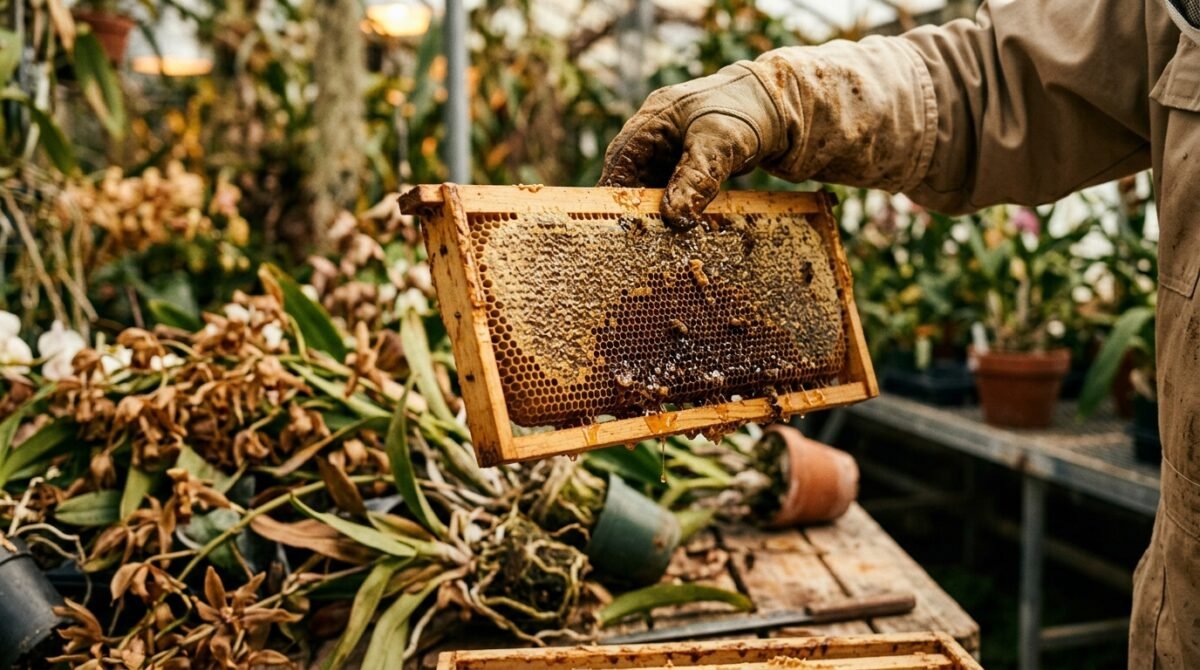
Walking into the backyard felt like stepping into a nightmare version of my own life. The once-clear glass of the greenhouse was now smeared with propolis, and the interior was a chaotic mess of wooden supers and frames, stacked haphazardly against the potting benches. My prized orchids, which had taken years to cultivate, were nowhere to be seen, likely tossed into the compost to make room for the wooden boxes.
I stood frozen near the back door, watching Arthur move with the casual confidence of a man who owned the land. He pulled a frame from a hive, completely oblivious to our presence, his movements slow and practiced. Susan was busy labeling jars on our outdoor patio table, using my potting bench as a staging area for labels and sticky syrup bottles. The level of comfort they displayed in our absence was bone-chilling.
“Arthur? Susan? What on earth is happening in my greenhouse? My plants—where are my orchids?”
— Me, voice trembling with suppressed rage
Arthur looked up, shielding his eyes from the sun with a gloved hand. He didn’t look guilty. He looked proud. He tipped his bee veil back and gave us a wide, toothy grin as if he were waiting for a round of applause for his initiative. ‘Oh, you’re back! You’re just in time for the first harvest. We realized that greenhouse was just sitting there doing nothing, so we turned it into a profit center for the grandkids’ college fund.’
I felt a vein pulsing in my temple. ‘A profit center? It was a greenhouse, Arthur. It was my hobby. Those plants were worth hundreds of dollars and years of my time. You didn’t ask. You didn’t even mention this when we spoke on FaceTime last week.’
Susan chimed in, dismissively waving a sticky jar. ‘We didn’t want to worry you while you were on vacation, dear. We knew you’d be stressed about the trip. This is a family venture. We’re doing this for you, for Mark, for everyone. Don’t be so ungrateful. It’s just bees, and they’re good for the garden.’
The Logic of Entitlement
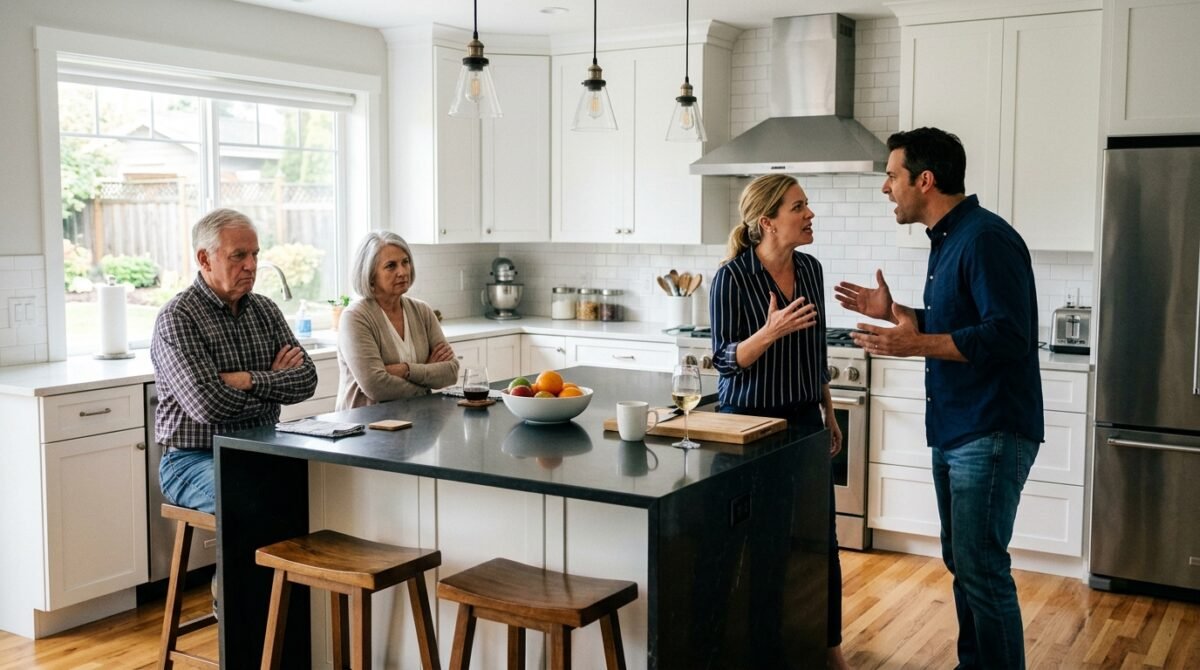
Mark stood beside me, his face a mask of confusion and mounting anger. He was the one who usually mediated, the one who tried to find the ‘reasonable’ path in every family drama. But even he couldn’t justify this. The sheer logistical nightmare of having thousands of bees behind our kitchen window was not something one simply ‘accepted’ for the sake of family harmony.
We retreated to the kitchen, leaving them to their buzzing project. The conversation that followed was the first of many circular arguments where Arthur and Susan insisted that because they were family, the concept of ‘trespass’ or ‘permission’ was irrelevant. They viewed our property as an extension of their own, an asset to be managed for the greater good of the bloodline.
“We pay the taxes on this house, Arthur. We pay the insurance. We spend our weekends here. We are not a co-op or a commercial facility. You have effectively turned our home into a hazard zone without our consent.”
— Me, setting the boundary
Susan’s expression shifted from dismissive to martyred, the classic defensive stance of a parent who feels slighted by their child’s independence. She sat at our kitchen island, which was now sticky with residue from her ‘harvest,’ and sighed heavily. ‘You know, your father just wanted to keep busy in his retirement. You’re always complaining that he doesn’t have a hobby. Now he has one, and you’re acting like we robbed you.’
I looked at the counter. There were honey drips on the granite. ‘A hobby is knitting, Susan. A hobby is painting. A commercial honey farm, with thousands of stinging insects and heavy machinery, is a zoning violation, a liability, and an invasion of privacy. We are not a farm. We are a residential property.’
Mark finally spoke up, his voice low and steady. ‘Mom, Dad, you have to move the hives. Tonight. I don’t care how you do it, but they cannot stay in that greenhouse. You didn’t just borrow the space; you destroyed my wife’s workspace. This is over.’
The Midnight Ultimatum
The night that followed was sleepless. Every time I closed my eyes, I could hear the hum of the bees. The fear of an allergic reaction, the concern for our neighborhood, and the sheer audacity of the entire ordeal kept me pacing the hallway. We gave them until the next morning to start moving the equipment, believing that once they realized we were serious, they would fold. We were wrong.
At 6:00 AM, I looked out the window. They were back. Not only were they back, but they were now setting up a secondary ‘extraction station’ on our back patio, complete with a rented centrifuge machine. They had clearly spent the night planning, not packing. The level of delusion was staggering. They truly believed we would eventually just accept it as a ‘done deal.’
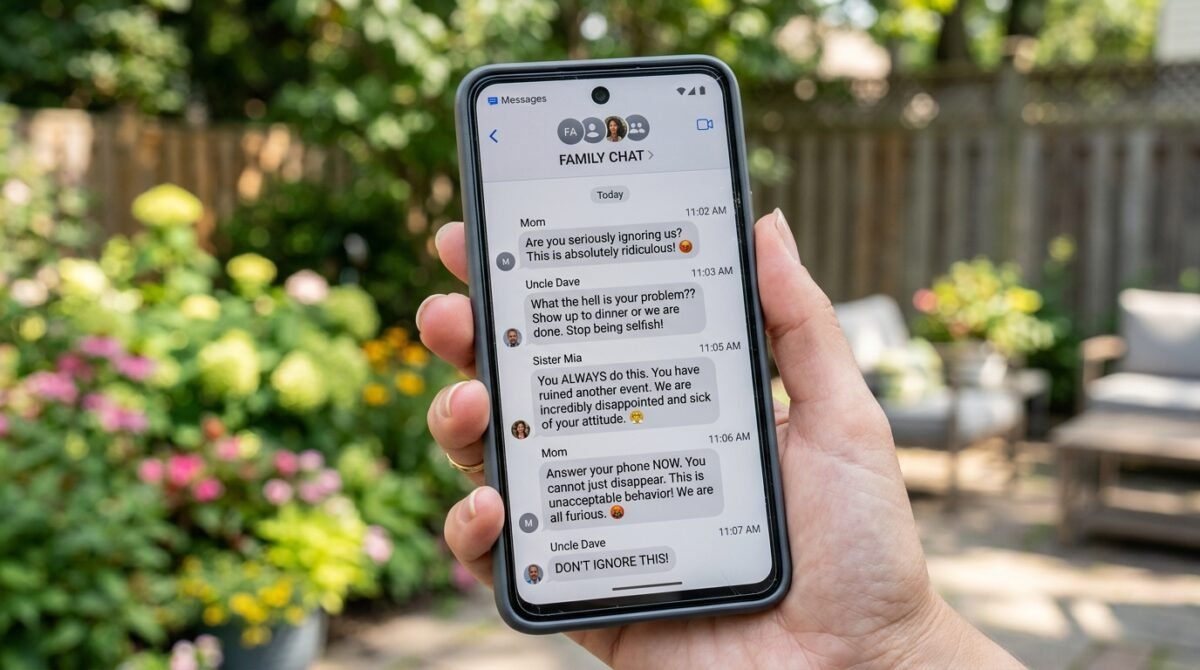
I grabbed my phone and started drafting a message in the family group chat. I needed to document everything. I needed a trail of evidence that they were operating a commercial business on our property without permission, especially since they had started selling jars of ‘The Sweet Life’ honey to neighbors, using our address as the return label.
“Arthur and Susan, the hives are still there. You have until 5:00 PM today to remove every single piece of beekeeping equipment from our property. If not, I will be forced to involve the local authorities. I am not asking anymore.”
— My text in the family group chat
The response was almost immediate. Susan sent a laughing-crying emoji followed by a lecture on ‘respecting your elders.’ She claimed they had already taken orders from three neighbors and couldn’t possibly move the hives now without ‘losing face’ in the community. The entitlement was weaponized; they were using the neighbors as a human shield.
I didn’t argue. I didn’t reply to the group chat. I picked up my phone and called the city’s code enforcement office. I had the address, the photos of the commercial equipment, and the documentation of the business operations. The representative on the other end of the line was surprisingly interested, mentioning that a commercial apiary in a residential zone without a permit was a significant violation.
The Day the Inspectors Arrived
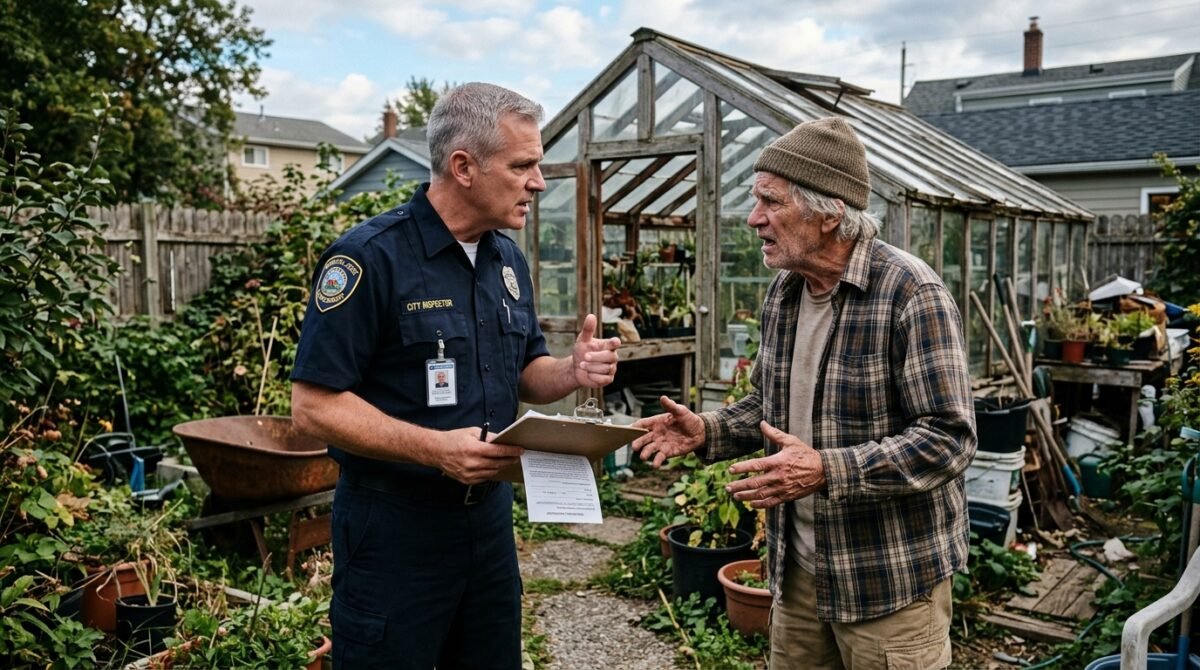
The code enforcement officer, a no-nonsense man named Mr. Henderson, arrived at 2:00 PM. I met him at the curb. I didn’t want him walking through the house, so I led him straight to the backyard via the side gate. The scene was worse than I expected. Arthur was currently showing off the hives to a neighbor, clearly unaware of the impending doom.
Mr. Henderson didn’t waste time. He walked directly to the greenhouse, his notebook ready. He inspected the ventilation, the equipment, and the proximity to the neighboring houses. Within ten minutes, he had seen enough. The violation was clear: commercial agricultural activities were strictly prohibited in our neighborhood zoning, and the greenhouse was never permitted for industrial use.
“Sir, I’m going to need you to shut this down immediately. You have no permit for beekeeping, no zoning variance for commercial operations, and you are currently in violation of multiple municipal health codes regarding food production in residential dwellings.”
— Mr. Henderson, Code Enforcement Officer
Arthur’s face went pale. He tried to argue, his voice rising in panic. ‘But this is family property! My daughter-in-law invited us to stay here while they were away, and we just thought—’ Mr. Henderson cut him off with a sharp look. ‘Unless she invited you to run a business, that is irrelevant. The city doesn’t care about family dynamics. You are facing fines starting at $500 per day until this is cleared.’
Susan, who had been listening from the patio, burst into tears. She began wailing about how they had spent ‘thousands’ on the startup costs and how we were ‘ruining’ their retirement. The neighbors, who had been enjoying their cheap honey, now looked on with a mix of awkwardness and annoyance as the reality of the situation hit them. Their source of cheap, local honey was being shut down, and the ‘neighborhood nice guys’ were being exposed as rule-breakers.
I stood back, arms crossed, feeling a strange mixture of relief and exhaustion. This wasn’t the way I wanted to handle my in-laws, but they had left me no other choice. They had forced my hand by assuming that I was a pushover who would prioritize ‘keeping the peace’ over the integrity of my own home.
The Fallout in the Family Chat
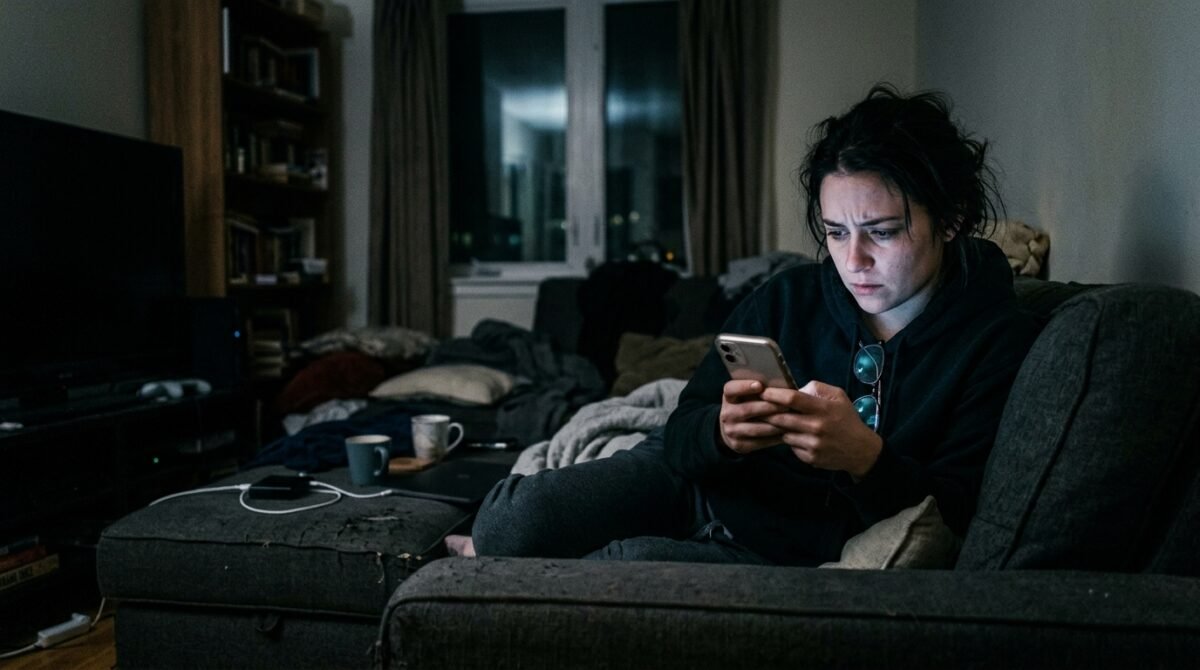
The explosion in the group chat started about an hour after the inspector left. My phone was vibrating incessantly. My sister-in-law, who hadn’t even visited, was blowing up my notifications, calling me ‘heartless’ and ‘cruel.’ Apparently, Susan had been painting a very different picture: one where I had encouraged the business, then suddenly turned on them the moment it started making money.
“How could you do this to your own parents? They put everything into that business! Do you have any idea how embarrassed they are? You called the authorities on them like criminals!”
— My sister-in-law, via group chat
I took a deep breath and started typing, keeping my response calm, factual, and screenshots-heavy. I knew that if I got emotional, I would lose the high ground. I posted the photos of my destroyed plants, the photos of the sticky, messy counters, and a screenshot of the zoning laws I had printed out earlier. I didn’t attack them personally; I just presented the reality of what they had done to our property.
I then left the chat. I didn’t want to engage in the back-and-forth. I knew that any explanation would just be seen as an excuse to them. They were operating on a logic of ‘family entitlement’ that I simply didn’t subscribe to. My silence was the most powerful tool I had, and it clearly drove them up the wall.
Mark was supportive, though he was visibly pained. He loved his parents, and seeing them being publicly humiliated by the city was hard for him. We spent that evening talking, really talking, about why his parents felt so comfortable doing this in the first place. We realized that for years, he had been letting small boundary violations slide to keep them happy. This was just the natural conclusion of that pattern.
The Aftermath: A Quiet Backyard

By the following weekend, the greenhouse was empty. It was also a wreck. The smell of honey and wax clung to the glass panes, and the floor was stained. The bees were gone, relocated to a legitimate facility Arthur had to scramble to find, which cost him a small fortune in transport and setup fees. The fines from the city were substantial, and they were the ones responsible for paying them.
The silence in the backyard was beautiful. I spent that Saturday cleaning the greenhouse, scrubbing the floor with hot water and soap, trying to reclaim my space. It felt like a cleansing ritual. I was reclaiming my autonomy. I planted new seeds, ones I had been saving for a special occasion. I didn’t tell anyone. I just focused on the growth.
The family dynamic, however, had shifted permanently. The ‘Sweet Life’ honey incident was a watershed moment. We stopped hosting Sunday dinners. We stopped giving them keys to the house. When we saw them, it was in neutral territory—a park or a restaurant—where they couldn’t just ‘take over’ a room. It was a firm, boundary-driven peace.
“We are not going to talk about the honey again. If you want to have a relationship with us, it needs to be based on mutual respect for our space and our decisions. If you cannot respect that, we will take a break from seeing each other.”
— Mark, putting his foot down at a neutral meeting
They didn’t apologize. People like that rarely do. They felt that their intentions were ‘good,’ so they were the victims in the situation. But they did stop trying to impose their projects on us. The fear of another call to code enforcement was a powerful deterrent. It was a sad way to have to parent your own parents, but it was necessary.
Community Reaction: Reddit Weighs In

When I posted the story to r/relationship_advice and r/entitledpeople, the response was overwhelming. Thousands of comments flooded in, ranging from supportive validation to stories of similar in-law nightmares. It was clear that I wasn’t alone in this battle for boundaries.
“NTA. Your in-laws thought they could treat your home like their private warehouse because they’re ‘family.’ The audacity to turn your hobby greenhouse into a commercial business without a single word to you is absolutely unhinged. You did the right thing calling the city. They needed a reality check, and you gave them one.”
— u/HomeownerHero, 28.5k upvotes
Others brought up the legal perspective, which was incredibly helpful. They warned me about liability insurance and the risks of having ‘customers’ walking onto my property. It made me realize that I hadn’t even scratched the surface of how dangerous their little experiment really was. What if someone had been stung and had an allergic reaction? My homeowners’ insurance would have been a disaster.
“The fact that they were selling honey with your address on the label makes me sick. That is a massive legal liability. If someone got sick from that honey or injured on your property, you would have been the one to get sued. You saved your own financial future by shutting them down.”
— u/LegalEagleEye, 12.1k upvotes
Then there were the ‘ESH’ (Everyone Sucks Here) comments, which I found fascinating. Some people felt that I should have handled it with ‘more grace’ before calling the city. But the majority of the community shut that down, pointing out that you cannot have a ‘graceful’ conversation with someone who is currently in the middle of stealing your property usage for commercial profit.
The Cost of Boundaries

People often tell you that setting boundaries is ‘healthy,’ but they don’t often talk about the cost. The cost is the loss of the fantasy. I had to let go of the idea of having a ‘typical’ close-knit family dynamic with my in-laws. I had to accept that they were people who would, given the chance, overstep every single boundary I set.
It’s been six months since the ‘Honey Farm’ incident. I still don’t talk to Susan. We send occasional text updates about logistics, but the warmth is gone. And surprisingly, I don’t miss it. The weight of constantly monitoring their behavior, of worrying about what they would do next, was exhausting. Now, the peace is worth the distance.
I’ve learned that family is a support system, not an excuse for entitlement. When someone uses the word ‘family’ to justify taking something that isn’t theirs, they aren’t acting like family. They are acting like an intruder. And an intruder, whether they share your DNA or not, deserves to be shown the door.
“Boundaries aren’t about keeping people out; they’re about defining where you end and they begin. Once that line is blurred, you have to be the one to redraw it in permanent ink.”
— My therapist, during our post-incident session
My greenhouse is thriving again. My orchids are blooming, and there isn’t a single bee in sight. Every time I walk out there with my coffee in the morning, I remind myself of why I stood my ground. It wasn’t just about the bees; it was about the right to own my own space, to live my own life, and to decide who gets to participate in it.
Lessons in Property and Patience

One of the biggest lessons I learned is that ‘politeness’ is often used as a weapon against women to keep them compliant. If I had been ‘polite’ when I first saw the bees, I would have been trapped in a month-long, grueling negotiation while they slowly took over more of my space. By being firm and using the legal system, I cut the cord before it could fester.
It’s important to remember that laws exist for a reason. Zoning laws aren’t just arbitrary red tape; they protect the safety and quality of life for everyone in the neighborhood. Using them wasn’t an act of malice; it was an act of civic responsibility. I protected my neighbors from a potential hazard and my home from a commercial disaster.
I’ve also started looking at my house differently. I’ve installed a security system that includes cameras in the backyard. Not because I’m paranoid, but because I’m a realist. My home is my biggest investment, both financially and emotionally. I have a right to protect it, even from the people who claim to love me the most.
“Never apologize for protecting your peace. The people who get angry when you set boundaries are the ones who benefited the most from you having none.”
— A quote I keep pinned on my fridge
For those of you dealing with similar family entanglements, my advice is simple: don’t wait for them to ‘realize’ they are being unreasonable. They won’t. You have to create the reality you want to live in, and sometimes that means making the hard call, paying the price of their disappointment, and moving forward without them.
Moving Forward into a Different Future

Mark and I are in a much better place now. The incident was a catalyst for us to actually address the lack of boundaries he was raised with. We’ve had long, difficult conversations about his family, and he’s finally starting to see the patterns that I saw years ago. We are closer than we’ve ever been, because we are finally on the same team.
We haven’t cut them off completely, but the relationship is now strictly controlled. We don’t share our plans, we don’t give them keys, and we don’t allow them to dictate how we live our lives. It’s a low-contact, high-respect arrangement. If they can’t handle that, then they don’t get to be in our home. It’s that simple.
I’ve realized that I don’t need their approval to be a ‘good daughter-in-law.’ I don’t need their validation to be a homeowner. I am the architect of my own life, and for the first time in a long time, the walls I’ve built feel strong, permanent, and entirely my own. The bees are gone, the honey is gone, and the entitlement is gone. All that’s left is the garden, and it has never looked better.
“The best revenge is living well in the space you’ve reclaimed, with clear boundaries that no one dares to cross again.”
— Final reflection
If you’re wondering if I have any regrets, the answer is no. I regret that it came to this. I regret that my in-laws chose to be the way they are. But I have no regrets about the decision I made. It was the only way to preserve the life we had worked so hard to build. And I would do it again in a heartbeat.
Conclusion
This saga serves as a stark reminder that entitlement often masquerades as ‘family love.’ When boundaries are ignored, the only way to re-establish them is through clear, decisive, and often uncomfortable action. I lost a bit of family harmony, but I gained back my home, my sanity, and my autonomy. The lesson here is that you are not obligated to accept poor treatment just because you share a last name or a family tree.
What about you? Have you ever had a family member assume they had rights to your property or personal space that they clearly didn’t? How did you handle it? Did you find that setting boundaries ultimately strengthened the relationship, or did it lead to an inevitable fallout? Let’s discuss in the comments below.
POLL: Should OP have tried to ‘negotiate’ with the in-laws before calling code enforcement?
– A) Yes, they should have given them one last chance.
– B) No, they crossed the line; immediate action was necessary.
– C) ESH (Everyone Sucks Here) – they should have all sat down like adults.
What's your verdict on this dilemma?
Vote below to contribute to the official community consensus.

Have a Dilemma Keeping You Up at Night?
Share your real-life feud, wedding chaos, or relationship crossroads anonymously with our editorial team.
What do you think ?
0 Comments🛡️ Comments are moderated to protect community integrity. Your comment will appear once approved by the editorial team.