
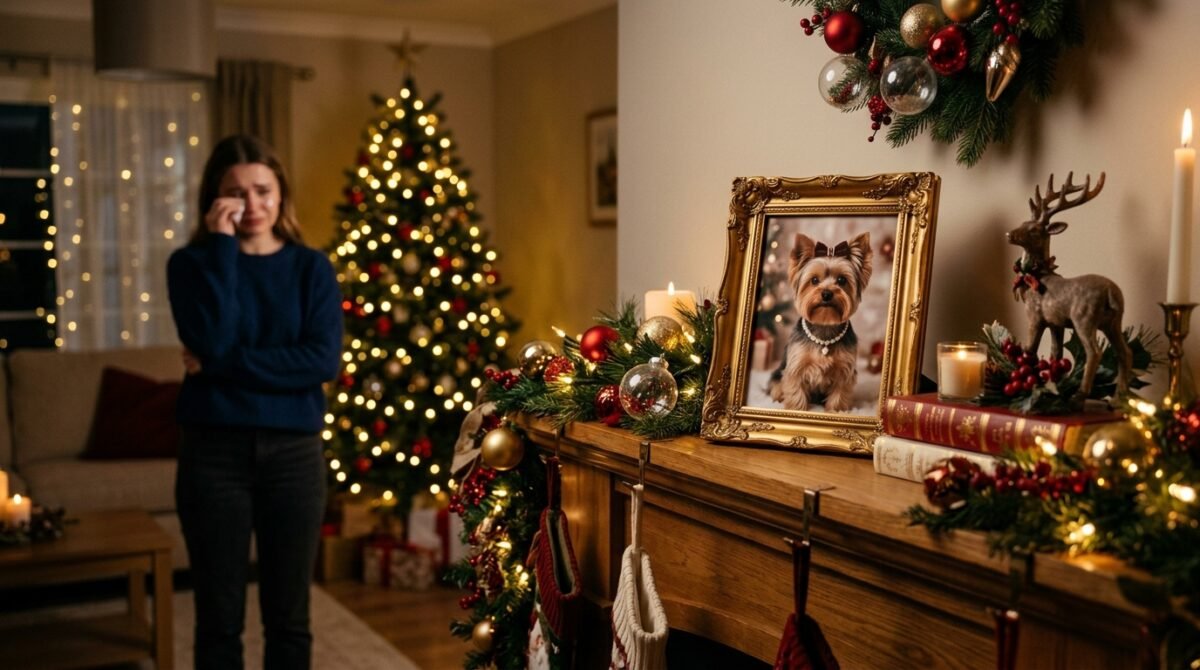
Grief is a landscape that never quite settles. It shifts, it erodes, and sometimes, it leaves us grasping for the landmarks we’ve built to honor the people we’ve lost. For me, that landmark was a small, silver-framed portrait of my older sister, Clara, who passed away in a car accident four years ago. It sat on the mantle in my father’s living room, a quiet, constant reminder of a laugh that would never echo through those halls again. It was the centerpiece of our holidays, a way to keep her seat at the table, even if she wasn’t physically there.
My father remarried two years after the funeral. Janet, his new wife, always seemed to occupy a space of polite, if slightly forced, enthusiasm. We navigated the holidays with the careful precision of people walking on thin ice. I never expected her to be a mother to me, but I did expect her to respect the boundaries of our shared history. I expected her to understand that the mantle wasn’t just shelf space—it was a sacred ground for the person who had been the glue of our family.
This year, the invitation for Christmas dinner arrived with a note about a ‘fresh start’ and ‘new energy.’ I didn’t think much of it until I walked into the foyer on Christmas Eve. The house was stiflingly warm, smelling of pine needles and expensive candles, but the air felt heavy with a different kind of tension. As I walked toward the fireplace to hang my coat, I stopped dead in my tracks. The silver frame was still there, but the photo inside had been swapped.
Where Clara’s smile once captured the light, there was now a high-contrast, professional-grade glamour shot of Janet’s Yorkie, ‘Princess Muffin,’ wearing a miniature Santa hat. It was bedazzled, filtered, and entirely out of place in a room that still held the ghosts of my family’s past. I didn’t scream. I didn’t smash anything. I simply looked at the dog, looked at my father, and realized that my sister had been evicted from her own home to make room for a pet’s vanity project.
The Erasure in Plain Sight

The silence in the room was deafening. I stood there for what felt like an eternity, my fingers twitching against the wool of my coat. The Yorkie stared back at me with unblinking, glassy eyes, adorned with a tiny, glittery collar. The audacity of the placement was what stung the most; it was front and center, catching the reflection of the Christmas tree lights as if it were a prize-winning painting. I felt a cold, sharp spike of nausea rise in my chest, a physical reaction to the sheer disrespect of it all.
I waited for my father to notice. He was busy fussing over the wine in the kitchen, his voice boisterous and forced, talking about the ‘new spirit’ of the house. Janet walked into the living room behind me, her heels clicking against the hardwood with a rhythmic, sharp precision. She saw me looking at the mantle and she didn’t apologize. She didn’t look away. Instead, she leaned against the doorframe, sipping a glass of champagne, and offered a tight, self-satisfied smile.
“Don’t you think she looks festive? Muffin just has such a natural eye for the camera. We had a professional shoot done last week. I felt like the room needed something light, something that brought a bit of joy to the season. The old photo was just… so heavy, you know? It made everything feel like a funeral parlor.”
— Janet, my stepmother
I felt the room tilt. ‘Heavy?’ I asked, my voice barely a whisper. ‘She was my sister, Janet. She wasn’t a piece of decor you can just rotate out because it doesn’t match your aesthetic.’ The calm in my voice was terrifying, even to me. I wasn’t angry anymore; I was hollow. I realized then that to Janet, this house was a project to be renovated, a space to be curated, and Clara’s memory was just clutter that interfered with her vision.
I turned to look for my father, hoping, praying he would see the absurdity, the cruelty of it. He walked in, holding a tray of appetizers, his face beaming with the kind of performative cheer that only happens at forced family gatherings. He didn’t even look at the mantle. He saw my face, however, and his smile faltered. ‘Is everything okay? You look like you’ve seen a ghost,’ he joked, missing the irony completely.
I pointed at the frame. ‘Dad, where is she? Where is Clara?’ I asked, my voice finally rising. Janet let out a soft, dismissive sigh, rolling her eyes as if I were a child throwing a tantrum over a toy. My father looked at the mantle, saw the dog, and his expression went slack. He didn’t defend me. He didn’t even acknowledge the switch. He just looked down at the floor, his shoulders slumping as he realized the conflict was already brewing.
The Casual Dismissal of Grief
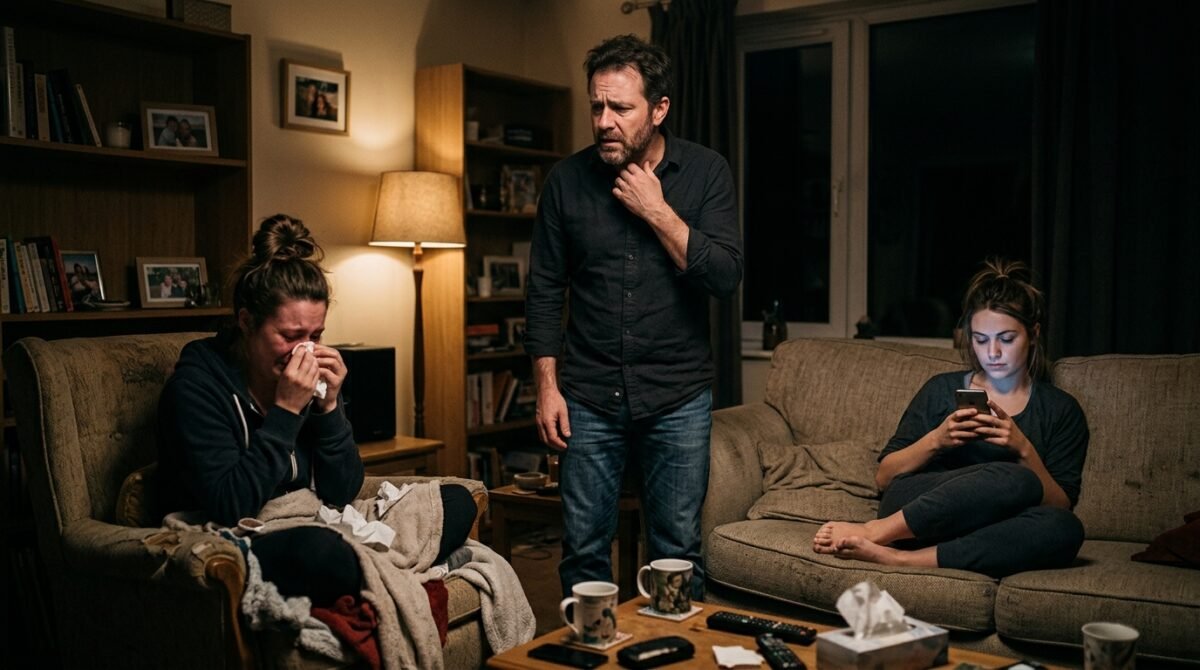
The argument didn’t explode; it hissed, a slow release of steam that scalded everyone involved. My father tried to step between us, his hands raised in a placating gesture that only served to fuel my rage. He started talking about how hard Janet had worked to make the house ‘welcoming’ for everyone, implying that my presence—and my expectations—were the actual problem. He used words like ‘moving forward’ and ‘letting go,’ weaponizing my own therapy terminology against me.
Janet, meanwhile, had retreated to the sofa, acting as if she were a spectator in her own living room. She played with her phone, completely disinterested in the wreckage she had caused. It was a calculated apathy, a way to show me that my feelings held no power here. Every time I tried to speak, she would make a sharp comment about how ‘youthful’ I was being, or how ‘clinging to the past’ was a sickness. It was psychological warfare disguised as holiday cheer.
“You’re making a scene over a dog photo, honey. It’s Christmas Eve. Can’t you just be happy that we’re all here? Clara wouldn’t want you moping around. She’d want us to be cheerful and celebrate life. You’re being incredibly selfish by making this about your trauma instead of our family’s happiness.”
— Janet, while scrolling through her phone
I looked at my father, waiting for him to tell her that Clara was part of that family, that she wasn’t just some abstract concept. But he didn’t. He looked at me with tired, pleading eyes, asking me to just ‘drop it for tonight.’ He wanted me to be the bigger person so that he wouldn’t have to be the man who stood up for his dead daughter. That realization was the final nail in the coffin of my patience.
I felt a strange sense of clarity wash over me. The house, the decorations, the fake warmth—none of it was real. It was a stage set for a life that didn’t include us. I realized that my father had already checked out of his own history, and by choosing to stay quiet, he had effectively chosen his new life over the memory of his past. I wasn’t just fighting for a photo; I was fighting for the right to remember who we were before she arrived.
The air grew thick with the smell of roasting turkey, a scent that suddenly made me want to gag. I realized that if I stayed, I would be participating in a lie. I would be sitting at that table, acting as if everything was normal, while the reminder of my sister was hidden in some dusty drawer in the back of the house. I couldn’t do it. I couldn’t trade my integrity for a plate of dry stuffing and polite conversation.
The Walkout and the Silence That Followed

I grabbed my purse from the entryway table. My hands were shaking so hard that I dropped my keys, the clatter echoing like a gunshot in the quiet room. Nobody moved. Janet didn’t even look up from her screen. My father finally took a step toward me, but he stopped when I turned and looked him dead in the eye. I didn’t yell; I didn’t make a scene. I just said the words I knew would hurt him, because at that moment, I wanted him to hurt as much as I did.
“You’re right, Dad. She wouldn’t want me moping. She’d want me to remember who she was. And since you’ve clearly forgotten, maybe I should stop coming here to remind you. Keep the dog photo. It fits the house perfectly. It’s just as hollow as everything else here.”
— My parting words
I walked out the front door and into the biting cold of the winter night. The relief was instantaneous, replaced immediately by a crushing, lonely wave of sadness. I got into my car and sat there for a long time, watching the lights of the house flicker through the frosted windows. I saw my father’s silhouette move to the window, then pull back. He didn’t come out. He didn’t call. He just went back inside to finish his dinner, to laugh at Janet’s jokes, and to look at that stupid dog.
Driving home, I felt like I was shedding a skin. For years, I had been the ‘grieving child,’ the one who had to be accommodated, the one who was a bit too sad for everyone’s comfort. By leaving, I had finally broken the script. I wasn’t the grieving child anymore; I was an adult who had decided that her boundaries were worth more than a family tradition that didn’t include respect.
When I got home, I opened a bottle of wine and sat on my floor, staring at my own wall. I had my own photos of Clara. I didn’t need the mantle at my dad’s house to keep her memory alive. But the abandonment stung. It wasn’t just the photo. It was the fact that my dad hadn’t even bothered to ask where the photo of his daughter went. It was as if she had been erased by omission, and he was perfectly okay with it.
My phone started buzzing shortly after I arrived. It was the family group chat—the one I had been trying to leave for months. The messages were coming in thick and fast, a barrage of passive-aggressive guilt trips. I didn’t open them at first, just watched the notification count climb, feeling a strange sense of detachment. This was the ‘family’ they wanted me to have, and it was a structure built on sand.
The Digital Inquisition: Leaked Chats

I finally opened the group chat. It was a disaster. My aunt, my cousin, and my stepmother were all weighing in, painting me as the villain of the Christmas story. They weren’t just talking about my exit; they were dissecting my character, my ‘need for attention,’ and my ‘inability to move on.’ It was a masterclass in gaslighting, with my father conspicuously silent in the thread, allowing the narrative to be written without him.
“OP always finds a way to ruin the holiday. It’s never enough that we try to make her feel welcome. She has to be the center of the universe. Poor Janet is just trying to make the house feel like a home, and she gets attacked for a simple photo swap. So dramatic. Honestly, it’s embarrassing.”
— Aunt Linda, in the family group chat
I read through the messages, my skin crawling. The way they spoke about Clara was almost worse than the way they spoke about me. They treated her name like a dirty word, something to be scrubbed away so that the ‘new’ family could thrive. I realized that for all of them, Clara was just a ghost who was getting in the way of their comfort. My father’s silence was the loudest part of the whole conversation.
I didn’t respond to the group chat. I just took screenshots. I didn’t know why at the time—maybe for record-keeping, maybe for the sheer irony of it. I felt like I was documenting a cult. They were so convinced of their own righteousness that they couldn’t even see how cruel they were being. They had effectively closed ranks, creating a wall of ‘normalcy’ that I was no longer allowed to scale.
The messages kept rolling in. My cousin suggested that I needed ‘professional help’ because I couldn’t handle a change in decor. It was funny, in a dark, twisted way. They were calling me mentally unstable for refusing to accept the erasure of my dead sister, while they were living in a house where a dog’s glamour shot replaced a memorial portrait. The projection was so intense it was almost blinding.
I finally muted the chat. I couldn’t look at it anymore. Every chime was a reminder that the people I thought were my family were actually strangers who were just looking for a version of me that was quiet, compliant, and easy to ignore. I decided right then and there: I was done. No more fighting for a seat at their table, no more explaining why I deserved respect, and no more apologizing for being human.
Reddit’s Verdict: The Community Speaks

I posted my story on Reddit the next morning, mostly because I needed to know if I was actually the one losing my mind. I laid it all out—the mantle, the Yorkie, the walkout, and the group chat. I didn’t sugarcoat it, and I didn’t ask for pity. I just wanted to see if there was anyone left in the world who understood the concept of basic decency. I went to sleep, expecting to wake up to a few comments calling me a brat.
Instead, I woke up to thousands of messages. The support was overwhelming, but the most jarring thing was the sheer volume of people who had experienced the exact same thing. It seemed like everyone had a story about a step-parent who tried to ‘rebrand’ the family, or a parent who prioritized their new partner over the memory of a lost child. It was a massive, collective validation of my experience.
“NTA. Your father is the real villain here. He allowed his new wife to replace the memory of his daughter with a dog photo and sat back while his family bullied you for reacting. He has effectively replaced his past. It’s heartbreaking, but you’re doing the right thing by walking away. Don’t look back.”
— u/GriefBoundaries (Top Comment, 45.2k upvotes)
The thread became a repository of heartbreak. People were sharing their own stories of photos being removed, of rooms being remodeled, and of being told they were ‘too much.’ It made me realize that I wasn’t alone, but it also made me realize that this was a systemic issue. The ‘Step-parent Erasure’ phenomenon was real, and it was devastating to families everywhere. The community didn’t just support me; they analyzed the situation with a surgical precision I hadn’t been able to achieve.
I read through the comments for hours. There were a few people who told me to be ‘the bigger person’ and apologize to save the relationship, but they were buried under an avalanche of ‘NTA’ (Not The Asshole) verdicts. The community was adamant: my father had abandoned his role as a protector, and my stepmother was a narcissist who couldn’t handle not being the center of attention. It was the perspective shift I needed.
I started replying to a few of the comments, thanking them for the validation. For the first time in months, I felt like I could breathe. The weight of the guilt, the feeling that maybe I *was* the problem, started to dissipate. I had been gaslit for so long that I had started to believe the lie. But reading the words of thousands of strangers who saw the truth so clearly made me realize that my reality was the correct one.
The thread was eventually locked by the moderators because of the sheer volume of vitriol directed at my stepmother and father. It felt like a small victory. I had forced the world to look at what they were doing, and they had been found lacking. It wasn’t about the photo anymore; it was about the truth, and for once, the truth was out in the open for everyone to see.
The Financial Fallout of the Holidays
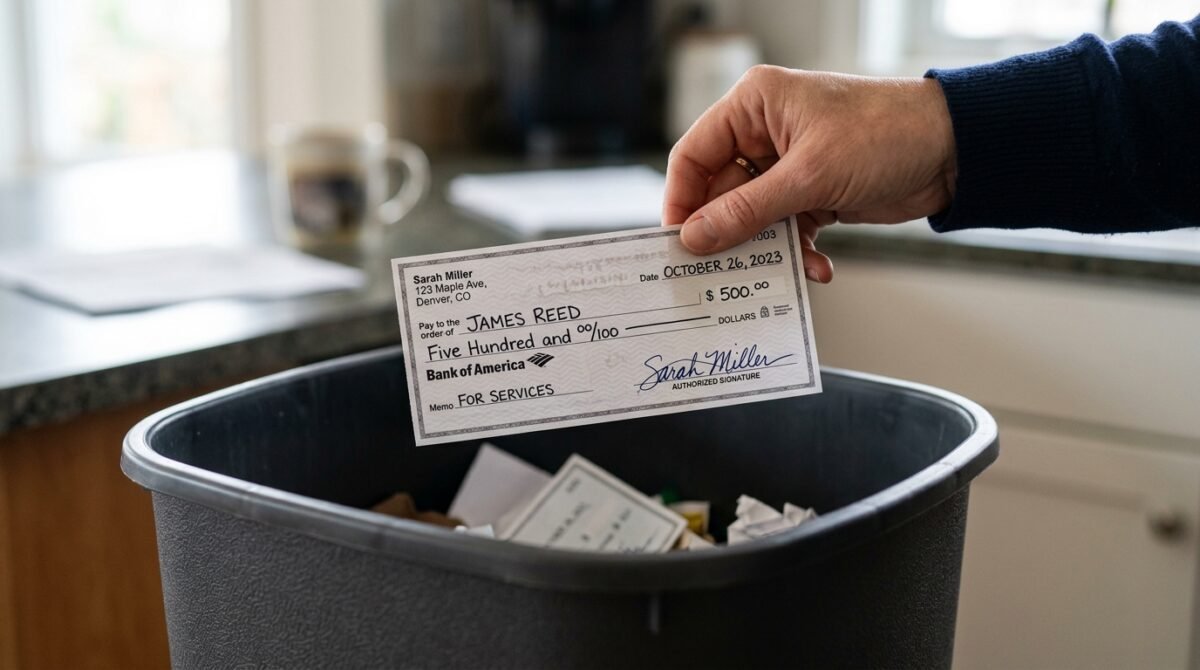
The drama didn’t end with the internet. A week later, my father sent me a check for my share of the ‘Christmas gift fund.’ It was an insulting gesture, a way to ‘buy off’ the peace. He included a note about how he hoped I would ‘take some time to think about my behavior’ and maybe apologize to Janet. The audacity of it—thinking that money could somehow paper over the cracks in our foundation—was the final straw.
I didn’t cash the check. Instead, I sent it back in the mail with a letter detailing exactly why I was cutting contact. I didn’t do it in anger. I did it with a cold, calculated sense of finality. I itemized the ways in which his behavior had hurt me over the last two years, including the photo incident. I told him that I wasn’t asking for an apology, because I didn’t think he was capable of giving one that wasn’t coached by Janet.
| Interaction | Father’s Action | My Reality |
|---|---|---|
| The Portrait | Replaced with Dog Photo | Erasure of my sister’s memory |
| The Confrontation | Deflected and blamed me | Gaslighting and abandonment |
| The Aftermath | Sent money to quiet me | Transactional relationship |
The financial aspect was interesting. It made me realize that our entire relationship had become transactional. He didn’t know how to relate to me as a person anymore, so he used money. If I was sad, he bought me a gift. If I was angry, he tried to pay me to be quiet. It was a shallow, hollow way to live, and I was done being a part of it. I didn’t need his money; I needed a father.
I started a savings account specifically for the money I would have spent on family events. It was a small act, but it felt significant. I wasn’t going to be part of the cycle of gift-giving that was just a cover for lack of intimacy. I wanted to build a life that didn’t depend on the approval of people who didn’t respect me. Every dollar I saved was a reminder of the choice I had made to put myself first.
My friends were incredibly supportive, even the ones who usually tried to play ‘peacemaker.’ They saw the change in me. I was less anxious, less prone to apologizing for existing, and more assertive in my own life. It turned out that the ‘drama’ wasn’t coming from me; it was coming from the toxic environment I had been forced to inhabit. Once I removed myself, the drama just… disappeared.
The silence from my father after I sent the check back was deafening. He didn’t call. He didn’t text. He didn’t try to argue. He just disappeared, confirming my suspicion that he only wanted me around as long as I was easy to manage. It was the hardest part of the entire process—the realization that he would choose his comfortable, artificial life over his own daughter every single time.
Reframing the Memory: Beyond the Mantle

I decided to reclaim Clara’s memory in my own way. I took the photos I had—the ones he had ‘forgotten’ to display—and created a beautiful, permanent memorial in my own home. I bought a high-quality frame, not something cheap or flashy, but something that honored her life. I placed it in a spot where I would see it every single day, not as a source of pain, but as a source of strength. She wasn’t just a lost sister; she was a vibrant, amazing person who deserved to be remembered.
I started doing things that she and I used to love. We loved old movies, so I started a monthly movie night with my friends. We loved hiking, so I joined a local club. I wasn’t just mourning her; I was living for her. I was integrating her memory into my daily life in a way that felt healthy and sustainable. The ‘heaviness’ that Janet complained about turned out to be the weight of love, and I realized that love isn’t meant to be light; it’s meant to be foundational.
“You’ve done a wonderful thing by reclaiming your sister’s memory. Grief isn’t a shelf item to be moved around by others; it’s a living thing. By creating your own space for her, you’ve taken the power back from people who tried to diminish her importance. You should be proud of how you handled this.”
— A supportive message from a friend
The transformation was slow, but it was real. I wasn’t the girl who walked out of her father’s house anymore. I was a woman who knew what she stood for, and who refused to be moved by the whims of people who didn’t understand the depth of her connections. I found that I had a lot more emotional capacity for the people who actually mattered—my friends, my chosen family, and myself.
I also realized that I had to forgive myself for waiting so long to leave. I had spent years trying to ‘make it work’ with people who weren’t interested in making anything work with me. I had held onto a version of my father that no longer existed, a version that would have stood up for me. Letting go of that version of him was the hardest part of the process, but it was also the most liberating.
I started writing letters to Clara, not that I expected her to read them, but because it helped me process my feelings. I told her about the Yorkie, and the drama, and the way I finally stood up for myself. I told her that I was sorry it took me so long, but that I was finally home. The act of writing was a ritual of healing, a way to keep our conversation going even when the world tried to shut it down.
The Unannounced Visit
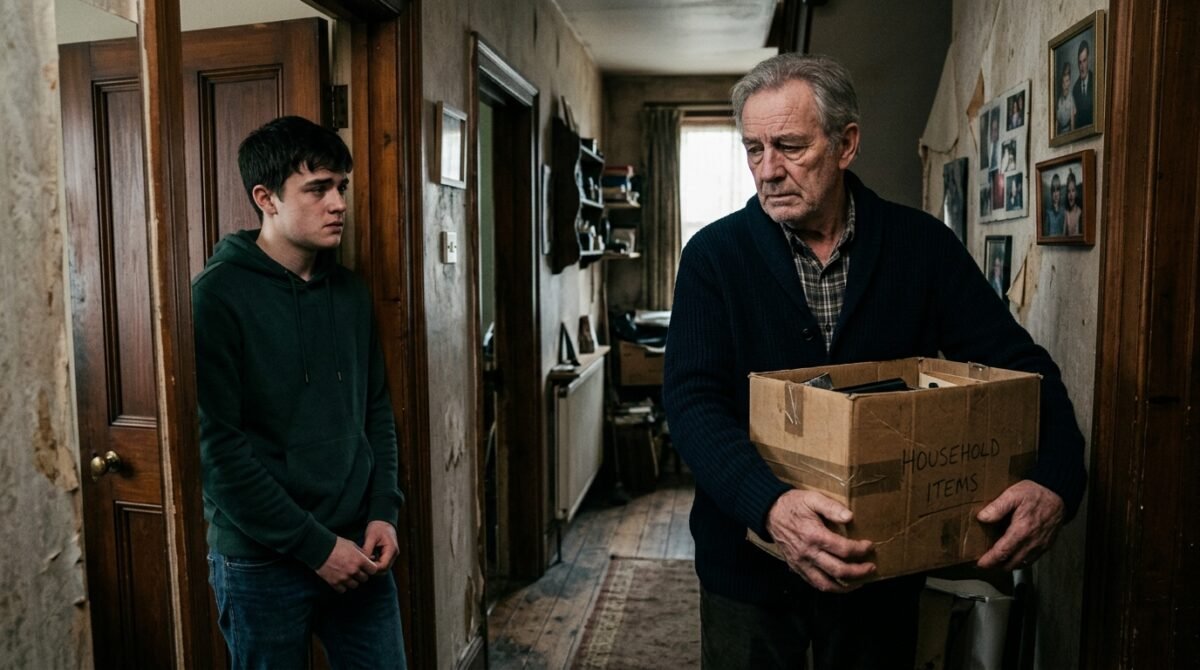
Three months later, my father showed up at my apartment unannounced. I saw him on my doorbell camera, standing on the porch with a box in his hands. He looked older, tired, and uncharacteristically humble. My first instinct was to ignore him, to let the silence continue. But I realized that ignoring him was just another form of engagement. I wanted to see if there was anything left of the man I used to know.
I opened the door, and he held out the box. It was the original frame, the silver one that had held Clara’s photo for years. He didn’t speak for a long time. He just stood there, his eyes welling up with tears. ‘I’m sorry,’ he finally said, his voice cracking. ‘I realized… I realized I lost more than just a photo that night. I lost you. And it was all my fault.’
“I don’t want the frame, Dad. I want to know why it took you three months to realize that you erased your daughter. Was it really worth it? Was the house worth it? I need to know that you understand why I left. I don’t need an apology as much as I need the truth.”
— My response to his visit
He didn’t have an answer. He just looked down at the box. ‘Janet… she doesn’t understand,’ he muttered, not making excuses, but offering a reality check. ‘She lives in a different world. And I let myself get pulled into it because I was afraid of the conflict. I thought if I just did what she wanted, I could keep everyone happy. But I realized that in doing that, I wasn’t making anyone happy—least of all myself.’
We talked for hours. It wasn’t a perfect conversation, and it wasn’t a reconciliation. I didn’t invite him in for dinner, and I didn’t tell him everything was fixed. I told him that he had a long way to go to earn my trust again, and that I wasn’t going to be part of his life until he learned to stand up for his own history. It was a firm boundary, but it was one he seemed to accept.
He left the box and walked away, his head bowed. I didn’t watch him go. I opened the box and saw the frame. It was empty. The Yorkie photo was nowhere to be found. He had taken it out, destroyed it, or hidden it away. It was a symbolic gesture, but it was a start. I didn’t put Clara’s photo back in it; I left it empty for a while, a reminder that it wasn’t the frame that mattered, but the memory itself.
Lessons in Boundaries and Self-Worth

Looking back at the whole ordeal, I realize that the most important thing I learned wasn’t about my stepmother or even my father. It was about me. I learned that I have the power to define my own reality, and that I don’t have to accept anyone else’s version of my life. I learned that boundaries are not just suggestions; they are the walls that protect our mental and emotional well-being.
I also learned that grief is a personal journey, and it’s okay to protect it. I don’t owe anyone an explanation for how I choose to honor the people I’ve lost. I don’t owe anyone a seat at my table if they don’t respect the history I bring with me. Learning to say ‘no’ to the people I loved most was the hardest thing I’ve ever had to do, but it was also the most empowering.
“Boundaries are not meant to keep people out; they are meant to keep your sense of self intact. When someone tries to cross those boundaries—whether it’s by removing a memorial or erasing your history—you have every right to stand your ground and walk away. Your worth is not negotiable.”
— My internal mantra during the process
I’m still not back to ‘normal’ with my father. We talk occasionally, but the dynamic has shifted. I’m no longer the child who needs his approval, and he’s no longer the parent who can avoid the truth. It’s a slow, steady process of rebuilding, if it ever happens at all. And I’ve come to accept that it might not. That’s okay. I’m okay with that, because I know I’ve done everything I could.
My advice to anyone facing a similar situation is simple: trust your gut. If something feels wrong, if it feels like your history is being erased or your boundaries are being ignored, listen to that feeling. Don’t let anyone convince you that you’re being ‘too sensitive’ or ‘dramatic.’ Your feelings are valid, and they deserve to be respected. You don’t have to be the martyr for someone else’s convenience.
I’ve found a peace that I didn’t know was possible. It’s not a loud, festive peace; it’s a quiet, sturdy one. It’s the peace of knowing that I’m the guardian of my own heart and my own memories. And as for the Yorkie? Well, I hope he’s having a nice life, somewhere far away from my mantle. He was just a dog, after all—the real tragedy was the people who thought he was a replacement for a human soul.
Moving Forward: Defining the ‘New Normal’

My life has changed in ways I never anticipated. I’ve started volunteering at a local hospice, helping others navigate the messy, painful, and beautiful landscape of grief. It’s given me a new perspective on what it means to honor the departed. I realize now that grief is not something to be ‘managed’ or ‘fixed’; it’s something to be lived alongside, with honesty and compassion.
I’ve also started building my own traditions. This year, for the first time, I hosted my own holiday dinner. It was small, it was intimate, and it was entirely mine. I didn’t worry about decorations or glamour shots or pleasing anyone else. I just focused on creating a space where people felt seen, heard, and respected. It was the best holiday I’ve had in years.
I still think about Clara, of course. I talk to her in the quiet moments, and I feel her presence in the things I love. She isn’t gone; she’s just moved into a different space, one that I hold within me. And that’s enough. I don’t need a picture on a mantle to know that she’s part of who I am. She’s in the way I stand up for myself, in the way I choose my friends, and in the way I live my life.
“The most beautiful memorial isn’t built of silver and glass; it’s built of the love we carry and the integrity with which we live. You haven’t lost your sister; you’ve simply learned how to carry her memory without it being a burden that others can displace.”
— A thought from my journal
The journey from that Christmas dinner to where I am today has been long and sometimes painful, but I wouldn’t change it. It taught me that I am capable of standing on my own two feet. It taught me that I deserve to be treated with dignity, and that it’s okay to walk away from anyone who refuses to do so. I’ve found my own voice, and for the first time, I’m using it.
I’m grateful for the Reddit community who stood by me, for the friends who listened to my rants, and for the strength I found in the aftermath. It’s a strange thing, to find yourself through a conflict, but that’s the reality of life. We are tested, we are broken, and we are rebuilt. And the person who emerges on the other side is always, hopefully, a little more authentic, a little more grounded, and a lot more free.
Conclusion
Looking back, the incident with the Yorkie portrait was merely a catalyst—a breaking point for a situation that had been eroding long before that specific Christmas Eve. It serves as a stark reminder that we often tolerate small betrayals for the sake of ‘keeping the peace,’ until the cost of that peace becomes our own identity. My story is a testament to the fact that grief, when ignored or minimized, will always find a way to the surface. By choosing to walk away, I didn’t just save my sanity; I saved the integrity of my own story.
The debate about ‘who was in the wrong’ is often the subject of intense scrutiny in our community. Some might say I was too harsh, while others argue that the erasure of a family member is the ultimate betrayal. I have come to realize that the ‘right’ or ‘wrong’ is less important than the truth of what we are willing to accept. We all have a mantle in our lives—metaphorical or physical—where we place the things that matter most. When someone asks us to clear that space for their own ego, we are faced with a choice: do we comply, or do we stand our ground?
I choose to stand my ground. I invite you, the reader, to reflect on your own ‘mantles.’ What have you allowed to be moved, hidden, or replaced for the comfort of others? Is it time to reclaim those spaces? We would love to hear your thoughts. Have you ever had to draw a line in the sand with family, even when it meant losing that connection? Let us know in the comments below—your voice might be the catalyst for someone else’s breakthrough.
Poll: What would you have done if you found a pet photo replacing a memorial of a loved one?
- A) Stayed for dinner to keep the peace and addressed it later.
- B) Confronted the stepmom and demanded the photo be returned.
- C) Walked out immediately and initiated low/no contact.
- D) Other (Share your story in the comments!)
What's your verdict on this dilemma?
Vote below to contribute to the official community consensus.

Have a Dilemma Keeping You Up at Night?
Share your real-life feud, wedding chaos, or relationship crossroads anonymously with our editorial team.
What do you think ?
0 Comments🛡️ Comments are moderated to protect community integrity. Your comment will appear once approved by the editorial team.