
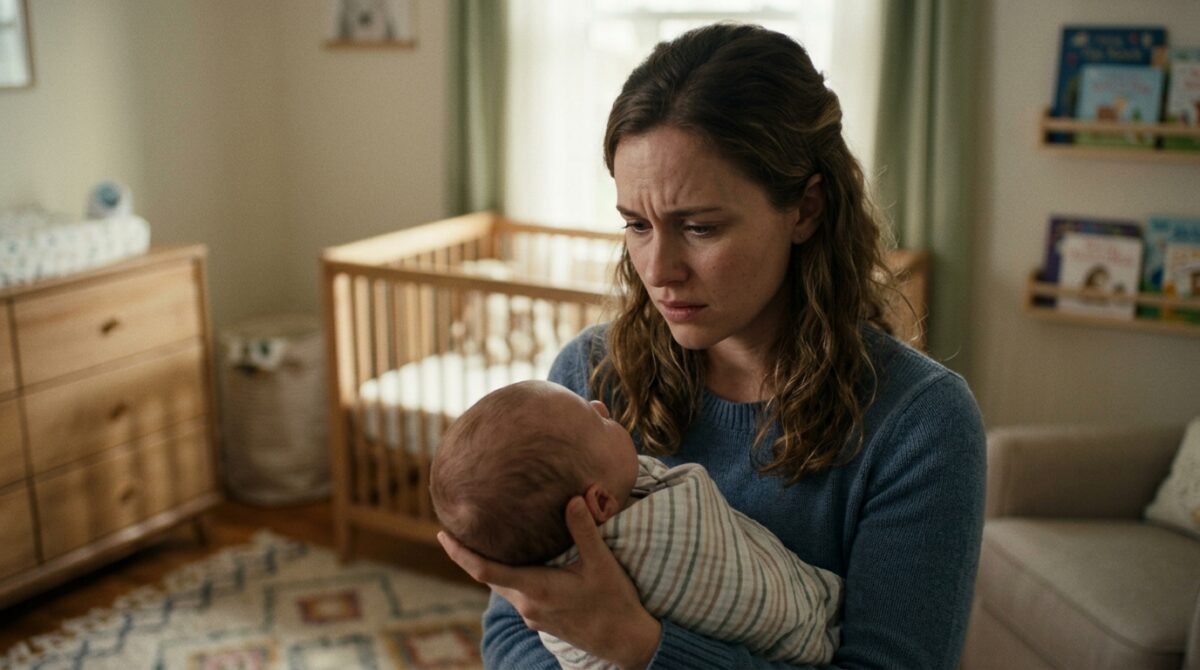
Motherhood is supposed to be the most sacred, protective chapter of a woman’s life. When my daughter, Elara, was born with a shock of natural, angelic blonde hair, it felt like she was a little piece of sunshine brought into our lives. My sister, Clara, had always been obsessed with the aesthetic side of life—she is a freelance stylist and photographer who views everything, and everyone, as a potential composition for her portfolio. I knew she was ambitious, but I never imagined her ambition would eclipse her basic humanity.
For weeks, Clara had been pestering me about a ‘high-fashion infant project’ she was pitching to a boutique agency. She insisted that Elara had the look, but needed a ‘more edgy, avant-garde contrast’ to stand out in the saturated market. I laughed it off, thinking she was just being her usual eccentric self. I told her in no uncertain terms that Elara was not an accessory. She was a human being, not a mannequin for a portfolio that would serve Clara’s vanity rather than my daughter’s well-being.
The boundaries I set were clear. They were reinforced by my husband, who saw the way Clara looked at our daughter—not with the affection of an aunt, but with the calculated, cold gaze of someone evaluating a product. We trusted her to watch Elara for three hours on a Tuesday afternoon so we could attend a mandatory post-birth checkup and a quick, necessary meeting with our lawyer regarding some estate planning. It was a lapse in judgment that I will regret for the rest of my life.
When we returned home, the smell of chemicals hit me before I even reached the nursery door. It was a sharp, acrid scent that had no place near a newborn baby. I rushed to the crib, my heart hammering against my ribs, only to find my daughter’s soft, blonde hair matted and streaked with a deep, unnatural jet-black dye. My sister was sitting in the corner, camera in hand, reviewing the ‘shots’ she had taken while I was gone.
The silence that followed was heavy, suffocating, and absolute. I didn’t scream; I couldn’t. My body went numb. I realized in that single moment that my sister didn’t see my daughter as a niece, but as a resource to be exploited. And in that moment, the entire foundation of my relationship with my family crumbled into dust. This is the story of how I chose my child over blood, and why I haven’t looked back since.
The Premeditated Violation of Trust
Looking back, the signs were all there. The late-night texts asking about Elara’s ‘hair texture’ and the unsolicited outfits Clara kept dropping off, which were far too mature for a six-week-old baby. I dismissed them as sisterly excitement, but now I recognize the cold, calculating intent behind every single interaction. She wasn’t just being an over-involved aunt; she was building a resume at the expense of a child who couldn’t defend herself.
On that fateful Tuesday, Clara arrived at our home with a professional-grade kit bag. She claimed she was just stopping by to drop off a gift, but she hovered until the moment we left. She promised, with a smile that now makes my skin crawl, that she would be the best babysitter Elara had ever had. My husband was hesitant, but we were crunched for time, and we foolishly believed that familial love would prevent anyone from doing something so reckless.
“Don’t worry, I’ve got everything handled. I just want to capture her natural beauty before she starts looking like everyone else. Trust me, I know what I’m doing with these products—they’re organic, high-end, and perfectly safe for sensitive skin.”
— Clara, sent via text message at 11:15 AM
The term ‘organic’ is a dangerous buzzword when applied to infant skin and hair. I would later find the packaging in the trash, which clearly stated that the product was not for use on children under the age of six, let alone a newborn. She had ignored every safety protocol, driven by the desperate need to secure a contract with an agency that, ironically, wouldn’t even look at her portfolio if they knew how she got the shots.
The preparation for the betrayal was clinical. She had brought a portable ring light, different lighting modifiers, and a series of synthetic headbands designed to hold the hair in place while the dye set. She wasn’t just ‘taking photos’; she was conducting a full-scale editorial shoot in my nursery while my daughter was barely conscious of her own existence. The sheer gall of it is what still keeps me up at night.
I feel a deep, burning shame for having left them alone. I replay the scene in my mind constantly—the way she looked at her watch to track our progress, the speed with which she must have applied the chemicals, the way she ignored my daughter’s inevitable crying. She was racing against the clock of our return, treating my daughter like an asset in a business transaction.
The Moment the World Stopped
When I walked into that nursery, time didn’t just slow down; it ceased to exist. The visual contrast was jarring. Elara was laying in her crib, a beautiful, innocent child whose scalp was now irritated and red from the chemical reaction. The black dye was uneven, clumping in some spots and running down her forehead, staining her skin. It was, quite literally, a disaster.
Clara didn’t even stand up when I walked in. She was still looking at the back of her camera, scrolling through images with a look of intense satisfaction. It was only when I dropped my bag—a sound that echoed like a gunshot in the quiet room—that she finally looked up. Her first reaction wasn’t concern for the baby; it was defensiveness about the photos.
“You’re back early! You have to see these, the lighting was perfect. I think this is going to be the piece that finally gets me into the agency. Look at how the dark hair frames her eyes—it makes her look so mature, so much more marketable than the typical ‘bland’ blonde look.”
— Clara, upon being caught
I didn’t answer her. I went straight to the sink, frantically wetting a washcloth to try and wipe the chemicals off my daughter’s scalp. Elara was sobbing, a high-pitched, distressed sound that tore through my heart. I was crying too, a mix of rage and terror that I had never experienced before. I was worried about chemical burns, about toxicity, about the potential for long-term damage to her skin.
Clara followed me, still holding the camera. ‘You’re overreacting,’ she said, her voice dripping with that condescending tone she used whenever she felt I wasn’t being ‘artistic’ enough. ‘It’s just a temporary rinse. It washes out. You’re being so dramatic about a simple styling choice that could have set her up for a career.’
I turned around, holding my daughter, and for the first time in my life, I felt true hatred. Not the petty annoyance of siblings, but a cold, hard, crystalline hatred. I told her to get out of my house. I didn’t yell; I didn’t have the energy. I simply pointed at the door and told her that if she wasn’t out in sixty seconds, I would call the police for child endangerment. She looked at me like I had lost my mind, still convinced that her ‘art’ justified her actions.
The Fallout and the Family Group Chat
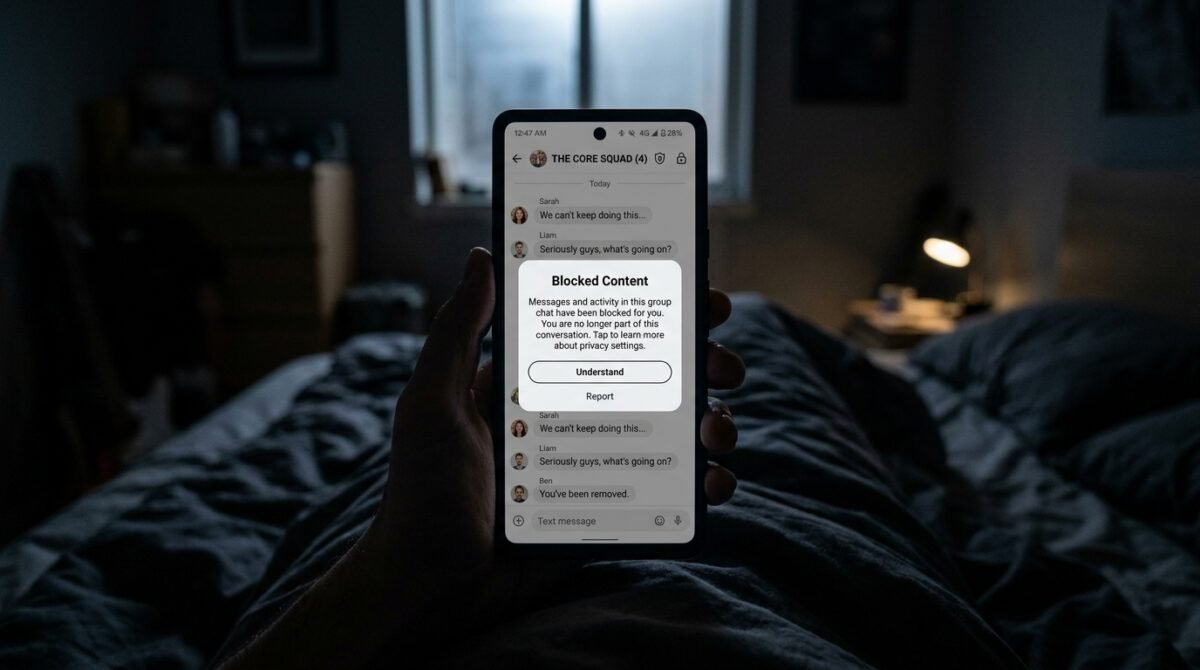
The next few days were a blur of pediatrician visits and dermatological consultations. Fortunately, the damage was primarily physical irritation and a few patches of temporary scalp staining, but the psychological breach was absolute. I sent a message to the entire family group chat, detailing exactly what Clara had done, including the fact that she had used a product explicitly labeled as unsafe for infants.
The response was not the support I expected. My mother, ever the peacekeeper, suggested that I was blowing things out of proportion. She argued that ‘family helps each other’ and that I should be grateful Clara was trying to help my daughter ‘succeed’ early in life. My father remained silent, which was perhaps the most painful reaction of all. He had always been the one to tell us that family comes first, no matter what.
“Look, we all know Clara can be a bit intense, but she loves you guys. She just wants the best for the baby. Don’t you think cutting her off entirely over a temporary hair dye is a bit extreme? She’s family, for heaven’s sake. Can’t we just talk about this like adults?”
— Mom, via Family Group Chat
I realized then that the toxicity didn’t start with Clara; it started with the environment that allowed her to believe her actions were excusable. They were prioritizing her ‘passion’ and her ‘career’ over my daughter’s physical safety. It was a clear demonstration of how deep the dysfunction ran. I didn’t argue. I didn’t defend myself. I simply posted a final message and blocked them all.
The message was short: ‘My daughter is not a prop for your personal projects. If you cannot respect her basic safety, you have no place in her life. Do not contact me or my husband again.’ That was the end of the conversation. The silence that followed was the first breath of fresh air I had felt since the incident. It was empowering, but it also cemented the reality that I was now on my own.
My husband, thankfully, was my rock. He didn’t hesitate to support my decision. He changed the locks that same afternoon and helped me draft a formal letter to my sister, warning her that any further attempts to contact us or post any photos of Elara would result in legal action. We were no longer playing the ‘happy family’ game. We were in survival mode, and our survival meant cutting out the rot.
The Internet Weighs In
When I finally posted the full story on a popular parenting subreddit, I wasn’t sure what to expect. I thought I might be called the ‘a-hole’ for overreacting or for being too harsh on my family. I was terrified that maybe I was the one who had gone too far. The response, however, was overwhelmingly supportive. It was the validation I didn’t know I needed.
“NTA. Chemical exposure to a six-week-old is not a ‘styling choice,’ it is child abuse. Your sister needs to be reported to whatever licensing board she operates under, and your family needs to be cut off for being enablers. You are the protector of your child; you did exactly what you needed to do.”
— u/SafetyFirstMom (Top Comment, 32.5k upvotes)
The thread exploded. Thousands of people shared their own stories of boundary-stomping relatives. I read through hundreds of comments, and for the first time, I didn’t feel like the ‘crazy’ one. The community helped me realize that the gaslighting I had been subjected to by my parents was a common tactic used to protect the ‘golden child’ or the ‘creative’ one in the family.
One user, a former agency scout, provided some of the most chilling context yet. They confirmed that agencies often look for ‘unique’ looks, but that no legitimate agent would ever condone or support a project that involved modifying a newborn’s appearance with chemicals. It proved that my sister wasn’t even being a ‘good professional’—she was just being a reckless, narcissistic amateur who lacked the most basic ethics of her industry.
The thread became a repository for my healing. People shared advice on how to handle the inevitable ‘Christmas card’ guilt trips, how to navigate the fallout of missing weddings and holidays, and how to stay firm in my boundaries. It was a digital support group that kept me strong when I felt the familiar pull of ‘but she’s my sister’ creeping back in.
I realized that the internet isn’t always a toxic wasteland. Sometimes, it is exactly the mirror you need to look into to see your own reality clearly. Every upvote was a reminder that I had made the right choice, and every comment was a testament to the fact that protecting a child is the highest moral imperative, regardless of the blood ties involved.
The Unannounced Visit
A month after the incident, Clara showed up at our doorstep unannounced. She didn’t call, and she didn’t text. She just arrived, looking like a martyr, holding a peace offering of flowers and a ‘professional’ apology letter. I watched her from the security camera, feeling the familiar tightening in my chest. My husband went to the door, not opening it, but speaking through the frame.
“I’m sorry, Clara. I really am. But you need to understand that this isn’t about the dye anymore. It’s about the fact that you thought it was okay to put a six-week-old in danger to get a portfolio shot. We aren’t interested in your apology, and we definitely aren’t opening the door.”
— My husband, addressing Clara through the doorbell camera
Clara’s reaction was explosive. She immediately shifted from ‘contrite sister’ to ‘outraged victim.’ She started screaming about how I was ‘stealing her niece’ and how I was ‘ruining the family dynamic.’ She paced back and forth on our porch, seemingly forgetting that she was being recorded the entire time. It was the mask slipping completely.
She eventually tried to force the door, testing the lock, before realizing that the neighbors were watching. She left in a rage, throwing the flowers into our bushes and screaming that we would regret this. I was shaking, but my husband held me, and we just sat on the couch until we knew she was long gone. The incident didn’t make me feel guilty; it made me feel relieved that I had made the right decision.
That day marked the end of any hope for a reconciliation. It was clear that she felt zero remorse for the action itself—only for the consequences she was now facing. She didn’t care that my daughter could have been harmed; she cared that she was being shut out of a life she felt entitled to influence and control for her own benefit.
We reported the harassment to the local police to create a paper trail. It wasn’t the path I wanted for my life, but it was the one I had to take to keep my home a sanctuary. The peace we found afterward was worth every bit of the struggle. My daughter was safe, and that was the only metric that mattered.
Reframing the Narrative
I have spent a lot of time in therapy since then, processing the guilt of the ‘no-contact’ decision. It is a strange thing to mourn the living, to grieve a relationship that is still technically there, but fundamentally broken. My therapist helped me understand that the person I was mourning—the sister I thought I had—never really existed in the way I remembered.
She was always the one who needed to be the center of attention. She was always the one who used people to get what she wanted. I had just been too close to the picture to see the frame. Reframing the narrative meant accepting that I was the one who had been enabling her for years, by accepting her boundary-pushing as ‘quirks’ or ‘personality.’
Now, I focus on the present. I focus on the smell of my daughter’s hair—which is growing back, soft and golden, as it should be—and the way she laughs when she’s happy. I focus on the life I am building with my husband, a life defined by mutual respect and safety. We have created a circle of ‘chosen family’ who understand and honor our boundaries without question.
It is strange to see how my family reacts now. They still try to send messages through mutual acquaintances, guilt-tripping me about ‘how sad the holidays will be.’ I have learned to silence those messages, to delete them without reading them. I have learned that I do not owe anyone an explanation for why I choose to keep my child safe.
The modeling industry, to my surprise, actually reached out to me once. A junior agent from the firm Clara was targeting found my social media account after the story went viral. They wanted to know if I was interested in ‘managing’ Elara. I didn’t even reply. I just blocked the account. The cycle of exploitation ends with me.
The Lingering Question of Entitlement
One of the most difficult parts of this journey has been dealing with the ‘but she’s family’ argument. It’s a powerful, insidious phrase that implies that blood ties grant a special, unconditional license to violate boundaries. I’ve realized that this entitlement is the root of so much trauma. We are taught that family is a buffer, a support system, but too often, it’s a source of control.
When I look back at my childhood, I see the moments where Clara was encouraged to take what she wanted because she was ‘the creative one.’ She was never told ‘no’ in a meaningful way. My parents’ inability to set boundaries with her created the monster that eventually tried to use my child as a fashion accessory. It was a generational failure that I am now correcting.
It’s important to talk about this because so many parents are afraid to stand up to their own families. They fear the drama, the gossip, the ‘black sheep’ label. But what is the price of keeping the peace? Is it worth the risk of your child’s well-being? I have learned that the peace you keep by sacrificing your boundaries is not peace at all; it is just a temporary lull before the next storm.
I have started a blog where I write about these experiences, not to shame my family, but to help others find their own voice. I get messages from people all over the world who are struggling with similar issues. They tell me that reading my story helped them finally stand up for themselves. That, to me, is the true legacy of this nightmare.
I am no longer the person who lets people walk over her to keep things ‘polite.’ I am the mother who guards her child with everything she has. And if that makes me the ‘bad guy’ in my family’s eyes, then so be it. I will happily wear that label if it means my daughter grows up in a world where her body and her life belong to her alone.
A New Chapter of Boundaries
Life feels different now. It feels intentional. Every decision my husband and I make for Elara is filtered through the lens of safety and respect. We don’t have spontaneous visits anymore, and we don’t have people around who we don’t trust implicitly. It’s a quiet life, but it is a happy one. It is ours.
We have started traditions that are entirely our own, free from the expectations of grandparents or aunts who want to use us for their own social media aesthetic. We spend our weekends in nature, away from the pressure of cameras and ‘projects.’ It’s the kind of childhood I want for her—one where she is loved for who she is, not for how she looks.
I have also realized that forgiveness is not a prerequisite for healing. People always tell you that you ‘have to forgive’ to move on. I disagree. I have moved on, and I haven’t forgiven. I don’t need to forgive someone who still believes they did nothing wrong. I just need to move forward, and that is exactly what I am doing.
My daughter is starting to crawl now, and she is curious about everything. She touches my face with her small, soft hands, and I am reminded of why I did what I did. I am her protector, her advocate, and her safe space. I am the one who will teach her that she has the right to say no, and that no one, not even family, has the right to treat her as an object.
If there is one thing I have learned, it is that the hardest path is often the right one. Cutting off my family was the hardest thing I have ever done, but it was also the most liberating. I am no longer defined by their expectations, and my daughter is no longer a tool for their ambition. We are free.
Reflecting on the Community Impact
The impact of this story on others has been something I never expected. It seems I tapped into a vein of collective trauma that so many people are carrying around. The ‘Reddit effect’—where anonymous strangers provide the most genuine, unfiltered advice—has been a cornerstone of my recovery. It reminds me that I am part of a larger conversation about respect and autonomy.
Many people have asked if I regret posting the story. My answer is always no. Posting the story was an act of reclamation. It took the shame that was meant for me and transformed it into a lesson for others. It allowed me to see the absurdity of the entire situation through the eyes of thousands of objective observers.
I have seen comments from people who have been in my exact position—new mothers who were pushed into corners by ‘helpful’ family members. We all share a common thread: the moment we realized that our maternal instinct was more important than ‘being nice.’ That realization is a powerful shift in the human experience.
I am planning to write a book about this, a deeper dive into the politics of family and the importance of boundaries. I want to explore why we are so conditioned to prioritize the ‘wants’ of those we love over the ‘needs’ of our own children. It is a necessary conversation, and I feel like I am finally in a place where I can contribute to it in a meaningful way.
Thank you to everyone who supported me. Thank you to the people who validated my anger, who stood up for my daughter, and who showed me that I wasn’t alone. You have helped me build a life that is worth living, and a future for my daughter that is hers to define.
Lessons Learned and Moving Forward

If I could give advice to anyone facing a similar situation, it would be this: trust your gut. If something feels off, if someone makes you feel uncomfortable, or if they disrespect your boundaries, listen to that feeling. It is your protective instinct, and it is usually right. Do not let anyone convince you that you are ‘being sensitive’ or ‘causing drama.’
Set boundaries early, and be prepared to enforce them. A boundary without a consequence is just a suggestion, and people will walk right over it if they know there is no price to pay. It’s hard to stand your ground, especially with people you love, but the price of not standing your ground is far higher.
Remember that you are the author of your own life and the guardian of your child’s future. You have the right to curate your environment, to choose who is worthy of your time and your trust. You do not owe your presence to anyone, regardless of their relation to you. Family is something you earn, not something you are born into.
I am looking forward to the future now, not with fear, but with excitement. I have a partner who loves me, a daughter who is healthy and happy, and a life that is truly my own. I have learned that the strongest bonds are the ones built on respect, not obligation. And that is a lesson I will pass on to my daughter, every single day.
The past is behind me, and I am not looking back. I have taken the lessons and I am using them to build something beautiful. I am grateful for the journey, as painful as it was, because it led me here. It led me to the truth, and there is no greater gift than that.
Conclusion
My story is a testament to the fact that blood does not equate to love, and proximity does not equate to trust. I chose my daughter’s safety over the comfort of a broken family, and I would make that choice a thousand times over again. My sister’s actions were the catalyst, but my decision to walk away was the cure. I hope that by sharing this, I have given others the permission to do the same—to protect their own, to value their peace, and to realize that they are the only ones who can truly define what family means.
I’m curious to hear from you, dear readers. Have you ever had to draw a hard line with family over your children? How did you handle the backlash, and has it been worth it in the long run? Join the conversation in the comments below—your experiences are what make this community a place of healing and growth.
What's your verdict on this dilemma?
Vote below to contribute to the official community consensus.

Have a Dilemma Keeping You Up at Night?
Share your real-life feud, wedding chaos, or relationship crossroads anonymously with our editorial team.
What do you think ?
0 Comments🛡️ Comments are moderated to protect community integrity. Your comment will appear once approved by the editorial team.