
When people tell you that pregnancy brings out the best in family, they clearly haven’t met my mother-in-law, Linda. Our relationship was already a fragile ecosystem of forced smiles and thinly veiled criticisms, but I truly believed that the arrival of my first child would act as a bridge—a way to find common ground in the excitement of a new life. I wanted a quiet, neutral-themed tea party, a gentle afternoon in the garden with chamomile, finger sandwiches, and the people who actually cared about the transition I was going through.
Linda, however, viewed my request for a ‘neutral, calm aesthetic’ as a personal attack on her flair for the dramatic. She had spent months suggesting ‘themes’—cowboy rodeos, neon disco parties, and circus extravaganzas—all of which I politely declined. I thought we were on the same page. I was wrong.
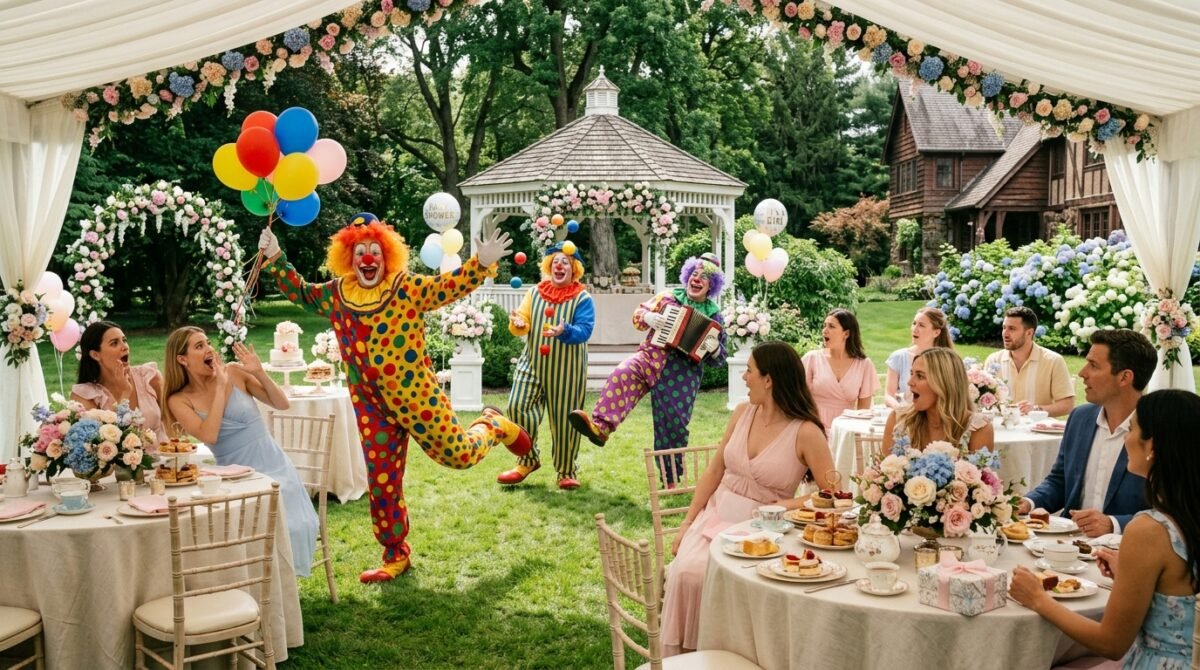
The morning of the shower, the garden was set up exactly as I had envisioned: soft linens, wildflowers, and the gentle hum of close friends. It was perfect. And then, at exactly 2:00 PM, the sound of a discordant steam whistle pierced the air. Three full-sized, professional circus clowns emerged from the treeline, honking oversized horns and throwing confetti into the delicate macaroons.
That moment changed everything. It wasn’t just a prank; it was a total disregard for my boundaries, my comfort, and my autonomy as a mother. Watching my guests scramble as these strangers began performing aggressive slapstick routines while I sat there, eight months pregnant and horrified, was the final straw. I made a choice that day: Linda had proven she wasn’t a guest in my life; she was an infiltrator. And she would not be coming into the delivery room.
The Gentle Request That Ignited A Firestorm
Three months before the incident, I sat down with Linda at her favorite café to discuss the logistics of the baby shower. I wanted to be proactive. I knew Linda was a ‘more is more’ kind of person, so I brought a mood board—soft greens, creams, and natural woods. I explained that because I was already dealing with high-risk pregnancy nausea and extreme exhaustion, I really needed the event to be a low-sensory environment. I wasn’t just asking for a color scheme; I was asking for a sanctuary.
Linda looked at the photos with a thin, tight-lipped smile that I had learned to fear. She tapped her manicured nail against the table and sighed, a sound that carried the weight of a thousand unspoken judgments. ‘It’s very… beige, isn’t it?’ she asked, tilting her head. ‘Don’t you think the baby deserves a celebration that actually has a personality? A little bit of color? A little bit of life?’
I tried to remain patient. I explained that the baby doesn’t care about the color of the napkins, but my nervous system definitely did. I emphasized that I wanted to avoid anything loud, overwhelming, or chaotic. I even offered to let her choose the cake flavor if she would just agree to keep the decorations simple. She agreed, or so I thought. Looking back, that wasn’t an agreement; it was a tactical retreat.
“I just think you’re being a bit dramatic, dear. A baby shower is a celebration of joy, not a funeral for your color palette. I’ll make sure it’s memorable.”
— Linda, during our ‘planning’ brunch
Over the next few weeks, I heard rumors from my sister-in-law that Linda was looking into ‘entertainment services,’ but I brushed it off. I assumed she meant a harpist or maybe a soft-jazz quartet. I never once considered that she was scouring the local yellow pages for a circus troupe. I was so focused on keeping my blood pressure down that I failed to see the warning signs of her escalating need for control.
I should have known that Linda didn’t do ‘quiet.’ To Linda, a party without a spectacle was a failed mission. She viewed my desire for peace as a void that she was morally obligated to fill with her own brand of chaotic joy. I was designing an afternoon of rest, and she was designing a show that needed an audience, regardless of whether that audience was comfortable or not.
The Arrival Of The Uninvited Entourage
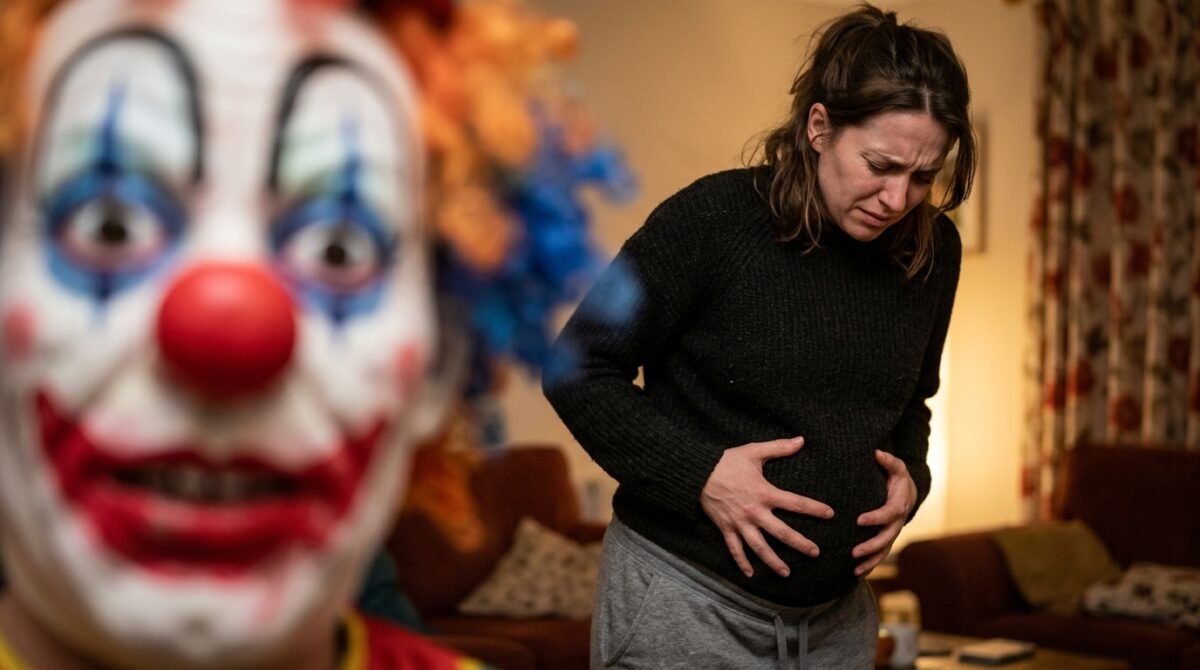
The day of the shower started beautifully. The morning light filtered through the oak trees in my aunt’s garden, and the tables were set with vintage china. My friends were laughing, the music was a soft instrumental lo-fi playlist, and I finally felt like I could breathe. For a few hours, the impending reality of motherhood felt manageable, even magical. Linda arrived early, wearing a bright, flamboyant floral dress that seemed to clash with every single aesthetic element of the garden.
She didn’t say much to me. She kept checking her phone, glancing at the entrance to the garden with a look of eager anticipation. I thought she was just waiting for the catering staff to arrive. I was busy talking to my grandmother, explaining how I felt about the upcoming birth, when the calm was shattered. A loud, screeching air horn went off near the bushes.
Three clowns—full greasepaint, oversized shoes, and squeaky noses—burst onto the lawn. One of them was riding a unicycle, while another began twisting balloon animals at a frantic pace. The third started juggling bowling pins dangerously close to the gift table. My guests froze, eyes wide with confusion. The music was drowned out by the squeaking of shoes on grass and the discordant blaring of the clowns’ horns.
I stood up, my heart hammering against my ribs. I felt lightheaded. I looked at Linda, who was standing a few feet away with her arms crossed, grinning like a child who had just pulled off the perfect prank. She didn’t look worried; she looked triumphant. She looked at me, expecting me to laugh. Expecting me to thank her for ‘livening things up.’
“Mom, what is this? Tell them to stop. Right now. I’m serious, Linda, I cannot handle this noise. Please!”
— My plea to Linda while the clowns began ‘pranking’ my grandmother
The clowns were loud, invasive, and completely oblivious to the fact that half the people there were visibly distressed. One of them approached my table, trying to shove a giant, squeaky balloon flower into my face. I felt like I was in a fever dream. The laughter of the guests stopped, replaced by an awkward, heavy silence that made the clowns’ antics seem even more aggressive and bizarre. It wasn’t funny. It was a violation of the safe space I had explicitly requested.
The Confrontation Among The Balloon Animals
I didn’t wait. I marched directly over to Linda, ignoring the clown who was trying to get a reaction out of me with a rubber chicken. My hands were shaking, and I could feel the adrenaline spiking. The guests had stopped talking entirely. The only sounds were the clowns’ squeaking shoes and the distant hum of the nearby highway. I looked at Linda, and for the first time, I didn’t see a mother-in-law. I saw someone who had intentionally sabotaged my day for her own entertainment.
‘You need to pay them and tell them to leave,’ I said, my voice low but sharp enough that several people stopped their conversations to listen. Linda looked at me, still wearing that smug, performative grin. ‘Oh, lighten up! Everyone loves a bit of fun. You were becoming such a bore, honestly. Look, your friends are taking pictures! They love it!’
I looked around. My friends weren’t taking pictures to remember a fun moment; they were filming out of sheer, horrified disbelief. I felt a surge of rage so intense it nearly blinded me. ‘This isn’t fun, Linda. It’s a sensory nightmare. I have high blood pressure, and I asked for one thing—one thing—and you went out of your way to make sure I didn’t get it. Get them out of here, or I am leaving. And you are not welcome to follow.’
“You are ruining the mood for everyone! It’s my son’s child’s shower, and I wanted to make sure it was a memory we’d talk about forever. You’re being incredibly ungrateful.”
— Linda’s response to my request for her to stop the chaos
She refused. She told me I was being ‘hormonal’ and that I should ‘let go of the control’ for once. That was the moment the bridge burned. I didn’t yell; I didn’t cause a scene. I walked to the edge of the garden, grabbed my purse, and simply started walking toward my car. My husband, who had been caught off-guard on a work call, finally emerged from the house, saw the clowns, saw his mother’s smirk, and immediately understood.
He didn’t hesitate. He grabbed Linda by the arm—not aggressively, but firmly—and told her that if the clowns didn’t leave in the next sixty seconds, he would handle the removal himself. She started to argue, to play the victim, but when she saw the look on his face, she finally realized she had crossed a line she couldn’t walk back from. The clowns were dismissed, but the damage was done. The party effectively ended in total silence.
The Secret Group Chat Revelation
Later that night, as I sat on the couch with a cold compress on my head, I received a notification from my sister-in-law, Sarah. She had been at the shower and was just as disgusted as I was. She sent me a screenshot of a family group chat that I wasn’t even aware existed—a chat titled ‘Project Pizazz.’ My blood ran cold as I scrolled through the messages, reading how Linda had planned this for weeks, specifically mocking my desire for a ‘calm’ event.
The messages were brutal. Linda had been discussing how to ‘break’ my boundaries with her friends and other family members, treating my pregnancy anxiety like a game. She called me ‘uptight’ and ‘needing a reality check.’ She specifically mentioned that the clowns were meant to ‘teach me that life isn’t always about my little rules.’ It wasn’t just a mistake; it was a premeditated psychological strike.
“OP is so sensitive, it’s honestly pathetic. She thinks she can control the whole world. I’m going to make sure the shower is something she’ll never forget. Clowns are booked! She’ll have no choice but to smile for the pictures.”
— Linda in the ‘Project Pizazz’ group chat
Reading those words, I felt a strange sense of clarity. The ambiguity of our relationship disappeared. There was no longer any gray area about whether she meant well or if she was just misguided. This was malicious. She had spent money—likely hundreds of dollars—to hire people to disrupt a day that was supposed to be about me and my baby. She had prioritized her desire to win an imaginary argument over my physical and mental well-being.
My husband read the screenshots and didn’t say a word for a long time. He just sat there, staring at the screen, his face pale. I watched him process the betrayal. He had always tried to bridge the gap between us, always told me that his mom meant well, that she was ‘just eccentric.’ Seeing the proof that his mother had plotted against me destroyed that narrative entirely. We didn’t even have to discuss it. We both knew what the next step had to be.
The Decision To Close The Maternity Ward Door
A week later, Linda called. She didn’t apologize. She started the conversation by saying, ‘So, are we over that little tantrum yet?’ I didn’t raise my voice. I didn’t engage in an argument. I simply told her that I had seen the screenshots from the ‘Project Pizazz’ group chat and that, as a result, I didn’t feel comfortable having her in the delivery room when the baby arrived.
She sputtered. She started to backpedal, saying it was just a ‘joke’ and that I was being ‘way too serious.’ She tried to frame it as if she had done me a favor by introducing humor into a ‘boring’ event. I cut her off. I told her that the maternity ward was for people I trusted, people who prioritized my safety and my peace, and that she had proven she was neither. I told her the decision was final.
The fallout was instantaneous. She started calling my husband, then my parents, then my friends. She played the victim masterfully, claiming that I was using the baby as a pawn to control her. She sent me long, rambling emails about how ‘grandmothers have rights’ and how I was ‘tearing the family apart.’ It was the classic narcissist’s playbook, and I was exhausted by it.
“You are denying a grandmother the right to see her grandchild enter the world! This is abuse! You’ll regret this for the rest of your life.”
— An email sent by Linda after I blocked her calls
But the more she fought, the more resolved I became. Every time she lashed out, it just confirmed that I was making the right decision. If she couldn’t respect a boundary as simple as ‘no clowns at a baby shower,’ how could I possibly trust her to respect my boundaries during the most vulnerable moments of my life? I wasn’t punishing her; I was protecting myself and my child.
The Internet Weighs In: The Reddit Verdict
I eventually posted the situation on a popular subreddit for family drama. I didn’t hold back. I detailed the planning process, the clowns, the secret group chat, and the eventual banning from the maternity ward. I expected some blowback, but the response was overwhelmingly supportive. It felt like a weight being lifted off my chest to have thousands of strangers validate that, no, I was not crazy for wanting a clown-free pregnancy.
The comments sections were filled with stories of other people dealing with boundary-stomping in-laws. People shared their own ‘clown stories’—metaphorical and literal—and offered advice on how to enforce no-contact or low-contact policies. It was a massive community of people who had been through the same grinder and had come out the other side. It made me realize that I wasn’t alone in this, and that my desire for boundaries was perfectly normal.
“NTA. Your mother-in-law didn’t just ‘mess up’ a party; she staged a targeted, expensive act of sabotage to spite you. Banning her from the delivery room is a mercy, not a punishment. She lost the right to be there the moment she decided to prioritize her ego over your health.”
— u/FamilyLawAdvice (Top Comment, 32.4k upvotes)
However, there were dissenting voices, too. A few people argued that ‘family is family’ and that I should ‘just get over it’ for the sake of the baby. But those comments were quickly buried by people who pointed out that ‘family’ isn’t an excuse for toxic behavior. The consensus was clear: the maternity ward is a place of medical necessity and emotional support, not a public stage for a performance-obsessed grandmother.
Reading those comments helped me realize that I had been conditioned to believe that I had to tolerate mistreatment just because of ‘family ties.’ Seeing the community draw a line in the sand—a line I had been afraid to draw for years—gave me the confidence to stand my ground when the inevitable pressure from other relatives started to mount.
The Unexpected Visit And The Locked Front Door
Two weeks before my due date, Linda showed up at our house unannounced. I was napping, exhausted, and my husband was out running errands. I heard a loud knocking at the door—not a polite tap, but a rhythmic, insistent pounding. I looked through the peephole and saw her standing there with a giant teddy bear and a look of practiced concern on her face. She was clearly there to force a ‘reconciliation.’
I didn’t open the door. I walked back to the bedroom, locked it, and put my headphones on. I could hear her calling my name, then yelling that she had gifts for the baby, then eventually shouting that I was a ‘coward’ for not facing her. It was terrifying, and it was infuriating. I felt like a prisoner in my own home, waiting for her to get bored and leave.
“I know you’re in there! Stop this nonsense! I’m your mother-in-law! Open this door right now or I’m calling the police for a wellness check!”
— Linda, yelling through my front door
When my husband got home, he found her sitting on our porch. He was furious. He didn’t let her inside. He stood on the porch and told her that if she didn’t leave immediately, he would have no choice but to call the police for harassment. It was the first time I had ever seen him stand up to her so definitively. She left, but not before screaming that she would ‘win’ eventually and that we would ‘regret’ treating her this way.
That incident convinced us to move our ‘due date’ announcement. We told the rest of the family that I was being induced two weeks later than I actually was. We knew she would try to find out when we were at the hospital, and we weren’t taking any chances. We had to treat our own lives like a clandestine operation just to avoid her presence.
The Calm Before The Storm
The weeks leading up to the birth were a blur of nervous energy and tactical preparation. We changed our door locks, notified our neighbors to be on the lookout for ‘unannounced visitors,’ and even spoke with the security staff at the hospital. We had a password system for everything. It felt ridiculous to have to live like this, but after the clown incident and the unannounced visit, we knew we couldn’t trust her to respect any normal social contract.
We spent those nights talking about how we wanted to raise our child. We agreed that the ‘chaos’ and ‘pizazz’ of his grandmother would not be a part of his life until he was old enough to handle it—and even then, only under our supervision. We wanted him to grow up in a home where his boundaries were respected, where he wasn’t treated as a prop for someone else’s performance.
My husband apologized to me a hundred times for the years he spent trying to force a relationship between us. I told him he didn’t need to apologize for hoping that his mother would be better than she was. It was a tragedy, really—the loss of what could have been a healthy, supportive grandmother-grandson relationship. But we realized that you can’t build a house on a foundation of sand, and Linda was nothing but shifting, unstable ground.
“I just want him to have a normal life, a happy life. I don’t want him to ever feel like he has to perform for his family’s approval.”
— My husband, late at night, reflecting on our parenting goals
We found peace in the silence. The lack of constant drama, the absence of passive-aggressive texts, and the space to focus on ourselves allowed me to finally enjoy the final stages of my pregnancy. I started to feel like myself again. I wasn’t just ‘the pregnant daughter-in-law’ anymore; I was a mother, and I had the power to protect my family.
The Day Of Arrival And Total Secrecy
When the time finally came, it happened in the middle of the night. It was quiet, peaceful, and exactly the environment I had wanted all along. We drove to the hospital, checked in under a pseudonym, and went straight to the labor and delivery unit. I had my husband, and he had me. No audience, no clowns, no chaos. Just the two of us, preparing for the most important moment of our lives.
We didn’t tell anyone, not even our closest friends, until the baby was already born and we were settled in our room. The silence was golden. We had the support of the medical staff, who were all briefed on the situation and were perfectly happy to be the bouncers at our door. When we finally sent out the announcement, we made it clear that we weren’t taking visitors yet.
“He’s here! Everyone is healthy. We’re taking some time to bond as a family of three and will not be receiving visitors for the first few weeks. We appreciate your respect for our privacy.”
— The text message we sent to the family group chat
Linda didn’t take it well. We saw the missed calls, the frantic texts, and the ‘woe-is-me’ social media posts. She tried to guilt us into letting her come to the hospital, claiming that it was ‘her right’ to see her grandson immediately. We didn’t even read the messages. We turned our phones off and just looked at our son. He was perfect. And he was safe.
That first week at home was the most peaceful week of my life. There was no pressure to entertain, no need to explain our choices, and no fear that a troupe of clowns would jump out from behind the sofa. We were in our bubble, and it was exactly what we needed to start our new life together. We had made the right choice.
The Long Road To Low-Contact
In the months that followed, the pressure to ‘reconcile’ became a persistent, low-grade hum in our lives. Extended family members would call, asking if we could ‘just give Linda a chance’ or ‘forgive and forget’ for the sake of the child. We had to learn how to set firm, unwavering boundaries. We became experts at saying ‘no’ without offering an explanation. We didn’t need to explain ourselves; our experiences were justification enough.
We eventually shifted to a ‘low-contact’ arrangement. We would send photos occasionally, and we would agree to meet in public, neutral places for short, supervised visits if we felt up to it. But the ‘uninvited, unannounced, and chaotic’ access was gone forever. Linda had lost the privilege of being a part of our daily lives because she had refused to treat us with the basic level of respect that any human being deserves.
It wasn’t easy. There were moments of guilt, moments where I wondered if I was being too harsh, but then I would remember the clowns. I would remember the look on her face as she watched me suffer in the garden, and the guilt would vanish. Protecting your child isn’t an act of cruelty; it’s an act of love. And I was determined to love my son enough to keep him safe from the people who would use him for their own entertainment.
“Boundaries aren’t walls we build to keep people out. They’re gates we install to protect the things that matter most. We choose who gets the key.”
— A piece of advice from a therapist that helped me during the transition
We are in a much better place now. The drama has subsided, replaced by a cold, distant politeness that works for everyone involved. Linda has realized that she doesn’t have the power to control us, and that realization has, in turn, limited her influence over our lives. We have our peace, and that is worth more than all the ‘pizazz’ in the world.
Reflections On The Cost Of Control
Looking back, I see the clown incident not just as a singular act of petty sabotage, but as the moment I finally broke free from the cycle of people-pleasing that I had been trapped in for years. I had spent so much time trying to be the ‘good’ daughter-in-law, the one who kept the peace and went along with the plans, that I had lost sight of my own worth. The clowns, in all their absurd, terrifying, and intrusive glory, actually forced me to look at the reality of my situation.
They were the physical embodiment of the way Linda had been invading my life for years—noisy, unwanted, and destructive. By hiring them, she had inadvertently provided me with the ultimate ‘before and after’ picture. She showed me exactly what kind of grandmother she would be, and in doing so, she gave me the permission I needed to stop trying to please her. I wasn’t just protecting my son; I was protecting the version of myself that existed before I started shrinking to fit her expectations.
This journey has taught me that you can’t negotiate with someone who doesn’t see you as an equal. I spent years trying to explain my needs, trying to communicate my boundaries, and trying to be ‘reasonable.’ All it did was give her more information to use against me. Once I stopped trying to ‘win’ the argument and started simply enforcing my boundaries, everything changed. I stopped being a participant in her chaos and became the architect of my own peace.
“Sometimes, the most dramatic act of defiance is simply refusing to participate in the game. When you stop playing, the show ends.”
— A realization I came to during my postpartum recovery
I don’t regret the decision to exclude her from the delivery room. I don’t regret the boundaries we have in place now. If anything, I regret that it took a troupe of clowns to make me realize how much I was worth. But we learn, we grow, and we move forward. And today, I am stronger, happier, and more secure than I have ever been.
The Legacy We Are Building
Our son is growing up in a home where ‘no’ is a complete sentence. We are raising him to understand that his feelings are valid, his boundaries are important, and that he does not owe anyone access to his personal space or his peace of mind. Every time I set a boundary with my mother-in-law, I am showing him what it looks like to stand up for yourself. I am teaching him that family isn’t about blind loyalty; it’s about mutual respect.
We are building a legacy of autonomy. We are breaking the cycles that have held previous generations hostage to the whims of the ‘matriarchs’ who prioritize their own ego above the health of the family. It’s a quiet legacy, one that doesn’t involve circus performances or dramatic group chats, and that’s exactly how we want it. We are perfectly happy living a life that is, by Linda’s standards, ‘boring.’
I have realized that the people who call you ‘difficult’ or ‘demanding’ when you set boundaries are usually the ones who benefit the most from your lack of them. I’m no longer afraid of that label. If protecting my family makes me difficult, then I will wear that label with pride. I am the gatekeeper of my son’s childhood, and I take that responsibility seriously.
“The most important thing I’ve learned is that your peace is not a gift you give to others; it’s a standard you maintain for yourself.”
— My final takeaway from the last year of growth
We’re looking forward to the future—a future where we choose our own themes, our own pace, and our own company. And if someone decides they don’t like it? Well, they’re more than welcome to stay away. The door is closed, and we’re quite happy with the quiet.
Conclusion
Writing this story has been a form of catharsis. For a long time, I felt like I had to hide the reality of my family drama, as if talking about it would make it ‘real’ or ‘public.’ But there is power in sharing the truth. By documenting the absurdity of the clown incident and the subsequent fallout, I’ve been able to see the situation for what it was: a necessary turning point that led to my independence.
The lessons learned here go far beyond one difficult mother-in-law. They are about the universal struggle for autonomy, the importance of protecting one’s mental health during pregnancy, and the courage it takes to break away from toxic expectations. If you are currently dealing with a boundary-stomping family member, know this: you are not alone, you are not ‘too sensitive,’ and you are well within your rights to close the door.
What about you? Have you ever had to draw a hard line with a family member who just couldn’t respect your boundaries? Did you have your own ‘clown moment’ that made you realize it was time for a change? Share your stories in the comments below—let’s create a space where we can support each other in reclaiming our peace.
Poll: If you were in my shoes, would you have allowed her one final chance after the clowns, or was the delivery room ban the only appropriate response?
- Banned her immediately – she crossed a line that can’t be uncrossed.
- Tried to talk it out once more before the birth.
- Allowed her to visit, but under strict, supervised conditions.
What's your verdict on this dilemma?
Vote below to contribute to the official community consensus.

Have a Dilemma Keeping You Up at Night?
Share your real-life feud, wedding chaos, or relationship crossroads anonymously with our editorial team.
What do you think ?
0 Comments🛡️ Comments are moderated to protect community integrity. Your comment will appear once approved by the editorial team.