

Childbirth is supposed to be one of the most vulnerable and intimate moments of a person’s life, a time when the presence of loved ones is meant to provide comfort, safety, and unwavering support. For most, the decision of who stands by their side during labor is a simple one, often reserved for a partner and perhaps a parent who has been a pillar of strength throughout the years. However, in my case, that sacred space was turned into a battlefield by my mother-in-law, Brenda, a woman whose penchant for control had long cast a shadow over my marriage.
It began as a subtle erosion of boundaries—comments about how I should decorate the nursery, unsolicited advice on my prenatal vitamins, and persistent questions about who would be the primary caregiver for our child. But the situation escalated into a nightmare when I explicitly stated that my mother would be the one accompanying me during the delivery. Brenda, seemingly unable to accept that she was not the matriarch of my personal life, decided that my mother’s presence was ‘an unnecessary distraction’ and that she, as the grandmother, held a higher claim to the experience.
The audacity of her demand wasn’t just a slight; it was a profound violation of my agency. She didn’t ask; she dictated. She assumed that her authority in her son’s life extended into the delivery room, a place where I was the one doing the heavy lifting, both physically and emotionally. When she finally brought it up over a Sunday dinner, the temperature in the room plummeted. The silence that followed was heavy with the weight of years of repressed frustrations and the sudden, sharp realization that my boundaries were being treated as suggestions rather than hard rules.
This story is not just about a delivery room dispute. It is about the years of preparation that led to this moment, the moment I finally realized that if I did not protect my peace and my autonomy then, I never would. It is about the explosive confrontation that forced my husband to choose between his mother’s ego and his wife’s health. It is about the aftermath, the fallout, and the hard lesson that some people will only respect you when you finally show them the door.
As I sat in that hospital room later, the peace was deafening. I felt no guilt—only the clarity that comes from knowing you have stood your ground in the face of unreasonable demands. This is the chronicle of the day I set a boundary that changed my relationship with my in-laws forever, and why I would do it again in a heartbeat.
The Sunday Dinner Declaration
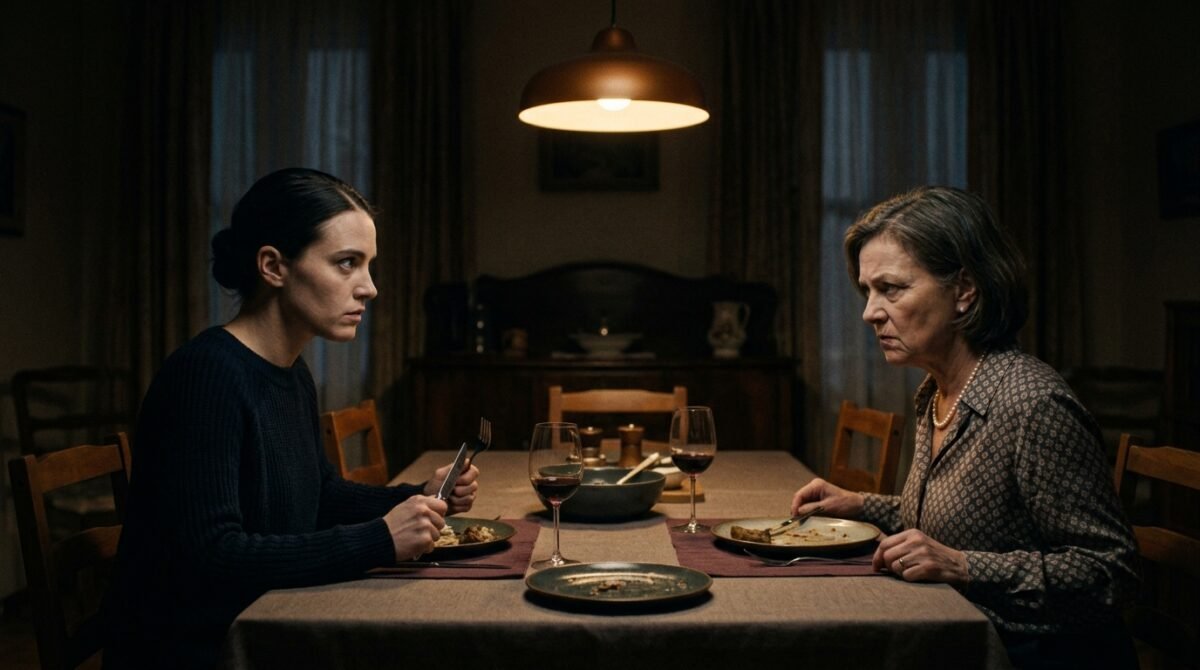
The dinner was meant to be a celebration of my third trimester, a calm evening meant to bring our families closer together before the chaos of newborn life took over. My mother had flown in from out of state specifically to be there for the birth, a plan that had been solidified months in advance. Brenda, however, had been acting strangely for weeks, often making pointed remarks about ‘maternal instincts’ and ‘the importance of paternal lineage’ whenever the topic of the hospital came up.
As we were clearing the plates, Brenda put down her fork with a practiced, dramatic sigh. She looked at my husband, Mark, and then directly at me, her eyes unblinking. She didn’t couch her words in sentimentality or requests; she delivered them as if she were announcing a change in a corporate policy. She explained that she had ‘done the research’ and decided that the hospital staff would be overwhelmed by too many people, so she had made the executive decision to take the spot reserved for my mother.
“I’ve talked it over with Mark, and we both agree that it makes more sense for his mother to be there during the birth. Your mother is wonderful, of course, but the paternal grandmother has a special role in welcoming the heir to the family name. It’s only appropriate that I am the one present.”
— Brenda, over cold mashed potatoes
My mouth went dry. I looked at Mark, expecting him to shut her down immediately, but he was staring intently at his water glass. The cowardice in that moment was palpable. My mother, sitting just two seats away, went quiet, her face flushing with a mix of embarrassment and hurt. I felt a surge of adrenaline that was entirely out of character for me, a cold, hard anger that centered itself in my chest.
I waited for a beat, letting the silence hang in the air until it became uncomfortable for everyone else. I didn’t raise my voice; I didn’t need to. I spoke with a quiet, icy clarity that caught Brenda off guard. I told her that the decision had been made months ago, that my mother had been by my side through every difficult medical challenge I had faced, and that her presence was non-negotiable.
Brenda scoffed, waving a hand at me as if I were a child who didn’t understand how the world worked. She argued that the hospital was a public space, implying that she would just show up and demand entry because she was the grandmother. That was the moment the veil was lifted; she wasn’t concerned about my comfort or the baby’s safety—she was concerned about her own status and her ability to exert control over a situation that was fundamentally mine.
The rest of the evening was a blur of forced small talk and avoidant eye contact. My mother excused herself to the guest room early, and I spent the next hour in the kitchen, washing dishes with a ferocity that left my hands raw. Mark followed me in, trying to ‘de-escalate’ the situation by telling me that his mother was just ‘excited’ and didn’t mean anything by it. That was the first time I realized that if I didn’t act, I would be fighting this battle for the rest of my child’s life.
The Late Night Text Offensive
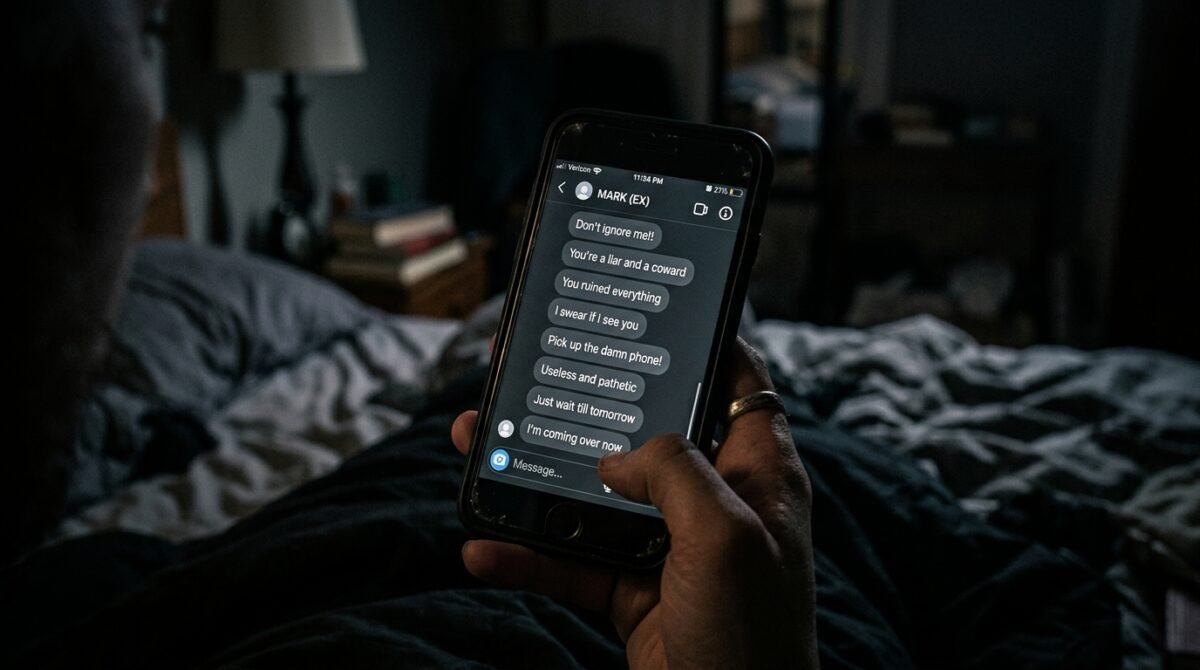
The following morning, my phone started buzzing before the sun was even up. It was a barrage of messages from Brenda, each one more condescending than the last. She had moved from arguing about the ‘appropriateness’ of her presence to questioning my fitness as a mother for wanting to exclude her. She sent links to articles about ‘the importance of in-law inclusion’ and ‘the psychological benefits of a grandmother’s presence in the birthing suite.’
“I don’t think you realize how selfish you are being. This child is a reflection of our family, and by keeping me out, you are creating a rift that will never heal. Do you really want to start your motherhood journey by alienating the people who love your child most? Think about your husband.”
— Brenda, 5:45 AM text
I read the messages in the dark, my heart pounding in my ears. The manipulation was textbook: gaslighting, guilt-tripping, and the invocation of ‘family’ to excuse her behavior. She wasn’t just trying to get into the delivery room; she was trying to establish a hierarchy where she sat at the top, and I was merely a vessel for her grandchild. I didn’t reply to any of them, which only seemed to make her more frantic.
She started calling Mark at work, interrupting his meetings to complain about me. When he came home that night, he was stressed and clearly annoyed, not at his mother, but at the situation. He told me that she was crying and that it would just be easier to let her come for a ‘short while.’ He hadn’t realized that for someone like Brenda, there is no such thing as a ‘short while.’ Once she had a foot in the door, she would take the whole house.
I sat Mark down and laid it out in no uncertain terms. I explained that this wasn’t about a single event, but about a pattern of boundary-crossing that had been building for years. I told him that I needed someone in the room who would prioritize my needs, not someone who would make the experience about their own emotional gratification. I told him that if he couldn’t support me in this, he was essentially choosing his mother over the mother of his child.
The conversation was brutal. There were tears and accusations of ‘being difficult,’ but I held firm. I told him that the hospital would be notified that Brenda was not on the approved visitor list. He was shocked, perhaps thinking I was bluffing, but the look in my eyes told him otherwise. I wasn’t playing games; I was protecting my sanctuary.
That night, I blocked Brenda’s number. It was the first time I had ever done such a thing, and the feeling of relief was instantaneous. The constant pinging of her messages had been a source of anxiety that I didn’t realize I was carrying until it was suddenly gone. I slept through the night for the first time in weeks, knowing that the next battle wouldn’t be fought over text messages, but in reality.
The Hospital Security Protocol

I didn’t wait for labor to start to take action. Two days later, I drove to the hospital where I was scheduled to give birth. I walked into the maternity ward with a folder full of paperwork and a sense of purpose that I hadn’t felt in a long time. I spoke with the charge nurse and explained the situation, keeping it brief and professional. I made it clear that I wanted a strictly enforced ‘no visitors’ policy, except for my husband and my mother.
The staff were incredibly understanding. They had seen this kind of thing before, perhaps even more often than I realized. They took down Brenda’s name and a description, flagging my chart for security. It was a surreal experience, having to treat my mother-in-law like a potential threat, but it was necessary. The peace of mind I gained was worth every second of the awkward conversation.
When I got home, I updated Mark on what I had done. He was horrified, worried about the ‘scene’ it would cause if she showed up and was turned away by security. I told him that the scene would be entirely of her own making, not mine. I told him that if he was so worried about her feelings, he should be the one to tell her that she was not welcome. He went silent, his face pale, realizing the gravity of the situation.
In the following days, the silence from the in-laws was deafening. No phone calls, no passive-aggressive emails. It was the calm before the storm. I spent the time preparing my house, packing my bags, and spending quality time with my mother. We didn’t talk about the drama; we focused on the baby. It was exactly what I needed to ground myself before the big day.
“I’ve never had to bar a family member from a room before, but you’re doing the right thing. If she can’t respect a simple boundary before the baby is even born, she won’t respect any boundaries after. You’re setting the tone for your child’s life.”
— My mother, over tea
My mother’s support was the anchor I needed. She didn’t want the spot in the delivery room because she felt entitled to it; she wanted to be there because she knew I needed her. The contrast between her attitude and Brenda’s was stark. One was rooted in love and service, the other in ego and control. It made the decision to ban Brenda even easier to justify.
I kept my phone off for most of the days leading up to the birth. I didn’t want to hear about the ‘disappointment’ or the ‘heartbreak’ Brenda was allegedly experiencing. I had a child to focus on, and that was all that mattered. I had effectively cut the noise out of my life, and for the first time, I felt like the master of my own destiny.
The Day the Water Broke
The labor started at 3:00 AM on a Tuesday. It was quiet, steady, and exactly how I had imagined it. Mark woke up, panic written all over his face, but he quickly shifted into gear. He helped me get to the car, and we drove to the hospital in the dark, the city lights blurring past us. For a few hours, the world was just the two of us, preparing for the most significant shift in our lives.
As we arrived at the hospital, the check-in process was smooth. The nurse acknowledged my chart, and I saw a subtle nod of recognition when I mentioned the security protocol. It was a comforting feeling, knowing that the wall I had built was standing firm. We went to our room, and I settled in, my mother arriving shortly after to take her place beside me.
While I was in the early stages of labor, Mark checked his phone. He turned it off immediately, his expression tight. He didn’t tell me what he had seen, but I knew. Brenda had clearly found out we were at the hospital. I didn’t ask; I didn’t care. I was in a zone where nothing outside of that room existed. Every contraction was a reminder that I was doing something powerful, something that required every ounce of my focus.
The hours passed, and the intensity ramped up. My mother was an incredible source of support, holding my hand, reminding me to breathe, and offering words of encouragement that kept me grounded. There was no drama, no competition, no ego. It was exactly how it was meant to be. I was surrounded by people who cared about my wellbeing, and for the first time in a long time, I felt completely safe.
“You’re doing amazing. Just focus on your breathing. Everything else is taken care of. You are safe here.”
— My mother, during transition
I learned later that Brenda had actually driven to the hospital and tried to get onto the ward. The security team had stopped her at the front desk, and she had caused quite a scene, demanding to see ‘her grandchild.’ She was eventually escorted off the premises by hospital security. Mark hadn’t told me until after the birth because he knew it would distress me, and for that, I was grateful.
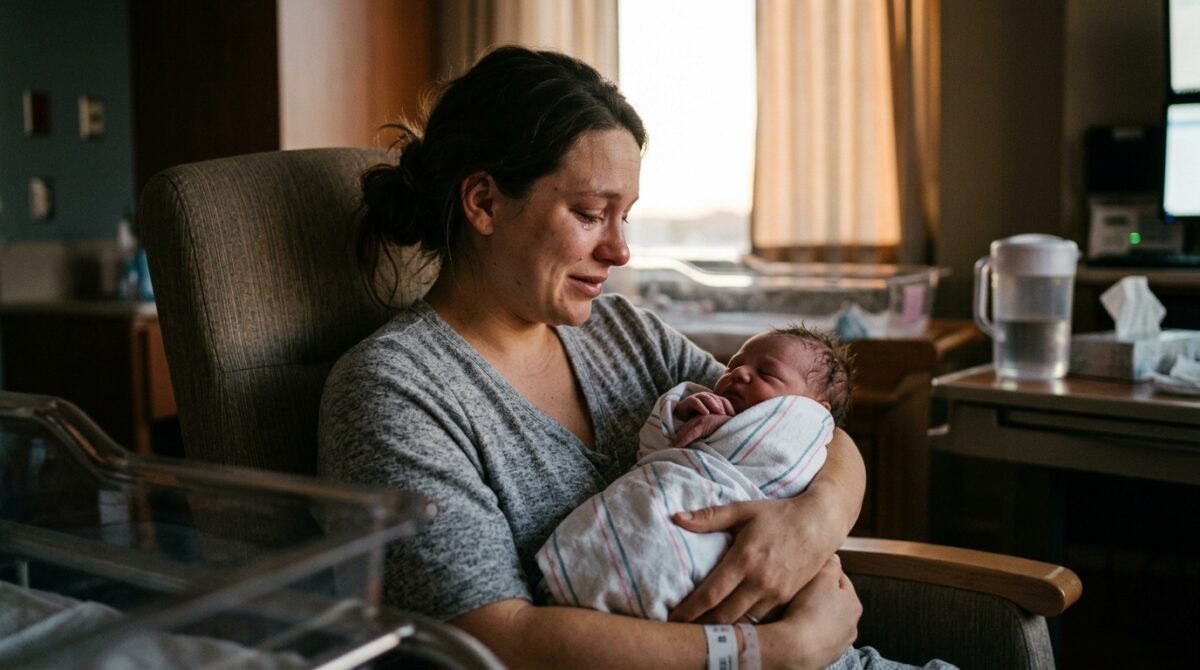
The birth was exhausting, but it was successful. When my baby was finally placed on my chest, the world seemed to stop. The noise of the outside world, the demands of the in-laws, the stress of the previous months—all of it faded into the background. I was a mother, and I had protected the space where my child entered the world. It was a victory, not just for me, but for the life I was now responsible for.
The Aftermath and the Cold Shoulder

Recovery was slow and required a lot of rest. The hospital staff kept the visitors at bay, and I was able to recover without the pressure of entertaining anyone. Mark took the lead, handling the few people who dared to show up with flowers or gifts. He was firm, clear, and for the first time, he was acting like the father and partner I needed him to be.
When we finally got home, the reality of our new life set in. There were dozens of voicemails from Brenda, alternating between tearful pleas to see the baby and angry threats about how we were ruining the family. I didn’t listen to a single one. I had Mark listen to them and summarize if there was anything urgent, which, unsurprisingly, there never was. It was always about her feelings, her needs, and her rights.
We decided to go low-contact for a while. We needed space to figure out our new routine and to heal from the trauma of the previous months. Brenda didn’t take it well. She showed up at our house unannounced twice, but we simply didn’t answer the door. It was a hard boundary, but it was necessary. Seeing her standing on our porch, looking confused and entitled, was a strange, empowering experience.
My husband finally started seeing her for who she was. He realized that his mother’s ‘love’ was conditional on her control. He saw the peace we had when she wasn’t around, and the anxiety that spiked the moment she arrived. The transformation in him was slow, but it was steady. He started setting his own boundaries, and it was beautiful to watch.
“I thought she would change when she saw the baby, but she hasn’t. She only wants to hold him to prove that she has access. I’m done, honey. I’m on your side now.”
— Mark, reflecting on his mother’s behavior
We eventually had a long, difficult conversation with her where we explained exactly why she had been banned from the hospital and why we were limiting contact. She didn’t accept it, of course. She claimed we were being abusive and that we were ‘brainwashing’ Mark. But it didn’t matter. Her words no longer had the power to hurt us because we were finally standing on solid ground.
The experience changed me. I realized that my voice was stronger than I had ever given it credit for. I realized that I didn’t have to sacrifice my comfort or my integrity to keep the peace. I had learned to value my own boundaries, and in doing so, I had created a much healthier environment for my child to grow up in.
Reddit Weighs In: The Verdict

I decided to post my story on Reddit, needing some perspective from people who didn’t have a stake in my life. I didn’t expect the response I got. Within hours, the thread had thousands of comments, and my inbox was overflowing with messages from people who had been in similar situations.
The consensus was overwhelming. Most people were horrified by my mother-in-law’s behavior and applauded my decision to involve hospital security. There was a strong sense of solidarity, with many users sharing their own ‘boundary-crossing’ stories that made mine look almost mild in comparison. It was a reminder that I wasn’t alone in this, and that my reaction was completely justified.
“OP, you are a queen for this. The delivery room is a medical event, not a spectator sport. Your MIL’s entitlement is staggering. She doesn’t have a ‘right’ to be there. Good on you for getting security involved. You protected your mental health and your baby’s first moments.”
— u/MamaBearDefender, 18.2k upvotes
“I had a similar issue with my MIL. She tried to barge in during the birth, and my husband had to physically block the door. It caused a massive rift, but it was the best thing we ever did. You set the standard for your marriage today. Don’t back down!”
— u/NoMoreGames, 12.5k upvotes
There were, of course, the contrarians. Some users argued that I was being ‘too harsh’ and that ‘family is everything.’ But those comments were quickly buried by the community, who pointed out that ‘family’ doesn’t give anyone the right to stomp over your boundaries. The support was a massive boost to my confidence, confirming that I had made the right choice.
I read through hundreds of comments, feeling a sense of validation I hadn’t realized I was missing. Seeing so many people recognize the toxicity in my MIL’s behavior helped me process my own feelings. It was a community-wide therapy session, and it helped me move past the guilt that I had been carrying around for months.
The Reddit experience also taught me about the importance of external validation when you’ve been gaslit by someone for a long time. When you are in the thick of it, it’s easy to question your own reality. Seeing thousands of strangers confirm that your boundaries are reasonable is a powerful antidote to doubt.
I will always be grateful for the people who took the time to comment and share their wisdom. It reminded me that there is a world of people out there who value respect and boundaries, and that I don’t have to settle for anything less in my own life.
The Evolution of My Marriage

The fallout from the hospital incident didn’t just change my relationship with my mother-in-law; it fundamentally changed my relationship with my husband. We were forced to confront the ways in which his mother’s influence had been shaping our marriage without us even realizing it. We started couples counseling to navigate the new boundaries we were setting, and it was one of the best decisions we ever made.
Mark had been conditioned his entire life to put his mother’s needs first, a habit that was hard to break. But seeing the consequences of her behavior in such a high-stakes scenario forced him to reevaluate everything. He began to see his mother not as the saint she portrayed herself to be, but as a person who was willing to cause him and his family pain to satisfy her own ego.
We learned how to communicate better, how to present a united front, and how to say ‘no’ without feeling the need to apologize or explain ourselves. We became a team, the two of us against the world, and it was a level of closeness we had never achieved before. The ‘mother-in-law problem’ became a catalyst for our growth rather than the wedge that drove us apart.
“I’m sorry I didn’t see it sooner. I was so used to her demands that I thought they were just how things had to be. But you showed me that there’s a better way. I’m proud to be your husband and the father of our child.”
— Mark, during our weekly date night
We established firm rules for our household: no unannounced visits, no back-seat parenting, and no expecting us to sacrifice our plans for her convenience. It wasn’t always easy, and there were many ‘tests’ where she would try to push the boundaries again, but we held firm. Every time we successfully held our ground, it got a little easier.
The change in our dynamic was visible to everyone around us. Our friends noticed that we seemed happier, more relaxed, and more connected. We were no longer living our lives for the approval of others; we were living them for ourselves. It was a freedom that we had never experienced, and it was worth every ounce of the conflict it took to achieve it.
I look back on the day I banned my mother-in-law from the hospital as the day I truly became an adult. I stopped seeking permission to lead my own life and started making decisions based on what was best for me and my family. It was a turning point, and I will always look back on it with a sense of pride.
The Cost of Control

It’s important to acknowledge that there was a cost to all of this. We lost the ‘perfect’ family image that my mother-in-law had worked so hard to cultivate. We faced criticism from extended family members who didn’t know the full story and only saw the ‘poor, excluded grandmother.’ We had to be prepared to defend our decisions to people who didn’t really care to understand the nuance.
But as I look back, I realize that the cost was actually an investment. We were paying a price to buy our own independence, and it was a bargain. The ‘perfect’ family image was a facade, a thin veil over a reality of manipulation and control. By tearing it down, we were able to build something authentic, something real, something that we could actually be proud of.
Some extended family members eventually understood. When we took the time to explain the situation—the constant boundary-crossing, the attempt to override my medical decisions, the aggressive behavior—many of them were shocked. They had only ever seen Brenda’s ‘polite’ side and had no idea how she behaved behind closed doors.
“I had no idea it was that bad. I thought she was just being a typical grandmother who was excited about the baby. Knowing what you went through, I think you made the only choice you could have.”
— A relative, after finally hearing our side
We lost some relationships, and we had to accept that. But the relationships we kept were stronger and more genuine. We realized that people who didn’t respect our boundaries weren’t people we wanted in our lives anyway. The filtering process was painful, but it was necessary for our long-term health and happiness.
I don’t regret a single thing. Every decision I made, from the hospital ban to the low-contact policy, was made with the intention of protecting my peace. I have no room in my life for people who don’t respect the sanctity of my home or the health of my family. I am a mother now, and that is my primary responsibility.
If you are in a similar situation, know that you are not alone. Know that your boundaries are valid, that your medical choices are your own, and that you do not owe anyone access to your most intimate moments. Stand your ground, find your allies, and don’t be afraid to walk away from people who refuse to respect you.
Reflecting on the Sacred Space

The memory of the birth is still so fresh. I remember the smell of the antiseptic, the sound of the heart monitor, the feeling of the hospital bed under my back. But more than anything, I remember the feeling of absolute peace in that room. It was a space I had curated, a space I had protected, and it was exclusively for me and those I loved.
When I think back to the arguments, the tears, and the stress, they feel like they belong to a different person. I was so much younger then, so much more willing to let other people dictate my experience. That day in the hospital, I shed that version of myself. I realized that my body, my life, and my choices are my own, and no one else gets to lay claim to them.
The relationship with my mother has only gotten stronger. She was there for the highs and the lows, and she respected me throughout the entire process. She never once tried to push her own agenda or override my decisions. She was the definition of supportive, and I am so grateful that she was the one by my side.
“I am so honored you chose me to be there. Watching you become a mother was the greatest privilege of my life. Thank you for trusting me.”
— My mother, on my daughter’s first birthday
I have learned that the people who love you will always respect your boundaries. They will ask, they will listen, and they will support you even if they don’t fully understand your reasoning. The people who fight you on your boundaries, who try to manipulate you, and who make your most important moments about themselves, are not the people you need in your inner circle.
My daughter is growing up in a home where boundaries are respected, where communication is open, and where she will never be made to feel like she has to sacrifice her own peace to keep someone else happy. I am so proud of the environment we have created for her, and I know that the decisions I made, as difficult as they were, were the right ones.
If I could go back and change anything, I wouldn’t change the outcome. I would only change how long I waited to take action. I would have set those boundaries sooner, stood my ground more firmly, and saved myself the months of anxiety. But we live and we learn, and I am just grateful that I finally found my voice.
Moving Forward: A Life Without Guilt

Today, my life is so much quieter. We are still low-contact with my mother-in-law, and it works for us. We have the occasional interaction during holidays, but it’s always on our terms, and it’s always in a neutral environment. We don’t owe her anything, and we have finally reached a place where we don’t feel like we do.
The guilt that I used to carry—the feeling that I was somehow ‘bad’ for setting boundaries—has completely vanished. It was replaced by a sense of clarity and peace. I realized that guilt is often a tool used by toxic people to keep you in line, and once you recognize it for what it is, it loses its power. I am a good mother, a good wife, and a good person, and that has nothing to do with whether or not I let my in-laws control my life.
I spend my days focusing on my family, my career, and my own personal growth. I have rediscovered hobbies I had abandoned and built new friendships that are based on mutual respect and support. I feel more like ‘me’ than I have in years, and it’s a feeling I intend to keep.
“Setting boundaries isn’t about being mean or difficult. It’s about creating a life that you can actually enjoy living. Never apologize for protecting your own sanity.”
— Advice to my younger self
I hope that by sharing my story, I can help someone else who is struggling with similar issues. I know how isolating and overwhelming it can be to have your boundaries violated by people who are supposed to love you. But you are not alone, and you are not wrong for protecting your peace. Your life, your birth, and your family are yours to define.
The path forward is not always easy. There will be people who don’t understand, there will be conflict, and there will be moments of doubt. But stay the course. You are worth the effort, and the life you are building on the other side of those boundaries is worth every bit of the struggle it takes to get there.
Thank you for reading my story. It has been a long journey, but it’s one that has brought me to the best place I’ve ever been. I hope you find the same peace in your own life.
Conclusion
Reflecting on this journey, I have realized that the delivery room was just the beginning of a much larger shift in my life. It was the catalyst that forced me to define what I would accept and what I would reject. By standing my ground, I didn’t just prevent an unwanted guest; I reclaimed my autonomy.
It is important to remember that boundaries are not barriers to love; they are the foundation upon which healthy, respectful relationships are built. When you stop fearing the reactions of others, you start living a life that is authentically your own. The community support I received on Reddit proved that thousands of others are in the same boat, fighting the same battles, and finding their own way to peace.
What about you? Have you ever had to draw a hard line with a family member during a major life event? Did you feel the weight of social expectation pushing back against you? Let’s talk about it. Share your experiences in the comments below—I want to hear how you handled the pressure and what you learned about your own strength in the process.
What's your verdict on this dilemma?
Vote below to contribute to the official community consensus.

Have a Dilemma Keeping You Up at Night?
Share your real-life feud, wedding chaos, or relationship crossroads anonymously with our editorial team.
What do you think ?
0 Comments🛡️ Comments are moderated to protect community integrity. Your comment will appear once approved by the editorial team.