
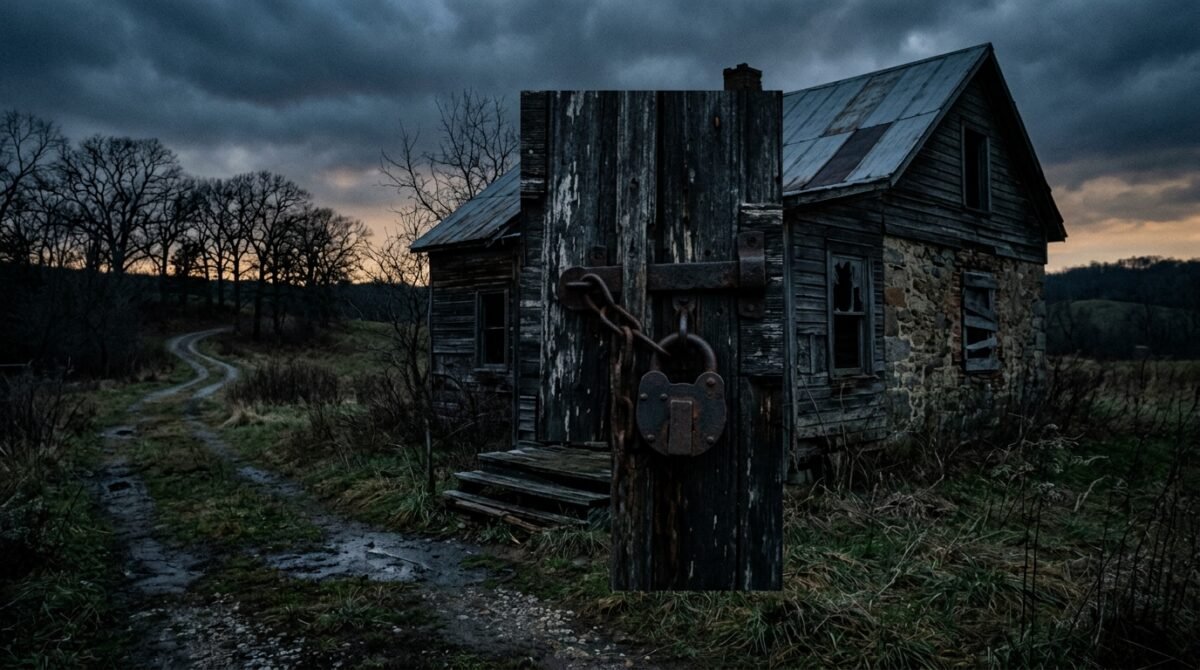
My life was tethered to a plot of land that smelled of cedar, damp earth, and the lingering scent of my late grandmother’s lavender tea. When she passed, she didn’t just leave me a farmhouse; she left me a piece of my own soul. It was a modest, creaky structure that required constant maintenance, but it was mine—free of mortgages, debts, or the chaos of my mother’s impulsive lifestyle. For years, I treated that property like a sacred archive of a childhood that wasn’t entirely defined by my mother’s shifting moods and financial instability.
My biological mother, Sarah, had always viewed money as a fluid concept. To her, a bill was a suggestion, and an asset was simply collateral waiting to be leveraged. We had a strained relationship characterized by years of low-contact boundaries that I had fought tooth and nail to maintain. I thought by keeping her at arm’s length, I was protecting my sanctuary. I never imagined that she would reach across those boundaries with a pen, a notary seal, and a calculated lie.
The betrayal didn’t happen in a single, cinematic moment of rage. It arrived via a sterile, white envelope from a regional bank that I hadn’t even realized I was associated with. Inside was a statement regarding a second mortgage I had never requested, signed with a scrawl that bore a suspicious, practiced resemblance to my own. It was a cold, calculated strike against my autonomy, executed by the woman who was supposed to be my first line of defense.
As I sat on the porch of the farmhouse, the letter trembling in my hands, the realization washed over me that my inheritance was no longer just a home—it was the subject of a crime. This story isn’t just about a house. It’s about the devastating realization that some people will burn down the world just to keep themselves warm for one more night, and the painful, necessary process of cutting off the source of the fire.
The Envelope That Turned My World Inside Out
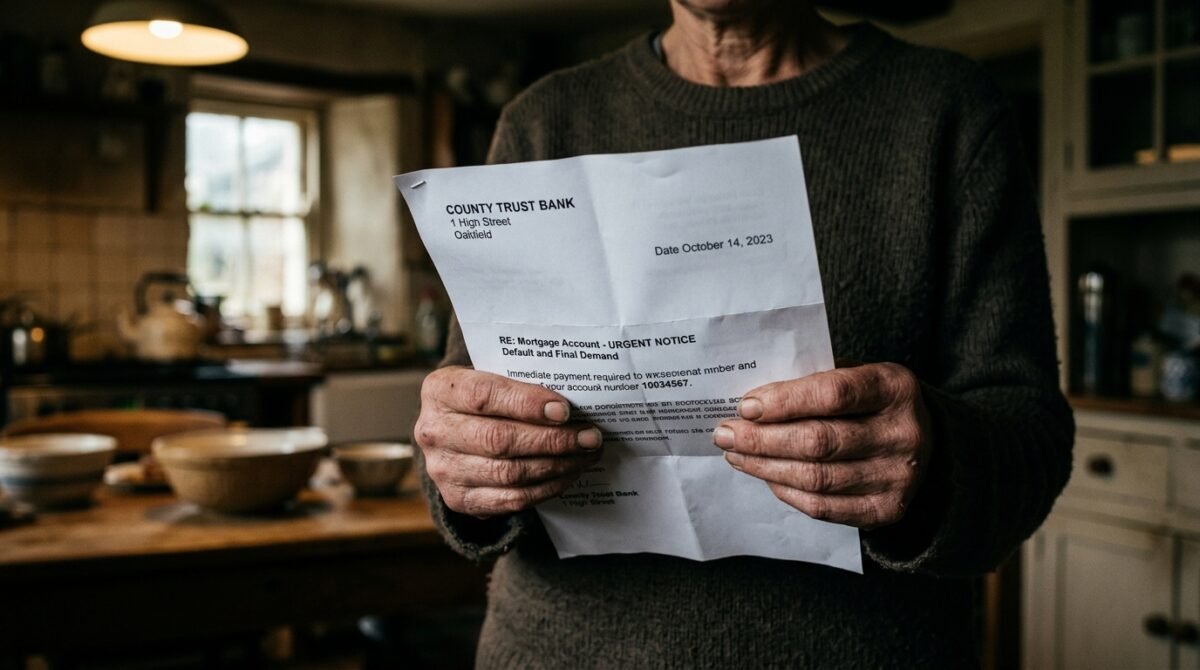
I remember the exact weight of the envelope in my hand. It was standard, white business stationery, marked with the logo of a bank located three towns over. I hadn’t opened my mail for three days because I was deep in the middle of a planting season, and the farmhouse was demanding my full attention. When I finally sat down at the kitchen table to sort through the stack, that specific envelope stood out. It didn’t look like a utility bill or a property tax assessment; it looked like a threat.
As I tore the perforated edge, my heart began a slow, rhythmic thud against my ribs. The first line stated that my application for a home equity line of credit had been approved and that the first disbursement of fifty thousand dollars had been successfully transferred to the designated account. My eyes darted to the bottom of the page, where a signature field contained a name that was undeniably mine, written in a hand that felt like a twisted caricature of my own penmanship.
I felt a cold sweat break out across my neck. I hadn’t applied for anything. My farmhouse was owned outright, a clear title that had been tucked away in a fireproof safe since the funeral three years prior. My first thought was identity theft—some faceless stranger had managed to breach my privacy. I spent the next twenty minutes frantically checking my credit reports, my hands shaking so hard I could barely type my password.
Then, the secondary realization hit. I looked at the routing number for the account where the funds were deposited. It wasn’t my account. It wasn’t an account I had ever held. I spent the next hour on the phone with the bank’s fraud department, my voice tight and strained, trying to explain that I was the owner of the property and that I was looking at a document I had never signed. The agent on the other end went quiet for a moment, then asked me if I knew a woman named Sarah Jenkins.
“Ma’am, we have a Power of Attorney document on file dated six months ago. It lists Sarah Jenkins as your authorized representative. She presented this document in person to finalize the equity release.”
— Fraud Department Agent, during the initial call
The room seemed to tilt. Sarah. My mother, who hadn’t set foot on this property in two years, had not only managed to get a Power of Attorney document, but she had used it to treat my home like a personal ATM. The betrayal was so expansive that I couldn’t even process the anger yet. I was simply floating in a void of disbelief, looking at the house around me and wondering how much of it was still actually mine.
The Facade of the Perfect Mother
I drove to my mother’s apartment an hour later, the letter clutched in my passenger seat like a weapon. My mind was reeling through every interaction we’d had in the last year. There were the ‘innocent’ visits where she offered to help organize my files, the times she asked to see the ‘deeds and documents’ just to make sure I was ‘properly prepared for the future.’ I had been a fool. I had attributed her curiosity to a sudden, late-blooming interest in being a responsible parent, while she was actually scouting for weaknesses in my armor.
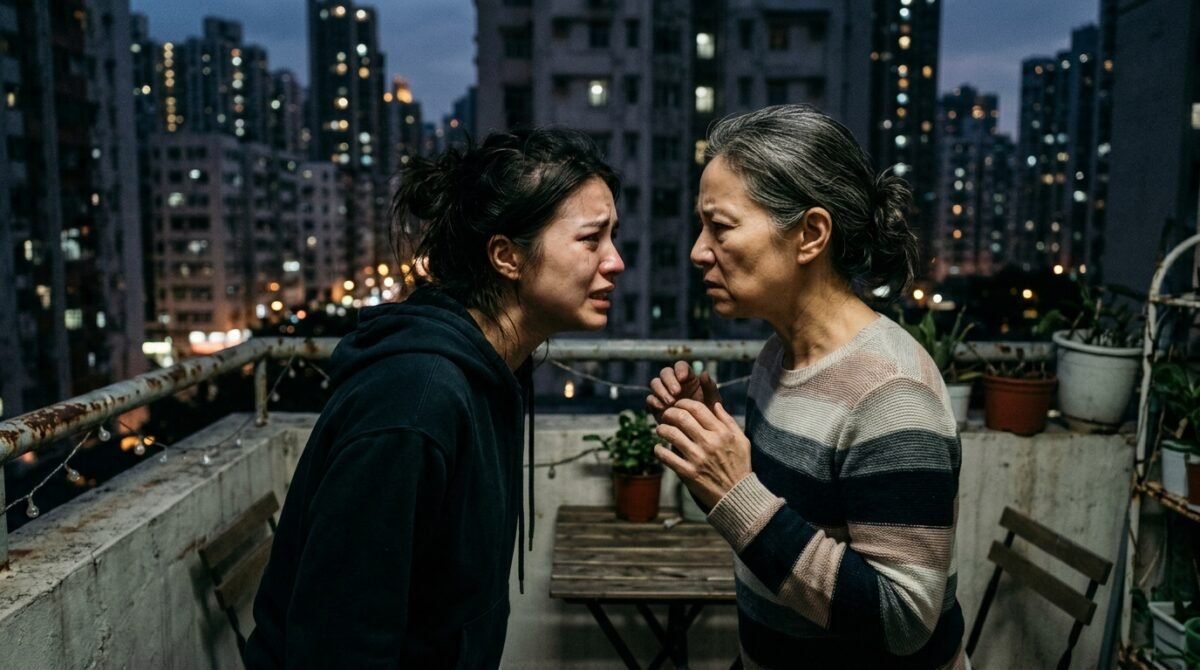
When I arrived, she was sitting on her balcony, nursing a glass of wine and looking entirely too comfortable. She greeted me with a bright, performative smile that didn’t reach her eyes. She clearly didn’t expect me to be there, especially not with the bank document in my hand. She tried to deflect immediately, pulling out the ‘I’m your mother, I only want what’s best for you’ card, but the look on my face stopped her short.
I didn’t yell. I didn’t scream. I walked up to her table and laid the document down, pointing at the signature. The silence that followed was heavy and suffocating. She tried to claim she had ‘borrowed’ the equity to invest in something that would eventually pay for my roof repairs, a blatant lie that she delivered with the practiced ease of a career grifter. It was then that I realized she didn’t just feel entitled to my money; she felt entitled to my life.
She told me I was being dramatic, that she had ‘repaid’ me by handling my affairs, and that I should be thanking her for managing the ‘complex’ financial side of my life. She acted as if the house was a burden she was graciously alleviating. It was a gaslighting masterclass, and for a moment, I actually felt my resolve waver. But then I looked at the date on the document—it was the day of my grandmother’s birthday, the one day she knew I’d be at the cemetery, occupied with grief and unable to track my mail.
“You think this is about you, don’t you? It’s about family, and family helps each other. I didn’t steal anything; I used the assets available to keep us both afloat. You’re being incredibly selfish.”
— Sarah, during the confrontation
She had no remorse. She was genuinely annoyed that I had found out, not because she had done something wrong, but because the ‘investment’ had failed and the bank was now calling for interest payments. She had gambled my home on a speculative venture, and she had lost. The casualness with which she discussed my potential homelessness was the final shred of empathy I had for her.
The Legal Tangle of Forged Intentions

The next forty-eight hours were a blur of lawyers, police reports, and the grueling process of proving a negative. Dealing with the bank was a nightmare. Even with the evidence of forgery, they were hesitant to reverse the loan. They treated the Power of Attorney document as a sacred, bulletproof contract. I had to hire a forensic document examiner just to prove that the signature was not only a forgery but a clumsy one, traced over a document I had signed for a completely different purpose years ago.
My mother, meanwhile, had gone into hiding. She blocked my number, stopped answering her door, and sent a lawyer—a cheap, aggressive guy who sent me a cease-and-desist order for ‘harassment.’ The sheer audacity of her legal strategy was breathtaking. She was attempting to use the legal system to protect the very crime she had committed against me. It was a bizarre, Kafkaesque nightmare where the victim was being treated like the aggressor.
I reached out to my aunt, my grandmother’s sister, who had always been the only voice of reason in our family. She was horrified, but she wasn’t surprised. She told me that Sarah had been doing this for years, shifting debts from person to person, constantly burning bridges and moving on before the embers could reach her. My grandmother had known, she said. That was exactly why she had put the farmhouse in a trust that was supposed to be untouchable—but Sarah had found a way to exploit the ’emergency’ clause in the Power of Attorney.
The legal fees were mounting faster than I could earn, and I had to start looking at selling off part of the land just to cover the cost of a private investigator. Every dollar I spent to reclaim my home felt like a tax on my own sanity. I kept a ledger of everything, tracking the ‘loans’ she had taken in my name, the interest piling up, and the legal costs. By the end of the month, the total damage exceeded a hundred thousand dollars.
| Category | Estimated Loss | Status |
|---|---|---|
| Principal Loan Amount | $50,000 | Disputed |
| Accumulated Interest | $4,200 | Disputed |
| Legal Fees | $15,000 | Out of Pocket |
| Forensic Handwriting | $2,500 | Out of Pocket |
The table was a cold, hard reminder that this wasn’t just a family disagreement. It was a financial assault. Every row in that table represented a piece of my future that my mother had cannibalized for her own benefit. I realized then that there was no path to forgiveness that didn’t involve me becoming a victim for the rest of my life. I had to make the choice to be the villain in her story if it meant being the survivor in mine.
The Group Chat Explosion

The family group chat, which usually consisted of holiday plans and birthday well-wishes, became a war zone when I finally decided to stop protecting Sarah’s reputation. I didn’t blast her with insults; I simply posted the screenshot of the police report and the notice of the forgery investigation. I wanted the narrative to be based on facts, not the distorted ‘poor Sarah is having a hard time’ version she had likely been feeding the rest of the relatives.
The reaction was immediate. My cousins, who had always been told I was the ‘difficult’ one, were stunned. Some tried to mediate, suggesting that I ‘just talk it out’ and ‘keep it in the family.’ The pressure to stay silent was intense. My mother, lurking in the chat, finally broke her silence, accusing me of being a cold-hearted daughter who didn’t understand the hardships of adulthood. She tried to frame her actions as a desperate act of maternal love.
“I just wanted to make sure we were both secure. You have that house sitting there, empty for months, while I’m struggling to keep my rent paid. It was only temporary! I was going to pay it back as soon as the stock matured.”
— Sarah, from the family group chat
I didn’t bite. I didn’t engage in the ‘who loves who’ debate. I simply replied that the stocks she was referring to didn’t exist, and that the bank had already flagged her for fraud. The chat went deathly silent. It was the most satisfying silence I had ever experienced. It was the sound of a carefully curated web of lies finally snapping under the weight of the truth.
Of course, there were enablers. One uncle insisted that I was ruining my mother’s life and that a mother’s place was to look out for her child’s inheritance, even if it meant ‘managing’ it without permission. He was effectively saying that she had a right to my property because she had given birth to me. It was a sickening display of patriarchal entitlement that made me realize how deep the rot went in my family’s hierarchy.
I left the chat shortly after. I didn’t need to read the justifications, the moralizing, or the ‘you only get one mother’ guilt trips. I had done my part. I had exposed the truth, and now the consequences were out of my hands. I deleted the app, threw my phone in the drawer, and went outside to dig in the dirt. For the first time in weeks, the silence of the farm felt peaceful instead of oppressive.
The Day the Locks Changed
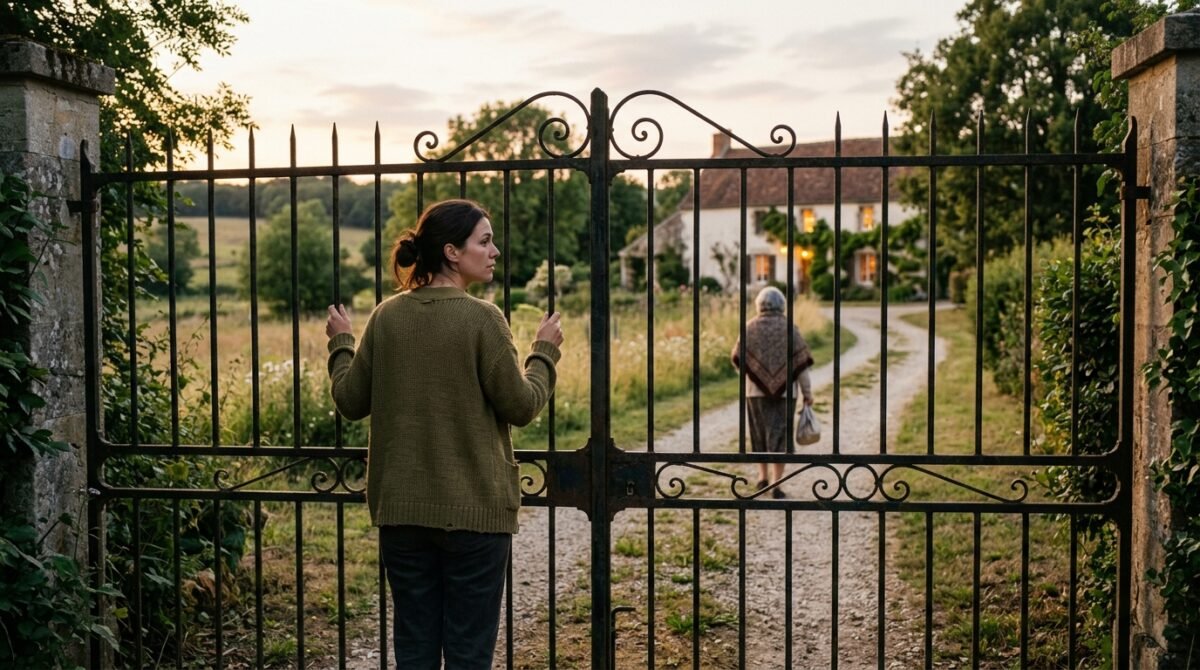
The final straw was when she showed up at the farm unannounced, two weeks after the group chat explosion. She pulled up to the gate in an Uber, looking disheveled and frantic. She wasn’t there to apologize; she was there to ‘negotiate.’ She had somehow convinced herself that if she could just sit me down and talk, I would drop the police investigation and sign a document saying it was all a ‘misunderstanding.’
I didn’t let her past the gate. I walked out to meet her, keys in hand, and informed her that the locks had been changed and that she was officially trespassing. She tried to cry, she tried to get angry, and she even tried to use the ‘I’m your mother’ card one last time. But looking at her, I didn’t see the woman who raised me. I saw a stranger, a predator who had looked at my life and decided it was a resource to be stripped.
I watched as she realized the gate wasn’t opening. The shift in her expression from manipulative to genuinely terrified was jarring. She realized that she had finally pushed too far. There was no going back to the way things were. I told her clearly that the next time we spoke, it would be through a lawyer or a courtroom clerk. I told her that she had lost the right to be a mother to me the moment she forged my name.
“You’re really going to throw away twenty years of history over a few thousand dollars? You have no heart. You’re exactly like your grandmother—cold, distant, and obsessed with things instead of people.”
— Sarah, at the gate
I didn’t argue. I didn’t defend my grandmother. I simply turned my back and walked away. As I heard the Uber pull away from the gravel driveway, I felt a weight lift from my shoulders that I hadn’t even realized I was carrying. The house was mine again. The debt was being handled. And for the first time in my life, I was entirely, completely, and blissfully alone.
Community Echoes: The Internet Verdict

I posted my story on a popular forum, expecting a mix of advice and maybe a few people telling me I was being too harsh. I was not prepared for the sheer volume of support—and the terrifying number of similar stories. People shared their own experiences with family ‘managers,’ with forged documents, and with the long, grueling road of legal recovery. The consensus was overwhelming: I was not the villain.
One comment in particular stood out to me. It was from someone who had gone through a similar legal battle and reminded me that boundaries aren’t just about who we let in; they’re about how we define our own worth. They warned me that the hardest part wasn’t the legal battle, but the emotional ‘ghosting’ that comes from realizing you have to mourn a parent who is still alive.
“NTA. Your mother is a predator. She didn’t make a mistake; she executed a plan. Do not let the ‘but she’s family’ brigade guilt-trip you into submission. You are protecting your future, and that is the most mature thing you can do.”
— u/LegalEagleEye (Top Comment, 18.2k upvotes)
Others were more pragmatic, offering advice on how to secure my assets further—putting the farm into an irrevocable trust, changing my bank, and even getting a restraining order. The community was an unexpected ally, providing the validation I didn’t get from my own family members. It felt like I was part of a larger conversation about what we owe our parents and where the line of ‘duty’ ends.
I spent hours reading the responses. There were the expected naysayers, claiming I was ‘too cold,’ but they were drowned out by the voices of people who had been through the fire and came out the other side. It reminded me that I wasn’t alone in this. The trauma of family betrayal is a universal language, and reading these stories gave me the strength to stay the course, even when the legal bills kept piling up.
The community also helped me realize that the ‘guilt’ I felt was a conditioned response. I had been raised to feel responsible for my mother’s happiness, for her security, and for her mistakes. Recognizing that this guilt was a tool she used to control me was the final step in my liberation. I started treating my life like a business I was the CEO of, and the first order of business was trimming the toxic assets.
The Long Road to Recovery

Recovery isn’t a linear path. There are days when I wake up and panic, checking my bank accounts for unauthorized activity, even though I know I’ve secured everything. There are moments when I see a mother and daughter shopping and I feel a pang of jealousy for a connection I never truly had. But then I walk out to the barn, I touch the weathered wood of the farmhouse, and I remember why I did what I did.
The legal situation is still ongoing, but the bank has finally paused the loan payments while the investigation into the forged Power of Attorney continues. It’s slow, tedious, and expensive, but the threat of foreclosure has been removed for now. I’ve started a small garden project, planting crops that take years to mature—a metaphor for the life I’m building for myself, one that doesn’t rely on the whims of others.
I’ve also started seeing a therapist who specializes in family estrangement. She’s helped me understand that I didn’t ‘block’ my mother; I ‘protected’ myself. There’s a distinct difference in the language, and it’s helped me stop internalizing her failures as my own. Every session is a peeling back of another layer of the conditioning that made me believe I was responsible for her life.
I’ve reached out to a few friends who I had pushed away during the height of the drama. They were surprisingly understanding. It turns out that people are much more willing to walk through the fire with you than I had assumed. I’m learning how to trust again, not just in others, but in my own judgment. I’m no longer the daughter who stands by and watches her world be dismantled.
The house is quiet, but it’s a healthy, thriving quiet. I’ve started painting the shutters, doing the repairs I had put off for so long. Every hammer strike is a reclaiming of territory. I’m not just fixing a house; I’m fixing the foundation of my own existence. And for the first time, it feels like it might actually hold.
Reflecting on the Cost of Truth

People often ask if the cost was worth it. If I had to do it all over again, would I have just let her have the money? The answer is a resounding no. The money was never the point. The point was the violation. If I had let her take the equity, it wouldn’t have ended there. She would have come back for more, again and again, until there was nothing left to take. You cannot appease a predator; you can only deny them the hunt.
I’ve learned that truth is a costly commodity. It cost me my relationship with my mother, it cost me my peace for several months, and it cost me a significant amount of money in legal fees. But the peace I have now is priceless. There is no more looking over my shoulder, no more waiting for the other shoe to drop, and no more gaslighting. The house is mine, and the future is mine.
My relationship with the rest of my family is forever altered. Some of them have chosen to stand by her, and I have had to accept that their support is conditional and based on a false narrative. I’ve stopped trying to convince them. I’ve realized that people will believe what they want to believe, and my job is not to educate them, but to live my life in a way that proves them wrong.
I’ve also learned that forgiveness is not a mandatory step in healing. I don’t forgive her. And I’ve stopped feeling the need to. I have moved past the need for her validation or her apology. She is a chapter in my life that I have closed, and I don’t feel the need to re-read it. My story is no longer about her; it’s about me.
If you find yourself in a similar situation, know this: you are allowed to protect yourself. You are allowed to prioritize your home, your life, and your sanity over a family bond that has become a shackle. Don’t let the weight of tradition or the fear of being ‘the bad guy’ stop you from doing what you need to do to survive.
Lessons from the Rubble

Looking back at the timeline of the betrayal, I can see the warning signs I missed—the subtle inquiries, the ‘accidental’ mentions of bank policies, the way she would linger over my mail. It was a slow build-up of erosion. I learned that you have to be vigilant, not just with your money, but with the information you share. I’ve become much more private about my financial affairs, even with people I trust.
I also learned the importance of having a support system outside of your biological family. My friends were the ones who stepped in with legal advice, who brought me groceries when I was too stressed to cook, and who listened to me cry for hours on end. They are my chosen family, and they have been worth their weight in gold. Investing in those relationships is the best insurance policy you can have.
The financial side of things has been a harsh lesson in reality. I now have a secure, digital-only vault for all my important documents, and I’ve taken steps to ensure that no one, regardless of relation, can access my accounts without multi-factor authorization. I’ve also consulted with a lawyer to set up a living trust that makes it impossible for anyone to leverage the farm without a unanimous vote from a board of trustees, effectively making it bulletproof.
I’ve started a small savings fund for legal emergencies, just in case. It’s not something I ever wanted to have to do, but it’s a reality of the world we live in. You hope for the best, but you prepare for the worst. It’s not about being cynical; it’s about being prepared. I’m no longer the person who believes that everyone has my best interests at heart.
Finally, I’ve learned to appreciate the simple things again. The sound of the wind through the trees, the smell of the rain on the fields, the quiet of the night. These are the things that were almost taken from me, and I cherish them now with a new intensity. The farmhouse is more than just a home; it’s a symbol of my resilience, a testament to the fact that I stood my ground and I survived.
Looking Toward the Future

As I look forward, I see a horizon that is clear of the clouds that used to hang over me. I’m planning to open a small organic farm-to-table business on the property, using the very land that was once the subject of such a bitter struggle. It’s my way of turning that negative space into something productive and nourishing. I want to build a legacy that is mine, built on my own terms, not on the debt of someone else.
The trauma is still there, but it’s no longer the main character in my life. It’s a background element, a reminder of what I can overcome. I’m stronger, I’m wiser, and I’m much more protective of my boundaries. I’ve realized that my worth is not defined by my family, but by the actions I take to honor my own truth. And that is the most empowering realization I have ever had.
I hope that by sharing this story, I can encourage others to stand up for themselves. The fear of being the ‘villain’ is a powerful tool used by manipulators to keep us silent. But when you speak out, when you take action, you realize that the world doesn’t end—it just rearranges itself to fit the new, stronger version of you. It’s not easy, and it’s not painless, but it is worth it.
I am no longer waiting for her to change, and I’m no longer waiting for her to acknowledge the harm she caused. I have given myself the closure I was waiting for her to provide. I have written the final chapter of our relationship, and it doesn’t end with a reconciliation. It ends with me, walking forward, into a life that is entirely, rightfully my own.
The farm is flourishing. The crops are coming in, and for the first time in my life, I am genuinely excited for the next season. The shadows of the past are fading, and the sun is rising over a future that I have built with my own two hands. And that, in the end, is the greatest victory of all.
Conclusion
My journey from a victim of financial forgery to the owner of my own peace has been the most difficult chapter of my life. It required me to strip away everything I thought I knew about family obligation and replace it with a firm, uncompromising commitment to my own survival. The farmhouse is no longer just a building; it is a monument to the boundaries I fought to establish.
I’ve learned that silence is the accomplice of abuse, and speaking out is the first step toward reclamation. Whether it’s a family member stealing your inheritance or a friend betraying your trust, the act of standing up for yourself is never selfish—it is a necessary act of self-preservation. I’ve walked through the fire, and while I have the scars to show for it, I also have the clarity that only comes from knowing what you are capable of surviving.
I want to hear from you. Have you ever had to draw a hard line with a family member, even when the world told you to forgive and forget? What was the moment you realized that ‘family’ was no longer a valid excuse for betrayal? Let’s talk in the comments.
Poll: If you were in my shoes, would you have pursued legal action, or would you have cut ties and walked away entirely?
1. Pursuit of legal action is essential for justice.
2. Walking away is the only way to find peace.
3. Both—legal action first, then complete severance.
What's your verdict on this dilemma?
Vote below to contribute to the official community consensus.

Have a Dilemma Keeping You Up at Night?
Share your real-life feud, wedding chaos, or relationship crossroads anonymously with our editorial team.
What do you think ?
0 Comments🛡️ Comments are moderated to protect community integrity. Your comment will appear once approved by the editorial team.