
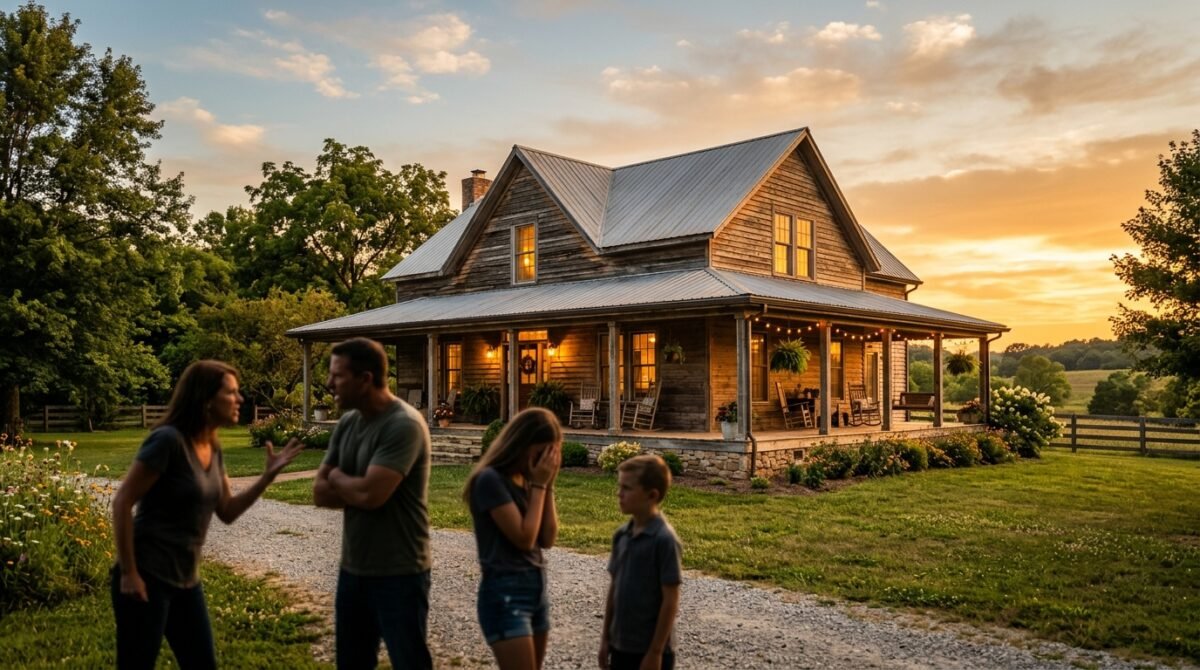
When my grandfather passed away, he left behind a property that was more of a liability than a legacy. The farmhouse, a sprawling structure built in the 1920s, had been neglected for nearly two decades. My mother, aunts, and uncles viewed it as a financial black hole, a place where memories were overshadowed by dry rot, termite infestations, and a leaking roof that threatened to bring the entire second floor down. For years, the house sat empty, a skeletal reminder of a man they all claimed to love but none were willing to save.
I, however, saw something different. I saw a project, a sanctuary, and a way to honor the man who taught me how to work with my hands. I spent every weekend for five years scrubbing mold, stripping wallpaper, rewiring ancient electrical systems, and pouring every cent of my IT salary into the restoration. I didn’t ask for permission because, frankly, no one else wanted to touch it. I assumed that since they had abandoned it, they would be thrilled that I was keeping the family property from being condemned by the county.
The trouble began the moment the final coat of paint dried and the first high-end vacation rental bookings started rolling in. Suddenly, my family stopped viewing the farmhouse as a derelict pit and started seeing it as a gold mine. They descended like vultures, not with gratitude, but with legal documents. The lawsuit for ‘unjust enrichment’ wasn’t just a shock; it was a cold, calculated betrayal that forced me to realize exactly how much my family valued greed over kinship.
This is the story of how a labor of love turned into a war of attrition. It is a story about the toxicity of entitlement, the fragility of blood ties, and the moment I realized that sometimes, the family you choose is the only one that truly exists. As the legal fees mount and the group chats become increasingly hostile, I am left wondering: is a pile of lumber and history worth burning every bridge I have?
The Skeleton in the Woods
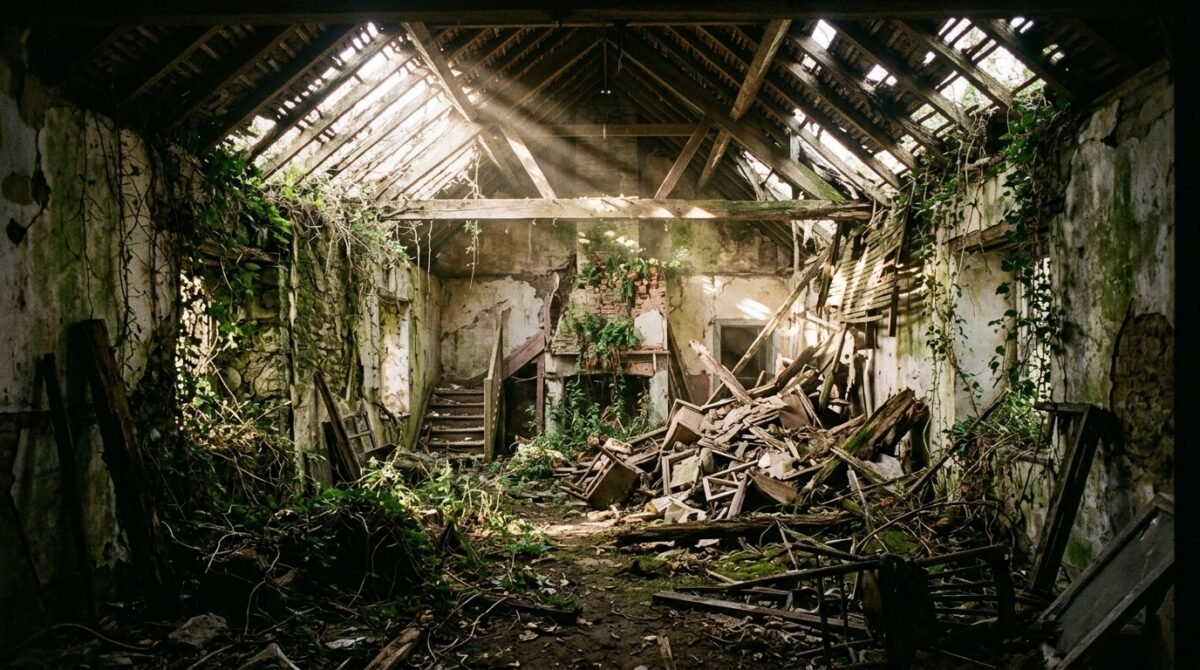
The farmhouse was a catastrophe. When I first stepped inside after my grandfather’s funeral, the smell of damp earth and trapped history was overwhelming. The roof had partially collapsed in the east wing, and the garden had long since surrendered to aggressive blackberry bushes and invasive weeds. My family had held a meeting at the local diner three weeks after the burial, and the consensus was chillingly unanimous: sell the land for scrap and walk away.
I remember sitting there, watching my uncle flip through a stack of maintenance estimates that were astronomically high. They weren’t looking for a builder; they were looking for an excuse to liquidate. I was the only one who spoke up, offering to take over the property taxes and the responsibility of the house. They laughed, thinking I was naive. They honestly didn’t think I could survive the first winter.
I started small. I spent my first two months just cleaning up debris. I hauled away truckloads of rusted scrap metal and rotted floorboards. I lived in a tent in the backyard for the first summer, showering in a makeshift setup I built behind the shed. It was grueling, lonely work, but for the first time in my life, I felt a sense of purpose. I was reclaiming a piece of our history that they were ready to discard like trash.
“You’re wasting your youth on a pile of rot. Why bother? It’s not like it’s ever going to be worth anything to anyone but the tax assessor.”
— Uncle Dave, during his last visit to the site three years ago.
The transition from a derelict ruin to a habitable home was slow. I learned how to frame walls, how to patch drywall, and how to sweat copper pipes. Every paycheck I earned went directly into materials. I ate instant noodles and lived in a sleeping bag for three years, but as the rooms began to take shape—the exposed beams, the refinished hardwood floors—the house started to feel like a living, breathing entity. It was mine, in every way that mattered.
The Silent Transformation and the First Booking

By the fourth year, the farmhouse was unrecognizable. I had turned the drafty, rotting structure into a modern, rustic masterpiece. I kept the original character but added the amenities that would make it a premium rental: high-speed fiber internet, a custom chef’s kitchen, and a wraparound deck that overlooked the valley. I put the house on a vacation rental site, not because I wanted to be a landlord, but because I needed the income to pay for the property taxes I had been covering for years.
The first booking came through within a week. It was a couple from the city looking for a secluded getaway. They paid top dollar, and the experience was seamless. I reinvested that money into landscaping and a new HVAC system. I was finally breathing, seeing the fruit of five years of back-breaking labor. I felt proud. I even sent a few photos to the family group chat, thinking maybe they would finally see the beauty in what I had accomplished.
The silence in the group chat was deafening. No congratulations, no ‘good job,’ not even a thumbs-up emoji. I assumed they were just jealous or still bitter that I had succeeded where they had been too lazy to try. I was wrong. They weren’t silent because they were bitter; they were silent because they were busy consulting with an attorney. The wheels were already in motion, and I hadn’t even noticed the engine starting.
I felt a strange sense of unease that week. My mother called me, not to ask how I was doing, but to ask specifically about the rental revenue and the property valuation. She sounded calculated, her voice lacking its usual warmth. I played it down, telling her the income was barely covering the maintenance and that I was still in the red. I didn’t trust her, and for the first time in my life, I lied to my own mother.
It wasn’t long after that that the first letter arrived via certified mail. It wasn’t a friendly check-in or a birthday card. It was a formal notice that my uncle and my mother were challenging the probate status of the property, claiming that as heirs, they were entitled to the ‘unjust enrichment’ derived from the appreciation of the asset I had single-handedly resurrected. I stared at the envelope for hours, unable to comprehend the sheer audacity of it.
The Legal Ambush in the Living Room

The summons arrived on a Tuesday. It was a rainy, miserable day that seemed to mirror the storm brewing in my life. The claim was absurd: they were alleging that by ‘improving’ the property without their explicit, written consent as co-heirs, I had somehow created a situation of unjust enrichment where I was profiting from their inherited share of the land. They were demanding half of all rental profits retroactively and a stake in the current market value of the house.
I spent that night in the library, pouring over property laws and emails from my late grandfather. I had documentation for every single purchase—receipts for lumber, nails, appliances, and labor. I had photos of the house in its original, destroyed state compared to the current condition. I was going to fight this. I wasn’t going to let them strip away the only thing I had ever truly built for myself.
I called a lawyer the next morning, a shark who specialized in real estate disputes. When I showed him the files, he leaned back in his chair and let out a long, low whistle. ‘They have a weak case,’ he said, ‘but they have a deep sense of entitlement. This is going to be expensive and messy. They’re betting that you don’t have the stomach for a protracted court battle.’
“They aren’t just looking for money, kid. They’re looking for a payday for doing absolutely nothing. They want to punish you for being competent.”
— My Attorney, during our initial consultation.
The family began to call, one by one. My aunt, who I hadn’t spoken to in three years, tried the ‘family bond’ angle. She told me that I was being greedy and that, as family, I should be sharing the ‘wealth’ I had created with the house. She couldn’t understand that the ‘wealth’ was actually just a mountain of debt I was still paying off. They had no idea about the loans I had taken out against my own car to afford the final renovations.
I stopped answering the calls after the third day. The pressure was mounting, and I felt like I was being suffocated. I was working my day job, managing the rental guests, and preparing for a lawsuit. The stress started to manifest in physical ways; I was losing sleep, my hair was thinning, and I felt like I was constantly on the verge of a panic attack. But every time I looked out at the farmhouse, I remembered why I started this. I wasn’t doing it for them. I was doing it for me.
The Group Chat Explosion

The family group chat, which had been dormant for months, suddenly exploded. It started with my cousin posting a screenshot of the house listing on a travel site, calling it ‘deceptive’ and ‘stealing from family.’ I didn’t engage for a while, but then the insults started. They were calling me a thief, a liar, and a manipulator. They were accusing me of brainwashing my grandfather before he died to get the house, despite the fact that the will was clearly settled years ago.
I finally typed a response. I didn’t apologize. I didn’t try to justify my choices. I laid it all out: the five years of labor, the thousands of hours of manual work, the fact that they hadn’t stepped foot on the property once in over a decade. I included a link to a folder containing photos of the rot and the destruction they had left behind. I told them that if they wanted the house, they could have it—once they reimbursed me for every cent I had spent and paid me a fair market wage for my labor.
“You didn’t want this house when it was a ruin. You want it now because I did the hard work you were too lazy to do. You are not entitled to my sweat.”
— My message to the Family Group Chat.
The silence that followed my message lasted for exactly four minutes. Then, the vitriol returned, but this time, it was defensive. They claimed that the house was ‘our heritage’ and that I had ‘stolen their memories.’ It was a masterclass in gaslighting. They were trying to rewrite history to suit their current financial interests. I muted the chat and blocked every single one of them. It felt like cutting off a gangrenous limb.
Even with the chat blocked, I knew the repercussions would reach me in the physical world. I started installing security cameras around the property. I didn’t trust them not to show up and try to change the locks or sabotage the place. I was living in a state of hyper-vigilance, waiting for the other shoe to drop. My home, my sanctuary, now felt like a fortress.
Discovery and the Financial Ledger

The legal discovery process was the most brutal part of the entire experience. I had to provide every receipt, every bank statement, and every email correspondence regarding the property. It was invasive and exhausting. I spent weeks organizing files, ensuring that every dollar spent was accounted for. My attorney was impressed by the meticulousness of my records, but the sheer volume of paperwork was daunting.
When it was my turn to request their records, the reality was even more pathetic than I had imagined. They hadn’t paid a dime toward the property taxes since the day my grandfather died. They hadn’t contributed to the insurance or the maintenance. They had essentially abandoned the property, and now they were claiming they were ‘wrongfully excluded’ from the benefits of an asset they hadn’t cared for in years.
We created a ledger to present to the court. It was a stark comparison: on one side, my contributions—thousands of hours and nearly $150,000 in personal savings and loans. On the other side, their contributions—zero. The math was simple, yet they were still convinced that the law would somehow favor their sense of entitlement. It was a bizarre disconnect from reality that I couldn’t wrap my head around.
| Contribution | Me | Family |
|---|---|---|
| Financial Investment | $148,000 | $0 |
| Labor Hours | 5,200+ | 0 |
| Maintenance/Taxes | $24,000 | $0 |
| Legal Intent | Defending | Suing |
My attorney told me that in many jurisdictions, ‘sweat equity’ is hard to quantify, but in this case, the abandonment of the property by the other heirs was a powerful argument in my favor. He was confident that we could get the lawsuit dismissed before it even reached a jury. But that didn’t stop the stress or the emotional toll. I was still fighting for my life, essentially.
The Sunday Dinner Confrontation
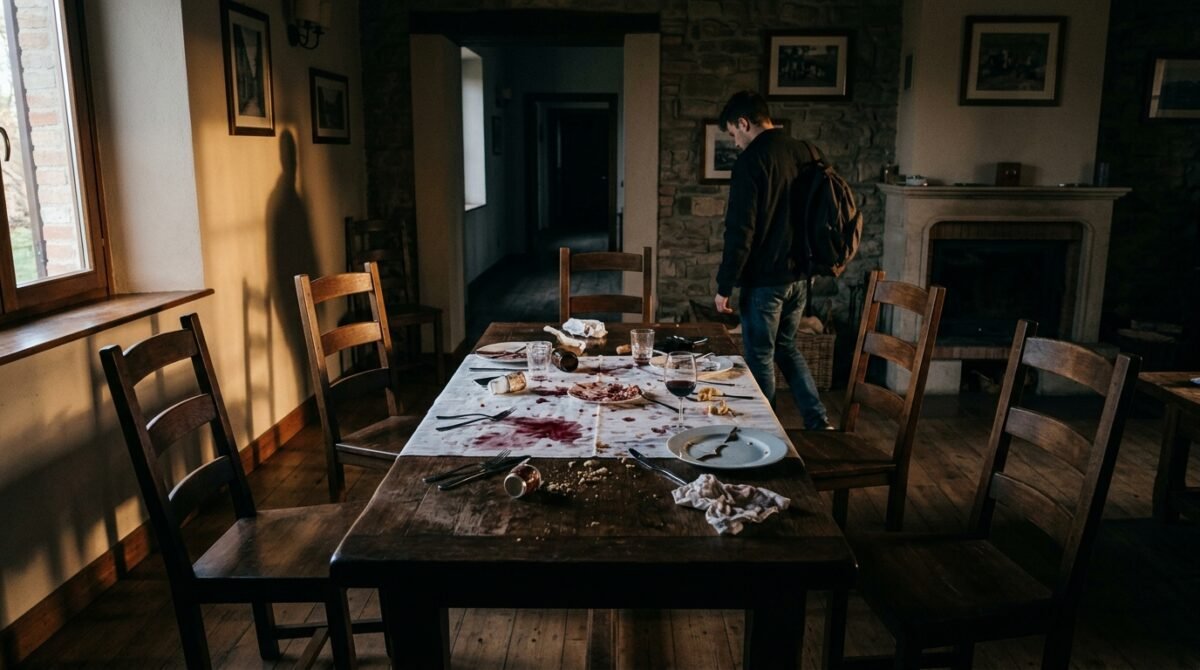
I knew I should have stayed away, but my grandmother—the only one who hadn’t taken a side—asked me to come to dinner. I wanted to see her, so I made the mistake of going. The atmosphere was poisonous the moment I walked through the door. My mother and uncle were there, and they didn’t even acknowledge my presence. They spoke over me, talked about the farmhouse as if I were a contractor they were planning to fire.
I sat through the appetizers, my hands shaking under the table. When my uncle made a snide comment about ‘people who think they can steal family assets,’ I finally snapped. I stood up, pushed my chair back, and looked them all in the eye. I told them exactly what I thought of their greed, their laziness, and their lack of integrity. I told them that the house was dead to me, just as they were.
“You act like you’re the victims, but you’re the ones who left a dying man’s house to rot. I saved it. If you want it so badly, pay me back every cent, plus interest, and I’ll walk away today.”
— My outburst at the family dinner.
The table went silent. My mother started crying, playing the victim card, claiming I was ‘abusive’ and ‘heartless.’ I didn’t care. I walked out of that house and didn’t look back. I drove straight to the farmhouse, parked my car in the driveway, and sat on the porch until the sun came up. It was the moment I finally accepted that the family I grew up with was gone.
That night, I realized that the legal battle was secondary to the emotional severance. I wasn’t just fighting for a house; I was fighting for my own independence from a group of people who had never truly supported me. It was a painful, liberating realization. The, what I thought was a loss, actually gave me the clarity to move forward without looking back at them.
The Verdict and the Withdrawal

The case never made it to court. When my lawyer presented the evidence of the abandonment and the absolute lack of financial contribution from the other heirs, their own counsel advised them to drop the suit. They realized they would likely lose and be forced to pay my legal fees, which were already reaching the tens of thousands. They withdrew the claim three weeks before the scheduled hearing.
I didn’t get a ‘sorry.’ I didn’t get a handshake. I just got a letter from their lawyer confirming the withdrawal. It was the most anti-climactic end to such an intense, life-altering experience. I felt a mix of relief and profound sadness. I had won the house, but I had lost the last remnants of a family I once thought I knew.
I kept the house. I finished the final landscaping projects, and it continues to thrive as a rental. Every guest who stays there leaves a review about the beauty of the property and the care that went into it. They don’t know the story behind the walls, and I prefer it that way. The farmhouse is now a symbol of my resilience, not my family’s greed.
I’ve since moved on to other projects. I’m renovating a cabin in the mountains now, and I’m much more careful about who I involve and how I handle legal ownership from the very start. I’ve learned that when it comes to family, you have to be as clear as a contract. Love is one thing, but property and business are entirely different, and they should never be mixed without clear, written boundaries.
The Reddit Community Weighs In

When I shared my story on Reddit, the response was overwhelming. Thousands of people reached out to share their own experiences with toxic family members, inheritance disputes, and the ‘unjust enrichment’ claims that often come when someone finally gets their life together. The support was incredible, and it helped me realize that I wasn’t alone in this nightmare.
“OP, you did the work. You took a rotting dump and made it a gem. They have no moral or legal leg to stand on. Don’t feel guilty for one second. They’re just mad they didn’t think of it first.”
— u/BuildItRight (Top Comment, 28.5k upvotes)
“I’ve seen this exact situation happen to a friend of mine. Once you start succeeding, family members come out of the woodwork like termites. You handled this perfectly. Stay no-contact.”
— u/LegalEagle99 (12.2k upvotes)
There were, of course, the contrarians. Some argued that I should have at least offered them a small slice of the profits to ‘keep the peace.’ I found those comments to be the most frustrating. They didn’t understand that ‘keeping the peace’ with people who sue you is a losing game. You don’t negotiate with people who are trying to bankrupt you for their own gain.
Reading the comments, I saw a reflection of the human condition. People love a story of redemption, but they also fear the betrayal of family. Most of the community stood by me, validating my decision to cut ties. It was the closure I didn’t know I needed. The internet, for all its flaws, provided the communal support I had been missing in my real life.
Reflecting on the Cost of Independence

Looking back, I realize that the most expensive part of the farmhouse wasn’t the materials or the labor. It was the emotional cost of losing my family. Was it worth it? Yes. Because the family I had was never really a family to begin with. They were a group of people who claimed to love me but were ready to destroy me the moment I achieved something they hadn’t.
I’ve learned to value myself more. I’ve learned that my worth isn’t tied to their approval or their validation. I’ve built a life that I love, and for the first time, I don’t feel like I have to apologize for my success. It’s a quiet, peaceful life, and the farmhouse is the center of it all. It’s a place where I can breathe, think, and just be.
I don’t think I’ll ever reconcile with them. The trust is gone, and the betrayal was too deep. I have found a new family, a group of friends who support my goals and celebrate my successes. We have our own traditions, our own gatherings, and none of them involve arguments over property or money. It’s a relief to know that I can choose who I spend my life with.
If you are in a similar situation, my advice is simple: protect yourself, document everything, and don’t be afraid to walk away. Sometimes, the most important thing you can build isn’t a house; it’s a boundary. And sometimes, you have to burn the bridge to keep the fire from spreading to the rest of your life.
Lessons Learned from the Ashes
The farmhouse taught me more about life than any book or class ever could. It taught me that hard work doesn’t always pay off in the way you expect, but it always pays off in the way you need. It taught me that people will show you who they are when money is on the table, and you should always believe them the first time.
I’ve also learned to be more transparent in my personal relationships. I no longer hide my plans or my successes from the people in my life. I talk about my goals and my struggles openly. I’ve found that by being honest, I attract people who are on the same wavelength as me. I don’t have time for people who are waiting for me to fail.
The legal fees were a bitter pill to swallow, but they were also the price of my freedom. Every dollar I spent on that lawyer was a dollar spent on my future. I’ve recovered financially, and I’m in a better place now than I have ever been. I have no regrets about the time, the money, or the effort I put into that house. It was the best investment I ever made.
As for the future, I’m planning to keep the farmhouse for a few more years and then sell it to someone who will appreciate the work I put into it. I’m ready for a new chapter, one that doesn’t involve legal battles or family drama. I’m ready for peace, and I think I’ve earned it. The farmhouse will always be a part of my story, but it’s no longer the entire book.
Conclusion
In the end, the farmhouse remains standing, as solid as the day I finished the foundation. It stands not as a monument to family, but as a monument to my own resilience. The legal threats, the shouting matches, and the toxic group chats are just background noise now, muffled by the peace I’ve found in the years since. I learned that you cannot fix a broken foundation, whether it’s in a house or a family relationship. Sometimes, you just have to build something new on your own terms.
The experience has fundamentally changed how I view my own value. I no longer seek approval from those who benefit from my silence, and I no longer apologize for the life I’ve built with my own two hands. I hope my story serves as a reminder that your labor belongs to you, and your future is something that you have every right to protect. You are the architect of your own life, and no one else has the right to rewrite your blueprints.
What would you have done in my shoes? Would you have fought the suit, or would you have walked away to save your sanity? Join the conversation in the comments below—I’m curious to see how many of you have dealt with the ‘vulture’ effect in your own families, and what boundaries you had to set to stay afloat.
What's your verdict on this dilemma?
Vote below to contribute to the official community consensus.

Have a Dilemma Keeping You Up at Night?
Share your real-life feud, wedding chaos, or relationship crossroads anonymously with our editorial team.
What do you think ?
0 Comments🛡️ Comments are moderated to protect community integrity. Your comment will appear once approved by the editorial team.