
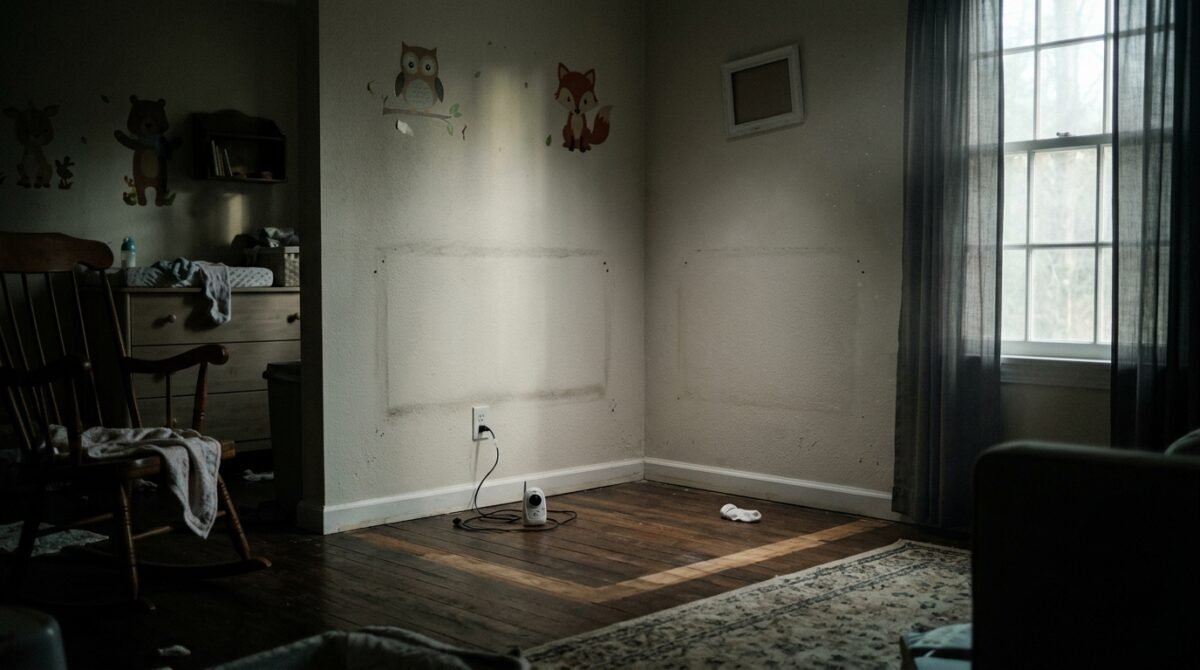
They say the nursery is a sanctuary—a physical manifestation of the love and preparation a parent pours into the life of their unborn child. For my husband, Mark, and me, it was more than just a room. It was the culmination of months of effort. The centerpiece was a handcrafted crib, commissioned from a master woodworker and stained in a custom, non-toxic walnut finish that matched the heritage oak dresser we’d inherited from my grandfather. It wasn’t just furniture; it was a promise.
We had been careful. When we decided to take a much-needed two-week trip to visit my ailing mother in another state during my second trimester, we made the mistake of trusting Mark’s mother, Linda, with a spare key. She had insisted on ‘checking in’ on the house and watering our plants. It was a gesture we viewed through the lens of family duty, unaware that it was actually an opportunity for her to stage a quiet coup in our home.
The return home was supposed to be a moment of relief. We were tired, travel-worn, and looking forward to relaxing in our own space before the final stretch of pregnancy. Instead, we walked into a house that felt subtly different. The silence wasn’t peaceful; it was heavy. When I pushed open the nursery door, the air rushed out of my lungs. The corner was empty. The crib was gone.
What followed was not a simple misunderstanding. It was a masterclass in gaslighting, entitlement, and the devastating reality of being the ‘other’ daughter-in-law. My mother-in-law hadn’t just ‘borrowed’ the item; she had gifted it to her favorite child, my sister-in-law Sarah, who was expecting her own baby just two months after me. This wasn’t a mistake—it was a calculated redistribution of resources based on a hierarchy that I was never meant to climb.
The Empty Nursery and the Manufactured Alibi

I stood in the center of the nursery, the silence echoing in the empty space where my beautiful walnut crib should have been. Mark walked in behind me, his smile fading as he scanned the room. ‘Where is it?’ he asked, his voice barely a whisper. I couldn’t answer. I felt a cold, sharp pain in my chest, a mixture of physical exhaustion and sudden, blinding rage. I checked the rest of the house, hoping for a note, a text, anything that would explain this madness.
When I finally called Linda, her voice was chirpy, almost annoyingly bright. She didn’t wait for me to ask. She dived straight into a rehearsed script about how ‘space needed to be cleared’ and how ‘Sarah was in a real bind.’ The lack of guilt was the most chilling part of the conversation. She spoke as if she had done us a favor, clearing out ‘clutter’ to help her golden child.
“Oh, honey, I knew you wouldn’t mind! Sarah is in such a tiny apartment and she needed a sturdy crib. You have plenty of time to order another one before your baby arrives. It’s all about family helping family, right?”
— Linda, on the phone
I was so stunned I could barely speak. I handed the phone to Mark, who was turning pale. Watching him realize the magnitude of his mother’s audacity was like watching a man lose his faith in real-time. He tried to maintain his composure, but his voice cracked when he demanded she return the crib immediately. Her response was a flat refusal, citing that the crib was already assembled in Sarah’s nursery, bolted to the wall, and that ‘moving it now would be a nightmare for her.’
The realization hit us: she hadn’t just moved it; she had installed it. This was a permanent displacement. She had effectively decided that Sarah’s needs superseded mine, regardless of the fact that I had paid for the custom design and that it had been delivered to our private home. The arrogance was staggering. She didn’t see me as a person with rights; she saw me as a resource manager for her own children.
We spent that night sitting on the floor of the nursery, talking about the implications. It wasn’t just about the furniture. It was about the fact that she felt entitled to enter our sanctuary and remove our possessions. If she could take the crib, what would she take next? The stroller? The baby monitors? Our peace of mind? We were trapped in a loop of disbelief, trying to rationalize the irrational behavior of a woman who had finally shown her true colors.
The Group Chat Explosion

By the next morning, the anger had solidified into a cold, hard resolve. I didn’t want to play the ‘diplomatic daughter-in-law’ game anymore. Mark was hesitant, wanting to avoid a scene, but I was past the point of caring about optics. I decided to address the family group chat. I needed everyone to see exactly what Linda had done, and I wanted to see who would defend such a blatant act of theft.
I took a screenshot of the crib’s original invoice, which clearly showed my name and our address, and posted it to the family group with a pointed question. The response was near-instantaneous. My sister-in-law, Sarah, jumped in immediately, playing the victim. She claimed she didn’t even know it was ‘stolen’—she thought it was a gift from her mother, and she was ‘deeply offended’ that I would accuse her of being an accomplice.
“I am literally crying right now. Mom said she bought this for me weeks ago! How dare you try to ruin my pregnancy with these nasty accusations? You have no idea how hard it is to be a single mom-to-be. You have Mark, you have your parents, you have everything!”
— Sarah, via Group Chat
The group chat devolved into chaos. Linda’s other children started chiming in, some defending her, others staying quiet. It was the classic dynamic: the golden child can do no wrong, and the outsider is the aggressor for noticing the injustice. I watched my phone screen light up with notifications, feeling like I was watching a car wreck in slow motion. The entitlement was dripping off every message.
Then, my brother-in-law, the one who usually avoided conflict, sent a message that stopped everything. He admitted that he had heard Linda talking about the ‘crib situation’ weeks ago at a Sunday dinner I hadn’t attended. He didn’t want to get involved, but he couldn’t stand the lie. The veil was lifted. Everyone now knew that this was premeditated. It wasn’t an act of charity; it was a strategic gift.
I kept my composure in the chat, refusing to engage in the name-calling. I simply stated the facts: the crib was my property, I had the receipts, and if it wasn’t returned within 48 hours, I would be filing a police report for theft. The chat went dead silent. The threat of legal action was the only language they seemed to understand. It was ugly, it was public, and it was exactly what needed to happen.
By the time I put the phone down, I felt drained. The social fallout was going to be massive. Linda wasn’t the type to take a threat lying down, and Sarah was already playing the ‘stressed expectant mother’ card to anyone who would listen. But for the first time, I didn’t feel like the victim. I felt like a woman defending her home, and that realization was empowering in a way I hadn’t anticipated.
The Sunday Dinner Confrontation

The next Sunday dinner was mandatory, or so Linda insisted. She wanted a ‘family sit-down to resolve this misunderstanding.’ Mark tried to tell me we didn’t have to go, but I insisted. If she wanted to face me, she could look me in the eye while she tried to justify her actions. Walking into her house felt like walking into enemy territory, but I held my head high, ready for whatever game she was playing.
The atmosphere in the dining room was suffocating. Sarah was there, rubbing her belly and looking pointedly at the floor. Linda was acting as if we were all just there for a lovely meal, ignoring the tension that felt like a physical weight in the room. When the subject finally came up, she started with her usual gaslighting tactics, framing it as a ‘miscommunication’ that had blown out of proportion.
“Can’t we just move past this? It’s a piece of wood, for heaven’s sake! Sarah is having a difficult pregnancy, and you’re acting like this is some kind of major crime. Why are you so obsessed with material things? It’s very unbecoming of a mother.”
— Linda, during dinner
I looked at her, really looked at her, and saw the desperation beneath the arrogance. She was terrified of losing control. I calmly explained that the ‘piece of wood’ wasn’t the point. It was the fact that she felt comfortable enough to enter our house, steal our belongings, and then lie to our faces. I told her that if she wanted to support Sarah, she could use her own money, not mine.
Sarah started sobbing, claiming I was ‘attacking’ her. Her husband, who had been silent up until this point, leaned forward and told me to ‘calm down.’ That was the spark. I turned to him and asked if he would be ‘calm’ if someone walked into his house and took his property. The room went silent. No one had an answer. They all knew I was right, but they were too committed to the family hierarchy to admit it.
Mark finally spoke up, and it was the strongest I had ever seen him. He told his mother that her behavior had crossed a line that could never be uncrossed. He explicitly laid out that we would be going no-contact until she returned the crib and issued a formal, sincere apology. The shock on Linda’s face was worth every second of the discomfort. She hadn’t expected him to side with me so firmly.
We left the dinner before the main course was even served. The walk to the car was silent, but it was a different kind of silence than before. It was a silence of relief. We had set the boundary, and we had held it. The war was far from over, but the first battle had been won. As we drove away, I felt a weight lifting off my shoulders that I hadn’t even realized I was carrying for years.
The Legal Threat and the Sudden ‘Discovery’
Three days after our disastrous dinner, a package arrived at our doorstep. It wasn’t the crib, but a letter from a lawyer hired by Linda. The letter claimed that since the crib was ‘abandoned’ in our home during our absence, she had acted in ‘good faith’ to reallocate it. It was complete nonsense, but it showed how far she was willing to go to avoid admitting she was wrong. She was actually trying to litigate her way out of a theft charge.
I didn’t panic. I went straight to the police station. I had the original purchase order, the email thread from the carpenter, and the text messages where she initially ‘checked in’ on the house. The officer I spoke to was helpful, mostly because he seemed to find the story of a mother-in-law stealing a crib absolutely bizarre. He advised that since it was a civil matter, we might need a small claims suit, but he was willing to make a ‘wellness check’ at Sarah’s house to see if the property could be recovered voluntarily.
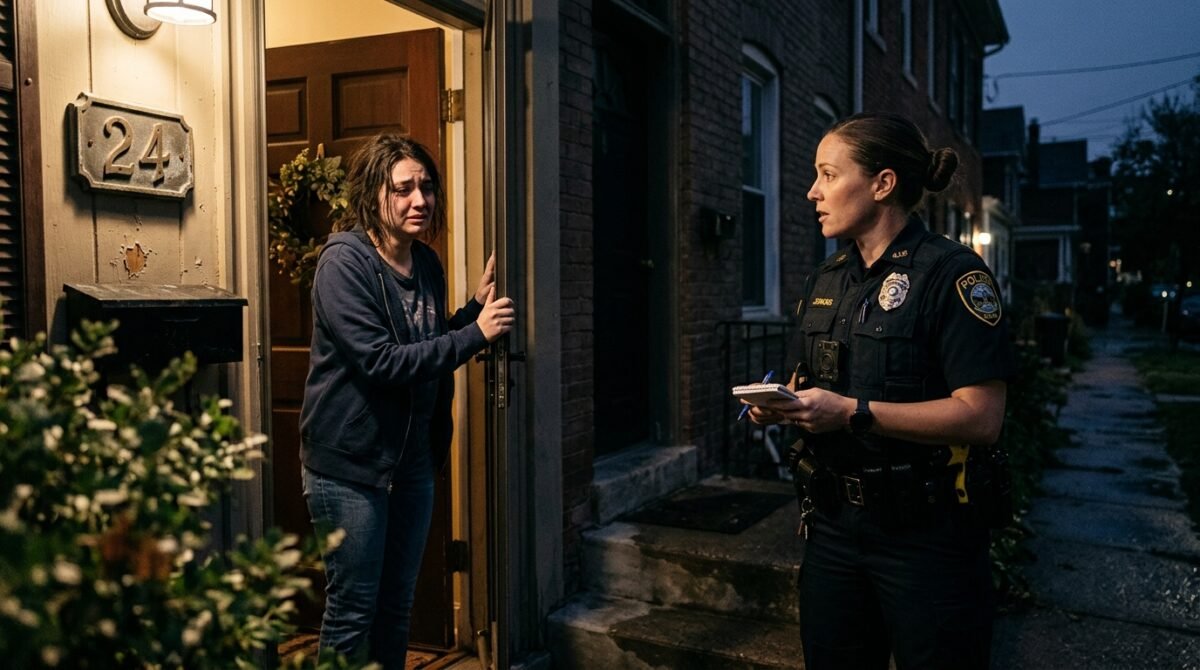
When the police officer showed up at Sarah’s door with us, the narrative shifted instantly. The ‘misunderstanding’ excuse didn’t hold up in front of a uniformed officer. Sarah was mortified. She tried to cry, but the officer was strictly professional. He asked to see the crib, and when he saw it, he noted the custom markings that matched our invoice. It was indisputable.
“I’m not here to arrest anyone today, but this property has been reported stolen and the documentation here is clear. You have two hours to vacate this furniture, or we will be filing a formal report which will lead to a summons. It’s your choice.”
— Police Officer, at Sarah’s front door
The look on Sarah’s face was pure panic. She looked at her husband, then at her phone, frantically trying to reach Linda. Linda wasn’t there, and for the first time, Sarah was on her own. She didn’t have her mother to buffer the situation. She agreed to take it apart and leave it on the porch. She was so angry she was shaking, but she knew she had no choice.
We loaded the disassembled pieces into our truck. It was scratched in two places—careless assembly, just as we feared. But it was home. As we drove away, I looked back at the house, seeing the curtains twitch as they watched us leave. The relationship with that side of the family was effectively shattered, but I didn’t care. I had my crib back.
When we got home, the physical act of bringing the pieces inside felt like a reclamation of our territory. We didn’t reassemble it that night. We just left the boxes in the nursery, a reminder that we had fought for our space and won. It was a victory, but the emotional cost was starting to settle in. We weren’t just fighting for a crib; we were fighting for the right to be seen as a family unit with our own boundaries.
The Fallout: What the Internet Had to Say

I decided to post the story on a popular forum, keeping names changed to protect our privacy. I needed to know if I was crazy. Was I being too harsh? Was it just a ‘family thing’ that I didn’t understand? The response was overwhelming. Within hours, the post had thousands of upvotes and a comment section that turned into a full-blown debate about boundaries, in-law toxicity, and the ‘golden child’ phenomenon.
The consensus was clear, but the nuances were fascinating. Many people shared their own horror stories, proving that my experience, while extreme, wasn’t unique. The collective outrage from strangers on the internet actually helped me process the trauma. It validated my feelings in a way that I hadn’t been able to do on my own, as I had been conditioned to view my needs as secondary to the family’s.
“NTA. The fact that she had it bolted to the wall at her other daughter’s house proves it wasn’t a ‘misunderstanding’—it was a theft. She knew exactly what she was doing. Go NC immediately. This woman will ruin your child’s life if you let her.”
— u/SafetyFirstMom (Top Comment, 32.1k upvotes)
There were dissenters, of course. Some argued that ‘family is family’ and that I should have let it go for the sake of peace. They were quickly drowned out by people who pointed out that ‘peace’ at the cost of one’s own sanity is just submission. It was interesting to see how the ‘family values’ crowd reacted when presented with an act of genuine malice disguised as a family favor.
The thread became a repository of advice on how to set boundaries with narcissistic parents-in-law. I spent hours reading, taking notes on how to handle future interactions if we ever chose to bridge the gap. The community support was a lifeline. I realized that my struggle wasn’t just about a crib; it was about the lifelong pattern of control that Linda had exerted over her children and their spouses.
One comment in particular hit home. A user pointed out that by fighting for the crib, I wasn’t just saving a piece of furniture; I was teaching my child that their parents would stand up for their rights. It shifted my perspective. I wasn’t being a ‘difficult’ daughter-in-law; I was being a protective mother. That distinction was the most important thing I learned through the entire ordeal.
As the thread grew, I realized I wasn’t just telling a story; I was participating in a larger dialogue about modern family dynamics. People were sharing their own ‘crib-gate’ moments, their own struggles with in-laws who thought they could bypass boundaries. It was a reminder that we are all navigating these complex, often painful, relationships, and that we are allowed to demand respect.
The Choice to Go No-Contact

After the police intervention, the silence from Linda was deafening. She didn’t apologize. She didn’t explain. She simply went quiet, waiting for us to fold, as we had always done in the past. But the dynamic had fundamentally changed. We were no longer the couple that could be pushed around for the sake of harmony. We had shown our teeth, and the relationship was forever altered.
Mark and I had a long conversation about the future. What kind of relationship did we want our child to have with a grandmother who thought it was acceptable to steal from them? The answer was painful but clear: none. If she couldn’t respect the parents, she couldn’t be trusted with the child. It was a boundary that felt like a severance, but one that was necessary for our mental health.
We sent a formal, brief message to her. No drama, no long-winded accusations. Just a statement of fact: because of her actions and the subsequent refusal to apologize, we would be taking a step back. We were going no-contact for the foreseeable future. The response was a barrage of text messages, then phone calls, then emails. She tried every tactic: the victim, the ‘confused’ grandma, the ‘you’re being irrational’ guilt trip.
“I cannot believe you are doing this to me. I raised you, Mark! I sacrificed everything for you, and now you’re cutting me off over a piece of furniture? You’re making a huge mistake, and your wife is clearly brainwashing you.”
— Linda, in a series of frantic texts
We didn’t respond to any of it. We blocked her number, then her social media, then her email address. It was the digital equivalent of closing the door and locking it. The relief was immediate. No more wondering what she was thinking, no more waiting for the next ‘surprise,’ no more feeling like we were under a microscope. We had finally claimed our own autonomy.
The transition to no-contact wasn’t without its challenges. There was a sense of grief, not for the person she was, but for the grandmother we had hoped she would be. We had to mourn the loss of a ‘normal’ family dynamic. But the grief was balanced by the freedom of knowing we were no longer subject to her whims. We were building our own family, on our own terms, and that was worth every bit of the heartache.
We spent the following months focusing on ourselves. We prepared the nursery, slowly and carefully, filling it with things we chose together. We bonded over the experience of being a team, of having each other’s backs when the world (or at least the family) felt like it was against us. The crib sat in the corner, a symbol not just of our fight, but of our strength as a couple.
Sarah’s Secret Burden

A few months later, I received an unexpected message. It wasn’t from Linda, but from Sarah. Her tone was completely different—humbled, quiet, and surprisingly honest. She was at the end of her pregnancy and the reality of being a single mom was settling in. She wasn’t asking for money or favor; she was reaching out to apologize for her part in the chaos.
She explained that Linda had manipulated her, telling her that we had ‘extra’ money and that we didn’t care about the crib. She admitted that she knew it was wrong, but that she was so desperate to feel ‘supported’ by her mother that she went along with it. It was a sad, pathetic confession. She was trapped in the same cycle of need that we had just broken free from.
“I know you won’t believe me, and I don’t blame you. But Mom told me you said I could have it. I should have asked you myself, but I was so scared of her that I didn’t think I had a choice. I’m sorry. I have no excuse.”
— Sarah, via private message
I didn’t know how to respond. A part of me wanted to forgive her, to bridge that gap. Another part of me remembered the way she had attacked me in the group chat, the way she had played the victim while standing in the middle of a lie. I decided to keep it professional. I wished her a safe delivery and told her that we weren’t ready to rebuild any bridges.
It was a reminder that Linda’s toxicity affected everyone in the family, not just us. Sarah was a victim, but she was also an active participant. She had to deal with the consequences of her choices, just as we had to deal with ours. I felt a sense of pity for her, but I also felt a firm resolve to keep our boundaries intact. We couldn’t save her, and we shouldn’t have to.
Seeing the way Linda had pitted her children against each other made me realize that this was a deep-seated pattern. She didn’t want a healthy family; she wanted a kingdom where she was the queen and her children were the pawns. By refusing to play, we had effectively broken her game. The resentment she felt toward us wasn’t because we were bad children; it was because we were the ones who refused to bow.
This realization helped me let go of the anger. I didn’t hate them anymore; I just felt a profound distance. They were living in a reality that we no longer had any part of. We had our own lives, our own home, and our own future. The ‘crib-gate’ saga was just a chapter in a much larger story of our growth, and we were ready to move on to the next one.
Reframing the Narrative

As we moved closer to the due date, the crib became less of a symbol of conflict and more of a symbol of security. Every time I looked at it, I remembered that we had the power to protect our own space. It wasn’t just a piece of furniture; it was a physical manifestation of our family’s strength. We had faced a trial and come out stronger on the other side.
We started to talk about how we would raise our child to be different. We wanted to foster an environment where autonomy was encouraged, where boundaries were respected, and where love wasn’t transactional. We were breaking a cycle that had likely existed for generations. It was a heavy responsibility, but it was also a beautiful one. We were the architects of our own family culture.
“We aren’t just raising a child; we’re raising a person. And that person will never know what it feels like to have their home violated or their needs ignored for the sake of someone else’s comfort. We’re going to do better.”
— Mark, reflecting on the situation
This perspective shift was the most healing part of the entire ordeal. We stopped focusing on the ‘why’ of Linda’s actions and started focusing on the ‘what’ of our own future. We weren’t victims of a bad mother-in-law; we were the heroes of our own journey. The narrative had changed from one of betrayal to one of empowerment.
We also became more careful about who we let into our lives. We started to evaluate our relationships with a clearer lens, looking for signs of manipulation or entitlement early on. We didn’t want to repeat the cycle. We were intentional about the people we surrounded ourselves with, choosing friends and family who respected our boundaries and supported our growth.
The crib, now fully assembled and waiting, was the centerpiece of our nursery. It was beautiful, sturdy, and entirely ours. It wasn’t just a place for a baby to sleep; it was a fortress. It held the memories of the fight we had won, the boundaries we had set, and the love that had sustained us through the fire. We were ready for the next chapter.
Looking back, the entire incident felt like a rite of passage. It was the moment we truly became adults, taking responsibility for our home and our family. The pain had been real, but the lessons were invaluable. We had stood up for ourselves, and in doing so, we had created a space that was truly, unconditionally ours.
The Lessons Learned

If there is one thing I’ve learned from this experience, it’s that boundaries are not just suggestions; they are the foundation of healthy relationships. We often think that by being ‘accommodating’ we are being ‘kind,’ but in reality, we are often just enabling bad behavior. Real kindness involves being firm enough to protect your own dignity and the well-being of your family.
I also learned the importance of documentation. Without the receipts, the emails, and the records, I would have had a much harder time standing my ground. It feels cold to treat family interactions like a business contract, but when you are dealing with people who don’t respect boundaries, you have to protect yourself. It’s not about being suspicious; it’s about being prepared.
“Never underestimate the value of a paper trail. In situations involving toxic family, your facts are your best defense. Don’t be afraid to document everything, even when you hope you’ll never need to use it.”
— Advice from a mentor
Another major lesson was that you cannot change people. I spent so much time hoping Linda would suddenly ‘get it,’ that she would apologize and we could have a ‘normal’ relationship. But she was who she was. Once I accepted that, the pressure to make things work vanished. I stopped trying to fix her and started focusing on building our own life.
We also learned that true support comes from unexpected places. The community online, the friends who stood by us, even the police officer who treated us with respect—they all reminded us that we weren’t alone. We had a network of support, and we needed to lean on it more often. We didn’t have to do everything on our own, but we had to be the ones to lead the way.
Finally, we learned that conflict is not always a bad thing. Sometimes, it is the only way to clear the air, to set the record straight, and to establish the terms of a relationship. We had been avoiding conflict for years, and all it did was allow the resentment to build up. By facing it head-on, we were able to resolve it—or at least, to move past it.
Today, we are in a much better place. We have our boundaries, we have our peace, and we have our baby. The crib is still in the room, and every time I look at it, I’m reminded of the strength we found in each other. It’s a beautiful, solid piece of furniture, and it represents everything we stand for: protection, respect, and unconditional love.
The Aftermath and Looking Ahead

Today, our life is quiet, calm, and entirely our own. The ‘crib-gate’ saga is a story we tell occasionally, usually with a sense of disbelief that it actually happened. It feels like a lifetime ago, a distant memory that no longer has the power to hurt us. We have moved on, and in doing so, we have found a peace that we never thought possible.
We don’t hear from Linda. We don’t hear from the rest of the family who chose to stay in her orbit. And honestly, we are okay with that. We have our own traditions, our own family, and our own way of living. We have surrounded ourselves with people who love us for who we are, not for what we can provide or how we can be manipulated.
“When you cut off the dead weight, you finally have the space to grow. It’s the hardest thing you’ll ever do, but it’s the only way to build a foundation that lasts.”
— A reflection on healing
We are raising our child to be independent, kind, and strong. We teach them that their voice matters, that their boundaries are respected, and that they are loved unconditionally. We are breaking the cycle, one day at a time, and it feels like the most important work we will ever do. We are the architects of a new kind of family, and we are proud of what we have built.
Looking back, I wouldn’t change a thing. The struggle was necessary. It revealed the truth, it forced us to set boundaries, and it taught us how to be the kind of parents we want to be. It was a baptism by fire, and we came out the other side tempered, stronger, and more clear-eyed than ever before.
We are grateful for the lessons, even the painful ones. They have shaped us into the people we are today, and they have led us to this moment of peace. We have our crib, we have our home, and most importantly, we have each other. And for us, that is more than enough.
Conclusion
The story of the ‘handcrafted crib’ is, at its core, a story about the right to own our lives. It’s a reminder that no matter how much pressure we are under to conform to family expectations, we are the ultimate guardians of our own peace. When we stand up for ourselves, we don’t just protect our possessions; we protect our dignity and the future of our own children.
It is easy to feel small when facing the weight of long-standing family dynamics, but as this experience showed, even the most entrenched systems can be disrupted by a single, firm ‘no.’ We are not just the roles we play in other people’s stories; we are the authors of our own.
What about you? Have you ever had to stand your ground against a family member who crossed a boundary? What did you learn from the experience, and how did it change your perspective on family? Share your story in the comments below—we’d love to hear your perspective.
What's your verdict on this dilemma?
Vote below to contribute to the official community consensus.

Have a Dilemma Keeping You Up at Night?
Share your real-life feud, wedding chaos, or relationship crossroads anonymously with our editorial team.
What do you think ?
0 Comments🛡️ Comments are moderated to protect community integrity. Your comment will appear once approved by the editorial team.