
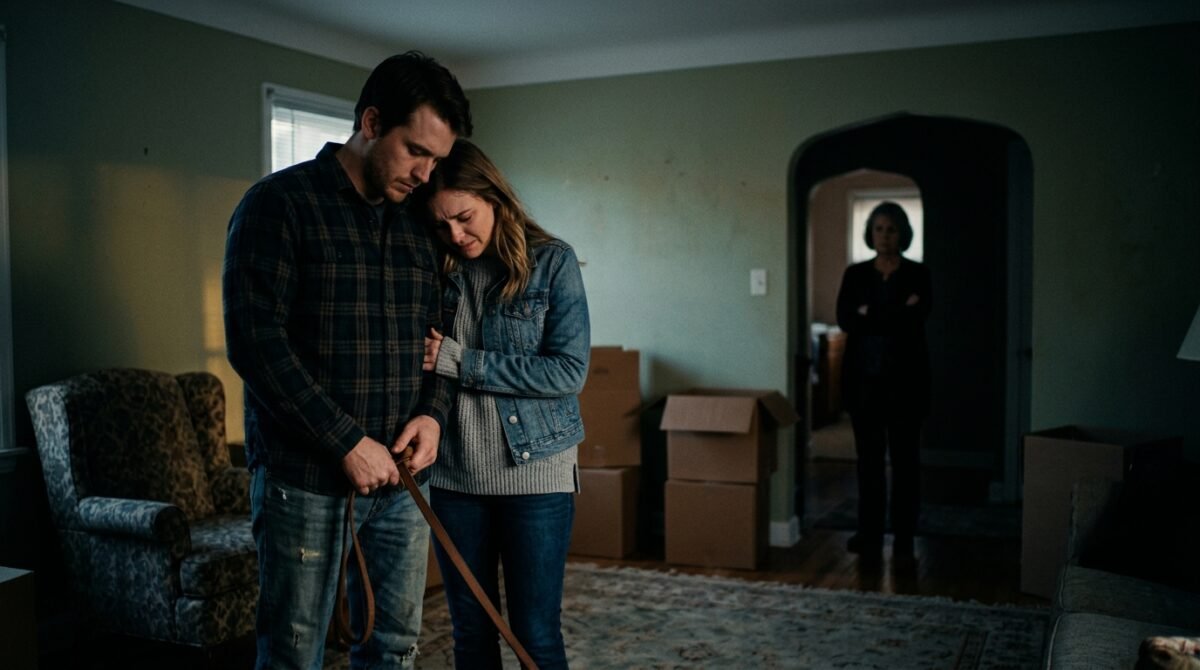
When Mark and I planned our wedding, the one non-negotiable guest was Barnaby. Barnaby isn’t just a dog; he’s a ten-year-old rescue spaniel who lost his sight due to cataracts and trauma before he found his way into my life. He is the heartbeat of our home, a creature of habit who navigated our small townhouse with a gentle, tapping rhythm that felt like music to me. My mother-in-law, Susan, never liked him. She called him ‘an eyesore’ and ‘a depressing reminder of failure,’ but I dismissed it as her usual, cold-hearted critique of anything that didn’t fit her pristine, magazine-cover aesthetic.
We booked a two-week honeymoon in the Greek Islands, trusting Susan with a spare key only because she promised to water the plants. We had a pet sitter, Sarah, who came by twice daily, but Susan insisted on ‘stopping by’ to drop off mail. It was a lapse in judgment that cost me the most important companion I have ever known. We came home to a silent house, a missing dog, and a casual note on the granite countertop that would ultimately lead to the most explosive confrontation of my life.
The note was brief, chillingly clinical, and devoid of any remorse. It claimed Barnaby had been ‘rehomed’ to a family that could offer him a ‘better, more aesthetic environment.’ My husband, Dave, stood there in the entryway, his face draining of color as he read the words aloud. The world didn’t just stop; it fractured. I knew in that moment that forgiveness was not an option. This wasn’t a misunderstanding; it was a calculated theft, a violation of my trust, and a cruelty that demanded a consequence far heavier than a mere family argument.
As the hours ticked by, the realization settled in: my dog was gone, handed over to strangers by a woman who viewed a living soul as an accessory to be purged. My grief was quickly eclipsed by a cold, sharp fury. I didn’t reach for the phone to scream at Susan. I reached for the phone to call the authorities. What she considered an act of ‘tidying up,’ the law recognizes as grand larceny. This is the story of how I chose justice over family, and why I will never look back.
The Note on the Granite Countertop
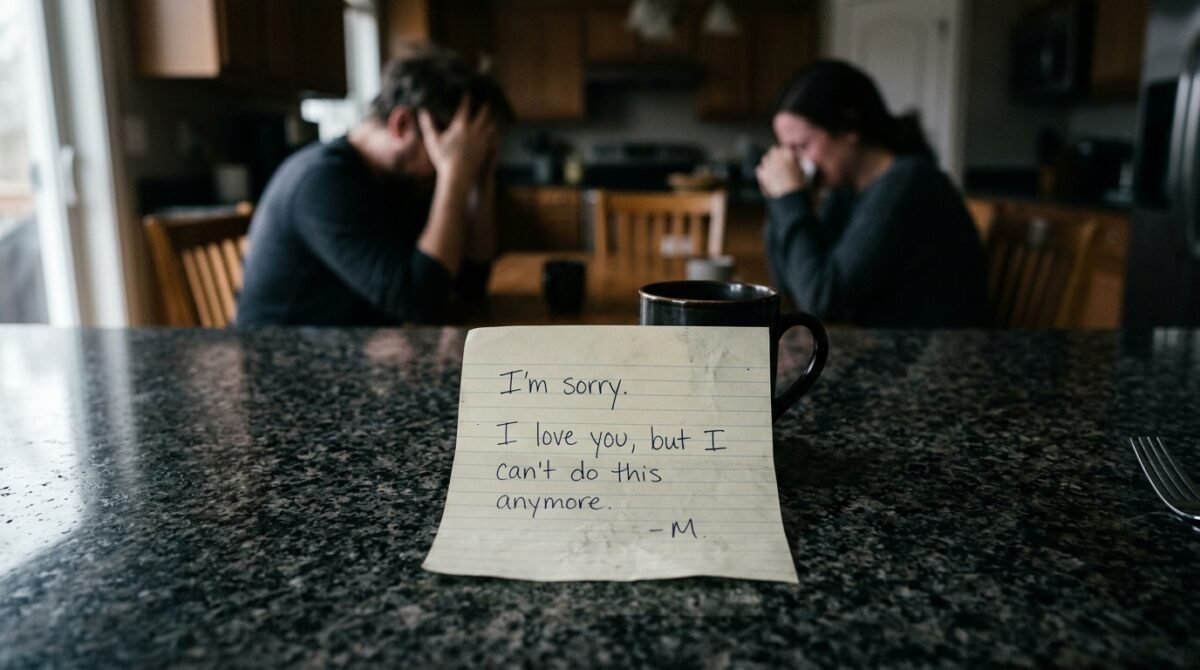
Walking through the front door after fourteen hours of travel, the silence of the house felt heavy, almost suffocating. Usually, the sound of Barnaby’s soft paws clicking against the hardwood was the first thing to greet me, followed by his hesitant, excited bark. Today, there was nothing. The house smelled of lemon polish—a scent Susan used religiously. I dropped my luggage, my stomach turning with a premonition of disaster.
Dave found the envelope first. It was sitting exactly in the center of the kitchen island, a stark white rectangle against the dark grey stone. He ripped it open, his hands shaking slightly from fatigue. As he read the letter, his brow furrowed, then he went completely still. The silence in the room stretched until it felt like a physical weight pressing against my chest.
“I hope you enjoyed your trip. While you were away, I decided to take the initiative regarding the dog. He was looking increasingly unkempt and frankly, he was dragging down the energy of the home. I found a wonderful couple who wanted a companion for their older rescue, and I took him there yesterday. You’ll thank me once you get a proper, healthy dog that isn’t a constant source of pity.”
— A note left by Susan, the mother-in-law.
I felt a scream rising in my throat, but it never made it out. My vision blurred. I snatched the paper from Dave’s hand, reading the words again and again, hoping that I was hallucinating from the jet lag. But the ink was permanent, and the malice was undeniable. She hadn’t just gotten rid of him; she had treated him like a piece of furniture that no longer matched the decor.
Dave was frantic, calling her immediately. I stood behind him, listening to the muffled tone of the phone. When she finally answered, her voice was infuriatingly calm, as if she were discussing a minor grocery errand. She didn’t sound like someone who had just stolen a family member; she sounded like someone who had just completed a chore she found tedious.
“Susan, where is he?” Dave shouted, his voice cracking. “Where did you take him? We need an address right now!” The response from the other end was a dismissive scoff. She told him to ‘grow up’ and that she was doing us a favor. I walked out of the room, my heart pounding, already opening the search history on my phone. The time for talking had ended long before we even arrived home.
The Police Report and the Legal Reality
I didn’t care about the family drama. I didn’t care about the inevitable fallout with my in-laws or the holidays that would be ruined. My only focus was the law. I spent the next three hours at the precinct, clutching a folder of documents: adoption papers, medical records, and the handwritten note Susan had left behind. The officer on duty, a woman named Officer Miller, looked at the note with an expression of profound disbelief.
“She admits to taking the animal without permission, and she admits to giving the animal away,” the officer noted, tapping her pen against the desk. “In the eyes of the law, a pet is property. Taking someone else’s property and disposing of it without their consent is theft. Depending on the value and the circumstances, this qualifies for a grand larceny investigation.”
The terminology felt cold—referring to Barnaby as ‘property’—but in that moment, it was my greatest weapon. I gave them Susan’s address, her phone number, and the names of the neighbors who might have seen her loading him into her car. I wanted her to feel the full weight of the legal system. I wanted her to sit in an interrogation room and explain why she thought she had the right to play God with my life.
When we left the station, Dave was silent. He was torn between his loyalty to his mother and the horror of what she had done to me. “She’s my mother,” he whispered, as if he were pleading with the universe to change the reality of the situation. I looked at him, my eyes hard. “She is a criminal, Dave. She didn’t just hurt me; she broke into our home and stole our dog. That is the only reality that matters now.”
The following morning, two uniformed officers showed up at Susan’s suburban house. I watched from across the street in our car, my knuckles white against the steering wheel. I saw her standing on her porch, her face indignant, her arms crossed. As they began to question her, her composure started to crack. She didn’t know yet that I had provided the police with every single text message she had ever sent me complaining about the dog.
The Fractured Family Dinner
The news of the police involvement spread through the family like wildfire. By Sunday, my phone was a graveyard of notifications—angry, pleading, and accusatory messages from Dave’s sisters, aunts, and even his father. They were demanding that I drop the charges, claiming that ‘family doesn’t do this to family.’ It was a masterclass in gaslighting and manipulation, and I refused to engage with any of it.
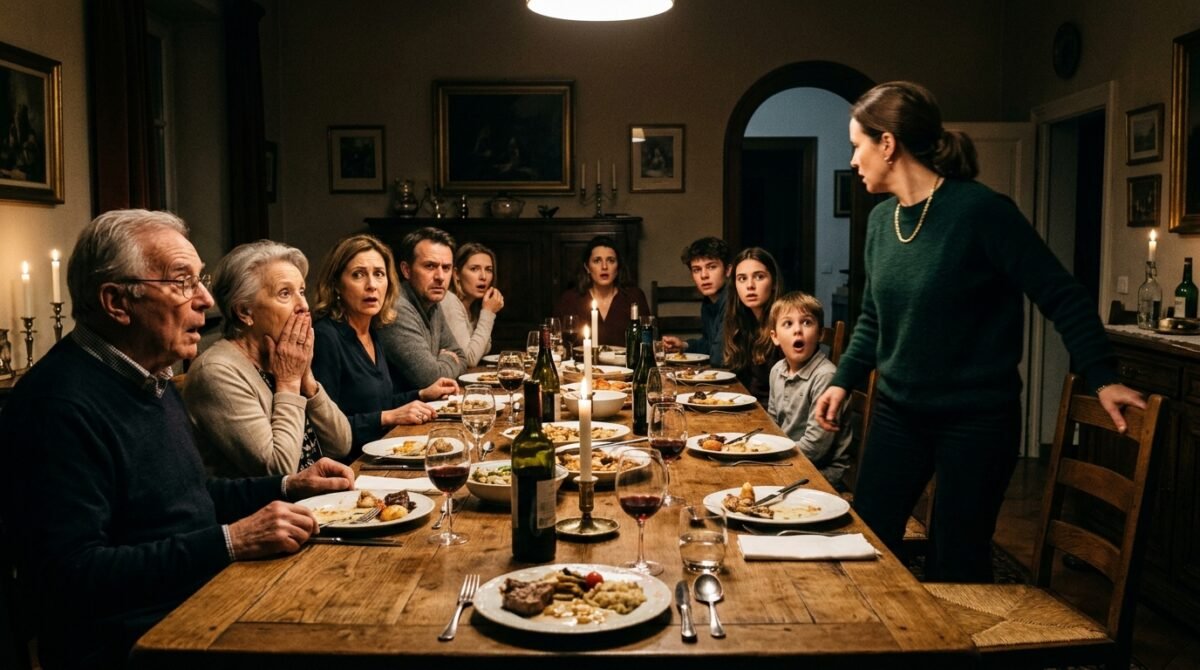
We were invited to a ‘peace summit’ at the family estate, an invitation I initially declined. Dave convinced me to go, promising that he would stand by my side and that his mother would be forced to reveal where Barnaby was. We walked into the dining room to find ten people staring at us, their faces twisted with disappointment and judgment. Susan sat at the head of the table, looking entirely unbothered, sipping tea with an air of practiced superiority.
“I’ve done this family a service. That dog was a burden. He was blind, needy, and an embarrassment to have around when company visited. I made sure he went to a home that understands how to manage such things. You should be thanking me for stepping in when you were clearly too sentimental to do what was necessary.”
— Susan, during the heated family confrontation.
The audacity was breathtaking. I looked around the room. Dave’s sister, Clara, was shaking her head at me. “You’re calling the cops on your own mother-in-law over a dog? Do you have any idea how this looks?” I stood up, my chair scraping harshly against the floor. I didn’t yell; I spoke with a quiet, icy clarity that silenced the room. I explained the law, the trauma she had caused, and the fact that I didn’t care about ‘how it looked’ to them.
The dinner ended abruptly. I didn’t finish my meal, and I didn’t wait for Dave to finish his excuses. I walked out to the car, leaving them to their indignant whispers. I knew then that the bridge wasn’t just burned; it had been demolished. The realization that I was alone in this fight with Dave, who still struggled to fully detach, was the hardest pill to swallow. But I was ready for the war.
The Digital Breadcrumbs
The police investigation wasn’t moving as fast as I wanted, so I started my own. I had access to Susan’s old tablet, which was synced to our shared family iCloud account. It was a goldmine. I found months of emails between her and a local ‘pet rehoming’ group. She hadn’t just given him away; she had been planning this for weeks, looking for someone who wouldn’t ask questions about where the dog came from.
One email in particular stood out. She had been warned by the rescue group that the dog was clearly microchipped and belonged to someone else. Her reply was chilling: ‘Don’t worry about the chip. I’m the grandmother; I have the authority to manage the estate assets. Just take him and make sure he is never seen in this neighborhood again.’ She had lied to them, defrauded them, and treated my dog like a piece of faulty inventory.
I printed every single email, highlighted the most damning sections, and drove back to the station. Officer Miller took the files, her expression turning serious. “This changes things,” she said. “This is evidence of premeditation and fraud. We can move much faster with this.” I felt a surge of grim satisfaction. I wasn’t just a grieving pet owner anymore; I was a plaintiff with a mountain of evidence.
I showed these to Dave that night. He had been trying to minimize the situation, suggesting that maybe she just ‘lost control’ of her emotions. Seeing the emails, seeing the cold, calculated way she had tracked down a stranger to take my dog, finally broke his delusion. He sat on the floor, head in his hands, finally seeing his mother for what she truly was. He didn’t say a word, but the next morning, he was the one who called the detective to add his own statement.
The Confrontation with the ‘New Owners’
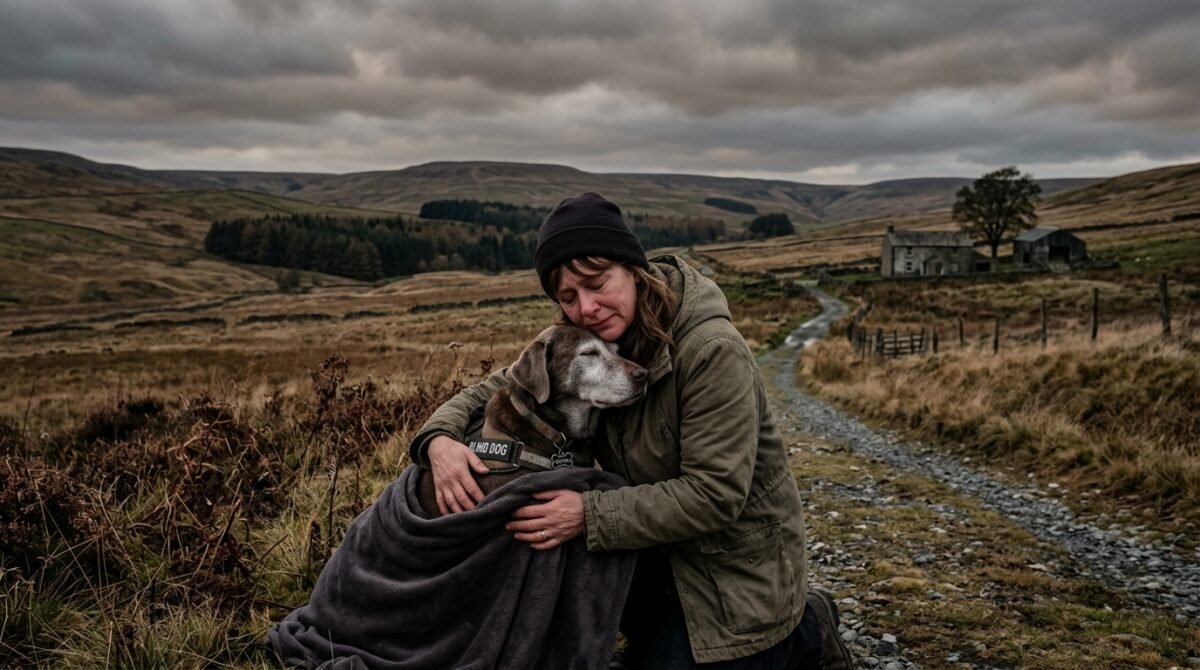
Through the police, we finally got the address. It was a farm about two hours away, a place where ‘unwanted’ animals were supposedly sent to ‘live out their days.’ When we arrived, the property was bleak. There were dozens of dogs, most of them in poor condition. I didn’t wait for the police to finish their formal inquiry; I ran toward the kennels, calling Barnaby’s name. His response was immediate—a tentative, hopeful yelp that broke my heart.
He was in a small, damp pen, shivering. He had lost weight, and his collar was gone. When I knelt down and opened the gate, he stumbled into my arms, his tail wagging frantically. I didn’t look at the owners. I didn’t acknowledge them. I just scooped him up and carried him to the car, my tears soaking his fur. He was terrified, confused, and desperate for the familiar scent of our home.
The police handled the ‘owners.’ It turned out they were part of a shady operation that accepted pets without verifying ownership, charging fees to ‘rehome’ them. They were facing their own legal trouble now, thanks to the trail of breadcrumbs Susan had left. We didn’t stay for the showdown. We drove away, Barnaby curled up in the passenger seat, finally safe. The feeling of him in my arms was the only victory I needed, but the legal war against Susan was only just beginning.
Dave was the one who drove. He didn’t look at me, but I could see his jaw set. He was angry now, a cold, hard anger that mirrored my own. We didn’t talk about what we would do when we got home. We didn’t need to. The path forward was clear. Susan had lost her son, her daughter-in-law, and her reputation. And all for a dog she deemed ‘untidy.’
The Fallout: Social Media and the Family Divide
The story leaked. It wasn’t my doing—I suspect it was a clerk at the police station or perhaps someone in the family who felt that Susan’s actions needed to be exposed. Within days, the entire town knew. The backlash was instantaneous. People who had once respected Susan now looked at her with disgust. She was the woman who stole a blind dog.
The family group chat, which had been silent for days, exploded. The vitriol was incredible. Susan’s defenders—mostly people who feared her disapproval—began attacking me for ‘airing dirty laundry.’ I didn’t respond to any of it. I simply blocked them one by one. The group chat was a relic of a life I was no longer living. I was done with the performative family dynamic that prioritized optics over basic human decency.
“You are destroying this family over a dog. Do you have any idea how much this will affect your husband’s career? You’re acting like a child. Grow up and drop the charges.”
— A text from Susan’s eldest daughter to the group chat.
I read the message, felt a brief flare of indignation, and then deleted it. I didn’t need to explain myself to them. I didn’t need their validation. Dave did the same, leaving the chat after sending a single, final message: ‘If you support what my mother did, you have no place in our lives.’ It was the most beautiful thing he had ever said to me.
The community support was overwhelming. I received messages from neighbors, friends, and even total strangers who had heard the story and were horrified. It turns out that a lot of people have ‘Sussans’ in their lives—people who think they have the right to curate the world to their liking, regardless of who they hurt. I wasn’t just fighting for Barnaby; I was becoming a symbol for everyone who had been violated by someone else’s ego.
The Courtroom Silence
The day of the court hearing was surreal. Susan sat in the front row, looking small and defeated. She wasn’t wearing her expensive jewelry or her designer clothes. She looked like a woman who had finally realized that the world doesn’t bend to her will. I didn’t look at her. I sat with my lawyer, focusing on the documents in front of me, listening to the prosecutor detail the theft of my dog.
The judge was a stern, no-nonsense man who seemed particularly unimpressed by Susan’s defense, which was that she was ‘trying to improve the dog’s life.’ He tore through her arguments with surgical precision. It was clear that he saw through the entitlement and the arrogance. He focused on the theft, the deception, and the emotional trauma caused to the victims. It was the validation I had been waiting for.
Susan’s lawyer tried to plead for a lesser sentence, citing her ‘good intentions.’ The judge’s response was short and final: ‘Good intentions do not excuse criminal acts, nor do they grant you the right to treat another person’s property as your own.’ It was a moment of absolute clarity. The law had spoken, and for the first time in years, the hierarchy of the family had been completely dismantled.
She was sentenced to community service, a fine, and a permanent restraining order. It wasn’t jail time, but for a woman like Susan, who lived for her social standing and her reputation, the public shame was a far more effective punishment. She left the courtroom with her head down, ignored by the very family members who had once bowed to her every whim. I didn’t feel triumph. I felt relief.
Life After the Storm
Barnaby is back to his old self, though he’s a bit more clingy now. He follows me from room to room, his tapping paws a constant, comforting sound that reminds me of everything I fought to keep. We’ve moved to a new neighborhood, a place where no one knows our history, where we can start over without the shadow of the past. It’s quiet here, and it’s peaceful. It’s exactly what I wanted.
Dave and I are stronger than ever. The ordeal tested us in ways I never thought possible, and we came out on the other side with a bond that feels unbreakable. We’ve had to cut off contact with most of his family, which was painful at first, but it has been a necessary step in our healing. We’ve replaced their toxicity with a new circle of friends—people who actually respect our boundaries and love our dog.
I still think about that day we came home. I still think about that note on the counter. But it doesn’t hurt the same way anymore. It’s just a reminder that I was capable of standing up for myself, of protecting what was mine, and of refusing to be a victim of someone else’s cruelty. That is a lesson that has served me in every aspect of my life since.
We don’t talk about Susan. She is a ghost, a cautionary tale we tell ourselves whenever we feel tempted to let someone else dictate how we live our lives. We have moved on, and we have found a happiness that is entirely our own. And that, in the end, is the greatest victory of all.
Reddit’s Verdict: The Community Reacts
When I shared my story on Reddit, the response was overwhelming. Thousands of people commented, shared, and debated the morality of my choices. The consensus was clear, but the nuances of the discussion were fascinating. People weren’t just reacting to the dog; they were reacting to the audacity of the mother-in-law and the struggle to break free from family expectations.
“NTA. Your mother-in-law committed a crime. She stole your dog. The fact that she claimed it was for the ‘aesthetic’ of the house is proof of her narcissism. Do not feel guilty for a single second. You did the right thing by involving the police.”
— u/DogJusticeAdvocate (Top Comment, 45.2k upvotes)
“I’m sorry, but if a family member did this to my dog, they would be dead to me. This isn’t just about the dog; it’s about the total lack of respect for your life and your autonomy. You should have cut them off years ago.”
— u/BoundariesAreKey (12.4k upvotes)
“Everyone saying ‘but it’s family’ is part of the problem. Family doesn’t give you a free pass to commit crimes. Good on you for taking the legal route. It’s the only way to send a message that this behavior is unacceptable.”
— u/LegalEagleEye (8.9k upvotes)
The debate shifted from the specific incident to the broader issues of family boundaries and the entitlement that some parents feel toward their children’s lives. It was heartening to see so many people, from so many different backgrounds, agreeing that there are lines that simply cannot be crossed. It made me realize that I wasn’t alone in my struggle, and that my experience could help others find the courage to stand up for themselves.
There were a few ‘YTA’ (You’re the Asshole) comments, mostly from people who thought I was being too harsh by involving the police. I read them, but they didn’t shake me. They were the voices of people who had been conditioned to accept abuse in the name of family harmony, and I felt a sense of pity for them. They hadn’t yet realized that their ‘harmony’ was just another word for silence.
Lessons in Radical Self-Respect
Looking back, the most important lesson I learned was the value of radical self-respect. For years, I had allowed Susan to treat me like an outsider in my own marriage, a guest who was lucky to be there. I had normalized her criticisms, her subtle digs, and her constant interference. I had allowed her to think that my boundaries were suggestions, not rules.
That all changed when she took Barnaby. That was the moment I realized that if I didn’t start treating myself with respect, no one else would. I had to learn how to say ‘no,’ how to draw a hard line, and how to follow through on the consequences. It wasn’t easy, and it certainly wasn’t pretty, but it was necessary. It was the only way I could regain my agency and build a life that I could truly be proud of.
If you are in a similar situation—if you have someone in your life who constantly violates your boundaries, who treats you like an accessory, or who thinks they have the right to dictate how you live—know this: you have the power to stop it. You don’t owe them your silence, your compliance, or your life. You owe it to yourself to be the person you want to be, even if it means losing people who don’t deserve to be in your life in the first place.
Barnaby is the luckiest dog in the world, and I am the luckiest person. We found each other, we survived the storm, and we’re still here. And I know, with every fiber of my being, that we will never let anyone else threaten our happiness again. That is the promise I made to myself, and it is a promise I will keep for the rest of my life.
Conclusion
The story of Barnaby and Susan isn’t just about a dog; it’s about the fundamental right to define our own lives and protect the things that matter most. It’s a story of boundaries, of legal justice, and of the agonizing, necessary process of choosing our own paths over the expectations of others. The legal resolution brought us peace, but the true healing came from reclaiming our home and our dignity.
We all have people who push our limits, and sometimes, those people are our family. But remember, family is not an excuse for abuse or theft. It is a relationship, and like any other, it must be based on mutual respect. If that respect is gone, the relationship must change. Sometimes, that change means setting firm boundaries; other times, it means walking away for good.
What about you? Have you ever had to choose between your family’s expectations and your own peace of mind? Have you had to set a boundary that cost you everything, only to find that it was the best decision you ever made? Let’s talk about it in the comments below. Your story might just be the one that gives someone else the courage they need to stand up for themselves today.
What's your verdict on this dilemma?
Vote below to contribute to the official community consensus.

Have a Dilemma Keeping You Up at Night?
Share your real-life feud, wedding chaos, or relationship crossroads anonymously with our editorial team.
What do you think ?
0 Comments🛡️ Comments are moderated to protect community integrity. Your comment will appear once approved by the editorial team.