
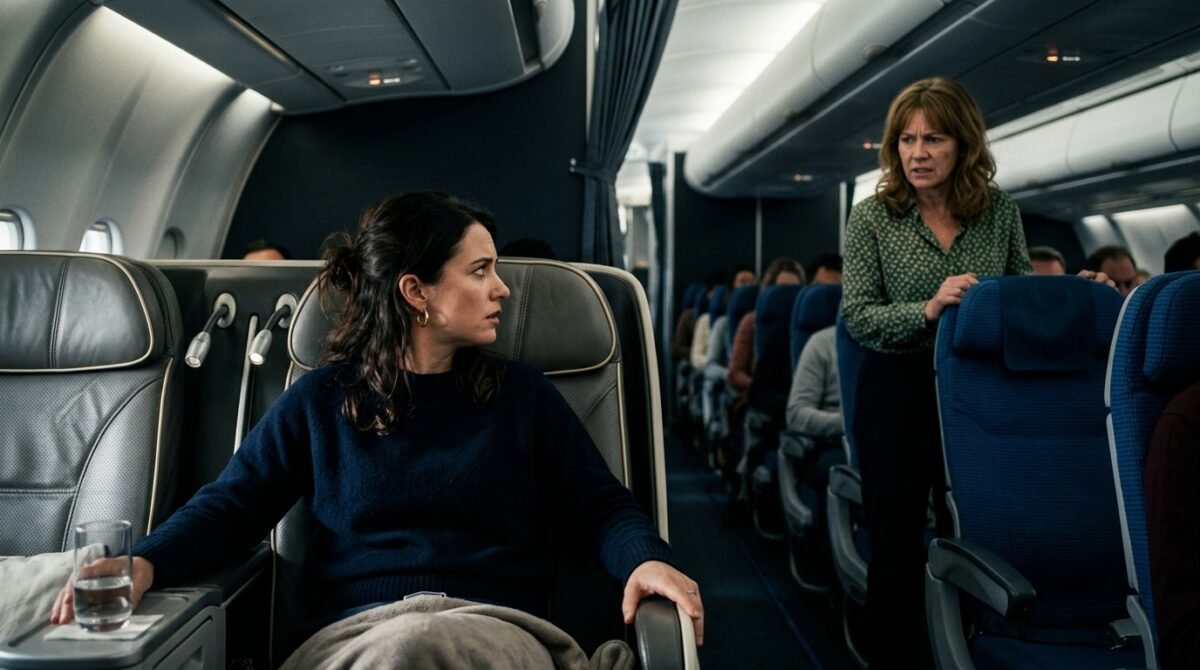
Travel has always been a point of contention in my family, but nothing could have prepared me for the absolute spectacle that unfolded last month. My sister, Clara, has always operated under the assumption that the world—and specifically her younger sibling—exists primarily to subsidize her comfort. It is a mindset that has permeated every family gathering, every holiday, and now, apparently, every long-haul flight we happen to share.
The dilemma began months ago when we planned a trip to our cousin’s wedding on the other side of the country. I spent weeks saving up for a comfortable flight. I am a firm believer in arriving well-rested, especially when it comes to red-eye flights. I booked my ticket early, selected a premium first-class seat, and invested in the additional legroom and service that would ensure I could actually walk off the plane without debilitating back pain.
Clara, on the other hand, is the queen of ‘budget-conscious’ travel, which really translates to booking the absolute cheapest ticket available and then expecting everyone around her to magically upgrade her. She thinks that because we are sisters, our resources are communal. When she realized that I was flying first class and she was relegated to row 42, the middle seat, her entitlement shifted into overdrive. She didn’t just ask for my seat; she demanded it as if it were her birthright.
What followed was a masterclass in emotional manipulation, gaslighting, and the slow, painful realization that I had spent years coddling someone who viewed me as nothing more than a personal assistant and financial cushion. This story isn’t just about a seat on a plane; it’s about the moment the scales finally fell from my eyes and the silent, suffocating expectation of ‘family loyalty’ was officially revoked.
The Initial Request Dressed as a Favor

It started as a casual text message, the kind that feels innocuous until you read it three times and realize the sheer audacity behind it. My phone buzzed while I was in a meeting, and I didn’t think twice about opening it. I expected a question about the wedding rehearsal or perhaps a request for travel tips, but what I got was a calculated attempt to secure an upgrade without spending a dime.
Clara’s message was framed as a concern for her ‘mental well-being’ and ‘physical safety’ on the long flight. She claimed that she had been suffering from terrible insomnia and that a middle seat in economy would be a nightmare for her. She didn’t offer to pay the difference, nor did she offer to trade seats for the return flight. She simply assumed I would be the ‘kind sister’ and swap.
“Hey, I just checked the flight seating chart and realized you’re in 2A. I’m stuck in 42E, right next to the bathroom. You know how much I hate tight spaces and the smell of the lavatory. Could you just swap with me so I can actually get some sleep? I’ll owe you one!”
— Text from Clara
I stared at the screen, my heart rate spiking. I had paid an extra six hundred dollars for that seat specifically to avoid the exact scenario she was describing. I responded with a polite but firm ‘no,’ explaining that I had back issues and needed the extra space. I thought that would be the end of it. I was, predictably, very wrong.
Her reply came almost instantly, and the tone had shifted from ‘casual request’ to ‘hurt disappointment.’ She tried to frame my refusal as a personal slight, implying that I didn’t care about her health or our relationship. She made it seem as though I was being greedy for wanting a seat I had paid for, rather than recognizing that she was being demanding for expecting me to sacrifice my comfort for her poor planning.
The Escalation at the Sunday Roast
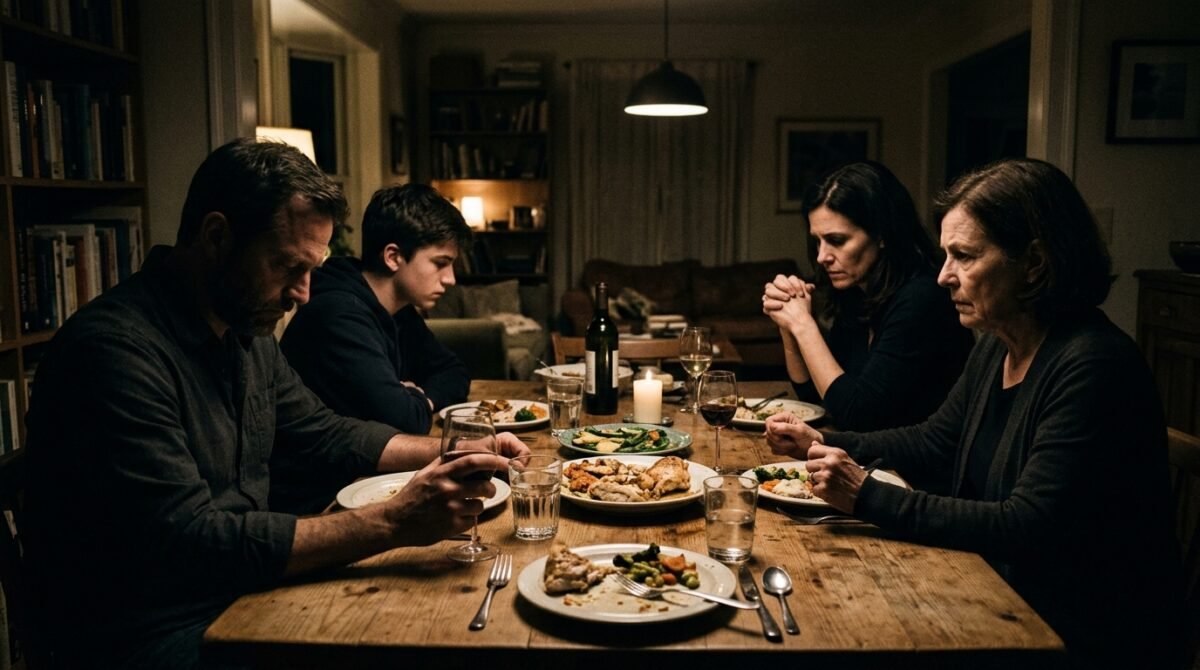
By the time Sunday dinner rolled around at our parents’ house, the tension in the room was thick enough to cut with a knife. My mother had clearly been briefed on the ‘horrible thing’ I was doing to Clara, because the moment I walked through the door, the passive-aggressive comments began. It wasn’t just a flight anymore; it was a character flaw that was being dissected in front of the entire extended family.
Clara played the victim perfectly. She walked around with a weary expression, talking about how ‘some people’ were so lucky to have extra money to throw away on luxury while others had to struggle. She made sure that our aunts and uncles heard her plight, turning the simple act of choosing my own seat into a moral failing on my part. The judgment in the room was palpable.
“I just don’t understand why you’re being so difficult, Sarah. It’s just a seat. You’re family. Family is supposed to support each other. Clara is having a hard time, and you’re choosing a leather chair over your own sister. It makes me wonder what your priorities are.”
— My Mother, mid-dinner
I tried to defend myself, but every time I spoke, I was interrupted. It was a classic trap: if I stood my ground, I was selfish. If I gave in, I was a martyr. I realized then that this wasn’t about the seat at all. This was about the power dynamic in our family, where my ‘success’ was meant to be shared, but Clara’s ‘struggles’ were meant to be ignored.
The dinner ended early, with me leaving in a haze of frustration and anger. My father, who usually stayed out of these things, caught me on the way out and told me to ‘just do it to keep the peace.’ That was the final straw. I realized then that everyone expected me to be the bigger person because being the bigger person was the only way to avoid the noise they created when they didn’t get their way.
The Digital Campaign Against Me

The next day, I woke up to a notification from our family group chat. It wasn’t just a text; it was a screenshot of my earlier message, annotated with commentary from Clara and my cousin, who had clearly decided to take sides. The group chat had become a war room, with people I hadn’t spoken to in months weighing in on my ‘entitlement.’
The comments were vicious. They accused me of being ‘classist’ and ‘pretentious’ for daring to fly first class while my ‘struggling’ sister was in economy. They ignored the fact that Clara had spent the last two months posting photos of her expensive weekend getaways and new wardrobe, while I had been living on a strict budget to afford the flight for the wedding. The hypocrisy was staggering.
“Honestly, it’s not about the money. It’s about the attitude. We’re a family. If one of us is in 42E, we’re all in 42E. Sarah’s acting like she’s better than us. It’s really sad to see.”
— Family Group Chat / Cousin Mark
I stayed silent in the chat. I didn’t engage, which only seemed to enrage them further. They began calling my phone, leaving voicemails where they alternated between pleading and outright threats. My mother told me that if I didn’t ‘make this right,’ I wouldn’t be welcome at the post-wedding brunch. It was a bizarre ultimatum for something as trivial as an airplane seat.
I kept a cool head, though. I documented everything. I knew that if I were to go public with this, I needed proof of their behavior. I didn’t want to fight fire with fire, but I wasn’t going to be bullied into submission. I spent the day looking up airline policies, confirming that the seat was non-transferable and that the upgrade was tied to my frequent flyer account.
The Airport Confrontation

The day of the flight, I arrived at the airport early. I was terrified that Clara would try to make a scene at the gate. I had already spoken to the gate agent, explaining the situation and asking for discretion. I just wanted to get on the plane, put on my noise-canceling headphones, and ignore the entire world until we landed.
Clara found me at the gate. She looked tired, disheveled, and clearly ready for a fight. She didn’t look like someone who had been ‘struggling’ with insomnia; she looked like someone who had been rehearsing a script for a drama. She stood in front of me, blocking my path to the boarding line, and started crying—loudly.
“Everyone is looking at us, Sarah. Do you want them to know what kind of sister you are? Give me the boarding pass. I’ll pay you back later. Please, just don’t do this to me. I’m begging you in front of everyone.”
— Clara, at the boarding gate
People were indeed looking. The gate agent looked uncomfortable. I felt a wave of cold resolve wash over me. I looked at Clara, not with anger, but with a strange, detached pity. She had spent her entire life using these tactics to get what she wanted, and she was genuinely shocked that they weren’t working on me this time.
I told her quietly, ‘Clara, you made your booking. I made mine. I am not switching. If you continue to harass me, I will speak to airport security.’ The look of pure, unadulterated shock on her face was almost worth the misery of the last week. She didn’t expect me to actually threaten her with security. She expected me to fold.
The Silent Flight

Boarding the plane felt like walking into a sanctuary. I walked past the economy section, where Clara was already sitting in her middle seat, staring daggers at me. I didn’t look back. I found my seat in first class—the wide, leather-clad oasis I had worked so hard to afford—and I sat down with a sigh of relief that was audible to my seatmate.
The flight was, for me, perfect. I had champagne before takeoff, a full meal, and the ability to recline my seat fully and sleep. I didn’t check my phone. I didn’t worry about the drama waiting for me at the other end. I just existed in that little bubble of comfort, reflecting on the fact that I had finally, truly, set a boundary that would define my relationship with my family moving forward.
I kept wondering what Clara was doing. Was she stewing in her anger? Was she already texting our mother? It didn’t matter. For the first time in years, the chaos she created was her problem, not mine. I had detached myself from the cycle of guilt she used to control me. It was a powerful, liberating feeling that I hadn’t experienced before.
When we landed, I took my time getting off the plane. I wanted to be the last one out, just in case she was waiting at the gate to start the fight again. I walked through the terminal, found my bag, and headed for the exit. I didn’t see her, and I didn’t care to. I was officially off the hook.
The Reddit Community Weighs In

When I finally got to the hotel, I logged onto Reddit and posted the entire story on a popular forum for family drama. I didn’t expect the response I got. Within an hour, the post had thousands of upvotes and hundreds of comments. People were outraged on my behalf, mostly because they recognized the exact brand of manipulation I had been dealing with.
The consensus was overwhelming: I was ‘NTA’ (Not The Asshole). The comments were a mix of validation, personal anecdotes of similar family drama, and even some legal advice about family boundaries. It was cathartic to see so many strangers validate what I had felt but had been unable to articulate for years.
“This is a classic case of an entitled sibling weaponizing ‘family’ to get a free ride. She isn’t entitled to your money, your time, or your seat. You set a boundary, and she’s angry because she can no longer control you. Stay strong, OP. The guilt trip is a tactic, not a reality.”
— u/TravelBoundaries (Top Comment, 18.2k upvotes)
There were, of course, the dissenters. A few people argued that ‘family comes first’ and that I should have swapped just to avoid the drama. But they were quickly shouted down by the majority. It was clear that the tide was turning against the idea that family members have to sacrifice their own well-being to appease the whims of the entitled.
I read through the comments for hours. Every story that was similar to mine—the wedding dress demands, the unannounced visits, the financial ‘loans’ that were never returned—made me feel less alone. I realized that my situation wasn’t unique; it was a symptom of a larger, more pervasive problem in family dynamics.
The Wedding Brunch Fallout

The wedding itself was… tense. I arrived with my head held high, ready to face the music. My parents wouldn’t look at me, and Clara spent the entire ceremony avoiding me. It was a cold war, played out over glasses of champagne and forced smiles for the wedding photographer. I didn’t care. I felt strong.
At the brunch, the inevitable confrontation happened. My aunt approached me, wanting to know ‘how I could be so cruel’ to my own sister. I didn’t apologize. I didn’t explain. I simply looked her in the eye and said, ‘Clara is a grown woman who made her own choices. Why are you so invested in her lack of planning?’
“You’re really going to die on this hill? Over a chair? It’s pathetic. You’ve ruined the whole vibe of the wedding weekend because you had to be right.”
— My Aunt, loudly at the brunch
I walked away from her while she was still talking. I didn’t stay for the rest of the brunch. I went back to my hotel, packed my bags, and checked out early. I didn’t tell my parents I was leaving. I just left. I wanted to reclaim my life, and that meant leaving behind the people who made me feel like an extra in their story.
The drive to the airport was the most peaceful I had ever experienced. I knew that when I got home, there would be a deluge of messages and calls, but for the first time, I felt like I had the tools to deal with them. I could block them. I could ignore them. I could just exist for myself.
The Unveiling of the Secret Group Chat
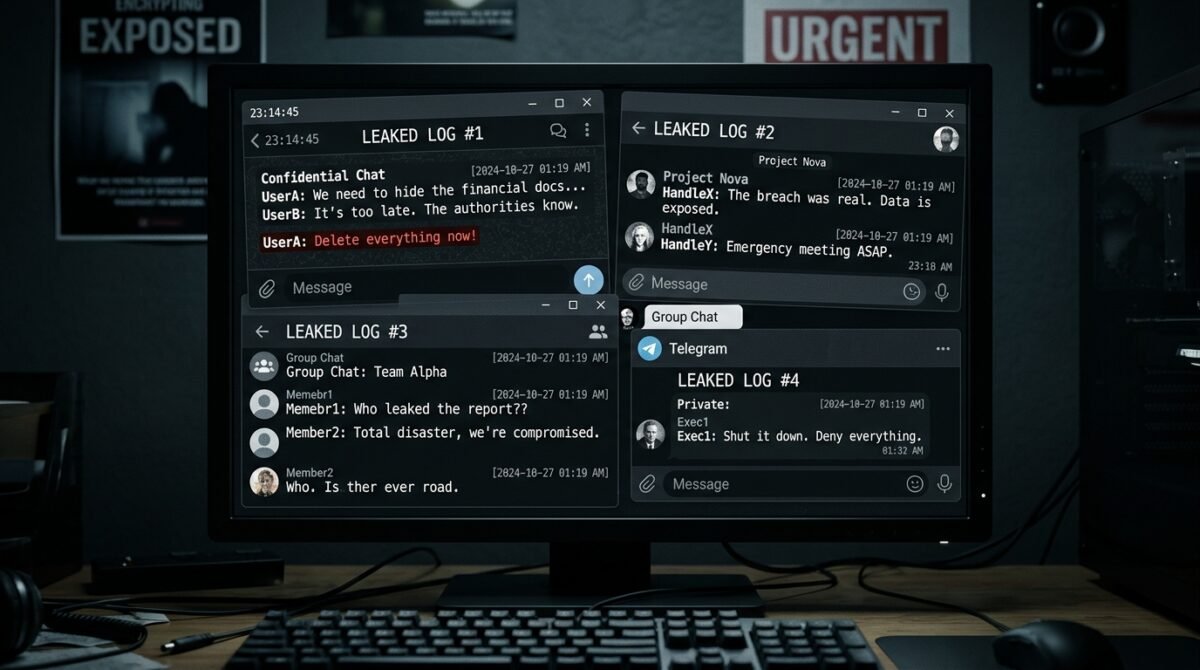
A few days later, a cousin—one who had stayed neutral throughout the ordeal—sent me a series of screenshots. They were from a *different* group chat, one that included my parents, Clara, and several other relatives, but specifically excluded me. It was a roadmap of the smear campaign they had been running behind my back for months.
They were planning to ‘teach me a lesson.’ They had been discussing ways to make me feel guilty for my ‘success’ and trying to organize family interventions to force me to contribute more to the ‘family fund.’ It was a cold, calculated effort to keep me in my place. Seeing it all in writing was devastating, but it was also the final piece of the puzzle I needed to cut them off.
“We need to make sure she realizes that if she wants to be part of this family, she needs to stop acting like she’s above us. If she doesn’t give in on the flight, we’re going to stop inviting her to the holiday events. That’ll show her who she needs.”
— Leaked Message, Mother to Clara
I didn’t respond to the cousin who sent the screenshots. I just saved them and then did what I should have done years ago. I blocked my mother, my father, and Clara on every platform. I deleted the family group chat. I was done. The relief was instantaneous. It was like breathing clean air after years of living in smog.
They could plan all the interventions they wanted; they could hold all the secret meetings they desired. I was no longer a participant in their games. I had my own life, my own friends, and my own boundaries. And for the first time, I was genuinely happy.
Reframing the Narrative

Looking back, I realize that the flight was just the catalyst. The real work began long before I stepped onto that plane. It was the internal decision to stop being the family ‘fixer.’ Every time I had given in before—paying for their dinners, letting them borrow money, covering for their mistakes—I was reinforcing the idea that my needs were secondary to theirs.
I started attending therapy to unpack the years of guilt-tripping and emotional manipulation. My therapist helped me see that my family’s reaction to my boundary wasn’t a reflection of my character, but a reaction to the loss of their control. They didn’t hate me because I was ‘selfish’; they hated me because I was no longer useful to them in the way they wanted.
It’s a hard realization to come to terms with, that the people who are supposed to love you unconditionally might actually just love what you can do for them. But once you accept that, everything changes. You stop trying to earn their love through service, and you start looking for relationships where respect and reciprocity are the baseline, not the exception.
I’ve replaced those family dinners with gatherings with friends who actually care about how I am, not what I can do for them. It’s a different kind of life, one that is much quieter and much more peaceful. I don’t miss the drama. I don’t miss the entitlement. I don’t miss the feeling of being an outsider in my own family.
The Aftermath and New Boundaries

It has been six months since the wedding. I haven’t spoken to my parents or Clara. I’ve heard through the grapevine that they are still ‘very disappointed’ in me, and that the story has become a legend in the family—a cautionary tale about what happens when you ‘forget your place.’ I wear that label like a badge of honor.
I’ve learned that setting boundaries doesn’t just protect you; it identifies who actually belongs in your life. The people who got angry at me for saying ‘no’ were never really my friends or supporters; they were the beneficiaries of my lack of boundaries. The people who stood by me, or who respected my decision even if they didn’t understand it, are the ones I’ve kept close.
I still travel, and I still fly first class when I can afford it. And when I sit in that seat, I don’t feel guilty. I don’t feel the need to justify my existence to anyone. I feel proud of the work I’ve done, the money I’ve earned, and the person I’ve become. I am the pilot of my own life, and I am not giving up the controls to anyone.
To anyone out there struggling with a similar situation: you do not owe anyone your comfort, your hard-earned money, or your sanity. You are allowed to say no. You are allowed to prioritize yourself. The drama will pass, but the person you become after you set that boundary is someone you will be proud of for the rest of your life.
Conclusion
The story of the first-class seat is, ultimately, a story about the cost of saying ‘no.’ For some, the cost was the relationship; for me, it was the price of admission to a life where I am finally the protagonist. The entitlement that Clara displayed wasn’t just about a seat—it was about a lifetime of accumulated expectations that finally collided with the reality of a boundary.
The internet’s reaction to this saga reinforces a crucial lesson: we are all collectively tired of the ‘family loyalty’ script that demands we set ourselves on fire to keep others warm. It is time to retire the idea that family members are entitled to our resources or our autonomy. If you find yourself in a similar position, remember that your ‘no’ is a complete sentence, and you don’t owe anyone a justification for your own success.
What about you? Have you ever had to draw a hard line in the sand with family members who felt entitled to your hard-earned rewards? How did you handle the fallout, and what would you do differently if you could go back? Join the discussion in the comments below—I’d love to hear your stories of boundary-setting, survival, and the lessons you learned along the way.
What's your verdict on this dilemma?
Vote below to contribute to the official community consensus.

Have a Dilemma Keeping You Up at Night?
Share your real-life feud, wedding chaos, or relationship crossroads anonymously with our editorial team.
What do you think ?
0 Comments🛡️ Comments are moderated to protect community integrity. Your comment will appear once approved by the editorial team.