
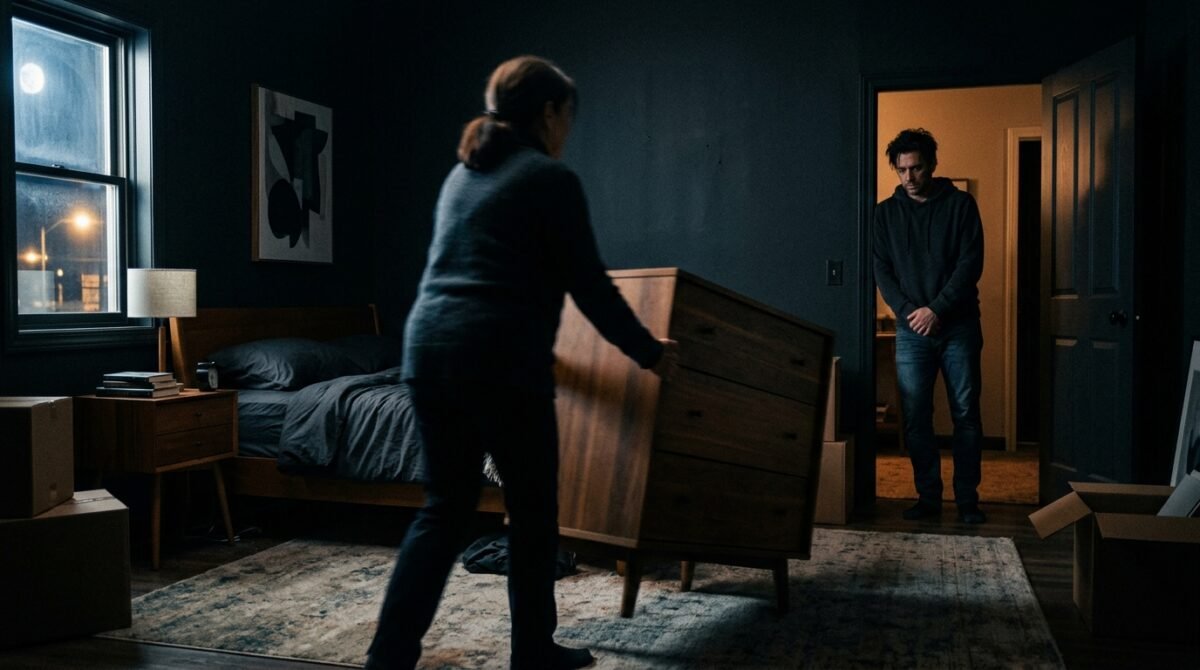
Marriage is supposed to be a partnership of two, a sacred space where the external world—and especially external family—is held at a respectful distance. For most, that means maintaining privacy in the places that matter most: the kitchen, the living room, and, above all, the master bedroom. But for some, the concept of a ‘sacred space’ is merely a suggestion, easily dismantled by a partner who refuses to stand up for their spouse.
My husband, Mark, and I had been married for four years. We worked hard to afford our home, a modest but beautiful place that we had decorated together, piece by piece. My mother-in-law, Susan, had never been a fan of my aesthetic, often making ‘helpful’ suggestions about how we could ‘brighten’ the place up. I always laughed it off, thinking it was just her way of trying to connect. I was wrong.
The breaking point wasn’t a slow burn; it was an explosion that happened while I was completely unconscious, recovering from a back-to-back shift at the hospital. I came home, exhausted, and fell into a deep sleep. When I woke up, the familiar comfort of my bedroom had been erased. My vanity was gone, my bedside tables were mismatched, and the layout I had painstakingly curated was replaced by Susan’s idea of ‘functionality.’
Mark was there when I woke up, smiling as if he’d just given me a gift. He told me it was a surprise, a way to ‘help me’ because I had been so tired. He didn’t see the violation. He didn’t see the theft of my autonomy. He saw a project he and his mother had completed behind my back. In that moment, the love I had for him didn’t just fade—it evaporated, replaced by a cold, hard clarity: I was a guest in my own home.
This is the story of how I stopped being a guest and started taking back my life, one legal document at a time. It isn’t just about furniture; it’s about the decades of subtle gaslighting and the final, crushing realization that I was married to a man who would always prioritize his mother’s whims over his wife’s dignity.
The Morning I Didn’t Recognize My Own Home
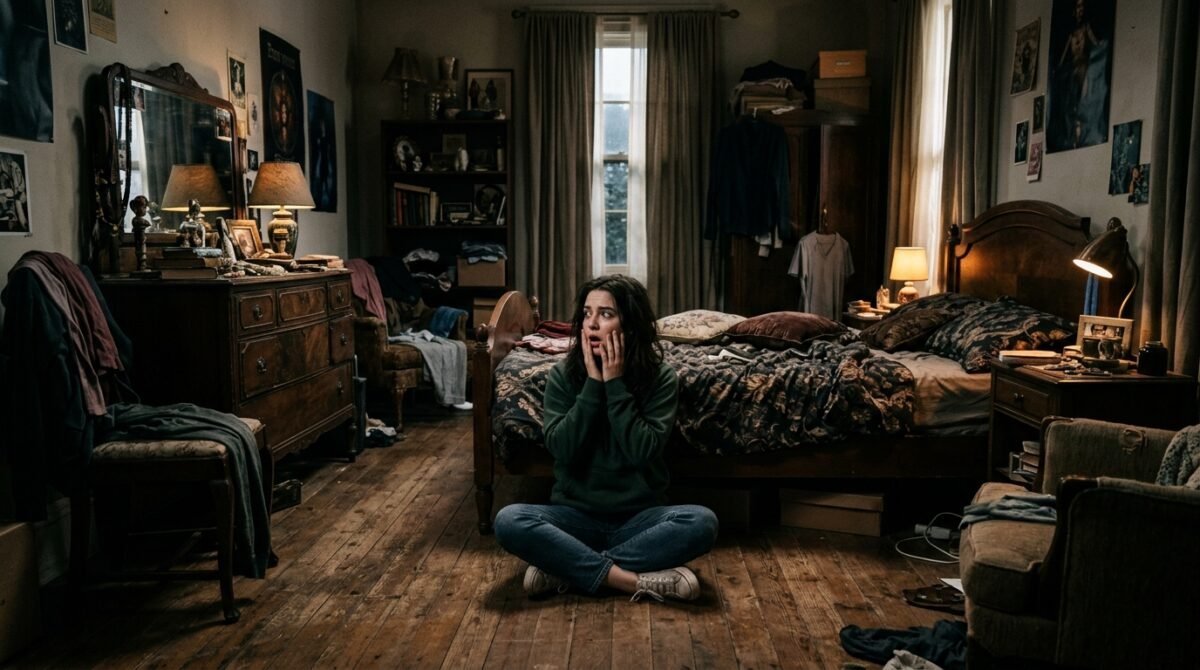
I remember the sensation of waking up that Tuesday afternoon. My body ached from twelve hours on my feet, and my mind was foggy. I rolled over, expecting to see the soft glow of the amber lamp I’d placed on my nightstand, but instead, I saw a stark, clinical white light hitting me directly in the eyes. I blinked, disoriented, and looked around.
Everything was wrong. The velvet armchair I’d spent months saving for was shoved into the hallway. The mahogany dresser my grandfather had gifted me was pushed against the far wall, covered in doilies I had never seen before. In the center of the room, Susan’s heavy, dated cedar chest sat like a monolith, anchored where my rug used to be. The smell of harsh floral polish hung heavy in the air, a scent I associated with my mother-in-law’s home, not my own.
I sat up, my heart hammering against my ribs. I felt like I had been robbed, but the thief had left their own belongings in my place. I walked toward the bedroom door, my legs shaking, and found Mark in the kitchen, casually drinking coffee as if nothing had happened. He looked at me with a grin that made my skin crawl.
“Oh, you’re finally up! Don’t look so shocked. Mom and I spent the whole morning shifting things around. She said the energy in our room was stagnant, and honestly, the new layout makes the place look twice as big. You’re welcome, babe.”
I couldn’t even speak. I stared at him, trying to find the man I had married, but I only saw a boy who was still trying to please his mother. I turned around and walked back into the room, touching the surfaces of the furniture, feeling the cold, hard reality of what they had done. They had decided that my sanctuary was their playground.
The silence in the house was heavy. I realized that my voice hadn’t even been considered. I wasn’t even consulted while I was ‘stagnant’ in my sleep. This wasn’t just redecorating; it was a power move, a clear signal that my opinions in my own house carried zero weight when Susan was involved. I sat on the floor, the realization settling into my bones that the ‘us’ in our marriage had been a lie all along.
The Text Messages That Exposed the Plot

After the initial shock wore off, the anger arrived. It wasn’t the hot, screaming kind of anger; it was cold and surgical. I went to the living room and saw Mark’s laptop left open on the coffee table. His phone was charging right next to it, the screen lighting up periodically with notifications from a group chat titled ‘Home Improvements’.
I don’t usually go through his things. We had a pact of privacy, but that pact had been shredded the moment my private bedroom was invaded. I clicked on the notifications, expecting a simple conversation about moving a couch. What I found was a transcript of a planned invasion. Susan had been messaging him for weeks about how ‘unprofessional’ and ‘cluttered’ my design choices were.
“She’s so exhausted from work, she’ll sleep through the whole thing. We can move the dresser before she wakes up, and by the time she sees it, she’ll be too tired to complain. It’s for her own good, Mark. She needs a proper home environment.”
— Susan, text to Mark
Mark’s replies were even worse. He hadn’t just agreed; he had provided the spare key details. He had given her a timeline of my shifts. He had even sent her pictures of my jewelry box, asking if they should move it to the safe in the basement because ‘she’s always losing things.’ The manipulation was layered, deep, and systematic.
I scrolled back for months. There were hundreds of messages about my spending habits, my cooking, and even my job. Susan wasn’t just redecorating my bedroom; she was orchestrating a complete takeover of my life. And Mark? He was the willing apprentice. He was reporting on me like a spy in my own home, validating her concerns and laughing at my expense.
I took photos of the entire thread. My hands were steady, which surprised me. I felt like a spectator watching a train wreck that I was no longer on. I realized that every time Mark had asked me about my schedule, he wasn’t trying to make plans for ‘us.’ He was checking to see when the coast was clear for his mother to come over.
The Confrontation in the Dining Room
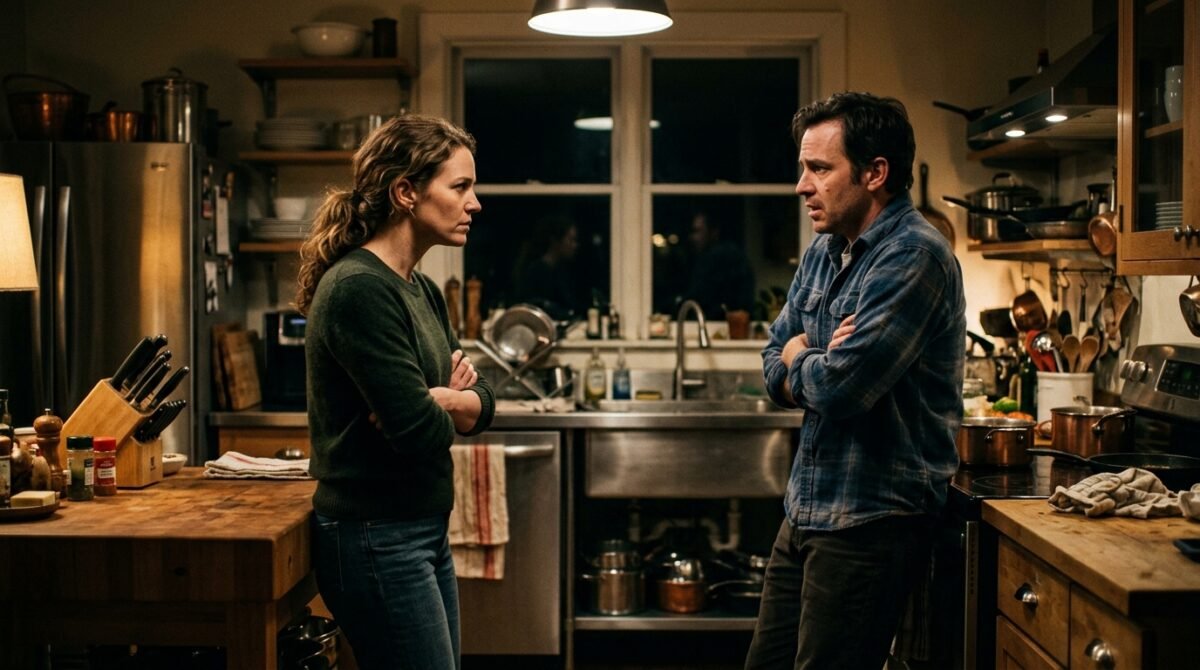
I didn’t wait for him to come to me. I walked into the kitchen, my phone in my hand, and placed it face up on the table. Mark was still there, scrolling through his own phone, looking perfectly content. I tapped the screen, pulling up the thread where Susan called me a ‘disorganized mess’ who needed a ‘stronger influence’ in the household.
Mark looked up, his face losing its color as he realized exactly what I was looking at. He tried to reach for the phone, but I snatched it away, my eyes locked on his. The air in the room felt thin. I asked him why he thought my autonomy was something he could auction off to his mother, but he just stammered, claiming it was ‘all about helping’ and ‘family unity.’
“You think this is help? You let her go through my private drawers, my clothes, my personal belongings while I was sleeping. This isn’t helping, Mark. This is a violation. You aren’t my husband; you’re a subordinate in your mother’s life, and I am the casualty.”
He tried to gaslight me, saying I was being ‘hysterical’ and that I was ‘overreacting to a simple furniture change.’ He tried to touch my arm, but I recoiled as if he had burned me. I told him that the furniture was the least of the problem—it was the fact that he was actively working against me, behind my back, for months.
He finally dropped the facade of the ‘helpful husband’ and got defensive. He accused me of being ungrateful, saying his mother had spent thousands of dollars on the new furniture because she thought our old stuff was ‘tacky.’ He said I should be thanking them for upgrading our lifestyle. The entitlement was breathtaking. He actually believed that money could buy my consent to be controlled.
I looked at him and realized that nothing I said would ever get through to him. He was fundamentally broken in his understanding of what a marriage was. He saw me as an extension of his household, one that needed to be managed, edited, and corrected by the matriarch of his family. I walked out of the kitchen, leaving him standing there with his cold coffee and his fragile, pathetic ego.
Consulting the Reddit Hive Mind

I didn’t have anyone to turn to in that moment. My own family was across the country, and I didn’t want to worry them until I had a plan. So, I did what so many of us do when we feel trapped: I went to the internet. I created a throwaway account and poured my heart out in a subreddit dedicated to relationship advice. I didn’t hold anything back.
Within twenty minutes, I had hundreds of comments. Some were from people who had been in similar situations, others were from people who were just as disgusted as I was. The consensus was immediate and overwhelming. They didn’t just see the furniture; they saw the pattern of abuse. They pointed out the gaslighting, the surveillance, and the complete lack of respect.
“This isn’t about a bedroom. This is about your husband being a secret agent for his mother. Get out now. If he’s letting her touch your furniture, he’s letting her dictate your finances, your career, and eventually, your children. He will never choose you. He has already chosen his mother.”
— u/TruthSeeker99 (Top Comment, 32.5k upvotes)
Another comment really stuck with me, a legal perspective from someone who had been through a toxic divorce. They warned me about the ‘marital home’ dynamics and advised me to document everything before I made my next move. I started taking photos of every room in the house, cataloging the changes, and saving every single text message from the group chat.
The validation from strangers was the lifeline I didn’t know I needed. It confirmed that I wasn’t being ‘hysterical’ or ‘ungrateful.’ I was being abused, and the community helped me identify the exact nature of that abuse. It was a slow, systematic erosion of my identity. I started to feel stronger, more determined to end this cycle of control.
I spent the next two days living in the guest room, refusing to step foot in the master bedroom. Mark kept trying to ‘apologize,’ which was really just him trying to convince me to come back to the ‘upgraded’ room. I didn’t engage. I just packed a bag, kept my head down, and waited for my lawyer to get back to me with the paperwork.
The Certified Letter of No Return

The day the divorce papers arrived, I didn’t tell him. I had already moved my essential documents, my jewelry, and my grandmother’s keepsakes into a safe deposit box off-site. I had also contacted a real estate agent to understand my standing on the house, which, as it turned out, was much stronger than I had initially realized due to our pre-nuptial agreement.
I waited for a Saturday morning, the day Susan usually came over for her ‘Sunday brunch’ prep. She walked in with her key—a key I had asked Mark to change months ago, which he obviously hadn’t. She walked straight into the kitchen, immediately starting to criticize the state of the countertops. I stood at the kitchen island, waiting for the perfect moment.
Mark walked in, looking hopeful, expecting us to finally ‘reconcile’ now that the house was ‘perfect.’ He sat down, and I handed him the envelope. It was thick, heavy, and undeniably official. He looked at it, then at me, and his smile flickered. He opened it, his eyes scanning the pages, and for a moment, the world stood still. Susan leaned over his shoulder, her face twisted in confusion.
“What is this? You’re joking, right? It’s just furniture, for heaven’s sake! You’re going to blow up your marriage over a dresser? You are so selfish, you have no idea what a real sacrifice is.”
— Susan, staring at the divorce papers
I looked at her, then back at Mark. I didn’t yell. I didn’t cry. I spoke with a calm that terrified them both. I told them that the furniture was the final straw, but the life he had built with her, behind my back, was the foundation of the end. I told him that he was free to have all the furniture he wanted, as long as he kept it with his mother.
Mark started to cry, not out of regret for his actions, but out of fear of what his mother would say to him. He looked at Susan, then at me, and he finally realized that I wasn’t playing a game. I wasn’t trying to ‘teach him a lesson’ so he would change. I was leaving, and there was absolutely nothing he could do to stop me.
I walked out of the house, leaving the keys on the counter. I didn’t look back at the ‘rearranged’ bedroom, or the woman who thought she could walk into my life and rewrite the script. I walked out to my car, breathed in the crisp air of freedom, and drove away from the life I had been forced into, finally choosing my own reality over the one they had imposed upon me.
The Aftermath: When the Dust Settles

The weeks following the departure were a blur of meetings, phone calls, and the cold reality of dismantling a life. Mark tried to reach out multiple times, his tone shifting from angry to pleading, and finally, to desperate. He sent long, rambling emails about how much he ‘loved’ me, but every single one of them included a caveat about how ‘if I had just been more flexible, none of this would have happened.’
He still couldn’t see it. Even with the divorce papers in his hand, he was incapable of taking responsibility for the betrayal. He blamed me for ‘being too sensitive,’ for ‘not being part of the family,’ and for ‘giving up’ on the marriage. The gaslighting continued even as we were separated, which only confirmed that I had made the right decision. My lawyer told me to stop replying to him, so I blocked him on every platform.
Susan, on the other hand, went on a smear campaign. She told our mutual friends that I was mentally unstable and that I had abandoned my husband because I was ‘jealous’ of her relationship with her son. It didn’t matter. The truth eventually came out when I shared the screenshots of the group chat with a few close friends who had been confused by her narrative. They were horrified.
“I had no idea it was that deep. I thought you were just being dramatic, but looking at these texts? She wasn’t just ‘helping,’ she was literally erasing you from your own house. You did the right thing.”
— A close friend, after seeing the leaked messages
I found peace in my new apartment, a place that was entirely mine. No one had a key. No one was allowed to come over and ‘rearrange’ my things. I decorated it in my own style, and for the first time in years, I felt comfortable in my own home. I started therapy to deal with the aftermath, and my therapist helped me realize that the boundary violations started long before the furniture.
I had been ignoring red flags for years—the constant phone calls, the uninvited visits, the way Mark would look at his mother whenever I expressed an opinion. It was a hard lesson to learn, but it was one that saved me from a lifetime of being a side character in my own story. I was finally the protagonist again, and the plot was entirely under my control.
I look back on that Tuesday morning, the day I woke up to a changed room, and I don’t feel anger anymore. I feel a strange sense of gratitude. If they hadn’t been so arrogant, if they hadn’t pushed that final boundary, I might still be trapped in that house, slowly losing myself to their expectations. That violation was the catalyst for my freedom, and for that, I am eternally grateful.
The Final Settlement: Who Gets What?

When it came to the division of assets, the furniture that had caused so much drama ended up being the easiest thing to deal with. I told my lawyer that Mark could keep every single piece that his mother had ‘helped’ with. I didn’t want any of it. I didn’t want anything in my new life that carried the stench of their manipulation.
Mark was shocked. He had expected a legal battle over the ‘upgrades,’ but I just handed it all to him on a silver platter. I told him he could have the heavy cedar chest, the new nightstands, and the floral-themed decor. He could keep all of it as a reminder of the relationship he had prioritized over our marriage. It was a symbolic gesture, but it meant everything to me.
| Item | Decision | Reasoning |
|---|---|---|
| Master Bedroom Furniture | Mark Keeps | Symbol of his mother’s control |
| Grandfather’s Mahogany Dresser | My Property | Family heirloom, non-negotiable |
| Kitchenware | Split | Based on pre-nuptial contributions |
| Joint Savings | Divided | Equitable distribution as per law |
The financial split was straightforward, thanks to the pre-nuptial agreement we had signed before the wedding. Mark tried to challenge it, claiming that his mother had invested in the home, but the judge didn’t care about his mother’s ‘contributions.’ The law was clear, and I was able to walk away with my share, allowing me to start fresh without the shadow of his family’s money hanging over me.
I think the most satisfying part of the entire divorce was the silence. Once the papers were signed and the assets were divided, the contact stopped. He didn’t have anything left to fight over, and I had everything I needed to move on. I saw him once, months later, in a grocery store, and he looked smaller, more tired. I didn’t stop to talk. I just kept walking.
It’s important to remember that when you set boundaries, people who benefited from you not having them will fight back. They will call you difficult, selfish, and ungrateful. Don’t let those labels stick. You aren’t being those things; you are being human. You are protecting the space you occupy in this world, and that is a right, not a privilege you have to earn.
If you’re in a situation where you feel like you’re losing yourself, start small. Set a boundary, see how they react, and pay attention to what they do when you say ‘no.’ If they don’t respect your ‘no,’ they never respected you. And that, more than anything, is the most important lesson you can take away from this story.
Reflecting on the ‘Mother-in-Law’ Dilemma

Looking back, I realize that Susan was never the real problem. The problem was always Mark. A mother-in-law can only cross boundaries that her son allows her to cross. Mark had the power to stop her at any time, but he chose not to. He chose his comfort, his mother’s approval, and the status quo over his wife’s well-being.
Many people ask me if I regret not having ‘the talk’ with Susan directly. I did, many times. I told her that she couldn’t come over unannounced, that she couldn’t make decisions about our house, and that she needed to respect our privacy. She would smile, apologize, and do it again the next week. She knew exactly what she was doing. She was testing the limits of what she could get away with.
“You’re just a guest in my house, dear. Mark is my son, and I know what he likes better than anyone. If you were a better wife, you wouldn’t need me to step in and fix things.”
— Susan, during one of our arguments
The realization that she saw me as a ‘guest’ in my own home was the turning point. It wasn’t about me being a bad wife; it was about her never accepting that her son had grown up and started a new life. She wanted to keep him as her little boy, and I was just an obstacle in her way. Mark was more than happy to play that role, so they were a perfect match.
If you are dealing with a similar dynamic, recognize the ‘enmeshed’ family structure. It’s not something you can fix by being ‘better’ or ‘more accommodating.’ It’s a structural issue that requires the partner who is ‘in’ the family to take action. If they won’t, then you have to accept the reality of your situation: you aren’t in a marriage of two; you’re in a marriage of three.
I’m finally free of that dynamic. I don’t have to navigate someone else’s family drama, I don’t have to apologize for existing, and I don’t have to worry about my personal space being violated. My life is quiet, peaceful, and entirely mine. It’s the best life I’ve ever had.
Community Reactions: The Verdict is In

I shared my story on Reddit to help others identify the signs of a failing relationship based on boundary violations. The response was overwhelming. People shared their own stories, and the advice was consistent: you cannot save a marriage where your partner is actively working against you. The community was unanimous in their support.
“The furniture was just the final brick in the wall. You handled this with so much grace. Most people would have just started screaming, but you kept your cool and got your exit plan in order. You’re a legend.”
— u/SupportiveSoul (15.2k upvotes)
Another user wrote about the ‘frog in boiling water’ analogy, which hit home for me. They said that in toxic relationships, the abuse is so slow that you don’t even realize you’re being cooked until it’s too late. I was the frog, and the bedroom furniture was the moment the water reached a rolling boil. I was lucky I realized it before I was completely destroyed.
“I had a mother-in-law exactly like that. The husband was the same. It took me ten years to leave. You did it in four. You saved yourself six years of pain. Don’t ever look back.”
— u/Survivor101 (8.4k upvotes)
Reading these comments helped me realize that I wasn’t alone. There is a whole community of people who have been through this, and we’re all here to tell you that it gets better. You find yourself again. You rediscover the parts of you that were suppressed, the hobbies you gave up, and the people you stopped seeing because they didn’t fit into the ‘in-law’ approved mold.
I hope that by sharing my story, at least one person recognizes that they deserve to be the priority in their own marriage. If you’re reading this and you feel that familiar pit in your stomach, if you’re constantly apologizing for things you didn’t do, or if you feel like a guest in your own home—please, know that you are not alone, and you deserve better.
Moving Forward: Lessons in Self-Respect

The biggest lesson I learned is that self-respect isn’t something you get from others; it’s something you provide for yourself. I had been waiting for Mark to respect me, waiting for Susan to see me, waiting for the family to approve of me. I was outsourcing my worth to people who didn’t care about me at all.
Today, I don’t need anyone’s approval to feel valid. I know who I am, I know what I want, and I know how to set boundaries that protect my peace. I’m dating someone new, someone who actually asks for my input on everything—from what we should have for dinner to how we should decorate our living space. It’s such a simple, beautiful thing, but after everything I’ve been through, it feels like a miracle.
I still think about that bedroom sometimes, but I don’t feel sadness. I feel a sense of triumph. I think about the girl who was so tired from her shift, the one who woke up to a changed world, and I want to tell her that she was stronger than she knew. She didn’t just survive; she thrived.
If you’re in a tough spot, keep your head up. Take your time, document everything, and don’t be afraid to walk away. It’s not ‘giving up’; it’s ‘choosing yourself.’ And choosing yourself is the bravest thing you will ever do.
Conclusion
The journey from a suppressed, gaslit wife to an independent, thriving individual was not easy, but it was necessary. My story isn’t just about furniture; it’s about the fundamental human need for agency, dignity, and respect within the most intimate of relationships. If you find yourself in a marriage where your voice is silenced and your boundaries are treated as suggestions, I urge you to look at the reality of your situation with cold, hard clarity.
My marriage failed because Mark could not commit to our union above his mother’s demands. He allowed the very sanctity of our private life to be violated, and when confronted, he chose to double down on the disrespect. That, ultimately, was the moment I stopped loving him. It was a painful but necessary death of a relationship that was built on a foundation of control rather than partnership.
I am now in a place where my home is my sanctuary, and my peace of mind is my top priority. I hope this story serves as a reminder that it is never too late to reclaim your life. You are the architect of your own happiness, and you deserve a life where you are the protagonist, not a side character in someone else’s family drama.
What about you? Have you ever had to draw a hard line with an in-law, or have you ever realized that your partner was never truly on your side? Let’s discuss in the comments below—I want to hear your stories of boundary setting and personal reclamation.
What's your verdict on this dilemma?
Vote below to contribute to the official community consensus.

Have a Dilemma Keeping You Up at Night?
Share your real-life feud, wedding chaos, or relationship crossroads anonymously with our editorial team.
What do you think ?
0 Comments🛡️ Comments are moderated to protect community integrity. Your comment will appear once approved by the editorial team.