
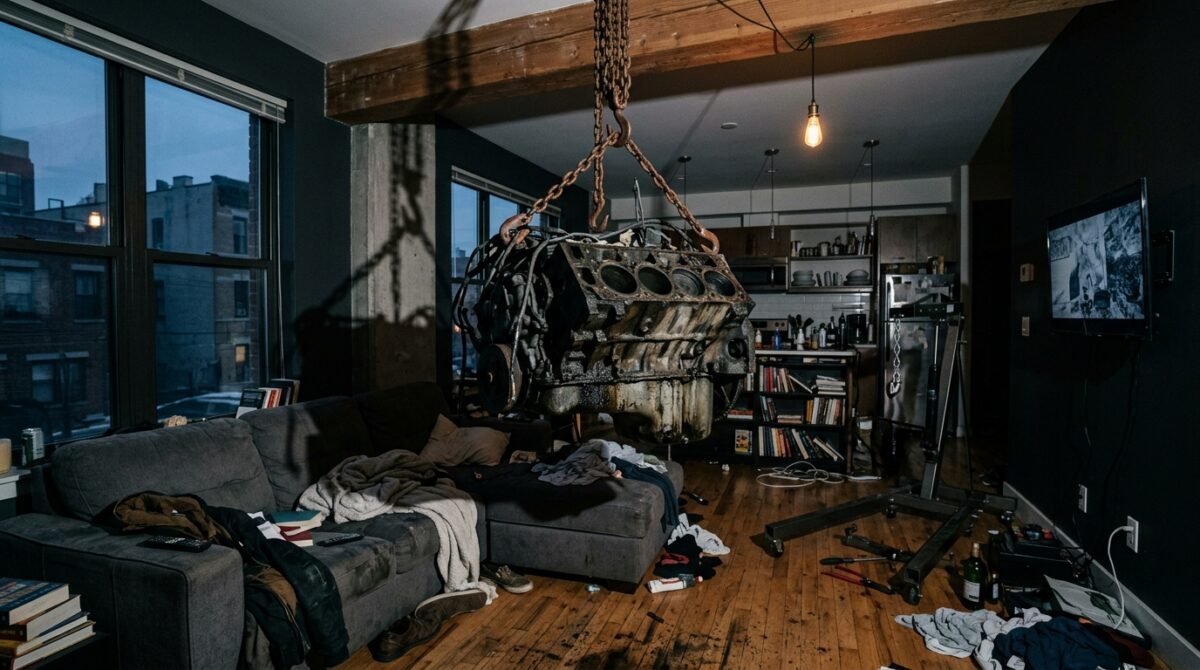
When I signed the lease on our two-bedroom apartment, I expected a standard roommate situation. We had common ground: we both liked the location, we both appreciated the hardwood floors, and we both agreed that the place was a sanctuary from the frantic pace of the city. My roommate, Mark, seemed perfectly normal. He worked in automotive logistics and spent his weekends tinkering with small motorcycle parts in the garage. I never imagined that he would view our rented living room as an extension of an industrial machine shop.
The transformation happened slowly, then all at once. First, it was a few greasy rags on the coffee table. Then, it was a set of heavy-duty wrenches that scratched the finish on our communal dining table. Finally, the day arrived when I returned home from a long shift at the hospital to find the ceiling sagging under the weight of a V8 engine block, hoisted by a makeshift pulley system rigged directly into the structural timber of our rental unit. It wasn’t just a hobby; it was an act of extreme negligence.
I stood there, mouth agape, as Mark wiped his hands on a rag, grinning as if he had just installed a piece of avant-garde art. He didn’t see a safety violation or a lease-breaking disaster; he saw a workspace. The sheer absurdity of the situation hit me like a physical weight, much like the engine block was currently hitting the structural integrity of our ceiling. I realized then that my living space had become a ticking time bomb, both figuratively and literally.
The moral dilemma weighed on me for days. If I reported him, I was ruining his passion project and potentially causing us both to be evicted. If I stayed silent, I was complicit in the destruction of our building and the potential injury of everyone living in the unit below us. I wasn’t just a roommate; I was a witness to an impending catastrophe that I could no longer ignore.
This is the story of how a harmless hobby turned into a nightmare of landlord disputes, legal threats, and an inevitable call to the city building inspector that would change our living situation forever. It is a story about the boundaries of shared space, the audacity of entitlement, and the moment you finally decide to put your safety above the comfort of a friend.
The Day the Engine Became a Ceiling Ornament

It was a Tuesday, the kind of day that drags on, when I finally unlocked our apartment door at 6:30 PM. I expected the usual quiet, perhaps the hum of a television, but instead, I was greeted by the metallic smell of gasoline and cold steel. The living room looked like a war zone of automotive detritus. There were oil pans on the rug, gaskets scattered like confetti, and the undeniable shape of a heavy iron engine block swaying gently in the middle of the room.
Mark was standing on a stepladder, tightening a bolt on a chain anchored into the main ceiling beam. I couldn’t believe my eyes. The ceiling plaster was already cracking under the localized pressure of the hook. He looked over his shoulder, his face smeared with grease, and gave me a thumbs up. He was genuinely proud of this logistical feat, completely oblivious to the fact that our living room was not a garage.
“Mark, get that thing down right now. Are you insane? You’re going to bring the whole ceiling down on our heads!”
Mark just laughed, wiping his forehead with a filthy sleeve. He explained that the engine needed to be ‘out of the humidity’ of his basement storage locker to prevent rust on the precision-milled surfaces. He insisted that the beam could hold the weight, citing some vague structural engineering knowledge he claimed to have picked up in his line of work. I felt my pulse racing as I looked at the dark, oily smudge already creeping across the white ceiling paint.
I spent the next hour pacing the kitchen, unable to even sit down. The rhythmic creaking of the wood every time he adjusted the chains was agonizing. I tried to reason with him, offering to help him find a local makerspace or even a rented garage bay nearby, but he was stubborn. He felt he was being ‘resourceful,’ and to him, I was just being ‘panicky’ and ‘unsupportive’ of his creative process.
I realized then that this wasn’t just about a car engine. It was about a fundamental disconnect in how we viewed our home. For him, the apartment was a tool, a space to be exploited for his own ends. For me, it was a home, a place of rest that was now being turned into a dangerous industrial site. The argument lasted until midnight, leaving me exhausted, angry, and feeling like a stranger in my own home.
The Late Night Text Messages
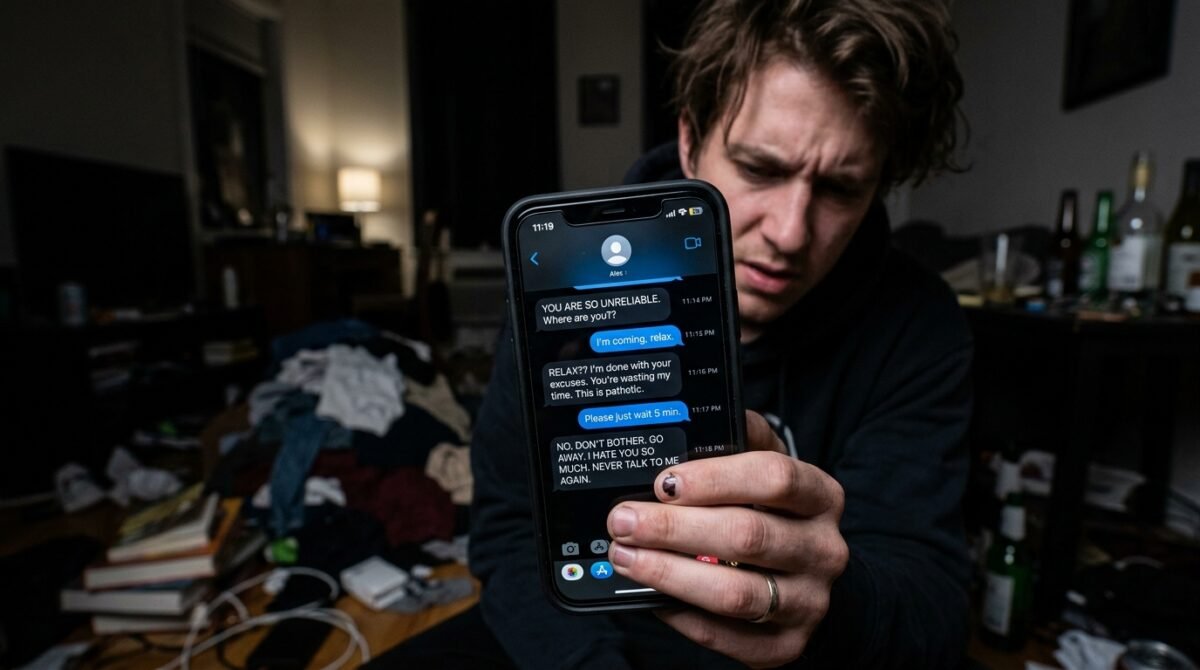
The next morning, I woke up to a series of messages in our shared roommate group chat that I hadn’t even bothered to check before falling asleep. Mark had clearly been busy while I was tossing and turning in my bed, trying to block out the sound of his metal clinking against metal in the next room. He was already planning the next phase of the ‘overhaul,’ which apparently involved stripping the cylinder heads.
“Don’t worry about the noise tonight. I’m just going to be using the impact wrench for a little while to get the heads off. It’ll be quick. Also, I invited some of the guys over on Friday to help with the transmission swap. We need to clear some space in the living room.”
— Mark (via WhatsApp)
I felt a cold dread wash over me. A transmission swap? In the living room? I grabbed my phone, my thumbs hovering over the screen. I was furious, but I knew that reacting in anger wouldn’t get the result I needed. I had to be firm. I typed back, reminding him that we were renters, that our lease had explicit clauses about commercial activity, and that I was not a participant in this experiment.
“Mark, you are not bringing anyone over to do a transmission swap. The landlord already called me about the noise complaint from the downstairs neighbors. If they find out what you are doing, we are both getting evicted. This is the last warning.”
— OP (via WhatsApp)
His response was dismissive. He claimed that the neighbors were ‘just sensitive’ and that the landlord wouldn’t care as long as the rent was paid on time. He seemed to have a total detachment from reality. It was as if the legal consequences of his actions simply didn’t apply to him. I realized then that he wasn’t going to stop on his own; he was escalating.
I started taking photos. Every day, I documented the mounting damage: the oily stains on the hardwood, the deep gouges in the ceiling, the expanding pile of scrap metal that now occupied 40% of our common area. I wasn’t just collecting evidence; I was building a case. I knew that at some point, I would have to choose between our ‘friendship’ and my financial security.
The tension in the apartment became thick enough to cut with a knife. We stopped speaking entirely, communicating only through short, clipped notes on the fridge or the occasional icy text. He would look at me with genuine resentment whenever I walked through the living room, as if I were the one acting unreasonably by wanting to use the sofa without getting grease on my clothes.
The 6:00 AM Kitchen Intrusion
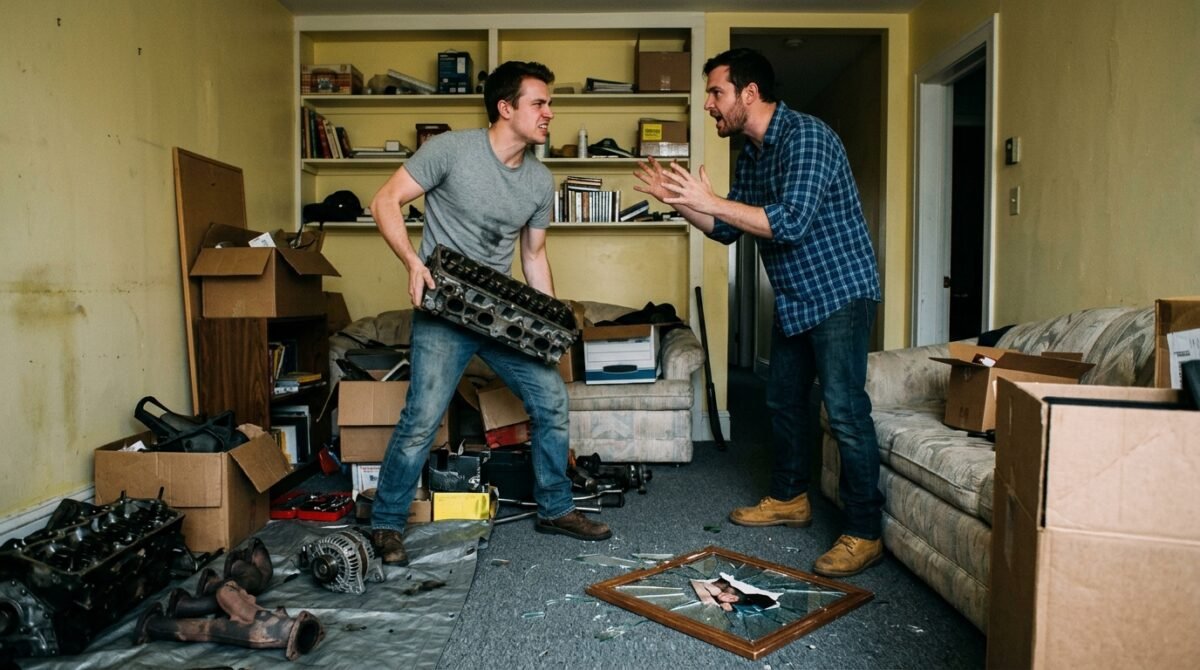
The breaking point arrived on a Saturday morning. I was woken up not by my alarm, but by a loud, rhythmic thudding coming from the living room. It sounded like someone was swinging a sledgehammer. I scrambled out of bed, threw on a robe, and stormed into the living area to find Mark, accompanied by two strangers I had never seen before, trying to maneuver a heavy gearbox through the narrow doorway.
They had pushed the dining table against the wall, damaging the paint, and were currently blocking the hallway that led to the bathroom. My frustration reached a boiling point. I didn’t care about being polite anymore. I stood in the middle of the room, arms crossed, and demanded they leave immediately. The strangers looked uncomfortable, but Mark just rolled his eyes, clearly annoyed by my presence.
“Are you serious right now? We’re almost done. It’s just a simple swap, and then we’re out of your hair. Stop acting like the landlord’s spy.”
I looked at the strangers and told them that they were trespassing and that I was calling the police if they didn’t vacate the property. Mark turned bright red, his voice rising to a shout. He accused me of being controlling, of wanting to dictate his entire life, and of being a ‘killjoy’ who couldn’t handle a little bit of ambition. He didn’t see the mess; he saw his own dream.
The argument escalated into a shouting match that could be heard down the hall. I didn’t care. I felt a strange sense of liberation in finally letting it all out. When they finally dragged the gearbox out, Mark slammed the door so hard that a picture frame fell off the wall and shattered. It was a symbolic end to any semblance of a roommate relationship we once had.
I went back to my room, shaking with adrenaline. I knew that I couldn’t live like this for another month. The lease was up in three months, but the damage being done to the unit was accelerating. I sat down at my laptop and started searching for the city’s building code regulations regarding residential occupancy and structural modifications. I needed to know what my options were.
That morning, I made the decision. I would contact the city building inspector. It wasn’t an act of betrayal; it was an act of self-preservation. I couldn’t allow the structural integrity of our building to be compromised by someone who thought that ‘home improvement’ meant turning an apartment into a junkyard. The countdown to the inspection had begun.
The Anonymous Tip
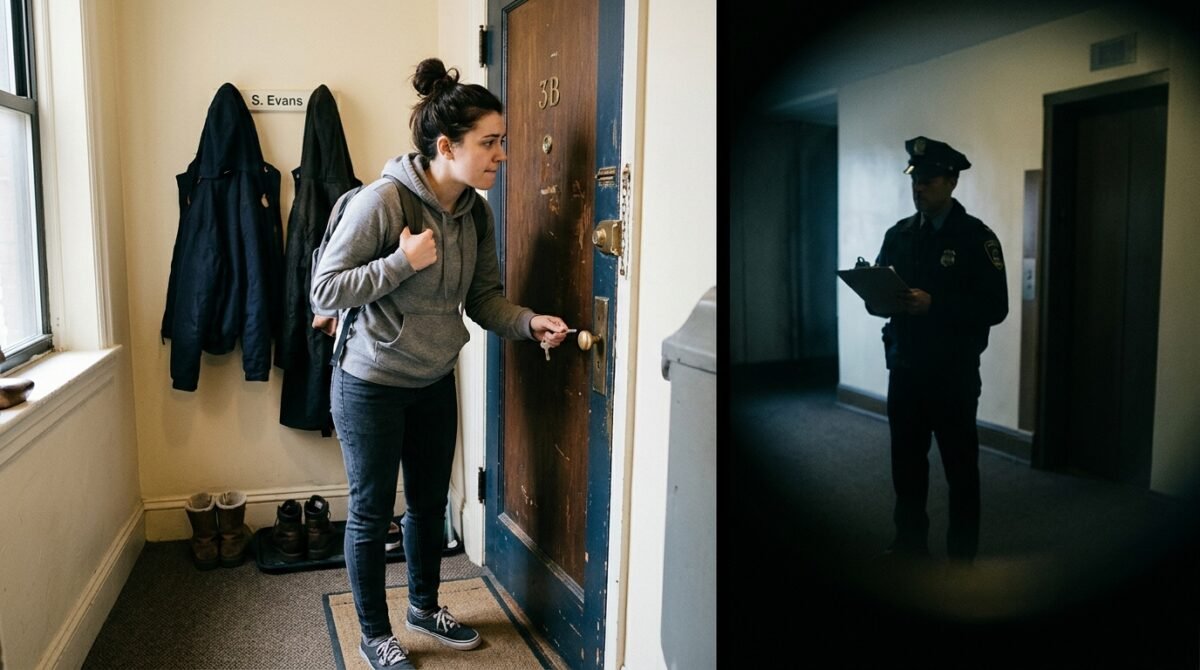
I didn’t report Mark by name. I reported the ‘unsafe structural modifications’ at our address. I kept it professional, citing the weight on the rafters and the presence of hazardous materials like gasoline and heavy oil in a residential unit. The person on the other end of the line was clinical, taking down every detail. They told me an inspector would be out within 48 to 72 hours.
When I hung up, I felt a heavy sense of guilt. Was I overreacting? Could I have handled this differently? Maybe I should have tried to talk to him one more time? But then I remembered the sagging ceiling, the oily handprints on the walls, and the complete disregard Mark had shown for my peace of mind. He had brought this on himself by refusing to listen to reason.
I didn’t tell Mark. I went about my day as if nothing had happened. He was still fuming from the morning’s argument, avoiding me entirely, which made the deception easier. I spent the next two days in a state of high anxiety, waiting for the knock on the door that would inevitably change everything. Every time a car drove by, I jumped, expecting it to be a city vehicle.
By the second day, I had started packing. I knew that once the inspector came, the situation would be untenable. Even if we weren’t evicted immediately, the trust was broken beyond repair. I packed my belongings into boxes, tucked away in the back of my closet, preparing for a quick exit. It was a strange, bittersweet feeling, packing away a life I had built in this place.
The irony wasn’t lost on me. I was the one who was going to suffer the consequences of the inspection, too. I would lose my deposit, I would have to find a new place, and I would have to deal with the fallout of being the ‘person who called the city.’ But I also knew that if I didn’t do it, I would never sleep soundly in this apartment again.
The final afternoon was the quietest. Mark had gone to work, and the apartment felt heavy with the weight of the secret I was keeping. I sat on the couch, staring at the engine block still dangling from the ceiling, and waited. The doorbell rang at exactly 3:00 PM. I knew it was time. I stood up, smoothed my clothes, and went to open the door.
The Inspector’s Verdict
The inspector was a stern-faced woman who didn’t waste any time. She walked through the apartment with a clipboard and a flashlight, noting everything. When she entered the living room, her expression hardened. She didn’t even need to ask who had done it; the evidence was everywhere. She spent a long time examining the ceiling rafters, looking at the cracks in the plaster, and taking measurements of the engine block’s weight.
Mark arrived home while she was still there. I’ll never forget the look on his face. It went from confusion to sheer, unadulterated panic in a split second. He tried to explain that it was temporary, that he had ‘safety precautions’ in place, but the inspector wasn’t hearing any of it. She told him, in no uncertain terms, that he had created a ‘imminent structural hazard’ that violated at least four different city ordinances.
“This is not an industrial space. You have compromised the load-bearing capacity of this floor. This engine needs to be removed immediately, and you will need to vacate the premises until a professional engineer can sign off on the repairs.”
— The City Building Inspector
Mark was speechless. He looked at me, a sudden realization dawning on his face. He knew who had made the call. He didn’t say anything, but the look of betrayal in his eyes was almost too much to handle. He turned away and started frantically trying to lower the engine, his hands shaking so violently he could barely operate the pulley.
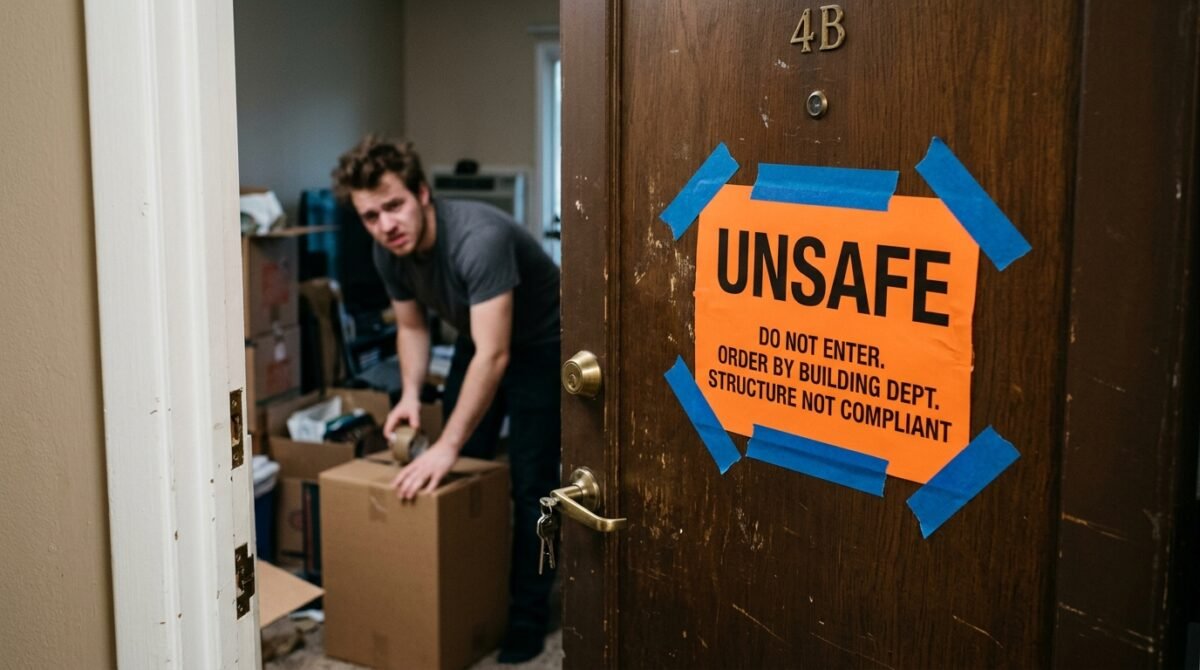
The inspector didn’t leave until the engine was on the floor. She issued a formal citation, leaving a bright orange ‘UNSAFE’ notice on our door. It was the end of the line. Mark was looking at thousands of dollars in potential fines, and we were both effectively homeless as of that moment. The reality of the situation finally sunk in for him, but it was far too late.
I watched from the sidelines as he packed his tools, his face a mask of defeat. He didn’t yell, he didn’t argue. He just moved with a hollow, mechanical efficiency. It was a sad, pathetic end to a situation that could have been avoided with a simple conversation weeks ago. I felt no joy in being right; I only felt a profound sense of exhaustion.
As he walked out the door for the last time, he didn’t look back. I was left alone in the apartment, standing in the middle of a room that was now littered with oil stains and broken dreams. I had won the battle for my safety, but I had lost everything else. The silence of the apartment was deafening.
Community Reaction: The Reddit Verdict
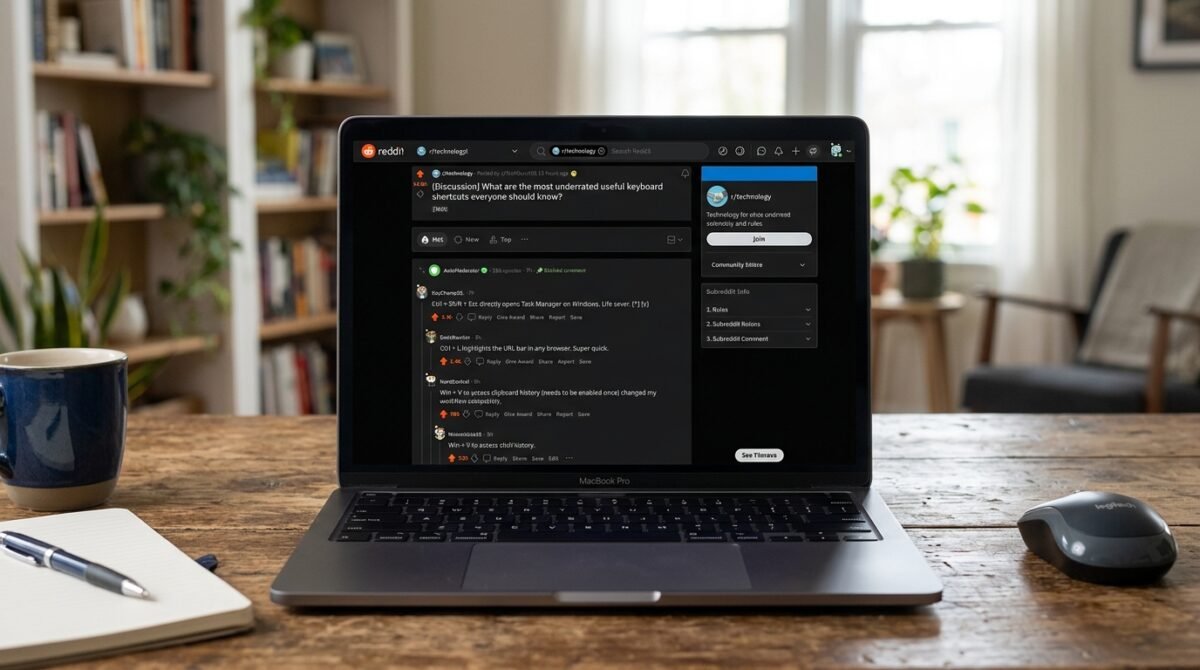
I posted about the whole saga on Reddit later that evening. I wasn’t looking for sympathy, but I needed to know if I had lost my mind. The response was immediate and overwhelming. Thousands of people weighed in, with opinions ranging from ‘you’re a hero’ to ‘you’re a snitch.’ It was a fascinating window into how people view boundaries and shared responsibility.
“OP, you did the right thing. Forget the roommate drama—you were literally living under a crushing hazard. People die because of idiots like this. You saved yourself from a potential lawsuit, injury, or worse.”
— u/SafetyFirst_Always (Top Comment, 15.2k upvotes)
There were also, of course, the contrarians. A few people argued that I should have talked it out more, or that I was being ‘passive-aggressive’ by not giving him a final ultimatum before calling the city. They argued that reporting a roommate is the ‘nuclear option’ and that I ruined a friendship over a misunderstanding.
“YTA. You didn’t even give him a final warning? You went straight to the city? That’s a massive escalation. You could have given him 24 hours to move it or you’d call. You chose to destroy his life instead.”
— u/LoyalRoomie4Life (1.2k upvotes)
I read through thousands of these comments, finding comfort in the support but also reflection in the criticism. It really forced me to examine my own role in the breakdown of communication. Could I have been more direct? Perhaps. But would it have made a difference with someone as stubborn as Mark? I doubted it.
The most interesting comments were from people who had been in similar situations—people who had roommates who treated their home like a workshop, a recording studio, or a pet sanctuary. The stories were endless. It seems that the ‘roommate from hell’ phenomenon is a universal experience that cuts across all demographics.
The community discussion helped me process the guilt. I realized that my decision was based on a fundamental difference in values. I valued stability and safety; he valued his project over everything else. When those values collided, the result was always going to be a disaster. I wasn’t the one who made that choice; his actions forced the collision.
In the end, the ‘Reddit Verdict’ was clear: I was justified. While some people thought my methods were harsh, the consensus was that a living room is not a garage, and my safety was not up for negotiation. It was a validation I didn’t know I needed, but it helped me move on from the experience.
The Legal and Financial Fallout

The aftermath was a bureaucratic nightmare. The landlord was livid. He held both of us responsible for the damage to the ceiling and the floor, citing the ‘damages beyond normal wear and tear’ clause in our lease. My share of the deposit was gone, and I was looking at a significant bill for the structural repairs to the rafter.
Mark, meanwhile, was facing legal action from the city. The fines for illegal structural modifications to a rental unit were hefty. He tried to claim that I was ‘in on it’ to shift the blame, but my photos and the lack of my signature on any of his ‘repairs’ saved me from being held personally liable for the modifications themselves.
I spent weeks talking to lawyers and the landlord’s representatives, trying to disentangle my liability from Mark’s. It was an expensive lesson in the importance of clear, written communication in roommate agreements. I learned that being ‘nice’ can be the most expensive mistake you ever make when it comes to shared housing.
I ended up settling with the landlord, paying a portion of the repair costs just to get out of the lease cleanly and avoid a black mark on my rental history. It was a bitter pill to swallow, but it was worth it to be rid of the entire situation. I moved into a studio apartment, a place where I was the only one responsible for what happened inside the walls.
The final tally of the ‘hobby’ was astronomical. Between the fines, the repairs, the lost deposit, and the legal fees, the engine block had ended up costing Mark nearly $12,000. It was the most expensive engine overhaul in history. He never spoke to me again, which I considered the best part of the entire resolution.
This experience changed the way I look at living arrangements forever. I no longer assume that people have the same baseline of respect for shared property. I’ve become much more discerning, much more careful, and much more willing to set hard boundaries early on. Sometimes, the most important thing you can do for a friendship is to live separately.
Reflecting on the Boundaries of Home
Looking back, I wonder if there was a moment where I could have steered us away from this disaster. Was it the first time he brought in a motorcycle part? Was it the time he asked to store a spare tire in the living room? I realized that the slow creep of boundary violations is what makes them so insidious. You don’t wake up one day with an engine in your rafters; you get there one ‘small favor’ at a time.
I’ve realized that my need for conflict avoidance was my biggest weakness. I wanted to be the ‘chill’ roommate, the one who didn’t sweat the small stuff. But the ‘small stuff’ eventually becomes the ‘big stuff.’ By not speaking up early, I had implicitly given him permission to push the boundaries further and further, until they were shattered.
I’ve also come to terms with the fact that I’m not responsible for Mark’s choices. He was an adult who made a calculated decision to prioritize his hobby over the safety and well-being of his home and his roommate. The fact that he suffered the consequences is not my fault. It is the natural outcome of his own actions.
I’ve learned to value my own peace more than being liked. If someone makes me uncomfortable in my own home, I have the right to address it, immediately and clearly. I no longer care if I’m labeled as ‘difficult’ or ‘uptight.’ My home is my sanctuary, and I will protect it with everything I have.
The silence in my new studio apartment is the most beautiful thing in the world. There’s no creaking, no oily smell, no stress. It’s just me, and the space is exactly how I left it. It’s a peace I earned through a very hard, very public, and very expensive lesson. I wouldn’t wish the experience on anyone, but I’m grateful for the clarity it gave me.
We all have our flaws, and mine was a lack of assertiveness. I’ve spent the last year working on that, learning to set boundaries in all aspects of my life. It’s a process, but I know that I’ll never again be the person who stands by while someone else turns my life into a disaster.
Lessons Learned the Hard Way

If there’s anything you take away from this, let it be this: never ignore the signs. If something feels wrong in your home, it probably is. Don’t wait for it to explode; address it while it’s still manageable. Your home is not a laboratory for someone else’s experiments, and you are not a prop in someone else’s drama.
Financial independence and rental stability are worth more than the comfort of a roommate who doesn’t respect your boundaries. If you find yourself constantly feeling anxious in your own living room, it’s time to move. It’s a hassle, sure, but it’s better than the alternative. You are the only person who is going to stand up for your right to a safe living environment.
I also learned the value of documentation. Those photos of the damage were my saving grace. Without them, it would have been my word against his, and that’s a fight you don’t want to have. Keep records of everything: the texts, the damage, the conversations. It’s not paranoid; it’s being prepared for the worst.
And lastly, don’t be afraid to pull the ‘nuclear option’ if you need to. Sometimes, you have to burn a bridge to save yourself. It’s not a fun thing to do, and it will hurt in the short term, but it’s better than staying in a toxic situation that will only get worse. Trust your gut. It’s the best tool you have.
I’m finally at a place where I can look back on the whole thing and laugh, albeit a little nervously. The story has become a legend among my friends—the time I lived with a guy who hung a car motor from our ceiling. It’s a ridiculous story, but it’s my story. And it’s one I’m glad is finally over.
I’m moving forward, focusing on my career and my new, quiet life. I have no regrets about the call I made that day. It was the moment I reclaimed my autonomy and learned that I am capable of making the hard choices. And that, in the end, is worth more than any deposit or apartment lease.
The Final Word on Boundaries

In closing, I want to emphasize that boundaries are not meant to keep people out, but to keep your sanity in. A good roommate relationship is based on mutual respect, not one person’s entitlement. If you find yourself in a position where you have to sacrifice your safety to keep the peace, you’ve already lost the battle. The peace you’re keeping is a lie.
Don’t be afraid to be the ‘bad guy’ for a moment if it saves your long-term health. I spent so long trying to be the ‘good roommate’ that I forgot to be the ‘safe roommate.’ It was a mistake I won’t make again. I’ve learned that true friendship doesn’t require you to be a martyr for someone else’s bad decisions.
If you’re currently in a situation that feels like it’s spiraling, talk to someone. Talk to your friends, talk to your family, talk to the landlord if you have to. Don’t carry the weight of someone else’s disaster on your shoulders. You deserve to live in a place that feels like a home, not a workshop or a trap.
Thank you for listening to my story. Writing this down has been a therapeutic way to process the final remnants of the trauma. It’s helped me see the situation from a distance and appreciate how far I’ve come. I hope that by sharing this, I can help someone else who might be in the same position realize that they have the power to change their reality.
Remember: your home is your kingdom. Don’t let anyone turn it into a junkyard. Set your boundaries, stand by them, and never, ever feel guilty for choosing your own safety. It’s the most important thing you’ll ever do for yourself.
What about you? Have you ever had a roommate situation that went completely off the rails? Let me know in the comments. I’d love to hear your stories—good, bad, or absolutely insane.
Conclusion
The saga of the living room engine remains a cautionary tale in my social circle—a reminder that common sense is not always common. While the financial sting has faded, the lesson remains etched in my mind: your environment dictates your mental state, and you must protect it at all costs. I’ve since moved on to a peaceful, independent life, leaving the drama and the greasy floorboards far behind me.
Reflecting on the Reddit community’s response, I realize that my story touched a nerve because so many of us struggle with the tension between wanting to be ‘easygoing’ and needing to survive. The moral of this story isn’t just about car parts—it’s about the courage to say ‘no’ when the cost of saying ‘yes’ is your own well-being.
I’d love to hear your thoughts on this. Where do you draw the line between supporting a friend’s hobby and protecting your own living space? Is there a point where reporting a friend is the only moral option? Share your take in the comment section below, and let’s debate the boundaries of roommate etiquette.
What's your verdict on this dilemma?
Vote below to contribute to the official community consensus.

Have a Dilemma Keeping You Up at Night?
Share your real-life feud, wedding chaos, or relationship crossroads anonymously with our editorial team.
What do you think ?
0 Comments🛡️ Comments are moderated to protect community integrity. Your comment will appear once approved by the editorial team.