

Grief is a shadow that never truly leaves; it just changes shape. For me, that shape was a delicate, art-deco emerald ring that belonged to my sister, Clara, before she passed away in a tragic accident three years ago. It was the only physical tether I had left to her—a reminder of her laughter, her spirit, and the way she used to hold my hand when I was scared.
When I met Mark, he seemed to understand this. He held me while I cried, he visited her memorial with me, and he promised he would always respect the sanctity of my memories. We were engaged for a year, planning a life that felt grounded in mutual respect and deep, unwavering support. Or so I thought.
The unraveling didn’t happen with a shout, but with a silence—a silence that fell over his mother’s dining room table during a holiday visit. I looked at her hands, expecting to see her usual gold band, and instead, I saw it. The emerald sparkled, defiant and misplaced, on her wrinkled finger. In that moment, the air left the room, and the foundation of my life fractured.
I am not a person who acts on impulse, but there are certain lines that, once crossed, leave no room for diplomacy. When the truth emerged—that Mark had taken the ring from my locked vanity without asking, simply to appease his mother who ‘loved the style’—something snapped inside me. What followed was a cold, calculated purge of his presence from my life.
This is the story of how I threw out his belongings, how I walked away from a man I thought was my soulmate, and how the internet reacted when I finally shared my truth. This is not just about a ring; it is about the theft of a legacy and the price of betrayal.
The Emerald That Should Never Have Been Found

It was a Tuesday night, the kind of mundane evening that usually passes without consequence. We were at Mark’s mother’s house for a belated birthday dinner. I had been feeling uneasy for weeks; I noticed my vanity drawer was slightly ajar whenever I returned from work, though I dismissed it as my own forgetfulness.
As Sarah—his mother—reached for the salt shaker, the light caught the emerald. I stopped breathing. The setting was unmistakable: a custom 1920s cut that Clara had saved for years to purchase. I felt a cold wave of nausea wash over me as I realized exactly what I was seeing.
I didn’t cause a scene. I couldn’t. I excused myself, claiming a sudden headache, and retreated to the bathroom. I sat on the edge of the tub, staring at my reflection, trying to process the sheer audacity. Why would she have it? And more importantly, how did it get there?
When Mark followed me in, his expression was one of practiced annoyance. He asked me what was wrong, his tone dripping with the kind of condescension that usually precedes a lecture. I looked him dead in the eye and asked, ‘Why is your mother wearing my sister’s ring?’
“She needed something nice for the gala, and you never wear it anyway. It was just sitting in a drawer gathering dust, so I thought I’d let her borrow it to make her feel special. Don’t be so dramatic about a piece of jewelry.”
— Mark, during the initial confrontation
The words hit me like physical blows. He hadn’t just ‘lent’ it; he had violated the most sacred space I owned, all to serve his mother’s vanity. The trivialization of my grief was the true betrayal.
The Anatomy of a Quiet Betrayal
The drive home was silent. My mind raced through every moment of the last few months. I remembered the times Mark mentioned his mother loved vintage jewelry. I remembered the times he told me I was ‘too attached to the past.’ It all made sense in a terrifying, cohesive narrative.
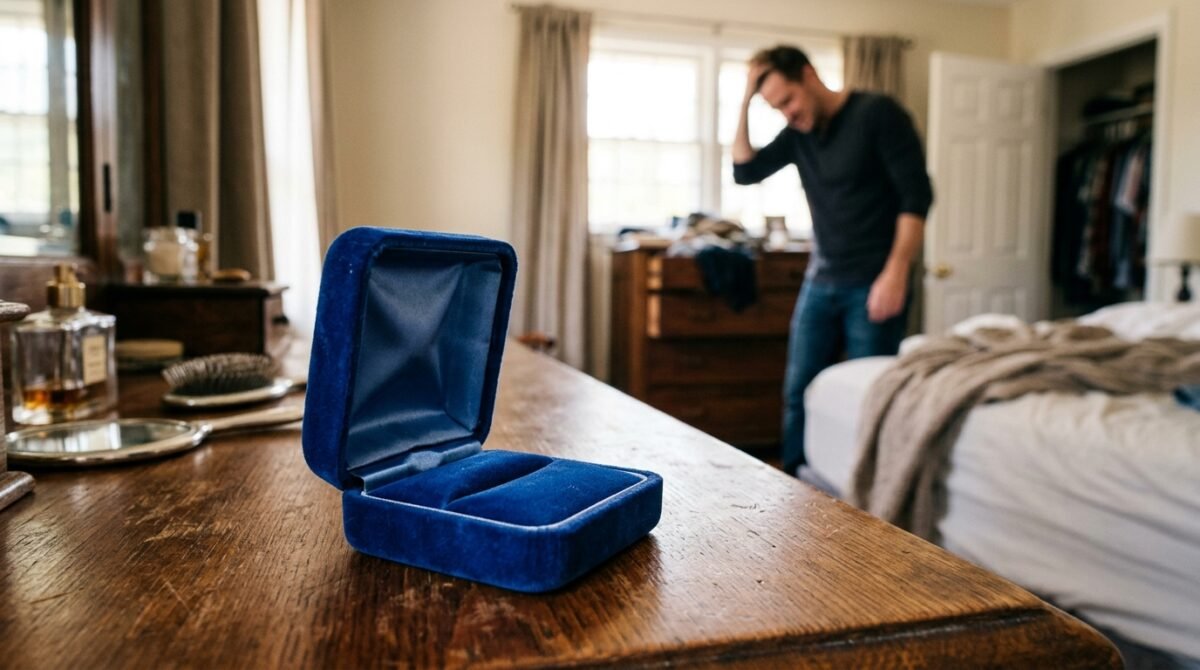
Once we arrived at the apartment, I didn’t yell. I didn’t cry. I walked straight to the vanity. My heart hammered against my ribs as I opened the velvet-lined box where the ring used to live. It was empty. The ghost of the ring was the only thing left behind.
Mark stood in the bedroom doorway, still trying to play the ‘rational’ partner. He insisted that I was being possessive and that families should share everything. He argued that since we were getting married, his mother was effectively my mother, and therefore, it was a ‘family heirloom’ now.
I realized then that he didn’t respect my boundaries. He never had. He viewed my life, my history, and my possessions as communal property that he had the right to distribute as he saw fit. The realization felt like a sudden drop in temperature in the room.
I looked at him—really looked at him—and saw the stranger I had been living with for two years. He wasn’t a partner; he was an opportunist who valued his mother’s approval over my autonomy and my mourning. I knew then that the wedding was never going to happen.
The Packing of a Life Unlived

I didn’t wait for the morning. I started packing his things the moment he walked out to sleep on the couch. I grabbed trash bags, boxes, anything I could find. It was a cathartic, agonizing process. With every sweater, every book, and every trinket I threw into a box, I felt like I was physically removing his influence from my home.
I worked through the night. By the time the sun began to bleed over the horizon, the apartment looked different. It looked lighter. The space where his clothes had hung in the closet was now just empty air, a testament to how quickly a life can be hollowed out.
When he woke up, he found me standing in the living room with the boxes stacked by the door. His face went pale. He hadn’t expected me to actually act. He thought this was another fight we would ‘get over’ with a generic apology and a forced dinner date.
“Are you serious? You’re throwing away three years of history because of a ring? This is insane, and you’re acting like a child. Put my stuff back right now.”
— Mark, witnessing his packed belongings
I didn’t respond to his shouting. I simply opened the front door and pointed to the stack of boxes. I told him he had until noon to get his things, or they were going to the curb. His entitlement was still so thick he thought he could bargain with me.
The Mother’s Unannounced Visit
Around 10:00 AM, the doorbell rang. It wasn’t Mark. It was his mother. She walked in as if she owned the place, the ring still prominently displayed on her finger. She looked at the boxes, then at me, with a look of absolute confusion and indignation.
She told me that Mark had called her, crying about how ‘crazy’ I was being. She started lecturing me on the importance of family harmony and how I should be honored she wanted to wear something that belonged to my ‘late, unfortunate sister.’ The word ‘unfortunate’ nearly made me lose my composure.
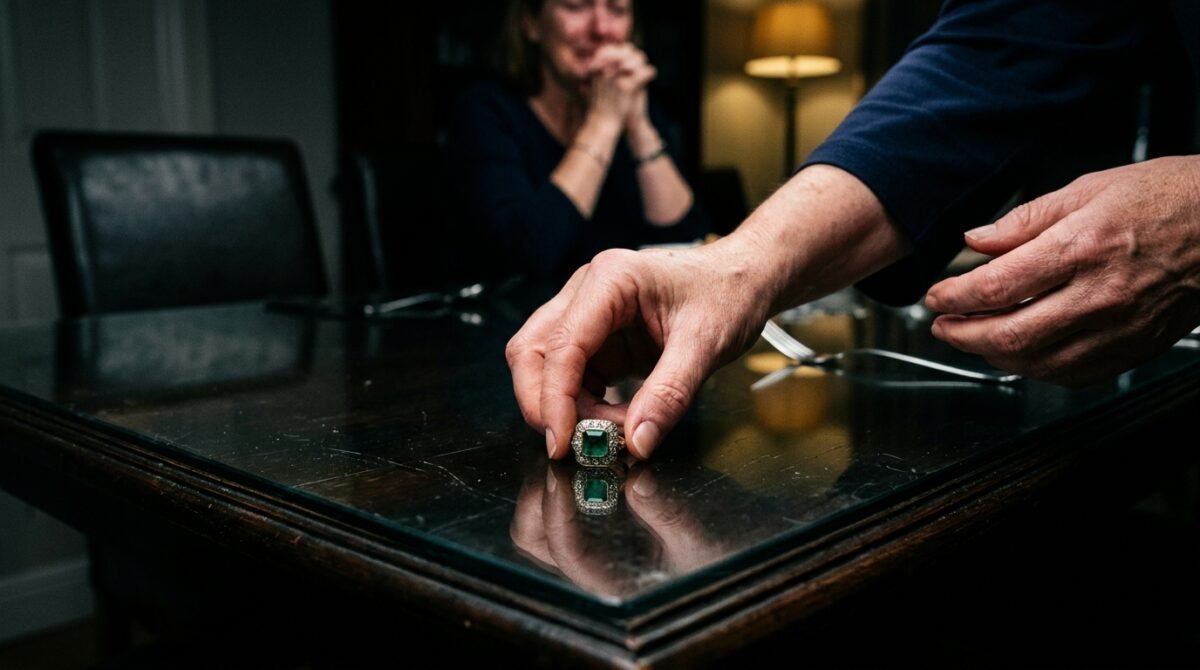
I looked at her, then at the ring, and calmly told her that the ring was stolen property. I informed her that if it wasn’t on the table by the time she left, I would be calling the police and reporting the theft of a high-value heirloom. The change in her demeanor was instantaneous.
She went from patronizing to defensive, insisting she had no idea it was ‘stolen’ and that Mark told her I had given it to her as a gift. The lie was so transparent, so pathetic, that I almost laughed. They had truly thought they could gaslight me into believing my own sister’s ring was a gift to a woman I barely tolerated.
She dropped the ring on the table with a trembling hand, snatched her purse, and left without another word. She didn’t look at me, and I didn’t look at her. I picked up the ring, and for the first time in weeks, I felt a sense of peace. My sister was back with me, and the parasites were gone.
The Digital Fallout and the Group Chat Leak

By the afternoon, the chaos moved to the digital realm. My phone wouldn’t stop buzzing. Apparently, Mark had been complaining to his friends and family, painting me as a manic, abusive partner who threw his stuff out for no reason. He conveniently omitted the theft of the ring.
One of his cousins, who had always been kind to me, sent me a screenshot of a family group chat. It was horrifying. They were mocking me, calling me ‘unstable’ and claiming I was trying to isolate Mark from his family because I was ‘bitter’ about my sister.
“She’s clearly losing it. The grief is turning her into a monster. Mark deserves someone who isn’t obsessed with the dead. Honestly, good riddance.”
— Sarah (Mark’s mother) in the family group chat
Seeing those words written out, black and white, was the final nail in the coffin. I didn’t defend myself. I didn’t argue. I just took the screenshot and posted it to my own social media with a simple caption: ‘Sometimes you realize you’re a supporting character in someone else’s toxic play. I’m stepping off the stage.’ The response was overwhelming.
The Reddit Trial: Community Verdicts
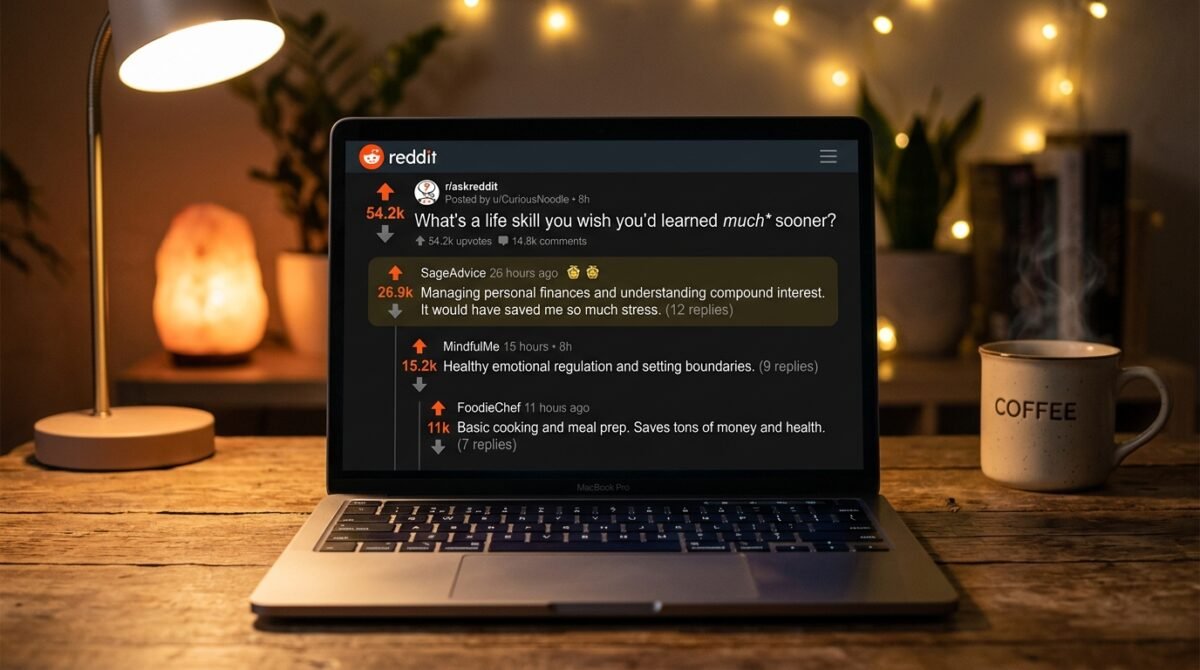
I posted the story on a popular forum, needing to know if I was actually the villain in this story. The response was immediate and intense. Thousands of people read the account, and the feedback was unanimous. I was not the crazy one; I was the victim of a calculated violation.
The community support was a balm to my soul. People shared their own stories of boundary-crossing in-laws and partners who didn’t respect their history. It reminded me that I wasn’t alone in this struggle and that my boundaries were not just valid, but necessary.
“This is not just about a ring. This is about a man who views your grief as a resource to be plundered for his mother’s benefit. You did the right thing. Never look back.”
— u/JusticeForHeirlooms (Top Comment, 32.1k upvotes)
Another user noted the legal aspect, warning me that Mark might try to claim the ring was a gift. I had already documented the provenance of the ring, so I felt secure, but the advice was a wake-up call to keep my guard up. The solidarity was overwhelming.
The Financial and Emotional Tally

After the dust settled, I took stock of the situation. There were no joint accounts, thankfully, but the emotional tax was enormous. I started seeing a therapist to process the betrayal and the realization that the man I thought I knew was a stranger.
I realized that Mark had been subtle about his disrespect for a long time. He would make offhand comments about my ‘obsessions’ or suggest I sell things that had value. I had ignored those red flags, labeling them as his ‘pragmatic nature.’ I was wrong.
I also realized how much of my energy I had spent trying to please his mother, thinking that if I just did enough, she would accept me. It was a bottomless pit. No amount of kindness or jewelry would ever have been enough to satisfy her need for control.
I calculated the cost of the relationship in time, energy, and mental health. The ring was just the physical anchor for a much larger weight I had been carrying. Getting rid of his stuff was symbolic of shedding that burden. It was expensive, but it was the cheapest price I could have paid for my freedom.
Now, I focus on the things that bring me joy. I’ve started a small garden in memory of my sister, and I’ve found that the simple act of nurturing life is a better way to honor her than keeping a ring in a box. The ring is still in my possession, but I keep it in a safe deposit box now.
The Aftermath: Moving Forward

It has been six months since I threw his things out. I haven’t spoken to Mark or his mother since that day. There were a few attempts from his side to reach out—emails, texts, a phone call from a blocked number—but I didn’t engage. There was nothing left to say.
I moved into a new apartment, a place that is entirely mine. No ghosts, no expectations, no demands. It is a quiet life, but it is a happy one. I learned that my boundaries are not negotiable and that anyone who doesn’t respect my past does not deserve a place in my future.
I still think about the ring sometimes. It’s not just an object anymore; it’s a symbol of the day I stopped being a victim. It’s a reminder that I have the power to protect my own heart, even when it feels like everything is falling apart.
I’ve also reconnected with old friends who I had pushed aside when I was busy managing Mark’s life. They’ve been supportive and kind, helping me rebuild my social circle and my sense of self-worth. It turns out, I was never the one who was ‘too much’; I was just with the wrong people.
If you are in a situation where you feel your boundaries are being ignored, listen to that feeling. Don’t rationalize it. Don’t wait for a grand explosion. Trust yourself, and do what you need to do to keep your peace intact. Sometimes, the most important thing you can throw away is the person who makes you question your own reality.
Reflecting on the ‘Family’ Myth

One of the most difficult parts of this experience was deconstructing the societal myth that ‘family’ is an automatic pass to bypass boundaries. We are taught to be ‘accommodating’ and to ‘keep the peace,’ but at what cost? My experience taught me that peace bought at the expense of one’s dignity is not peace; it is surrender.
I look back at the interactions with his mother and realize how much I was conditioned to accept her intrusion. She was used to getting what she wanted, and Mark was her enabler. By marrying him, I would have been signing up for a lifetime of this behavior. The ring was just the start.
It is important to remember that you can love someone and still recognize that they are not good for you. Mark wasn’t a villain in every sense; he was a person with deep flaws who lacked the capacity to respect the boundaries of another. That doesn’t make the pain easier, but it makes the decision to walk away clearer.
I’ve realized that the ‘family’ I choose for myself—my friends, my support group—is far more valuable than the family I was being forced to endure. True family respects your pain and celebrates your boundaries. They don’t try to strip you of your history to make themselves feel special.
I am grateful for the outcome. I am grateful that I found out before we were married, before we had children, and before my identity was fully absorbed into his. I am a different person now, stronger and more aware, and I wouldn’t trade that for anything in the world.
Lessons Learned and Future Boundaries

Looking back, I see a few key takeaways. First, never ignore the small signs. The vanity being left open was a red flag I chose to ignore because I wanted to believe the best in him. I won’t make that mistake again. Intuition is a powerful tool, and it is rarely wrong.
Second, financial or sentimental independence is non-negotiable. I have since made sure that all my important documents and heirlooms are secure, and I have a clear understanding of what is mine and what is shared. My boundaries are now documented, understood, and enforced.
Third, I learned to be okay with being the ‘villain’ in someone else’s story. Mark and his mother definitely paint me as the antagonist. That’s their right. I have no control over their narrative, only my own. And in my narrative, I am the hero who saved her legacy and herself.
I’ve also learned that healing is not linear. There are days when I miss the man I thought he was, and that’s okay. It’s part of the grieving process. I allow myself to feel those feelings without letting them dictate my actions. I am in control of my life, and that is a beautiful place to be.
If you take anything from this, let it be this: you are allowed to have things that are just yours. You are allowed to say ‘no.’ You are allowed to protect your history. You are enough, and you deserve a partner who sees your value, not someone who steals it.
Conclusion
The story of the stolen ring is ultimately a story of reclamation. It is about the moment a woman looked at the wreckage of her life and chose to build something new, something that was entirely, authentically hers. It is a reminder that while loss is inevitable, the way we handle it defines our character.
The internet debate continues to rage under my original post, with people still arguing about the nuances of the situation. Some say I should have given him a chance to apologize; others say I should have taken legal action. I think I did exactly what I needed to do to survive the moment.
What about you? Have you ever had to walk away from a relationship because of a fundamental violation of your boundaries? How did you handle the aftermath, and what did you learn about yourself? Let’s talk about it in the comments below.
What's your verdict on this dilemma?
Vote below to contribute to the official community consensus.

Have a Dilemma Keeping You Up at Night?
Share your real-life feud, wedding chaos, or relationship crossroads anonymously with our editorial team.
What do you think ?
0 Comments🛡️ Comments are moderated to protect community integrity. Your comment will appear once approved by the editorial team.