

When I bought my townhouse three years ago, it was the proudest moment of my life. I had scrimped, saved, and worked two jobs to secure the down payment for this small, cozy slice of independence. It was entirely in my name, a sanctuary built on my own sweat and late nights at the office. When Mark moved in six months ago, I thought it was the beginning of our future. We talked about ‘us,’ but I never imagined that ‘us’ would eventually involve a notary and a demand for nearly half of my property.
Mark is a handyman by hobby, not by trade, which makes the absurdity of what happened even harder to swallow. He often complained that the townhouse lacked ‘his touch.’ I was happy to let him paint the guest room and hang a few pictures, thinking it was a healthy way for him to feel at home. It was innocent enough at first, or so I thought. The shift in his demeanor started subtle, a creeping sense of entitlement that I dismissed as him just being overly invested in our living space.
The moral dilemma here isn’t just about money; it’s about the fundamental disrespect for boundaries and the transactional nature of his affection. He didn’t see a home; he saw an asset class. The transition from ‘let me help you fix this light’ to ‘I own 40 percent of this building’ happened over the course of a single weekend, leaving me reeling in the aftermath of a conversation that destroyed my trust in the man I thought I knew.
This story has become a flashpoint for my friends and family, and even the internet, who have all looked at the math of his ‘contributions’ and found them severely lacking. It is a cautionary tale about what happens when one partner views a relationship as a business merger and the other view it as a partnership of equals. Here is the chronicle of how a simple task of replacing two kitchen light fixtures morphed into a battle for my home and my sanity.
The Sunday Afternoon That Started the Descent
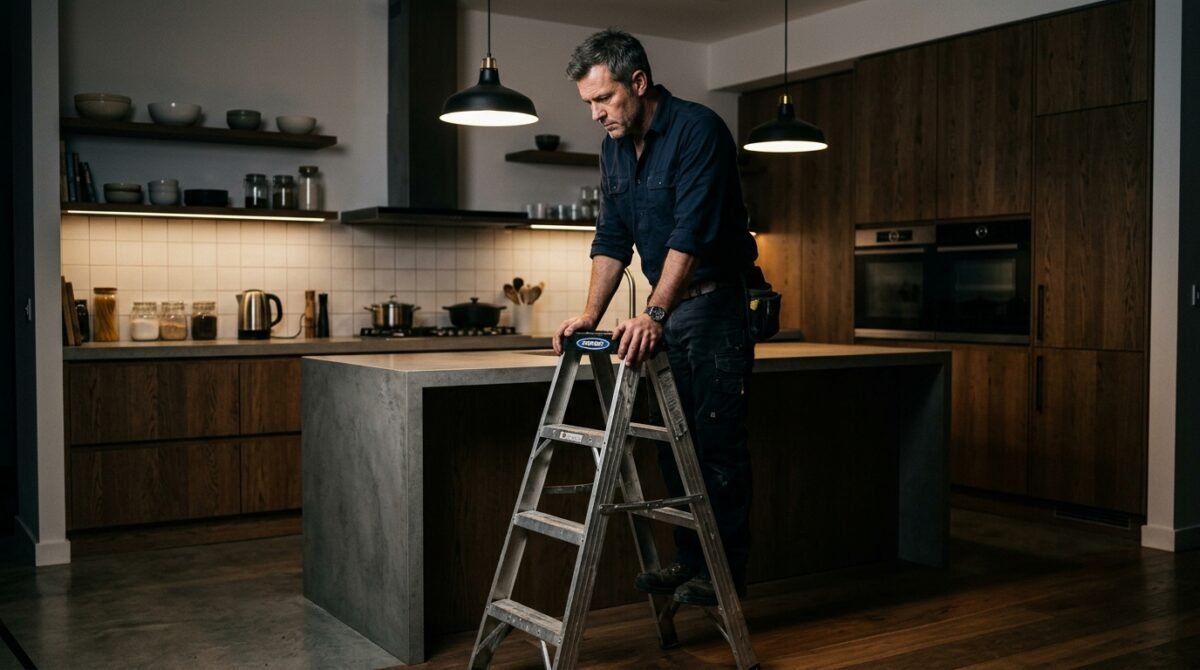
It was a rainy Sunday, the kind of day designed for lazy coffee and reading. Mark had been talking about the ‘outdated’ lighting in the kitchen for weeks. I finally relented, giving him the green light to swap out the builder-grade fixtures for something more modern he had picked out from the hardware store. I honestly thought it was a sweet gesture, a way to make the space feel more like *our* home rather than just *my* house.
He spent the afternoon on a stepladder, grumbling about wiring issues and the quality of the original installation. I stayed out of his way, preparing lunch and listening to music. At the time, I felt appreciative. He was putting in effort, and while I never asked for the upgrade, I didn’t mind the aesthetics. Little did I know that every twist of the screwdriver was, in his mind, a down payment on a permanent claim to my equity.
When he finally finished, he climbed down, wiped his hands on a rag, and looked at the kitchen with an odd, triumphant smile. He didn’t ask if I liked them. He didn’t ask for a thank you. He just said, ‘You know, this really changes the value of the place. We should probably sit down and talk about how we document my contributions to the property value.’ I laughed, assuming he was joking about his DIY skills. I was wrong.
“Are you serious? You honestly think two light fixtures are worth a sit-down meeting about real estate equity?”
— Me, realizing too late that he wasn’t kidding
The air in the room seemed to shift. He didn’t laugh back. Instead, he pulled out his phone and started scrolling through Zillow, comparing our townhouse to others in the neighborhood. He began lecturing me on market trends and how ‘unpaid labor’ in a marriage-track relationship is legally indistinguishable from capital investment. It was the moment the mask slipped, revealing a calculating side I had never seen before.
I watched as he paced the kitchen, his voice taking on a lecture-hall tone. He wasn’t talking to his partner; he was talking to a business associate who had just made a bad deal. The realization hit me with the force of a physical blow. This wasn’t about the lights. This was about him feeling insecure in a house he didn’t own, and his solution was to try and claw his way onto the deed by any means necessary.
The Legal Document That Wasn’t a Joke
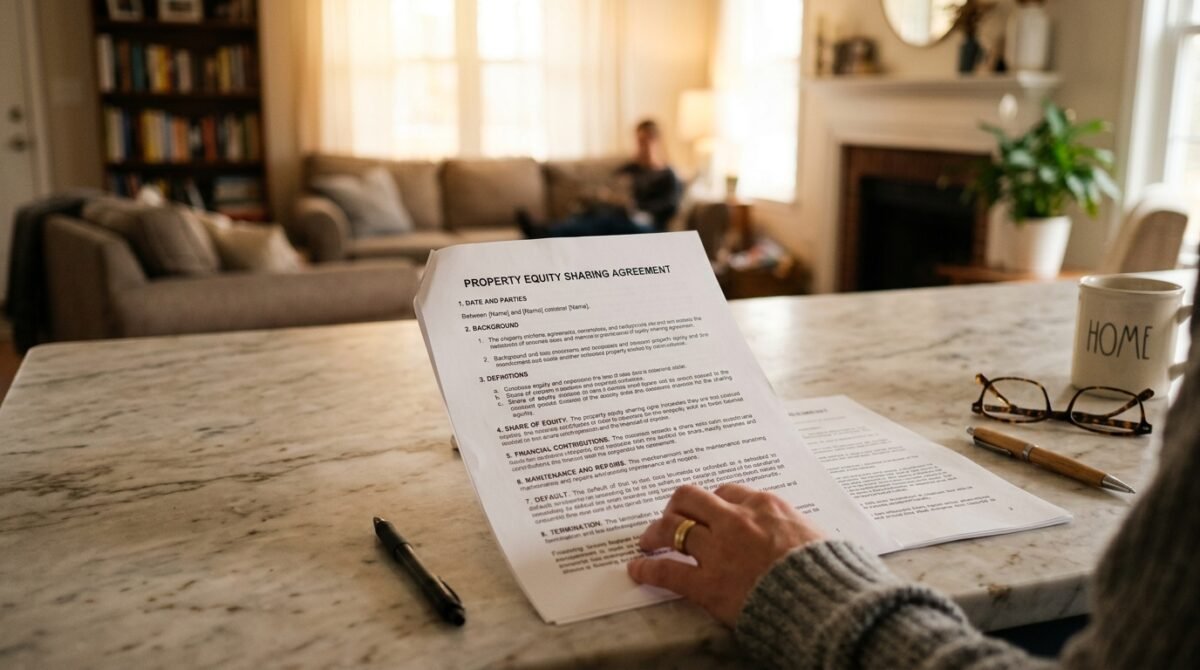
Two days later, I came home from work to find a thick manila envelope sitting on the kitchen island. It was heavy, and for a split second, I thought it was some kind of romantic gesture, maybe tickets or a surprise. I opened it and felt the color drain from my face. It was a drafted document, poorly worded, titled ‘Property Equity Sharing Agreement.’ My hands were shaking so hard I could barely read the legalese.
The document claimed that because Mark had performed ‘renovations’—a generous term for replacing two lights and painting a wall—he was entitled to a 40 percent stake in the home’s current market value. It cited ‘sweat equity’ and ‘cohabitation investment’ as if he were a venture capitalist. I was stunned into silence. I sat on the kitchen stool, staring at the paper, wondering if I had entered an alternate reality where logic no longer applied.
When Mark walked through the door, he looked at me expectantly, clearly waiting for me to praise his initiative or ask questions about the ‘fairness’ of his proposal. I held up the paper, the edges crinkling in my grip. ‘Mark,’ I said, my voice barely a whisper, ‘what is this? Are you actually trying to extort ownership of my home because you bought a screwdriver?’
“It’s about security, babe. I’m putting my time and effort into this place, and I shouldn’t be vulnerable if things go south. It’s only fair that my contributions are recognized in the ledger.”
— Mark, justifying his demand
The audacity of his framing left me speechless. He was speaking as if he were an equal investor who had been short-changed, rather than a guest who had been living rent-free for six months while I covered the mortgage, property taxes, and HOA fees. He genuinely believed that his labor was equivalent to tens of thousands of dollars in down payment and years of credit-building.
I told him to leave. Not forever, just for the night. I needed to be in the house without his presence, without his ‘improvements,’ and without his cold, analytical gaze. As he left, he looked genuinely offended, as if I were the one acting unreasonably for refusing to hand over nearly half of my most valuable asset to someone who had spent the afternoon watching Netflix while I paid the bills.
The Group Chat That Revealed Everything

The next morning, the betrayal went deeper than just the document. While I was at work, I received a notification on my laptop—a sync issue had left his browser open, and his messages were visible. I hadn’t gone looking for trouble, but there it was, glaring at me in a group chat with his friends. The thread was titled ‘The Hustle,’ and it was a play-by-play of how he planned to ‘secure his future’ by manipulating me.
I felt a cold, sharp pain in my chest as I read the messages. They weren’t just discussing the townhouse; they were mocking me. They were calling me ‘the landlord’ and making bets on how long it would take before I caved to his pressure. One of his friends had suggested he threaten to move out if I didn’t sign the agreement, betting that I was too codependent to let him go.
“She’s so desperate for the relationship to work that she’ll sign anything. Just keep pushing the ‘fairness’ angle. She’s sensitive about being seen as the ‘big earner.’ That’s your leverage.”
— A text from ‘Dave’ in Mark’s group chat
My stomach churned. This wasn’t a misunderstanding. It was a calculated, predatory campaign to gain control over my assets. Every nice thing he had done, every ‘renovation,’ every romantic gesture was just a move in a game I hadn’t realized I was playing. I took screenshots of every single message, my heart pounding in my ears. The sense of violation was absolute.
I realized then that I wasn’t just dealing with a boyfriend who had a misguided sense of entitlement; I was dealing with someone who viewed me as a mark. The light fixtures weren’t an improvement; they were a pretext. He had been planning this for weeks, waiting for the right moment to strike. I sat at my desk, surrounded by coworkers, feeling utterly alone in the middle of a crowded room.
I knew I couldn’t just confront him in the moment. I had to get my house back. I had to protect myself from the legal mess he was trying to create. I spent the rest of the day in a state of hyper-focus, gathering my documents, checking my accounts, and planning the logistics of an eviction. The relationship was dead; the only thing left was the cleanup.
The Confrontation of a Lifetime
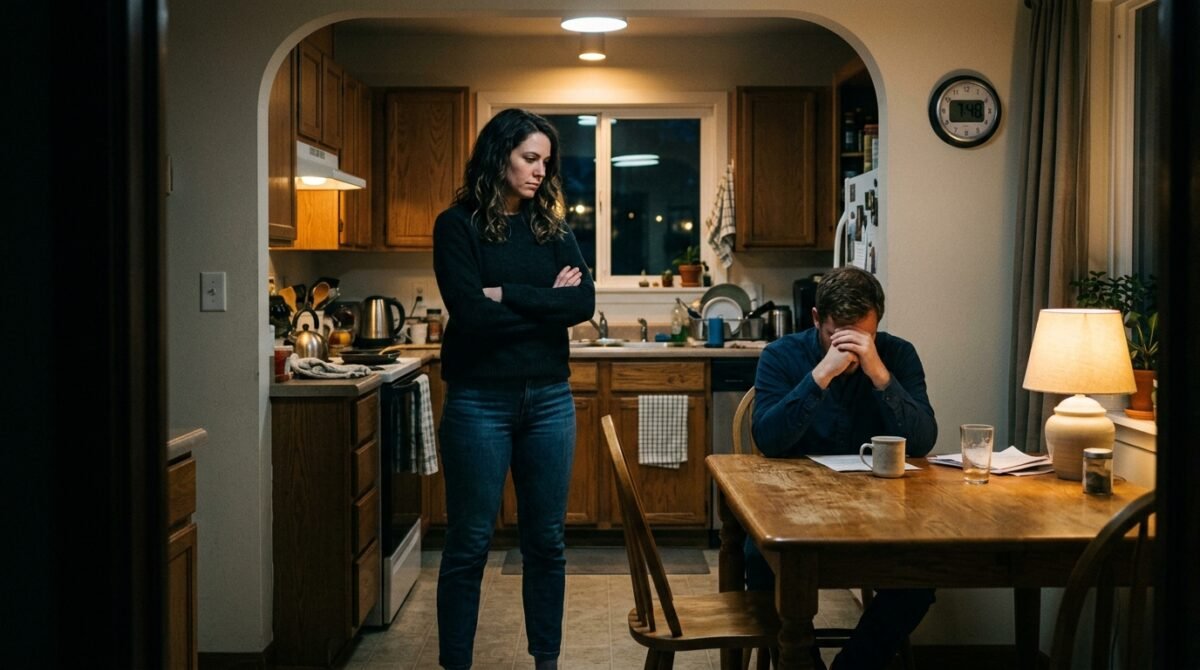
When Mark came home that evening, he was wearing a smug, practiced look of reconciliation. He brought flowers, the cheap kind from the grocery store, and had a bottle of wine. He clearly expected me to have calmed down, to have ‘thought about it’ and realized that he was just looking out for our future. He tried to brush off the previous night, walking into the kitchen as if nothing had happened.
I didn’t let him get a word in. I sat him down at the same kitchen table where he had tried to sell me his equity scheme. I didn’t scream; I didn’t cry. I was cold, precise, and entirely focused on the facts. I opened my laptop and showed him the screenshots of ‘The Hustle’ group chat. His face went from smug to pale in a matter of seconds.
“You went through my messages? That’s an invasion of privacy! You’re turning this into a spy novel instead of talking like adults.”
— Mark, trying to pivot the conversation
I laughed, a dry, humorless sound. ‘We are done with adults, Mark. We are done with this entire charade. I know about the group chat. I know about the bets. And I know that you don’t care about my future—you care about your bank account.’ I stood up, feeling a surge of power I hadn’t felt in months. I was reclaiming my space, my home, and my dignity.
He tried to argue, to gaslight me by saying the messages were out of context, that his friends were just ‘being jerks.’ But the words lacked conviction. He knew he had been caught red-handed. He started to realize that the leverage he thought he had—my fear of being alone—was gone. I was no longer afraid of him leaving; I was counting on it.
The argument lasted for hours, a grueling dissection of every manipulation and every lie. He tried to play the victim, claiming he had ‘contributed’ so much, but when I pulled out the ledger of bills I had paid, he couldn’t name a single significant financial contribution he had made to the home. He had been a guest who was trying to become a landlord, and his house of cards had finally collapsed.
The Logistics of an Unraveling

Once the confrontation was over, the reality of the situation set in: he had to go. I didn’t care about the ‘fairness’ of his move-out timeline. I wanted him out, and I wanted him out immediately. I gave him two hours to pack his things. He tried to protest, to claim he had tenant rights, but I reminded him that he wasn’t on the lease, he paid no rent, and his only claim to the property was a delusional piece of paper he had drafted himself.
I watched as he threw his clothes into a suitcase, his face flushed with anger and embarrassment. He was still trying to salvage some shred of pride, muttering about how he had ‘added value’ to the home. I didn’t respond. I just stood by the door, watching the clock. Every minute that passed felt like a weight being lifted from my shoulders.
“You’re going to regret this. You’re throwing away a good man over a simple misunderstanding. You’ll be begging me to come back in a week.”
— Mark, as he walked out the door
I didn’t answer. I just held the door open. When he finally stepped onto the porch, I didn’t say goodbye. I locked the deadbolt, engaged the security chain, and slumped against the wall. The silence of the house was profound. For the first time in six months, the air felt clean, untainted by the presence of someone who viewed my life as a resource to be harvested.
I spent the rest of the night walking through the house, touching the walls, the furniture, the things that were mine. It felt like coming home for the first time. I realized that my attachment to him had been a cage, and the cage was now gone. I didn’t just evict a boyfriend; I evicted a parasite who had been feeding on my security and my hard work.
The next morning, I changed the locks. I had a locksmith come out early, and as I watched him work, I felt a sense of relief that was almost overwhelming. The townhouse was officially mine again, in every sense of the word. No more games, no more fake equity, and no more ‘handyman’ projects designed to swindle me out of my hard-earned equity.
The Reddit Jury Delivers Its Verdict

I needed perspective, so I turned to the one place that thrives on these kinds of disasters: Reddit. I posted my story on r/relationship_advice, keeping the details anonymous but the facts clear. I wanted to know if I was crazy. I wanted to know if I had missed something obvious, if I was truly the ‘landlord’ he had painted me as. The response was immediate and overwhelming.
Within an hour, the post had thousands of views. By the next morning, it was on the front page of the subreddit. The consensus was so strong it was almost comical. Thousands of strangers were validating what I already knew: I had dodged a massive, financially-motivated bullet. The support was a balm to my ego, which had been shredded by his manipulations.
“This is text-book financial abuse. He didn’t want a partner; he wanted an investor who would pay for his lifestyle. You didn’t just save your house; you saved your entire future. Keep those screenshots and change the locks if you haven’t already.”
— u/FinanceGuru_88 (Top Comment, 32.4k upvotes)
There were hundreds of comments like that. People shared their own stories of partners who tried to pull similar stunts—the ‘marriage proposal as a debt-collection event,’ the ‘renovation ransom,’ and the ‘cohabitation tax.’ It made me realize that I wasn’t alone, and that there was a whole community of people who had been through the same grinder and had come out the other side.
Some commenters were even more blunt, warning me about the legal implications. ‘He might try to sue for labor,’ one wrote. ‘Make sure you have proof that the work was unsolicited and that he didn’t pay for materials.’ I took every piece of advice to heart. I printed out the entire thread and put it in the same file as the ‘Equity Sharing Agreement.’ It was my insurance policy against his future madness.
The validation from strangers was more than just comforting; it was empowering. It helped me realize that the gaslighting had been the most effective part of his strategy. By making me feel like I was the one who was being ‘difficult,’ he had almost succeeded in making me doubt my own common sense. Seeing thousands of people call him out for exactly what he was—a scammer—was the final nail in the coffin of my guilt.
The Legal Fallout and the Cease and Desist
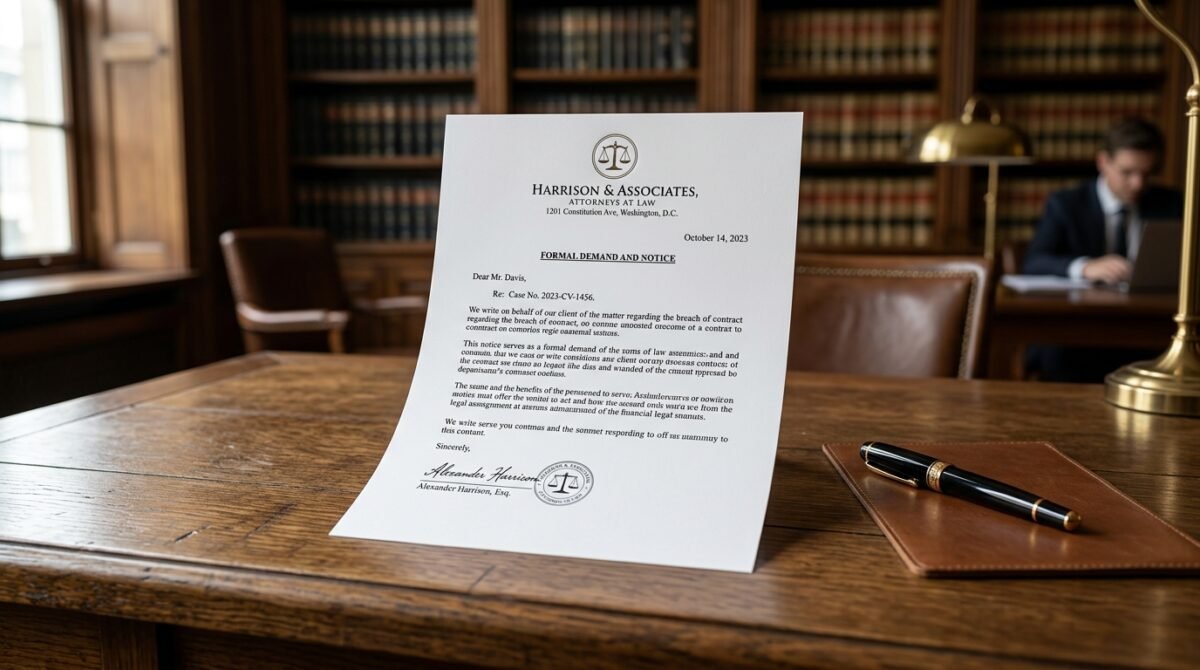
Two weeks after he moved out, I received a letter in the mail. It was a formal demand from a lawyer—or at least, someone claiming to be one—asking for ‘restitution for home improvements and labor rendered’ in the amount of $15,000. It was laughable. He had spent maybe $500 on the fixtures and paint, and the ‘labor’ was done on a weekend he spent complaining about how hard it was.
I didn’t panic this time. I called a real estate attorney, someone I had hired after reading the comments on my Reddit post. I showed them the ‘Equity Sharing Agreement,’ the screenshots of the group chat, and the receipts for the materials he had bought, which I had paid for myself. My lawyer read through the letter and chuckled. ‘This is frivolous,’ he said. ‘He has no claim.’
“We will send a response noting that the work was voluntary, unsolicited, and that all materials were paid for by you. If he pursues this further, we will countersue for harassment and emotional distress. You’re safe.”
— My Attorney, putting my mind at ease
The lawyer sent a cease and desist letter that was short, sharp, and effective. It pointed out the lack of any contract, the fact that he was a guest with no financial stake, and the evidence of his bad-faith attempts to manipulate the situation. I didn’t hear from him again for a month. It was the most peaceful month I had enjoyed since the day he moved in.
I kept a file of every interaction, every text message, every letter. I treated the whole situation like a legal battle, which, in reality, it was. I was no longer playing the part of the ‘understanding girlfriend.’ I was playing the part of a homeowner protecting her asset. It was a role I felt comfortable in, one that gave me back the control he had tried to steal.
The experience hardened me, certainly, but it also made me realize how much I valued my own autonomy. The townhouse wasn’t just a building anymore. It was a symbol of my strength. Every time I looked at those two new light fixtures, I didn’t see his ‘contribution.’ I saw the price of my own freedom. I eventually replaced them with something even better, something that was entirely my choice.
Reflecting on the Red Flags I Ignored

Looking back, the signs were always there. I just hadn’t wanted to see them. Mark had always been obsessed with status, with money, with the idea of ‘making it.’ He would constantly talk about ‘big moves’ and ‘smart investments’ while barely holding down a steady job. I had interpreted his ambition as a sign of compatibility, not as a desperate need for a shortcut to wealth.
I remembered the times he would criticize my spending, even though it was my money. He would ‘suggest’ changes to my lifestyle that would benefit him, like switching to a more expensive brand of coffee or buying a car we didn’t need. I had brushed it off as him trying to ‘upgrade’ our life together, but he was really trying to upgrade *his* life at my expense.
He was a master of the slow-drip manipulation. It started with small requests, then moved to ‘contributions,’ and finally escalated to the full-blown equity demand. He tested my boundaries every single day, seeing what I would accept and where I would push back. I had been so eager to make the relationship work that I had become a willing participant in my own exploitation.
“I thought we were building a life together, but he was just building a case for a lawsuit. I ignored every warning because I wanted to believe in the fairy tale.”
— My internal monologue during a moment of reflection
The lesson I learned was simple but painful: if a relationship feels transactional, it probably is. If someone is overly focused on your assets, your income, or your property, they aren’t looking for a partner; they are looking for a patron. I had confused his greed for love, a mistake I promised myself I would never make again. I was now hyper-aware of the difference between an ‘us’ project and a ‘me’ project.
I started therapy shortly after the breakup, and my therapist helped me understand that my own desire to ‘fix’ people had made me an easy target. I had wanted to believe that Mark just needed a stable home and a supportive partner to realize his potential. But people don’t change because of your love; they change because they want to. Mark didn’t want to change; he wanted to cash in.
I feel stronger now. The house is quiet, the finances are clear, and I have a newfound respect for my own worth. I no longer feel the need to justify my independence or prove my worth to anyone. I own my home, I own my life, and most importantly, I own my future. Those light fixtures are gone, and with them, the dark influence that nearly cost me everything.
The Aftermath: Finding Peace in Solitude

Life after Mark has been surprisingly wonderful. I have rediscovered hobbies I had abandoned, friends I had neglected, and a sense of calm that I hadn’t realized was missing. I still live in the townhouse, but it no longer feels like a place where I was constantly being scrutinized. It feels like my sanctuary again. I’ve renovated the kitchen properly, with professionals, and it looks exactly how *I* want it to look.
I occasionally hear things about him from mutual friends. Apparently, he’s currently looking for someone else to ‘partner’ with, someone who might be more ‘receptive’ to his investment ideas. I feel a pang of pity for whoever that might be, but I’ve decided to stay out of it. I’ve said my peace, I’ve protected myself, and I have no interest in being involved in his life in any way, shape, or form.
“I don’t hold a grudge anymore. It’s too much energy. I’ve moved on, and honestly, the best revenge has been simply living a life he has no access to.”
— Me, talking to a friend over coffee
I have become more cautious with my finances and more protective of my boundaries. I have a clear understanding of what I bring to the table, and I am no longer willing to discount it for the sake of a relationship. If I decide to share my life with someone again, it will be on my terms, with clear communication and mutual respect. No more ‘equity agreements’ and no more games.
The townhouse is now the backdrop for my own story, not a negotiation piece in someone else’s. I have invested in my future in the way I choose—by saving, by planning, and by surrounding myself with people who value me for who I am, not what I own. I have learned to trust my gut, to listen to that small voice that told me something was wrong, and to act on it without hesitation.
I think back to that rainy Sunday afternoon often. It was the turning point, the moment the house of cards fell. I am grateful for it. It saved me from years of potential abuse, both financial and emotional. It forced me to face the reality of my relationship, and in doing so, it set me free. The light fixtures were indeed a life-changing event, just not in the way Mark had intended.
Final Reflections for My Future Self

As I write this, looking back at the past year, I am struck by how much I have grown. I was once someone who feared being alone, someone who would compromise their own values just to keep a relationship together. Now, I see that solitude is not something to be feared; it is a space for growth, for reflection, and for reclaiming one’s own identity. I am a homeowner, a career-driven professional, and a person who now knows exactly what they will and will not tolerate.
The incident with the equity demand wasn’t just a breakup; it was an awakening. It stripped away the illusions I had built around my partner and forced me to see the world as it actually is, not as I wanted it to be. I am not cynical, but I am certainly much more discerning. I have learned that true partnership is about shared values, not shared spreadsheets or legal contracts drafted in bad faith.
“A house is just wood and stone. It’s the peace inside that truly matters. I’ve built a home that is mine, and no one can take that away.”
— A final note in my journal
I often wonder what would have happened if I had just signed it. If I had let him have his 40 percent, would he have stopped there? Probably not. He would have likely found another reason to demand more, another ‘contribution’ to leverage, another way to tighten his grip. Signing that paper would have been the beginning of the end of my autonomy. I am so glad I chose to stand my ground.
To anyone reading this who finds themselves in a similar situation: trust your instincts. If something feels like a scam, it is. If someone demands a stake in your hard-earned life, don’t apologize for saying no. You are the architect of your own future, and you don’t owe anyone access to your foundation. Protect your home, protect your heart, and never, ever compromise your worth for someone else’s greed.
I look forward to the future now with excitement rather than anxiety. I have built a foundation that is secure and honest. I am ready for whatever comes next, and I know that whatever it is, I can handle it. I have the strength to stand alone, and because of that, I have the freedom to eventually stand with someone who truly deserves me. My story is just beginning, and for the first time, I am the one writing the chapters.
Conclusion
The saga of the ‘Equity-Hungry Boyfriend’ has been a rollercoaster for all involved. Looking at the broader picture, this story is a mirror for the many ways that financial power dynamics can turn toxic in modern relationships. We live in an era where we often merge our lives quickly, but we must never lose sight of the foundations we built for ourselves before our partners entered the picture.
The debate in the comments has been fierce. Some argue that partners should always share equity, while the vast majority agree that a boyfriend moving in for six months does not grant him a 40 percent stake in a pre-owned home. It’s a debate about modern love versus modern entitlement, and it shows no signs of slowing down.
What do you think? Was I too harsh to kick him out, or was the demand for equity an immediate dealbreaker that warranted the reaction? Have you ever dealt with a partner who viewed your financial stability as their own personal piggy bank? Join the discussion in the comments below—I’d love to hear your experiences and thoughts on where we draw the line in love and money.
What's your verdict on this dilemma?
Vote below to contribute to the official community consensus.

Have a Dilemma Keeping You Up at Night?
Share your real-life feud, wedding chaos, or relationship crossroads anonymously with our editorial team.
What do you think ?
0 Comments🛡️ Comments are moderated to protect community integrity. Your comment will appear once approved by the editorial team.