

They say you never truly know a person until you live with them. I thought I knew Sarah. We had been roommates for three years in a high-rent district, navigating the nuances of shared utility bills, rotating chore schedules, and the occasional awkward guest stay. She was the one who held my hair back during a brutal flu and the one I turned to when my career took a nosedive. Or so I thought. When a sudden, life-threatening health crisis landed me in the hospital for three weeks, I handed Sarah my spare key, trusting that she would look after my plants and perhaps bring me a change of clothes.
What I didn’t know was that my absence had turned my private sanctuary into a goldmine for her. While I was lying in a sterile hospital bed, fighting for my recovery, my couture wardrobe—pieces I had spent years meticulously curating and saving for—was being treated like a public library. Dresses that cost more than a mid-sized sedan were being worn by strangers, dragged across dance floors, and returned smelling of cheap perfume and stale cigarettes.
The betrayal wasn’t just about the money, though that was significant. It was the violation of my most intimate space. My closet was a diary of my achievements, a collection of memories tied to galas, anniversaries, and personal milestones. Seeing those items listed on a peer-to-peer rental app, complete with my own photos from my social media, felt like a punch to the gut. The realization didn’t come all at once; it came in the form of a notification from a mutual acquaintance who thought I was ‘making some extra cash’ while recovering.
By the time I was discharged, I wasn’t just tired; I was furious. I walked into my apartment to find a garment bag sitting on the floor—a rental return that Sarah hadn’t yet processed. The smell of someone else’s perfume clung to the silk. It was then that the legal wheels started turning in my head. This wasn’t a misunderstanding; it was a calculated exploitation of my vulnerability. What followed was a journey through the court system, a collapse of a friendship, and a lesson in why you should never, under any circumstances, share a passcode with a roommate.
The Mysterious Notification While Recovering

The epiphany didn’t happen in a courtroom or through a formal confession. It happened on a Tuesday, at 3:00 AM, in the quiet, hum-filled solitude of the hospital recovery ward. My phone buzzed against the bedside table, a notification from a fashion-forward acquaintance, Clara. I opened the message expecting a get-well-soon card, but instead, I found a link to a local designer rental app. It featured my vintage Chanel blazer—the one I had promised my mother I would save for my future daughter.
The caption was sickeningly casual: ‘The perfect look for your Friday night gala. Gently worn, high quality, available for same-day pickup.’ I stared at the screen, my heart rate monitor spiking, triggering a gentle chime from the nurse’s station down the hall. I refreshed the page. There were five other items from my closet listed under a profile called ‘CityChic_Rental.’ Each photo was lifted directly from my private Instagram, edited to hide my face, but the background was unmistakably my bedroom.
“Hey, I love that you’re selling your pieces, but are you really letting people borrow the vintage Chanel? I thought you said that was priceless!”
— Text from Clara, 3:12 AM
I felt a cold sweat break out over my forehead. I tried to call Sarah, but my hands were shaking too violently to dial correctly. I sent a simple text: ‘Are you using my closet?’ I waited for an hour, my mind racing through every item I owned. The math was horrifying. If she had been renting these out for weeks, how many people had worn my clothes? How many items had been damaged? The violation felt physical, a sickness deeper than the one that put me in the hospital bed.
Sarah finally replied at 8:00 AM. Her tone was defensive, almost annoyed that I was checking in on ‘home stuff’ while I was supposed to be resting. She claimed she was ‘keeping the clothes aired out’ and ‘making sure they stayed in good condition.’ She lied, but her lies were clumsy. She didn’t realize that I had already taken screenshots of the entire store. I didn’t need a confrontation then; I needed evidence.
I spent the next three days in the hospital documenting everything. I created a spreadsheet, cross-referencing the rental history on the app with the dates I was admitted. The pattern was clear. Every time I was sedated or undergoing procedures, a new batch of items was uploaded to the app. She wasn’t just borrowing; she was running an inventory. I felt like a stranger in my own life, watching my belongings being hawked to the highest bidder by someone I had trusted with my life.
The Confrontation in the Living Room
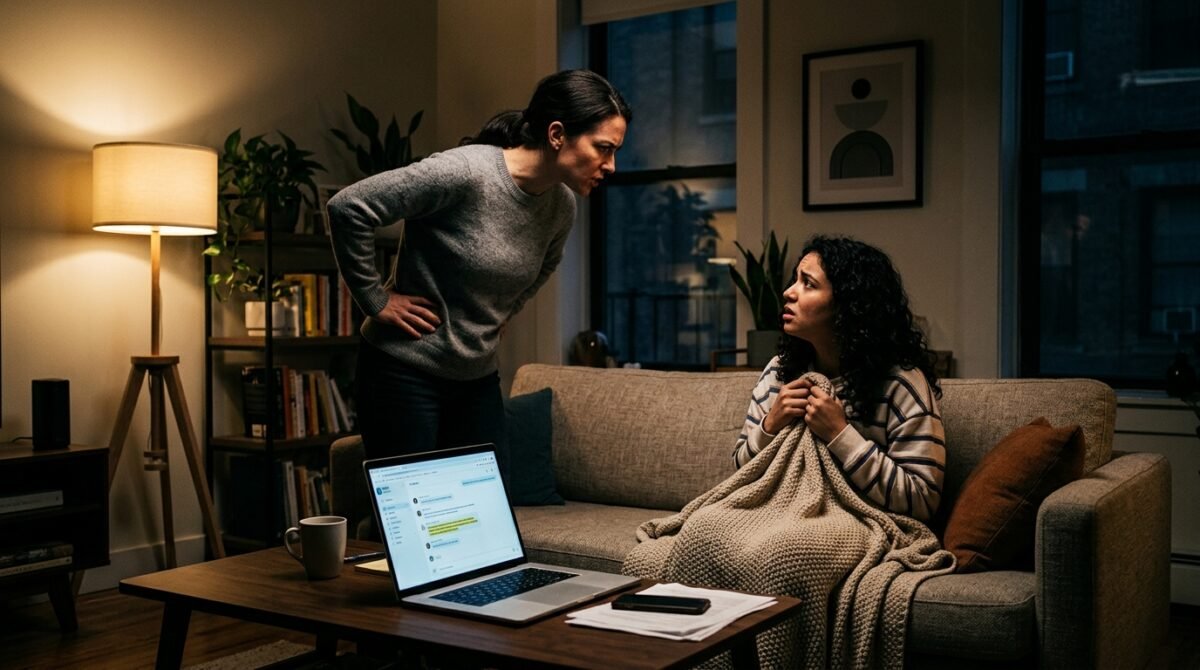
I arrived home against doctor’s orders. I was still weak, barely able to carry my own suitcase, but the rage provided a strange, synthetic energy. Sarah was lounging on the couch, watching a series, a glass of wine in her hand that I recognized as one of my own crystal stems. The apartment looked different—not necessarily messy, but curated. There was a specific rack by the door that held items that didn’t belong to her, items that looked like they were ready to be picked up by a courier.
She didn’t look up immediately when I walked in. She was too busy scrolling on her phone, likely managing her ‘business.’ When she finally realized I was standing there, the blood drained from her face. She dropped the phone, and the sound of it hitting the hardwood floor was the only noise in the room for a full minute. I didn’t say anything; I just walked over to the rack and started pulling items off the hangers, inspecting them for stains and tears.
“You’re home. You weren’t supposed to be back until the weekend. I was just… I was cleaning the apartment for you, I swear.”
— Sarah, attempting to justify the rack
I looked at her, and for the first time, I saw the parasitic nature of our living arrangement. She wasn’t a friend; she was a predator who had been waiting for the right moment to strike. I walked over to the desk and opened my laptop, pulling up the screenshots I had gathered. I set it down in front of her. ‘Cleaning, Sarah? Is that what you call renting out my custom-tailored Dior for $200 a pop?’
She tried to laugh it off, calling it a ‘harmless side hustle’ and insisting that I was being ‘dramatic’ because I was ‘sick and not thinking clearly.’ She had the audacity to suggest that I should be grateful she was keeping the clothes ‘circulating’ so they didn’t get moth-eaten. The entitlement was staggering. She didn’t see me as a person; she saw me as a resource. She had leveraged my health to fund her lifestyle, and she seemed genuinely offended that I had discovered her scheme.
I didn’t yell. I didn’t cry. I felt a weird sense of clarity. I told her that she had exactly twenty-four hours to vacate the room and that I would be calling the police if she didn’t cooperate. She scoffed, telling me that I couldn’t kick her out because we were on the lease together. She thought she had the upper hand because of the contract. She didn’t realize that my next move involved a lawyer who specialized in property theft and contract breach.
The $12,000 Damage Report
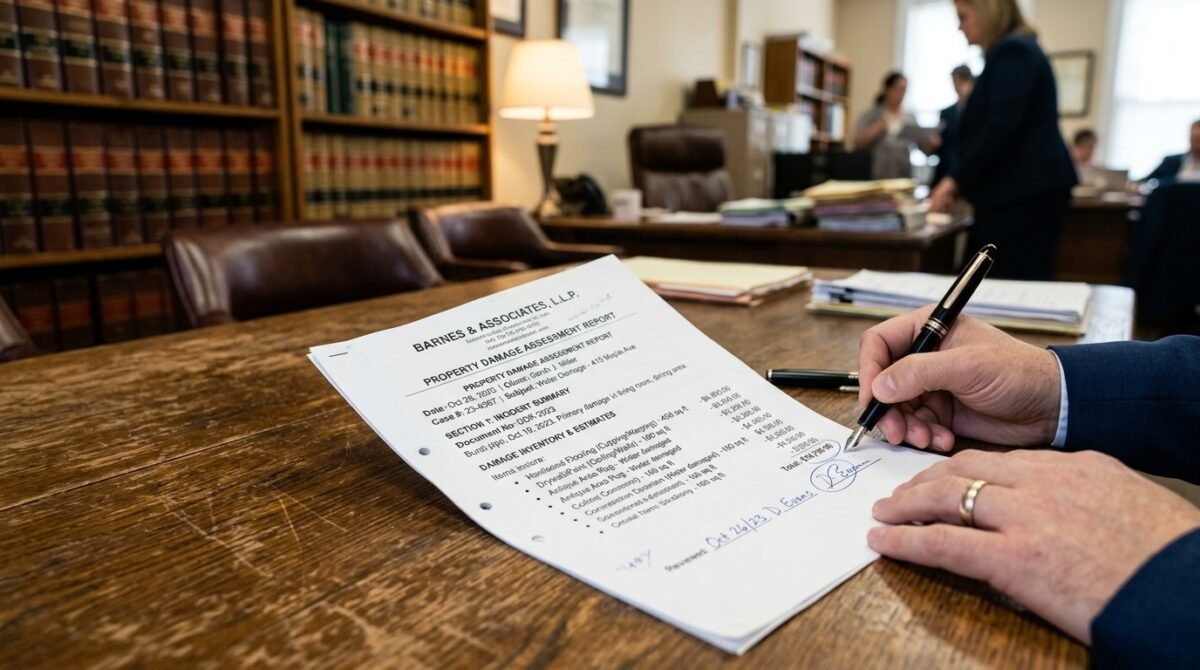
I hired an appraiser to come over the next day. I needed to know the full extent of the damage. When they arrived, they went through every single garment I owned. The results were worse than I had feared. It wasn’t just about the rental fees she had pocketed; it was about the irreparable damage caused by improper handling. Silk linings were torn, sequins were missing, and several items had been dry-cleaned at discount cleaners, which had ruined the delicate fabric.
The appraiser handed me a report. The total value of the damaged items alone exceeded $12,000. That didn’t even include the lost income she had generated, which I was legally entitled to reclaim as restitution. I looked at the numbers and realized that my ‘roommate’ hadn’t just betrayed my trust; she had committed a series of crimes that would follow her for the rest of her life. I didn’t feel bad for her. I felt a cold, hard sense of justice.
Sarah stayed in her room, slamming doors and texting people. I could hear her voice through the walls, complaining about how ‘unfair’ I was being and how I was ‘ruining her life over some clothes.’ She didn’t understand that these weren’t just clothes. They were the physical embodiment of my hard work. She had treated them like disposable trash, and now she had to pay for that arrogance. I kept the appraiser’s report on the kitchen table, a silent witness to the destruction.
“You’re really going to sue me? Over some dresses? You’re acting like a spoiled brat. I was going to pay you back eventually, once the app payouts cleared!”
— Sarah, shouting through the closed bedroom door
The audacity of her statement about paying me back ‘once the payouts cleared’ was the final nail in the coffin. She admitted to the theft in her own words. I hit record on my phone, capturing her confession perfectly. I wasn’t just going to sue her; I was going to make sure she couldn’t wiggle out of this with some flimsy excuse about a ‘shared understanding’ that never existed.
By the end of the day, I had a lawyer on retainer. He was expensive, but the look on his face when I showed him the screenshots and the recording was worth every penny. He told me that this was a ‘slam dunk’ case of conversion and breach of contract. We drafted a cease-and-desist that was more like a declaration of war. I felt like I was finally taking my life back, piece by piece.
The Legal Ultimatum and the Eviction Notice
The next morning, my lawyer arrived at the apartment with the paperwork. It was a formal notice of eviction for breach of lease, coupled with a demand for the $12,000 in damages plus legal fees. When I handed it to Sarah, she didn’t throw a fit. She didn’t scream. She just looked at the papers, her eyes scanning the legal jargon, and then she laughed. It was a hollow, desperate sound. She thought she could still talk her way out of it.
She started calling our mutual friends, trying to spin a narrative where I was the ‘unhinged roommate’ who was having a ‘medical breakdown’ and attacking her for no reason. She painted herself as the victim, the one who was just trying to help out while I was dying in a hospital bed. The manipulation was masterful, but it didn’t hold up once people started seeing the screenshots of her rental shop. The community didn’t take her side for long.
“I just wanted to make a little extra money because I was struggling with rent, and she had all these expensive things just sitting there. She’s overreacting, and now she’s trying to destroy me.”
— Sarah in a text to a mutual friend, later leaked to me
The ‘struggling with rent’ excuse was a blatant lie. I knew for a fact that her parents covered her rent every single month. This wasn’t about survival; it was about greed. She wanted the lifestyle, the clout, and the money, and she was willing to burn our friendship to the ground to get it. When the legal papers landed, the reality of her situation finally hit her. She wasn’t just moving out; she was facing a permanent record.
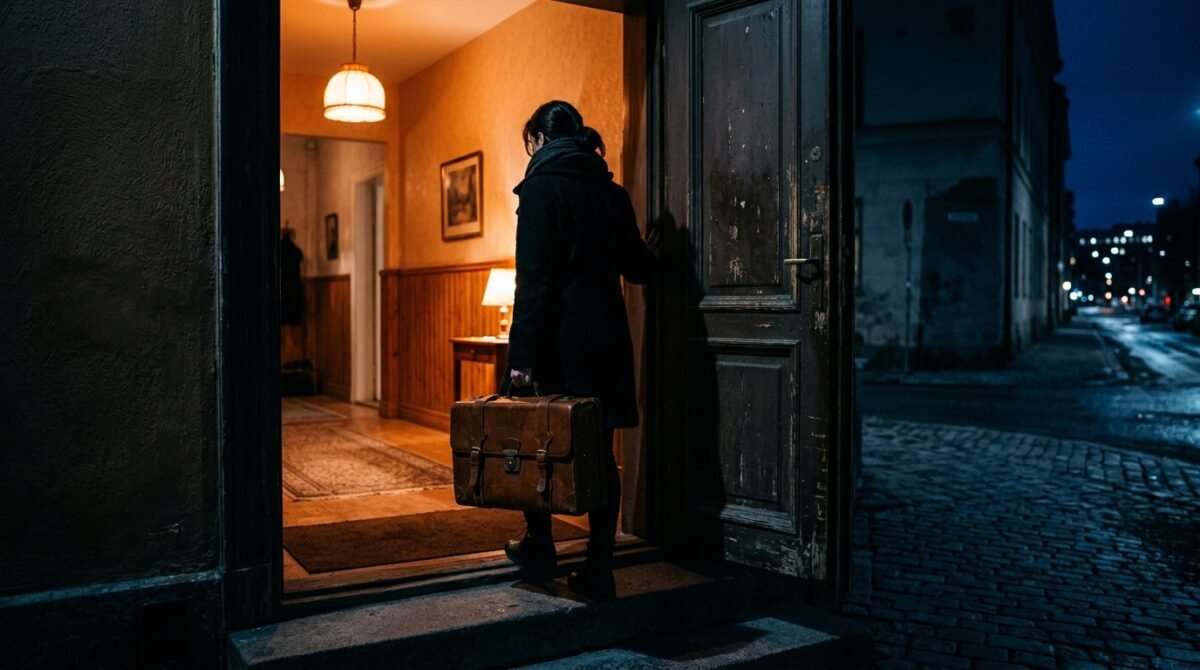
I watched as she packed her bags. It took her three hours. She was meticulous about her own things, wrapping her shoes in tissue paper while my designer bags sat on the floor, some of them scuffed and stained from her ‘business.’ I didn’t help her. I stood in the doorway, my arms crossed, watching her dismantle the life she had built on the back of my betrayal. It was the most satisfying thing I had ever witnessed.
As she left, she turned to me and threatened to tell the landlord that I was the one who had damaged the apartment. I just smiled and pointed at the security camera I had installed in the hallway the day I got back. She realized then that she had lost. There were no more cards to play, no more lies to spin. She walked out the door, and for the first time in three years, the apartment finally felt like it belonged to me again.
The Internet Weighs In

When I finally posted the full story on a popular legal advice subreddit, I wasn’t expecting the outpouring of support. I expected people to call me petty or tell me to ‘let it go’ for the sake of the friendship. Instead, the community rallied behind me. The thread blew up within hours, with thousands of people dissecting the nuances of the theft and the legal implications of what Sarah had done. It became a masterclass in why you should never trust a roommate with your private property.
The comments were visceral. People shared their own horror stories of roommates who had stolen clothes, makeup, and even money. It validated everything I had been feeling. I wasn’t being ‘dramatic.’ I had been the victim of a calculated crime. The legal advice was particularly helpful, with several lawyers pointing out additional avenues I could pursue, like filing a police report for larceny.
“This is not a roommate dispute. This is grand larceny. She didn’t just borrow your clothes; she engaged in a systematic effort to profit from your personal property without your consent. Do not settle for anything less than full restitution.”
— u/LegalEagle88 (Top Comment, 32.4k upvotes)
I spent hours reading the comments, realizing that my situation was a cautionary tale for thousands of others. The solidarity was overwhelming. I felt less like a victim and more like a survivor. I started to take the advice to heart, documenting every single interaction and preparing for the inevitable mediation or court date. The anger that had fueled me was shifting into a calm, focused determination.
Of course, there were dissenters. Some people argued that I was being too hard on her, that she was ‘just a friend’ and that I should prioritize the relationship. Those comments were quickly downvoted into oblivion. The consensus was clear: when someone violates your trust in such a fundamental way, the friendship is already dead. You don’t owe them grace when they’ve shown you nothing but contempt.
The community support helped me prepare for the final showdown. I wasn’t just representing myself; I was representing everyone who had ever been taken advantage of by someone they trusted. The story became a viral sensation, and for a few days, I was the face of ‘roommate betrayal.’ It was surreal, but it gave me the strength to stand my ground and refuse any low-ball settlement offers that Sarah’s lawyer started throwing at us.
The Mediation Meeting

The mediation meeting took place in a neutral office building downtown. Sarah looked tired, her usual polished exterior replaced by a frazzled, anxious demeanor. Her lawyer sat next to her, looking bored, clearly unimpressed by the ‘petty’ nature of the dispute. My lawyer, however, was prepared. He had binders full of evidence, the rental app logs, the repair invoices, and the recording of Sarah’s confession. When we walked in, the atmosphere in the room shifted instantly.
Sarah tried to start with an apology. It was the typical, ‘I’m sorry you feel that way’ speech. She tried to frame it as a misunderstanding, claiming she thought we were ‘close enough’ that it wouldn’t matter. My lawyer cut her off before she could finish. He presented the evidence of the systematic rental, the money she had made, and the damage she had caused. The mediator’s eyes widened as she looked through the documents.
“We are not here to discuss feelings, Sarah. We are here to discuss the financial restitution for the $12,000 worth of damage and the $4,500 in unauthorized rental income you generated using my client’s property.”
— My lawyer, speaking firmly to the mediator
Sarah’s lawyer looked at her, his expression hardening. He clearly hadn’t been told the full extent of the evidence. He leaned over and whispered something to her, and she slumped in her chair. The power dynamic in the room flipped completely. She was no longer the victim; she was a defendant who had walked into a trap of her own making. The mediation turned into a rapid-fire negotiation, but it was entirely on my terms.
They tried to offer half. My lawyer didn’t even blink. He just pulled out the next binder, showing the photos of the damaged Chanel blazer and the receipts for the professional cleaning it would take to restore it. The mediator looked at the images and then back at Sarah. She was cornered. She had no way to argue against the visual proof. She looked like she wanted to cry, but I felt nothing.
By the time we walked out, the agreement was settled. She would pay the full $16,500, with a strict payment schedule. If she missed a single payment, we would head straight to court. It wasn’t just about the money; it was about the accountability. She had to acknowledge what she did, sign the confession, and walk away knowing that she had been caught. It was the best outcome I could have hoped for.
The Aftermath and Personal Healing

Moving forward, the process of healing was harder than the legal battle. My apartment felt haunted for a long time. Every time I walked into my closet, I remembered the sight of those empty hangers and the smell of someone else’s perfume. I eventually sold most of the clothes that she had touched. I couldn’t wear them anymore. They didn’t feel like mine. They felt like tainted objects, reminders of a time when I was vulnerable and betrayed.
I started therapy to deal with the trauma of the illness and the subsequent betrayal. It turns out that being betrayed by someone you trust while you’re physically weak is a specific kind of trauma. I had to learn how to trust again, how to set boundaries, and how to protect myself. It wasn’t an easy journey, but it was necessary. I became much more cautious about who I let into my life and, more importantly, into my home.
“The hardest part wasn’t the money. It was the realization that the person I shared my home with saw me as nothing more than an ATM with a walk-in closet.”
— A journal entry from three months post-incident
I also learned the value of a solid legal contract. Even with friends, even with people you think you know, you need to have clear boundaries and a paper trail. I no longer share my spare key with anyone, and I have a strict policy about my personal property. It might seem cold, but it’s the price of peace of mind. I’d rather be seen as ‘difficult’ than be a victim again.
The financial restitution helped me replace the items I lost, but it couldn’t replace the sense of security I used to have. That had to be rebuilt from the inside out. I started focusing on my health, my career, and my own happiness. I stopped caring about what people thought of me and started focusing on what was actually best for me. It was a liberating experience.
I look back at the photos of my old wardrobe and I don’t feel sad anymore. I feel proud of the person I became in the aftermath. I stood up for myself. I didn’t let someone else define my worth, and I didn’t let them get away with exploiting my struggle. I came out the other side stronger, wiser, and much more protective of the things that truly matter.
Reflecting on the ‘Roommate’ Dynamic
Looking back at the entire situation, it’s easy to see the red flags that I missed. Sarah was always a bit too interested in my things, always asking where I bought them or how much they cost. I dismissed it as typical curiosity, but it was actually a form of envy. She wasn’t just admiring my life; she was calculating how to take it for herself. I should have seen that, but when you’re living in such close quarters, you tend to ignore the small, uncomfortable truths until they become too big to overlook.
The dynamic of a roommate relationship is inherently fragile. You are sharing space, resources, and often, emotional labor. When one party decides to act in bad faith, the entire ecosystem collapses. I had assumed that we were a team, but in reality, I was the provider and she was the consumer. It’s a harsh lesson, but a vital one. You have to be aware of the power dynamics in any living situation, even among friends.
“If your roommate acts more like a landlord of your own stuff than a friend, it’s time to move out or find a way to set ironclad boundaries.”
— Advice from a therapist friend
Many people have asked me if I regret being so ‘intense’ about the legal battle. They wonder if I could have handled it differently, maybe by just asking her to leave. But I know that wouldn’t have worked. She didn’t respect me enough to listen to a request. She only respected the law, the threat of financial ruin, and the consequences of being exposed. By taking the legal route, I stripped her of the ability to manipulate the situation.
I think about the people who are currently in situations like mine, who are being taken advantage of by friends or roommates. My advice to them is simple: document everything. Don’t wait for them to change. Don’t think they’ll stop if you just ask them nicely. If they are willing to cross those lines, they have already shown you who they are. Believe them the first time, and take the steps you need to protect your property and your peace.
It’s been a year now, and I’m in a much better place. I live alone, in a space that is entirely my own. There are no secret cameras, no legal binders on the table, and no fear of waking up to find my things missing. I have learned to define my own success, and I have learned that the most important thing you can own is your integrity. That, nobody can rent out.
Lessons in Property and Privacy
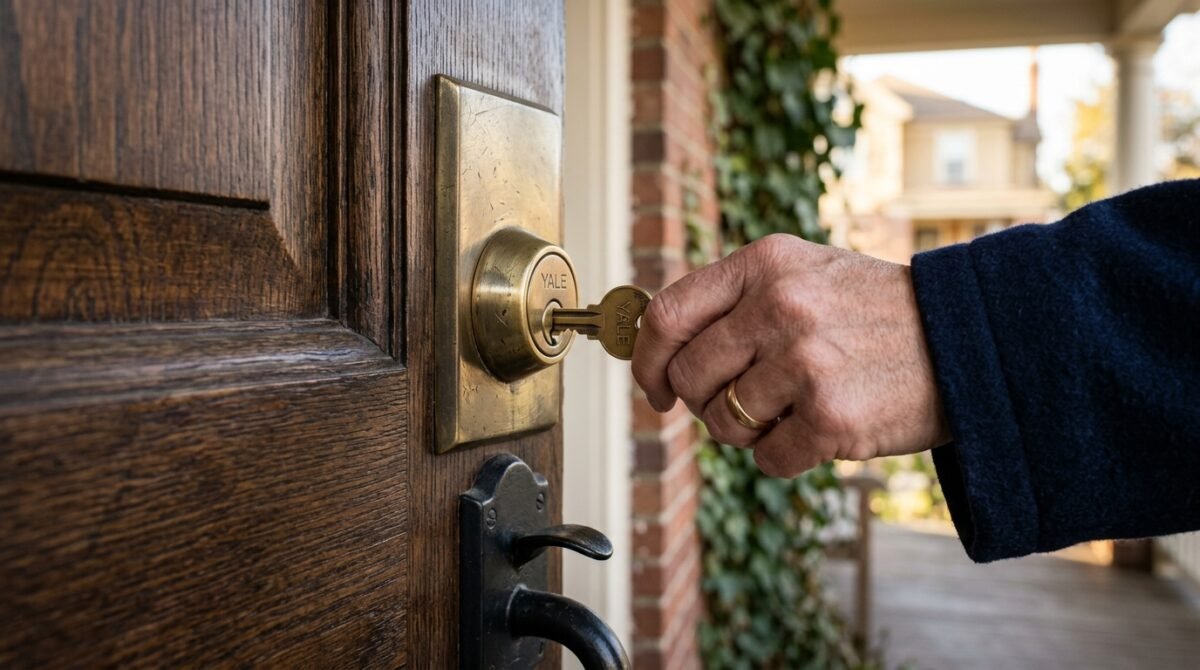
My case has become something of a local legend among my friends. It’s become a shorthand for ‘don’t be a Sarah.’ I have even had strangers reach out to me after reading about it, asking for advice on how to secure their own belongings or how to handle similar disputes. It’s a strange feeling, being a cautionary tale, but it’s also empowering. I’ve realized that my experience has helped others avoid the same fate, and that makes the whole ordeal worth it.
I’ve also come to realize that privacy isn’t just about hiding things; it’s about setting boundaries that define who you are. My closet was a part of me, and by letting someone else control it, I had allowed them to take a piece of my identity. Reclaiming that space was about more than just legal rights; it was about reclaiming my sense of self. I am no longer the person who lets others walk over me for the sake of ‘keeping the peace.’
“Boundaries aren’t about keeping people out; they are about defining what you will and will not allow into your life.”
— A quote I kept on my mirror during the legal process
I’ve started a small initiative to help young people understand their rights as tenants and roommates. It’s important to know what you’re entitled to and what your responsibilities are. Too many people go into these arrangements blindly, trusting that ‘friendship’ is enough to cover the gaps. It isn’t. You need to know your rights, and you need to be prepared to defend them if things go wrong.
As for Sarah, I don’t know where she is. She moved out of the city, and I haven’t heard from her since the final payment was made. Part of me hopes she learned something, that she realized the cost of her greed was more than just the money. But another part of me knows that people like that don’t change easily. They just find new targets. I’m glad I’m no longer one of them.
I feel like I’ve come full circle. The trauma of the illness is still there, but it’s part of a larger story now—one of survival, strength, and justice. I’m no longer defined by what happened to me, but by how I handled it. And that, in the end, is all that really matters.
Moving Forward: The Final Chapter

Today, my life is quiet and controlled. I have a new apartment, a new routine, and a completely new way of looking at relationships. I have learned that the people who truly care about you will respect your boundaries, even when they’re inconvenient. They won’t treat your life like a playground, and they certainly won’t treat your personal struggles as an opportunity for profit. I have surrounded myself with people who value me for who I am, not for what I have.
The legal battle is behind me, and while the scar of the betrayal remains, it’s fading. I’ve found that the best way to move forward is to stop looking back. I don’t check my old social media for updates, and I don’t follow the lives of the people who betrayed me. I’m focused on building a future that is entirely mine, one where I am the author of my own story and the protector of my own boundaries.
“The best revenge is living a life that is so full and so rich that the people who tried to bring you down become entirely irrelevant.”
— My favorite mantra
I hope that if you’re reading this and you’re in a situation where you feel your boundaries are being crossed, you take it seriously. Don’t wait for a disaster to happen before you stand up for yourself. You are worth more than the convenience of others, and your property is an extension of your hard work and your personal history. Protect it fiercely.
I am grateful for the journey, as painful as it was. It taught me things I wouldn’t have learned otherwise. It forced me to grow, to stand tall, and to demand the respect that I deserve. I am no longer the victim. I am the person who fought back and won. And that is a victory that I will carry with me for the rest of my life.
Thank you for reading my story. It’s been a long and winding road, but I wouldn’t change a thing. Every step, every confrontation, and every moment of doubt brought me to where I am today. And today, I am stronger, safer, and finally, truly at home.
Conclusion
My journey from a vulnerable patient to a triumphant survivor was paved with heartbreak, legal threats, and a total collapse of faith in those I once considered friends. But it was also a journey of rediscovery. I learned that my boundaries are not a suggestion—they are the foundation of my self-respect. When someone violates that, they aren’t just breaking a rule; they are breaking the sanctity of your life.
The lessons I learned weren’t just about fashion or money; they were about the inherent value of personal agency. By refusing to be a victim and holding Sarah accountable for her actions, I reclaimed my power. I hope my story serves as a reminder that your trust is a gift, not a resource to be exploited. If you find yourself in a situation where you are being taken advantage of, don’t wait for the ‘right moment’ to speak up. Take your life back today.
Now, I turn it over to you. Have you ever had a roommate or a friend violate your privacy or trust in a way that left you questioning everything? How did you handle it, and what would you do differently today? Let’s talk about it in the comments below.
What's your verdict on this dilemma?
Vote below to contribute to the official community consensus.

Have a Dilemma Keeping You Up at Night?
Share your real-life feud, wedding chaos, or relationship crossroads anonymously with our editorial team.
What do you think ?
0 Comments🛡️ Comments are moderated to protect community integrity. Your comment will appear once approved by the editorial team.