

I always believed that marriage was a partnership of equals. My husband, David, and I have always supported one another’s careers, or at least that is what I told myself for the past seven years. I am a senior graphic designer and creative strategist; he is a corporate project manager. We have spent countless nights hunched over our respective laptops, sharing the quiet hum of professional ambition. When he mentioned he was up for a VP position, I was the first to proofread his slide decks and offer feedback on his market analysis.
The promotion party was meant to be the culmination of his hard work. I had spent weeks helping him polish his presentation, never suspecting that the very ideas he was pitching—the unique branding strategies, the analytical breakdown of the Q4 marketing shifts, the high-concept visual identity—were things I had developed for my own freelance portfolio. I thought we were just collaborating. I didn’t realize I was drafting his winning argument.
The realization didn’t hit me all at once. It was a slow, agonizing process that began as a knot in my stomach and ended in a total collapse of my reality. As the evening progressed, the toasts began, and the CEO of his firm stood up to thank David for his ‘groundbreaking vision’ regarding the digital transition initiative. When he pulled up a slide to illustrate the point, the color drained from my face. I recognized that font. I recognized the color palette. I recognized the exact phrasing of the mission statement.
I stood there in a room full of his peers, gripping my champagne glass so tightly I thought it might shatter. The betrayal wasn’t just professional; it was a total violation of the intimacy we shared. He hadn’t just used my work; he had stripped my name from it and presented it as the pinnacle of his own genius. I realized then that I wasn’t his partner—I was his secret creative engine, and he was the one reaping the rewards.
What followed was not a scene of public histrionics, but a cold, calculated departure. I walked out of that ballroom, leaving my pride, my marriage, and my husband behind. This is the story of how I uncovered the deception, the fallout that followed, and the Reddit community that helped me see I wasn’t crazy for demanding justice.
The Subtle Unraveling of the Presentation Deck

It started three weeks prior to the promotion party. David had been stressed, pacing the floor of our home office at two in the morning. He claimed his firm was looking for someone who could demonstrate ‘visionary thinking.’ I, wanting to be the supportive spouse, offered to look over his deck. I spent an entire weekend refining the data visualization and building a cohesive brand narrative, treating it like a passion project for his benefit.
I remember him looking at the screen, a strange, unreadable expression on his face. He praised the design, calling it ‘a masterpiece’ that would surely impress the board. I felt a surge of pride, thinking we were a team. Little did I know, he was already planning to present these designs as his own independent conceptual work, which he had explicitly told his supervisor was his original creation.
“I don’t know what I’d do without you, Sarah. You have such a talent for making the complex look simple. This is going to change everything for my career.”
— David, during our ‘collaboration’ session
The week leading up to the announcement was filled with strange behavior. He started hiding his laptop screen whenever I walked into the room. He became secretive about his emails, claiming it was ‘confidential executive business.’ I chalked it up to nerves and the pressure of the upcoming promotion. I was so blinded by my own belief in his integrity that I didn’t see the red flags waving right in front of me.
Even when he told me he had won the position, he didn’t thank me. He thanked ‘his own late nights’ and ‘his own research.’ I pushed down the flicker of hurt, telling myself he was just caught up in the excitement. I started getting ready for the celebratory dinner, picking out a dress that made me feel like an equal, unaware that I was walking into the lion’s den of my own professional erasure.
By the time we arrived at the venue, I was still feeling a strange, nagging sense of unease. I hadn’t been allowed to see the final deck. He told me it was ‘proprietary’ and couldn’t leave his work terminal. At the time, it sounded like a reasonable excuse. Now, looking back, I realize how much effort he put into keeping me away from the final version of the evidence he would use to destroy my trust in him.
The Moment of Recognition in the Ballroom

The venue was packed with the elite of the city’s corporate scene. The air smelled of expensive perfume and success. David was in his element, shaking hands, laughing, and playing the role of the visionary leader perfectly. I stood by his side, nodding at polite conversation, feeling like an imposter in my own life. Then came the speech. The CEO of the firm, a man named Mr. Henderson, took the stage to introduce David.
As Henderson clicked through the slideshow, I felt the world tilt. There it was: ‘The Apex Initiative.’ I had titled it that while working on my own laptop at our dining table. The layout was identical, down to the specific typeface I had chosen for the header. I had even included a subtle, almost invisible watermark—a tiny, stylized icon of a mountain peak—that I often used in my freelance projects. It was there, right in the corner of the slide.
“And this, ladies and gentlemen, is what David has been working on for months. This original framework is the future of our firm.”
— CEO, during his keynote speech
The room erupted in applause. People turned to look at David with admiration. I stood frozen, my glass trembling in my hand. I wasn’t just seeing my work; I was seeing my professional identity being stolen in front of three hundred people. The violation felt physical, a cold weight pressing into my chest. How could he do this? How could he stand there and soak in the applause for a product that was birthed from my intellect?
I looked at him. He was smiling, a smug, satisfied grin that I had never seen before. He wasn’t nervous; he was triumphant. He looked over at me, and for a split second, our eyes locked. I saw no guilt. I saw only the expectation that I would continue to play my part—the supportive wife, the silent partner—and keep the secret for the sake of our household’s prestige.
I didn’t scream. I didn’t throw my drink. I simply set the glass down on the nearest table, turned on my heel, and walked toward the exit. The music was loud, drowning out my thoughts, but the sound of his voice explaining the ‘nuances of the design’ trailed after me, a constant reminder of the audacity of his lie. I felt a strange, detached calm as I pushed open the heavy brass doors of the ballroom.
The Silent Ride Home and the First Confrontation
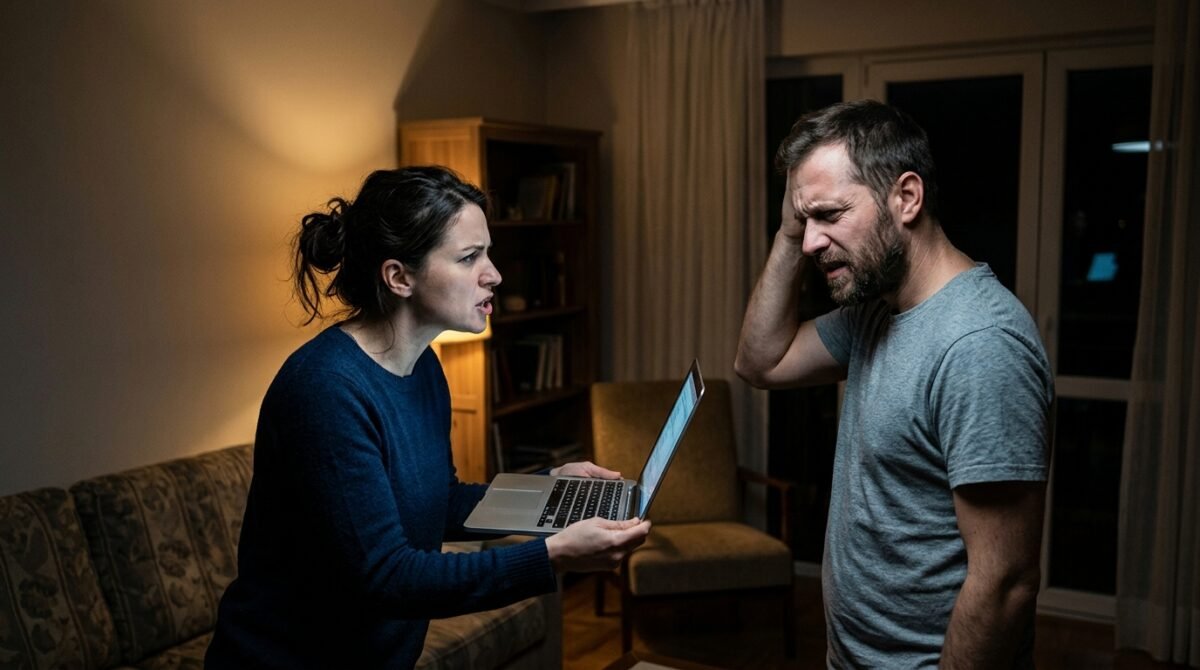
I drove home in silence, the city lights blurring through my tears. When I got inside, I didn’t turn on the lights. I sat in the dark, waiting. I knew he wouldn’t come home immediately; he had a party to finish. But the thought of him celebrating with my work in his hands made me feel physically ill. I pulled out my laptop and started digging through the shared cloud files we used for ‘collaboration.’ They were all gone.
He had deleted them. He had purged every trace of our shared work history, scrubbing the cloud of any evidence that I had contributed to his success. But he forgot one thing: I had backed up everything to a local hard drive that he never checked. I started comparing my original files with the screenshots I had managed to pull from the company’s public website and the snippets I remembered from the presentation.
“Where the hell did you go? You embarrassed me, Sarah. You just up and left like a child.”
— David, walking through the front door at 2:00 AM
He was drunk, his tie undone, his eyes glassy. He didn’t ask if I was okay. He didn’t ask why I had left. He was only concerned with the optics of my exit. The rage that had been simmering in me all evening finally reached a boiling point. I stood up, holding my laptop with the screen open to the comparison of the files.
“I didn’t leave like a child,” I said, my voice shaking with a cold, sharp anger. “I left because I was watching a thief claim credit for my life’s work. I know what you did, David. I know you used my portfolio for the executive position. I know you purged the cloud files.” The look on his face shifted from annoyance to pure, unadulterated panic. He realized he had been caught, and he realized he had no defense.
He tried to gaslight me, of course. He claimed it was a ‘collaboration’ and that in a marriage, ‘what’s mine is yours.’ He tried to spin it as if he were simply presenting our shared ‘family effort’ to the board. But we both knew that wasn’t true. He had signed his name to the documents. He had taken the bonus. He had secured the title. There was no ‘we’ in the legal contract he signed with his firm.
The Internet Weighs In: The Reddit Breakdown
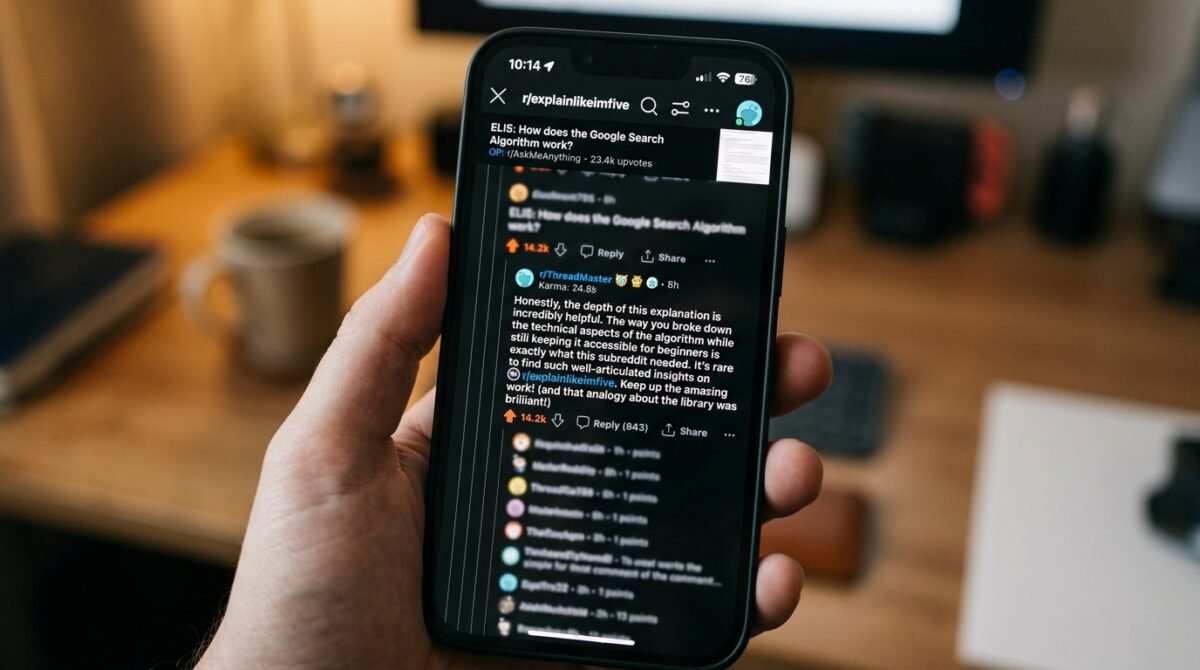
I felt so alone in that house that night that I turned to the only place I thought might give me an objective perspective. I posted my story on a popular subreddit, keeping the names and companies anonymous. I just wanted to know if I was overreacting. Was it normal for spouses to steal work? Was I being too sensitive by feeling this level of betrayal?
The response was immediate and overwhelming. By morning, my post had reached the front page, with thousands of comments pouring in. Most people were horrified. They didn’t see a ‘shared collaboration’; they saw intellectual property theft and a massive breach of marital trust. The validation was both comforting and terrifying, confirming that my gut feeling was right.
“This isn’t just about a presentation. This is about your husband treating you like a resource to be harvested rather than a person to be loved. Consult a lawyer. This is professional suicide if he keeps doing this.”
— u/CareerLegalEagle (Top Comment, 32.4k upvotes)
Others warned me about the potential legal ramifications. If he was using my proprietary, freelance-developed work for his corporation, he could be opening himself up to lawsuits, or worse, he could be framed as the sole author, leaving me with no proof of my own creative output. The community urged me to document everything, to secure my files, and to consider the long-term implications of his career trajectory being built on a foundation of lies.
I read through the comments with a sense of clarity I hadn’t felt in weeks. People were sharing their own stories of being ‘the secret creative’ for their partners, and how it had eventually led to resentment and divorce. It was a mirror held up to my life, and I didn’t like what I saw. I realized that my marriage was built on a power imbalance that I had been blind to, and the promotion was just the catalyst that made the crack visible.
The Reddit thread also gave me the courage to talk to a professional. I realized that if I wanted to protect my career and my future, I needed to take steps to separate my professional life from his completely. I started looking for a solicitor who specialized in intellectual property, someone who could help me navigate the mess he had created. I wasn’t just fighting for my marriage anymore; I was fighting for my professional reputation.
The Cease and Desist That Changed the Atmosphere
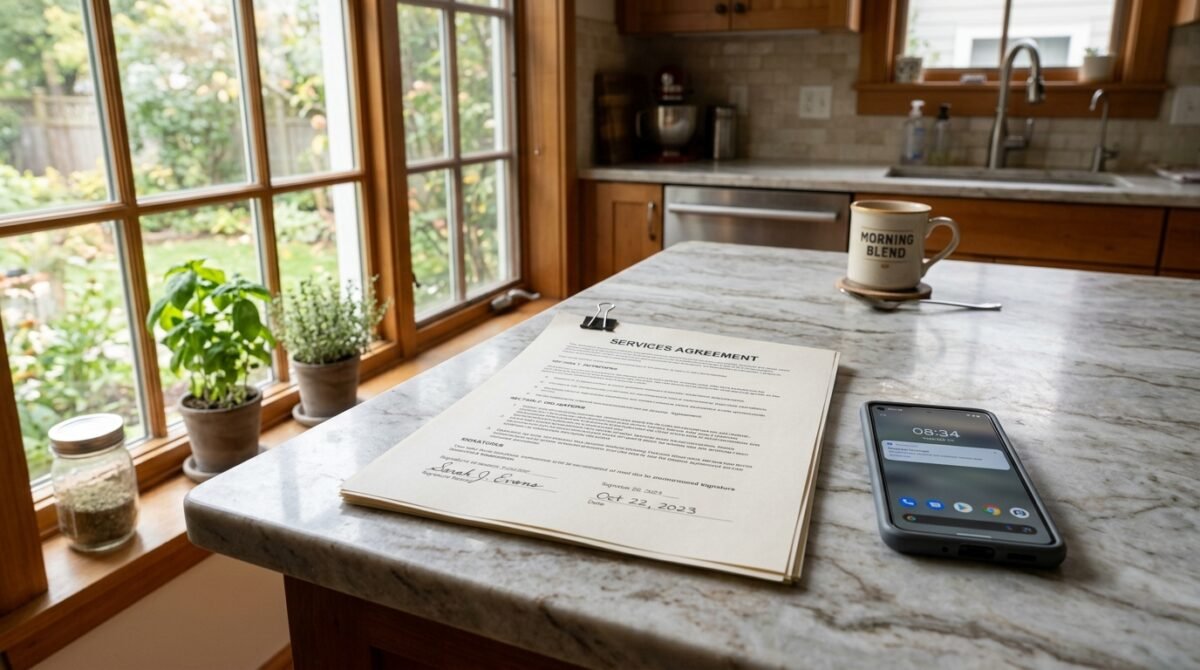
I couldn’t just let him continue to present my work as his own. I hired a lawyer and had a formal letter drafted to his company’s HR department, outlining that certain elements of the presentation contained intellectual property that I had developed independently. I didn’t want to burn his career to the ground, but I needed to ensure that my work was credited and that he couldn’t use it for future projects without my explicit consent.
The fallout was instantaneous. David came home one evening, white as a sheet. His company had launched an internal investigation. They were questioning him on the ‘originality’ of the assets he had provided. He tried to blame me, calling me vindictive and unstable, but the documents my lawyer had provided were bulletproof. He had no way to explain the hidden markers and the original timestamps.
“Do you have any idea what you’ve done? They’re questioning my integrity! You’ve ruined everything for us! I did this for our future!”
— David, pacing the kitchen floor
I looked at him, feeling nothing but profound sadness. He really believed that because he had done it for ‘our future,’ it was justified. He didn’t understand that he had violated my identity. He didn’t care about the integrity of the work; he only cared about the status it brought him. He was a man who would build a castle on someone else’s grave and call it a home.
The tension in the house became suffocating. We were living in separate rooms, communicating only through lawyers or the occasional cold, terse text. Every time I looked at him, I didn’t see the man I married; I saw a stranger, a corporate climber who would sacrifice everything, including his wife, to get ahead. The foundation of our marriage had crumbled, and there was nothing left to rebuild.
I started packing my bags that week. I knew I couldn’t stay. Being in the same space as him felt like a constant betrayal of my own values. I moved out, taking with me only the things that were mine, leaving him to the mess he had made of his career and his home. It was the hardest thing I’ve ever done, but it was also the most liberating.
The Final Confrontation at the Mediation Table

Divorce mediation is a strange experience. You sit across from the person you once planned to grow old with, discussing the division of assets while lawyers haggle over the price of a toaster. David tried to paint me as the ‘difficult’ one, the one who couldn’t handle his success. He played the victim card at every turn, suggesting that my ‘professional jealousy’ was the true cause of our marital breakdown.
I kept my cool. I didn’t need to argue. I just needed to secure my autonomy. I presented the evidence of his plagiarism, not as a weapon, but as a fact. I wanted it on the record that he had used my work. I wanted to ensure that he could never again claim the work as his own. The mediator was professional and neutral, but the look in David’s eyes told me he knew he had lost.
“You’re really going to do this? You’re going to burn the house down over some slide designs? It’s just work, Sarah! We’re married!”
— David, during mediation
“It’s not just work, David,” I replied calmly. “It’s about who you are. And it’s about who I am. I’m not your secret weapon anymore. I’m not your ghostwriter. I am my own person, and I deserve to be recognized for my own contributions. If you couldn’t value that, then you never really valued me.”
He didn’t have an answer for that. He just stared at the table, his face a mask of frustration and failure. The mediation ended with a clear division of property and a firm agreement regarding the ownership of our intellectual property. I walked out of that office feeling like a weight had been lifted off my shoulders. I was finally, truly free.
The process was painful, and there were days I wanted to crawl back into bed and forget everything. But then I would remember the look on his face when he realized his lies had finally caught up with him, and I would feel a sense of resolve. I had learned the most valuable lesson of my life: never prioritize someone else’s ambition at the expense of your own integrity.
Navigating the Professional Aftermath

The professional fallout for David was not what I expected, but it was justice in its own way. He wasn’t fired, but he was demoted. The company decided to keep him on because he had ‘potential,’ but they stripped him of the executive title and forced him to undergo a formal review. He lost his bonus, his access to the prestige projects, and, most importantly, his reputation among his peers.
I, on the other hand, had to rebuild. Because he had been so vocal about his ‘visionary’ work, some people in our industry assumed I was the one who had copied him. I had to be proactive. I created a new portfolio, documenting the dates and the processes of my work, and I started reaching out to my network. I was honest about what had happened, and I was surprised by how many people supported me.
“I heard what happened. You were right to stand up for yourself. Your work speaks for itself, Sarah. Don’t let his failure define your future.”
— A former colleague and mentor
The support was overwhelming. I landed a new position at a firm that values creativity and transparency, and for the first time in years, I feel like I’m doing work that is truly, entirely my own. I have boundaries now that I never had before. I don’t share my work with my partners unless I’m sure it’s protected, and I don’t give away my best ideas for free.
I also started a blog about navigating professional identity in relationships. It’s been a healing experience, being able to share my story and help others avoid the traps I fell into. I’ve realized that my worth isn’t tied to my ability to support someone else’s ego. It’s tied to my own talent, my own ambition, and my own integrity.
I still think about the party sometimes. I think about the champagne and the music and the way I felt when I realized I was being erased. But those memories don’t hurt as much as they used to. They’ve become a reminder of the day I found myself. They are the origin story of my independence, and for that, I can almost—almost—thank him.
Life After the Storm

It has been a year since the promotion party. I am living in my own apartment, which is decorated exactly how I like it. I have a new job, a new social circle, and a new sense of peace. I don’t talk to David. We have no contact, and I prefer it that way. The legal aftermath is behind us, and I’ve moved on to a chapter of my life where I am the protagonist, not the supporting character.
My friends say I look different—lighter, more confident. I think it’s because I’m not carrying the weight of his secret anymore. I’m not hiding my own potential to make room for his. I’m living out loud, and it feels incredible. I’ve even started mentoring young designers, showing them how to protect their work and how to advocate for their value in the industry.
“I used to think that being a good wife meant being a cheerleader. Now I know that being a good partner means being an equal, and that equality starts with respecting yourself.”
— My closing thoughts on the lessons I learned
I still see his name sometimes in industry news, though it’s rare now. He’s working in a mid-level project management role, still trying to climb the ladder, but the fire is gone. He’s just another corporate cog, and he knows that if he tries to pull a stunt like that again, he won’t get away with it. The industry is small, and reputations are hard to rebuild once they’ve been shattered by the truth.
I’m happy. For the first time in a long time, I am genuinely, deeply happy. I’ve learned that the most important relationship you will ever have is the one with yourself. If you can’t trust yourself to stand up for your own values, you’ll never be able to trust anyone else to value you. I’m proud of the woman I became that night, and I wouldn’t change a thing.
I know there are people out there right now who are in the same position I was, wondering if they’re crazy for feeling betrayed. To them, I say: trust your gut. Your work is your life, and your life is yours alone. Don’t let anyone take that from you, no matter how much they claim it’s for ‘the team.’ You are your own team. And you are worth fighting for.
Why We Need to Talk About Professional Theft

My story is, unfortunately, not unique. Intellectual property theft within relationships is a silent epidemic. It happens behind closed doors, under the guise of ‘collaboration,’ and it often goes unchecked because we are conditioned to believe that in marriage, everything is communal. But there is a line between sharing your life and sacrificing your identity. That line is crossed the moment someone else takes credit for your intellectual labor.
We need to stop romanticizing the ‘power couple’ who shares everything. We need to start acknowledging that individual ambition is healthy and that protecting your creative output is a fundamental right. Whether you are a writer, a designer, a coder, or an artist, your work is a reflection of your soul. When someone steals that, they aren’t just stealing a project; they are stealing a piece of you.
“Professional theft in relationships is a form of domestic abuse that we rarely talk about. It’s the erasure of a person’s identity for the sake of another’s ego.”
— A quote from a therapist I spoke to during my healing process
If you are in a relationship where you feel like your partner is using you to get ahead, start documenting everything. Keep your work separate. Use your own cloud storage, maintain your own hardware, and keep a paper trail of your ideas. It might feel like a lack of trust, but it’s actually a safeguard for your future. You owe it to yourself to be the owner of your own success.
I hope that by sharing my story, I can start a conversation. I want us to talk about the importance of boundaries, the necessity of professional autonomy, and the courage it takes to walk away from a life that is no longer serving us. We deserve to be seen for who we are, not for what we can provide to someone else’s success.
Let this be a reminder that your worth is not a variable. You are the constant in your own life. And if you ever find yourself standing in a room, watching someone else take credit for your life’s work, remember that you have the power to walk out. The door is always there. You just have to be brave enough to open it.
Final Reflections and Moving Forward

Looking back, the most shocking part of this entire ordeal wasn’t the theft itself. It was my own initial reluctance to acknowledge it. I had been so conditioned to play the ‘supportive wife’ that I had effectively erased myself to accommodate his ambition. That was the most painful realization of all. I had participated in my own marginalization.
Breaking free from that mindset was a process, not a single event. It required me to sit with my anger, to process my grief, and to ultimately forgive myself for being so naive. I learned that forgiveness isn’t about letting the other person off the hook; it’s about releasing the weight of the betrayal so you can move forward. I don’t hate David anymore. I just don’t think about him at all.
“You are the only person who can define your value. If someone doesn’t see it, they don’t deserve the privilege of being part of your journey.”
— My personal mantra for moving forward
I’ve realized that the greatest success is living a life that is authentic to who I am. I’m no longer chasing the validation of a partner or a corporation. I’m chasing my own potential. I’m building my own legacy, and this time, my name is on everything I create. There is no confusion about who is the visionary, and there is no question about who is the architect of my life.
I hope that anyone reading this who is currently doubting their own value or feeling the sting of betrayal knows that there is life on the other side of the fire. It’s hard, and it’s messy, and it’s often lonely, but it’s also beautiful. You are capable of so much more than you realize, and you are worth so much more than the credit you’ve been denied.
Thank you for listening to my story. It’s been a long journey from that ballroom to where I am today, but I wouldn’t trade it for the world. I’ve found my voice, I’ve found my strength, and I’ve found a life that is entirely, unapologetically mine. And for that, I am truly grateful.
Conclusion
This journey has been one of the most challenging experiences of my life, but it has also been the most transformative. I learned that you cannot build a healthy partnership on the foundation of stolen work or suppressed identity. True success is found in mutual respect, transparency, and the celebration of each other’s individual achievements.
If you have ever felt your work or your identity being overshadowed by someone else, know that you are not alone. Your voice matters, your ideas matter, and your contribution to your own success is non-negotiable. Don’t be afraid to demand the recognition you deserve.
I would love to hear from you. Have you ever experienced a betrayal in your relationship or workplace that forced you to re-evaluate your boundaries? How did you handle it, and what did you learn about yourself in the process? Share your stories in the comments below—let’s support each other in reclaiming our professional and personal power.
What's your verdict on this dilemma?
Vote below to contribute to the official community consensus.

Have a Dilemma Keeping You Up at Night?
Share your real-life feud, wedding chaos, or relationship crossroads anonymously with our editorial team.
What do you think ?
0 Comments🛡️ Comments are moderated to protect community integrity. Your comment will appear once approved by the editorial team.