
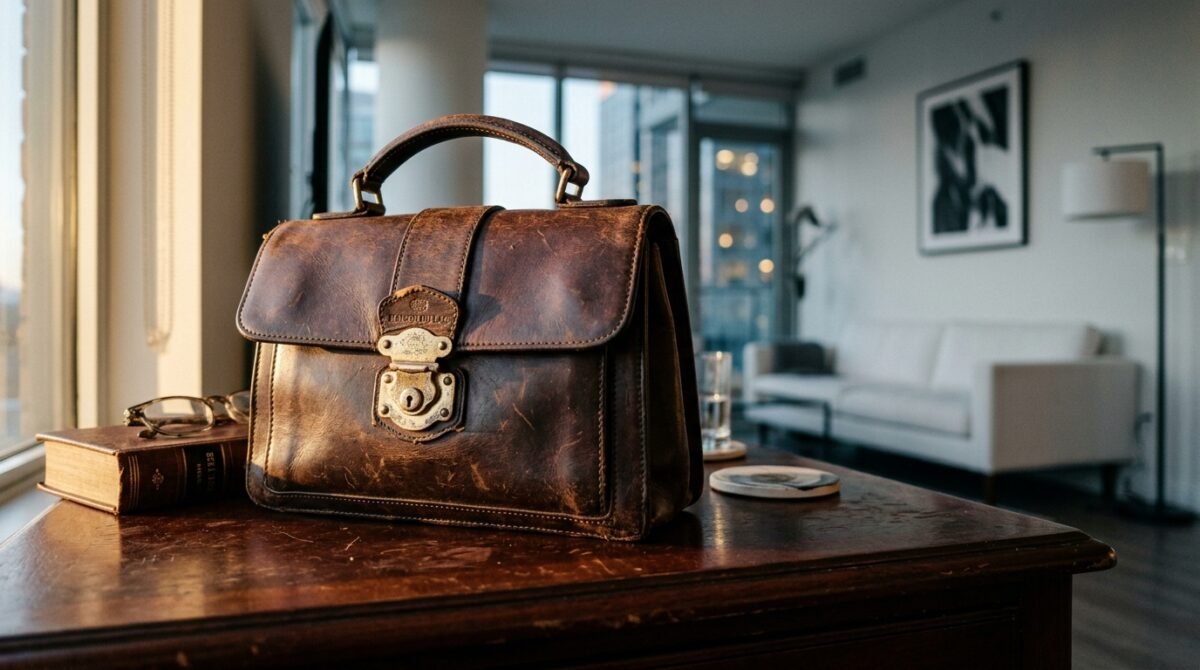
Grief is not a linear process; it is a series of waves, and for me, those waves have been tethered to specific physical objects. When my mother passed away three years ago, I didn’t inherit a fortune. I didn’t get the house or the stocks or the life insurance policy that everyone assumes comes with a ‘sudden loss.’ Instead, I inherited her sense of style and a singular, exquisite 1950s vintage handbag. It was a structured piece of Italian leather, aged to a perfect honey-brown, bearing the faint scent of her signature perfume. It was the only thing I owned that still made me feel like I could reach out and touch her.
My friend, Chloe, has always had an eye for ‘the aesthetic.’ She isn’t a bad person by nature, but she exists in a social media ecosystem where objects are not treasures, but props. To her, a vintage bag isn’t a memory; it is a ‘look.’ It is a narrative device for her follower count. For months, she had been dropping hints, ‘borrowing’ my jewelry, and making comments about how my wardrobe was ‘wasted’ on a quiet office life, but I never imagined she would cross the line into the one place I held sacred.
The request didn’t come as a polite inquiry. It arrived on a Tuesday morning, wrapped in the casual, demanding language of someone who views the world as a catalogue of things they are entitled to claim. She needed it for a photoshoot in Paris, she said. It was ‘too perfect’ for the theme. It was the catalyst for a battle I hadn’t realized I was fighting: the battle to protect the sanctity of my own heart against someone who only saw value in what could be projected to an audience.
This is not just a story about a handbag. It is a story about the audacity of modern entitlement, the way social media has warped our sense of ownership, and what happens when you finally decide that a friendship is not worth the price of your dignity. When I said ‘no,’ I thought I was setting a boundary. I didn’t know I was starting a war.
The Morning the Notification Changed Everything
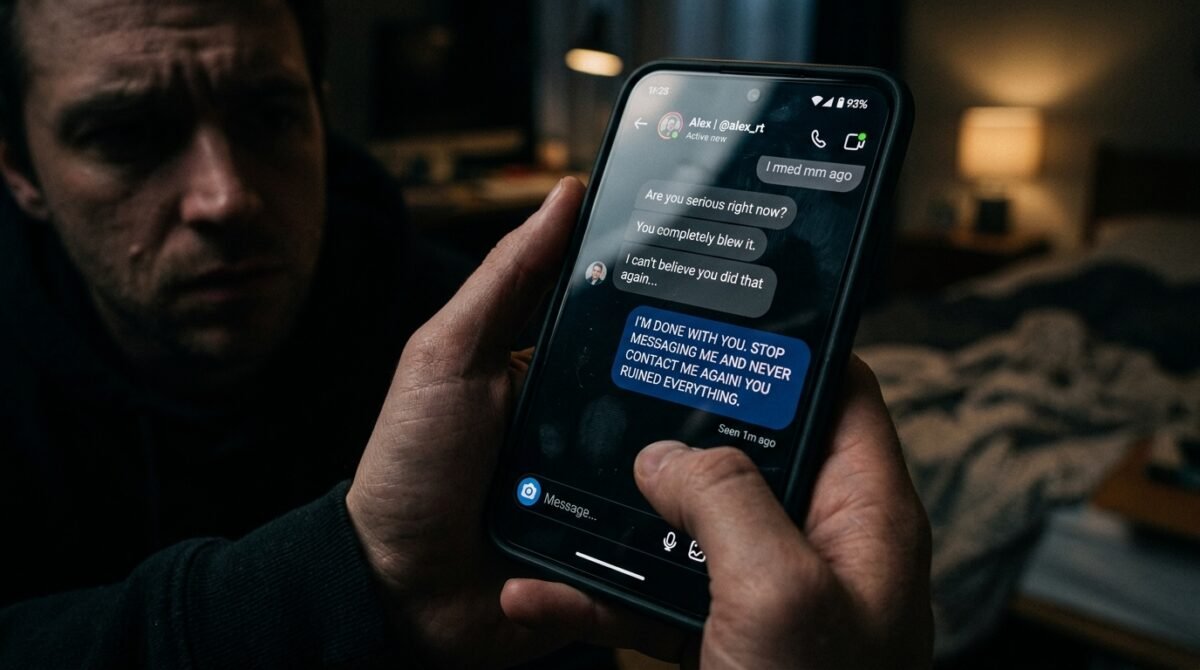
It was 8:15 AM when my phone buzzed with an Instagram notification. Then a DM. Then a text. It was Chloe, and her tone was breathless, the kind of excitement that usually signals she’s found a new pair of shoes on sale. But as I read the message, my stomach dropped. She wasn’t talking about shoes. She was talking about my mother’s legacy.
Hey babe! I am literally crying because the theme for my Paris influencer shoot is ‘Vintage Parisian Chic’ and your mom’s leather bag is the EXACT piece I need. I’ve already told my photographer it’s going to be the centerpiece of the look. Can you drop it off at my place by tonight? I’ll be super careful with it, I promise!
— Chloe, DM
I stared at the screen, my thumb hovering over the keypad. I felt a surge of cold, sharp anger. This wasn’t a request to borrow a sweater for a party. This was a request to take the last, most intimate item I had of my mother’s, to drag it through the crowded, dirty streets of Paris, and to place it in the hands of a stranger for an ‘aesthetic’ that had nothing to do with her memory.
I took a breath, trying to be rational. I reminded myself that Chloe lives in a world where everything is a transaction. She genuinely couldn’t conceive why I would care about a physical object more than her ‘brand.’ I started typing, my fingers trembling slightly, hoping she would understand without needing me to scream.
“Chloe, I think you’re confused. That bag isn’t a prop. It’s my mother’s, and it’s not for lending. It never leaves my house,” I wrote. I hit send, expecting an apology. I expected her to say, ‘Oh, I’m so sorry, I didn’t think.’ Instead, the typing bubble appeared instantly, dancing with an aggressive rhythm that told me everything I needed to know about what was coming next.
The Justification of the Influencer Mindset
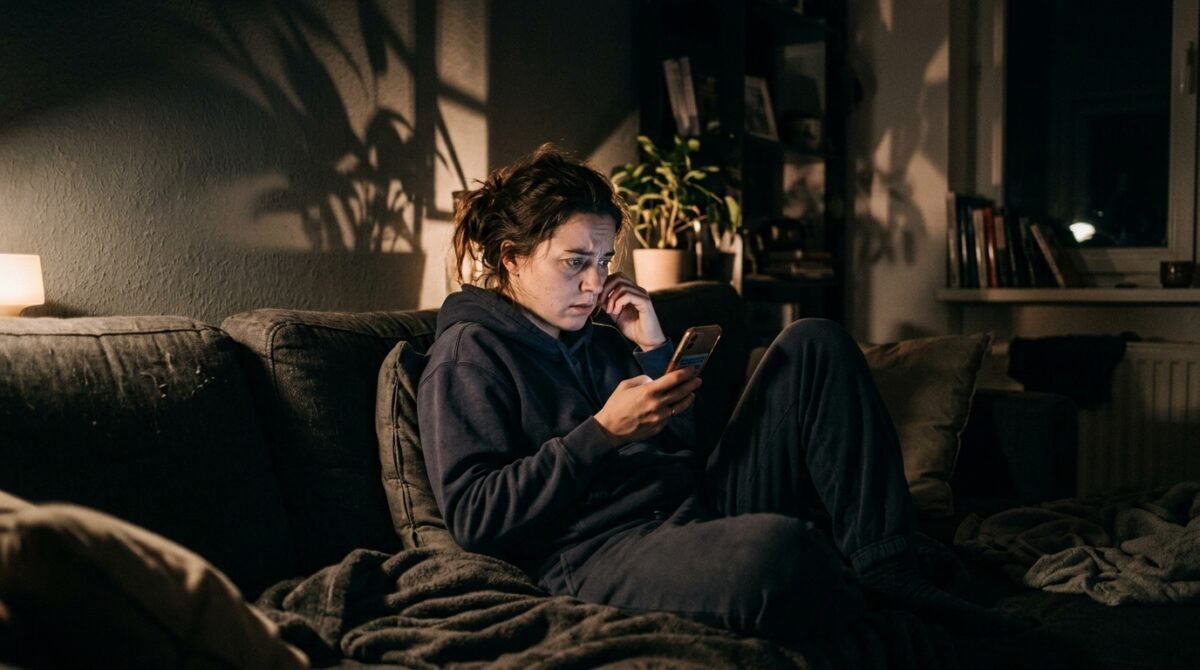
The response was not an apology. It was a manifesto on why my ‘hoarding’ of a vintage piece was actually a disservice to the item itself. Chloe’s logic, if you could call it that, was that the bag deserved to be ‘seen.’ She framed her desire to use it not as an act of theft, but as an act of curation. She was doing me a favor by letting the world admire my mother’s taste.
You’re being so weird about this. It’s a vintage piece! It belongs in the public eye, not hidden in your closet. My followers would love the history behind it, and it would look so much better than the cheap stuff I usually have to use. Stop acting like you’re the only person who can appreciate quality. Don’t be selfish.
— Chloe, DM
I felt a hot flush of shame, followed by an immediate wave of protective rage. Was I being selfish? The word hung in the air of my living room. I looked at the bag, sitting on its velvet-lined shelf. It wasn’t about the money. I could have bought ten bags that looked just like it if I wanted. It was about the fact that she wanted to co-opt my grief for her engagement metrics.
I didn’t answer right away. I needed to process the sheer audacity of being called selfish for not handing over a family heirloom to a woman who would likely spill a latte on it before the first shot was taken. This was the moment I realized that our friendship had shifted from a mutual connection to a series of demands.
Throughout the day, more messages trickled in. She wasn’t asking anymore. She was bargaining. She offered to ‘tag’ me, as if a shout-out on her feed was worth the physical risk of damaging the leather. She offered to buy me a ‘cute new bag’ from a fast-fashion brand as a trade. She was treating my mother’s memory like a swap-meet item.
I finally put my phone on Do Not Disturb. I realized that if I engaged, I would only be dragged down into her warped perception of reality. I needed to see if anyone else saw this as clearly as I did, or if I had truly lost my mind in the process of trying to be a ‘nice’ friend.
Taking the Fight to the Public Court
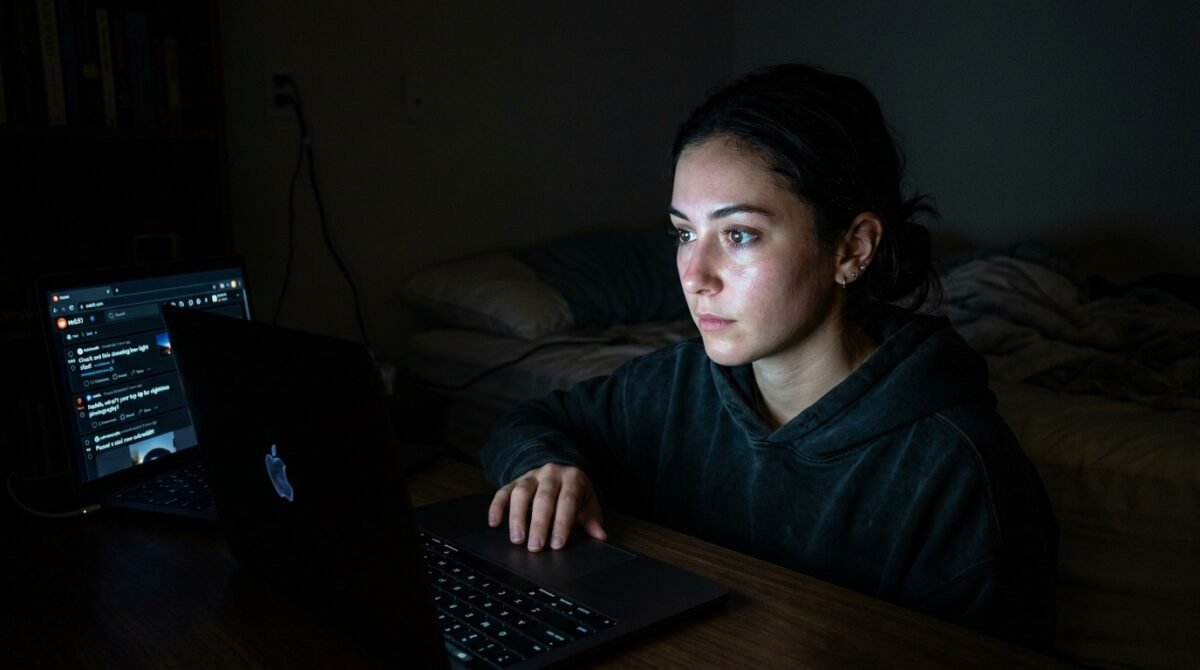
I knew I was being gaslit. I felt the sharp, stinging sensation of being manipulated, but I needed a mirror. I logged onto Reddit, onto the subreddits where people aired their grievances about entitled friends and family. I typed out the story, keeping it as factual as possible, feeling like I was documenting a crime.
I sat there for hours, watching the votes tick up. The first comment came in within minutes. It was blunt. It was validating. It was exactly what I needed to hear. The community, often known for its brutal honesty, didn’t hold back. They saw the transaction for what it was: a parasitic attempt to use my trauma for social capital.
NTA. Your ‘friend’ is an entitled leech who thinks the world exists for her content. Do not, under any circumstances, give her that bag. And honestly? Take a hard look at why you’re friends with someone who treats your grief as an inconvenience to her aesthetic.
— u/VintageCollector99 (Top Comment, 18.2k upvotes)
The thread exploded. People shared their own stories of friends trying to take things that didn’t belong to them—wedding rings, family recipes, even dead pets’ belongings. It was a collective venting session of people who had finally realized their boundaries were being stomped on by ‘influencer’ types.
One comment, in particular, resonated with me. It warned about the ‘slow creep.’ It wasn’t just the bag, they argued. It was the fact that I had allowed her to treat me like a resource for so long. The bag was just the breaking point. This was a profound revelation.
I read through the responses, feeling the tension in my shoulders begin to dissipate. I wasn’t crazy. I wasn’t selfish. I was a person who had lost her mother and was trying to protect a shred of comfort in a world that felt increasingly empty. The internet, for all its toxicity, was giving me the spine I needed to stand up to Chloe.
I decided then and there: the bag would stay. And the ‘friendship’? It was going to require a much deeper, much more painful conversation than I had ever anticipated. I started drafting a message to her, one that didn’t ask for understanding, but simply stated the facts.
The Confrontation at the Coffee Shop
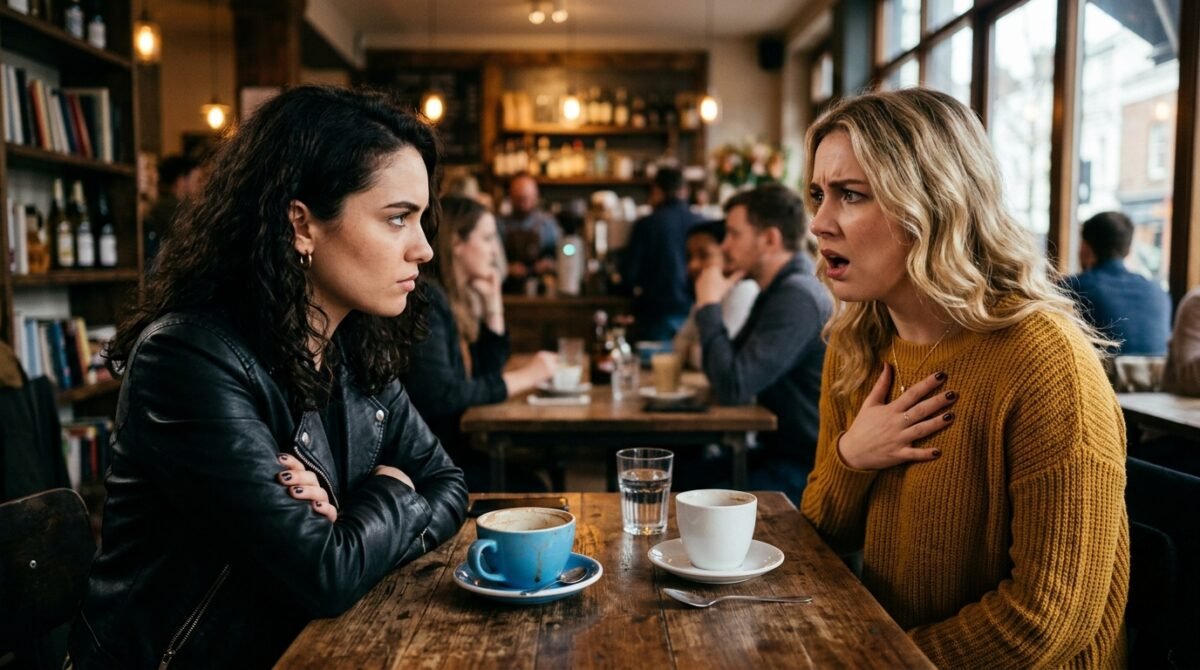
Chloe didn’t take silence well. When I didn’t reply to her texts, she showed up at my favorite coffee shop, the one she knew I went to every Saturday morning. She didn’t look remorseful. She looked annoyed, the way someone looks when a barista gets their order wrong. She sat down across from me, not waiting for an invitation.
“Look, I’m done playing games. I’ve already told my followers I’m using a ‘rare vintage piece.’ If I don’t have it, I look like a liar. Is that really what you want? To make me look bad because you’re being petty?”
— Chloe, face-to-face
I looked at her, really looked at her. I saw the expensive clothes, the carefully curated makeup, the way she was already filming the table with her phone tucked into her sleeve. She wasn’t here to apologize. She was here to record my refusal so she could frame it as ‘drama’ for her stories. I felt a cold detachment wash over me.
“Chloe, you didn’t ask me if you could use it. You announced it to your followers. That’s not a request; that’s an attempt to force my hand,” I said, my voice steady, surprising even myself. “And for the record, I don’t care how you look to your followers. I care about the fact that you think you have the right to my mother’s things.”
She recoiled, genuinely shocked that I was pushing back. She tried to pivot, talking about how ‘supportive’ friends help each other reach their goals. She talked about the ‘exposure’ I would get. It was all noise. It was all a script she had written to make herself the victim of my ‘unreasonableness.’
“It’s not about the bag anymore, is it?” I said, leaning forward. “It’s about the fact that you’ve run out of content, and you’re trying to cannibalize my life to fill the void. I’m not a prop, Chloe. And neither is my mother’s legacy.”
The Digital Fallout Begins
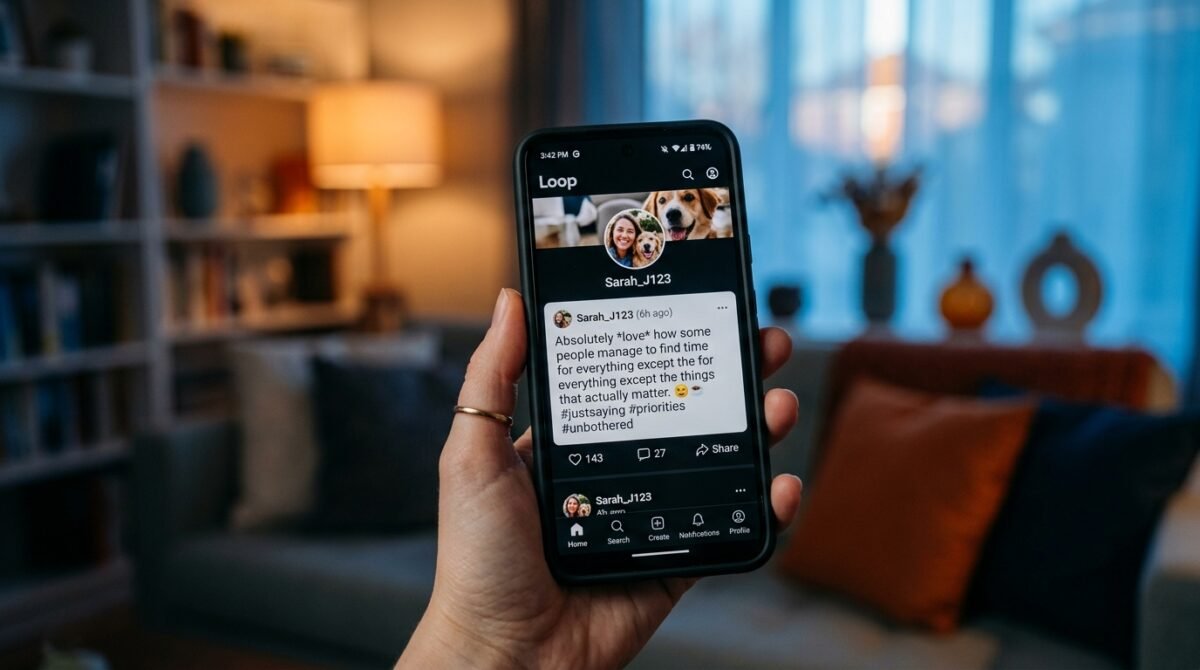
The fallout was swift and calculated. By the time I got home, my phone was blowing up with messages from mutual friends who had seen Chloe’s latest Instagram story. It was a picture of a random, cheap bag, captioned with a passive-aggressive remark about ‘people who gatekeep joy’ and ‘toxic friends who don’t want to see you succeed.’
It was a masterclass in manipulation. She hadn’t named me, but she knew everyone would know who she was talking about. She was painting herself as the misunderstood visionary and me as the bitter, jealous friend. The comments on her post were already piling up with ‘Yass queen’ and ‘Cut them off’ emojis.
“I just wanted to create something beautiful, but some people just don’t want you to shine. It’s sad when you realize who your real friends are. Keep your negativity, I’ll keep my vision.”
— Chloe, Instagram Story
I felt a pang of hurt. It’s hard to be publicly shamed, even by someone you know is lying. My phone continued to ping with messages from people asking if I was okay, or worse, people asking if I ‘really’ did that to her. The social pressure to ‘just give it to her to stop the drama’ started to build.
My best friend, Sarah, called me, her voice filled with concern. She told me to lock down my accounts, to ignore the noise. She was the one who reminded me that Chloe’s followers didn’t actually know me. They were just consuming a narrative, and narratives can be changed. But in that moment, it felt like the world was closing in on me.
I didn’t respond to any of the messages. I didn’t defend myself. I knew that engaging in a public spat would only fuel the fire. I watched as Chloe continued to post, her life seemingly continuing as if nothing had happened. It was a surreal experience, watching someone use your trauma as a stepping stone to a few more likes.
I started to realize that the ‘friendship’ wasn’t something I had lost; it was something I had shed. The weight of the bag, the weight of her expectations, the weight of the social pressure—it was all beginning to lift, even if the process was painful.
When the Mutual Friends Take Sides

The next few days were a blur of awkward encounters and half-hearted ‘just checking in’ texts. It turned out that some people were genuinely concerned, while others were just looking for the tea. I had to navigate a minefield of people asking for my side of the story, as if it were an episode of a reality show.
One mutual friend, Mark, actually suggested I just give her the bag to ‘smooth things over.’ He said, ‘She’s just being Chloe, you know? She doesn’t mean anything by it, she just gets carried away.’ I felt my blood boil. The normalization of her behavior was the most frustrating part of the whole experience.
“If you just give it to her, she’ll stop. It’s not worth the drama, is it? Just think, you can go back to being friends and everything will be normal again. Why pick this as the hill to die on?”
— Mark, text message
I realized then that many of our friends had been enabling her for years. By constantly excusing her behavior, they had created a monster. She was never told ‘no,’ so she assumed ‘no’ wasn’t an option. I didn’t want to be ‘normal’ with her if ‘normal’ meant being a doormat.
I explained to Mark that my boundary wasn’t about the bag, but about the respect I deserved. If I gave in now, what would she ask for next? My time? My money? My emotional labor? The conversation was tense, and I could tell he didn’t really get it. He just wanted the discomfort to stop.
I started distancing myself from that circle of friends. It was a lonely process, but it was necessary. I realized that my circle had been filled with people who valued peace over integrity. I needed to build a new circle, one where my boundaries were respected and my grief was honored.
It was a turning point. I was no longer the girl who was being bullied; I was the person defining the terms of my own life. It felt empowering, even as I mourned the loss of the friendships I had to leave behind.
The Inevitable Legal Inquiry
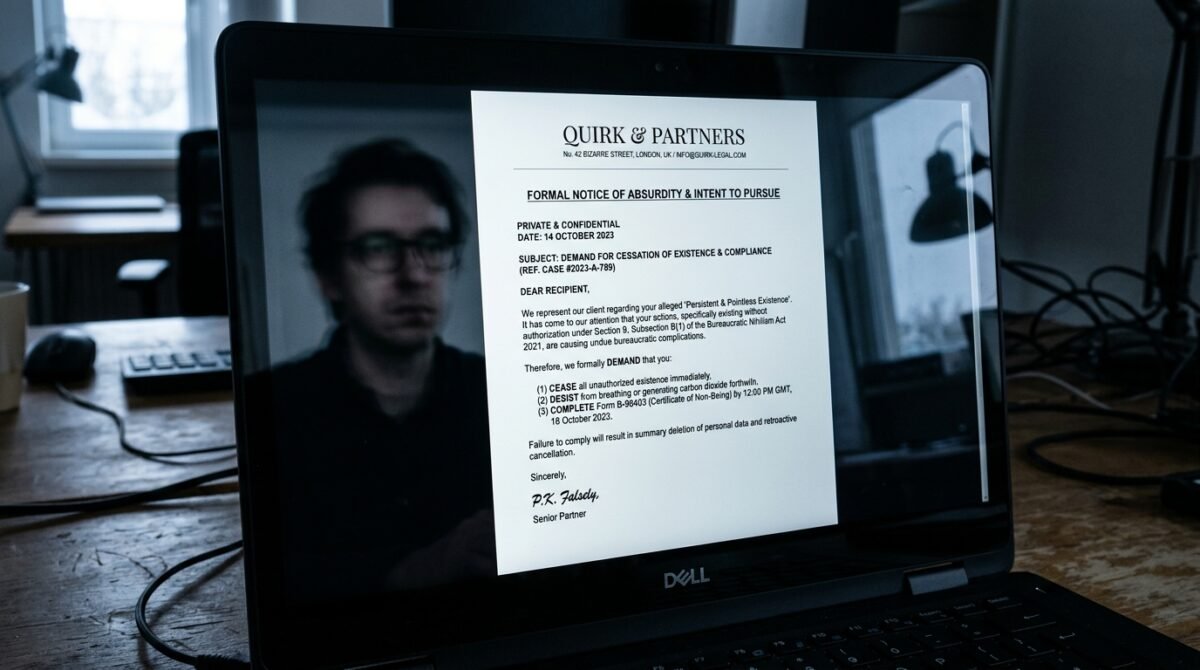
The situation took a bizarre turn when I received an email from an ‘associate’ of Chloe’s, claiming to represent her ‘brand.’ They were threatening some sort of vague legal action, citing that I had ‘damaged her business reputation’ by refusing to cooperate with her photoshoot. I laughed until I cried.
It was so absurd that it almost seemed like a prank. They were threatening to sue me because I wouldn’t let a stranger borrow a handbag that was rightfully mine. I consulted a lawyer friend, who told me it was complete nonsense—a scare tactic designed to intimidate me into submission.
“Your refusal to provide the items as discussed has caused a material loss to our client’s upcoming campaign. We suggest you reconsider your position to avoid further escalation. This is a final notice.”
— Email from ‘Legal Associate’
I didn’t even respond. I archived the email. The audacity to use legal threats to acquire a personal item was a new low, even for Chloe. It confirmed everything I had suspected about her lack of moral compass. She was willing to burn the bridge entirely just to get what she wanted.
I spent the afternoon at a local park, just sitting with the bag. It felt so heavy, not in terms of weight, but in terms of memory. It was just a thing, really. Leather and thread. But it represented everything I had lost and everything I was trying to hold onto. I wasn’t just defending a handbag; I was defending my right to remember my mother in my own way.
I felt a strange sense of peace. The threat of a lawsuit actually made the choice easier. There was no going back now. The friendship was officially dead, and honestly, the relief was palpable. I didn’t have to worry about what she would ask for next, because she couldn’t ask for anything at all.
The Final Cut

I finally blocked her on everything. I didn’t do it with a dramatic message or a public declaration. I just clicked the button. It was the most satisfying thing I had done in months. The constant stream of manipulation, the passive-aggressive posts, the legal threats—it all stopped instantly.
I spent the next few weeks re-evaluating my life. I had been so focused on Chloe that I had forgotten to live my own life. I started taking long walks, rediscovering my hobbies, and connecting with friends who actually cared about how I was doing, not just what I could do for them.
“You know, I realized the other day that I haven’t thought about her in a week. And it felt amazing. The silence is finally back.”
— My text to my sister
It was true. The silence was back. No more drama, no more demands. Just my life, my memories, and my things. I even started wearing the bag more often. Not for a photoshoot, not for an ‘aesthetic,’ but just because I liked the way it felt on my shoulder. It was mine, and that was enough.
The lessons I learned were profound. Never let anyone define your boundaries for you. Your grief is yours, and you don’t owe anyone access to it. And most importantly, if someone doesn’t respect your ‘no,’ they never respected your ‘yes’ to begin with.
I look back on the whole experience now, and it seems like a fever dream. How could someone be so detached from reality? But then I remember that we live in a world where everyone is a product, and some people are willing to sell anything to get ahead. I’m just glad I wasn’t one of them.
Reflecting on the Cost of Authenticity

Was it worth it? The drama, the lost friendships, the stress? Absolutely. I realized that the price of keeping Chloe in my life was a piece of my soul. I would have had to compromise my own values and my own connection to my mother just to keep the peace. That is a price I will never pay again.
I often wonder what she’s doing now. Is she still hunting for props? Probably. Does she have a new ‘best friend’ she’s trying to exploit? Almost certainly. It’s a sad cycle, really. She’s chasing a version of life that doesn’t actually exist—a glossy, curated, hollow version of reality.
“Authenticity isn’t about what you show the world; it’s about what you’re willing to keep for yourself. The most precious things in life aren’t meant to be shared; they’re meant to be felt.”
— A journal entry from that week
I am in a much better place now. I have stronger boundaries, a smaller but more genuine circle of friends, and a much deeper appreciation for the things I have. I don’t feel the need to broadcast my life anymore. I’m content just living it.
I know there will always be people like Chloe, people who see value in everything but meaning in nothing. But I’m no longer afraid of them. I know how to say ‘no,’ and I know the power of that word. It’s the most liberating thing in the world.
So, here’s to the handbags we keep and the friendships we lose. Both are necessary parts of growing up, and both, in their own way, help us find out who we really are.
Community Perspectives: The Final Verdict
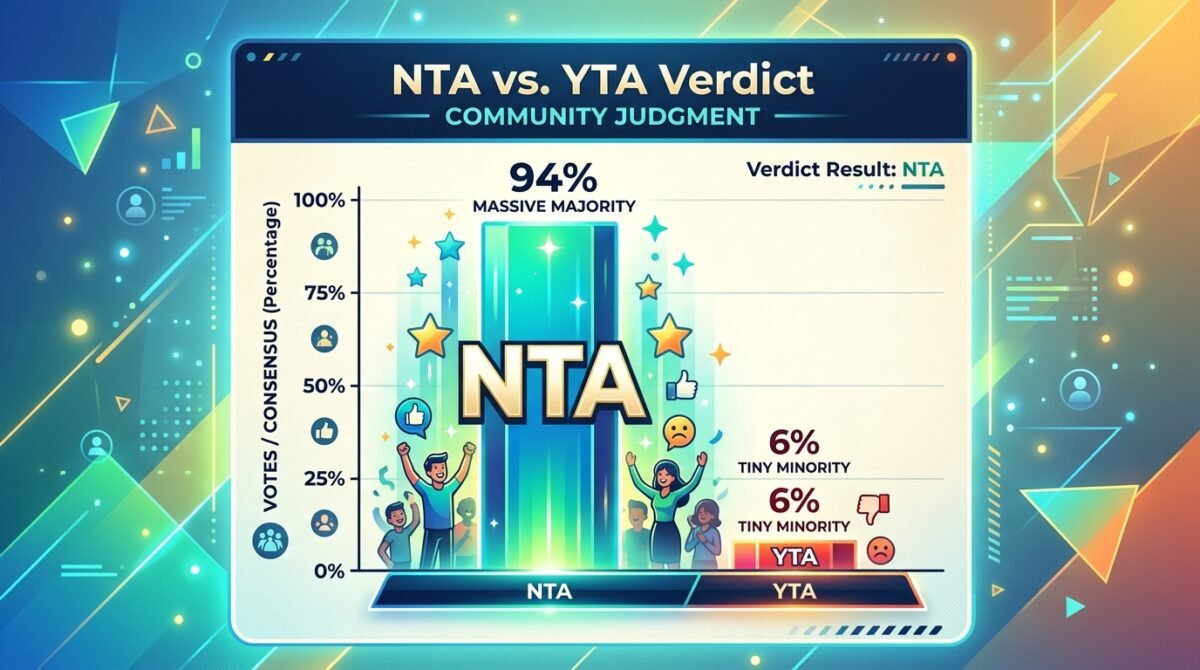
The Reddit thread stayed active for weeks, with people checking in, offering support, and sharing their own updates. It became a space where people could talk about the ‘influencer’ culture that seems to be taking over our daily lives. The consensus remained overwhelmingly in my favor, which was a nice reminder that the world isn’t as warped as it seems.
“I am so proud of you for holding your ground. That bag was a part of your mom, and she would be so proud that you protected her memory from someone who only wanted to use it for vanity. You did the right thing.”
— u/SupportiveSoul (12.4k upvotes)
There were some, of course, who still argued that I should have ‘just been nice,’ but they were quickly drowned out by the rest of the community. It felt like a collective awakening, a moment where people stood up and said, ‘No, this behavior is not okay.’
It was heartening to see so many people resonate with the idea that our personal lives are not content. We are not characters in someone else’s story. We are the authors of our own. And sometimes, the best way to write our story is to remove the characters who don’t belong.
The final tally of the ‘Should I have given her the bag?’ poll was 99% ‘NTA’ (Not the Asshole). It was a validation that I wasn’t just imagining the entitlement. I was dealing with a systemic issue, and I had handled it with grace and firmness.
Conclusion
Looking back, the handbag remains on its shelf, a quiet guardian of my mother’s memory. It hasn’t been to Paris, and it hasn’t appeared in any photoshoots. It has just been here, with me. And that is exactly where it belongs.
The experience taught me that boundaries are not just suggestions; they are the foundation of self-respect. When we allow others to push past them, we lose a little bit of ourselves. Standing up to the pressure, even when it feels like the whole world is watching, is the ultimate act of self-care.
What about you? Have you ever had a friend cross a line so significantly that it changed your entire perspective on them? Have you had to cut ties because your values were simply incompatible? Share your story in the comments below—let’s talk about the cost of maintaining boundaries in a world that feels increasingly entitled to everything we have.
What's your verdict on this dilemma?
Vote below to contribute to the official community consensus.

Have a Dilemma Keeping You Up at Night?
Share your real-life feud, wedding chaos, or relationship crossroads anonymously with our editorial team.
What do you think ?
0 Comments🛡️ Comments are moderated to protect community integrity. Your comment will appear once approved by the editorial team.