
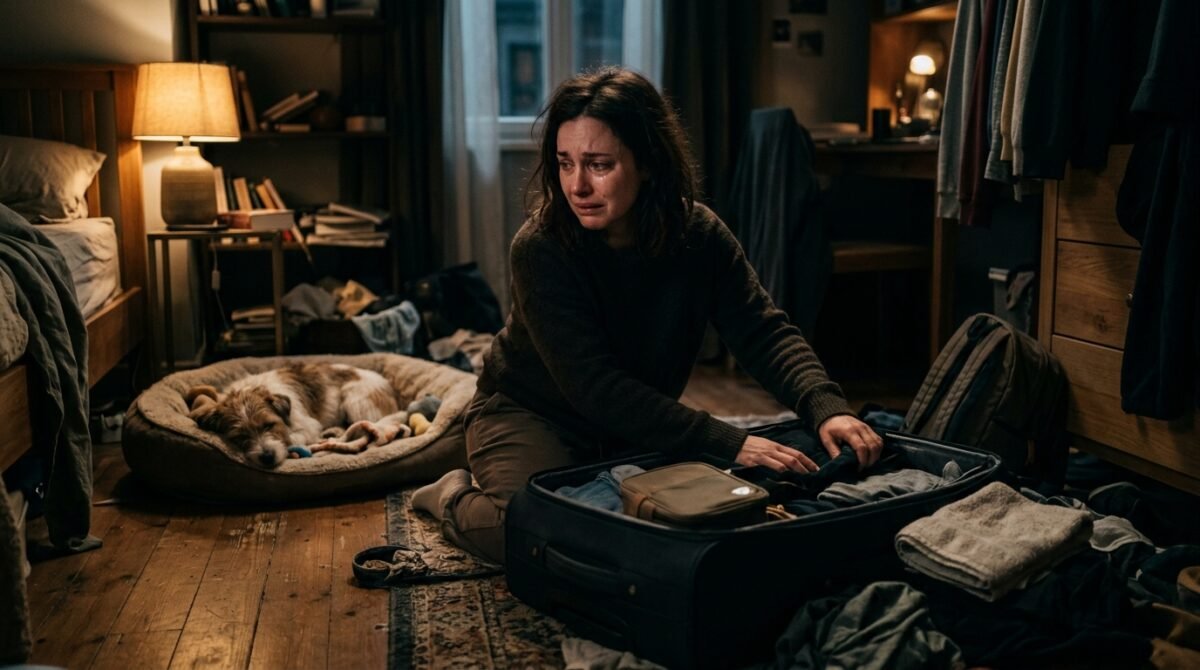
They say you never truly know someone until you face a crisis together. For three years, Mark and I were the picture of stability. We shared an apartment, a Netflix account, and, eventually, a dog named Barnaby. Barnaby was a rescue—a scruffy, soulful golden mix we adopted together six months into living in our downtown loft. We signed the adoption papers as a unit. We shared the costs of his kibble, his flea medication, and his annual checkups. It was a partnership, or so I thought.
The illusion shattered on a Tuesday night in November. Barnaby began vomiting, his energy plummeting to a terrifying low within hours. A frantic midnight run to the emergency vet revealed an obstruction in his intestines that required immediate, invasive surgery. The estimate was $4,200. I was shaking, tears streaming down my face in the sterile waiting room, when I turned to Mark, expecting comfort and a plan. Instead, he pulled out his phone, checked his banking app, and sighed with a cold, detached annoyance.
“That’s steep,” he said, his eyes not even meeting mine. “I didn’t sign up for a four-thousand-dollar liability. You wanted the dog, you pay for the surgery. I’m not hemorrhaging my savings for an animal.”
In that moment, the air left the room. The man I had planned to marry—the man who claimed to love Barnaby as his own—had just reduced our family member to a financial liability. It wasn’t about the money. We both earned comfortable salaries. It was about the fundamental values of care, responsibility, and the kind of person I was sharing my life with. That night, sitting on the cold plastic chairs of the clinic, I realized I wasn’t just losing money; I was losing a future.
The Tuesday Night That Changed Everything
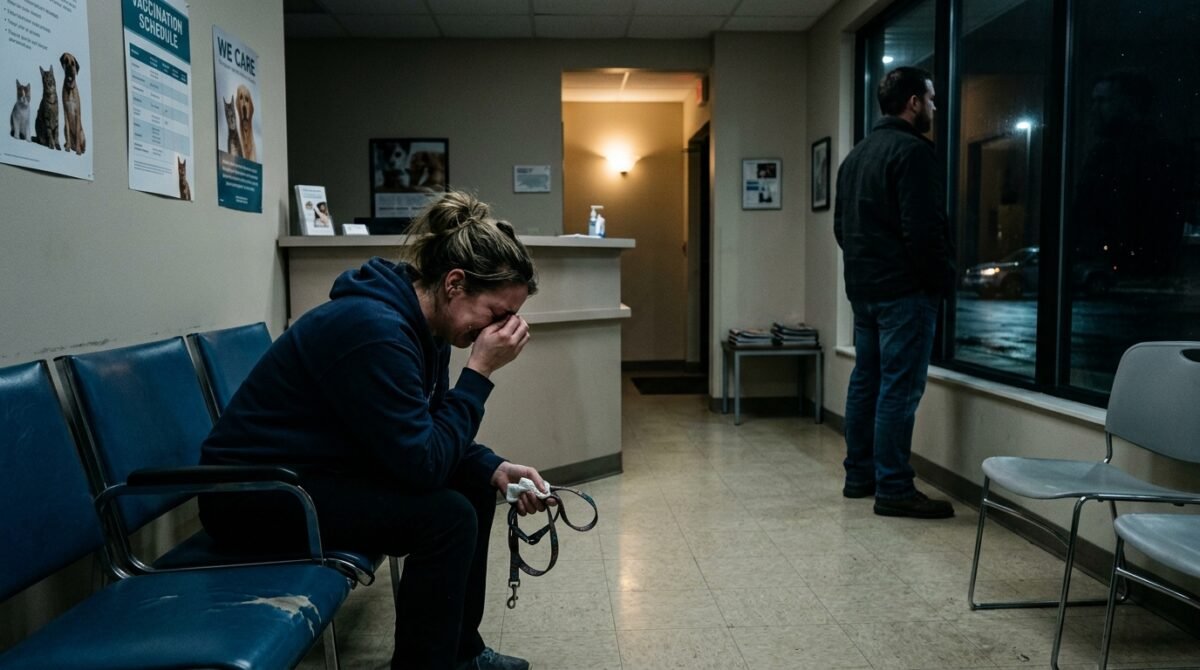
The clinic was eerily quiet, save for the rhythmic beeping of monitors. I had already put the deposit down on my credit card, my hands trembling as I signed the authorization forms. Mark stood by the window, his back to me, scrolling through his phone as if he were waiting for a bus rather than waiting to hear if our dog would live through the night.
When the vet technician came out to finalize the surgery details, Mark didn’t stand up. He remained seated, his posture rigid. When I approached him to discuss how we would split the staggering final bill, his demeanor was chilling. He didn’t offer a hug. He didn’t ask how I was holding up. He just looked at me with a gaze that felt entirely alien.
“I am not splitting this bill, Sarah. This is your pet, your responsibility. If you choose to spend your savings on a dog, that is a choice you are making. Don’t expect me to subsidize your emotional attachment.”
— Mark, in the Emergency Vet Waiting Room
I stared at him, stunned. We had adopted Barnaby together. We had both picked him out. We had shared every single expense for the last two years. This wasn’t just a pet; he was our family. To hear Mark speak of him as a ‘liability’ made my stomach churn. I felt a cold realization dawning on me—the man I loved was a stranger to compassion.
I asked him if he heard himself. I reminded him that we agreed to be a team. He just shrugged, stating that financial boundaries were important and that he had ‘higher priorities’ than our dog’s survival. He suggested I should have looked into pet insurance, as if that somehow justified his total abandonment of his partner and pet in a time of crisis.
I didn’t argue. I couldn’t. I was too exhausted, too terrified for Barnaby, and too heartbroken by the callousness radiating from the man sitting next to me. I walked away to the reception desk to finish the paperwork alone. I knew right then that the relationship was dead; I was just waiting for the logistics to catch up to the reality.
The Cold Silence of the Recovery Period
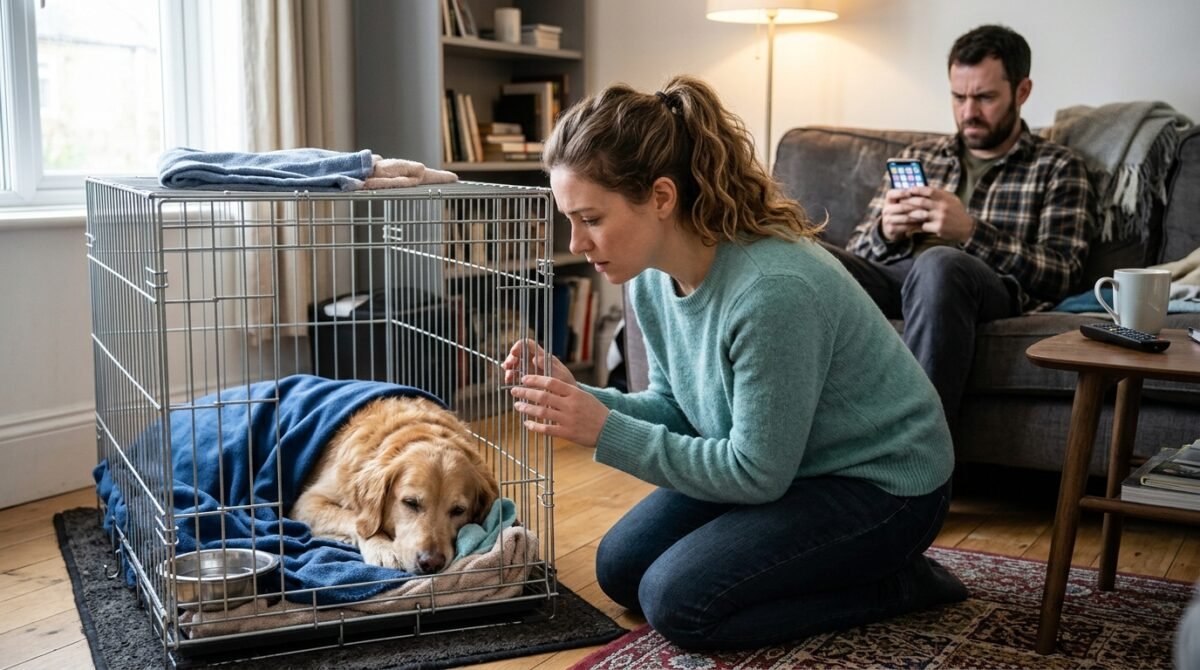
Barnaby survived the surgery, but the recovery was long and arduous. For the next two weeks, I was the sole caregiver. I had to monitor his incision, administer complex medication schedules, and carry him up and down the stairs because he couldn’t walk on his own. Throughout all of this, Mark barely lifted a finger. He would step over Barnaby’s crate on his way to the kitchen, never once offering to help or asking how the recovery was going.
The house felt like a tomb. There were no ‘how is he doing’ texts when I was at work. There were no evening check-ins. If anything, Mark grew more resentful, complaining that the house smelled like antiseptic and that I was ‘obsessed’ with the dog’s health. He made comments about how we couldn’t go out to dinner because I needed to be home for the dog’s medication schedule.
“Are you going to be a martyr for this dog forever? It’s ruining our social life. I thought we were going to that concert on Friday, but you’re stuck playing nurse.”
— Mark, during a heated dinner argument
I realized then that his issue wasn’t the money. His issue was that he felt inconvenienced. He had no capacity to prioritize anyone or anything that didn’t immediately benefit him. He saw my care for Barnaby as a threat to his lifestyle and comfort. The bitterness was palpable. Every time I looked at him, I saw a person who lacked the basic empathy required for a healthy partnership.
I began to pack, slowly. I didn’t tell him at first. I started moving my things to my sister’s place under the guise of ‘decluttering.’ I was already gone, mentally. Every time he made a snide remark about the vet bill, I checked my bank balance and reminded myself that this was the cost of freedom.
The emotional toll was immense, but it was also clarifying. I saw the true face of the man I had been with for years. It wasn’t a mask he wore; it was his core. He was transactional, selfish, and fundamentally incapable of being a partner when the situation required sacrifice. I felt a strange sense of peace as I finally gathered my things.
The Final Confrontation
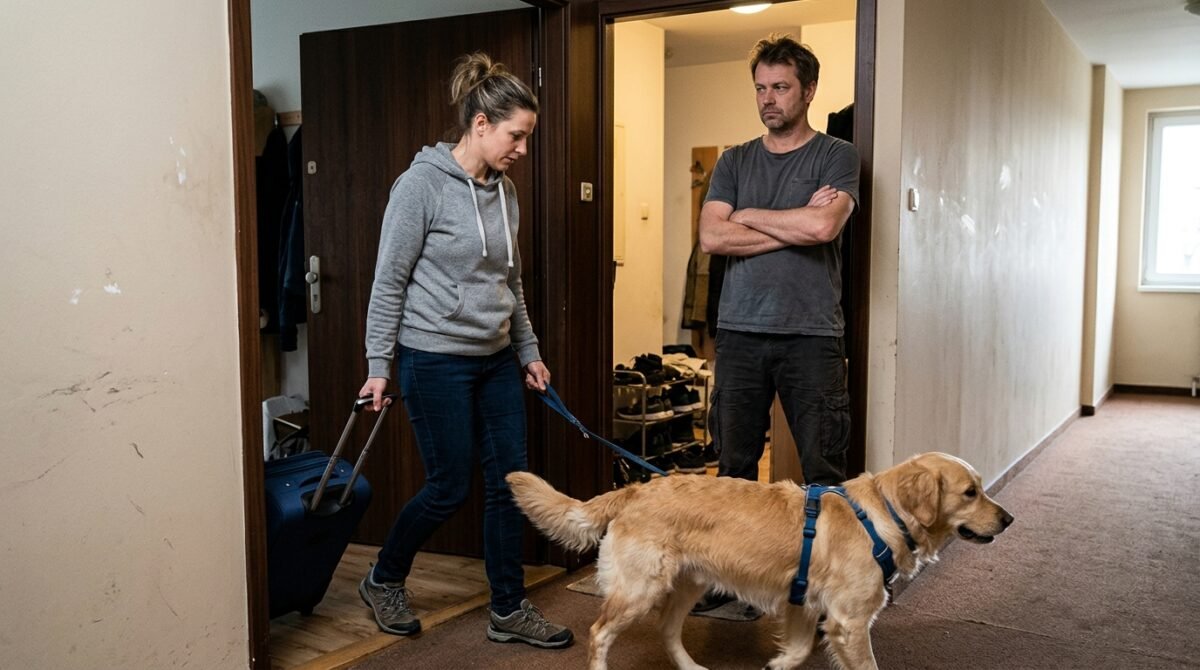
The breaking point wasn’t a scream-filled argument; it was a quiet, cold realization. Mark came home to find me folding the last of my sweaters. He stood in the doorway, confused, then angry. He didn’t ask if everything was okay. He asked if I was really leaving because of ‘a dog.’ He still didn’t understand. He couldn’t understand.
I told him clearly: I was leaving because I couldn’t build a future with someone who abandons their family the moment it becomes expensive or inconvenient. I pointed out that if we had children, or if I had a medical emergency, I knew exactly where I stood on his list of priorities. He scoffed, calling me dramatic and accusing me of overreacting to a ‘financial boundary.’
“You’re throwing away three years over a vet bill? You’re being incredibly irrational. This is a business-like decision for me. You’re making it into a romantic tragedy.”
— Mark, during the final argument
I looked at him, truly looked at him, and realized I felt nothing but relief. I told him he was right—it was a business decision. I was choosing to invest my time and life in someone who was capable of empathy, and he clearly wasn’t the right investment. I walked out the door with Barnaby, my suitcase, and my self-respect.
The silence as I drove away was profound. I wasn’t scared. I felt lighter than I had in months. The weight of his coldness, his constant need for things to be ‘convenient,’ had been crushing me without me even realizing it. I was going to be fine. Barnaby was going to be fine. We were just better off without him.
He didn’t try to stop me. He didn’t apologize. He didn’t even ask to say goodbye to the dog he claimed was ‘ours’ just months ago. That was the final confirmation that I had made the right choice. He was a man who lived only for himself, and I was finally free of his orbit.
The Reddit Verdict: Echoes of Validation
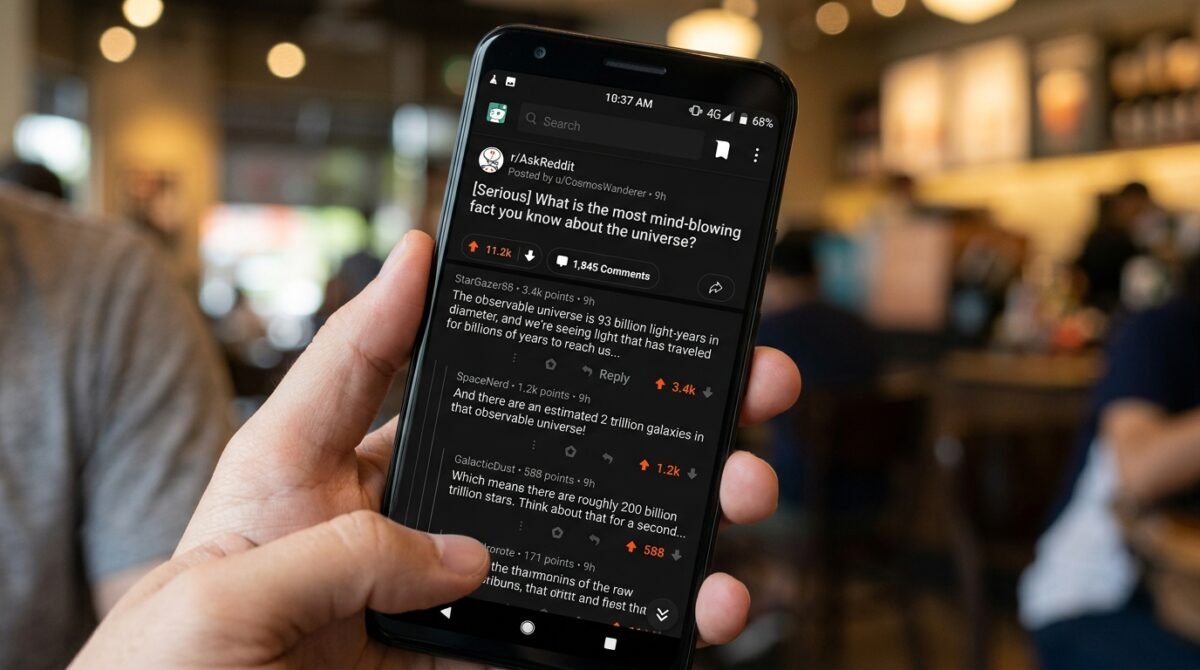
When I posted my story on Reddit to see if I was truly the villain as Mark claimed, the response was overwhelming. Within hours, the thread had thousands of comments, all echoing the same sentiment. The internet, often divided, found a rare moment of unity in condemning Mark’s behavior. It wasn’t just about the money; it was about the lack of character.
“This man showed you exactly who he is. Believe him. If he can’t step up for a beloved pet when it’s a matter of life and death, he will never step up for you when the real trials of life hit. You dodged a massive, selfish bullet.”
— u/DogMomForever (Top Comment, 32.1k upvotes)
Many users shared their own stories of partners who had stepped up in times of crisis, contrasting them with Mark’s coldness. The thread became a repository for people who had realized they were with the wrong person during a medical emergency, be it for a pet or a human. It was validating to see that my ‘dramatic’ reaction was seen by thousands as a completely reasonable, healthy boundary.
Some comments pointed out the ‘financial abuse’ aspect—that he felt entitled to the benefits of the dog (the companionship, the fun walks) but refused any of the burdens. It was a classic case of wanting all the perks without any of the responsibility. The community was unanimous: get out and stay out.
The sheer volume of support made me realize that I wasn’t crazy. I wasn’t being ‘irrational.’ I was setting a standard for how I deserved to be treated, and for how a partner should act. It was a wake-up call that I was surrounded by a community of people who valued loyalty and compassion, and that I could find those traits in others.
Financial Reckoning: The Ledger of Resentment

After I left, I sat down and made a list. I wanted to see exactly how much ‘partnership’ we had actually shared. It was a sobering exercise. I categorized our expenses over the last three years: rent, utilities, groceries, and, of course, the dog. The numbers painted a clear picture of what I had been subsidizing for a long time.
| Category | My Contribution | Mark’s Contribution |
|---|---|---|
| Rent/Utilities | 50% | 50% |
| Groceries/Dining Out | 60% | 40% |
| Vet/Pet Supplies | 85% | 15% |
| Household Improvements | 70% | 30% |
The data was undeniable. Even before the emergency surgery, Mark had been skating by. He always had an excuse for why he couldn’t chip in more—his ‘savings goals,’ his ‘student loans,’ his ‘investments.’ Meanwhile, I was the one paying for the ‘extras’ that made our life comfortable. The dog was just the final straw in a long history of financial imbalance.
It wasn’t just the money; it was the power dynamic. By keeping me in the position of the primary provider, he kept me in a position of ‘servant.’ When I stopped serving, he got angry. The surgery bill was simply the moment I refused to pay for his comfort anymore. I had been carrying the emotional and financial load for too long.
This ledger wasn’t for him. It was for me. It was to remind me why I left when I felt lonely or tempted to text him. It was a concrete reminder that the relationship was lopsided and that I had been essentially paying for his presence in my life. Never again, I promised myself.
The Aftermath: Rebuilding a Life

Life on my own was harder than I expected, but it was also infinitely more peaceful. I moved into a smaller, studio apartment, but it was *my* apartment. There was no one to complain about the dog’s behavior, no one to roll their eyes when I bought a new toy, and no one to make me feel guilty for caring about something that wasn’t ‘productive.’
Barnaby recovered fully. He is back to his bouncy, tail-wagging self, chasing squirrels and sleeping at the foot of my bed. Every time I see him, I’m reminded of why I made the choice I did. I chose him. I chose loyalty. I chose a life where compassion is not seen as an inconvenience. It’s a trade I would make a thousand times over.
I started seeing a therapist to unpack why I had accepted such a cold partner for so long. She helped me realize that I had been conditioned to prioritize others’ comfort over my own needs. I was a ‘fixer,’ and I had been trying to fix a broken man who didn’t want to be fixed. It was a powerful realization that shifted my entire perspective on what a relationship should look like.
I am not angry at Mark anymore. I am indifferent. He is simply a person who showed me what I didn’t want. I learned the hard way that you cannot force someone to care. You can only choose to be with someone who already does. That is the most valuable lesson I have ever learned.
Reflecting on the Red Flags

Looking back, the signs were always there. The way he talked about his parents’ divorce, the way he treated service staff, the way he dismissed my hobbies as ‘useless.’ I had ignored it all because I wanted the relationship to work. I had been building a house on a foundation of sand, hoping that my love could turn it into concrete.
The ‘dog bill’ incident was just the moment the sand shifted. It wasn’t an isolated event; it was the culmination of years of small dismissals, small acts of selfishness, and a pervasive lack of deep, soul-level connection. I had been living with a roommate who I happened to have sex with, not a partner who shared my life.
I think about the people who are currently in relationships like mine. I want to tell them that they don’t have to wait for a $4,000 emergency to see who they are with. Pay attention to how they handle your stress. Pay attention to how they treat your ‘attachments.’ If they treat your joy or your pain as an inconvenience, they are not your person.
I am grateful for the clarity. It was a painful, expensive lesson, but it was one that saved me from a lifetime of being with someone who would never truly see me. I am a different person now—stronger, more discerning, and more sure of my own worth.
A New Chapter of Independence

These days, my life is filled with things that make me happy. I’ve picked up new hobbies, reconnected with old friends, and focused on my career. I’m no longer waiting for permission to spend my money, or waiting for someone else’s approval to feel like my life is valid. It’s a level of freedom I hadn’t realized I was missing.
Barnaby is the best roommate I could ask for. He doesn’t complain about the bills, he doesn’t criticize my choices, and he is always happy to see me when I walk through the door. We have a bond that is built on mutual care and support. He needed me, and I was there. That is what love is. That is what a family does.
I don’t think about Mark often, but when I do, I don’t feel a sting of loss. I feel a sense of pity. He is still out there, probably looking for someone else to subsidize his life, someone else to call ‘dramatic’ when they ask for support. I hope he finds someone who is as cold as he is—they deserve each other.
I’ve learned that the most important relationship is the one you have with yourself. By refusing to compromise on my values, I kept my integrity intact. I didn’t let a man turn me into someone who looks at a living, breathing creature and sees only a price tag. I kept my heart, and that is a victory.
The Lessons Learned for Future Connections

I am much more careful now. When I date, I look for signs of kindness, not just charisma. I look for how they treat the waiter, how they talk about their friends, and how they react when things don’t go according to plan. I’ve realized that life is a series of unexpected events, and you need a partner who can handle the chaos with grace.
I don’t hide my love for my dog, either. If someone thinks it’s ‘too much,’ they are not for me. My love for Barnaby is a litmus test. If you can’t respect a bond that I value, you can’t respect me. It’s a simple, effective filter that has saved me from wasting time on the wrong people.
I’m also much more conscious of my financial independence. I keep my own accounts, I pay for my own things, and I have a clear understanding of what I bring to the table. I don’t need a partner to complete me; I need a partner to share a life with. There is a huge difference, and it’s a distinction that has made all the difference.
I am excited for the future. I know that whatever happens, I can handle it. I’ve survived the worst, and I’ve come out stronger. I’m not afraid of the next challenge; I’m ready for it. And I know that the next time I face a crisis, I won’t be alone. I will be with someone who chooses me, just as I choose them.
Why We Must Protect Our Boundaries

The story of the vet bill is a microcosm of a much larger issue: the erosion of boundaries in relationships. We are often taught that ‘compromise’ means giving up parts of ourselves, but that’s not true. Real compromise is finding a way to honor both people’s needs. When one person’s needs are consistently ignored, that’s not compromise—that’s exploitation.
I lost three years of my life to a relationship where I wasn’t valued. I don’t regret it, because it brought me here, but I do wish I had left sooner. I wish I had realized that I was worthy of more much earlier. I want everyone reading this to know that your boundaries are not ‘dramatic.’ They are the walls that protect your soul.
If someone makes you feel small for caring, for loving, or for needing, they are not your partner. They are an obstacle. Don’t be afraid to walk away from an obstacle. You deserve to be with someone who walks beside you, not someone who makes you crawl just to keep up with their selfish standards.
Your life is precious. Your heart is precious. Do not give them to someone who doesn’t know how to treasure them. You are the protagonist of your own story; don’t let someone else play the villain in your life. Walk away, keep your head high, and build a world that reflects your own beautiful, compassionate heart.
Conclusion
Reflecting on this journey, it is clear that the true cost of that surgery was not in dollars, but in the price of admission to a life of emotional honesty. I walked away from a man who viewed love through a transaction ledger, and in doing so, I gained a life of authentic self-respect. Barnaby is healthy, I am happy, and the silence in my home is now one of peace rather than neglect.
This story has sparked a massive debate about the intersection of finances and emotional responsibility in relationships. Are pets truly family? Does a shared adoption imply a life-long commitment to all veterinary costs? Or is it acceptable to maintain strict financial silos even in long-term cohabitation? I would love to hear your take on this.
Discussion Poll:
- Should vet bills be split 50/50 regardless of who initiated the adoption?
- Is it a red flag to treat a pet as a ‘financial liability’ in a committed relationship?
- Have you ever ended a relationship due to a fundamental disagreement on ‘non-human’ family care?
Share your experiences in the comments below. Your stories might be the wake-up call someone else needs to reclaim their happiness.
What's your verdict on this dilemma?
Vote below to contribute to the official community consensus.

Have a Dilemma Keeping You Up at Night?
Share your real-life feud, wedding chaos, or relationship crossroads anonymously with our editorial team.
What do you think ?
0 Comments🛡️ Comments are moderated to protect community integrity. Your comment will appear once approved by the editorial team.