

Marriage is supposed to be a partnership, a union of two people working toward a common goal. But for Sarah, a 34-year-old graphic designer and mother of two, the lines between partner and subordinate blurred until they vanished entirely. It started with subtle comments about ‘trimming the fat’ from the monthly budget, but it quickly devolved into a stifling regime of financial surveillance. Her husband, Mark, who held the primary income, began scrutinizing every transaction on their joint account. He wasn’t just checking for big-ticket items; he was auditing the grocery store runs, the pharmacy trips, and even the periodic coffee runs that kept Sarah sane during long, grueling weeks of childcare and remote work.
The breaking point wasn’t a grand revelation of infidelity or a major life event. It was a box of tampons. Mark had demanded a receipt for a $12 purchase at a local pharmacy, questioning why she needed ‘the expensive brand’ and suggesting that perhaps she was being frivolous with household funds. That moment of humiliation, standing in their kitchen while he gestured aggressively at a banking app on his phone, shattered the illusion of their equality. It was then that Sarah realized she wasn’t living in a marriage; she was living in an internship where the boss was a bully.
In the weeks that followed the tampon incident, the emotional atmosphere in their home grew heavy and toxic. Mark’s need for control extended beyond finances; he began tracking her time, questioning why dinner wasn’t on the table at exactly 6:30 PM, and criticizing the state of the laundry. Sarah felt the walls closing in. She found herself retreating into a quiet, cold resentment, observing her husband as if through a piece of glass. She knew she had to take action, not just to reclaim her dignity, but to prove a point about the invisible labor that sustained their entire lifestyle.
This isn’t a story about divorce yet, though the cracks are deep. It is a story about the quiet, radical act of defiance that changed a household’s power dynamic forever. By treating their home like the business Mark clearly thought it was, Sarah decided to professionalize her existence. She wasn’t going to argue, and she wasn’t going to plead. She was going to invoice. What happened next turned their quiet suburban life into a battleground of spreadsheets, labor laws, and the harsh reality of what it actually costs to run a family.
The Tuesday Night Audit
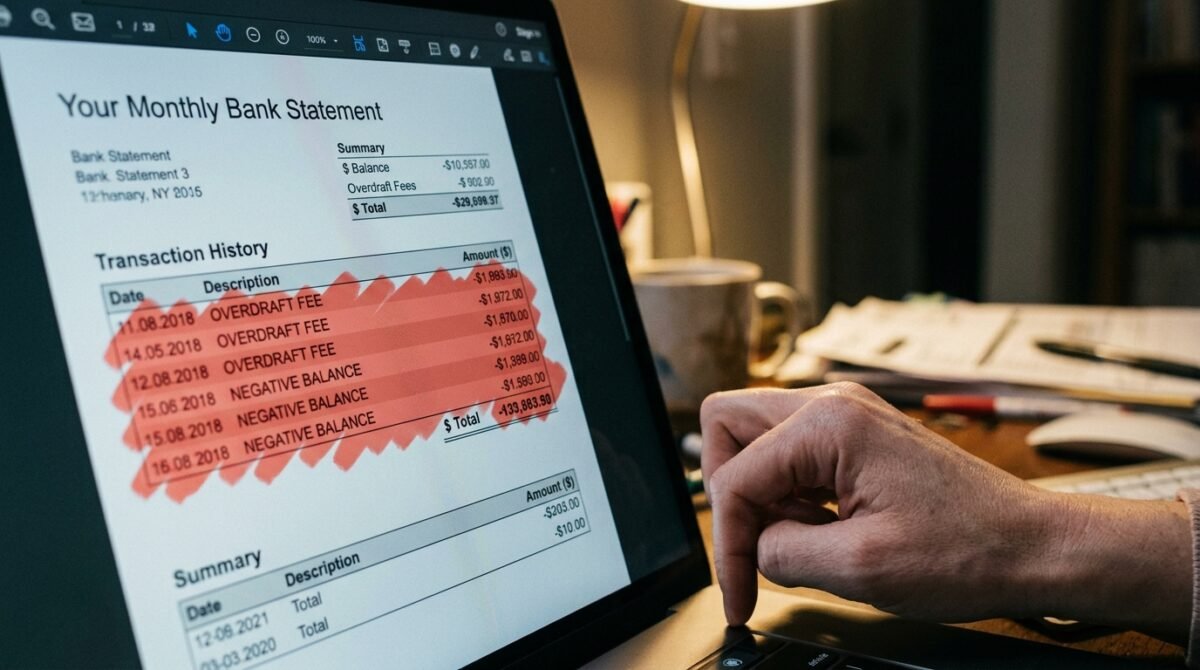
It was a Tuesday evening, the kind of mundane midweek grind that usually passes without incident. The kids were finally down for the night, and I was cleaning up the remnants of dinner—a lasagna I’d spent two hours prepping between conference calls. Mark was on the couch, laptop open, scrolling through our banking portal with the intensity of an IRS agent hunting for tax fraud. I wasn’t paying much attention until he cleared his throat, a sharp, jagged sound that cut through the silence of the room.
“Sarah,” he said, his voice devoid of any warmth. “Why was there a $14 charge at the drugstore this afternoon? I thought we agreed that all non-essential spending needs to be pre-approved. We’re tightening the belt, remember? You’re acting like money grows on trees.” I paused, the soapy dishcloth still in my hand. I hadn’t even realized he was tracking my individual store visits. I felt a cold knot tighten in my stomach, a familiar sensation whenever he decided to play the role of the benevolent provider.
“Mark, it was hygiene products. It was literally a box of tampons and some toothpaste. Are you honestly asking me to account for every single dollar spent on basic human maintenance?”
— Sarah to Mark
He didn’t even look up from his screen. “It’s about the habit, Sarah. It’s about the lack of discipline. You see a $14 charge, I see a lack of foresight. If you can’t manage a budget, I’m going to have to revoke access to the card and just give you an allowance. It’s for the good of the household.” The audacity hung in the air like smoke. My heart was pounding, not with fear, but with a sudden, icy clarity. He wasn’t just controlling the money; he was stripping away my agency under the guise of financial responsibility.
I looked around the room, really looked at it. I saw the toys neatly put away, the clean floors I’d mopped during my lunch break, the meal I’d prepared, and the clothes I’d folded while listening to a business presentation. I was running a household, managing two children, and maintaining a career, all while being told I was a financial liability. The realization hit me like a physical blow: to him, my labor had zero value because it was free. I decided then and there that the ‘free’ era of my life had officially come to an end.
The First Invoice Drafted
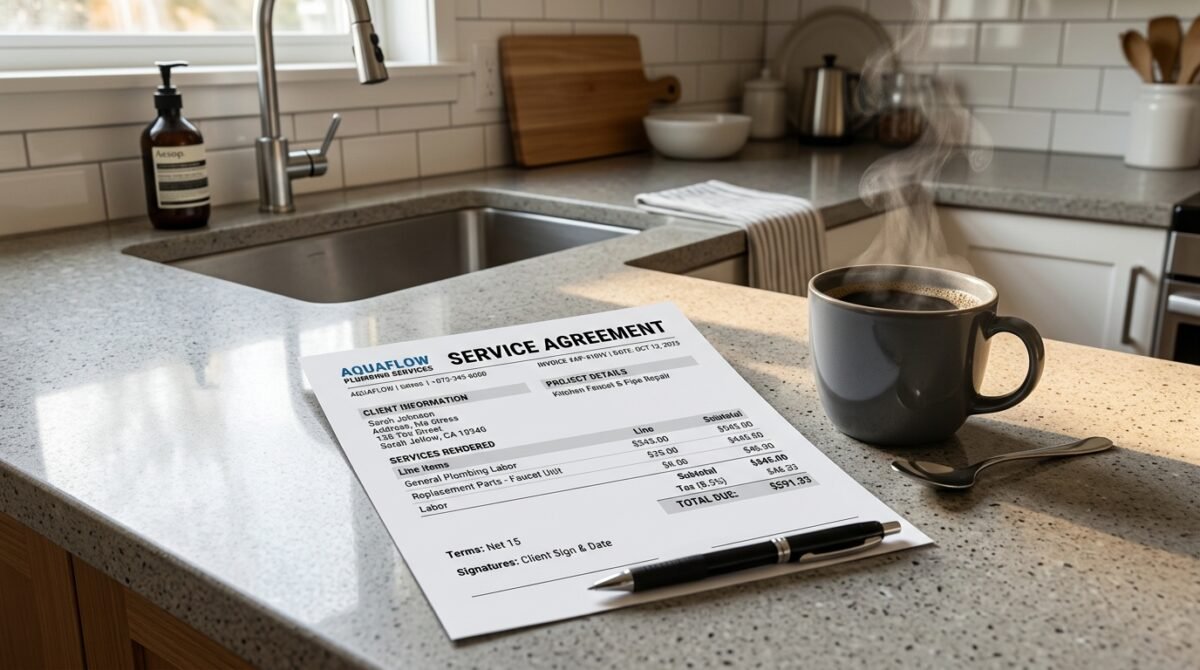
I didn’t sleep that night. Instead, I spent the hours between 2:00 AM and 5:00 AM working on a spreadsheet. I labeled it ‘Service Agreement and Fee Schedule.’ I researched the average market rates for a professional nanny, a private chef, a cleaning service, and a personal assistant. I was meticulous. I calculated the hours I spent on childcare—averaging eight hours a day on weekends and four hours on weekdays—and the hours spent on housekeeping and meal prep. The numbers were staggering. By the time I finished, I had a total that would make anyone pause.
When morning broke, the sun was streaming into the kitchen, highlighting the dust motes dancing in the air. Mark walked in, looking refreshed and ready for his day, clearly having forgotten the drama of the night before. He poured himself a coffee and reached for the toast, completely oblivious to the fact that his ’employee’ had just finished calculating the cost of his domestic comfort. I handed him an envelope. It wasn’t a love note, and it wasn’t a request for an apology. It was a professional invoice, complete with a payment deadline and a breakdown of services rendered.
“What is this? Are you joking? An invoice for… housekeeping? Sarah, this is our house. We share this life. You don’t get to charge me for being a wife and a mother.”
— Mark after opening the envelope
I stood my ground, my hands tucked into my apron pockets to hide their trembling. “Mark, you wanted a budget? You wanted to audit my spending? Well, I decided to audit my contribution. You seem to think my time has no monetary value because I do it for ‘love.’ But if we are running this house like a business, then I am a vendor. And current market rates for these services are significantly higher than what I’m billing you.”
He stared at the paper, his face turning a shade of purple that I hadn’t seen before. The logic of it was undeniable, even to him. He started to stammer, trying to find a way to dismiss the absurdity, but the math was right there in black and white. For every hour he spent at his desk, he was now indebted to me for the labor that allowed him to focus entirely on his career. The look in his eyes wasn’t just anger; it was the terrifying realization that he had lost the upper hand.
The Day the Kitchen Closed

The fallout began immediately. By Thursday, I decided to implement a ‘Work-to-Rule’ policy. If I wasn’t being compensated, I wasn’t working. I stopped cooking dinner entirely. I bought myself a salad and made sure the kids had pre-made meals I’d frozen weeks ago. When Mark walked in at 7:00 PM, expecting the usual spread of home-cooked food, he found me reading a book in the living room while he stared at an empty, quiet kitchen. The silence was deafening. He marched into the living room, his tie loosened, looking around for the meal he felt entitled to.
“Where’s dinner?” he barked, his voice echoing in the space. I didn’t look up from my book. I turned a page slowly, enjoying the rustle of the paper. “I’m not on the clock, Mark. You didn’t pay the invoice I sent on Monday. As per my terms, all services are suspended until payment is received or a contract is negotiated.” I could see him vibrating with frustration. He was used to me being the emotional shock absorber, the one who smoothed things over and made sure his life was comfortable, regardless of how I felt.
“This is ridiculous! You’re holding dinner hostage? This is a marriage, not a union negotiation. You’re being petty and insane. Go to the kitchen and make me something to eat.”
— Mark, losing his temper
I stood up then, calm and collected. “I am not holding anything hostage. I am simply prioritizing my own resources, just like you told me to do. You said we needed to watch our spending. Well, I’m watching my labor. If you’re hungry, there’s a grocery store down the street, and I believe you have your own debit card.” I walked past him, heading to the bedroom, leaving him standing in the middle of the hallway. The look on his face was a mix of shock and total disbelief.
That night, he ate a bowl of cereal. It was a small victory, but it felt monumental. The power dynamic hadn’t just shifted; it had been upended. For years, I had allowed him to treat me like a support system he could turn on and off at will. By demanding a receipt for a box of tampons, he had inadvertently forced me to see the transactional nature of his love. And if it was going to be transactional, then I was going to be the best damn accountant he’d ever met.
The Secret Group Chat Reveals All

The situation escalated when I accidentally discovered a group chat on his iPad, which he had left open on the counter. It was titled ‘The Boys’—a collection of his college friends. I wasn’t snooping out of malice; I was looking for the grocery list he’d promised to upload. But there it was, right at the top of the chat history. He had been complaining about me. Not just complaining, but mocking me. He had taken a photo of my invoice and sent it to his friends with the caption: ‘Look at what the wife is doing now. She thinks she’s a CEO of the house. Anyone want to tell her that I’m the one who makes the real money?’
The responses from his friends were worse. They were calling me ‘ungrateful,’ ‘a gold digger,’ and ‘needy.’ One friend suggested he ‘lock the accounts down completely’ to teach me a lesson. Seeing my private life, my struggles, and my attempt to set a boundary reduced to a punchline in a group chat made my blood run cold. It wasn’t just Mark; it was a culture of entitlement that he was actively participating in and feeding. I took screenshots. I didn’t feel guilty; I felt like a spy behind enemy lines.
“Wait until she realizes I’ve already contacted my lawyer about the separation of assets. She’s going to be so surprised when she has nothing left to invoice me for.”
— Mark, in the leaked group chat
I realized then that this wasn’t just about money or receipts. It was about respect. He had been planning an ‘exit strategy’ while I was trying to negotiate a partnership. The betrayal was so deep it felt hollow. I saved the screenshots to a secure cloud drive and then calmly closed the iPad. I didn’t confront him yet. I needed to be smart. I needed to prepare for the reality that the man I married was a stranger who saw me as an obstacle to be removed rather than a partner to be cherished.
The next day, I didn’t act any differently. I continued my ‘work-to-rule’ strike, but my internal focus had shifted entirely toward self-preservation. I started gathering my own financial documents, printing out statements, and making sure I had copies of everything that proved my contribution to our joint assets. If he wanted to play the corporate game, I was going to make sure I had the best legal counsel in the building. I wasn’t going to be a victim of his ‘audits’ anymore; I was going to be an architect of my own future.
The Sunday Dinner Table Silence

Sunday dinner was usually a ritual in our house. His parents would come over, and I would spend hours cooking a roast, setting the table, and making sure everything was perfect. This Sunday, I did nothing. I ordered pizza. When they arrived, the tension was so thick you could cut it with a knife. Mark’s mother looked at the pizza boxes on the counter and then at me, her face a mask of disapproval. ‘Sarah, dear, where is the roast? Mark said you were making his favorite,’ she whispered, loud enough for everyone to hear.
I smiled, a thin, tight expression. ‘Mark and I are currently restructuring our household budget and labor distribution, Martha. As part of that, I’ve had to cut back on discretionary culinary efforts. If you’d like a roast, I’m sure Mark can whip one up. He’s very passionate about our finances, so I’m sure he’ll find a way to make it cost-effective.’ Mark looked at me, his eyes wide, daring me to say more. I just picked up a slice of pepperoni pizza and took a bite.
“Sarah, is everything okay? Mark, what is going on here? Why is your wife talking about labor distribution and restructuring? Is this a joke?”
— Mark’s mother, sensing the tension
The entire dinner was a masterclass in awkwardness. Mark tried to make small talk, but every time he spoke, I interjected with a financial update, like, ‘Oh, I’m sorry, Mark, but I can’t discuss the weekend plans right now, as that falls under my off-duty hours.’ His father started laughing, thinking it was some weird, elaborate bit, but Mark looked like he was about to explode. It was the most satisfying meal I’d had in years. I didn’t care what they thought; I was finally speaking in a language that Mark understood—the language of consequences.
After they left, the explosion was inevitable. He turned on me, his face red and his voice shaking. ‘You embarrassed me! You made me look like a fool in front of my parents!’ I just looked at him, feeling absolutely nothing. ‘No, Mark. You made yourself look like a fool by treating your partner like an employee. I just provided the documentation. If you don’t like the results, maybe you should rethink your management style.’
The Reddit Community Weighs In

I knew I couldn’t keep this to myself. The isolation was part of his control, so I took to the forums. I posted the whole story—the receipt demand, the invoice, the strike, the group chat discovery. I didn’t sugarcoat it. I wanted to see if I was losing my mind. Within an hour, the post had blown up. Thousands of people were commenting, sharing their own stories, and offering advice that ranged from ‘get a divorce lawyer yesterday’ to ‘you are a queen, keep the invoice going.’
The support was overwhelming. I felt like I had an army behind me. People were dissecting the financial abuse, the gaslighting, and the sheer audacity of his behavior. It was the validation I needed. I started reading the comments aloud to myself, feeling the weight of the last few years lift. One comment, in particular, stood out to me. It reminded me that my worth was not tied to his approval or his ‘allowance.’ I wasn’t just a service provider; I was a human being with rights and dignity.
“This is text-book financial abuse disguised as ‘budgeting.’ The fact that he’s mocking you in a group chat while you’re holding the household together is a massive red flag. Secure your assets, get a lawyer, and don’t look back. You aren’t being petty; you’re being smart.”
— u/FinancialTruthSeeker (Top Comment, 32.4k upvotes)
The community’s response was a turning point. It shifted my perspective from ‘fixing the marriage’ to ‘protecting myself.’ I realized that there was no ‘fixing’ a man who viewed his wife as a contractor. The ‘budgeting’ was just a tool to keep me small, to keep me dependent, and to keep me under his thumb. The Reddit community gave me the armor I needed to stop fighting for his approval and start fighting for my own independence.
I started replying to some of the comments, feeling a strange sense of catharsis. Telling my story to strangers felt more honest than anything I had said to Mark in years. I realized that the secret wasn’t to win the argument; it was to exit the arena entirely. The people in the comments didn’t know me, but they knew the dynamic. And they were all saying the same thing: get out while you can.
The Certified Letter of No-Contact

I didn’t wait for him to initiate the divorce. I hired a lawyer, a sharp, no-nonsense woman who didn’t even blink when I showed her the invoice. She told me the spreadsheet was a goldmine—a perfect record of my contribution to the household that would be vital in the alimony and asset division. We sent a letter to his office, not to his home. It wasn’t a request for a meeting; it was a formal notification that I was seeking legal separation and that all future communications were to go through our respective counsel.
The day the letter arrived, I wasn’t there. I had packed a bag and taken the kids to my sister’s house for a few days. I knew he would be furious, but I didn’t want to be there for the storm. When I checked my phone, I had fifty missed calls and twenty text messages. They started with anger, then moved to confusion, and finally settled into a pathetic, desperate attempt to ‘fix things.’ He was finally realizing that his ’employee’ had quit, and the business was failing.
“Sarah, please pick up. I’m sorry about the tampons. I’m sorry about the comment in the group chat. We can talk about this. Just come home. I don’t know how to do the laundry, and the house is a mess.”
— Text from Mark, 11:42 PM
Reading that text brought me a level of peace I hadn’t felt in a decade. He wasn’t missing me; he was missing the labor. He was missing the person who made his life easy. He was missing the convenience. I didn’t respond. I blocked his number and focused on my kids. They were resilient, and in the quiet of my sister’s home, we started to build a new life. It wasn’t perfect, and it was going to be a long, difficult legal battle, but for the first time in years, I was in control.
The house was empty, the accounts were frozen by his own hand, and the charade was over. I wasn’t just Sarah the housewife anymore; I was a woman taking back her life. I felt a strange, electric energy coursing through me. I was scared, sure, but I was also free. The invoice had been the start, but the departure was the finish line. I had finally stopped being an employee in my own home.
The Legal Battle for Equity

The legal proceedings were brutal, exactly as my lawyer had predicted. Mark tried to argue that my ‘domestic contributions’ weren’t equivalent to financial ones, and he attempted to minimize my role in our life together. But the spreadsheet—my ‘invoice’—became a centerpiece of our evidence. It was an exhaustive log of every hour of labor, every chore completed, and every way I had supported his career growth by taking the load off the home front. It was undeniable proof of my ‘sweat equity’ in the marriage.
Mark’s face during the depositions was a study in arrogance meeting reality. He couldn’t understand why the judge was taking my ‘chores’ seriously. He tried to frame me as lazy, as someone who just ‘didn’t want to work.’ But his own text messages, the ones from the leaked group chat, were introduced as evidence. Seeing his own words projected on a screen in front of a judge made his entire defense crumble. He wasn’t just a man managing a budget; he was a man who had actively sought to degrade his spouse.
“Mr. Anderson, are you suggesting that the primary caretaker of your children and the individual who managed your entire household should receive zero compensation for their labor during the dissolution of this marriage?”
— The judge, during the divorce hearing
The judge didn’t buy his excuses for a second. We won on every major point. I was granted a significant portion of our assets, including a fair share of his savings, which he had tried so hard to hide under his ‘budgeting’ regime. I felt a sense of vindication that was deeper than any money could provide. It wasn’t about the wealth; it was about the recognition that my life, my time, and my effort had value. I had fought the system he created and won.
Walking out of the courthouse, I felt lighter than I had in years. The air tasted different. I didn’t have to look over my shoulder, I didn’t have to account for every cent, and I didn’t have to answer to anyone. The long, grueling process of divorce was finally yielding results. I looked at my lawyer and smiled. ‘We did it,’ I said. She nodded, a rare smile crossing her face. ‘You did it, Sarah. You were your own best advocate.’
Reflecting on the Invisible Cost

Looking back now, I realize how much of myself I had sacrificed on the altar of his expectations. I had internalized the idea that my role was to facilitate his success. I had forgotten that a partnership requires two people who value each other’s contribution, regardless of whether it comes in the form of a paycheck or a clean home. The ‘receipts’ were just the symptom; the disease was a fundamental lack of respect. I wasn’t just fighting for money; I was fighting for my personhood.
I spent months in therapy, unlearning the habits of self-sacrifice. I had to learn how to exist without needing to be ‘productive’ in the way he defined it. I learned that my value as a human being isn’t tied to how much I do for others. It’s tied to who I am. I started painting again, a hobby I had abandoned years ago because Mark said it was a ‘waste of time.’ I reconnected with friends I hadn’t spoken to in years. I started living for myself again.
“I used to think my worth was defined by how well I kept the house and how little I spent. Now I realize my worth is defined by how I treat myself and the boundaries I set for others.”
— Sarah, reflecting in her journal
The lessons I learned were hard-won. I now understand that financial abuse is one of the most insidious forms of control. It’s quiet, it’s persistent, and it’s designed to make you question your own reality. If I could give one piece of advice to anyone else going through this, it would be to trust your gut. If you feel like your partner is auditing your existence, it’s not because you’re doing something wrong; it’s because they’re trying to exert control.
I’m still healing, and some days are harder than others. But when I look in the mirror, I see a woman who stood up for herself. I see a woman who took the control back. And that, more than any financial settlement, is the true victory. I’m not just a survivor; I’m someone who built a new life from the ashes of a marriage that never valued the person I actually was.
Moving Forward: A New Chapter

Today, my life looks very different. I live in a smaller, sun-drenched apartment that I can decorate exactly how I want. My kids are thriving, and we have a new rhythm that’s based on mutual respect and shared responsibilities. We don’t have a rigid ‘invoice’ system anymore, but we do have clear, open communication about money and labor. We talk about what’s fair, what’s manageable, and what’s important. It’s not perfect, but it’s real. And for me, that’s everything.
I’ve started a small business, using my skills as a graphic designer to help other women build their own brands. It’s been incredibly rewarding to work on my own terms. I don’t feel the need to justify my expenses anymore. I make my own money, I pay my own bills, and I make my own choices. It’s a freedom that I’ll never take for granted again. I’ve learned that when you take the power back, you open up a world of possibilities you never even knew existed.
“The best thing I ever did was start that spreadsheet. It wasn’t the end of my marriage; it was the beginning of my life. I finally learned how to value myself, and that’s a price you can’t put a tag on.”
— Sarah, in a recent interview
I still see Mark occasionally during kid-related drop-offs. He looks tired, and the house he kept trying to control seems to have fallen into disarray without me there to manage it. He tries to bring up the past sometimes, but I just smile and walk away. I don’t owe him an explanation anymore, and I don’t owe him any of my time. I’m focused on the future, on my kids, and on the woman I’m becoming. The invoice is a memory, but the strength I found is permanent.
If you find yourself in a situation where you feel small, where your labor is ignored, or where your finances are used against you, please know that you are not alone. There is a way out, and you have more power than you think. You don’t have to be a victim, and you don’t have to accept less than you deserve. Take control, document everything, and remember: your time and your life are worth so much more than anyone else’s approval.
Conclusion
Sarah’s journey from a controlled ‘intern’ to an independent woman is a testament to the power of recognizing one’s own worth. Her story isn’t just about a broken marriage; it’s about the silent labor that so many women perform every day, often without recognition or compensation. By turning the tables and professionalizing her domestic role, Sarah wasn’t just acting out of spite; she was performing a radical act of self-reclamation. She exposed the transactional nature of her husband’s love and, in the process, found the path to her own liberation.
The debate surrounding Sarah’s actions is complex. Some argue that marriage should never be transactional and that invoicing one’s spouse is a sign that the relationship was already over. Others see it as a brilliant, necessary tactic to expose financial abuse and demand the respect that was long overdue. What do you think? Was Sarah’s approach justified given the circumstances, or is there a better way to handle financial control in a marriage? Share your thoughts below.
Community Poll:
- Was Sarah’s decision to invoice her husband a justified act of self-defense?
- Is it possible to recover from financial abuse, or is the foundation of trust permanently broken?
- How do you manage finances and labor in your own relationship to ensure equality?
What's your verdict on this dilemma?
Vote below to contribute to the official community consensus.

Have a Dilemma Keeping You Up at Night?
Share your real-life feud, wedding chaos, or relationship crossroads anonymously with our editorial team.
What do you think ?
0 Comments🛡️ Comments are moderated to protect community integrity. Your comment will appear once approved by the editorial team.