

When we talk about ‘for better or worse,’ most people think of sickness, career transitions, or the mundane trials of living together. I never imagined that ‘worse’ would involve a systematic, calculated attempt to dismantle a decade of my hard work, thrift, and disciplined saving. Mark and I had been together for four years, and by all accounts, we were the ‘power couple’ of our social circle. He was the charming architect with a vision for our future, and I was the logistics manager who made sure our lives ran like clockwork.
However, beneath the veneer of our perfect life lay a structural weakness I hadn’t properly inspected. Mark wasn’t just messy with money; he was avoidant to the point of danger. For years, he hid unopened envelopes, missed deadlines, and vague ‘accounting errors’ behind a disarming smile and promises that everything would ‘even out.’ I thought we were a team, but the reality was that I was the anchor, and he was a dead weight pulling me into a current of his own making.
The breaking point didn’t arrive with a bang, but with a spreadsheet. It was a Tuesday evening when he finally sat me down, not to discuss wedding venues or catering, but to present me with a $78,000 bill from the IRS. His request was simple, terrifying, and delivered with the casual air of someone asking for a cup of sugar: he needed my 401(k), the total sum of my savings for a future I had built entirely on my own, to make his negligence disappear.
I sat in the silence of our kitchen, the hum of the refrigerator suddenly sounding like a deafening roar. In that moment, I realized that for Mark, our partnership wasn’t a union of two people striving for a common goal. It was a safety net designed specifically to catch him when he fell, regardless of what that meant for my own stability. The trust didn’t just crack; it shattered into a thousand jagged pieces that no amount of ‘we are in this together’ talk could ever mend.
This is the story of how I stopped playing the role of the savior, reclaimed my autonomy, and left the symbol of a false future exactly where it belonged: on the cold, hard surface of our kitchen island. It wasn’t just about the money; it was about the realization that he didn’t value me as a partner—he valued me as a resource.
The Envelope Under the Decorative Bowl

It started, as these things often do, with an accident. I was deep-cleaning the entryway console, a task I had taken on to distract myself from a particularly stressful week at work. When I moved the heavy, decorative ceramic bowl that Mark claimed was a ‘family heirloom’—a story I was beginning to doubt given he’d picked it up at a flea market—I noticed a thick, official-looking envelope wedged behind the wall molding.
My stomach dropped. I recognized the return address immediately. It wasn’t the first time I’d seen that logo, but previously, they had been labeled as ‘final notices’ regarding his student loans, which he swore were under control. This one, however, was marked ‘Notice of Intent to Levy.’ My hands were shaking as I slid the letter out. It wasn’t just a late fee; it was a comprehensive breakdown of years of ignored tax filings.
I spent the next three hours scouring his desk. I wasn’t proud of the invasion of privacy, but the foundation of our life felt like it was shifting beneath my feet. I found folders stuffed with notices I had never seen, bank statements showing months of ‘overdraft protection’ fees, and a credit card bill that had been ignored for nearly a year. The math was impossible to ignore. His debt wasn’t a mistake; it was a lifestyle.
“I just didn’t want to worry you, babe. These things are complicated, and the IRS is notoriously heavy-handed with people who have high-earning potential like me. I knew if I just worked a few more freelance projects, I could bridge the gap before you ever had to know.”
— Mark’s defense when confronted that night
When he came home, I didn’t yell. I didn’t even cry. I simply laid the documents out on the kitchen island, meticulously organized by date. His initial reaction was one of annoyance, as if I had interrupted his evening with something trivial. When he realized what the papers were, he didn’t apologize. He began the familiar dance of excuses—the ‘economic climate,’ the ‘unfair tax burden,’ and the classic ‘I was going to tell you when it was resolved.’
The most chilling part wasn’t the debt itself; it was the way he looked at the pile of paper, then looked at me, and seemed to calculate exactly how much I could cover. He wasn’t thinking about how to fix it; he was thinking about how to leverage me. That was the first moment I realized the ‘us’ I believed in had been a one-sided delusion all along.
The $78,000 Proposal

Two days later, the air in the apartment was thick with tension. Mark hadn’t brought it up since that night, acting as if the reveal had been a minor inconvenience. I had been planning to suggest a budget, a path to repayment, or perhaps even a meeting with a financial advisor, but he had other plans. He walked into the kitchen while I was having my morning coffee and placed a printout of my own retirement account balance on the counter.
My blood went cold. I had never shown him that portal. He must have installed a keylogger or gone through my browser history while I was in the shower. The violation was so complete, so invasive, that I felt physically ill. He didn’t even pretend to be ashamed. He stood there, leaning against the counter, and laid out the ‘solution’ as if he were presenting a romantic gesture.
He explained that we were getting married in six months. In his mind, my money was already ‘our’ money. He argued that since I had ‘excess’ savings, it would be ‘financially irresponsible’ to let him incur interest penalties when I could just pay the debt off now and we could ‘replenish’ it later. He spoke about our future as if it were a business transaction where I was the primary investor.
“Look, if you keep this money in a 401(k), the government just gets to hold onto it. If you cash it out now, we pay a penalty, yes, but we clear my slate. We start our marriage with a clean record. Isn’t that what you want? Don’t you want to start our life together without any baggage?”
— Mark explaining his ‘logic’
The audacity was breathtaking. He wasn’t asking for help; he was demanding that I jeopardize my entire future to clean up the mess he had spent years hiding. He framed my hesitation as a lack of commitment. According to him, if I loved him, I would see that my retirement fund was just an ‘asset’ meant to be utilized for the betterment of the household.
I didn’t answer him immediately. I stood up, walked to the window, and watched the city traffic below. I thought about the overtime I worked during my twenties, the vacations I skipped to keep my savings growing, and the pride I felt in being self-sufficient. Every dollar in that account represented a sacrifice I had made for my own security. He was asking me to throw it all away for his negligence.
The Calculated Response
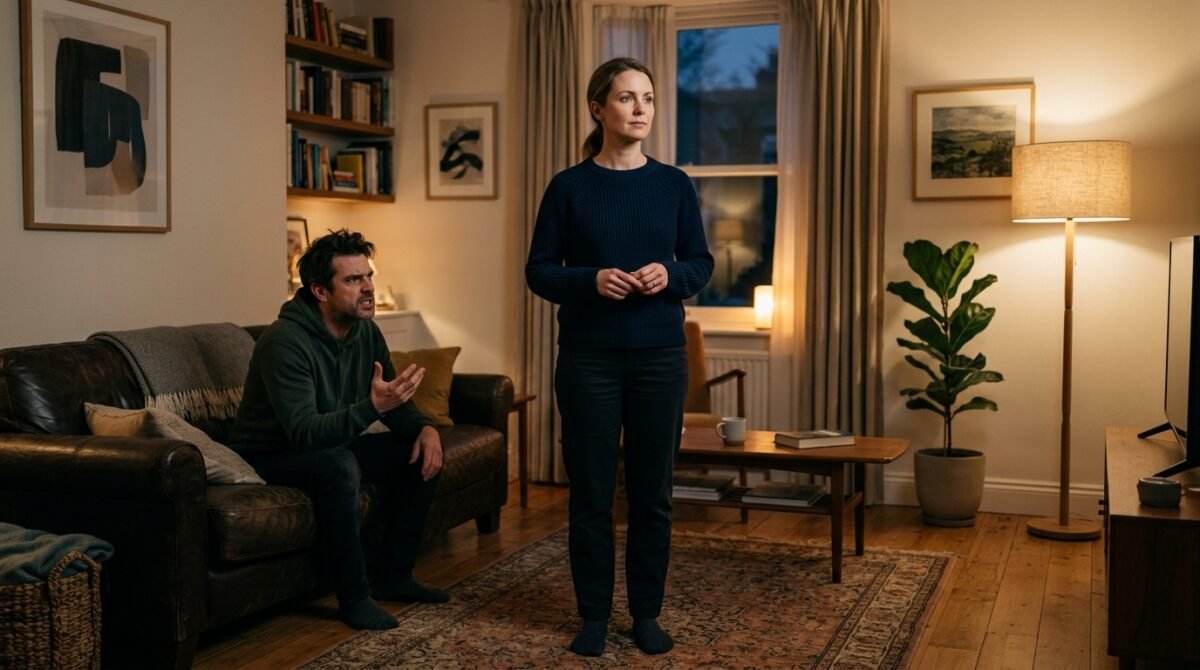
I didn’t lose my cool. I realized that reacting with anger would only give him an opportunity to pivot into his ‘you’re being hysterical’ routine. Instead, I went completely cold. I spent the next 48 hours in a state of clinical detachment. I contacted a financial advisor, not to see if I could withdraw the money, but to see what my options were if I needed to protect my assets from a potential spouse.
I learned a lot in those two days. I learned that my retirement funds were legally mine, but that if we married, the lines could blur depending on how we handled our finances. I also learned that Mark’s tax debt could become a lien on our future home. He wasn’t just asking me to pay his taxes; he was trying to drag me into a financial trap that would define our marriage for the next decade.
When I returned to the apartment, Mark was sitting on the couch, watching television as if everything were normal. He looked up, expecting me to have come around to his way of thinking. He still thought he had the upper hand, that his charm and the weight of our upcoming wedding would force me to fold. He didn’t realize that my silence wasn’t contemplation; it was the finalization of my decision.
“I’ve looked into it, Mark. And I have decided that your financial problems are exactly that—yours. I will not be touching my retirement fund. In fact, I think we need to have a very serious conversation about our future, because your definition of partnership is fundamentally different from mine.”
— My response to his demand
The look on his face shifted from expectant confidence to genuine confusion. He honestly didn’t understand how I could be so ‘selfish.’ He tried to pivot to his fallback: the idea that I was attacking his character. He claimed I was being cold-hearted, that I didn’t support him, and that I was setting our marriage up for failure by being so rigid about money.
I didn’t argue. I didn’t explain the hours of research I’d done or the legal advice I’d sought. I simply watched him perform his indignation, noting every manipulative technique he used. It was like watching a movie I had already seen. I knew how it ended, and I no longer wanted a part in the sequel.
The Ring on the Counter

The next morning was the most peaceful I had felt in months. I didn’t pack a bag. I didn’t want to turn this into a scene. I took my essential documents, my laptop, and my keys. I walked into the kitchen, where the ring sat in the box he had left out to ‘remind’ me of our commitment. It was a beautiful stone, but at that moment, it looked like a shackle.
I took the ring out of the box and placed it directly in the center of the kitchen island, right where he had stood while demanding my retirement money. I left a short note. I didn’t want to leave room for negotiation or ‘let’s talk about this.’ I wanted to leave a boundary that was impossible to cross. I walked out the door and didn’t look back.
I stayed with a friend for three days. My phone was blowing up the entire time. Mark went from confused to angry, then to apologetic, and finally to threatening. He called my parents, he texted my friends, and he even tried to frame the entire thing as a ‘misunderstanding’ where I had overreacted to a simple financial request. He couldn’t wrap his head around the fact that I was gone.
“You are abandoning me over a few tax issues? After everything we planned? You’re throwing away our entire life because you’re greedy. I hope you enjoy your retirement fund, because you’re going to be spending it alone.”
— A text from Mark at 2:00 AM
The irony of him calling me ‘greedy’ for wanting to keep my own money was not lost on me. It was a classic projection. He had spent years failing to manage his own affairs and now wanted to blame me for not subsidizing his incompetence. The messages continued for days, becoming increasingly desperate as the reality of his tax situation started to close in on him.
I didn’t respond to a single one. I blocked his number, blocked his social media, and made sure my friend was the only point of contact for anything truly essential. I wasn’t just leaving a man; I was leaving behind the version of myself that was willing to be a doormat in the name of love. The freedom I felt was absolute.
The Leaked Group Chat
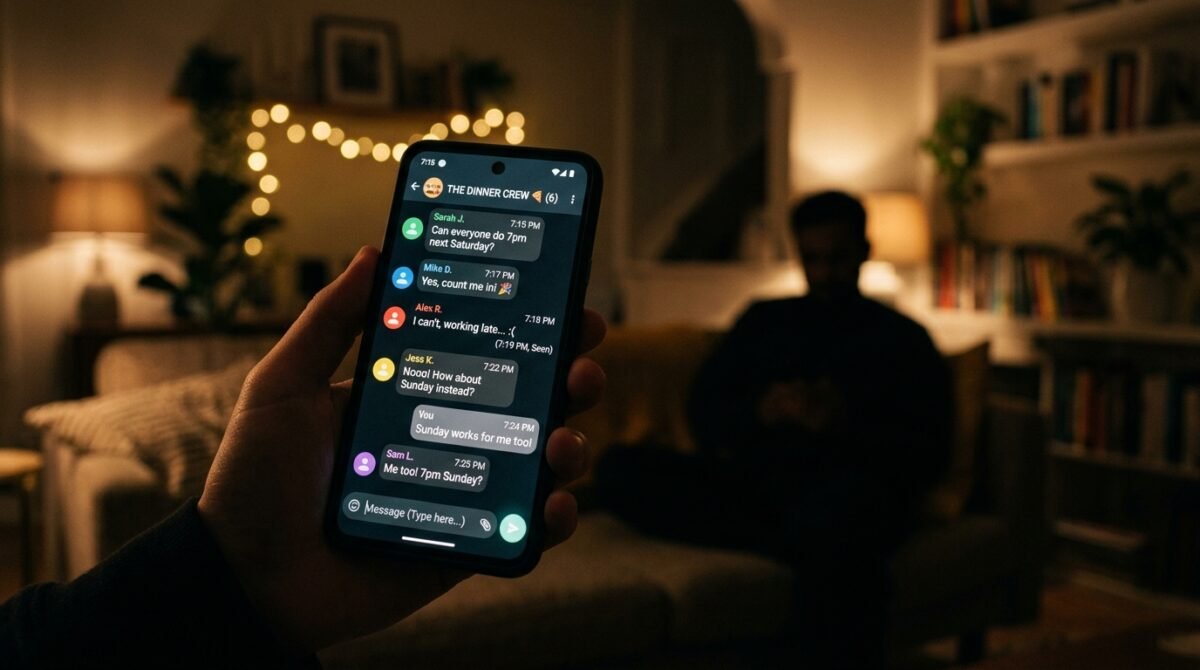
A week later, the drama reached a new level. A mutual friend sent me screenshots from a group chat that Mark had started with our ‘inner circle.’ It was a masterclass in gaslighting. He had spun a story where I had been ‘financially controlling’ and had ‘bailed on him’ right when he needed support for a ‘legitimate business investment’ that had gone sour.
The comments in the group chat were a mix of genuine confusion and blind support for him. It was fascinating to see how easily he manipulated the narrative when I wasn’t there to contradict him. He painted himself as the victim of a cold-hearted woman who only cared about her bank account. I sat on my couch and read the screenshots, feeling a strange sense of detachment.
People were actually weighing in, telling him how sorry they were and that I was ‘being unreasonable.’ It was a reminder that you never truly know what people are saying behind your back. But then, a few voices started to emerge—people who actually knew my work ethic and his track record. The chat began to fracture, and the true colors of his supporters started to show.
“Wait, so he asked you to clear a 78k tax debt with your retirement? Mark, man, that’s not a business investment, that’s a bankruptcy-level mess. Why would you even ask her to do that?”
— A message from a friend in the group chat
Seeing the tide turn was vindicating, but it didn’t change my decision. Even if everyone in the world thought I was wrong, I knew I had made the right choice. Their opinions were irrelevant. The fact that he was airing our private financial business to our friends confirmed that he had no respect for my privacy or our relationship.
I didn’t engage. I didn’t defend myself in the chat. I simply let them talk. The more they talked, the more they revealed about their own values and their own understanding of what a partnership should look like. I was already moving on, and they were still trapped in his web of excuses.
The Reddit Verdict

I eventually posted a version of this story on a popular forum to see if I was losing my mind. The validation I received from complete strangers was overwhelming. People saw exactly what I had seen: the financial abuse, the boundary violations, and the entitlement. It was the first time I felt like the weight of the last four years was finally being lifted.
The comments were varied. There were those who had been in similar situations, sharing their own horror stories of partners who had tried to drain their assets. There were financial experts who explained just how dangerous it would have been if I had agreed to his demand. And there were those who were just shocked by his audacity.
“You are not a bank. You are not a government bailout fund. You are a partner. The fact that he felt entitled to your retirement is a massive red flag that he doesn’t respect your labor or your future. Block him, delete him, and never look back. You dodged a massive, expensive bullet.”
— u/FinanceExpertReal (Top Comment, 32.5k upvotes)
Then there were the comments that were a bit more nuanced, pointing out that his tax debt might even have legal implications for me if we were married. It was a stark reminder of how close I had come to ruin. Reading these responses, I realized that I wasn’t just some ‘cold’ person; I was a person who had protected herself from a predator.
The community was a mirror. They didn’t see the ‘charming architect’ that everyone else saw. They saw a man who was using someone else’s security to fix his own failures. It was the clarity I needed to finalize my decision to go completely no-contact and focus on my own path forward.
The Aftermath and The New Normal

It has been six months since I left the ring on the counter. The dust has settled. Mark eventually lost the apartment, as he couldn’t afford it on his own once he stopped trying to lean on my income. He moved back in with a relative, and I’ve heard through the grapevine that he’s still struggling to get his finances in order. I don’t feel happy about his failure, but I don’t feel responsible for it either.
I have moved to a new city, a fresh start. My finances are secure, and I’ve taken steps to ensure that my assets are fully protected. More importantly, I’ve learned to recognize the warning signs of financial entitlement. I don’t let anyone get close to my financial data, and I’m much more open about my expectations for any future relationship.
I spent a lot of time in therapy, unpacking why I stayed as long as I did. I realized that I had been trained to be the ‘fixer,’ the one who kept things steady for everyone else. It was a role I needed to outgrow. The experience taught me that I am capable of making hard decisions, even when they feel like they are destroying everything I had planned.
“You didn’t break a relationship. You broke a cycle. You took control of your own destiny, and that is the bravest thing you could have done. Don’t look back at what you lost; look forward at what you protected.”
— My therapist, during our final session
I still think about the ring sometimes. I think about the life I thought I was going to have. But then I remember the feeling of that morning—the clarity, the peace, and the realization that I wasn’t just a person in a relationship, but a person with a life of my own. And that, I’ve realized, is worth more than any retirement fund.
The Hard Lesson in Independence

Looking back, the biggest lesson wasn’t about money. It was about the power of the word ‘no.’ I had spent so much of my life saying yes to things that were slowly eroding my sense of self. I was afraid that if I said no, I would lose the people I loved. But I learned that if someone leaves you because you said no to a demand that compromises your safety, they weren’t in your life for you; they were in it for what they could get from you.
I had to learn how to be alone again. Not just alone in the physical sense, but alone in the sense of taking responsibility for my own happiness. It was terrifying at first, but it became the most liberating experience of my life. I started pursuing hobbies I had put on hold, focusing on my career, and investing in friendships that were built on mutual respect rather than dependency.
There were nights when I doubted myself, when I wondered if I should have just helped him. But then I looked at the math again, and the logic was always the same: his problems were his to solve. By taking them on, I was enabling the very behavior that was destroying him. By leaving, I was forcing him to face the reality of his own actions, which was the only way he would ever learn to change.
“I thought we were building a future. Instead, he was building a wall between me and my security, one request at a time. I am finally building my own home, and for the first time, the foundation is solid.”
— Reflecting on my journey
The transition wasn’t easy. There were legal hurdles, emotional baggage, and the inevitable questions from family members who didn’t understand why I had ‘just walked away.’ But I learned to hold my ground. I learned that my peace of mind was worth more than a ring, a wedding, or the comfort of a conventional life that was built on a lie.
Why I Never Looked Back

There were moments when I considered reaching out. Maybe he had learned his lesson? Maybe he was finally paying his taxes and becoming the man I thought he was? But then I would remember the way he looked at me when he demanded my money. That look wasn’t love. It was calculation. It was the look of a person who had run out of other options and had decided that I was the next target.
I realized that even if he changed, the trust was gone. You can’t build a life with someone when you have to constantly look over your shoulder to see if they’re stealing your future. The foundation of a healthy relationship is trust, and he had violated that trust in the most intimate way possible. There was no ‘repairing’ that; there was only moving forward.
I have started dating again, but the dynamic is completely different. I am upfront about my financial independence, my boundaries, and my expectations. I don’t apologize for my success, and I don’t feel the need to hide my accomplishments. If someone is intimidated by my stability, they aren’t the right person for me. And if they ask for my help, I am now able to assess the situation from a place of strength, not desperation.
“Boundaries are not walls; they are gates. They let the right people in, and they keep the wrong ones out. I finally have the right people in my life, and the wrong ones are just memories.”
— My personal mantra for moving forward
I am grateful for the experience, as painful as it was. It forced me to grow in ways I never would have if I had stayed. I am stronger, more resilient, and more confident in my own worth. I have finally reclaimed the power that I had given away so freely, and I am never letting it go again.
The Final Reflection on Financial Intimacy

Financial intimacy is often overlooked in relationships, yet it is just as important as emotional or physical intimacy. It involves transparency, honesty, and a shared vision for the future. When one person hides their financial reality or tries to exploit the other’s stability, it is a form of betrayal that is just as damaging as any other. I learned this the hard way, but I also learned that I am worth more than my financial status.
I hope that by sharing my story, others will realize that they don’t have to sacrifice their future to ‘save’ a partner. You are not a charity, and you are not responsible for fixing someone else’s life at the expense of your own. You are a partner, and you deserve a relationship that is built on mutual support, not exploitation.
If you find yourself in a similar situation—if you are being asked to jeopardize your security for someone else’s failure—take a step back. Look at the numbers, look at the patterns, and listen to your gut. You don’t have to be the martyr in your own life. You are the architect of your own future, and you have the power to protect what you have worked so hard to build.
“The most expensive lesson I ever learned was the one that taught me the true value of my own independence. Don’t let your heart override your common sense when it comes to your future.”
— Final thought for anyone in a similar position
I am finally at peace. I have my life, my stability, and my future. And for the first time, I am excited about what lies ahead. I am not looking for a savior; I am looking for a partner who brings as much to the table as I do. And that is a journey I am finally ready to take.
Conclusion
The story of my engagement didn’t end with a wedding; it ended with a reclamation of my own life. Leaving that ring on the counter wasn’t a loss; it was the start of my real future. We often think of relationships as the goal, but we forget that the real goal is to build a life that you are proud of, with someone who respects you as much as you respect them.
The moral of this story is simple: your financial future is not a tool for someone else’s convenience. If your partner views your hard-earned security as their personal emergency fund, they are not a partner—they are a liability. I chose to save my future, and it was the best decision I ever made.
What about you? Have you ever had to draw a hard line on money in a relationship, or have you ever felt the pressure to ‘save’ someone at the cost of your own security? Let me know in the comments below.
Community Poll: What would you have done?
1. Tried to help him pay the debt with strict conditions.
2. Walked away immediately like the OP did.
3. Consulted a lawyer to see if a prenup could protect me.
4. Attempted one final conversation to see if he would change.
What's your verdict on this dilemma?
Vote below to contribute to the official community consensus.

Have a Dilemma Keeping You Up at Night?
Share your real-life feud, wedding chaos, or relationship crossroads anonymously with our editorial team.
What do you think ?
0 Comments🛡️ Comments are moderated to protect community integrity. Your comment will appear once approved by the editorial team.