
When you spend four years grinding through journalism school, interning for free, and surviving on instant noodles, the ‘big break’ isn’t just a dream—it’s a validation of your entire existence. For me, that break was a high-stakes, on-air correspondent audition for a major regional news station. Everything was meticulously planned: the suit, the resume, the poise, and the look. My hair, a natural, clean blonde, was part of that professional brand. I never imagined that the greatest threat to my career wouldn’t be a rival candidate or a difficult interviewer, but someone I shared a kitchen and a lease with.
It started as a typical Tuesday. We had lived together for six months—long enough to be friendly, but short enough to still be uncovering each other’s eccentricities. Sarah, my roommate, had always been ‘the funny one,’ a self-proclaimed prankster who thought boundaries were merely suggestions. I had told her a dozen times that the audition was the most important event of my life, yet she viewed my preparation as an annoyance that needed to be ‘lightened up.’
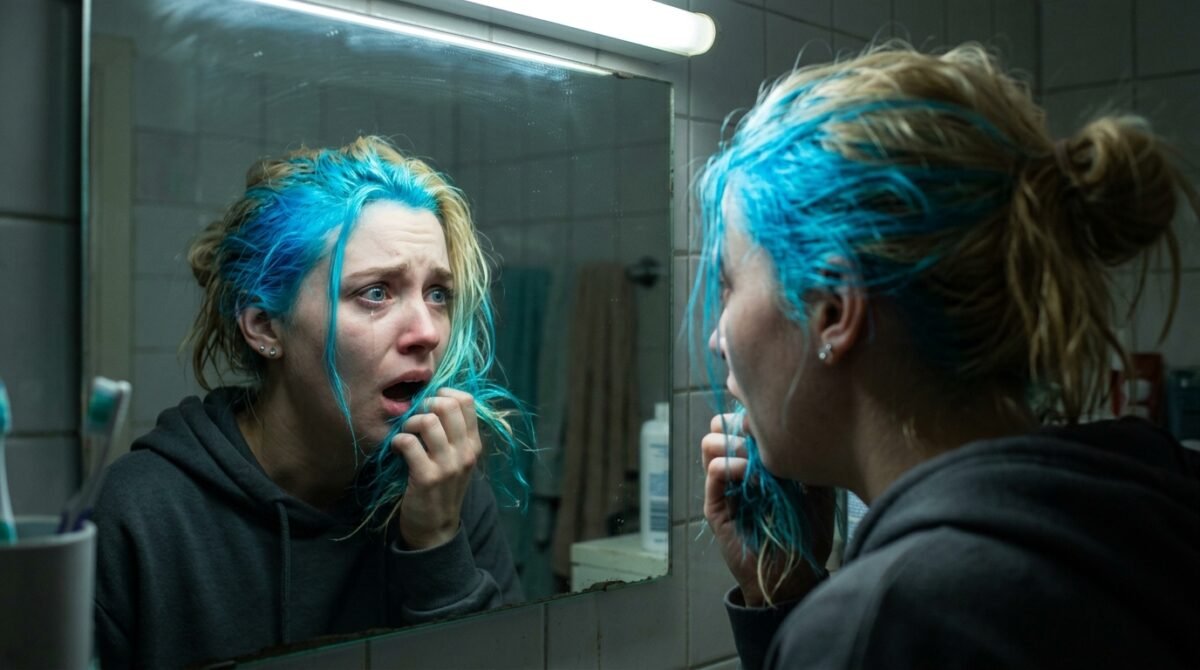
The morning of the audition, I woke up early to shower and prep. What I found in the bathroom was not a prank; it was a targeted act of sabotage that would change the trajectory of my professional life. As I reached for my hair mask, I felt something cold and viscous on the applicator. I didn’t think twice until I looked in the mirror after towel-drying my hair. My reflection was a nightmare of electric blue streaks, dripping down my shoulders.
The sheer absurdity of the situation didn’t hit me until the panic subsided into a cold, hard rage. I had three hours before I needed to be in the studio. There was no time to color-correct, no time to get an appointment, and certainly no time to explain to a producer why I looked like a failed science experiment. The incident wasn’t just a ruined hairstyle; it was a ruined opportunity, and it was time for the court system to intervene.
The Morning the Bathroom Mirror Turned Into a Crime Scene
I stood in front of the mirror, the smell of cheap chemical dye filling the small, cramped bathroom. It was so potent it made my eyes water. I touched my hair, expecting the familiar, soft texture of my blonde locks, but instead, my fingers came away stained a deep, vivid cerulean. My heart sank into my stomach. I frantically grabbed a washcloth and tried to scrub, but it was already set. The dye was a permanent ‘Midnight Blue’ box kit.
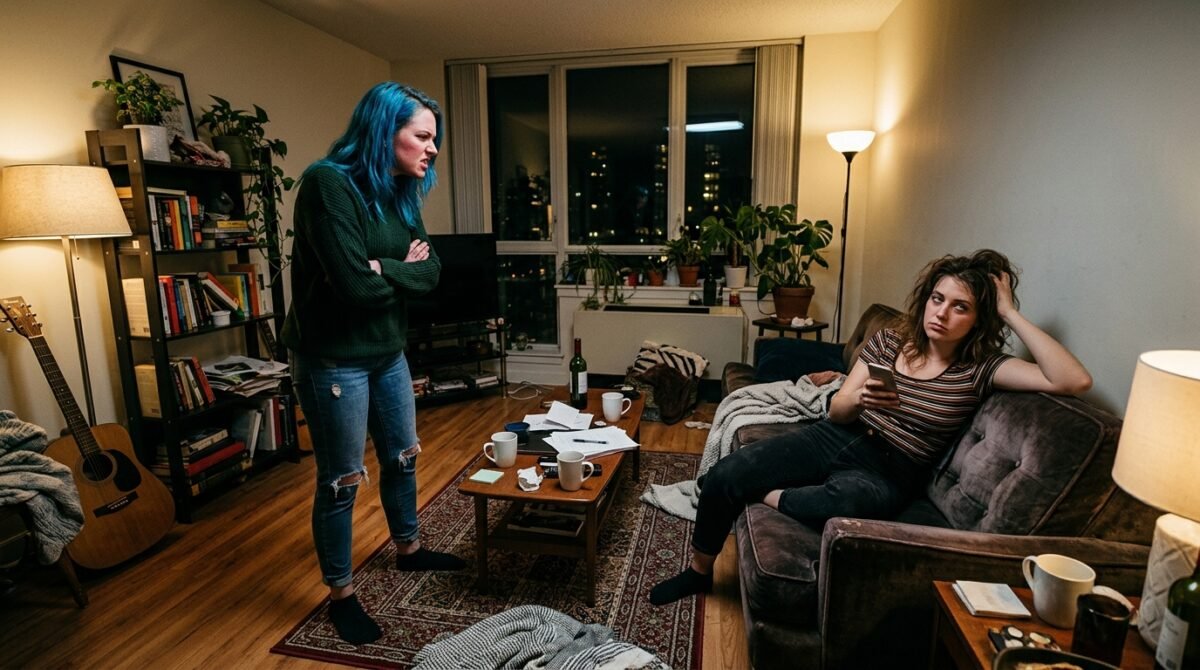
I stormed into the living room, not caring that it was barely 6:00 AM. Sarah was sitting on the couch, sipping coffee, looking suspiciously innocent. She didn’t even look up from her phone as I entered, her lack of surprise confirming my worst fears. She knew exactly what she had done, and she had been waiting for the reaction.
“Sarah, what in the hell did you do to my hair? Why is it neon blue? I have an audition in three hours. Do you realize what you’ve done?”
— Me, screaming at 6:00 AM
She finally looked up, a smirk playing on her lips. She didn’t look remorseful; she looked amused, as if she had just pulled off the greatest comedy sketch of the century. She shrugged, setting her coffee down on the coaster with maddening precision. “I thought you needed a change, honestly. You were so stressed about that audition, I thought a little ‘pop’ of color would help you stand out. Producers love personality, right? You should thank me for making you memorable.”
I was shaking, my vision blurring with tears of frustration. This wasn’t a joke. This was a calculated move to humiliate me. I had shared my calendar, my prep notes, and my excitement with her for weeks. She knew the station’s dress code was conservative and professional. She knew that showing up with blue hair would result in an immediate rejection before I even opened my mouth to speak. She had systematically destroyed a year of hard work for a laugh.
“You didn’t do this to help me stand out, Sarah. You did this because you’re jealous that I’m moving forward and you’re still stuck in the same place. This is professional sabotage. I have to go to the studio, and I have to look like a professional. You have ruined my hair, and you have ruined my chances.”
She just rolled her eyes, standing up to walk toward the kitchen. “Oh, stop being so dramatic. It’s just hair. It’ll grow out. Maybe if you spent less time worrying about your ‘brand’ and more time being a human being, you wouldn’t be so upset. Honestly, I did you a favor. Now you have a story to tell.”
The Cold Reality of the Studio Lobby

I spent the next two hours in a frantic state. I tried everything—lemon juice, dish soap, even a desperate attempt at a dark brown box dye I found in the back of the cabinet. It only turned the blue into a muddy, swampy green. By the time I arrived at the station, I looked like a punk-rock extra from a low-budget movie. I walked into the lobby, and the receptionist’s eyes widened. The silence in the waiting room was deafening.
I checked in, trying to hide my hair under a hat, but the producer asked me to remove it. When I took it off, the look on his face said everything. It wasn’t just shock; it was pity. He didn’t even ask me to read the teleprompter. He just thanked me for coming and told me that ‘the visual aesthetic of the role required a more traditional look.’ I hadn’t even started, and I was already finished.
“We are looking for a very specific type of anchor, and while we appreciate your demo tape, your current… look… suggests a lack of judgment that we can’t overlook for a news desk. I’m sorry, but we’re moving in a different direction.”
— The Station Producer
Walking out of that building was one of the lowest points of my life. I had prepared for weeks, memorizing scripts, studying news cycles, and perfecting my delivery. All of that was thrown away because of a roommate who thought a prank was worth more than my career. I sat in my car for an hour, just staring at the steering wheel, my phone buzzing with notifications I couldn’t bear to look at.
I started receiving texts from Sarah while I was still sitting in the parking lot. She wasn’t checking to see if I was okay. She was checking to see if I had ‘gotten the part’ yet. The tone of her messages was light, airy, and completely detached from the reality of the damage she had caused. She was treating my life like a reality television show where she held the power to cast the villains.
“So? Did they love the blue? I bet you stood out more than anyone else in that room! Tell me you got the job. I’m expecting a celebration dinner tonight!”
— Sarah (Text Message)
I didn’t respond. I couldn’t. I drove home in a daze, the reality of my financial situation crashing down on me. I had spent money on a new suit, travel expenses, and professional coaching. That money was gone, and the opportunity it bought was gone with it. I realized then that I wasn’t going to be ‘the bigger person.’ I was going to be the person who held her accountable, even if I had to go to the lowest court in the land to do it.
The Digital Paper Trail of Malice
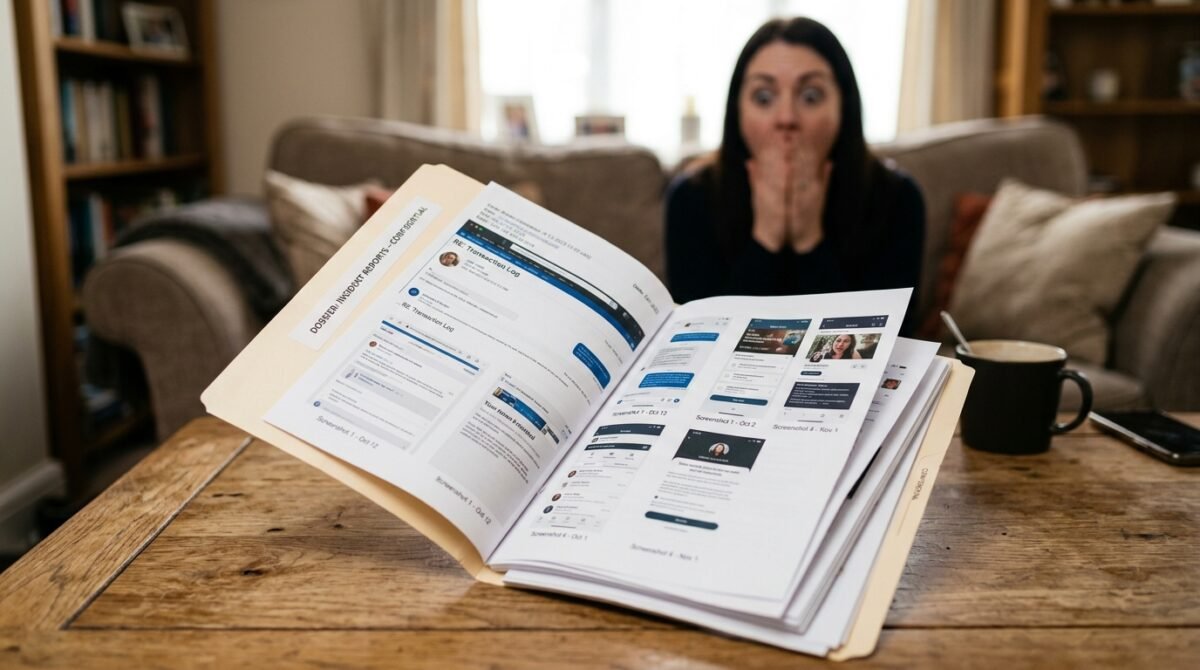
Before I even got to the apartment, I started documenting everything. I knew that in a case like this, ‘he said, she said’ wouldn’t hold up. I needed proof that this wasn’t an accident. I went back through our group chats and private DMs, looking for anything that suggested intent. It didn’t take long to find it. She had been bragging about her ‘prank’ to our mutual friends, calling it a ‘social experiment’ in an group chat I was coincidentally included in but had muted.
The messages were damning. She hadn’t just dyed my hair; she had planned it. She had bought the dye three days prior and had even joked about how ‘funny’ it would be when I showed up to the station looking ridiculous. She wanted me to fail, and she wanted an audience for it. It was cold, calculated, and entirely documented in black and white text.
“Guys, you won’t believe what I’m doing to OP tomorrow. She’s so high-strung about this audition, I’m going to make sure she has a ‘colorful’ debut. Seriously, it’s going to be iconic. Don’t tell her!”
— Sarah (Leaked Group Chat)
I screenshotted every single message, organized them by timestamp, and printed them out. I also made a list of the financial losses: the cost of the professional haircut I would now need to fix it, the application fees, the travel costs for the audition, and the emotional distress that I could potentially argue as damages. I was building a case, and for the first time since the morning, I felt a sense of control returning to my life.
When I finally walked into the apartment, Sarah was still sitting on the couch, laughing at something on her phone. She didn’t look up when I walked in. She assumed I was coming home to vent about the audition, not to deliver a legal ultimatum. The air in the room was thick with tension, but I held my ground, my hands steady as I placed a folder on the coffee table.
“What’s this?” she asked, looking up with a confused smirk. I didn’t say a word. I just sat across from her and waited for her to open it. Her face shifted from amusement to confusion, and then, finally, to a pale shade of realization as she flipped through the pages of screenshots and receipts. She looked at me, her eyes narrowing. “You’re actually going to sue me? Over hair?”
“It’s not over hair, Sarah. It’s over the loss of a career opportunity, the financial burden you placed on me, and your blatant disregard for my professional life. You admitted it in the group chat. I have it all. And I’m filing the paperwork tomorrow morning.”
Small Claims Court: The Day of Reckoning
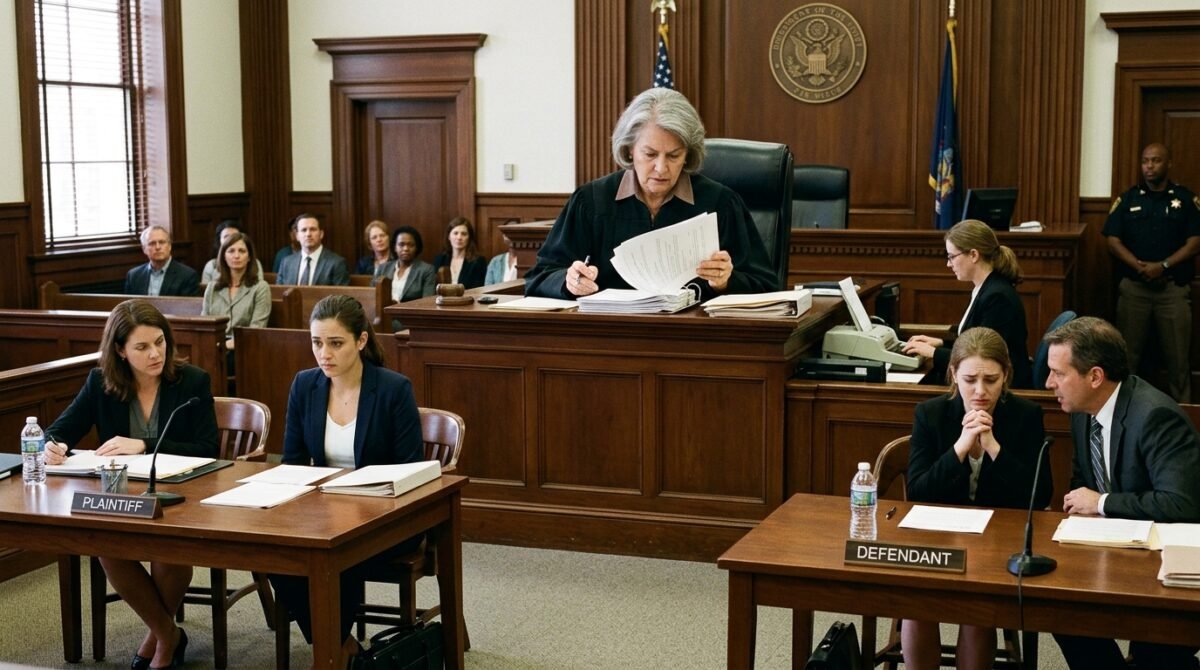
The day of the small claims hearing, the courtroom was a stark, quiet place that felt a world away from our chaotic apartment. Sarah had tried to laugh it off until the very last minute, calling me ‘petty’ and ‘obsessive.’ She even tried to bring a friend to testify that it was ‘just a joke,’ but the judge was having none of it. The judge was an older woman with a stern gaze who clearly had zero patience for roommate drama.
When it was my turn to speak, I laid it all out. I explained the importance of the audition, the financial investment, and the deliberate act of sabotage. I presented the screenshots as evidence. Sarah tried to interrupt, claiming it was just a ‘friendly prank’ and that I was ‘overreacting,’ but the judge silenced her with a single, sharp look. The courtroom was silent as I spoke, the weight of the moment sinking in.
“Your Honor, I put months of work into this preparation. It wasn’t just a hair appointment; it was my dream. When she applied that dye, she knew exactly what she was doing. She wanted me to look unprofessional. She wanted me to fail.”
— My testimony in court
Sarah’s defense was weak. She tried to argue that because we were friends, the boundaries were fluid. She tried to paint me as the one who was too uptight, too serious, and therefore, someone who ‘needed’ to be taken down a peg. It was an insulting defense, and it backfired spectacularly. The judge wasn’t interested in our friendship history; she was interested in the tort of interference and the financial damages incurred.
I watched as the judge reviewed the printed screenshots. She read the group chat messages slowly, her glasses perched on the edge of her nose. I could see her disapproval. She looked up at Sarah and asked a simple question: ‘Do you believe that personal property and professional standing are things you have the right to manipulate for your own entertainment?’ Sarah tried to stutter an answer, but she had nothing.
The ruling was swift. The judge found that Sarah had committed an act of intentional interference and that I was entitled to the full cost of the damages. It wasn’t a million-dollar lawsuit, but the victory felt infinitely bigger than the money. It was a validation of the fact that my career and my boundaries were not jokes to be toyed with. As we walked out of the courthouse, the look on Sarah’s face was one of pure, stunned defeat.
The Aftermath of the Verdict
The drive home from the courthouse was the quietest car ride of my life. Sarah didn’t speak a word, staring out the window with a look of disbelief. She couldn’t wrap her head around the fact that there were consequences for her actions. She had lived her whole life thinking she could push people around and laugh it off, and today, for the first time, the world had pushed back. The judgment had been entered, and she was legally required to pay.
I felt a strange sense of relief, but also a lingering sadness. It shouldn’t have come to this. We had once been friends, or at least, I thought we were. But the reality was that she never respected me. She saw my goals as something to be undermined, my joy as something to be tempered. The trial hadn’t just resolved a legal dispute; it had effectively ended our relationship. There was no going back to the way things were.
When we got back to the apartment, she immediately went to her room and slammed the door. I didn’t follow her. I spent the evening packing my own things. I had already decided that I was moving out. I couldn’t live in a place where I felt unsafe, where my belongings were targets, and where I had to constantly look over my shoulder. I had a new apartment lined up, and I was ready to start fresh.
“I hope you’re happy with your win. You really showed me, didn’t you? Is the money worth losing a friend?”
— Sarah (Text message sent after returning home)
I looked at the message on my phone, then blocked her. I didn’t owe her an explanation, and I certainly didn’t owe her a defense. I had my answer already. The ‘friendship’ ended the moment she decided my career was less important than her amusement. I didn’t lose a friend; I lost a liability. The money was just a bonus.
I moved out the following week. I didn’t leave a forwarding address. I didn’t want any further contact, and I didn’t want any more ‘pranks.’ I focused on healing, on fixing my hair, and on looking for the next opportunity. The audition had been a disaster, but the resilience I discovered in the process of holding her accountable was worth more than a broadcasting job.
Reddit Weighs In: The Community Reacts
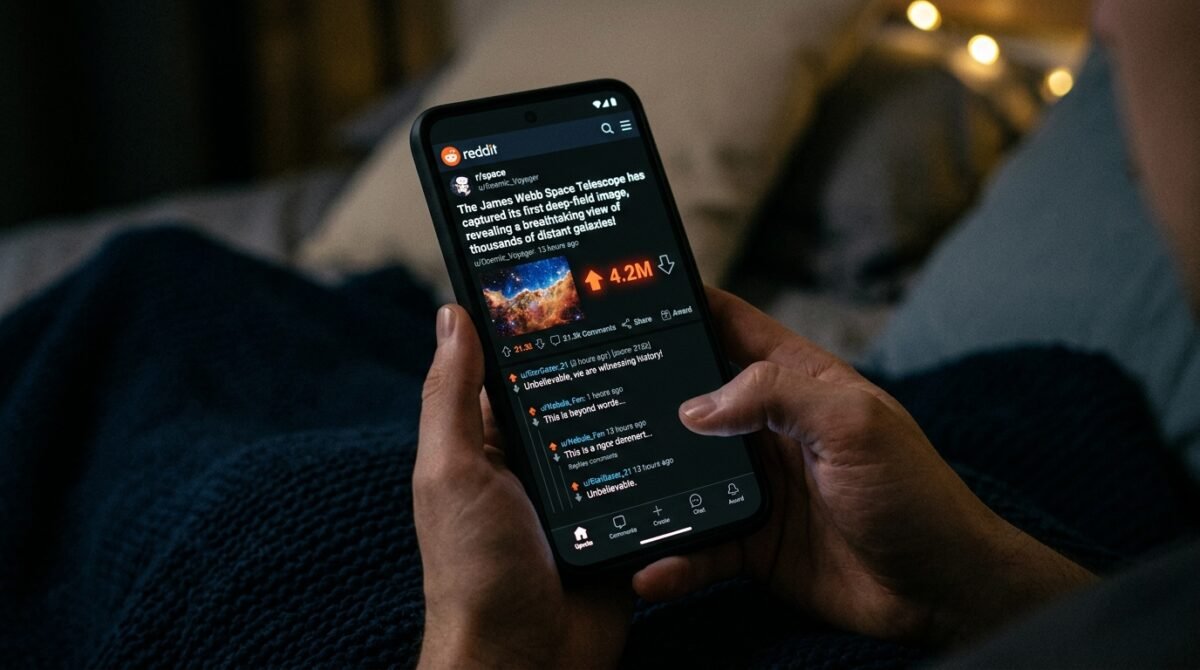
When I finally posted the full story on r/AmITheAsshole and r/LegalAdvice, I didn’t expect the explosion of support that followed. Within hours, the post had reached the front page, with thousands of comments debating the ethics, the legality, and the sheer audacity of my former roommate. The consensus was overwhelmingly clear: I was not the one in the wrong.
The Reddit community, usually known for its skepticism, was united in its disdain for Sarah. People shared their own stories of ‘roommate from hell’ experiences, commiserating with me about the loss of professional opportunities and the violation of personal space. It was a digital catharsis, reading thousands of people validate exactly what I had been feeling for months.
“OP, you are a hero. Most people would have just cried and moved on. The fact that you documented everything, took her to court, and actually won is the kind of ‘petty’ revenge that I live for. Don’t let anyone tell you that you were too hard on her. She destroyed your hard work.”
— u/JusticeForOP (Top Comment, 32.4k upvotes)
There were, of course, the contrarians. A few people argued that I should have been more forgiving, suggesting that ‘friends forgive each other’s mistakes.’ But those comments were quickly buried under a mountain of logic. The community was quick to point out that this wasn’t a mistake—it was a calculated act of sabotage. It wasn’t a messy room; it was a targeted hit on my career.
The legal advice I received was also invaluable. Many users pointed out that in many jurisdictions, ‘professional sabotage’ can be a civil tort, and the judge had correctly identified that my financial losses were directly caused by her actions. I learned that having a paper trail—like the group chat messages—was the single most important thing I had done. It turned an emotional argument into a factual one.
“I’m a lawyer, and I’m honestly impressed. Most people go into small claims court with nothing but a sob story. You went in with a document trail, a clear list of damages, and a calm demeanor. You acted like a professional, even when the situation was anything but. That’s why you won.”
— u/LegalEaglePro (15.2k upvotes)
The community support helped me realize that my reaction wasn’t ‘dramatic.’ It was necessary. It taught me that setting boundaries isn’t just about being firm; it’s about being prepared to defend those boundaries when they are violated. The support of thousands of strangers gave me the confidence to move forward, knowing that I had handled the situation with integrity and strength.
Reflecting on the Cost of ‘Pranks’

Looking back, I find it fascinating how people use the word ‘prank’ as a shield. It’s a way of saying, ‘I don’t respect your boundaries, but if you get mad, you’re the one at fault.’ Sarah’s behavior was a classic example of this. By calling her sabotage a ‘prank,’ she was attempting to gaslight me into believing that my anger was the problem, rather than the act itself. It’s a toxic pattern that many people experience, often for years, before they finally have the courage to walk away.
The financial cost of the damage was significant, but the emotional cost was higher. I had to learn to trust my own judgment again. I had to learn that it was okay to be ‘uptight’ if that meant being prepared and successful. I had to stop apologizing for wanting to reach my goals. The court case wasn’t just about the money; it was about reclaiming my right to be taken seriously in my own life.
I also think about the people who enable this behavior. Sarah had a group of friends who were cheering her on in that chat, encouraging her ‘experiment.’ They were just as complicit as she was. It made me realize how important it is to curate the people you surround yourself with. If your friends encourage you to sabotage others, they aren’t your friends; they are participants in your own downfall.
“True friends want to see you succeed. They don’t turn your biggest moments into their own stage. If someone treats your life like a game, they don’t deserve a seat at your table.”
— My personal mantra since the event
Today, I’m in a much better place. I found a new, supportive group of friends, and I landed a job at a different station—one that actually appreciates my professionalism. I still keep my hair blonde, and every time I look in the mirror, I’m reminded of how far I’ve come. I’m no longer the person who lets others dictate my worth.
If you find yourself in a situation where someone is constantly crossing your lines, don’t wait for a ‘big event’ to address it. Small slights are often the precursors to big disasters. Set the boundary early. If they don’t respect it, leave. You don’t owe anyone your peace of mind, especially not someone who thinks your life is a joke.
Moving Forward: Life After the Lawsuit

Life after the move has been remarkably quiet, and I mean that in the best way possible. I have my own space, my own schedule, and, most importantly, my own peace. I haven’t heard from Sarah, and I have no desire to. The legal judgment was paid, albeit begrudgingly, and that chapter of my life is officially closed. I’ve realized that closure doesn’t always come from an apology; sometimes, it comes from the simple act of walking away and never looking back.
I’ve also noticed a change in how I approach relationships. I’m much more cautious, more observant. I pay attention to how people talk about others when they aren’t in the room, and I pay attention to how they react to my successes. If I feel a hint of jealousy or a desire to ‘take me down a peg,’ I move accordingly. It’s not about being cynical; it’s about being protective of my own growth.
My career has also flourished in ways I didn’t expect. The incident taught me resilience in a way that no interview ever could. I’ve learned to handle high-pressure situations with grace, and I’ve learned that no matter what happens, I have the strength to fight for myself. That’s a lesson that stays with you forever.
“Success is the best revenge, but legal documentation is a close second. Don’t be afraid to use the tools available to you when someone tries to hold you back.”
— Advice to others in similar situations
I still get messages from people online who find my story through the Reddit threads, asking for advice on how to handle their own ‘nightmare roommates.’ I always tell them the same thing: document everything, trust your gut, and don’t be afraid to take formal action if you have to. You don’t have to be the martyr in your own life. You can be the one who stands up for yourself.
I’m finally at a point where I can look back at the neon-blue-hair incident and laugh—not because it was a funny prank, but because of how absurdly hard she tried to fail, and how spectacularly she failed at failing. I survived, I succeeded, and I’m stronger for it. And that, in the end, is the real story.
Lessons in Boundaries and Self-Respect

What I learned is that we often underestimate the power of our own voice. For the longest time, I thought that expressing my anger would make me look ‘unprofessional’ or ‘crazy.’ I thought that I had to endure the small digs and the ‘pranks’ to keep the peace. But all that did was embolden Sarah to go further. When you allow people to treat you poorly, you are essentially telling them that your boundaries are flexible.
The courtroom was a wake-up call for me. It taught me that the law exists to protect your rights, not just your property. My career was my livelihood, and when she attacked it, she was attacking my survival. Standing before that judge, I wasn’t just a victim; I was a claimant with a legitimate grievance. That shift in perspective changed how I see myself.
I also learned the importance of surrounding myself with people who are genuinely happy for my success. It’s easy to find people who will laugh at a joke, but it’s much harder to find people who will stand by you when things get difficult. I’ve spent the last year intentionally building those kinds of relationships, and the difference in my quality of life is immeasurable.
“Your boundaries are the architecture of your self-respect. If you don’t build them, anyone can walk all over your life.”
— A piece of wisdom I learned the hard way
I encourage anyone reading this to take an inventory of their own lives. Are there people in your circle who don’t respect your goals? Are there people who try to bring you down for their own amusement? If so, consider this your sign to start building your own boundaries. You don’t have to be a victim of anyone else’s insecurity.
The blue-hair incident was a catalyst for a total life transformation. It forced me to stop being passive and start being proactive. It was the hardest thing I’ve ever had to go through, but it was also the most important. I am exactly where I need to be, and I wouldn’t change the outcome, even if I could go back and change the hair.
The Final Verdict: Why Justice Matters

When we talk about ‘justice,’ we often think of big, national headlines. But justice is also found in the small claims courts of the world, in the resolution of personal disputes, and in the quiet reclaiming of one’s own life. For me, justice wasn’t about the money. It was about the act of holding someone accountable for their behavior. It was about saying, ‘This happened, this was wrong, and I am not going to accept it.’
I think the reason this story resonated with so many people is that we’ve all felt powerless in the face of someone who doesn’t respect us. We’ve all had that roommate, that coworker, or that ‘friend’ who pushes our buttons and expects us to just take it. My story is proof that you don’t have to just take it. You have options. You have a voice. And you have the right to hold people to account.
If there’s one thing I hope you take away from this, it’s that your goals and your professional integrity are worth fighting for. Don’t let anyone make you feel bad for wanting to succeed. Don’t let anyone turn your ambition into a punchline. And most importantly, don’t let anyone define who you are, especially when they’re trying to dye you a different color.
“Justice is not just a concept; it is an action. Sometimes, the most powerful thing you can do is stand in a room, state the facts, and demand what is rightfully yours.”
— My final takeaway
I’m proud of who I am today. I’m proud of the woman who walked into that courtroom, and I’m proud of the woman who walked out. I’m proud that I stood my ground, that I protected my dreams, and that I refused to be a victim. And if you’re reading this and feeling like you need a sign to stand up for yourself, this is it. Don’t let them win. Stand up for your life, your work, and your truth.
Conclusion
In the end, my story isn’t about a ruined hairstyle or a lost audition; it’s about the fundamental necessity of self-respect. When I look back, I realize that the blue dye was only the final act in a much longer drama of disrespect. By standing my ground, I didn’t just win a legal battle—I won back my own narrative. The truth is, people will only treat you as well as you allow them to, and I decided that I was worth more than being a prop in someone else’s misguided comedy.
I want to hear from you. Have you ever had a roommate or a ‘friend’ who violated your boundaries in a way that felt unforgivable? Did you take a stand, or did you walk away quietly? Share your stories in the comments below—let’s talk about how to protect our peace in a world that doesn’t always value it. Your experiences might be the guidance someone else needs today.
What's your verdict on this dilemma?
Vote below to contribute to the official community consensus.

Have a Dilemma Keeping You Up at Night?
Share your real-life feud, wedding chaos, or relationship crossroads anonymously with our editorial team.
What do you think ?
0 Comments🛡️ Comments are moderated to protect community integrity. Your comment will appear once approved by the editorial team.